
Downloads: Democracy how? project plan
“Democracy How?” is a community engagement project with multiple models for cultivating intergenerational community conversations about American history and democracy. This project consisted of a series of community engagements facilitated between October 2025 and January 2026.
Project Summary
“Democracy How?” is a 1619 Impact Grant project developed by 2025 Grantee, Veronica Jones, and her collaborators at La Unique Bookstore and Cultural Arts Center in Camden County, New Jersey. The project utilizes the La Unique space to cultivate a resource center for intellectual discourse about the ongoing challenges to democracy faced by American citizens. Project activities include: both classroom-based and intergenerational 1619 book studies as well as community events engaging participants with 1619 Project themes and takeaways for their local community.
Project Audiences
“Democracy How?” was a community-based project implemented in Camden County, New Jersey. The project used a grassroots, intergenerational approach to explore themes of democracy and American slavery and make connections to the local community context. The target audiences for each key activity were as follows:
- 1619 Book Club: An intergenerational community audience meeting online
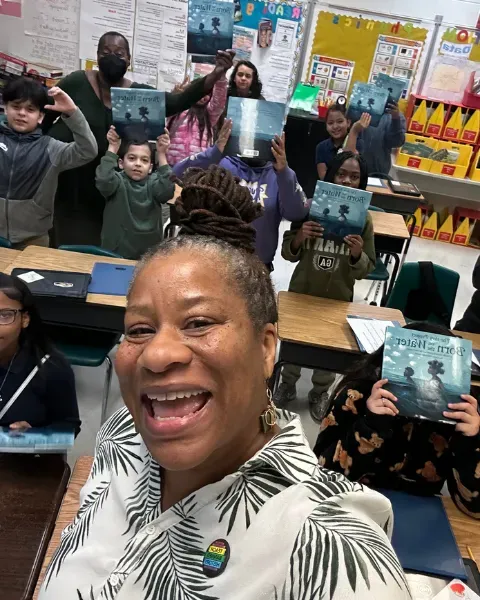
- Born on the Water Classroom Engagement: A diverse group of K-12 teachers and students from area schools
- 1619 Listening Party: An intergenerational audience both within and beyond the local community
- 1619 Viewing Party and Discussion: A gathering of college student groups and community elders
- Historical Symposium: An intergenerational community audience including college students, community members, elders and school aged children
Key Activities
Ongoing Activities
- An online book club that met monthly to discuss chapters from The 1619 Project: A New Origin Story
- Classroom-based book studies of The 1619 Project picture book, Born on the Water
Community Events
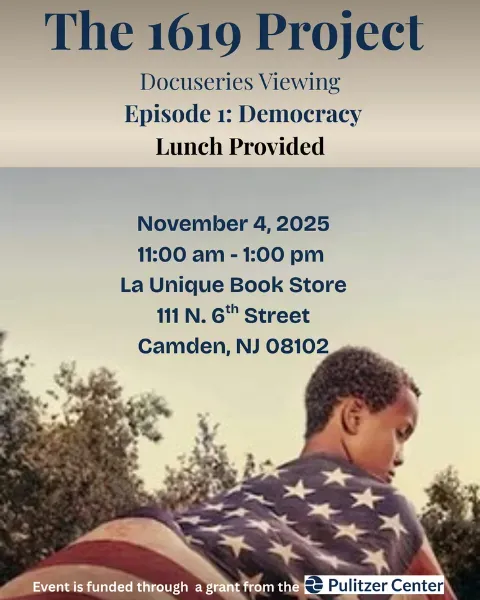
- A community viewing of 1619 Docuseries Episode 1, “Democracy”
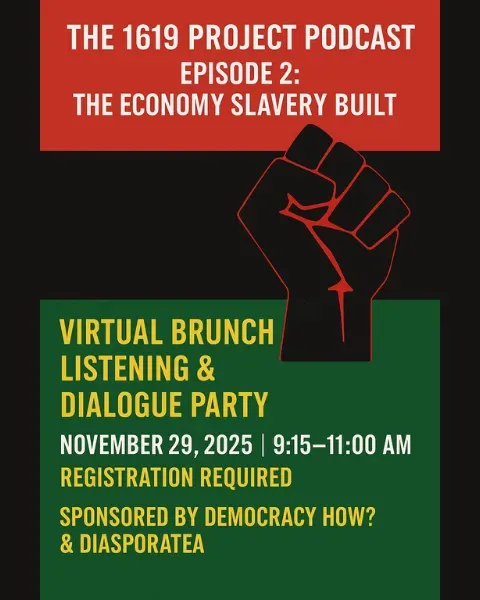
- An online listening party and discussion of 1619 Podcast Episode 2, “The Economy that Slavery Built”
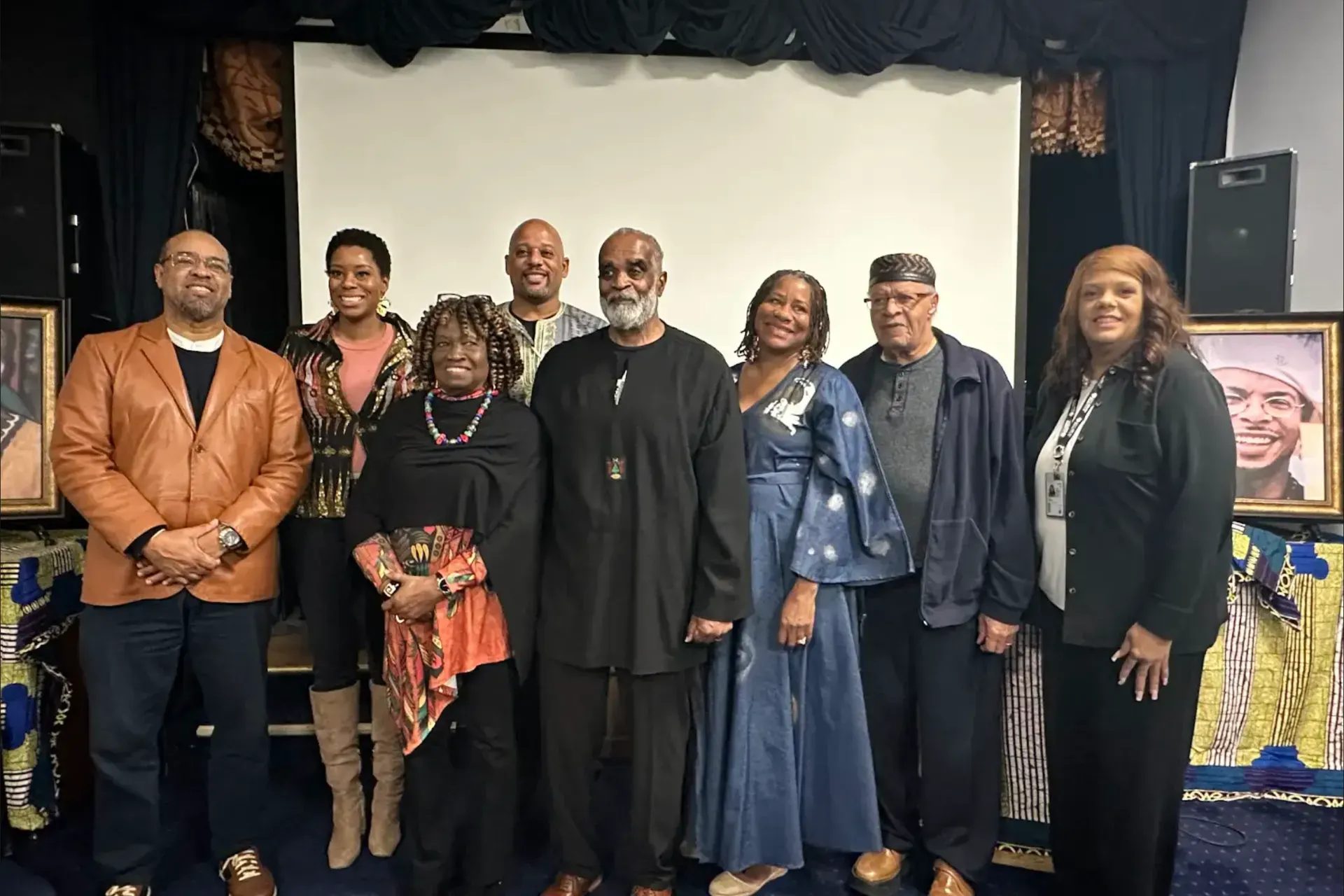
- A historical symposium with presentations from local historians, education leaders, and students.
An extended community engagement project plan including resources for facilitating ongoing activities, like a monthly book club, and templates for individual community events. Download the full plan below or scroll to review the resources.
Project Materials
| 1619 Materials |
The 1619 Project: Born on the Water The Teachers Guide for The 1619 Project: Born on the Water (Select chapters from) The 1619 Project: A New Origin Story The 1619 Project Docuseries Episode 1: “Democracy" The 1619 Project Docuseries Viewing Guide The 1619 Project Podcast Episode 2: “The Economy Slavery Built” The 1619 Podcast Listening Guide |
| Additional Materials | Sample surveys and reflection forms for community events A sample school proposal for educators and administrators considering utilizing Born on the Water Sample Teacher and student reflection forms for Born on the Water A sample agenda for a Defining Democracy Historical Symposium |
This project contains 5 distinct activities that reached an intergenerational community audience including 375 students and teachers.
Community Book Studies
The primary purpose of reading The 1619 Project book with our community was to develop a shared understanding of the central role of slavery in the evolution of democracy. The online book study group was so engaged with the space that the team decided to continue the book club into 2026, reading other books on hard topics.
Veronica Jones, Project Lead
Teachers who participated in the classroom book study were both encouraged and surprised to find that the students of all backgrounds were very open to learning about slavery and really connected to the trauma and resilience of enslaved people. The teachers gained confidence in their ability to teach about enslavement and build student understanding. Having support for teachers is critical for this type of teaching and learning.
Veronica Jones, Project Lead
1619 Docuseries Viewing and Podcast Listening Parties
Historical Symposium
The Democracy How? Historical Seminar was well attended. It was promoted through La Unique Bookstore channels and advertised in a local newspaper, the Anointed News Paper.The full day event included historians who spoke on topics such as the creation of the Declaration of Independence, The US Constitution and The Emancipation Proclamation and the intersection of the question of slavery in America. The event also featured a presentation by a historian and museum curator who shared actual artifacts used during the transatlantic slave route and on US plantations to control black bodies. Frederick Douglas’ speech, “What to the Slave is the 4th of July” was read by an intergenerational trio ( a 10 year old, 30 year old and 50 year old)! A representative from the NJ Amistad Commission who presented teacher and family resources they had available and the NJ Amistad Mandate. The team provided food and beverages and there was plenty of time for conversation and Q & A.
The project lead provided the following reflections and advice for other educators hoping to implement similar projects.
This community engagement project was developed as a new idea in response to the 1619 Impact Grant and was a very heavy lift. Having a great team was critical and this would have been a failure without each of us. In addition to our team members, we learned how important it is to meet face to face with school stakeholders early on and have written press releases to share with journalists and media outlets. We publicized events through the bookstore webpage entitled Democracy_How2025 and distributed flyers to local community college, local churches, the Camden City School Board of Education, and neighborhood businesses. There were invitations to the events posted on the La Unique Book Store & Cultural Arts Center website and each person who shopped at the bookstore received a flyer with their purchase.
In the end we learned that 1) this was very important and 2) this was doable. I was surprised about the push back concerning Born on the Water in primarily black and brown spaces but strong relationships, consistency, and positive attitudes went a long way. Providing educators with easy entry points and clear communication to dissipate the fear around teaching about slavery was paramount.
My advice for other educators or community leaders hoping to implement a similar project would be:
- Design a project that can be done without the funding, and then develop ideas around what could be expanded with additional financial support.
- Make sure you have a committed team. Think about skill sets and temperaments when deciding who should lead each aspect
- Meet with stakeholders and collaborators in person if you can - it could make all the difference.
- Make sure you teach and use a protocol for teaching hard history
- Use local and statewide resources (they are willing to come out and bring information). Don’f forget your local historical societies and museums
- Advertise, advertise, advertise! (print, internet and word of mouth)
- Enjoy the learning! (I sure did)