Story
 March 19, 2026
Community Plays a Key Role in New Approaches To Neurodiversity in the U.K.
Country:

Challenges and solutions created by neurodivergent people for neurodivergent people.
The heart of the neurodiversity movement is community—in all different forms. Across the United Kingdom people are sharing experiences, challenging societal norms, and reclaiming their narrative. Throughout England, Scotland, and Wales, neurodivergent people are pioneering the neurodiversity movement with honesty and a touch of rebellion.
Neurodiversity describes the natural differences in how people behave, process information, and perceive the world. Up to 20% of the population in the U.K. identify as neurodivergent, which amounts to about 13 million people. Yet, many face a lack of support from childhood through adulthood.
Society has been shaped around neurotypical people and often neglects those who have diverse brains. Some neurodivergent people may have difficulty maintaining eye contact, keeping attention, and have longer processing times. These and other differences are often frowned upon in social settings and the workplace. This stigma and misunderstanding of neurodivergent functioning can create lasting trauma for many neurodivergent people.
As a nonprofit journalism organization, we depend on your support to fund more than 170 reporting projects every year on critical global and local issues. Donate any amount today to become a Pulitzer Center Champion and receive exclusive benefits!
To shift the societal stigma about neurodiversity, neurodivergent researchers, advocates, and changemakers in the U.K. are using their lived experiences to make the world a better and safer place for the neurodivergent community.
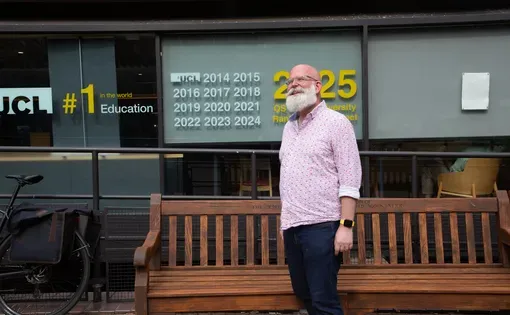
Brian Irvine’s journey of discovering his neurodivergence began when he found out his children are neurodivergent. This is a common theme among adults diagnosed later in life with attention-deficit hyperactivity disorder (ADHD), autism, dyslexia, and other forms of neurodiversity. He is diagnosed with aphantasia. This means he is unable to form mental images, which can make planning and day-to-day tasks difficult.
Although recalling the past can be difficult, Irvine often encodes memories into stories. He remembers being told as a young child in school that his cubby was the one with a blue boat on it; this posed quite a challenge since he was unable to remember what a blue boat looked like. Throughout the day he repeated “blue boat, blue boat, blue boat” so he could remember what cubby was his. That is one of his earliest memories of realizing he had aphantasia.
Irvine works as a researcher and specialist mentor at University College London, specifically at the Centre for Research in Autism and Education (CRAE). He looks at the superior perceptual capacity of autistic people and serves as a sounding board and a trusted confidant for neurodivergent students across campus. Specialist mentors in the U.K. are paired up with university students who have autism, complex mental health disorders, or other forms of neurodivergence, and serve as a support system throughout their university years. In discussing his role, Irvine describes the innate struggle for justice and fairness that neurodivergent folks grapple with every day in a capitalistic society that was built for neurotypical minds. He states that for neurodivergent people, “justice is a way of being.”
“ You work with people to show them how they can bring change to their institution. We teach a little bit of rebellion and actually, when you are stepping into your adult self, to see the world as not quite right and know how to fight for it to be a better place.”
Sonay Ozkutali and her children waited over two years on the Child and Adolescent Mental Health Services (CAMHS) waiting list to receive a diagnosis, a common occurrence across the U.K. They provided her with minimal resources, and there was nothing in her local area to support her child. Ozkutali came to terms with her own neurodivergence after her children were diagnosed, similar to Irvine. With a background in law and education, she used her lived experiences as a mom of neurodivergent children and a woman with ADHD to start the Neurodiversity Family Hub, an organization to empower neurodivergent children and caregivers.
The Neurodiversity Family Hub offers “tribes,” communities where autistic and neurodivergent people ages 0 to 25 can find community through play, conversations, and outings. The Hub also offers resources for parents ranging from advocacy tips and opportunities for caregivers to connections through coffee chats and walk-and-talks. As a parent of neurodivergent children, Ozkutali wanted to create a community for parents where they could feel heard and supported.
“What I found is they don't come to me because they're too busy looking after everyone else,” Ozkutali said. “They forget to look after themselves. Because in this country, when you get diagnosed with autism, that's it, you're done.”
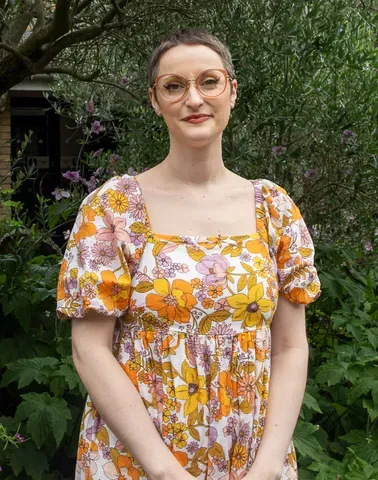
Community plays a pivotal role in the lives of not only autistic children, but adults as well. Chloe Farahar, an autistic researcher and advocate at the University of Kent, cites the importance of community in remaining resilient and sustaining the advocacy work that she does. “I talk about the importance of autistic identity, culture, community in space to reduce suicidality and improve mental health,” she said.
Farahar created Aucademy, a platform by and for autistic and neurodivergent people that offers education about the autistic experience through webinars, training videos, and conferences. The ethos of Aucademy is to educate autistic and non-autistic people alike by de-pathologizing autism and prioritizing and respecting autistic perspectives. Through Aucademy, Farahar and her colleagues have connected with autistic people around the globe to create a community where their voices and lived experiences can be shared openly.
Similar to Aucademy, Differabled in Glasgow, Scotland, is creating a community for older adults with autism. They are sharing their lived experiences and difficulties with the National Health Service (NHS)—long wait times for a diagnosis and even longer wait times to get follow-up appointments. The group meets every two weeks at the University of Glasgow to discuss everything from mental health to the connectedness and freedom they all feel when they are together. One participant said attending the group was like being able to breathe. Another referred to his life as a hurricane until he came to the group. Differabled serves as a safe space for the autistic community in Glasgow.
Over Jaffa cakes and cups of Nescafé coffee, the group discusses the difficulties of their schooling years and how they often struggled to conform to expectations. Their honesty often got them into trouble and led them to mask for most of their school career. Masking refers to the conscious or subconscious effort by autistic individuals to suppress or hide their natural behaviors and adapt to neurotypical social expectations.
In this space, Differabled group members Michael, David, and Martin are able to unmask and open up about their experiences growing up neurodivergent.
David’s newfound understanding of autism has opened an entire world for him to explore his monotropisms and enter his “flow state.” Monotropism is a form of hyperfocus to concentrate on a singular interest in great detail, which can lead to a flow state, a period of intense focus and concentration on activities driven by intrinsically motivated desires.
“Autistic people often talk about engaging in flow states (and how) really important and wonderful things come out of a flow state and, recognizing when a child is in that state and like respecting it and knowing that it's valuable,” David said.
Through the support of his family, friends, and social services, David has been able to create a stable environment for himself where he can enter these flow states and explore his own psyche, theories of autism, and governing laws of the universe.
Irvine’s concept of “justice as a way of being” resonates with Michael because he has struggled to fight systems of corruption throughout his life. He has lost numerous jobs and relationships simply for being honest and standing up for what was right.
“It's just so traumatic that people don't believe you when you’re telling the truth. I mean, in many workplaces, many workplaces, they expect me to be lying,” Michael said.
Autistic people often face barriers when looking for and keeping jobs, such as lack of understanding of autism, experiences of workplace harassment, and discrimination. The U.K. government offers different forms of support for people who are unable to work, including the Disability Living Allowance and the Employment and Support Allowance. This support offers money to help with living costs and support to get back to work for people who are able to. Michael aspires to travel and visit family but is unable to leave for extended periods of time because he depends heavily on his social benefits.
Michael recalls the many lives he lived before coming to the realization that he was autistic. After attending many support groups, he has found comfort and solidarity with the people at Differabled and feels he can be his authentic self, candidness and all.
Martin shares a similar sentiment to Michael. He has often found himself in trouble because of his honesty and his ability to see things for what they truly are. He felt that schools and other institutions pushed conformity at the cost of truth.
“I think that's usually the case with neurodivergent people that can really see what's going on ... and call it out,” Martin said.
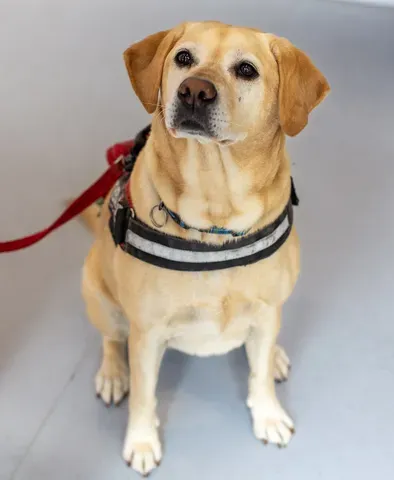
Martin has found a community with Differabled, but his true lifelines are his dog and his children. He expresses the difficulty that comes with day-to-day living as a neurodivergent person: fatigue, confusion, and rejection sensitivity.
Many people who identify as autistic or having ADHD experience rejection sensitivity dysphoria, which means experiencing intense emotional pain after being rejected or experiencing a perceived rejection. This can make functioning difficult and painful. Martin wishes there was more support available to help with tasks that feel overwhelming like doing laundry, cooking meals, or going to the bank. While every day brings its own challenges, he is grateful for the support he gets from Differabled.
Although Wales is smaller than England and Scotland, the team at Wales National Neurodivergence Team is combining the strengths of neurodivergent people and allies to match the efforts happening in England and Scotland. Ben Ewart-Dean and Rachel Hazlewood are two members of the eight-person collaborative. The team is funded by the Welsh government with the goal of working closely with stakeholders and communities to provide co-produced resources for the autistic community.
Wales has an innovative and, according to Ewart-Dean, “radical” approach to supporting autistic people. Each local authority designates an Autism Lead, who is the primary contact for autism-related information. These Leads work in conjunction with the Wales National Neurodivergence Team to provide pre- and post-diagnosis support and resources to the community at large. Although diagnosis can provide access to support and validation, to many autistic people, diagnosis is not the be-all, end-all.
“A diagnosis has value, but it doesn't bring a whole package of support with it. So, a lot of the work that we do is to try to get the message out that we have resources and information that are free for everybody, because we're Welsh government funded, that you can put in place whilst you're waiting for a diagnosis—or even you might not need a diagnosis,” Ewart-Dean said.
The affirmation of a diagnosis can provide a lot of clarity to autistic and neurodivergent people, but if post-diagnostic support isn't available, people are often left in the dark. The team aims to serve as a trusted source of information for autistic and non-autistic people alike, diagnosed or not.
Every country in the U.K. has threads connecting the neurodivergent community: shared experiences, willingness to learn and listen, and an overall goal of creating a more just and neuro-affirming society. Many neurodivergent people in the U.K. have cultivated communities rooted in acceptance, truth-seeking, and a little bit of rebellion.