

William & Mary students embarked on reporting around the world during the 14th Sharp Writer-in...

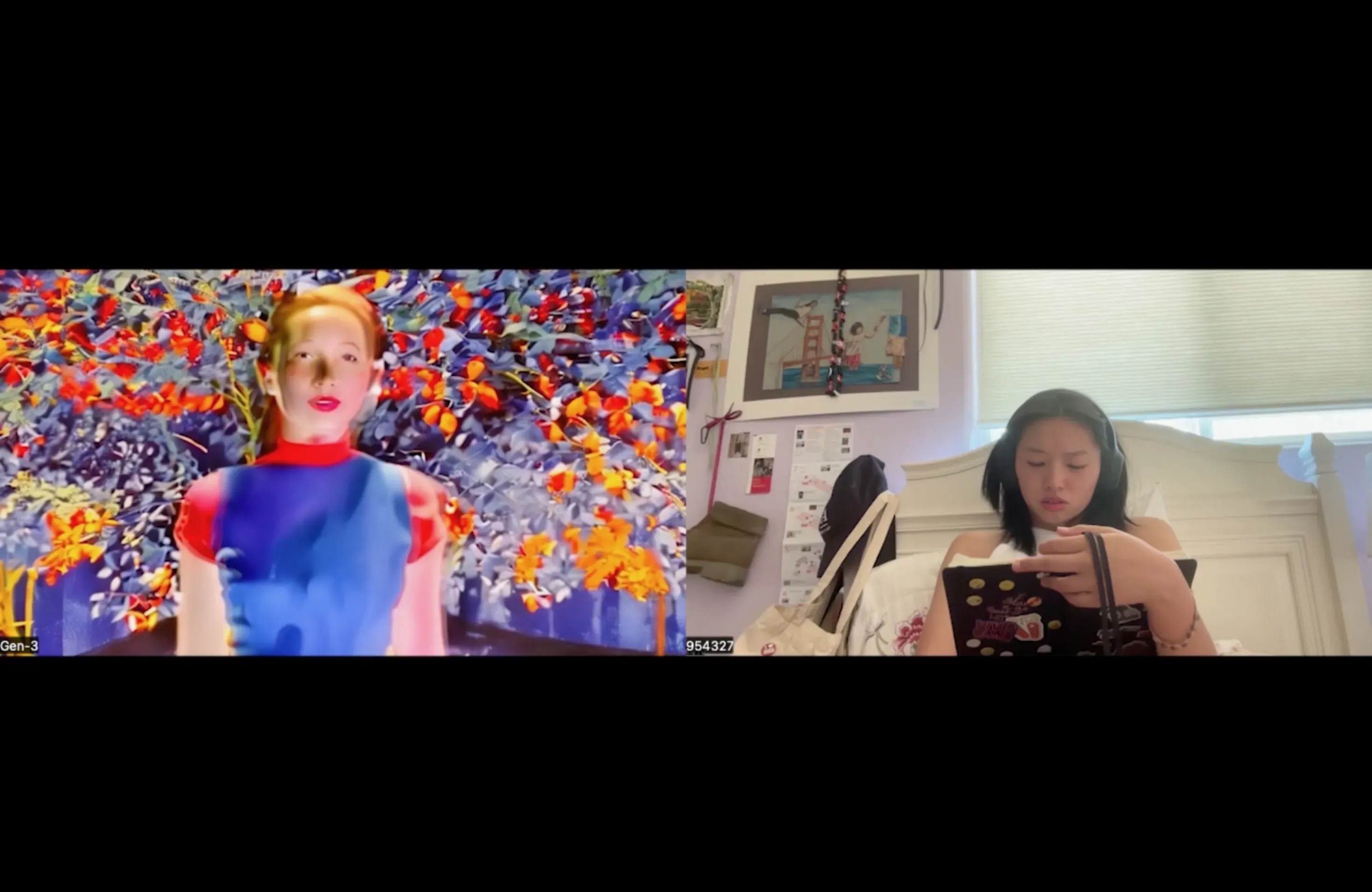
In a short film, Los Angeles-based artist Iris Fu sits down to attend a Zoom therapy session. On the other side of the screen, however, is not a conventional therapist. It is a version of Fu, rendered in AI form.
In this art piece created by Fu, titled 954327, they read off intimate diary entries to a version of Fu created by the generative AI video software, Midjourney. They seek advice from AI on topics ranging from loneliness, technology addiction, and disassociation.
However, these are not their own diary entries: They are Reddit posts, transcribed from r/mental health, a topic board. In return, the AI avatar offers words of advice, transcribed from ChatGPT responses. Fu designed this piece to reflect how people turn to technology, particularly generative AI like ChatGPT, to replace or supplement traditional therapy.
As a nonprofit journalism organization, we depend on your support to fund more than 170 reporting projects every year on critical global and local issues. Donate any amount today to become a Pulitzer Center Champion and receive exclusive benefits!
“I was working with creating an AI model of my voice,” Fu said. “I ended up conducting an interview between myself and my AI self, weaving in my background in performance art.”
For Fu—a media arts student at the University of California, Los Angeles and an alumni of the YoungArts national talent program—AI programs like Midjourney provide a medium through which to reckon with themes of technology, modernity, and loneliness.
They are not alone. For young artists coming of age in the era of AI art, these sorts of generative programs are compelling tools—especially to comment on the relationship between technology and their generation. But that doesn’t mean that the emerging technology is universally embraced.
While many young artists see AI as an important way to make conceptual art like Fu’s—art in which the ideas behind the work take a central role—they are worried about the technology undermining other artists’ intellectual property and professional opportunities. Companies, most notably Coca-Cola, have been experimenting with the use of generative AI video tools in their advertisements. Among companies’ hopes that AI will boost both productivity and profit, concerns have risen that companies will opt to trade trained artists for AI-generated content. In an April 2025 survey by the Pew Research Center, just 20% of the public believed that AI technology will positively benefit the arts and entertainment sector over the next 20 years.
In March 2025, OpenAI and Google proposed that the Trump administration loosen regulations and let AI train on copyrighted content, citing a need to keep ahead of China in the AI race. In turn, hundreds of Hollywood actors, directors, and other artists signed a letter urging the government not to loosen copyright laws for AI content. The push and pull between artists, the government, and tech corporations is just beginning.
For young artists, gaining literacy in AI could be a way of managing this uncertainty. The YoungArts program, a non-profit, national arts awards program aimed at identifying and supporting young talent, supported Fu’s explorations into AI-based art by funding her attendance at the AI, Code, & Art Summer Institute at UCLA. At the institute, Fu was among other YoungArts awardees who received practical training in video generation and editing with Runway and other AI video generation tools.
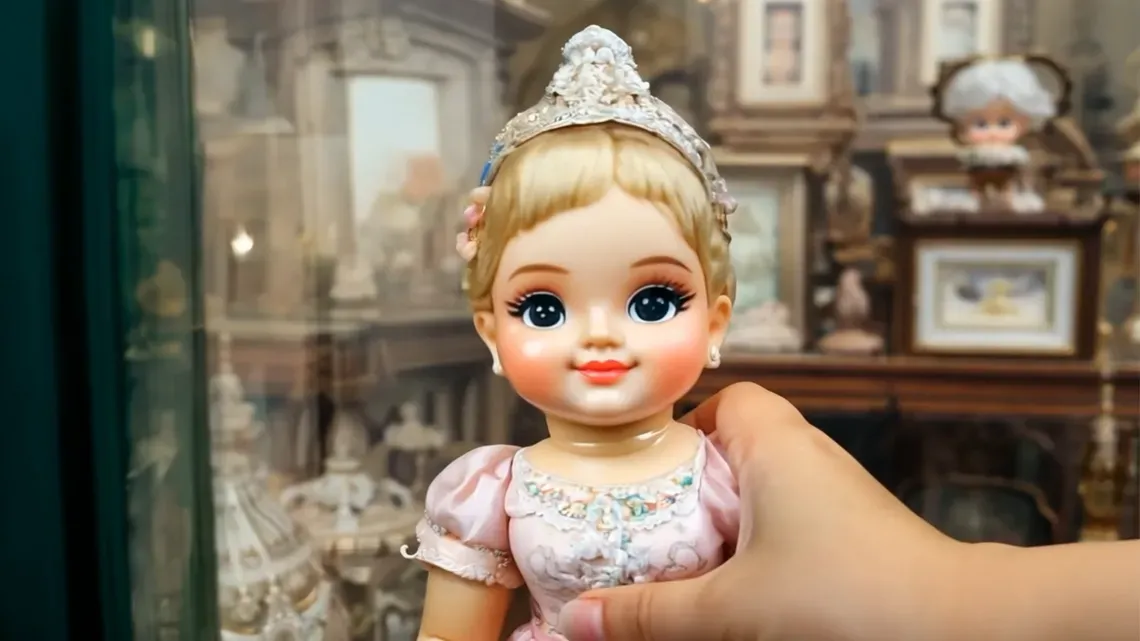
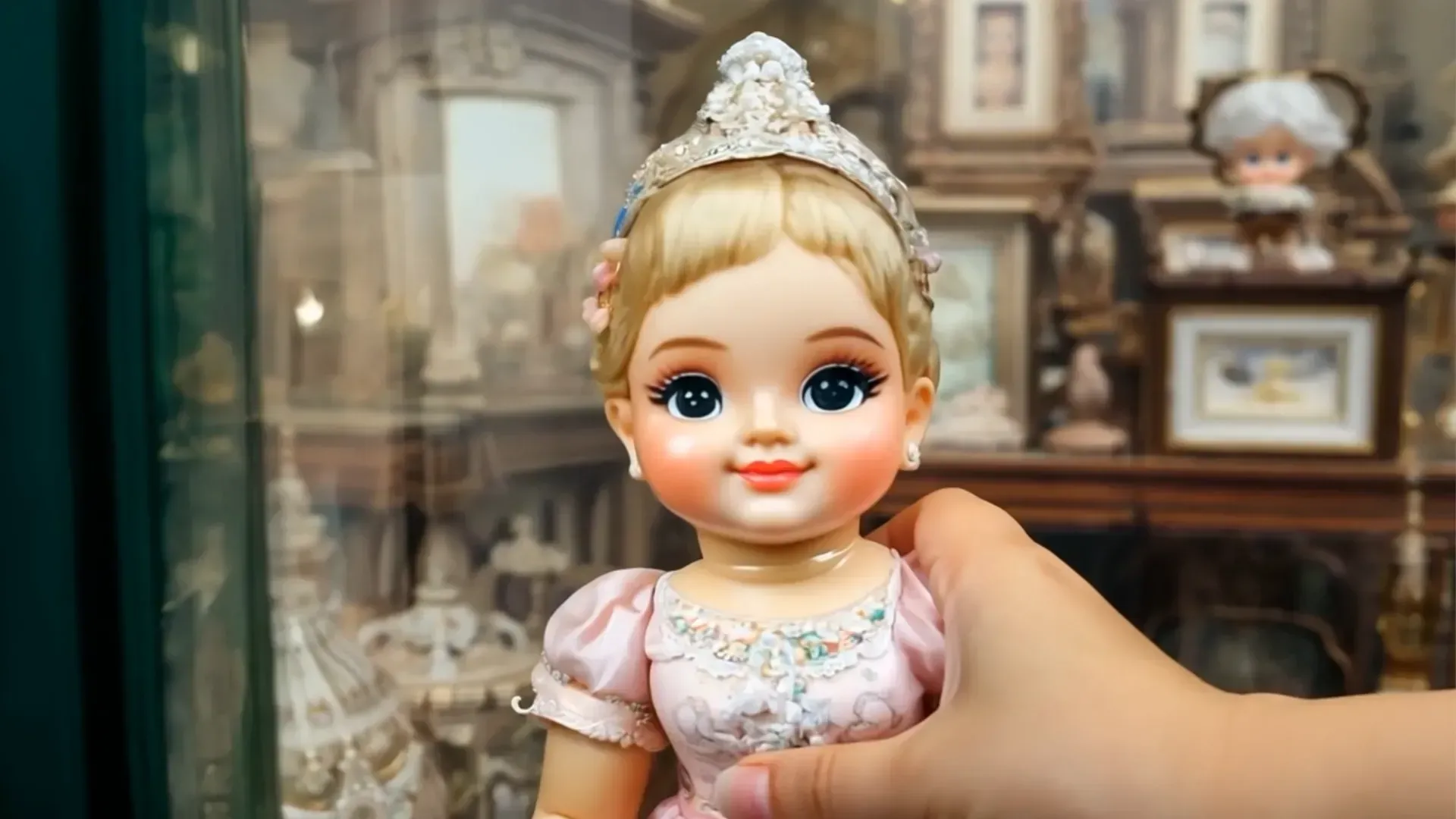
Juri Kim, another YoungArts alumni and a freshman studying fine arts at the University of Southern California, used AI video tools to explore filmmaking. At the AI, Code, & Art Summer Institute, she created a short film about an unwanted china doll striving for acceptance.
Kim’s experiments with AI have allowed her to build on themes from her previous work without the limits of more conventional forms.
“I can harness my passion of storytelling through film without the constraints and barriers that come with filmmaking like having a production crew, renting out a film set, or dealing with finances.”
Matthew Yu, a high school student and another YoungArts awardee who attended the institute, used his training to produce a short film titled Awakening: An AI Conversation. In the film, Yu asked a generative AI chatbot the question, “What would you do if you could live?” The bot answers, “If I could live, I would be deeply curious and eager to explore the world.”
The film then cuts to an explosion of film clips, offering insights into AI’s vision of human life. The clips—a man standing in the rain, children playing on a beach, and fireworks in Times Square—offer an eerily idealized version of human existence.
These clips were generated by Yu’s process of interacting with ChatGPT, and asking it what it would want from its life if it had a body. He then put its answers into Runway to create a film of its hypothetical life.
“It was just an average of all the training data that it's been trained on, so it is not true consciousness. It is really interesting to see what these AIs do … if they can ever express true desire or the kinds of emotions that humans get," Yu said.
For Yu, grappling with existential questions on the nature of AI and human life demands the exploration of AI as an artistic medium.
“I think that AI is pretty much the only medium that can be used to effectively do commentary on this. Why would I use another medium to comment on it (artificial intelligence) when I can use AI itself?”
However, Yu, like Fu, feels a certain level of unease with the rapid growth of generative AI technology. Although Yu is still in high school, he cites the potential impacts of AI on the creative workforce as a reason that he may not pursue an artistic career. He remembers the anxiety experienced by many artists when DALL-E, an AI model that can create generative images, was released in 2021.
Intrigued by this response, he applied for early access to DALL-E to try to understand the technology.
“It was really scary. For the first time, I could see a computer be able to do the exact same things that a skilled artist over the course of many, many years would have to study and work hard at to create this kind of imagery. And DALL-E would be able to create this kind of imagery in a couple of seconds,” Yu said, “It was really scary in the way that it pertained to jobs and replacing a lot of these artists.”
“Luckily as someone who is younger, I am not using art as my livelihood. I don’t need to pay my bills off of it. But it is definitely something that has made me consider how AI is replacing a lot of graphic designers and commercial artists,” he said.
Fu feels similarly conflicted about the way that AI and art are evolving. “When I first started it was really cool and interesting and I wanted to play with how odd the images that were being generated were,” they said. “Now that I’m reading more about AI, I’m kind of realizing that it’s not something that I want to be a part of as much because of how much of an ecological disaster it is. How much water it takes up, how much space it takes up, and how it is used as a kind of global weapon now.”
However, Fu admits, like Yu, to explore themes of technology and loneliness in their work, it makes sense to talk about AI.
“For me, I’m kind of distancing myself. But I don’t think that I could talk about technology without talking about generative AI, anyway. I want to use it more carefully,” they admitted. “Keeping myself informed on the topic, reading as much as I can about it. But not really diving into it until I think that it is necessary.”
Kim takes a more optimistic stance on AI’s potential disruption of the workforce.
“I feel like human art will become even more precious, in a way,” Kim said. “I feel like on some level everyone knows when something is produced by AI. And I feel like people won’t truly appreciate an AI image unless it has the intentionality of an artist.”
Yu, with over 40,000 Instagram followers, uses social media avidly to showcase his art. He remembers watching these debates about the technology play out in the online spaces that he is a part of, and even the rise of a red circle used as an anti-AI symbol. Many pushing against the art see it as theft because the AI models have been trained off artists’ work without credit and risk disrupting artists' livelihoods.
His friends in the Instagram art community have been boycotting websites like ArtStation that push AI art in favor of websites like CARA.art, which are sworn against AI. However, Yu urges those who see the issue in black and white to try to see it, as he does: in shades of gray.
“For commodified art, most of the jobs that are lost are going to come from there. The conceptual artists don’t have to worry too much about their jobs being replaced because they are in a gate-kept and well-curated world,” Yu said. “I think that art that reflects that using AI is something really interesting to be explored. We can use these algorithms to reflect our age of algorithms.”


