Story
 May 28, 2025
Community Arts: An Unexpected Casualty of Ups and Downs of Oil Sands’ Extraction
Country:

William & Mary students embarked on reporting around the world during the 14th Sharp Writer-in...


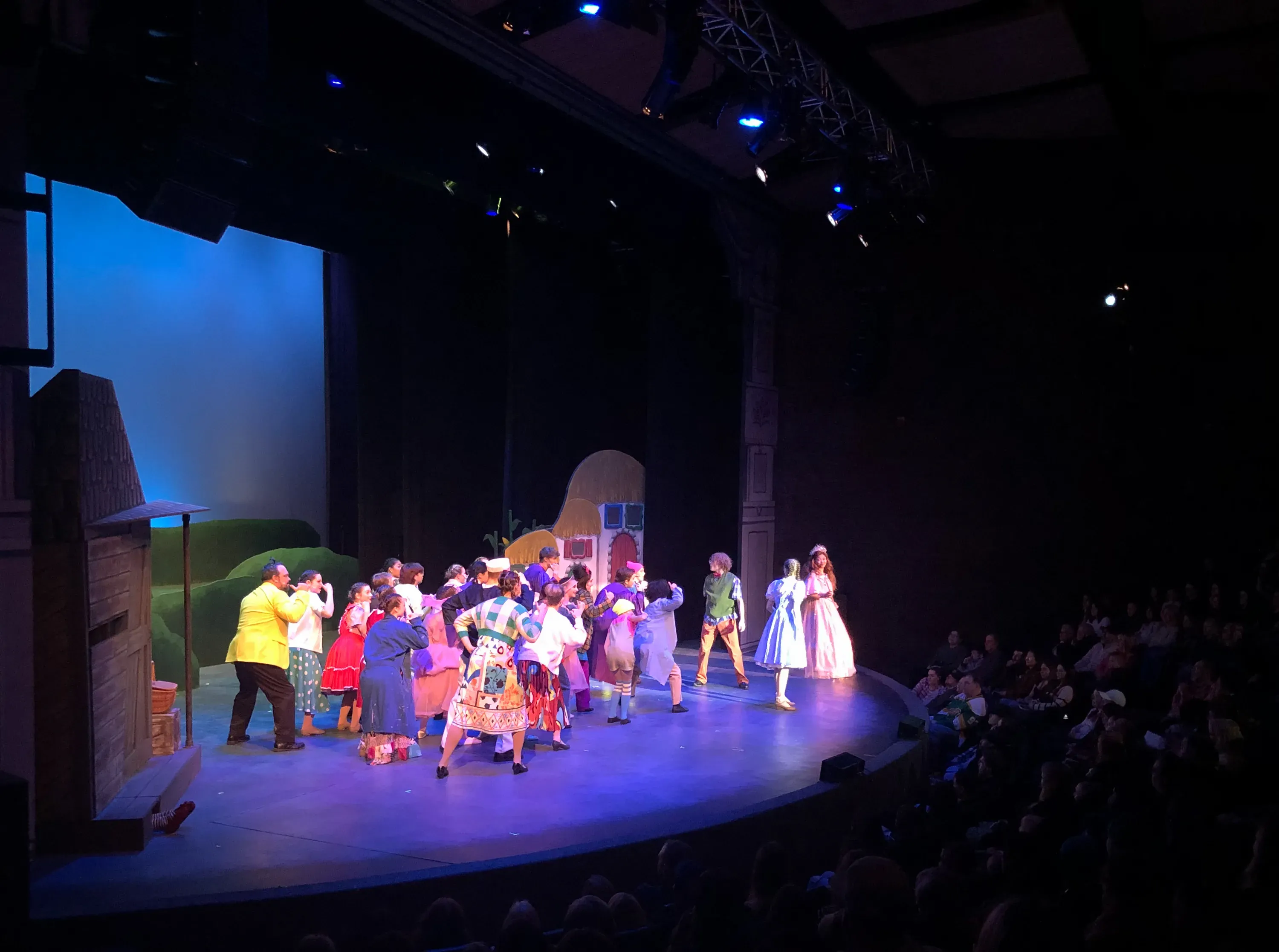
The props shop smells of various paints, from acrylic to spray. Animal cutouts mixed with large cardboard creations tower over felt piles. Next door, someone organizes flashy costumes of blues and greens while the sound of hammering comes from the stage as community members build sets for their upcoming performance of The Wizard of Oz.
Ashley Laurenson, an employee of Keyano College Theatre, stands in the aisle of the 500-seat venue facing the stage. The bustle seems large for the small municipality of Wood Buffalo in Alberta, Canada, and even bigger for the city of Fort McMurray. “Everything we interact with is some type of art,” says Laurenson, and it’s all “living out of spite in the middle of the boreal forest.”
As a nonprofit journalism organization, we depend on your support to fund more than 170 reporting projects every year on critical global and local issues. Donate any amount today to become a Pulitzer Center Champion and receive exclusive benefits!
Despite thriving and expanding alongside its city after wildfires and economic lows, this arts community faces new challenges. High property insurance leaves artists with a crunch for space, and the fluctuating funding of grants from entities associated with the oil sands proves difficult in acquiring new spaces and supplies. The community is also seeing a shift in priorities in one of its main institutional benefactors: Keyano College. With so many fronts pressuring the arts, the community pushes to build a resilience that will last independently of other institutions.
Artists in Fort McMurray have long requested more space for their work. Laurenson describes artists whose basements serve as studios because of high insurance premiums and losses from a 2016 wildfire.
“What do artists need in Fort McMurray?” Laurenson says, recalling surveys conducted by the Arts Council Wood Buffalo just after the 2016 wildfire, which destroyed a large portion of Fort McMurray.
“Artists said they needed space and supplies,” she says.
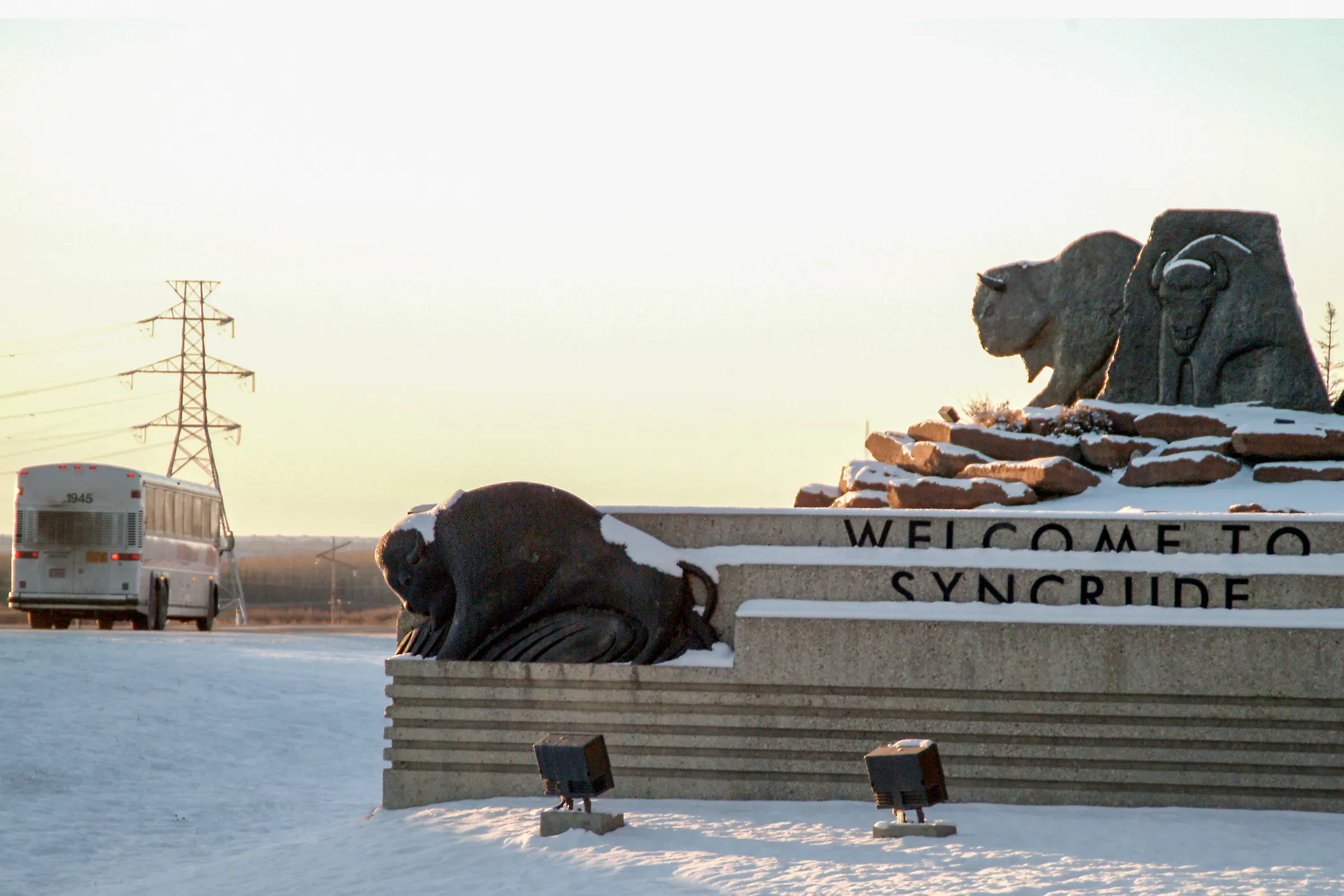
A large portion of funding for these spaces used to come from the oil sands, which now wanes in financial advocacy for the arts, leaving the arts community with a unique situation and question: How can it become financially independent from an industry that runs the city?
Chase Gargus, who runs communications at the Multicultural Association of Wood Buffalo, describes the art’s relationship with the oil sands as a “double-edged sword.” The oil companies have long provided funds for the arts, as evident by the oil company names that plaster every art building and gallery in the city.
Laurenson says they are “fantastic at giving back” with their volunteer programs, but funding has been dwindling ever since oil prices dropped back in 2014, according to local journalist Vincent McDermott. Laurenson says the Arts Council is “very financially minded for artists” because of the decrease in funds from the oil sands. “The hope is that Fort McMurray can outlast what the oil sands can do.”
From the effort to become less dependent on the oil sands, the Arts Council and the community worked together, creating Arts Inc. Starting in 2018, the Arts Council and artists alike have poured their resources and hope into a new building that will house studios and supplies for local artists.
Built from the skeleton of an abandoned cinema building, Arts Inc. is an arts incubator, a building dedicated to gathering and displaying artists and their work for the community. It will have music studios, culinary spaces, galleries, a theater, and workshops for various arts mediums across the region. Hanna Fridhed, co-founder of the local theater company Swamp Rat Experience, says this space was created to complement existing arts spaces and “fill gaps within the community.”
However, even with the arts community’s growth, Laurenson still refers to the arts scene in Fort McMurray as “underground art” because “for so long, art has been an afterthought in Fort McMurray.” Compared to other industries, the arts come second. On top of the oil sands, art is now coming second to Keyano College’s priorities of health care programs.
Today, Keyano Theatre, the largest world-class theater in northern Alberta, faces downsizing as Keyano College decides to expand its much-needed health programs that are at full capacity. It received $2 million from the provincial budget for health care programming alone, programs that report increased enrollment anywhere from 50% to 228%.
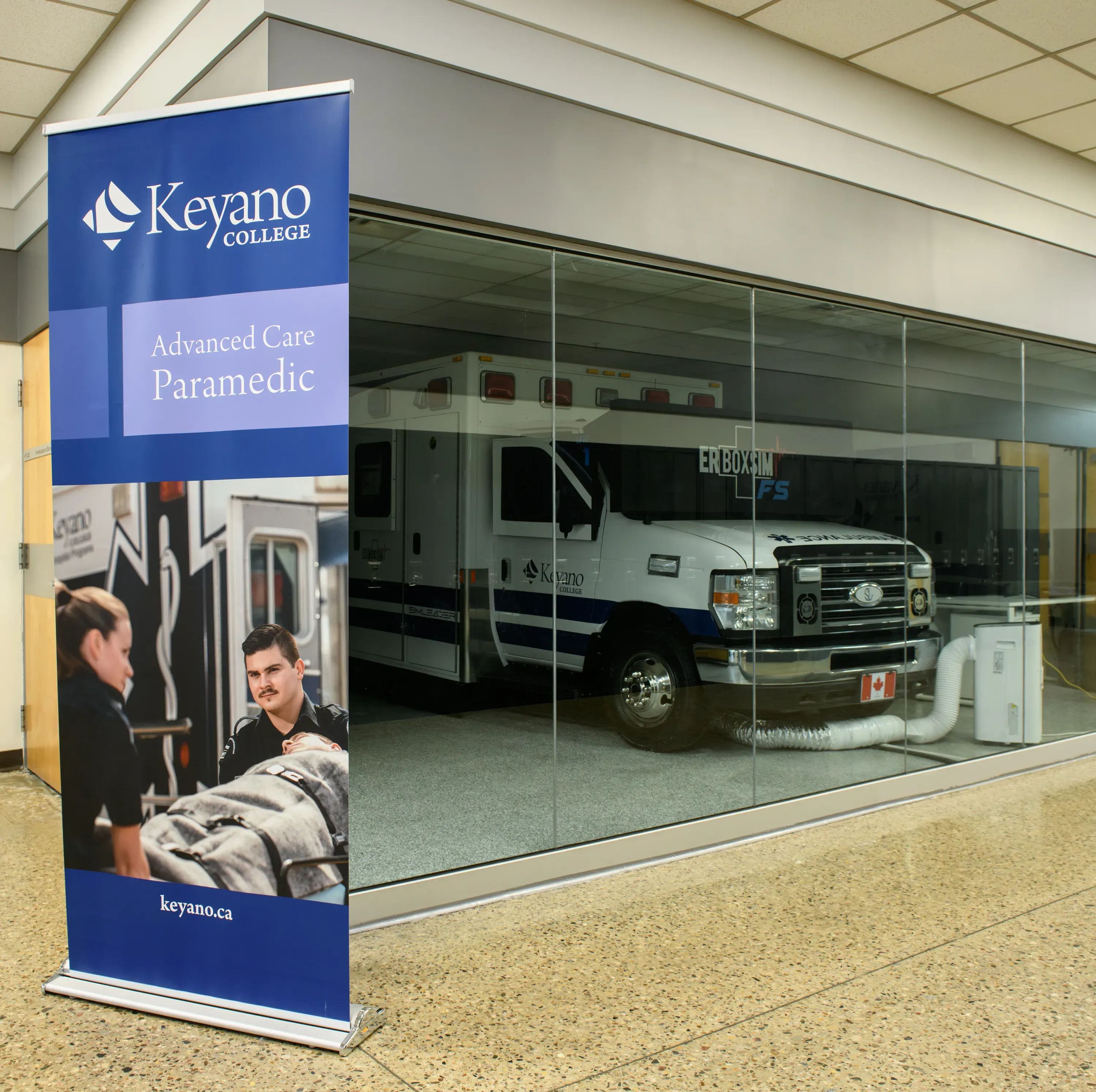
The college will repurpose several of the theater’s offices, studios, and smaller spaces that are all used primarily for the preparation of shows. The last downsizing of Keyano saw a dance studio repurposed into a room with a large vehicle to simulate skills needed in paramedics. This was only one of six spaces taken last year.
Regarded as “the heart of the arts scene” by community members such as Gargus, the news at Keyano Theatre is a blow to the entire arts community, not just theater. The space has grown in importance over the years, especially after the college cut its post-secondary arts education in 2014 due to low enrollment. It is one of the last few standing arts spaces in the college.
“Some people forget how important art is since it’s not something that makes a lot of money,” says Laurenson. Community members describe the arts as contributing to Fort McMurray’s growth, as it provided entertainment for the families that first moved there for work, leading to the attraction of even more people and businesses. Without the arts, Fort McMurray loses an environment to foster families, says Laurenson.
Even with Arts Inc. being built, it is not a suitable replacement for the visual arts studio that's being taken and was used for rehearsals and preparation for Keyano Theatre’s larger shows. The new theater in the incubator will only seat 32 people, a much smaller scale compared to the 500 seats that Keyano Theatre can support. Keyano Theatre’s ability to aid other local theatre companies also is limited in this space. Oftentimes, the Keyano will rent out equipment and human resources, or allow smaller companies access to its space to smaller companies around the city.
Laurenson describes programs the theater has sponsored, from theater camps to space for rehearsals. In fact, Keyano Theatre is the only one in northern Alberta with a flying rig, and many theater groups outside Fort McMurray will rent the space for their productions in order to use this system.
Laurenson describes the theater as “semi-professional,” meaning all their actors are community members, but the tech is run by professionals who share their skills with students and volunteers.
The community is “big enough to have multiple groups, but too small to compete with each other,” says Zachary Barrett, a stage manager and technician in Fort McMurray.
This dynamic has built a strong community in the arts. However, this could change if Keyano Theatre no longer has space or resources to rent out.
In the past, artists have had to compromise on space, supplies, and their craft in order to continue any semblance of art. Even when there was more funding from the oil sands, artists still needed multiple jobs and looked to outside sources for more financial resources.
Laurenson herself is a filmmaker, co-owner of the small film production company M’Guphynn Media, and the facility and events coordinator at Keyano Theatre.
“Everyone has their toes in several things,” she says. It is partially due to opportunities available in the community, but also largely due to financial need. Her group gets some of its funding from Story Hive, a filmmaking grant system, because it cannot rely on the oil sands’ funding as it once did.
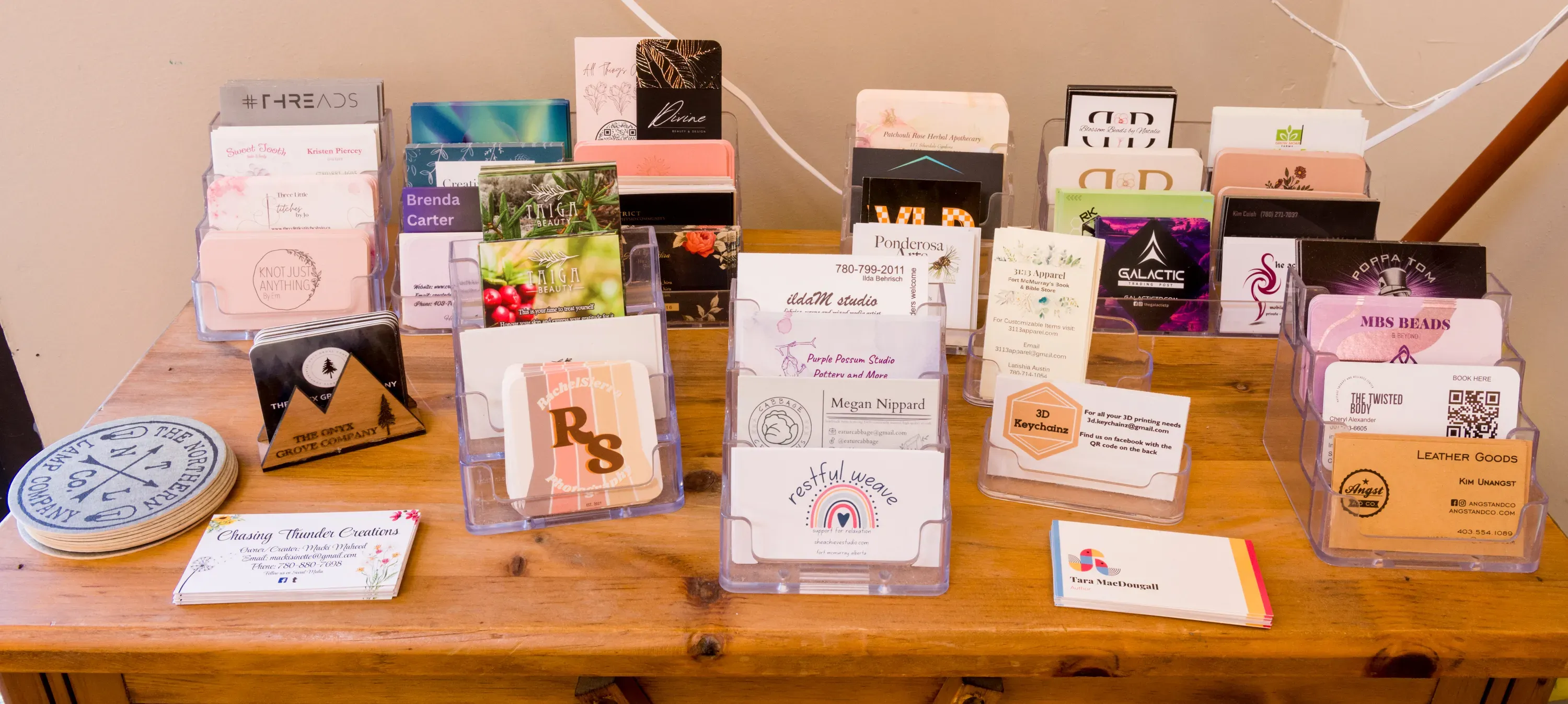
Another compromise has been in the use of the limited spaces. Along the streets are shops called corridors, which house multiple artists who sell their work. The entrances greet you with wooden tables filled to the brim with artists’ business cards. The walls behind are heavy with carved wood, paintings, and little knickknacks of varying material.
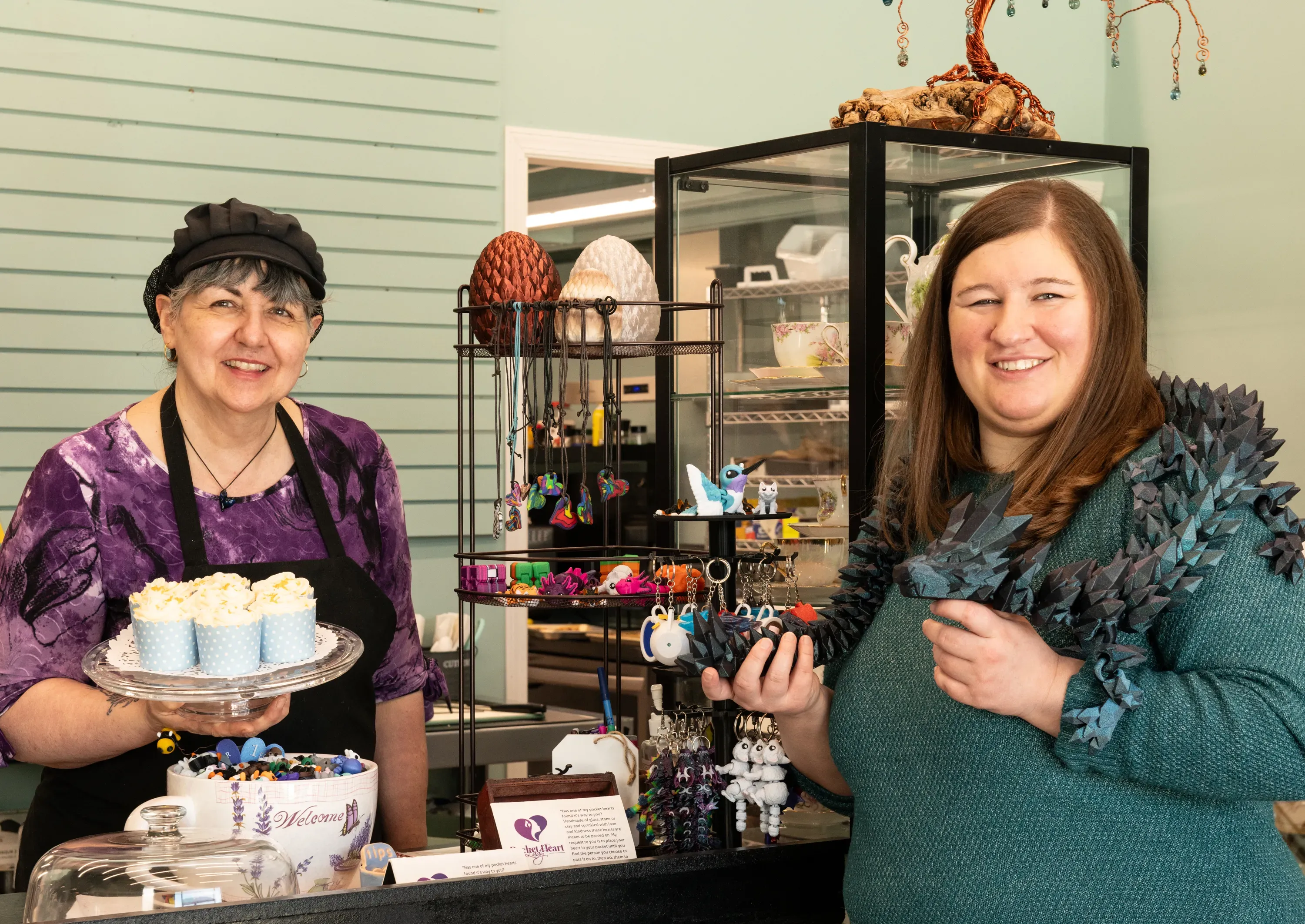
Pocket Heart Café is one such store, a local spot for fresh soup and sandwiches and home to a handful of artists, each with their own medium. The small store is run by Aileen Park, who came to Fort McMurray in 2014, like many others, "on a five-year plan.” Ten years later she still greets friends and strangers alike with a hot cup of soup. In the opposite corner, a local framer standing behind her counter with wooden frames from Italy hang behind her.
Artists have prints or photographs for sale along the wall next to shelves of 3D-printed animals and bookmarks made by Shallon Thacker. In yet another corner stands a glass shelf with meticulously made small clay figures. In just one shop that seats barely a dozen people, five different artists display their work.
Park herself is an artist. In a wooden bowl on the counter is a collection of painted clay hearts where her café gets its name from. She’s made thousands of them. Perhaps her most important artwork, however, is a glass-blown teardrop necklace that contains ash from the 2016 wildfire.
Art became her coping mechanism when disaster struck her community, and she was not the only one. After the wildfire, many artists lost their studios or space. While the city worked on homes, shops, and other necessary infrastructure, families and artists looked to build a new space from the ashes.
“You can sometimes forget the oil sands are here … unless it smells. We [the arts] get forgotten all the time,” says Laurenson.
Nevertheless, the arts community is not going silently. The Arts Council approached the Regional Municipality of Wood Buffalo to find replacements for the spaces being lost at Keyano Theatre.
Fridhed was one of the many community members who approached the Regional Municipality in a community meeting after a petition she started received almost 2,500 signatures to preserve the spaces. She recognizes that the municipality has no say in what the college does with its spaces, which is why she advocates for new creative studios, not just stages, to be built by the municipality—separate from an educational entity.
There has been “overwhelming support to keep spaces as is, but there has been a bit of defeat. We have seen it happen in several instances before,” says Fridhed. The previous closures happened “behind the scenes” with little to no public announcement. So community members were unaware of spaces being gone until months or even years later. It all “disappears quietly.”
Fridhed emphasizes the workshops and studio spaces that she refers to as “kitchens,” where the ingredients of the show come together: costumes, backdrops, and props.
“We already have the tables … but we need a kitchen so we can create theater.”


