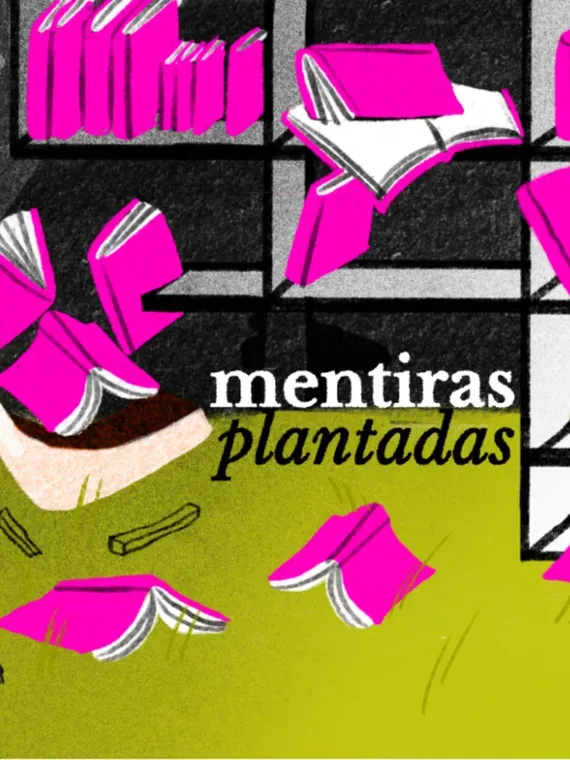


The project Sowing Lies (Mentiras Plantadas in Portuguese) investigates the advance of a new frontier in Brazil's agriculture industry: the field of education.
This series of reports reveals how a non-governmental organization funded by agribusiness has been pressuring the publishing industry to improve agribusiness’s image through new school textbooks.
Accusing current textbooks of spreading “disinformation,” the agribusiness lobby seeks to remove content that links the industry to deforestation, climate change, land conflicts, and contemporary slavery.
This project's journalists interviewed more than a dozen publishing professionals who, under anonymity, detailed the methods used by the De Olho no Material Escolar (Keeping an Eye on School Supplies) movement, also known as Donme, to try to promote false claims to students, as well as the strategies educators have employed to resist this pressure.
Through alliances with publishing owners and public authorities, however, the agribusiness lobby has already scored some victories. A comparison between textbook editions shows how the term “pesticides” has been replaced by softer expressions, downplaying their potential social and environmental harms. It is also increasingly common to find passages that praise the use of technology in farming or the sector’s impact on Brazil's economy.
The investigation also shows how the spread of a pro-agribusiness narrative is directly linked to the growing commodification of education in Brazil, with the expansion of private school systems and the weakening of the PNLD (the Brazilian national textbook program).


