


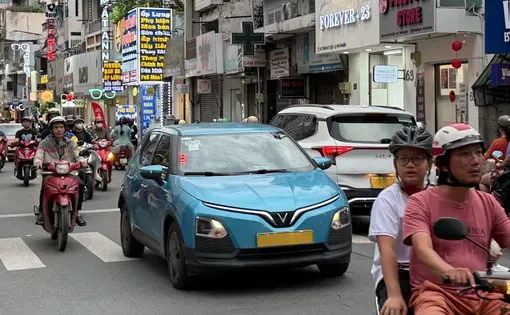
As demand for EVs rises, so does the need for tires made with natural rubber.


Across the country, rubber plantations built on land concessions are stripping Indigenous communities of their forests

Minh Ny and his family reside in a wooden house in Srae Chang village, Kampong Thom province, central Cambodia. They grow three hectares of rice, cassava and cashews.

Their farmland was once within walking distance of Prey Lang, Cambodia’s great rainforest, which the Kuy Indigenous people have called home for generations.
In their language, Prey Lang means “our forest.” In this home and sanctuary, vines sprout, wild fruit blooms, animals roam and ancestor spirits return to the trees. People and the forest lived as kin – one feeds, the other protects.

That bond began to break two decades ago. The government granted vast land concessions that gave away protected and community forests to private companies. And then along came rubber plantations.
The forest, once a food source and spiritual entity, was transformed into commodities – tires, gloves and shoes for faraway markets.

Vietnamese firms are major investors in Cambodia’s rubber industry. Since 2010, they have obtained approximately 200,000 hectares of land, an area equivalent to three times the size of Cambodia’s capital, Phnom Penh. Most of this land was previously classified as forest.
For Minh Ny and hundreds of Kuy Indigenous families, the concessions felt like a death sentence. Suddenly, they were cut off from their main source of food, medicine and livelihoods. When they rose in protest, the response was swift and harsh.
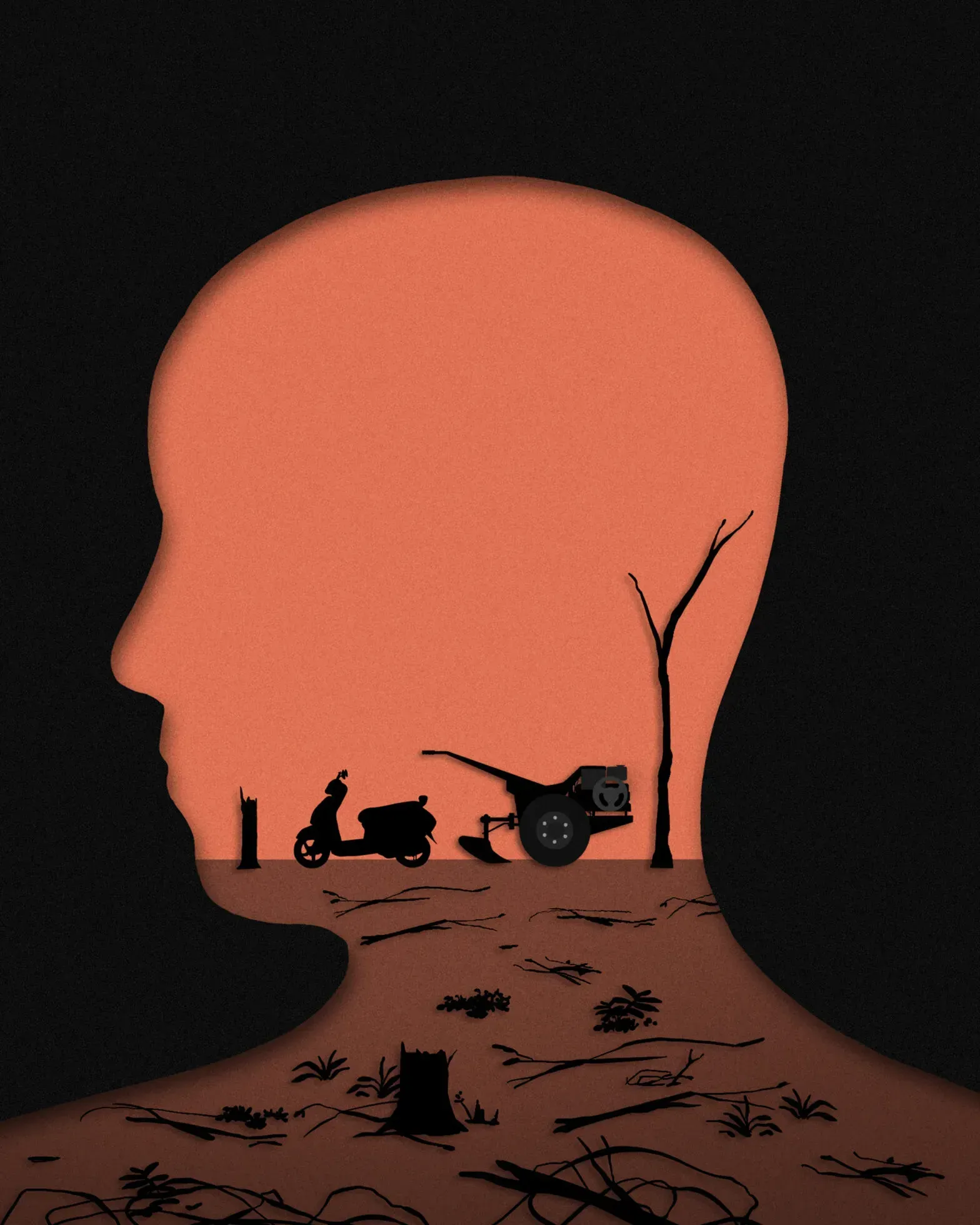
What was once abundant is now scarce. Without the forest, Minh Ny’s most valuable possessions today are a motorbike and a walking tractor.

In Ratanakiri province in northeastern Cambodia, the Kreung and Brao Indigenous peoples faced the same fate.
Chanthea, a 35-year-old Brao woman, watched helplessly as a Vietnamese rubber company felled the forest around her village. Her family was forced to abandon their forest and move to a slope where crops struggled to grow.
“We believe that some spirits live in the forest, and we believe our crops will not grow well if trees are cut,” she said. “There is either too much rain or no rain at all. The ancestral spirits are not happy.”

Like many others, Chanthea’s husband, her brother and her sister-in-law had no choice but to work as rubber tappers for the same company that destroyed their forest.
Each earns about US$120-150 a month, a meager trade-off for the abundance once provided by the forest.

In another corner of Cambodia’s northern Preah Vihear province, Kuy farmer Khut Soeum lost his rice fields to yet another Vietnamese concession inside the Prey Lang Wildlife Sanctuary. There was no compensation, no official notice.

Yet Soeum refused to surrender. With what remains of the forest, he and other villagers formed a voluntary patrol, venturing into the woods each month to guard against further destruction.

“If we don’t protect the forest, we will lose it forever. I grieve that the land of our ancestors has been taken over,” Soeum said quietly.
Rubber plantations across Cambodia, in many cases, were on land that was once someone else’s home.
Stories of Minh Ny, Chantea, and Soeum from three Cambodian provinces are not theirs alone.
The patch of forest near their home survived the birth of rubber production under French colonization, then decades of wars and conflicts throughout the 20th century.
However, it did not survive the rubber price surge in the 2010s, which triggered a rubber boom in Cambodia and led the government to incorporate the industry into existing land policies, attracting tycoons, politicians, and foreign investors.
Between 2001 and 2012, under the 2001 Land Law, Cambodia permitted economic land concessions (ELCs) of up to 100,000 hectares and lasting up to 99 years, although the actual duration was eventually reduced to 50 years.

As a nonprofit journalism organization, we depend on your support to fund more than 170 reporting projects every year on critical global and local issues. Donate any amount today to become a Pulitzer Center Champion and receive exclusive benefits!
These ELCs were intended to spur investment and rural development. Instead, they fueled deforestation and the displacement of Indigenous and Khmer communities.
At the start of the millennium, Cambodia had more than 34,000 hectares of active rubber production. More than two decades later, this figure increased tenfold in 2023, according to FAO data.
Roughly within the same period, Cambodia lost 29.5% of its forest cover between 2001 and 2021. Up to 40% of this deforestation was linked to ELCs, a 2022 study found.
In 2012, facing growing protests from villagers and concerns about disappearing wilderness, then-Prime Minister Hun Sen paused these ELCs. A decade later, in 2022, Cambodia resumed these concessions, raising fears of igniting new land conflicts.
Cambodia grows rubber for its domestic market, but most of its output ends up in the hands of Vietnamese rubber companies, who sell it to producers — including Chinese and global tire makers, whose products enable the EV transition worldwide.
A key link in this supply chain is Viet Nam. While the country’s own EV transition has driven some demand, its geopolitical advantages have enabled more rubber processing and tire production.
During the first Trump administration’s trade war with China, it hosted an influx of Chinese firms and became a key trade partner with U.S. and European tire companies.
Demand is likely to increase as Viet Nam’s own EV transition takes shape. Major cities have planned to phase out gasoline-powered motorbikes as early as 2026, and offered tax breaks and low-interest loans to EV producers and buyers. Since 2022, EV sales have jumped almost tenfold.
The tire industry consumes more than 70% of global natural rubber. Analysts at the Viet Nam Rubber Association say the global EV boom is now one of the key drivers of rubber consumption. They expect continued growth.
Meanwhile, Viet Nam produces only about 40% of its processing needs, despite owning many hectares of rubber plantations.
To fill this big gap, both Vietnamese state-owned and private companies have looked to Cambodia and Laos.
In 2023, Viet Nam imported 1.4 million tons of raw rubber, most of which was re-exported to China. Up to 80% of this volume comes from Cambodia and 11% from Laos, according to a Forest Trends report.
“Vietnamese firms are backed by deep ties with ruling elites and entrenched local business networks,” said Nguyễn Khắc Giang, a research fellow at the ISEAS-Yusof Ishak Institute.
“That political capital secures them a privileged position, even at moments when anti-Vietnamese sentiment runs high in Cambodia,” Giang added.
Viet Nam Rubber Group (VRG) is Cambodia’s largest rubber investor. Through complex paths, VRG rubber is supplying certain EV tire markets around the world.
The group supplies major Chinese rubber firms Newfortune and Mainland, as well as tire giants Goodyear, Bridgestone, and Kumho.
One of its biggest customers is Sailun, China’s second-largest domestic tire brand. Sailun has developed EV tires that it claims fit nearly 90% of models on the market and sells them to more than 180 countries.
Many EV makers buy Sailun tires, including Toyota, Chinese brands BYD, Geely, Great Wall and Vietnamese brand VinFast.
Sailun, calling VRG its “closest partner,” has pledged to ramp up purchases from VRG’s operations in Cambodia and Laos.
According to supply-chain data from a tech firm, Sayari, VRG in Cambodia also supplies Chinese tire maker Jinyu, which runs a factory in Viet Nam near the Cambodian border, producing EV bus tires.
Another key customer of VRG is Hiệp Thành, which supplies Triangle Tyre, China’s eighth-largest tire maker, producing EV tires for export to South and North America.
Sintex, a major partner of VRG, supplies rubber to Taiwan’s Cheng Shin, which produces electric motorcycles and car tires under the Maxxis brand, and later exports them to China and global markets.
R1 International, a subsidiary of Hainan Rubber and supplier to major EV tire manufacturers, including GiGi Tire and JK Tyre, also sources rubber across Southeast Asia, including via VRG.

On the other hand, Cambodian rubber is reaching EV markets directly without Vietnamese intermediaries like VRG. Chinese companies such as BYD are setting up shop in Cambodia’s special economic zones to avoid the U.S. tariffs.
At present, there are six Chinese tire plants either in operation or under construction in Cambodia.
These investments have surged along with a spike in Cambodia’s EV market. In 2024, new registrations rose 620% from 2023.
Mekong Eye contacted VRG, Sailun, and Hainan Rubber Industry Group via the official emails listed on their websites to request clarification on their rubber traceability systems, but did not receive a response.
While EVs with tires made from Cambodian rubber roll on Hanoi, Shanghai and San Francisco streets, land concessions remain a battleground for Cambodia’s Indigenous people.
Vietnamese investors alone own roughly one-third of Cambodia’s total ELCs, most of them for rubber production, data from nonprofit LICADHO shows.
VRG is responsible for one-third of Viet Nam’s rubber production. It operates an area the size of Hong Kong, about 100,000 hectares.
In 2013, Global Witness accused VRG of clearing at least 50,000 hectares in Cambodia, including protected areas and Indigenous territories. Forest Steward Councils (FSC), a global non-profit organization that promotes responsible forest management, revoked VRG Cambodia’s certification in 2015.
VRG dismissed the allegations and maintained its projects were sustainable and lawful due to the land acquisition approval by the governments of Cambodia and Laos.
VRG recently announced plans to expand by 40,000 hectares in Cambodia, raising concerns of renewed forest loss and land conflict.
Other Vietnamese companies have also expanded aggressively. Hoàng Anh Gia Lai (HAGL) secured tens of thousands of hectares in Ratanakiri for 50-70 years, much of it overlapping Indigenous Jarai, Kachok and Tompoun territories.
Allegations of land grabbing, the destruction of sacred sites, and forced displacement led 17 Indigenous villages to file a complaint with the World Bank’s Compliance Advisor Ombudsman in 2014.
Despite promises to return land, clearing allegedly continued during Covid-19 lockdowns. HAGL denied wrongdoing in an interview with Vietnamese state media, saying the land was a degraded forest and the project created jobs.
“These ELCs severely impact the livelihood and culture of both Khmer and Indigenous households,” said Naly Pilorge, LICADHO outreach director. “A systematic failure to conduct meaningful social and environmental impact assessments resulted in an opaque process. Communities often learned of concessions only after approval.”
“Rubber cultivation has impoverished Indigenous communities, driving many to abandon their villages,” Roy, a Cambodian NGO leader, told Mekong Eye. “It has brought roads and jobs, but benefits are far too small compared with what we’ve lost.”
VRG, HAGL, and Thaco Group — to which HAGL transferred its rubber holdings in Cambodia and Laos — did not respond to Mekong Eye’s interview requests.
Rubber flows from Cambodia to Viet Nam not only via concession-holding firms, but also through layered traders and smallholders, who manage less than four hectares on average yet hold more than 40% of Cambodia’s rubber area.
Rubber from smallholders is often exported raw via middlemen, according to a Forest Trends report. Farmers in Kampong Thom and Ratanakiri told Mekong Eye they sell coagulum directly to Vietnamese traders or local collectors, with little to no record-keeping.
Before crossing the border, rubber from multiple sources is lumped together, making traceability impossible in many cases.
VRG, which sources more than 15% of its rubber from smallholders across Cambodia, Laos and Viet Nam, acknowledged gaps.
A Viet Nam agriculture ministry official admitted that rubber imported from Cambodia and Laos cannot be fully traced and is blended with the domestic supply before processing and exporting to China and beyond.
Efforts such as the EU Deforestation Regulation (EUDR) and certification schemes like FSC have sought to curb deforestation and improve traceability. Yet compliance, especially finding proof of deforestation-free sourcing, remains a challenge.
As of December 2024, only three of VRG’s 63 subsidiaries across Viet Nam, Laos and Cambodia had met EUDR standards.
In September 2025, the group reported that 81% of its Cambodian plantation area had “completed or was close to completing” EUDR compliance.
However, its subsidiary Chư Sê Kampong Thom, a key supplier of Sailun, remains suspended by the FSC due to past deforestation accusations and has yet to be reinstated after a decade-long suspension.
“FSC is not engaged in a dialogue with VRG for the implementation of the FSC Remedy Framework. But we’re open to discussions with any organization interested in pursuing a remedy process, including VRG,” FSC International told Mekong Eye via an email, referring to its framework that addresses companies’ past social and environmental harms to the forests.
VinFast, a customer of Sailun, told Mekong Eye it has some traceability mechanisms in place.
“All OEM tire suppliers must sign a commitment to comply with VinFast’s Supplier Code of Conduct and Sustainable Supply Policy, in which VinFast requires partners to not only comply with the law, but also share a commitment to people, the environment and business ethics,” said ESG director David Edgardo Falcon Adasme.
"When risks are detected, VinFast applies a verification process and requires remediation, and may suspend cooperation if the supplier commits serious violations."
In Ratanakiri, families who lost farmland to rubber concessions have cleared new plots in the remaining forest.
Many Indigenous people, still being displaced from their ancestral land, now tap rubber for a Vietnamese company under low wages and high malaria risk, without protection or compensation.
“Some girls in my village have had to leave school and marry early after their families lost their livelihoods,” said Sa, a Jarai community member and NGO worker.
With few alternatives, young workers have been drawn to Chinese tire manufacturers, enduring long night shifts and frequent overtime in the heat radiating from production lines. Yet for many, the factory still offers a “better environment.”
Nit, 20, who doesn’t want to be a rubber tapper her entire life like her parents, hopes to save enough factory money to one day become a police officer.
“Rubber can make money,” Nit said from her rented room of less than 12 square meters. “But it wasn’t enough for me to continue my studies. I had to stop after high school and go to the factory.”
Her hands bear burn scars and thin black streaks from handling heated rubber slabs, which soon would be molded into tires.
Editor’s note: An earlier version of this article included Michelin among companies linked through supply-chain pathways to rubber sourced from Viet Nam Rubber Group (VRG), based on the information provided in VRG’s 2024 annual report. Michelin later clarified that it has not sourced natural rubber from Cambodia for several decades, has no plans to do so, and does not purchase rubber from Laos or Myanmar. The company also stated that it does not buy rubber from VRG or any of its subsidiaries, citing concerns related to Cambodia’s Economic Land Concession (ELC) scheme.


