


Both cities are plagued by flash flooding and extreme heat.
A small coastal village in Vietnam is hoping to slow the tide with mangrove saplings, but experts caution that real change requires tackling the root causes.
VĨNH LONG, VIETNAM — Nguyễn Trường Sinh was 11 years old when tropical storm Linda swept through southern Vietnam and claimed more than 3,000 lives in November 1997.
Walking back from school, Sinh remembers wading through thigh-deep water as his family fled to higher ground.
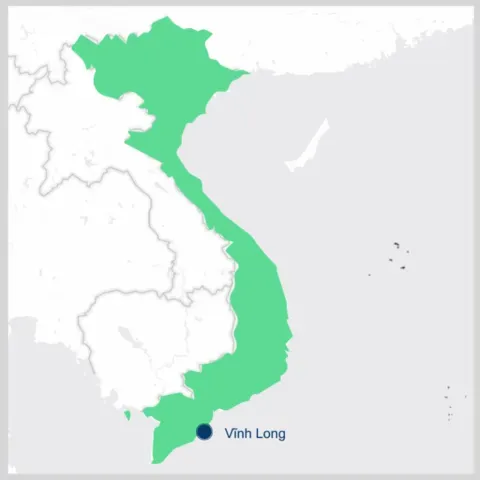
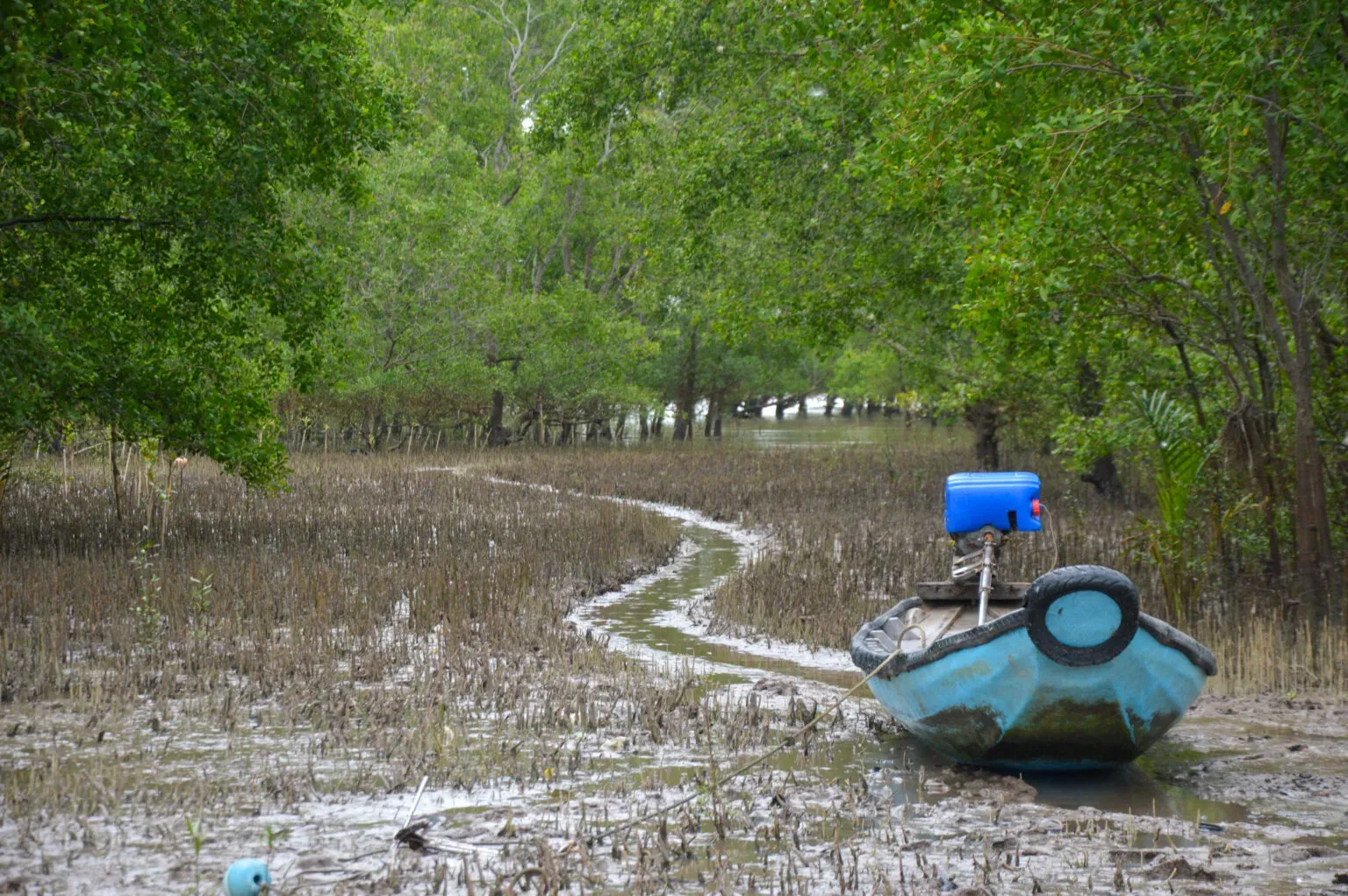
That year, Mỹ Long Nam, a small coastal commune by the Cổ Chiên River in Vietnam’s Mekong Delta where Sinh grew up, was battered. The following year, the community took matters into their own hands, fortifying the coast with native plants like corks and mangroves — hoping to slow coastal erosion and build a natural buffer against storms.

As a nonprofit journalism organization, we depend on your support to fund more than 170 reporting projects every year on critical global and local issues. Donate any amount today to become a Pulitzer Center Champion and receive exclusive benefits!
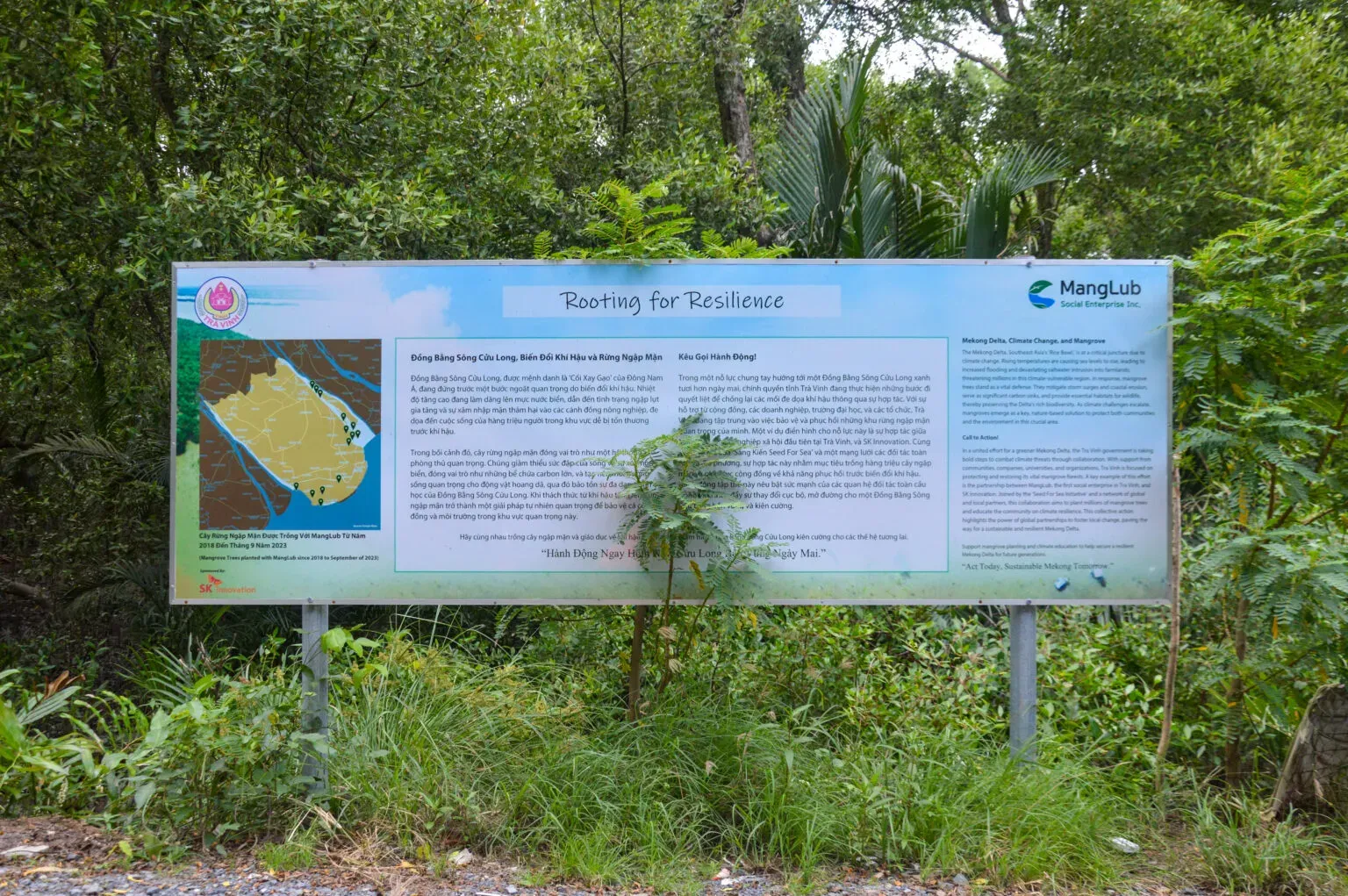
In the past 25 years, commune residents have transformed the bare riverbank into 500 hectares of mangroves that shield local farms from the sea. The planting started as a community effort, then it was supported by a partnership between the Vietnamese government and the World Bank from 1998 to 2008. It later drew funding from the nonprofit MangLub in 2020, which is funded by the Korean oil company SK Innovation.
A rich ecosystem now thrives above and under the water. Honey bees seek refuge in the foliage, while eel-tailed catfish, sea crabs, cockles and mudskippers live among the tangled roots — a marine life nursery that also filters seawater.
This rich ecology has created new sources of income for the commune residents and those of neighboring districts as they harvest honey, crustaceans and fish to sell, Sinh said, while providing new opportunities for ecotourism.
“People feel safe and more assured when the tide rises,” said Sinh, who is now in his mid-30s and the vice-chairman of his hometown.
Mangrove forests are key to fighting floods, coastal erosion and alleviating salinity — but in addition to decimation due to bombing and herbicides during the war, the delta lost the most trees between 1976 and 1990, when the country converted large swaths of forests to agricultural land to rebuild itself.
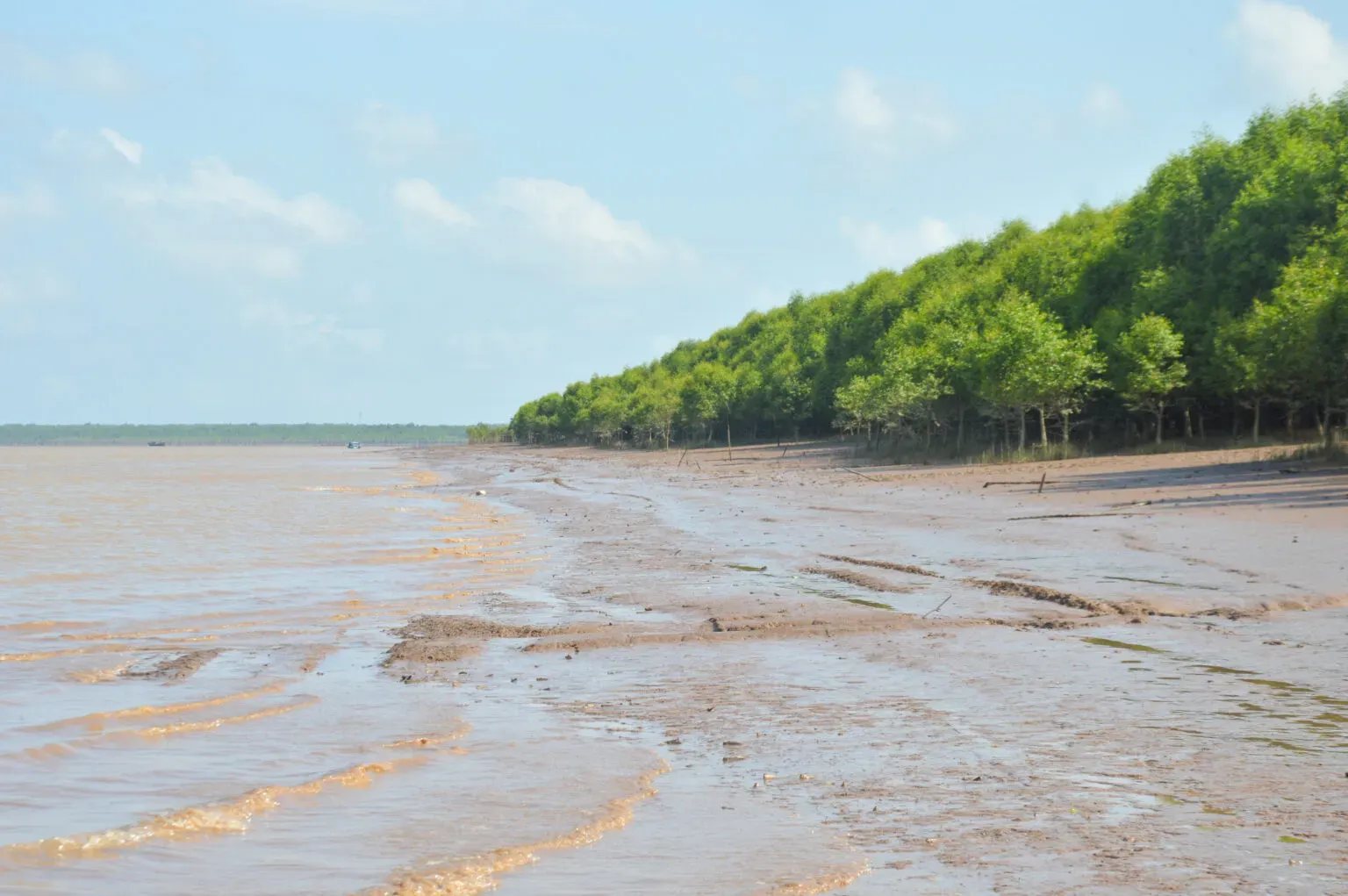
Mỹ Long Nam is among several communes in the delta that have seen a significant revival of mangroves during the last few decades, thanks to planting efforts. According to a 2022 study, the former provinces of Tiền Giang, Bến Tre, Trà Vinh, Sóc Trăng, Bạc Liêu, Cà Mau and Kiên Giang have seen approximately 2,237 hectares of annual new growth between 2015 and 2020.
It is a sliver of hope in a delta that is sinking, corroding and becoming salinized at unprecedented rates. Yet mangrove restoration will be increasingly challenging, especially as sea levels rise.
A drop in the sea
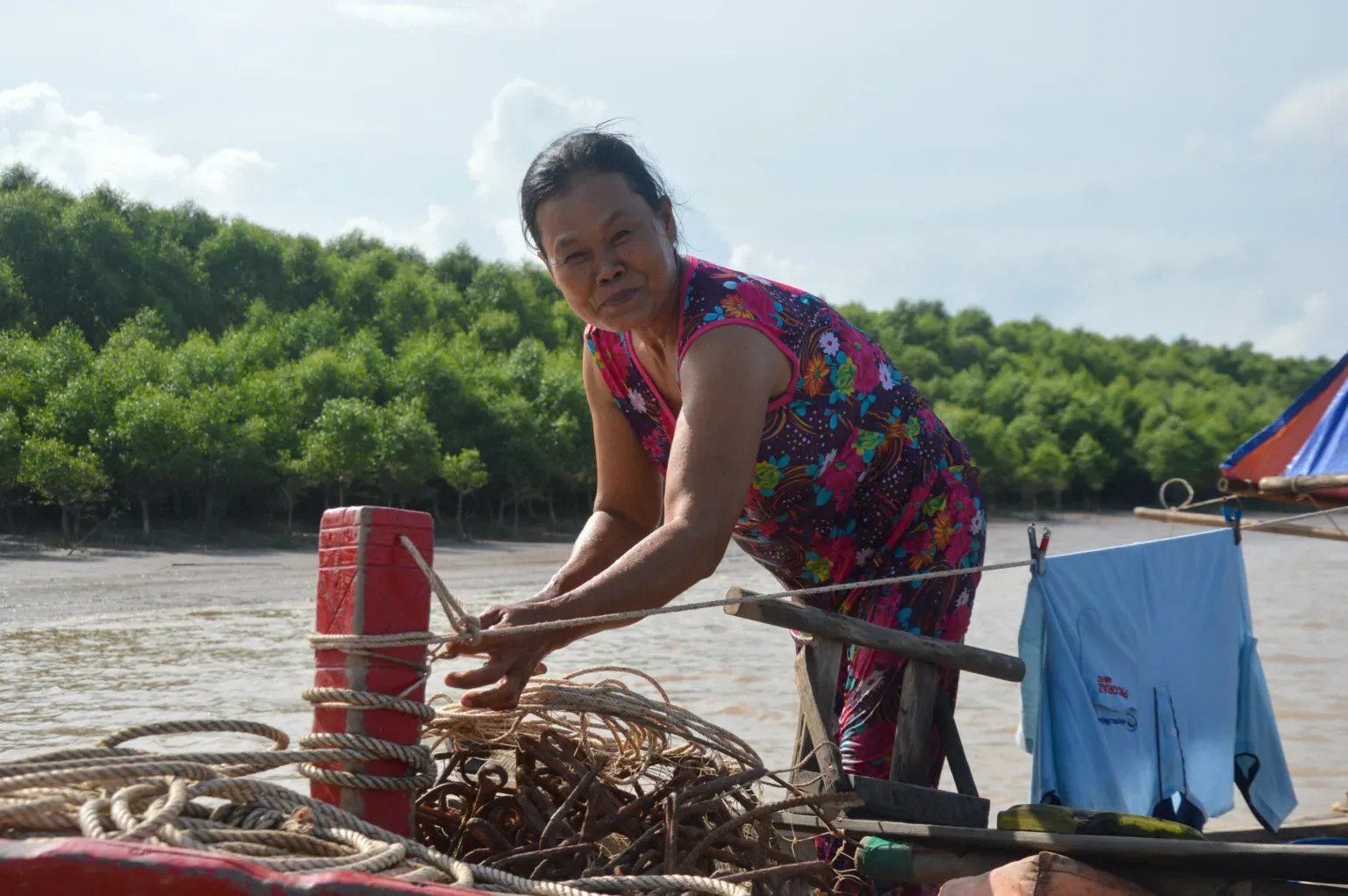
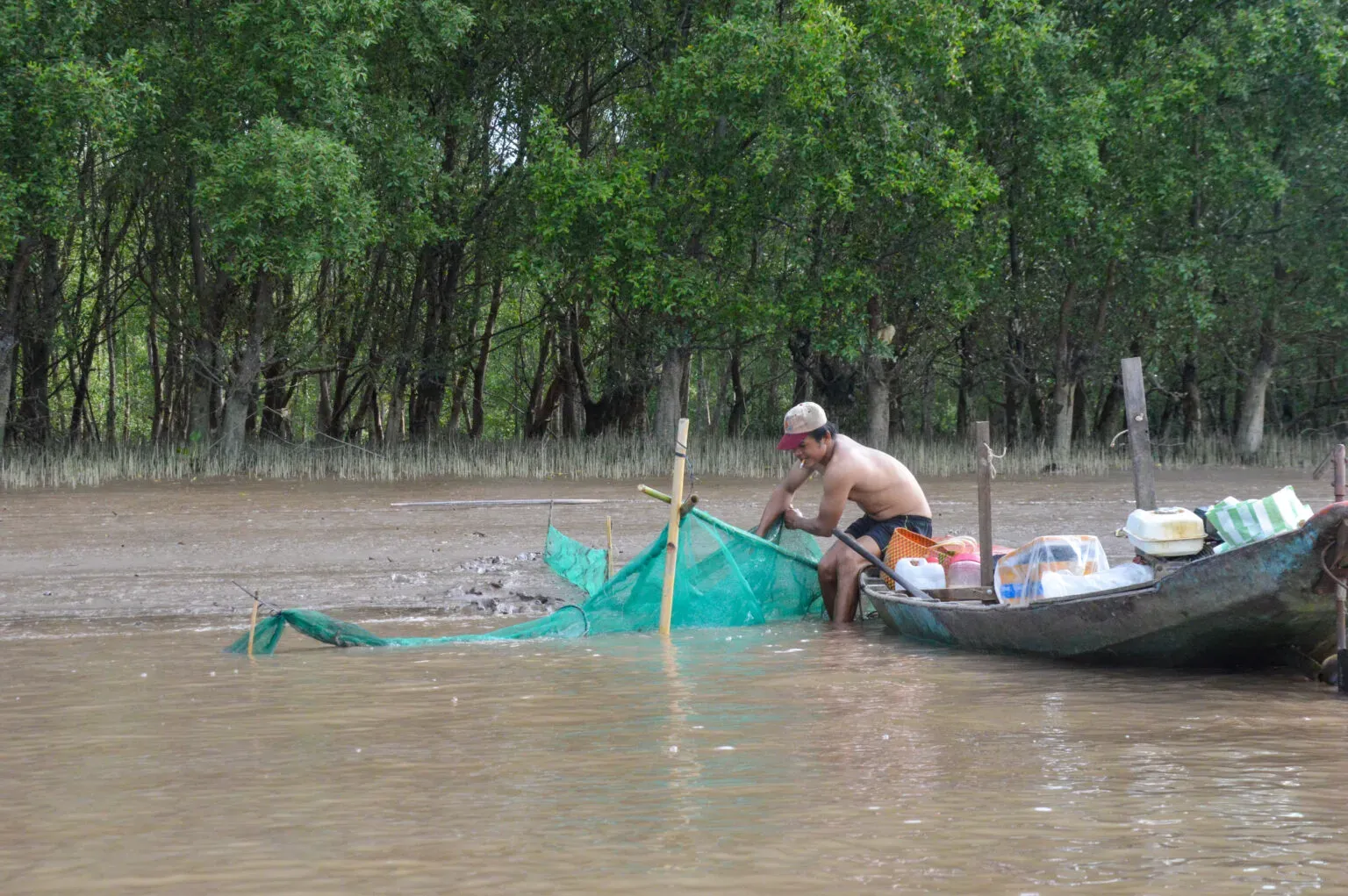
On Cồn Nghêu, or “Clam Islet,” Mỹ Long Nam’s second planting area that can only be reached by boat, locals live closely with nature. Named by local residents for its population of mollusks and cockles, it is a popular fishing spot.
When reporters visited during the summer of 2024, families were casting their nets, preparing meals and hanging laundry from boats anchored near its shores. Local fishermen sold freshly caught mudskippers straight from the net. Some bathed in the river in the mid-day sun.
Together with the 500 hectares on the mainland, these 400 hectares of young mangroves help protect farms and homes on the mainland from strong winds and rising tides.
They have also served as a local defense against the eroding coastline, as new land formed from sediment can easily be washed away.
But replanting is an arduous task for both the planters and the fragile saplings, especially under scorching heat and rising tides.
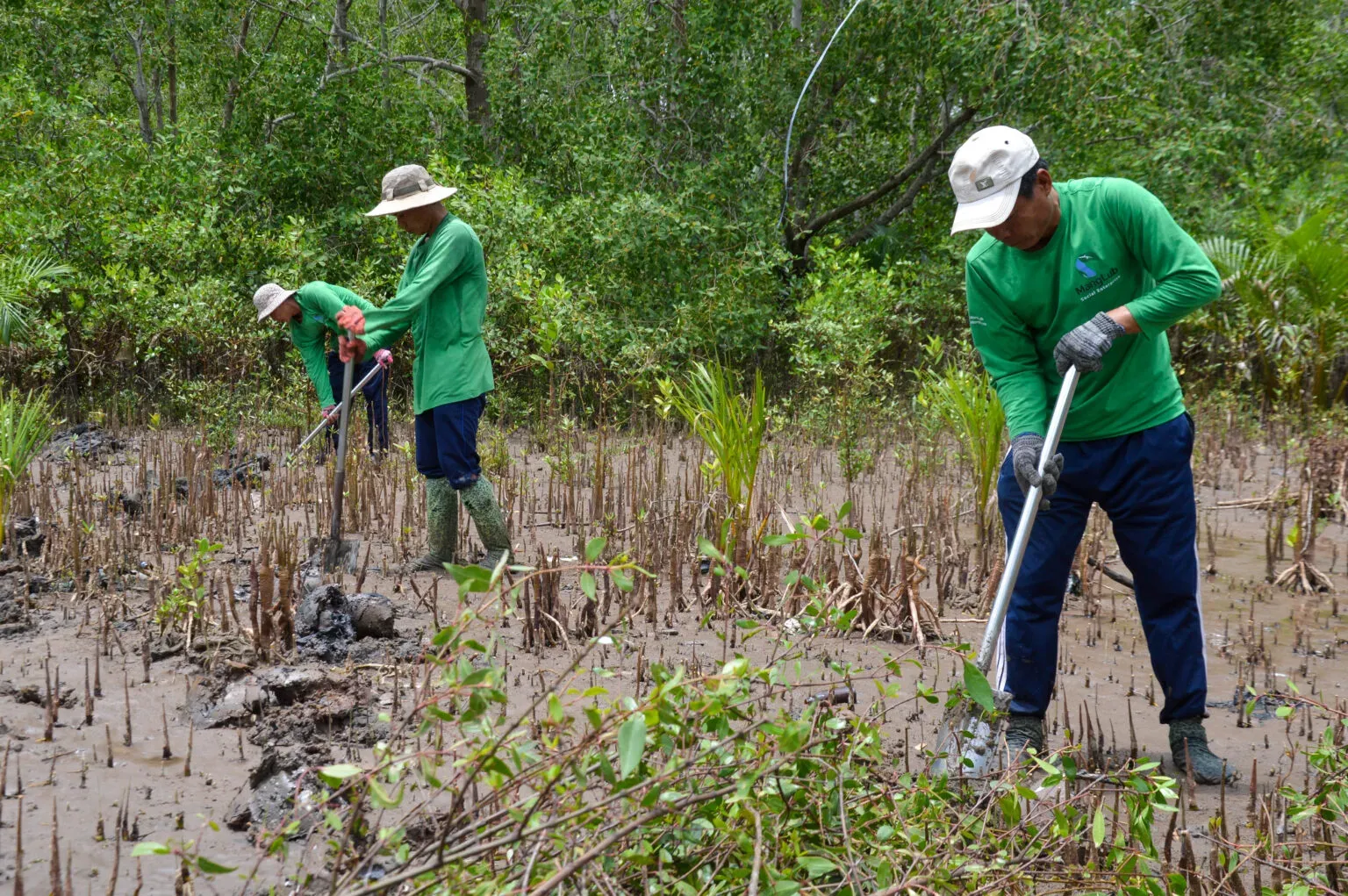
Planting days in Mỹ Long Nam start early in the morning, between May and December. In the scorching heat, residents head out with shovels, donning sock-like boots for the mud and wide-brimmed hats for shade.
Amid rising tides, young saplings struggle to breathe, needing specific cycles of exposure and inundation. Prolonged flooding can suffocate them, so locals built a barrier of coconut and bamboo logs to block the heavy tides and keep the land from sliding into the sea.
Cồn Nghêu is made entirely of accumulated sediment. Via satellite images, it appears to have emerged out of thin air and slowly became a green barrier at the estuary.
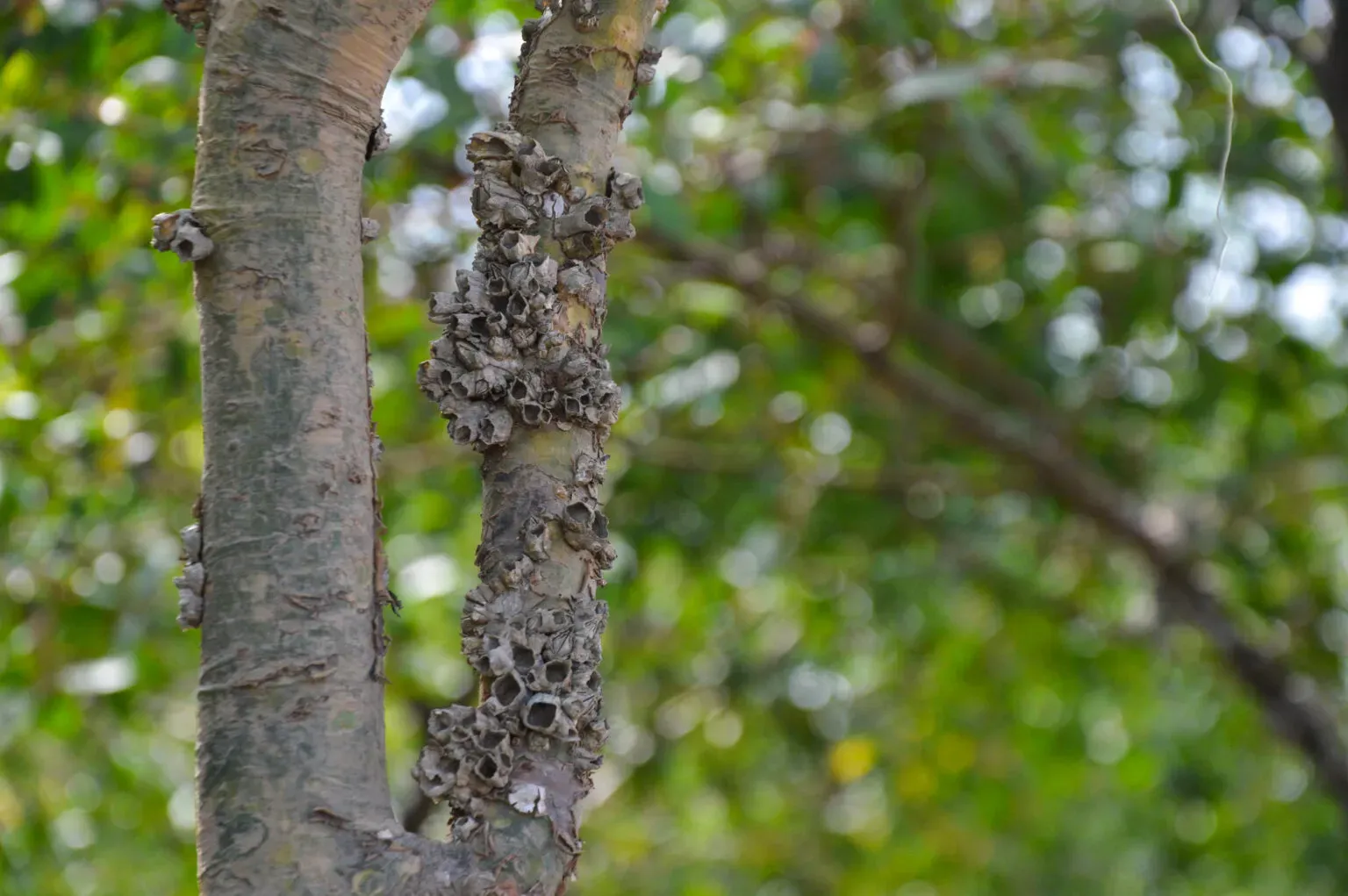
Planted between 2020 and 2022, these trees are sturdier than the mainland saplings, yet high tides still reach them — scraps of plastic and barnacles cling several feet up in the young canopy.
Living in partnership with the environment is Vietnam’s best strategy for resisting the coming changes, according to Võ Thành Danh, a professor of economics at Cần Thơ University.
“Vietnam doesn’t have enough resources to go against the almighty,” said Danh, “so the solution is to develop in harmony with nature.”
Other interventions like large-scale sea walls would not be possible in Vietnam due to financial burdens, said Danh. He stressed that such interventions are also not suitable for the delta, but he is optimistic about adaptive opportunities.
Embankments and sluice gates have proven costly, and there is evidence such infrastructure is only shifting water from one region to another — from rice fields and fruit orchards to urban streets.
Sinh, who’s overseen the planting effort for almost a decade, believes afforestation and embankments will continue to be viable for coastal areas like Mỹ Long Nam.
“We have a tradition of staying connected to the land and region, so we will try to adapt,” he said.
An ‘Atlantis future’
Unlike Sinh, others are not so hopeful. Some researchers warn that mangroves alone cannot protect the lower delta from disappearing into the sea.
“In that community, if it works then bless them,” said Nguyễn Hữu Thiện, an ecologist and self-described “delta boy” who advises on conservation projects in the Mekong region.
Since the Mekong Delta shares a single sediment budget, building up land in one area, like Cồn Nghêu, can reduce it elsewhere, he explained. In other words, there’s simply not enough to go around.
“Whatever you do internally on site in the delta cannot solve the upstream root cause of the problem,” he argued.
The natural flood system of the Mekong River has been expanding the delta by delivering nutrient-rich sediment downstream for approximately 7,500 years. About 20 years ago, this course started to reverse.
Approximately 130 million tons of sediment was once delivered through the river’s floodplain. Now it is estimated at 20 million tons, said Paul Liu, a professor of marine, earth and atmospheric sciences at the University of North Carolina who has been studying the delta’s shrinking shoreline since the 1970s.
According to Liu, the delta’s shoreline has retreated by as much as 1.4 meters per year since 2005. This is due to the combined impacts of dams in the upstream and sand mining in the downstream.
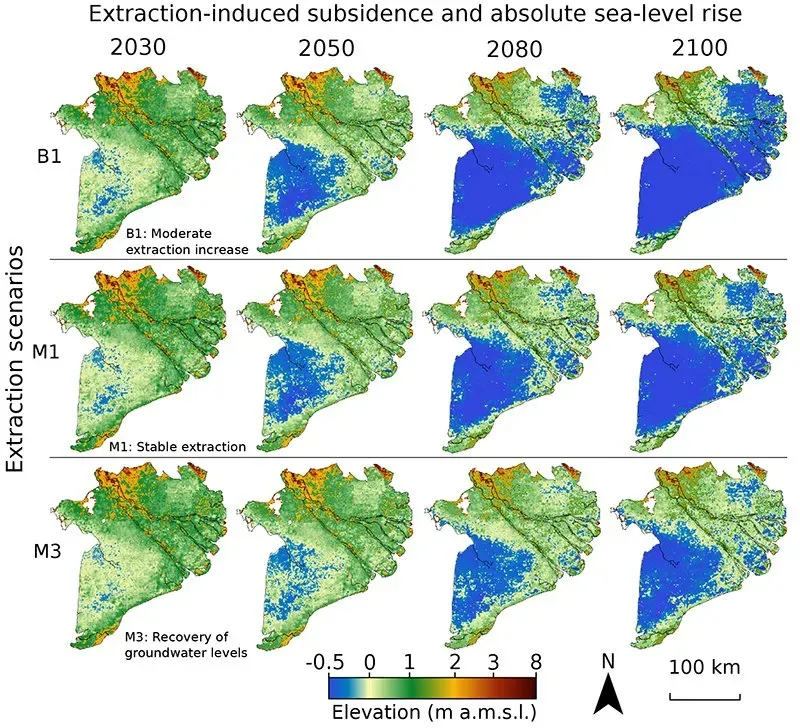
Meanwhile, according to Utrecht University’s Rise and Fall project, an initiative between Cần Thơ University and the Dutch Deltares Research Institute, the Mekong Delta is sinking at a rate 10 times faster than seas are rising, a symptom of the region’s over-reliance on ground water, said Philip Minderhoud of the Institute.
The project examined three scenarios for groundwater use over the next 75 years: stable, reduced or increased. In all projected scenarios, most of the southern districts of the delta, particularly in the west, fall below sea level by 2100.
The future scenarios are unprecedented, said Minderhoud.
“Losing such large areas of densely populated land to sink below sea level is something we have not witnessed before,” he added, noting that the Mekong Delta is roughly the size of his native Netherlands, a country guarded by enormous sea walls.
“It’s basically some sort of an Atlantis future. It’s so far away from what we perceive on a daily basis that we have a hard time envisioning that,” he told Mekong Eye.
Preparing for the worst
Minderhoud argued there is a path forward: Groundwater extraction and other stressors in the Mekong, and in other industrialized deltas, must be reduced.
“We have the tendency, worldwide as a human species, to adapt but we almost forget the option that we can also control the root causes and actually mitigate it,” he said. “That is much more effective than to try to fight the symptoms.”
“It’s becoming harder and harder to maintain the kind of productivity that we’re seeing in the Mekong Delta, so much so that something’s got to give — either a transition rapidly needs to happen or the system will break,” said Brian Eyler, director of the Stimson Center’s Southeast Asia Program and lead of the Mekong Dam Monitor.
For frontline communities, adaptation means taking immediate action to protect their homes as land sinks and seas rise.
Government planning might also require an eye toward adjusting the way of life in the delta, argued Liu at the University of North Carolina, emphasizing a need to reduce coastal reliance on agriculture as the region continues to sink.
“We are actually very sad about the future,” said Liu. “But that doesn’t mean we can do nothing. We still can do something, even if we have to prepare for the worst.”