Story
 December 4, 2025
Mekong’s ‘White Gold’ Rush Amid a Global EV Boom


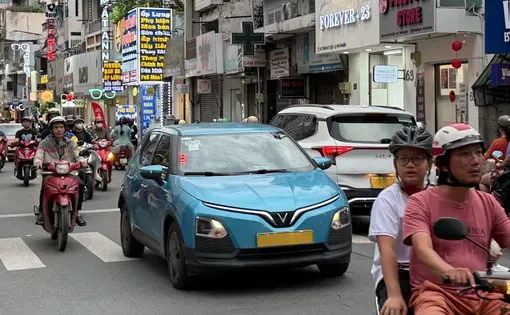
As demand for EVs rises, so does the need for tires made with natural rubber.
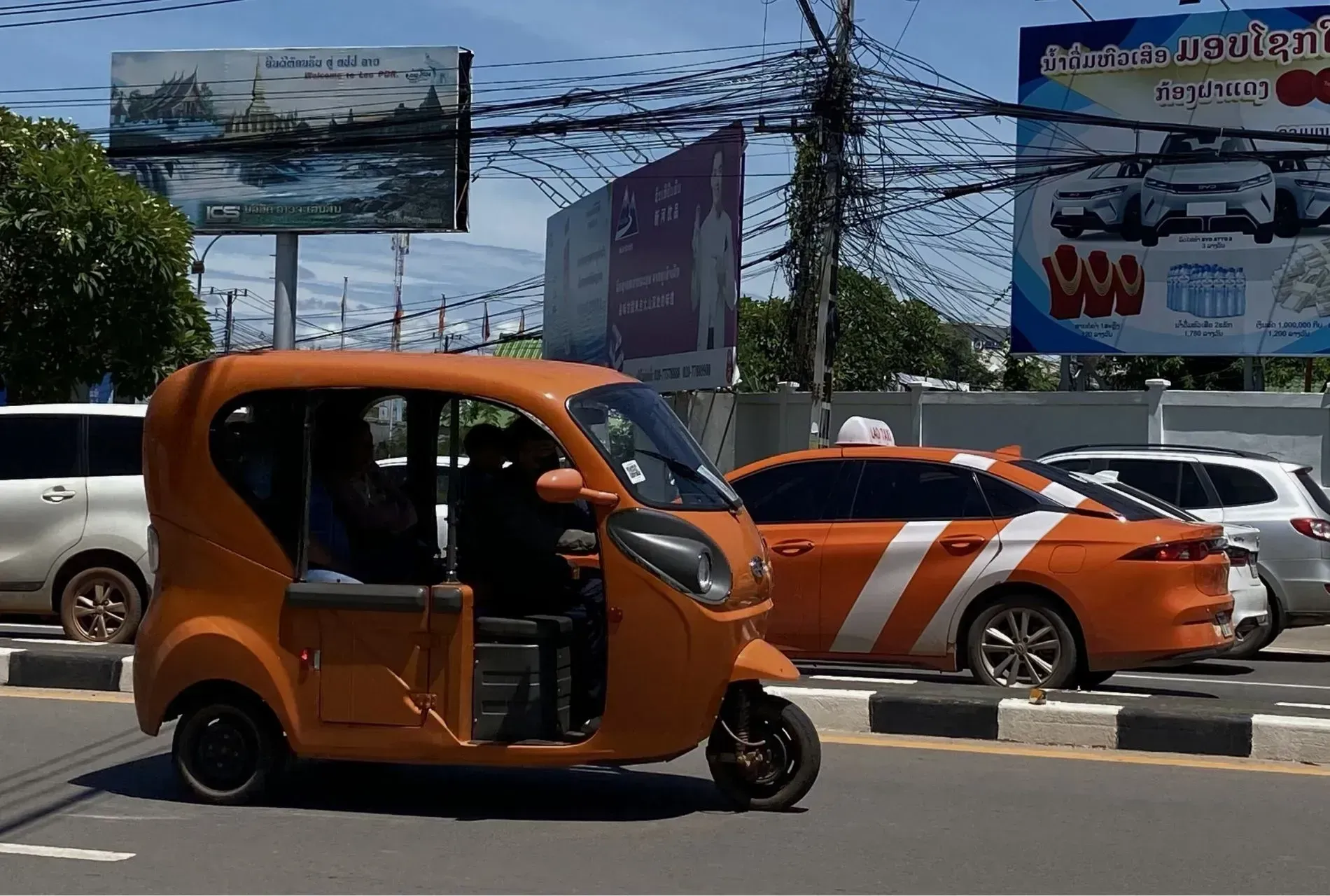
Rubber from the Mekong powers global EV tires, yet its murky supply chain demands stronger traceability to ensure a just energy transition.
The streets of Laos’ capital Vientiane are lined with billboards promoting Chinese electric vehicles (EVs). Laos neither makes EVs nor car tires, yet its forests are being cleared for rubber — the raw material for making tires — while locals tap rubber trees for Chinese and Vietnamese companies.
Proudly calling itself the “battery of Asia” because of its many hydropower plants, Laos’ EV push is driven by economics rather than climate concerns. Imported fuel is expensive, and recurring shortages have made imported electric cars an appealing alternative.
Between 2022 and 2024, the number of registered four-wheel EVs in Laos almost quadrupled, with projections reaching 15,000 by 2030.

As a nonprofit journalism organization, we depend on your support to fund more than 170 reporting projects every year on critical global and local issues. Donate any amount today to become a Pulitzer Center Champion and receive exclusive benefits!
Laos, like many countries worldwide, has joined the accelerating global shift to EVs, a transition driven by both climate commitments and economic goals.
This boom has brought opportunities to both smallholders of rubber plantations and large companies in the five Mekong countries — Cambodia, Laos, Myanmar, Thailand, and Viet Nam — as the region supplies half the world’s natural rubber.
Yet, underneath this so-called clean energy transition, extractive practices such as deforestation and land grabbing, connected to natural rubber production in the region, continue to perpetuate.
Fast electrification
Five years ago, Viet Nam had almost no EV registrations. Now, due to the rise of domestic brands like VinFast and the gradual shift towards restrictions on gasoline vehicles, nearly one in five new cars sold in 2024 were electric.
In Thailand, the expansion of Chinese EV manufacturers has pushed the share to roughly one in every 7.5 new cars.
Globally, EVs are quickly taking over a steadily expanding car fleet. According to the International Energy Agency (IEA) report, more than 17 million new electric cars were sold in 2024, a sharp rise from 2.1 million in 2018. Today, one in every five new cars sold is an electric vehicle.
China drives much of this surge, accounting for nearly two-thirds of global EV sales. Almost one in two new cars sold there is now electric, according to the IEA. Most of the remaining push comes from Europe and the U.S., where EVs make up roughly one in five and one in 10 new car sales, respectively.
This exponential growth is driving demand not only for scarce critical minerals such as lithium, nickel, and cobalt, but also a rising appetite for natural rubber.
With their heavy batteries and higher torque, EVs wear out their tires roughly 30-40% faster than gasoline-powered cars, according to a Coherent Market Insights analysis. Global EV tire sales, worth US$3.4 billion in 2024, are projected to increase at least fourfold by 2031.
Observers such as Thai Krungsri Bank’s research unit have pointed to the global EV boom as one of the main drivers of rising natural rubber demand.
Natural rubber is used in various industries, including automotive, medical supplies, and consumer goods. In China, 76% of the rubber is allocated to tire manufacturing, a trend similar to the global trend, where approximately 70% of rubber is used in the tire industry.
In the Mekong region, rubber production has increased slightly in major producers such as Thailand and Viet Nam, as the sector faces land conversion from agriculture to urban areas, more frequent droughts, and labor shortages among rubber tappers.
However, data from the Food and Agriculture Organization shows that production has nearly doubled in Myanmar, grown almost fivefold in Cambodia, and surged more than eightfold in Laos in the past decade.
Where the white gold lies
As countries cash in on increasing demand for tires and the subsequent rubber rush, the rewards are far from equal.
According to UN Comtrade data, global exports of natural rubber were worth US$13.6 billion in 2024, tire exports at US$96 billion and EV exports at a whopping US$128.5 billion.
China bought more than 45% of the world’s 2023 rubber production, exported 45% of the world’s car tires and produced 70% of the world’s EVs in 2024 — almost all of which were sold domestically.
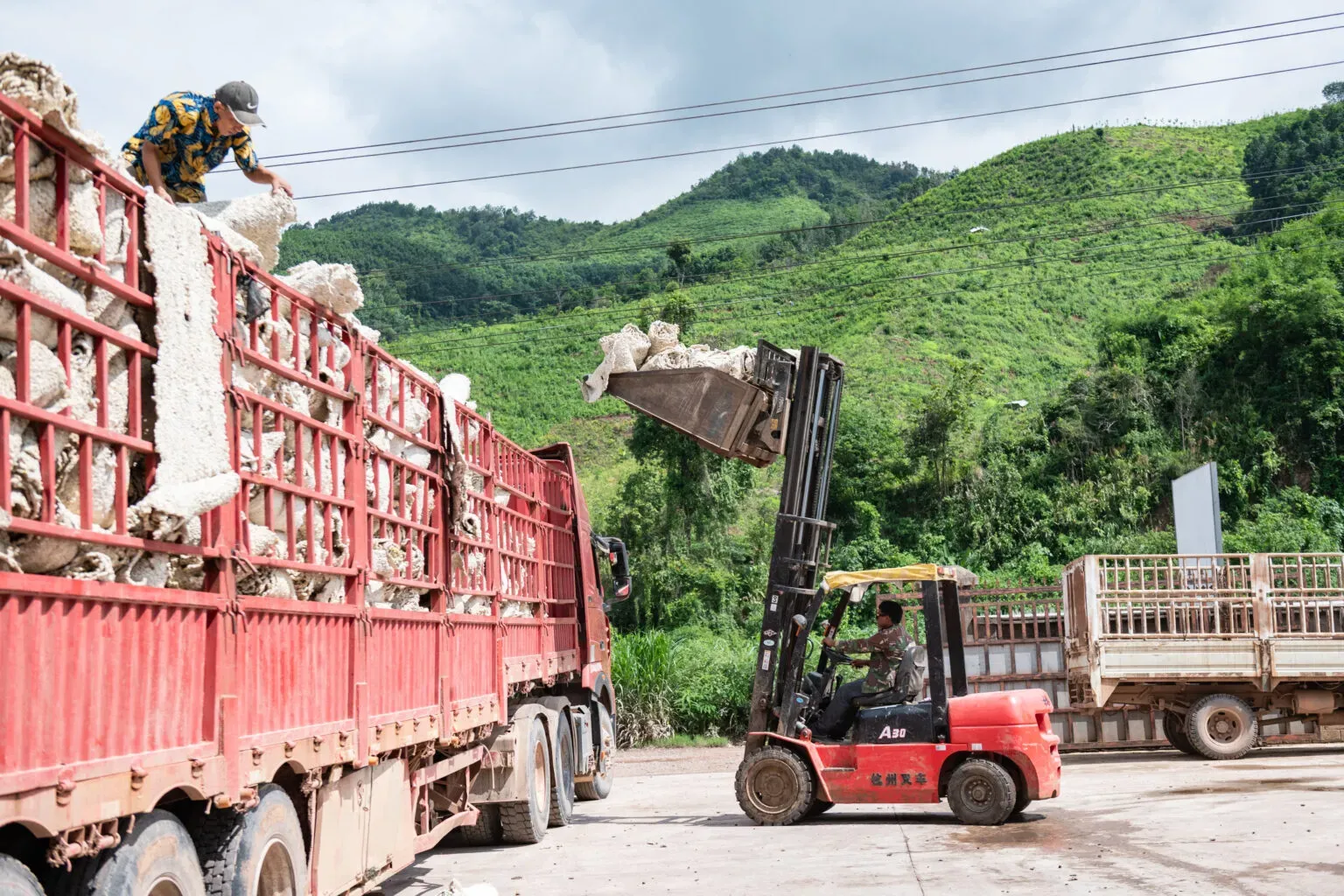
Thailand, aiming to become an EV regional automotive hub, produced more than one-third of the world’s 2023 natural rubber and was the second-largest net exporter of tires in 2024.
With the Thai government’s incentives to attract the foreign automotive industry since the 1990s, the country hosts many multinational tire giants, including Michelin, Bridgestone, Maxxis, Yokohama, Continental, and Goodyear — as well as Chinese tire makers such as ZC Rubber, Linglong, Chengshan, Double Coin Tire Group, and Xinyuan Rubber.
Many Chinese EV makers have also established presences in Thailand, including BYD, Great Wall Motor, GAC Aion, and Chery, driven by the government’s incentives such as tax and import duty exemptions.
With a growing domestic EV industry, Viet Nam is among the world’s major producers of natural rubber and net exporters of car tires.
Since 2018, the UN Comtrade data shows that it has imported more rubber than it exported — mainly from Cambodia and Laos, where its state-owned firm Viet Nam Rubber Group dominates rubber production through long-term land acquisitions.
EV makers from Germany, South Korea, Mexico, and Japan capture the most value, accounting for more than half of total exports and selling primarily to the EU, UK, and North America.
At the lower end of the value chain, Cambodia, Myanmar, and Laos remain net exporters of raw rubber — earning the least while facing rampant human rights and environmental abuses from the past two decades of plantation expansion.
A dubious supply chain
While EV consumers are praised for driving the energy transition, electric car production risks leaving a heavy environmental footprint if producers do not source tires ethically and responsibly.
Public reporting by tire makers rarely distinguishes between the production of EVs versus conventional wheels, complicating efforts to track supply chains of green transport. EV makers, on the other hand, rely on tire companies to establish policies for ethical and responsible sourcing of materials.
In the Mekong region, rubber cultivation has been historically linked to deforestation, land grabbing, and soil erosion.
In Laos and Cambodia, where public participation is restricted, large-scale concessions have emptied vast tracts of forests and displaced communities. In war-torn Myanmar, the expansion of rubber in the north has stripped hillsides bare and worsened soil erosion.
Converting pristine forests into vast rubber plantations releases arsenic and other heavy metals that can contaminate rivers, said Wan Wiriya, an associate professor at Chiang Mai University who monitors river quality in Myanmar and Thailand.
Monoculture rubber plantations utilize significant chemical fertilizers, while rubber processing requires large quantities of strong acid, which further pollutes the environment, Wan added.
As the forest disappears and waterways become polluted, ethnic minorities are losing their food security, said Ian G. Baird, a political ecologist at the University of Wisconsin–Madison who has studied the rubber industry in northeastern Cambodia and southern Laos.
According to Baird, many are left with no choice but to clear parts of the remaining forest to maintain their livelihoods.
“These are not short-term damages,” he said. “The consequences will unfold over years, and many generations are being forced to bear them.”
Sourcing ethical rubber
In many parts of the region, it is challenging to determine which rubber is ethically sourced due to several factors, including complex layers of rubber trading, weak registration systems, and land conflict.
In Thailand, smallholders produce approximately 90% of the total natural rubber supply. Many of them have not yet registered or are in the process of registering their farms to prove their rubber is not linked to deforestation.
Natural rubber passes through various layers of middlemen, who may or may not be registered, and domestic processors, before reaching the major manufacturers.
“We can trace from registered sellers to registered buyers, covering roughly 50% of the market,” said Suphachai Khangkhun, director of the Rubber Authority of Thailand’s northern region. “Our traceability ends at the rubber processors. It cannot go beyond that.”
A 2023 Nature study estimated that more than 600,000 hectares of deforestation in Thailand were attributed to rubber between 2001 and 2016, although the exact figure remains debated.
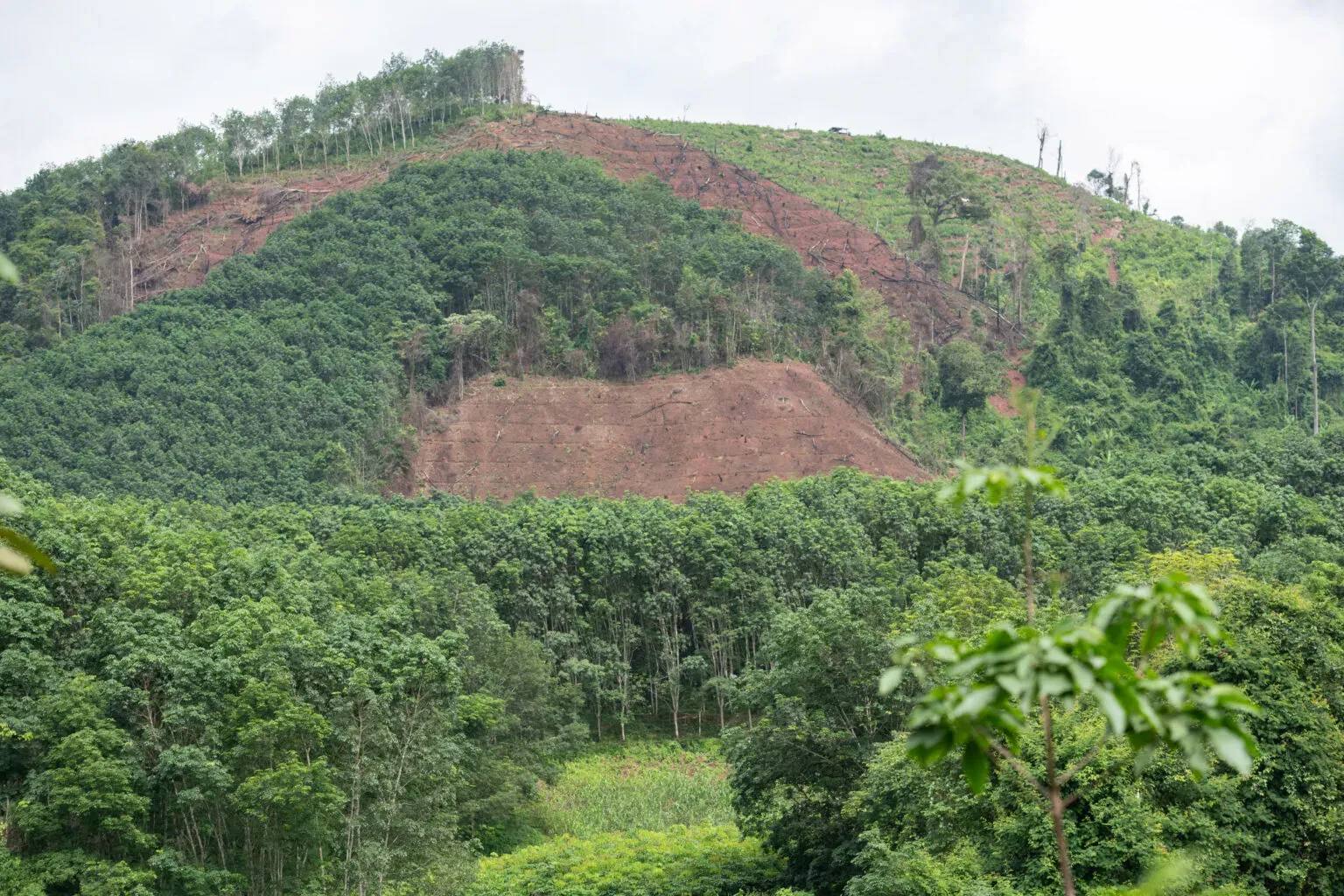
The challenges in Cambodia and Laos are even more complicated.
In the mid-2010s, both countries experienced a rubber boom due to high prices and favorable land concession policies, which attracted significant investment from Chinese and Vietnamese firms.
Corporate investors play a significant role in these countries’ supply chains, as smallholders only account for 44% of rubber production in Cambodia, 30% in Laos, and 50% in Viet Nam — far less than in Thailand.
Data from LICADHO, a Cambodian human rights NGO, reveal that a third of the total one million hectares of rubber plantations in Cambodia are owned by local companies — many tied to powerful families.
Vietnamese firms control another third, some of which have been accused of forest clearing and abuses against Indigenous communities.
“Land concessions granted for rubber have devastated Cambodia’s forests,” said Naly Pilorge, Outreach Director at LICADHO. “Prey Lang is a prime example. By the time the area was declared protected in 2016, huge swaths already converted to rubber were excluded from the protected zone.”
In Laos, Chinese rubber plantations have replaced opium fields, but their contract-farming and land-concession models have been criticized for delivering inequitable benefits to local communities.
In southern Laos, Vietnamese firms such as Viet Nam Rubber Group and Hoàng Anh Gia Lai obtained long-term land leases that allegedly included forest areas, exporting most of their output back to Viet Nam and re-exporting to China.
With such a system of politically influenced land acquisition, meeting traceability requirements remains extremely challenging.
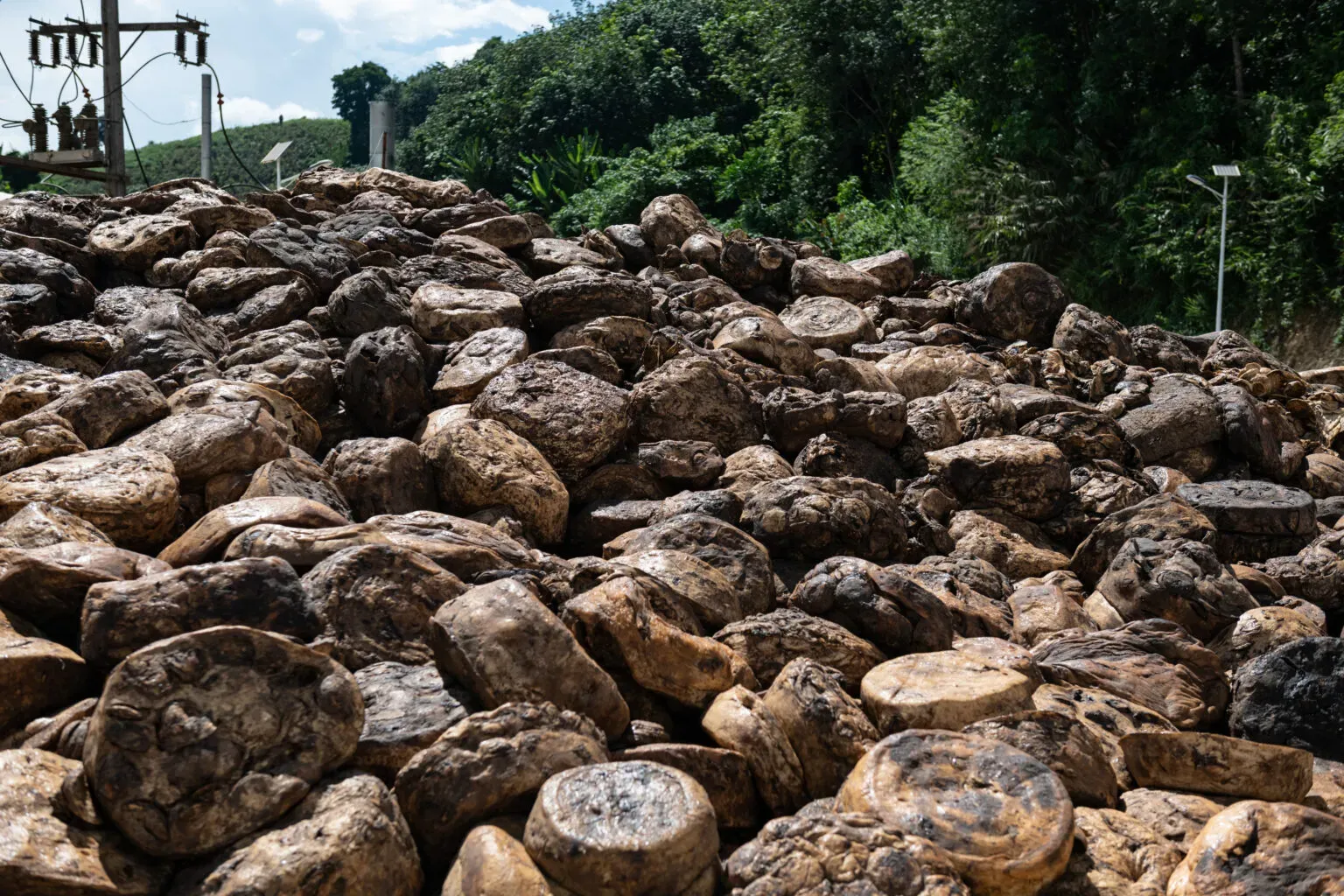
Officials in Viet Nam admitted that rubber imported from Cambodia and Laos cannot be fully traced.
Supply-chain data from Sayari shows that Chinese and Indian tire makers source rubber from both Laos and Cambodia. Rubber from both countries also makes its way to the U.S. via Vietnamese suppliers.
Major tire makers such as Giti Tire, Michelin North America, ATC Tires, JK Tyre are purchasing from R1 International and similar companies, which source their rubber acoss the Mekong region.
Chinese tire giants Guizhou and Sailun also buy rubber from the Mekong region, selling to more than 180 countries, including North America and Europe.
Traceability system taking shape
Regulatory pressure on traceability is growing worldwide. The EU Regulation on Deforestation-free Products (EUDR) requires companies exporting to the bloc to ensure their products, including rubber, are not linked to deforestation or human rights violations.
However, its implementation has been delayed until late 2026, prompting calls for accelerated action to ensure timely enforcement.
The delay is significant for the Mekong region, whose five countries collectively exported 13% of the natural rubber to EU markets, second only to China’s 36%, according to data compiled from the UN Comtrade.
Another mechanism is the Global Platform for Sustainable Natural Rubber (GPSNR), founded in 2019, which includes major tire producers such as Linglong and Shandong Haohua Tire.
By 2027, GPSNR plans to implement mandatory standards, which will require supply chain mapping, annual reporting, and third-party verification.
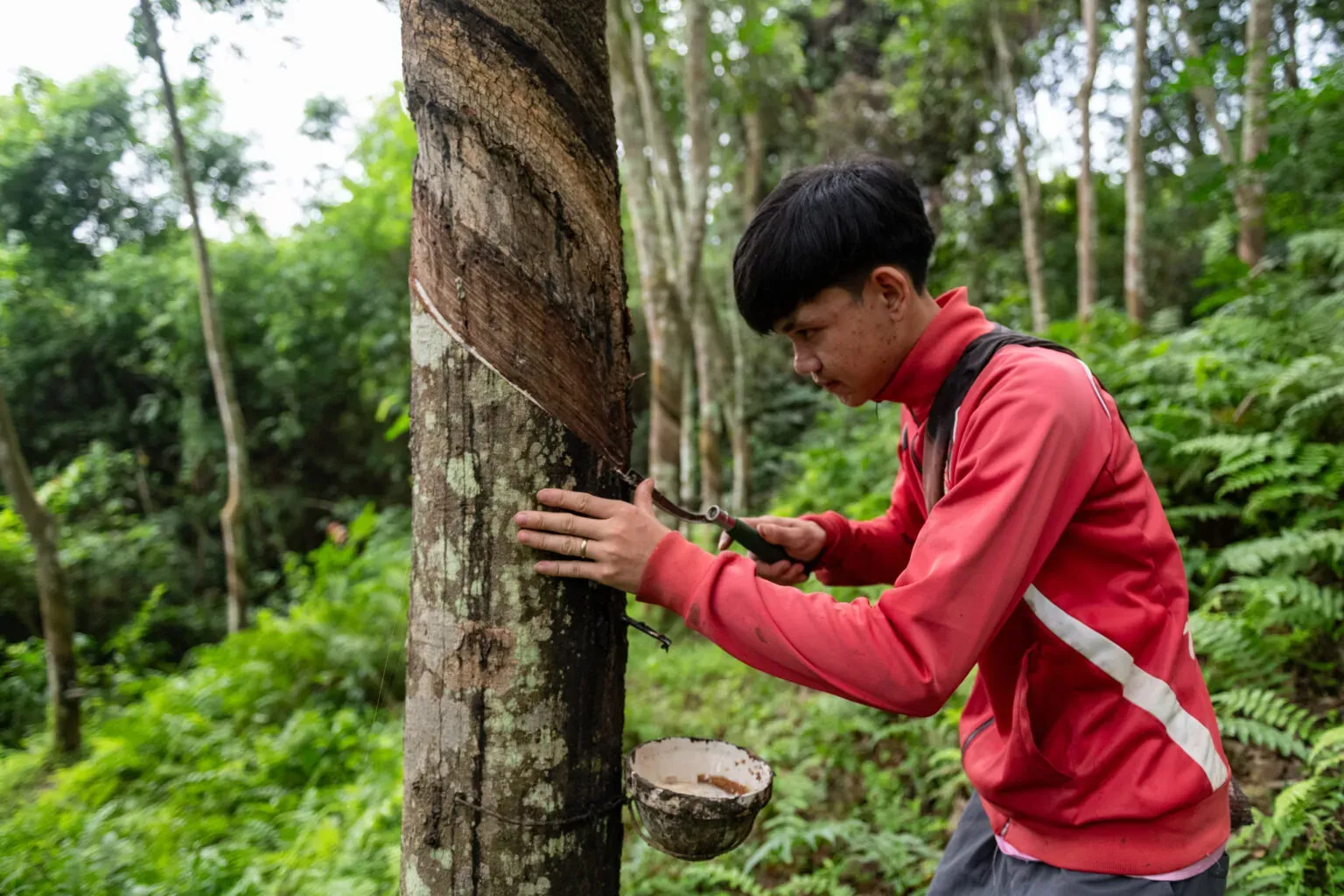
China, meanwhile, has no mandatory regulations yet but is moving toward sustainable sourcing mechanisms.
In 2017, the China Chamber of Commerce of Metals, Minerals and Chemicals Importers and Exporters (CCCMC) issued voluntary natural-rubber sustainability guidelines and has encouraged implementation among overseas Chinese companies, although progress has been limited.
Local news reports show it has also been collaborating with Mekong governments to develop responsible supply chains.
In Cambodia and Laos, groups like Oxfam have been helping communities build traceability systems and pushing overseas companies to engage responsibly with local people. At the same time, WWF has worked with smallholders in Myanmar to establish standards.
Thailand has expanded farmer and land-plot registration as well as rubber cooperatives to improve transparency. The Thai government has been encouraging farmers to integrate agroforestry and reforestation into their farming practices.
Meanwhile, prominent Thai rubber processors, such as Sri Trang, Vong Bundit and Southland Rubber Group have also launched initiatives and partnerships with smallholders to ensure traceability.
As the EV industry booms while ethical rubber practices emerge, this series examines how neglecting responsibility can lead to irreversible ecological, social, and economic losses — and how better practices can pave the way for a just energy transition.

