Story
 December 19, 2025
When Conservation Turns Deadly: Collisions in Mexico’s Vaquita Crisis
Country:

When must environmental conservation give way to human needs?
Caught between conservationists and cartels, a Mexican fishing town at the center of a global crisis is forced to answer the question of who controls the sea—and at what cost.
What Mario García Toledo, 56, was thinking in his final moments will remain forever unknown. Speeding toward the bow of the Sea Shepherd Conservation Society’s Farley Mowat—a 150‑ton former U.S. Coast Guard cutter—he swerved his small fishing boat at the last minute. Whether intentional or accidental, grainy footage shows spray from the Sea of Cortez as Toledo’s panga split in two, throwing him from the deck into the waters of Mexico’s Upper Gulf of California.
At 7:00am on December 31, 2020, Sea Shepherd’s crew was removing illicit nets from a designated no-catch area when half a dozen fishermen allegedly approached. While each side blames the other for initiating the skirmish, what is certain is that Molotov cocktails were thrown, fishing gear was set ablaze, and defensive anti‑piracy maneuvers churned the surface of the otherwise calm sea.

Toledo’s body was pulled from the water soon after, ending Sea Shepherd’s four‑decade claim of causing no fatalities. As the Mexican Navy began extracting two other injured fishermen, reports of the death filtered ashore. By 11:50am, protests erupted as fishermen sought revenge. “As soon as you leave, all hell is going to break loose. Get the gasoline ready, we’re going to set them on fire!” shouted a fisherman in Spanish, according to Latin American outlet Infobae.
Protesters set the docked Navy patrol boat Albireo alight, one crew member was injured by a projectile, and approximately 200 people approached the military base and began launching stones, according to a statement from the Mexican Navy. Trucks were set ablaze as local police and army units were called in to quell violence from spreading through the 17,000-resident town.
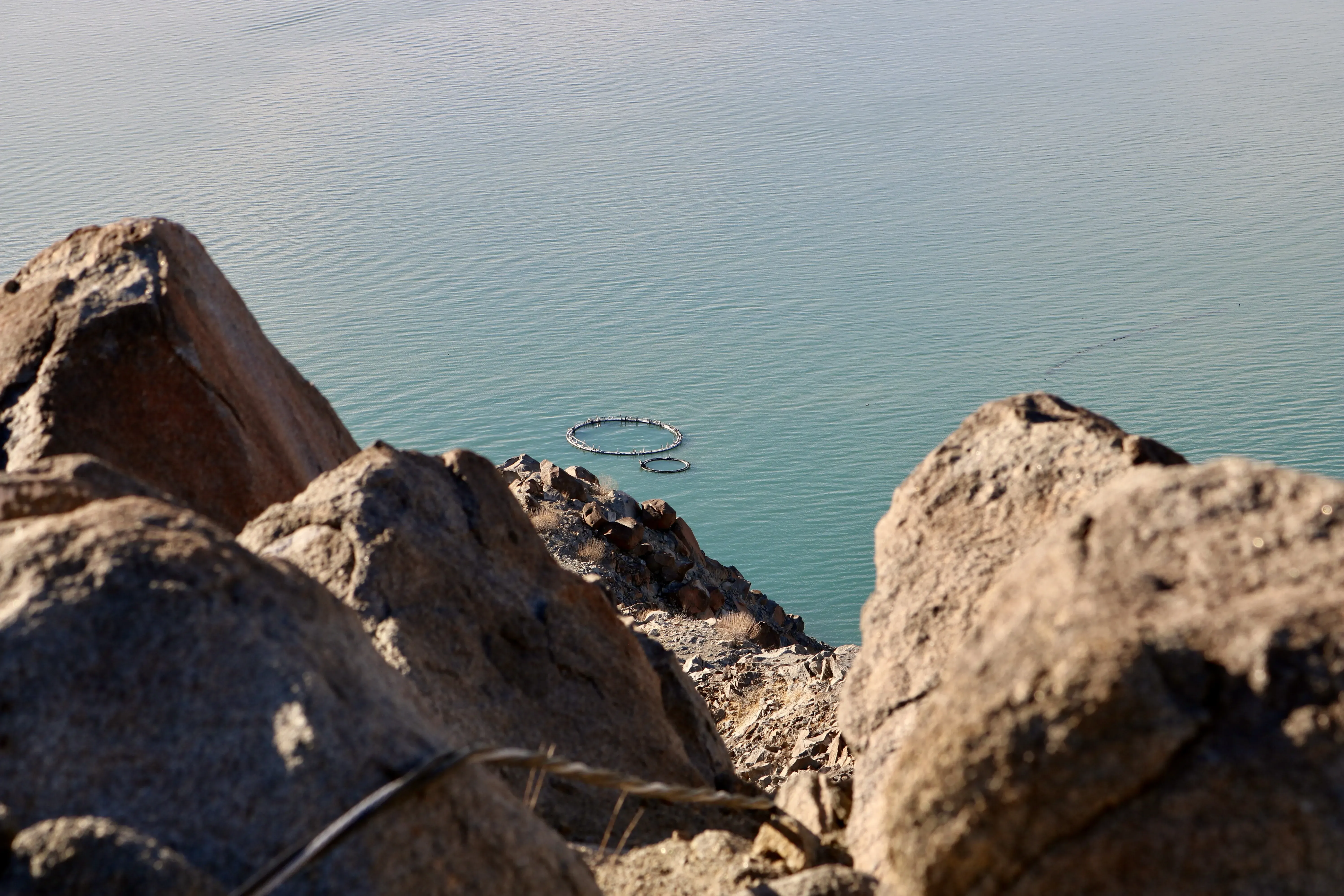
For decades, this narrow stretch of water has been Mexico’s most militarized conservation zone and the epicenter of a struggle between conservationists trying to protect the world’s rarest marine mammal and local people who view those efforts as a threat to their economic survival.
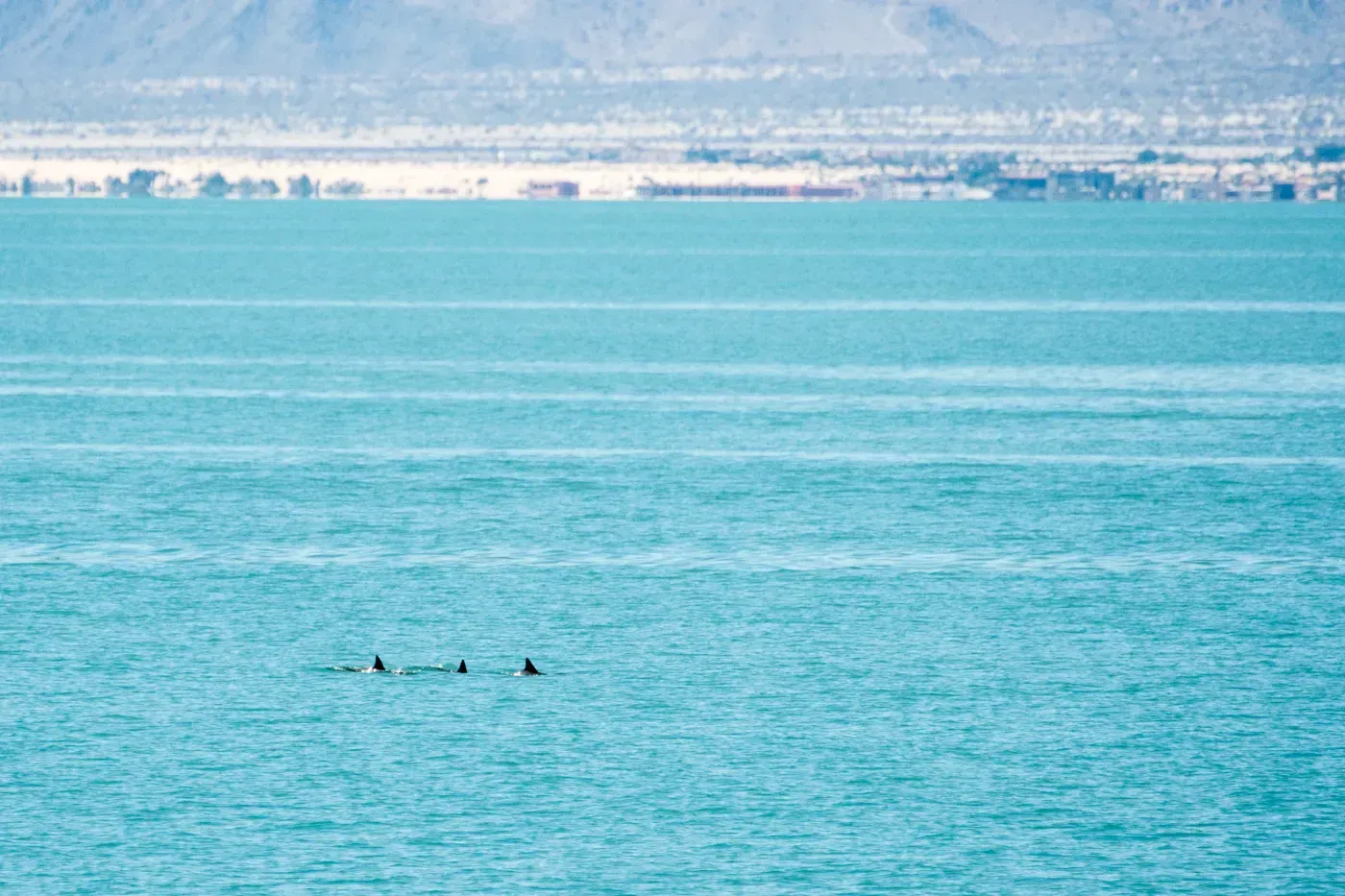
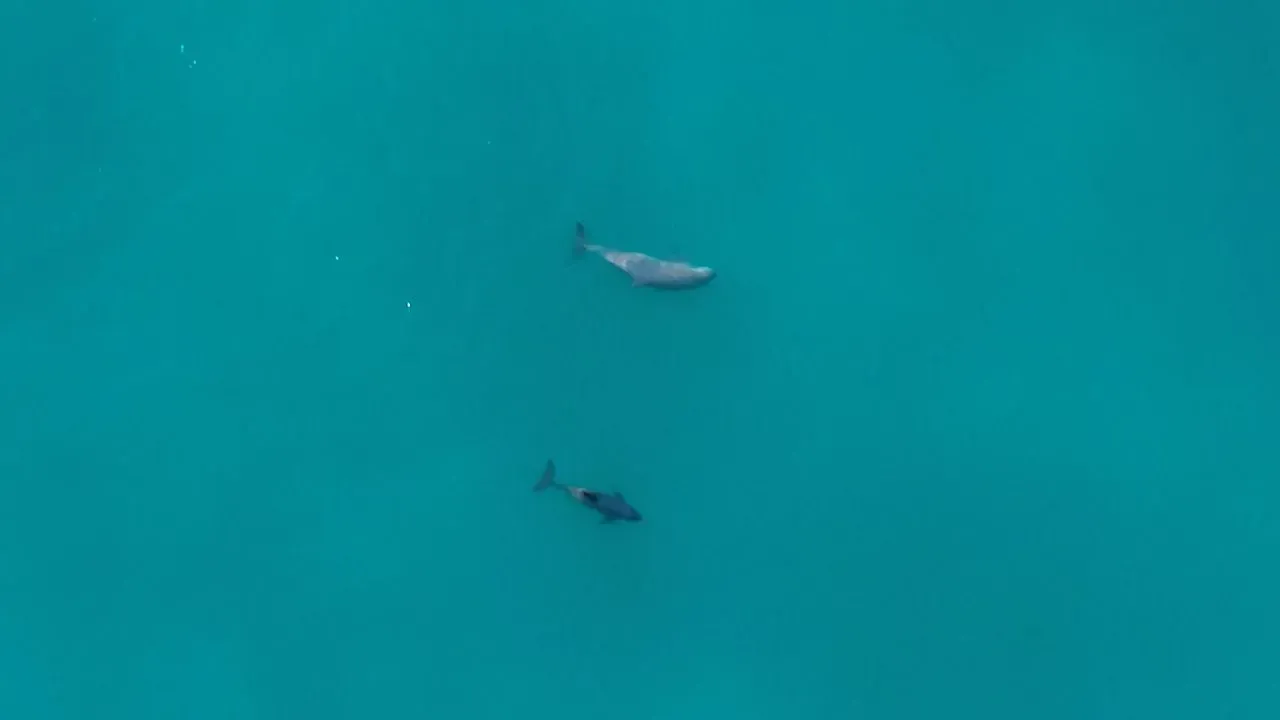
Caught in the middle of the tension: the vaquita. Characterized by its small childlike size and distinctive mascara-ringed eyes, the vaquita is found only in the Upper Gulf of California and teeters on the brink of extinction. The population has declined from roughly 560 in 1997 to an estimated six to eight in 2024, according to the U.S. National Oceanic and Atmospheric Administration (NOAA).
Vaquitas are accidentally caught as bycatch in fishing nets, and fishermen have been vilified around the world for their deaths, escalating confrontations with outside observers. However, the last two years have shown how community buy-in can be the key to morphing conflict into cooperation: a vital lesson for conservation efforts worldwide.
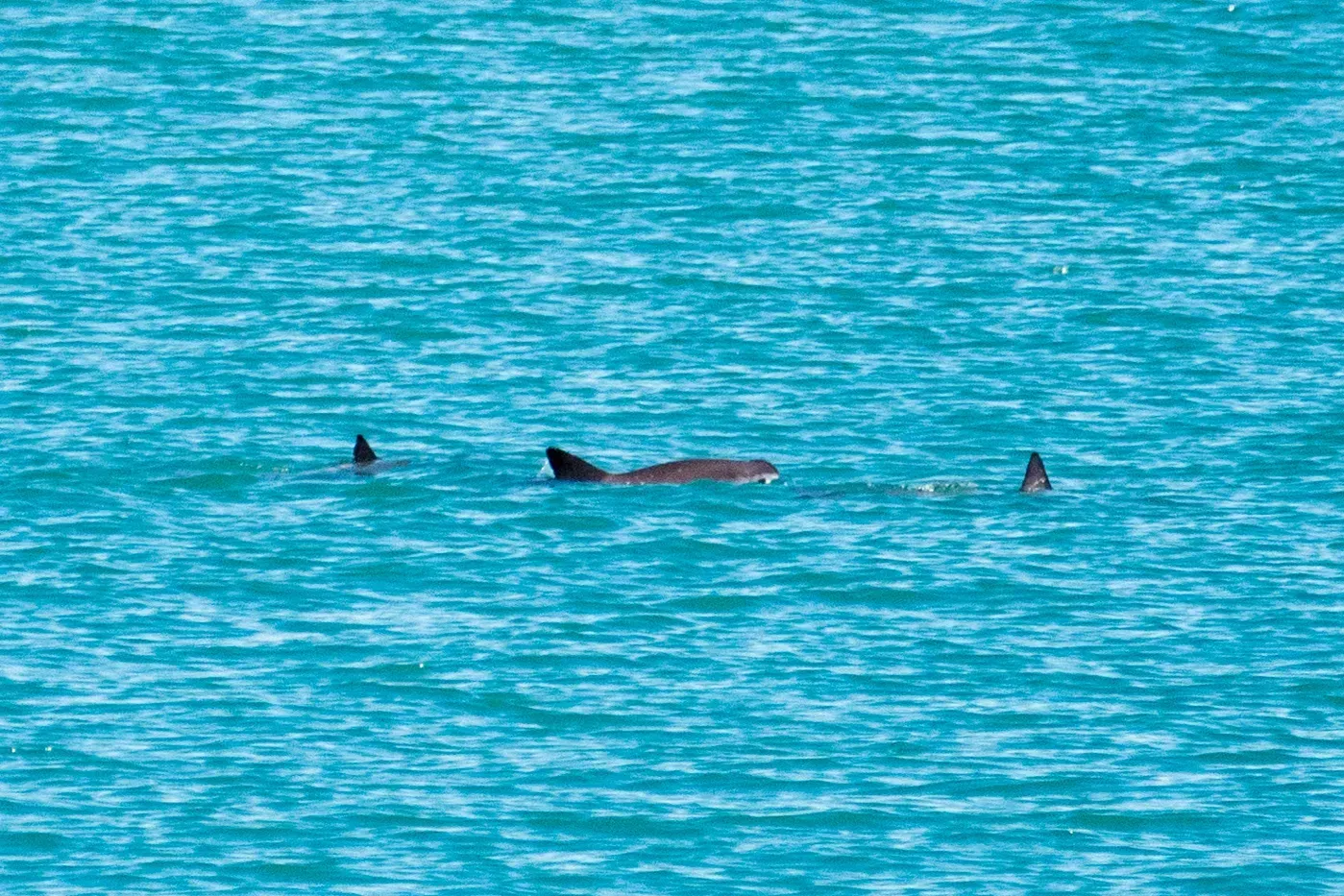
Under international pressure, Mexico banned the use of gillnets in 2017: a type of fishing gear that hangs vertically like a curtain in the water. Buoyed by plastic water bottles at the surface and rudimentary weights below, gillnets were used for decades for both legal and illegal fishing in San Felipe. Though effective for catching species ranging in size from shrimp to sharks, gillnets catch indiscriminately and are commonly associated with high rates of incidental cetacean captures.
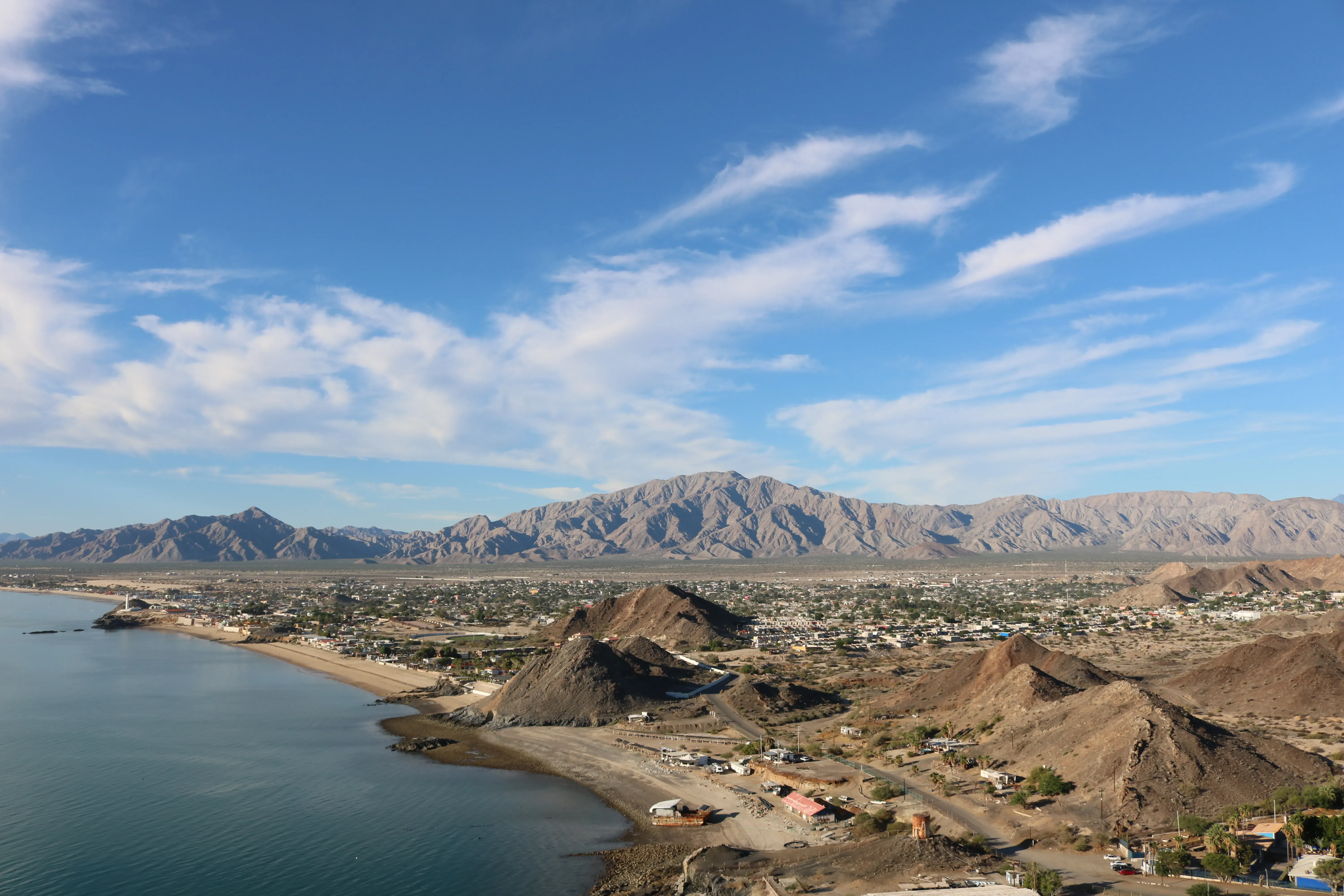
And, with the vaquita endemic to a relatively small habitat, the Mexican government established a roughly 100-square-mile Zero Tolerance Area in 2020 patrolled only by authorized personnel. But for the locals of San Felipe—a town built on fishing—the legislation stripped away their livelihood and set them up for a bitter confrontation with environmental groups who arrived under the banner of protection.
The death of Mario García Toledo, never fully investigated nor agreed upon, became a dividing line. Sea Shepherd called him an “assailant,” while many in San Felipe saw him as one of their own.
What happened that morning was not just a collision of two boats but the moment when an already combustible conservation conflict turned deadly. The incident exposed the human cost of saving a species and raised the uneasy question: Who gets to control the sea?
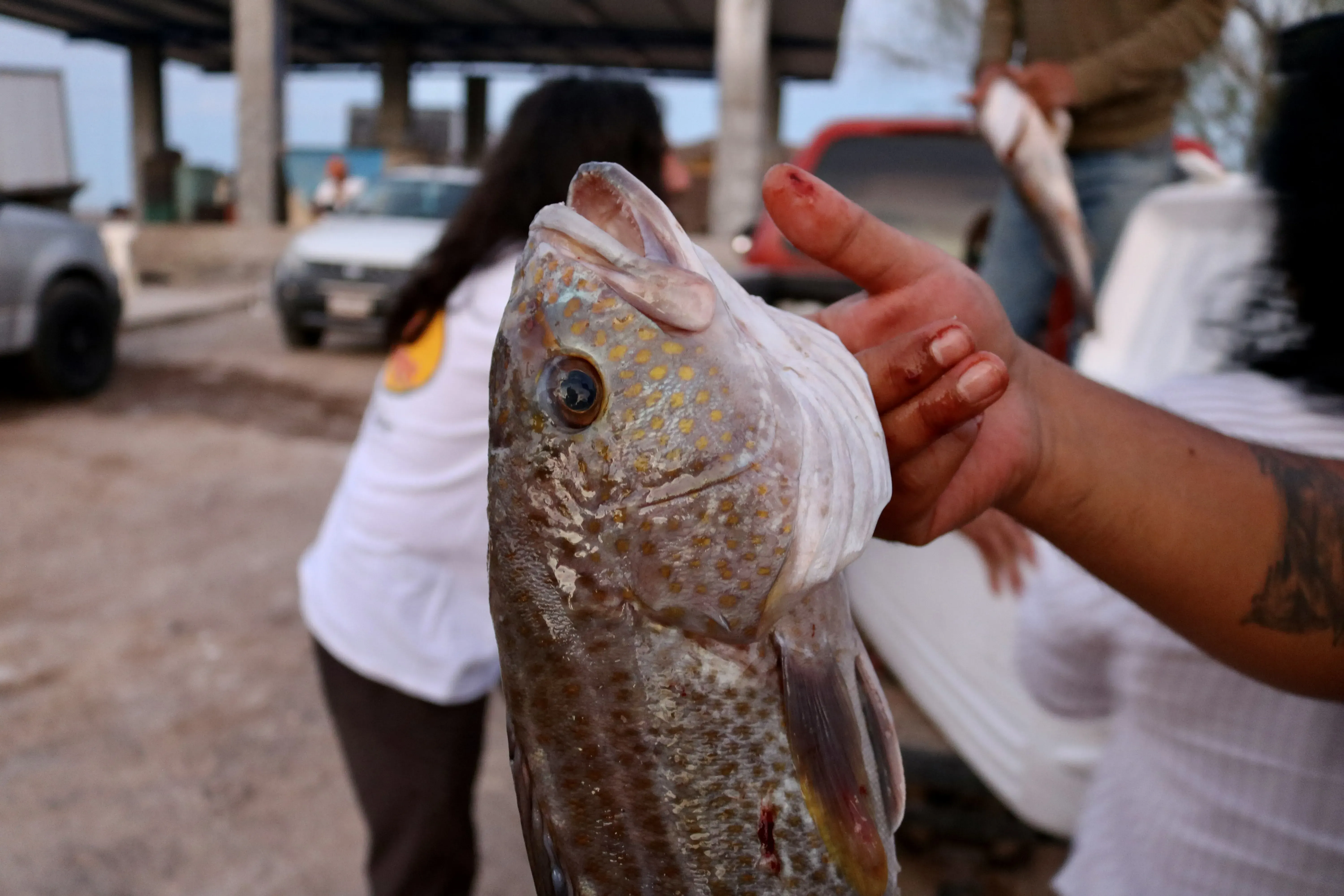
The vaquita’s rapid decline traces back to another species: the elusive silvery totoaba. Protected under Mexico’s Endangered Species List since 1975, this endemic fish was once caught for local consumption but is now poached with gillnets for its swim bladder. Commonly dubbed “the cocaine of the sea,” these bladders are trafficked to Chinese buyers for between $20,000 and $80,000 per kilo and are prized for their supposed medicinal value and alleged aphrodisiac qualities.
International demand draws organized trafficking rings, nicknamed the narcobucheros, into the region’s waters, turning fishing grounds into crime scenes.
Andrea Crosta, founder of Earth League International, a U.S. environmental crime intelligence group, has uncovered 25 different trafficking networks and more than 300 persons of interest operating between Mexico, the U.S., and Asia.
“This is not a conservation problem,” Crosta said. “This is an international crime issue.”
That violence sometimes spills onto land. In March 2025, former San Felipe fisheries leader Sunshine Rodríguez—a polarizing figure who opposed government restrictions and had once been imprisoned for poaching—was assassinated in Mexicali. Shot more than 40 times in broad daylight by four masked men, his killing underscored how deeply criminal interests have rooted themselves in the Gulf’s seafood supply chains.
For fishermen, who typically earn around $12 per kilo of shrimp, the temptation is obvious: a single kilo of totoaba bladder can fetch them between $3,500 and $8,500. With low odds of arrest and fewer than 20 successful prosecutions ever recorded, a night’s poaching can bring a year’s income, according to Frontiers in Marine Science.
But that’s not the full picture. Most locals, despite media vilification, have no ties to trafficking. They fish because their fathers fished and because there are few other ways to feed a family in a town sandwiched between sea and mountains.
Once-lawful tools now face bans and patrols monitor all catches. To outsiders, San Felipe appears to be a story of crime and extinction. Yet on the ground it is one steeped in pride and survival. The international crackdown meant to save the vaquita has deepened the divide between locals and NGOs, and erased a vital means of living.
Even San Felipe’s crest—unveiled in 2022 when it became Mexico’s newest municipality—tells the story of that schism. It features a shrimp and a totoaba, but the animal that brought global attention to the region is absent: There is no vaquita.
“I would never put the enemy in our shield of arms,” the municipal leader told a conservationist. The omission is more than symbolic. It highlights how the town sees itself not as villains but as people defending their existence while trapped between organized crime and a changing sea.
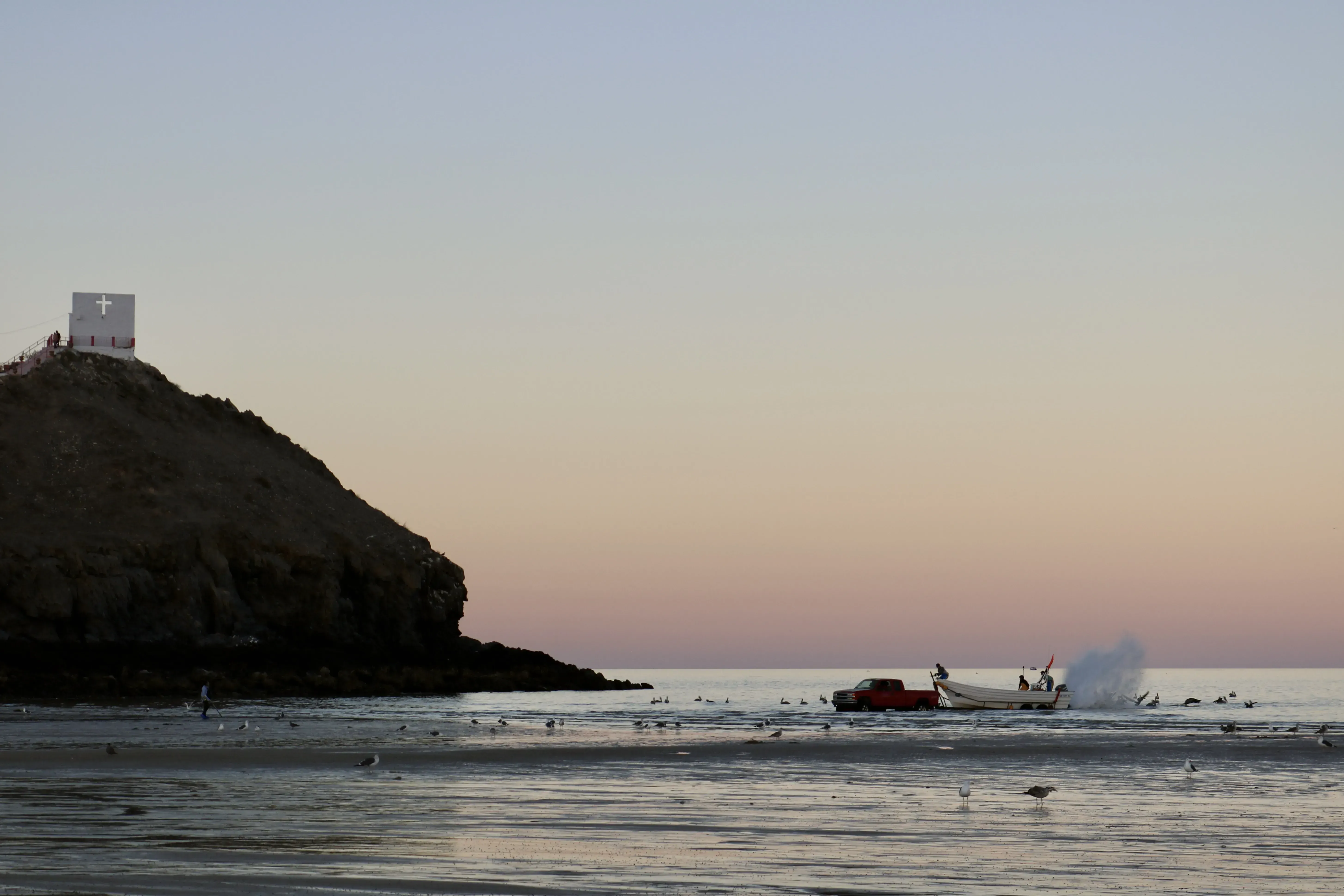
Roads in San Felipe are mostly named after distant oceans or islands. On a late afternoon in October, three older fishermen sit around a wooden table inside a house on Tyrrhenian Sea Street. Baseball caps still on, they drink beer and eat fresh ceviche made from line-caught corvina, their hands calloused from decades of pulling lines.
At the head of the table is local legend Javier "Don Chino" Valverde. His father helped found the town, and at 75, Valverde is in his sixth decade of fishing these waters—now depending on alternative gear to gillnets.
Yet, despite the trio’s involvement in conservation programs, they make no pretense of their mistrust for outside NGOs and the government, with the conversation soon turning to fear, not of the sea but of the law. “We used to all climb inside the boat and close it from the inside when we saw people out on the water,” he said, speaking of the panic fishermen felt when regulations tightened. “People were scared of any enforcement and didn’t want to get in trouble.”
But the ban on gillnets didn’t just cause worry, it also stripped thousands of small fishers of legal access to historic fishing grounds. Nets used for decades for legal fishing were outlawed overnight. “This blind prohibition leads to illegality,” Valverde said, referring to the lack of alternatives offered.
For a town whose economy depends on fishing, the 2018 U.S. import ban on seafood from the Upper Gulf further exacerbated challenges.
Covering shrimp, corvina, sierra, and chano, the ban is set to expand in January 2026 to all species that fail to meet bycatch standards of the Marine Mammal Protection Act.
Lauded as a victory by U.S. conservation groups, the ban did little to curb net use or the speed of vaquita deaths and only deepened resentment. Fishermen saw their prices halved—from around 650 pesos per kilo of blue shrimp to 300—while fish continued to reach the U.S., often shipped to Mazatlán and exported through forged papers.
Though Valverde has glimpsed a vaquita, most fishermen have not. For them, the rare porpoise is a thing of folklore. Some claim it is a government trick; others insist it is a foreign invention. A few even suggest it is a robot.
For those who have spent a lifetime on the water without seeing one, the vaquita has become an invisible instigator of conflict—a force shaping divisions in a town caught between survival and scrutiny.
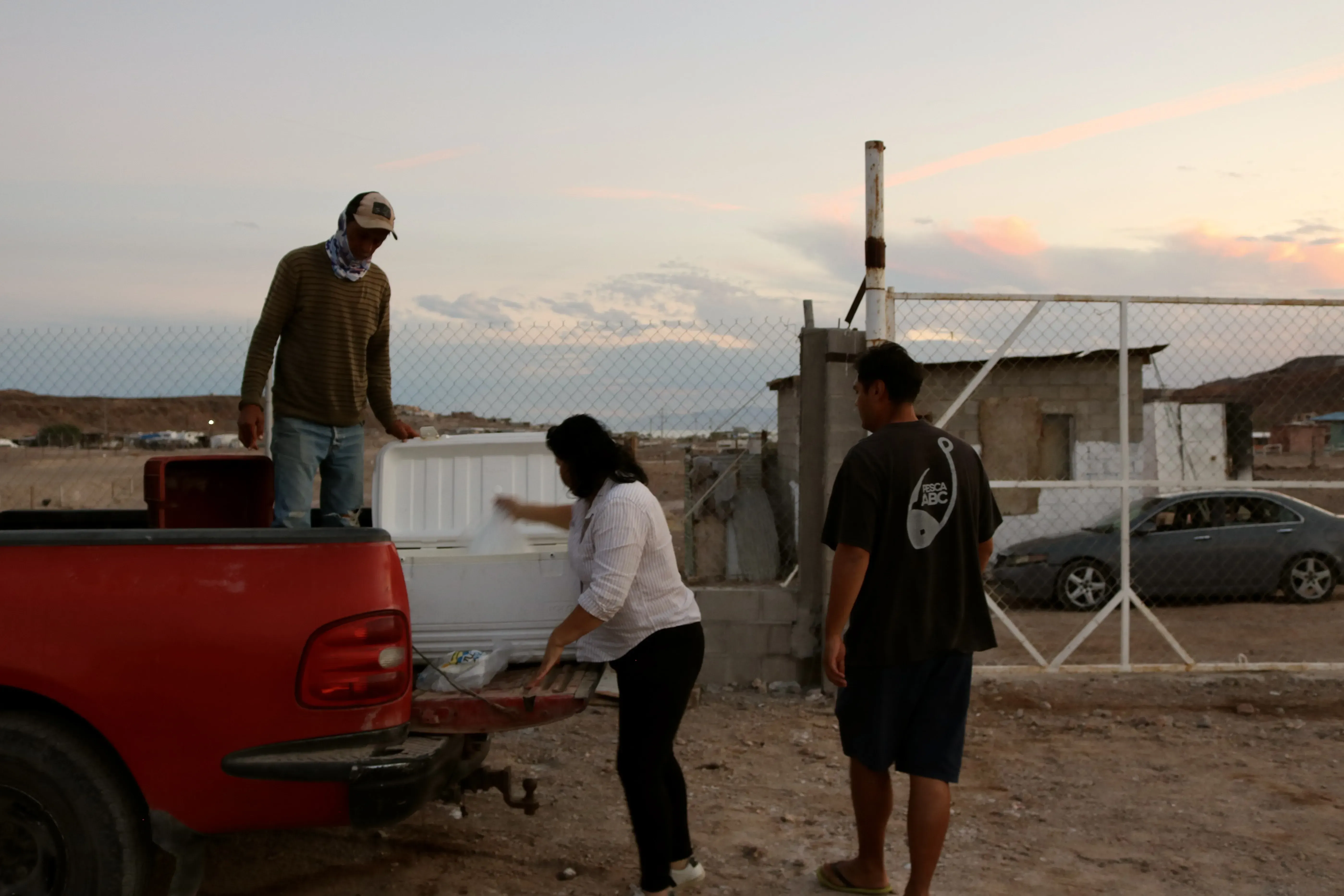
For those tasked with policing these waters, the challenge is seemingly insurmountable. In March 2023, the U.N. recommended the suspension of some seafood trade with Mexico over its failure to comply with the Convention on International Trade in Endangered Species. Though the threat of trade suspension was subsequently withdrawn, the incident led to international condemnation and further monitoring of efforts to save the vaquita at the behest of President Joe Biden. While the Mexican government insists the Navy acts decisively, the reality on the ground is far more complex.
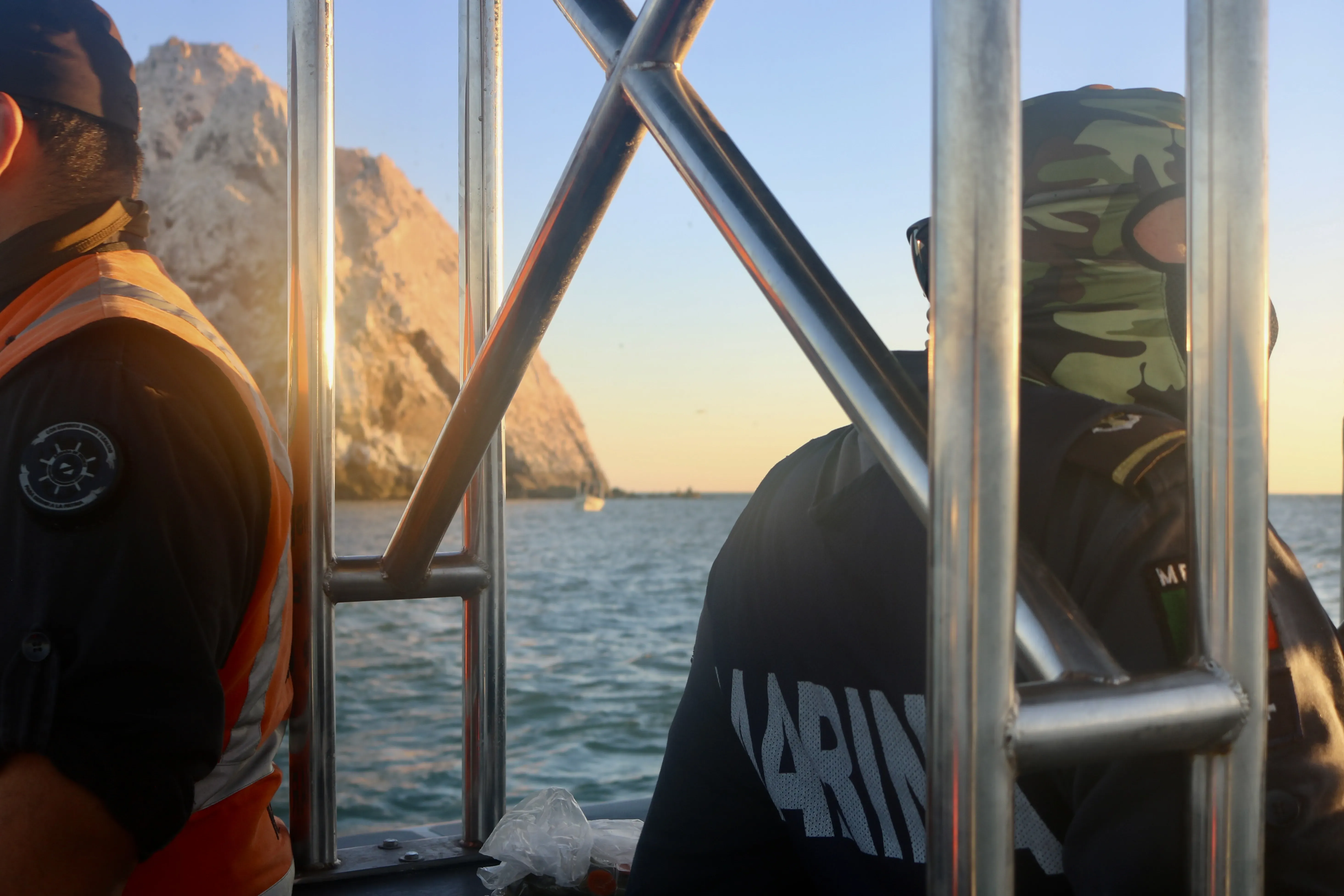
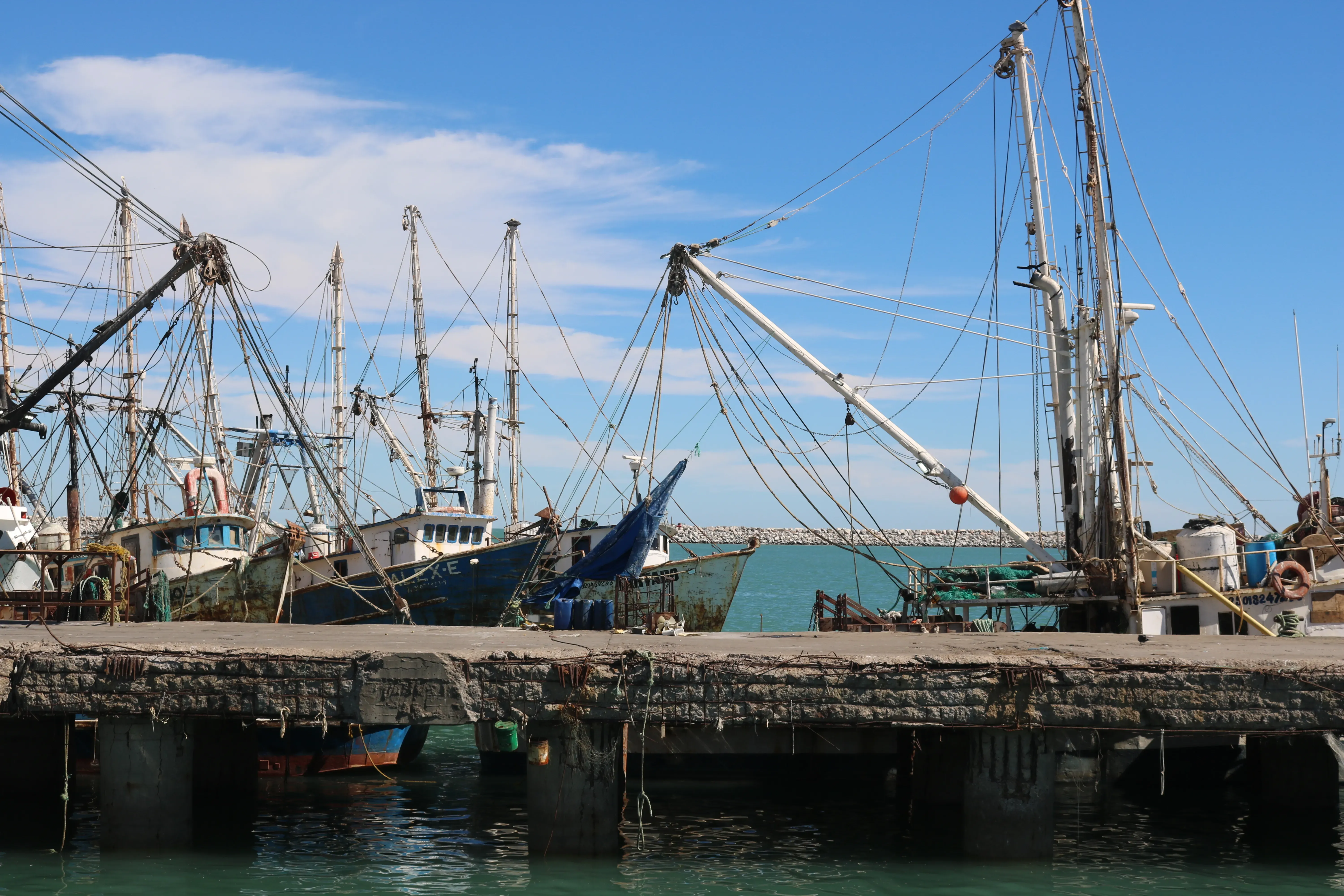
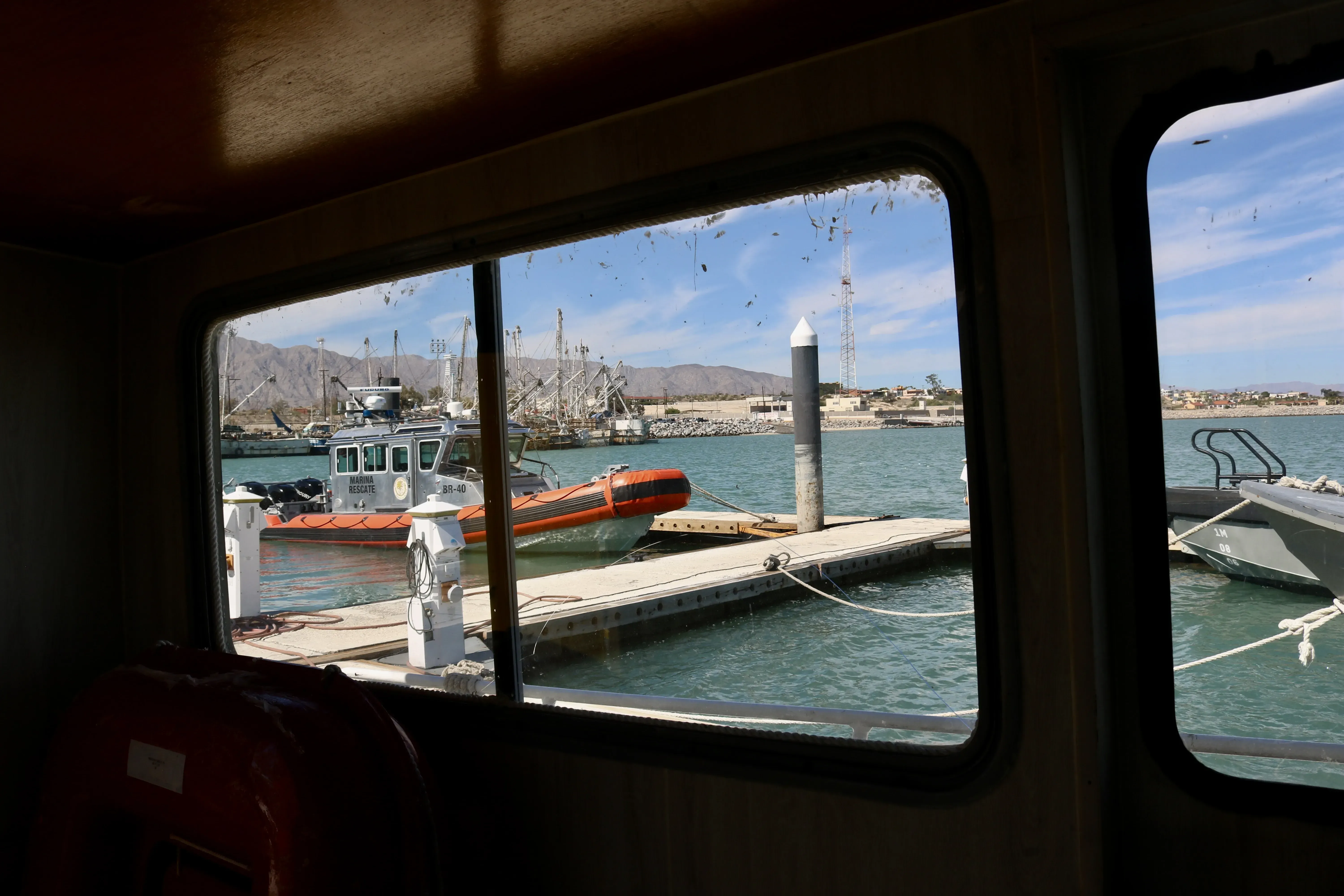
From behind the base’s exposed cinderblock walls, naval officers track activity in the harbor. Drifting in and out are about 350 of the town’s 1,200-odd fishing boats. The remaining two-thirds of the fleet work without documentation in a regulatory gray zone, launching from unofficial slips scattered along the coast.
Despite patrols, vessel tracking, and over 400 net-prevention hooks on the seabed, enforcement regularly clashes with community negotiation. As one officer put it: “Pueblo chico, corazón grande" ("small town, big heart.”) A Mexican proverb that accurately summarises the paradox of enforcing rules against your own neighbors on Monday and sitting beside them in a restaurant on Tuesday.
In a town of economic contradictions, where dirt lots and stray dogs sit alongside hotels housing American tourists, the evidence of regulatory resistance is plain. Walk along the dusty streets of San Felipe and you’ll find generations of fishers mending the outlawed gillnets in front yards. Forced internationally to protect the vaquita, and locally to protect people from economic hardship, the line of conservation and enforcement blurs.
But amid the politics of policing, a small contingent of scientists has been quietly building something new: trust.
At the helm, hemmed in by patrol boats and skiffs, Valeria Towns sees the harbor’s tensions clearly. Used by the late Armando Jaramillo-Legorreta in the first-ever 1997 vaquita survey, the Koipai vessel had been dry-docked for years until Towns decided to repair it. The broken engine has slowed progress, but she is determined to use it as both an educational tool and a monitoring platform.
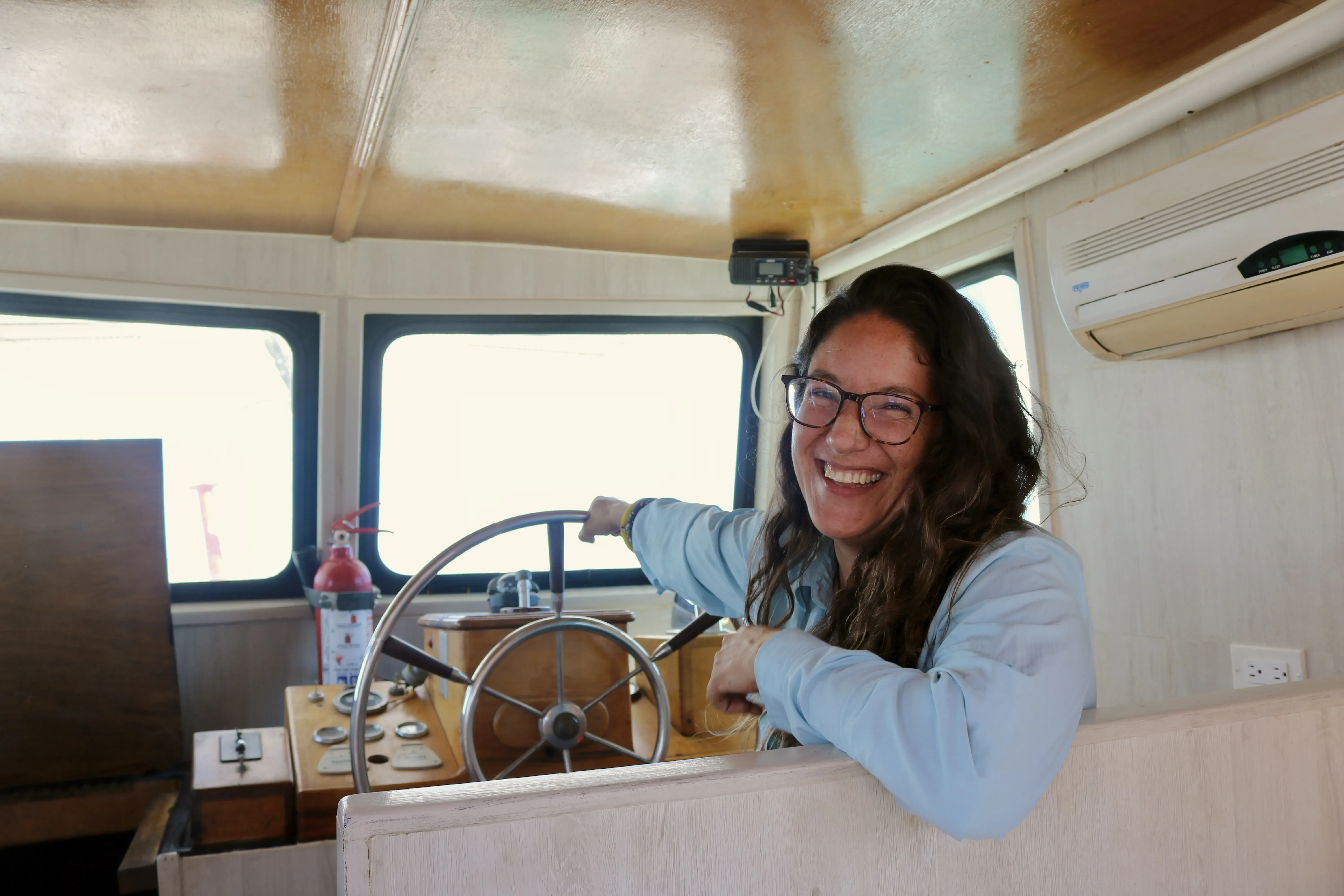
Towns, a National Geographic Explorer and field coordinator for Pronatura Noreste, has spent years rebuilding confidence between conservationists and the community. After two years on the Gulf’s opposite shore in Sonora, living through the most notorious of the totoaba cartel violence, she relocated her work to San Felipe, where the riots following Mario García Toledo’s death saw her truck torched. “Quite the welcome,” she said, jokingly.
Her conviction: Vaquita conservation has historically failed because it alienated the very people who knew the waters best. “It’s not just criminal organizations and bad people killing a very endangered animal,” she said. “It’s a conflict between the interests and survival of a community”—an approach that alienated individuals long before the riots.
In 2017, a $5 million attempt to use U.S. Navy dolphins to herd, capture, and breed vaquitas in captivity ended in tragedy when a mature female died from stress hours after being taken to a sea pen. International NGOs, including the World Wildlife Fund and the Marine Mammal Center, not wanting to be associated with future failures withdrew, leaving a vacuum of leadership and mistrust. Locals were forced to pick up the pieces.
Towns did what others refused: She went out with veteran fishers using “illegal” gear.
“I wanted to really understand what it means to go out in the water and catch fish with gillnets,” she said. “It wasn’t just like the outsider who came to tell us what to do.”
She discovered the issue wasn’t technical, it was cultural. Years of critique entrenched the industry; only two-way dialogue could persuade change. While it was the wives of fishermen who were hardest to convince, she now works with 15 fishers committed to using hand-line fishing methods, with 50 more waiting to be taught.
Her approach marked a shift from policing to partnership.
“I would never say that I’m part of the community,” she said, sitting at the wheel. “But I’m more accepted by the community,” a recognition she attributes to her willingness to work alongside them rather than above them, a lesson she hopes conservation movements around the world can learn.
Her approach is beginning to pay off. Since 2023, collaborative efforts in San Felipe have started to tentatively develop between formerly sworn foes.
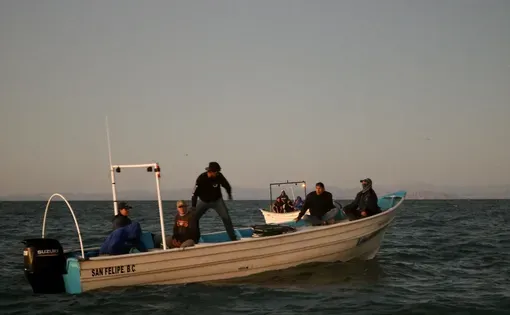
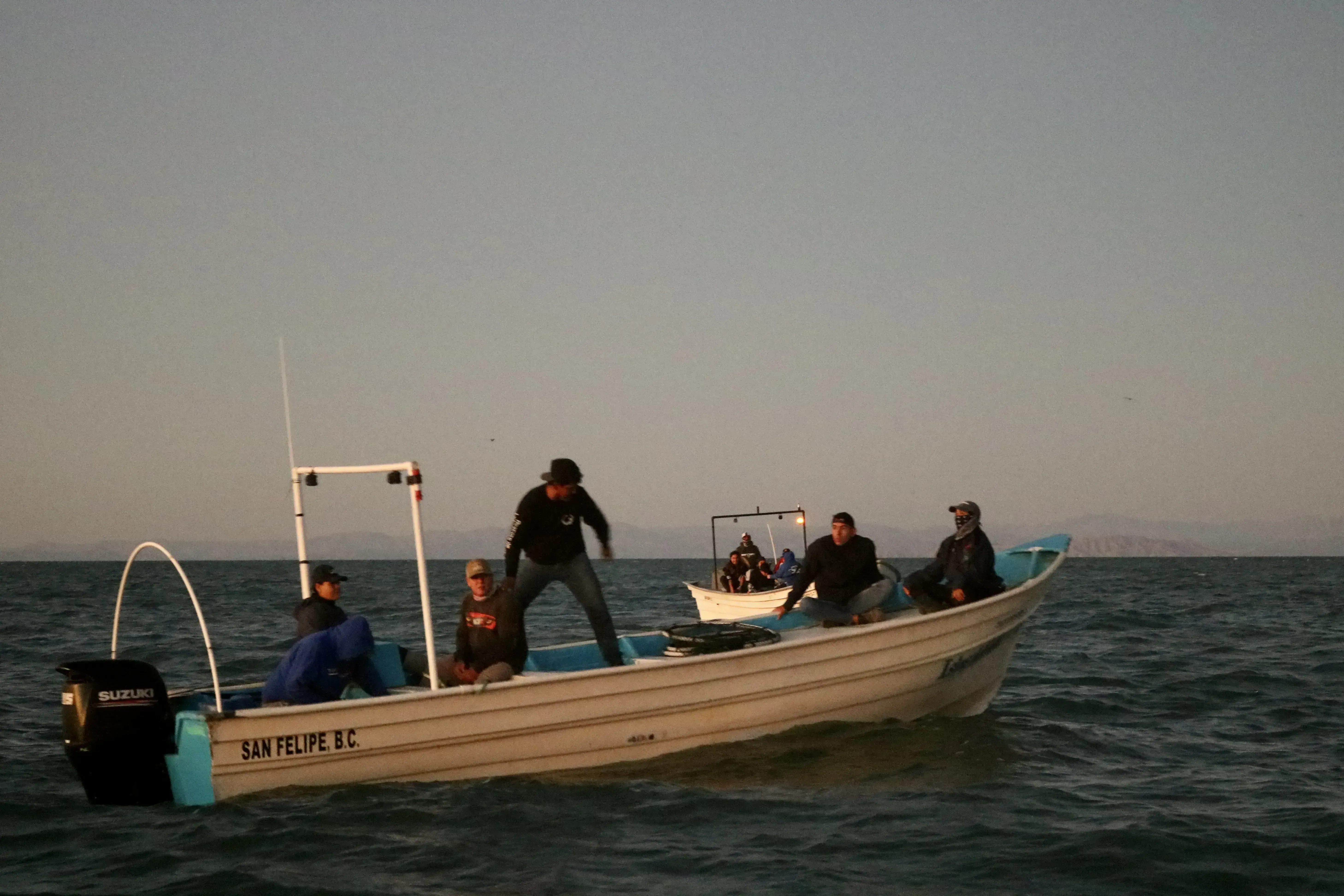
At the same dock as the Koipai, one such example of collaboration was playing out as three boats pushed off just after 5 in the morning. The first two pangas coughed to life and steered for the mouth of the harbor. The Barracuda, a Navy patrol boat, traced the wake lines behind them.
The trio of 300-horsepower outboards hummed gently while four balaclava-clad sailors plotted their course under a sky bristling with stars. Though these waters often host a nightly cat-and-mouse chase between poachers and patrols, this mission was different: a sea lion rescue symbolic of change.

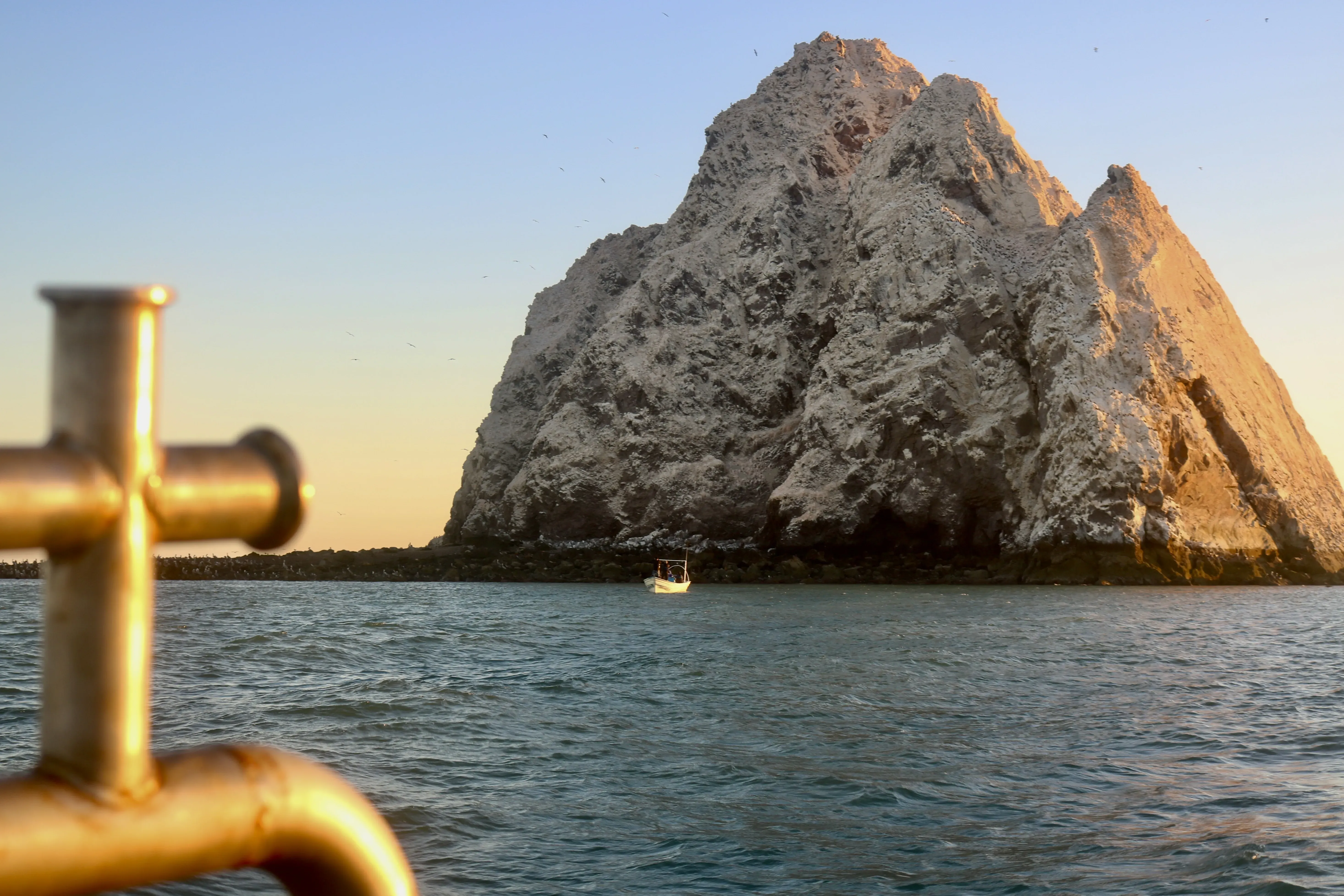
As the black sky gave way to purples that soon seeped into orange, the silhouette of a ship appeared on the horizon—the Bob Barker. A new 150-foot patrol boat operated by Sea Shepherd, the old enemy. Unthinkable only a few years ago, conservationists stepped down into fishing boats the likes of which they were once accused of fatally destroying. Together, they left for Isla Consag, a prominent jagged outcrop 23 miles from shore, where sea lions had become entangled in ghost nets.

In the dawn light, the choreography was cautious but assured. The Navy circled at a distance; fishermen leapt ashore with long pole nets; Sea Shepherd filmed from above with drones. Radios crackled softly and no one spoke above a whisper.
As slick, furious shapes thrashed against plastic mesh on the rocks, it was clear the work was perilous. When a young sea lion was lifted aboard a panga, Felipe Rocha smiled. The morning’s uneasy ballet was, in part, the result of his patient bridge-building as field coordinator for Pesca ABC, a community initiative that trains fishermen to adopt sustainable gear and develops a market for line-caught transparently sourced fish.
“You need to win with the social environment—fishermen, buyers, stakeholders,” he said later.
It’s painstaking work, but he believes locals want to reclaim their own conservation story.
“People are losing their ocean, but the community needs to realize the vaquita aren’t a curse—it can be a good thing.” The porpoise, he added, could serve as a warning for everything else at stake: whales, sea turtles, sea lions, sharks. For Rocha, the vaquita are the tip of the iceberg.
Rocha also believes enforcement alone won’t be enough to save the vaquita; livelihood alternatives and cooperation must come first. Though media attention has historically pinned fault at the door of San Felipe’s fishing fleet, they’re simply a small cog in a much larger web of human faults: the Chinese totoaba demand that spurs an industry; the U.S. import bans squeezing an already struggling local purse; and the historic top-down approach of outside conservationist groups lecturing rather than listening.
“It’s a worldwide problem, and it’s easier to blame the locals than to blame the global infrastructure,” he said.
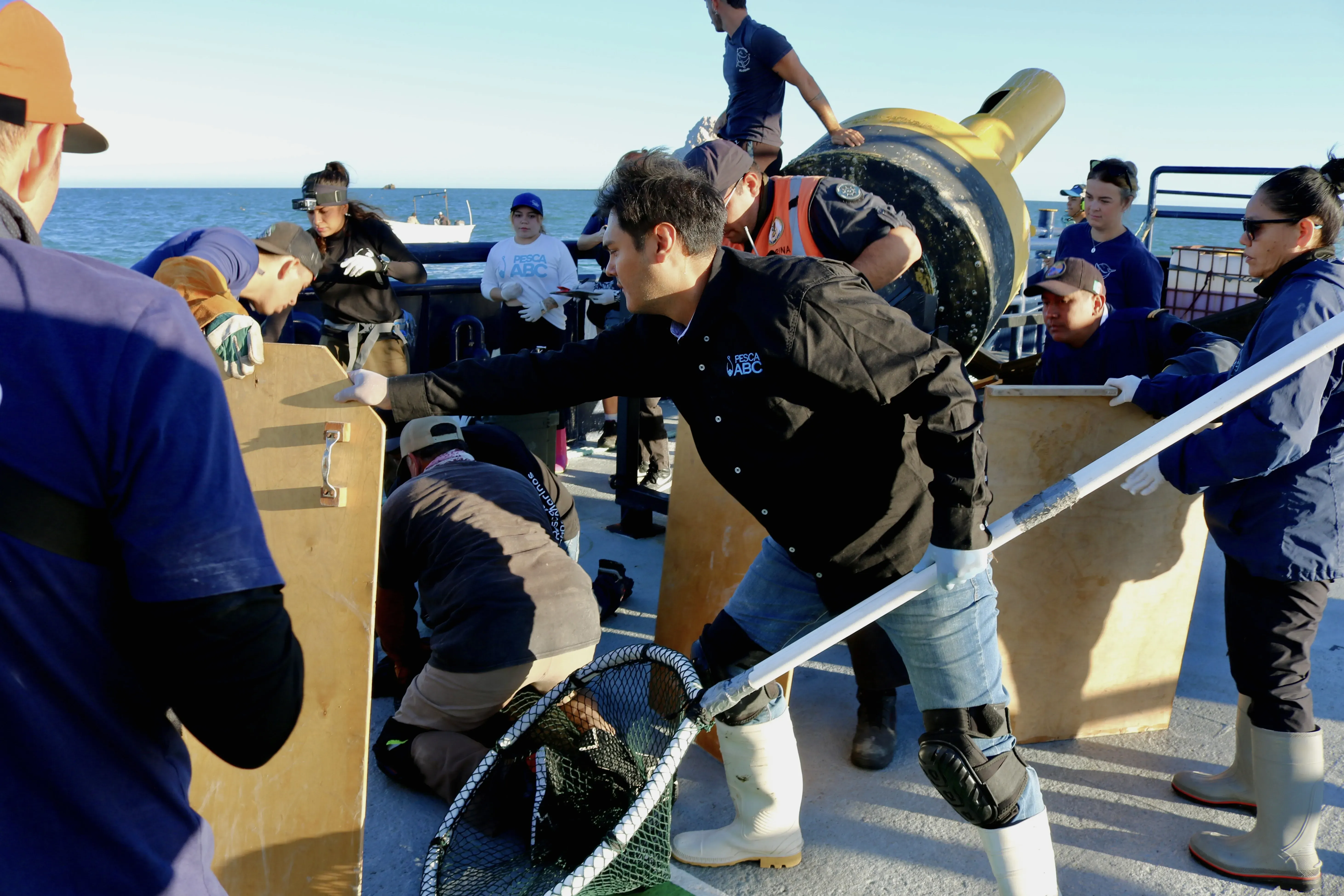
As the sea lion was transferred to the Bob Barker, the veterinary team from Rescate de Lobos Marinos crowded around. Among the group was Heidy Martínez, the ship’s onboard biologist. Raised in Queens, New York, she had first seen this blue world from behind the glass of the Coney Island aquarium. With a radio clipped to her belt, she spoke of how Sea Shepherd had changed and had formed strong bonds with Pesca ABC and other Mexican-run initiatives.
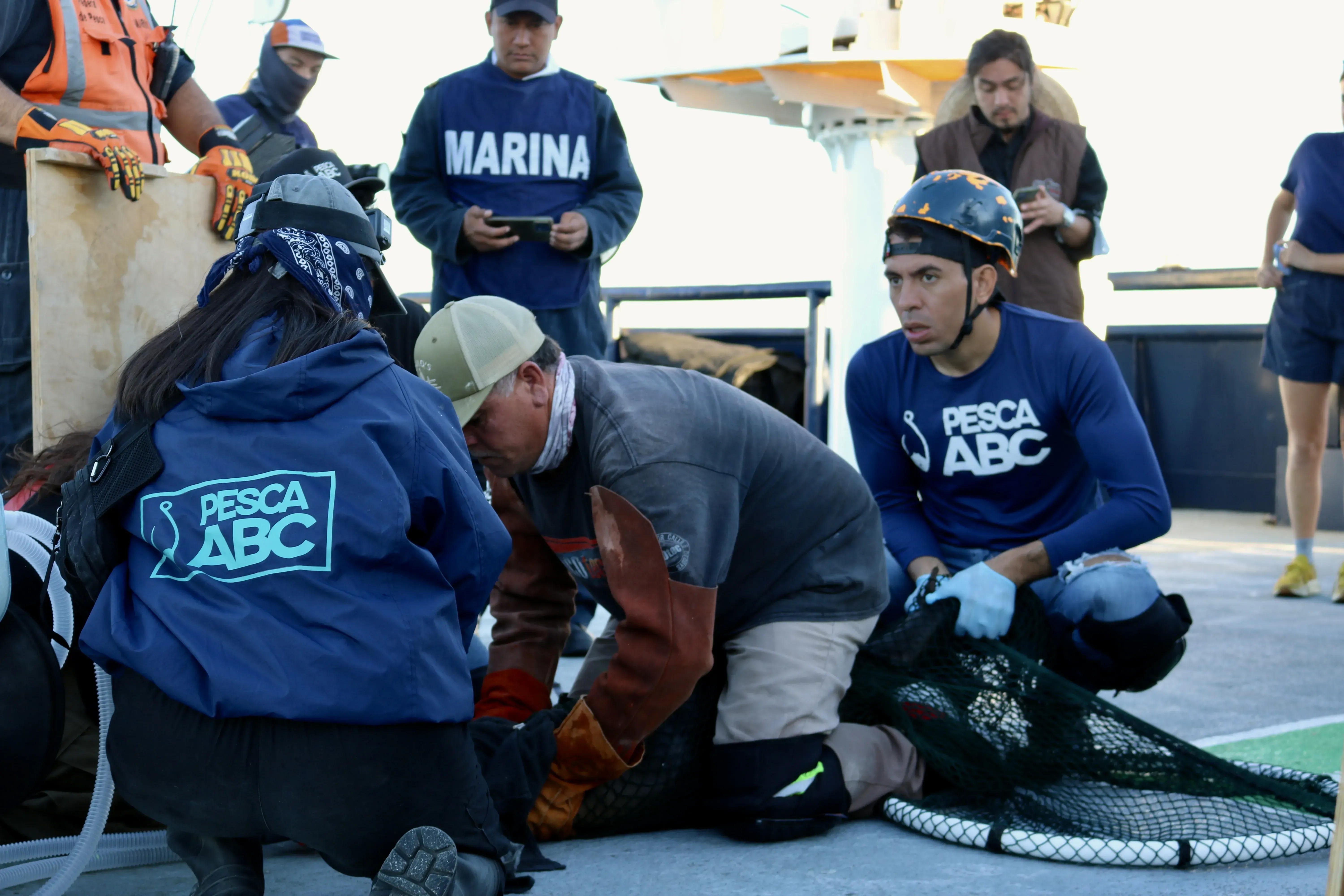
“In order for the vaquita to bounce back, sustainably long term, it’s a community thing,” she said. “We need so many hands that come together.”
Though the organization continues to monitor the work of both the Navy and fishermen for infractions and no longer refuels in San Felipe—a lingering remnant of hostilities—Martínez said its focus has shifted from confrontation to collaboration.
“We’re a very different organization now,” she said, referencing the deliberate dialing down of the NGO’s combative approach since the departure of founder Paul Watson. And, for all the criticisms of its past tactics, Sea Shepherd has arguably stemmed the vaquita from vanishing altogether.
Five years after Mario García Toledo’s death, the Mexican Secretariat of Environment and Natural Resources released the 2025 vaquita survey: The results estimated seven to 10 vaquitas sighted, including new calves. For the first time since records began in 1997, the population had risen—a small but significant turn toward the light for those who had spent years at odds.
When the now-freed sea lion slipped back into the water, the deck erupted in cheers and high fives. Two of the veterinarians walked over to Martínez and hugged her. They named the recently freed animal Janeth, after Martínez’s mother, who died two years ago that day.
A smile tugged at Martínez’s face as she blinked back tears, reflecting on the sacrifices all sides have made.
“Sometimes people think hope is just a thought or a word. But hope is actually action,” she said, gazing out at the Gulf and at the array of former enemies now embracing one another. “This is hope in action.”
In the Upper Gulf, the future of the world’s rarest marine mammal now rests less on patrol boats and more on whether once fractured communities can continue to choose cooperation over confrontation.
What started as a story of crime and distrust is shifting toward one of shared responsibility, with efforts here showing that conservation only succeeds when those closest to the problem are part of the solution.
If the vaquita is to survive the next decade, it will be because groups who once saw themselves as enemies will realize they are bound by the same sea.







