Story
 November 6, 2025
Can the Gulf of California Be Saved? Cabo Pulmo’s Lesson in Prosperity
Country:


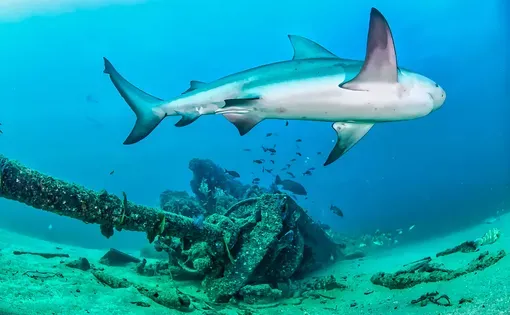
In Mexico’s “Aquarium of the World” science and tradition converge to turn struggling fishing...
PRESENT
An innovative model led by Mexican scientists seeks to turn marine conservation into a catalyst for social well-being. The challenges are many, yet the success of a small coastal community in Baja California Sur stands as a beacon of inspiration.
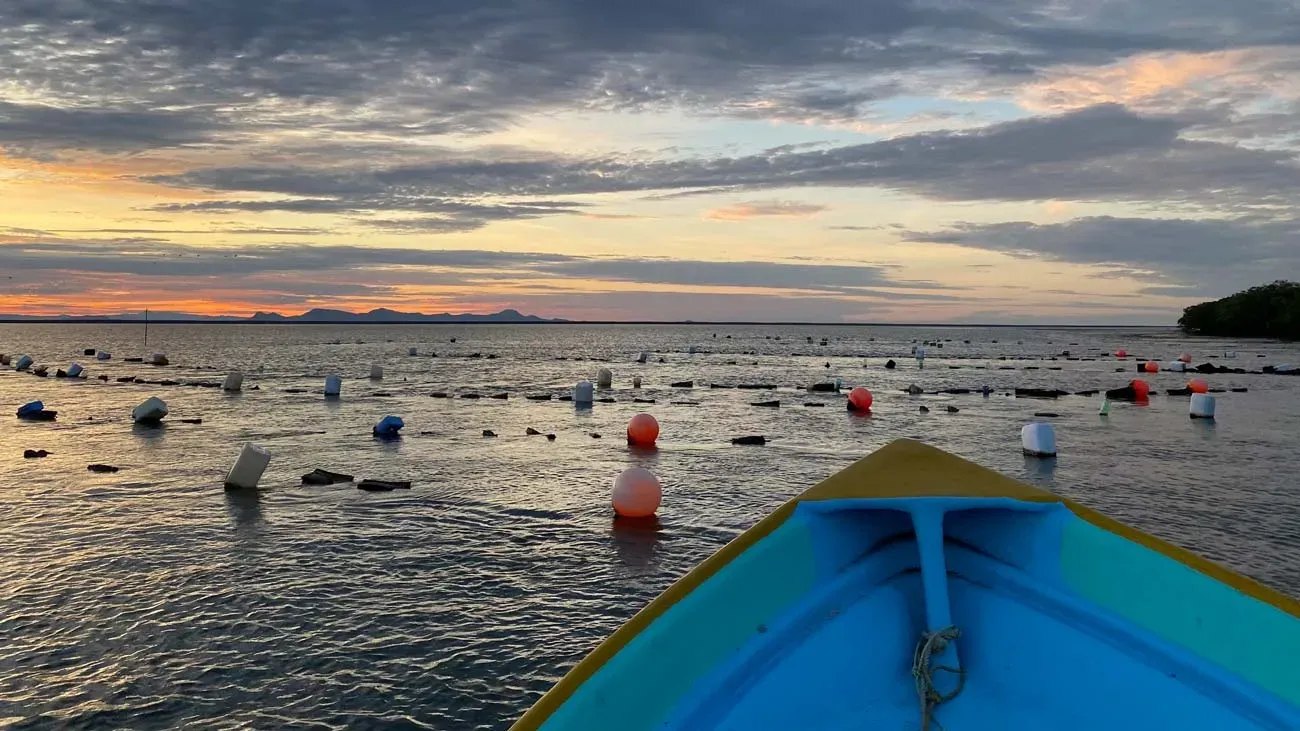
The road to Cabo Pulmo winds between desert and sea. From La Paz, Baja California Sur, the highway cuts through low hills and towering saguaros. In the distance, mirages shimmer—promising water where there is only parched earth. Even the soundscape feels arid: tires crunching, stones clattering, dust stirred by the wind. Then the asphalt gives way to dirt. At times, the sea flickers into view, a blue line trembling between land and sky.
In the truck, Octavio Aburto rides in the passenger seat. He lets the wind hit his face and smiles softly as he draws closer to his destination. He’s been taking this road for over two decades—the same amount of time he’s spent studying the reefs and watching them come back to life. He’s welcomed by young guides who learned to dive back when he was still figuring out how to measure marine life. For many here, Aburto isn’t just the scientist who documented the reef’s recovery; he’s part of the story that made it possible.

As a nonprofit journalism organization, we depend on your support to fund more than 170 reporting projects every year on critical global and local issues. Donate any amount today to become a Pulitzer Center Champion and receive exclusive benefits!
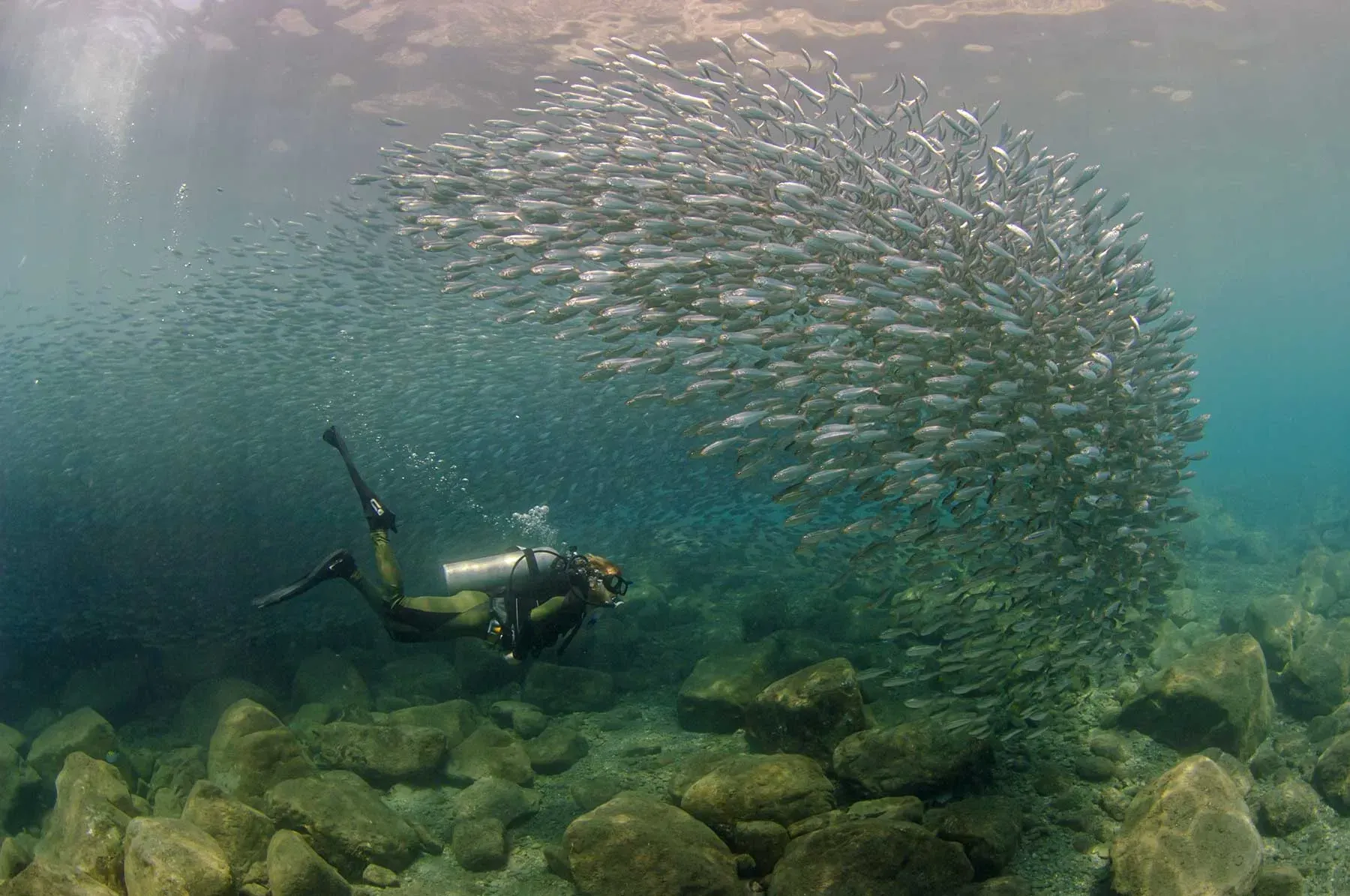
A marine biologist and photographer, he has dedicated his life to tracing the heartbeat of the Gulf of California. Few know its paradise as intimately—or its scars as deeply. Through his lens, Cabo Pulmo comes alive in a dance of abundance and motion: moray eels tucked among violet corals, flashes of multicolored fish gliding past anemones, and spirals of jackfish moving as one—like a single, silvery, mythic creature. His research confirms what his images reveal, a story often cited in conservation forums as an example of what’s possible: In this corner of the sea, life returned.
It wasn’t a miracle, but the result of collective effort—proof that ecological restoration and social well-being can move forward together. Today, as the Gulf of California faces an environmental crisis, what happened in this small reef at the southern tip of the peninsula stands as the foundation for a new approach to marine management: the Marine Prosperity Areas (MPpAs).
The Reef Reborn
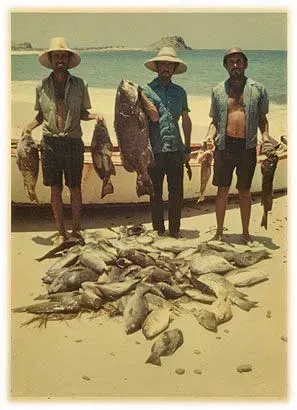
In the mid-1990s, when fishermen began hauling in empty nets, they made an unthinkable decision: to stop fishing and give the sea a second chance. It was a leap of faith with no guarantees— “fishing was the only thing we knew how to do,” says Judith Castro, a member of the Castro family, Cabo Pulmo’s founders.
But the sacrifice paid off. Today, the community thrives on diving, sustainable tourism, and other local services, welcoming some 40,000 visitors each year drawn to the reef. That generates roughly $8 million in annual revenue for a population of just over 200 people.
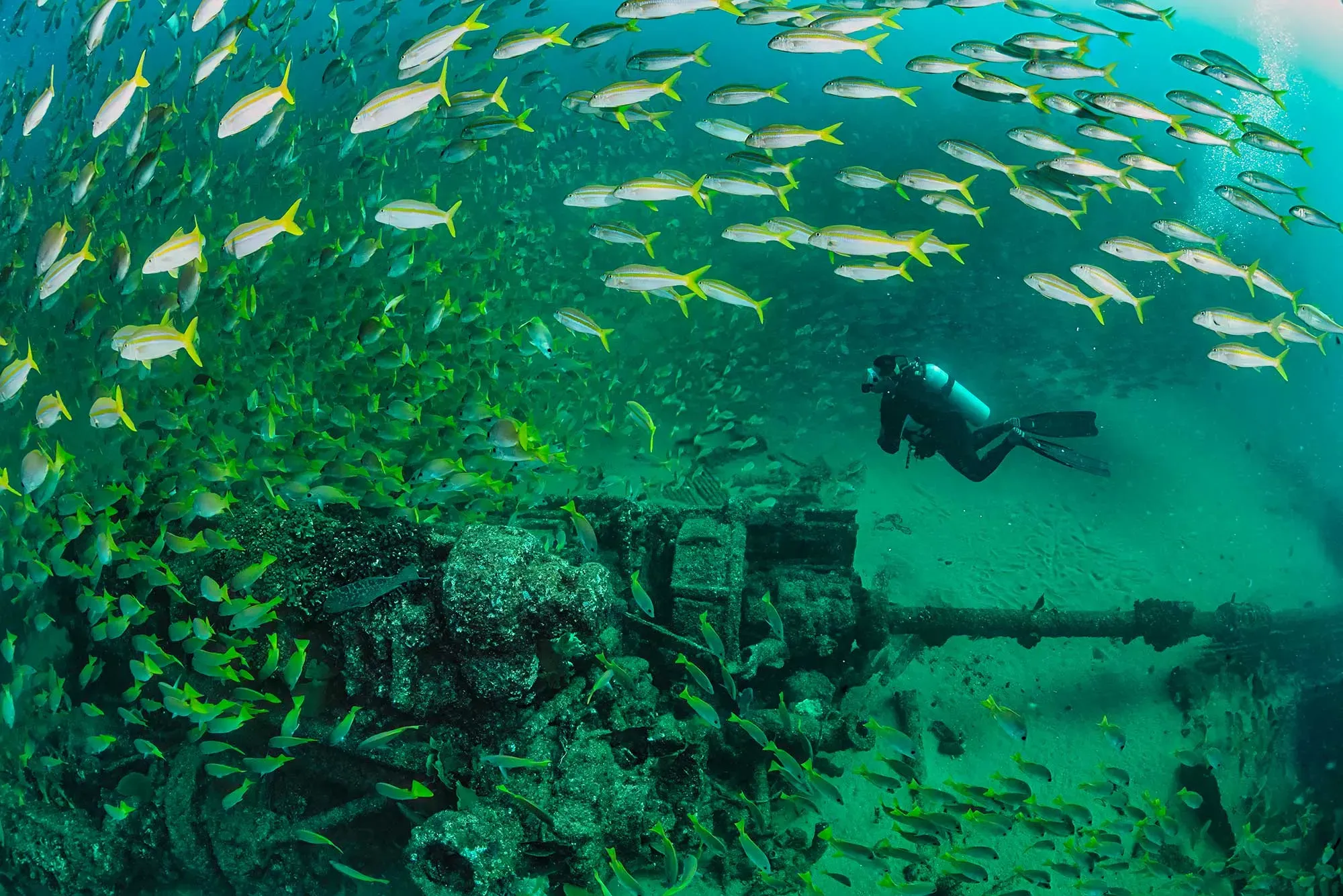
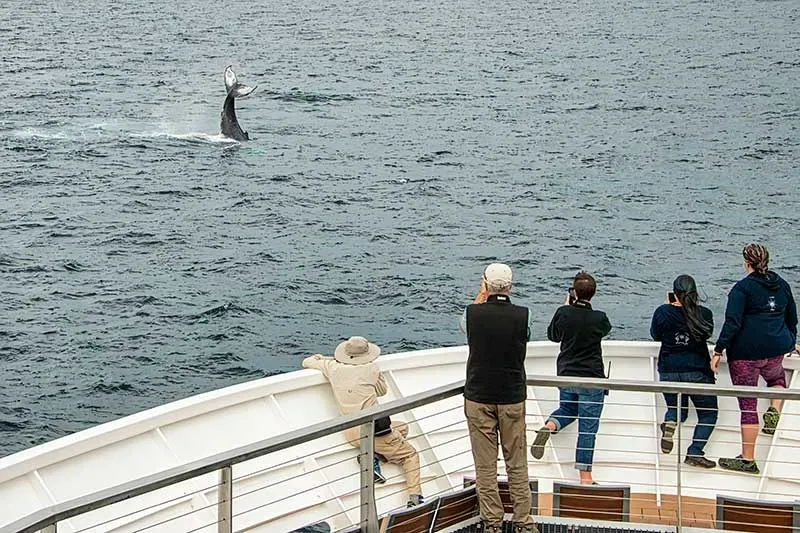
Photos shared on social media by thousands of divers capture the reef’s abundance, home to more than 300 fish species. Bull, tiger, and hammerhead sharks patrol its waters; rays glide across the horizon; five of the world’s seven sea turtle species come here to nest. In winter, humpback whales show their tails before continuing their journey. Everything moves, everything seems to breathe.
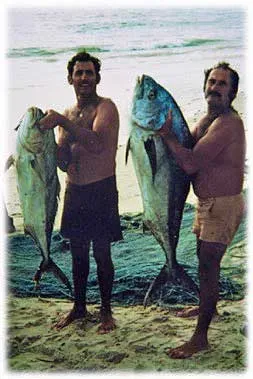
Science proves it. In 2009, after ten years of monitoring, Octavio Aburto and his team confirmed that the reef's biomass had increased by 463%.
Unfortunately, Cabo Pulmo shines alone.
Once called "the world's aquarium," the Gulf of California still provides between 40% and 70% of Mexico's fish but shows clear signs of depletion. Scientific literature warns that most of its fisheries are fully exploited or at risk of overexploitation, with key species like sharks, shrimp, red snapper, and mahi-mahi under unsustainable extractive pressure.
The crisis is exacerbated by species displacement —sardines, for example, are beginning to leave the Gulf for the Pacific as sea temperatures have risen by up to 1°C over the past decade— and by the disappearance of large predators that once kept ecosystems in balance. Today, biomass is concentrated at the lowest levels of the food chain, a phenomenon known as "fishing down the food web," revealing how a sea once brimming with life has been emptied of its essence.
Marine ecologist Fabio Favoretto, drawing on 25 years of observations since the 1998–1999 baseline, confirms this. Preliminary results from his latest monitoring, conducted in summer 2025, report that in key areas such as Loreto and La Paz, fish populations have nearly halved. "While a healthy ecosystem should maintain around four tons of fish per hectare," he warns, "today we barely record between one and one and a half tons."
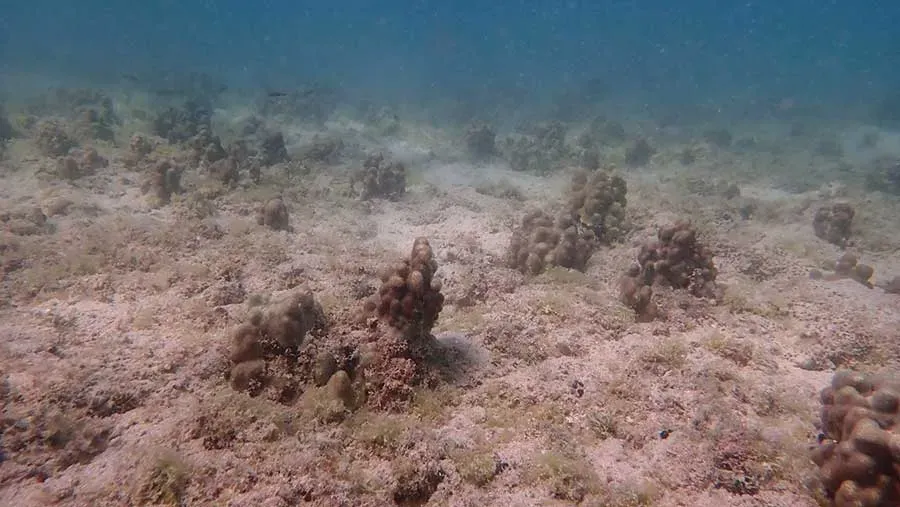
Much More Than an Ecological Problem
The deterioration of the Gulf of California goes far beyond environmental concerns. "Nature's degradation leads to social degradation," warns Alejandro Robles, director of Noroeste Sustentable, “because it fails to generate wealth, and community economies suffer.”
Beyond Cabo Pulmo and its tourist centers, the Gulf reveals a mosaic of fishing villages teetering on the edge of subsistence. Here, artisanal fishing —the sole livelihood for thousands of families — faces a double-edged sword: necessary regulations to protect ecosystems also reduce job opportunities and heighten economic insecurity. Added to this is the historical exclusion of fishermen from decision-making processes; their voices are often marginalized in the management of protected areas, fostering mistrust and resistance.
With few economic alternatives and inadequate basic services, many communities live in a state of uncertainty and resignation. Uncontrolled tourism, disputes over land and sea access, and a lack of infrastructure only deepen their vulnerability.
The causes? Environmental historian Micheline Cariño, professor and researcher at the Autonomous University of Baja California Sur, summarizes it: "The depletion of the seas is blamed on fishermen, but in reality, we have all contributed: the government, by promoting industrial fishing; companies, by investing more capital; and consumers, by eating fish as if it were farm-raised."
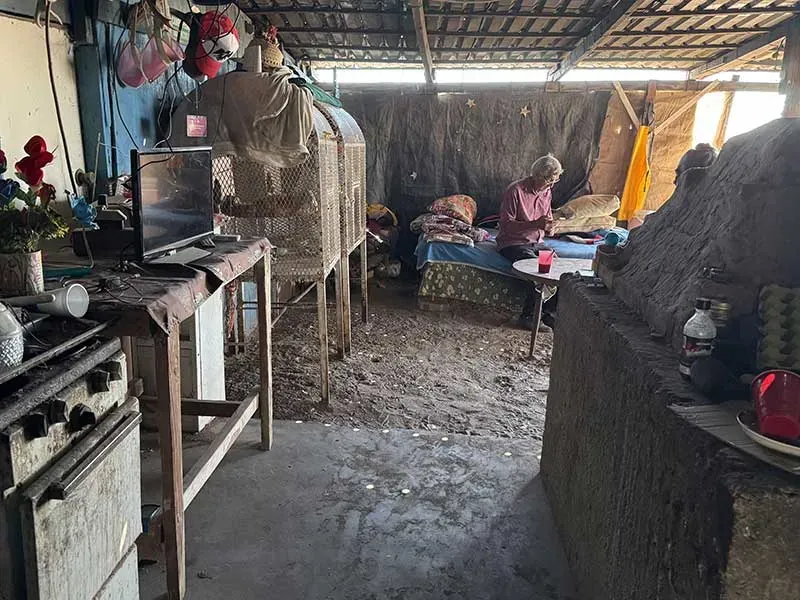
She concludes: "They are the ones who suffer the most. Consumers change their menu, businesses pursue other ventures, the government extracts something else... but fishermen are left with nothing to live on."
Favoretto starkly summarizes the urgency of the moment: "The choice is not 'we move forward or we protect.' There is no middle ground. It's simple: we either collapse or we protect—and perhaps save ourselves."
Infographic: How to achieve MPaAs step by step
The Balance and the Warning
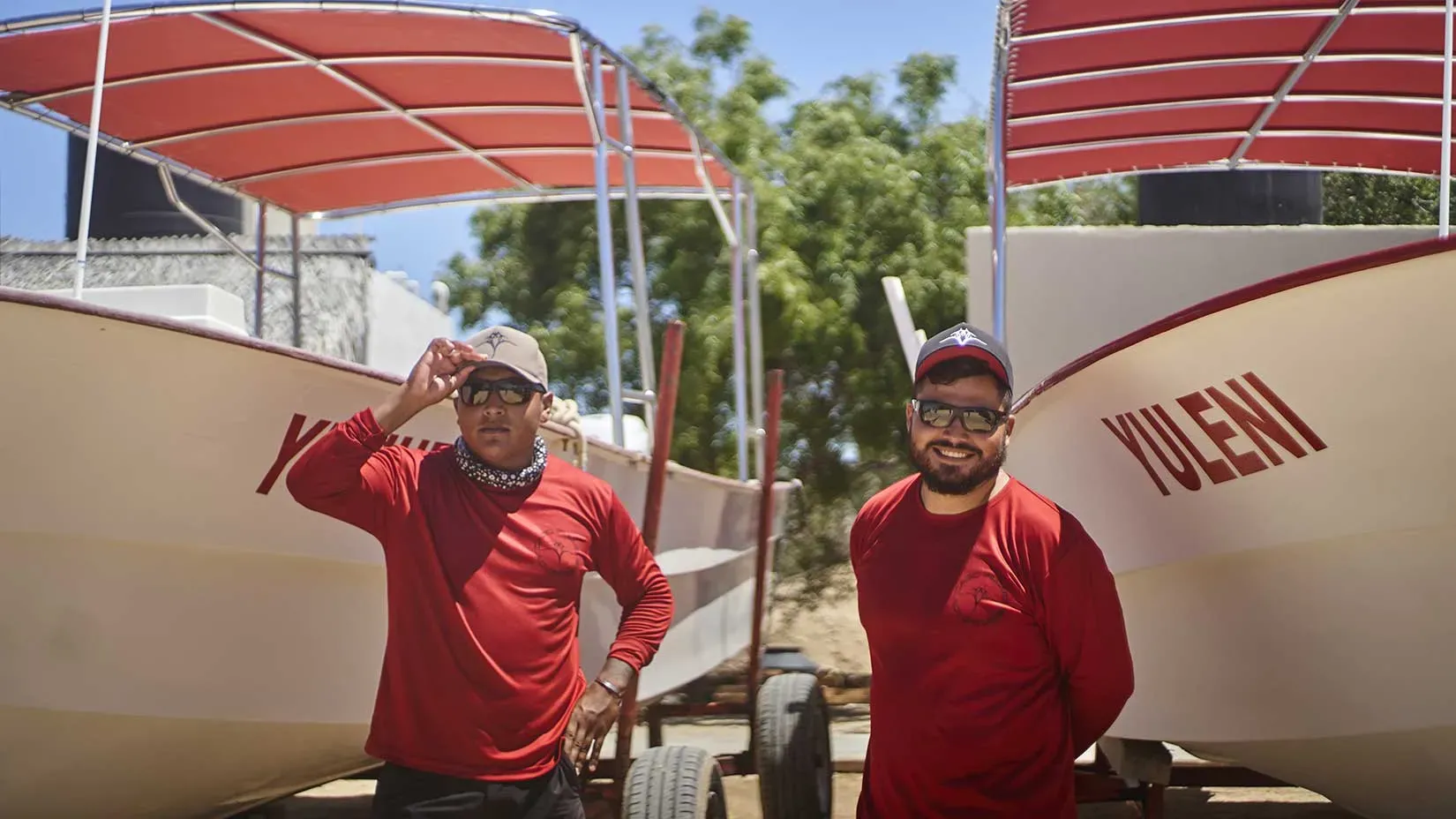
By the roadside, Manuel Enrique Castro bids farewell to his clients. He is 39 years old, the son and grandson of fishermen. Nowadays, he runs a dive shop with six boats and a team of ten people. Each year, he serves roughly 1,500 tourists under a strict rule: no more than eighteen divers per shift. "It's not about working for the sake of working," he says, "you have to know how to work, because we are not donkeys."
A few meters away, Adriana Sofía Santa Ana, 27, guides snorkel groups. She studied alternative tourism and sums it up with humor: "Here, we're all jacks-of-all-trades." She has seen orcas, blue whales, leatherback turtles, and even a tiger shark. “Every time you head out, it’s magical—but also fragile.”
The delicate balance sustaining Cabo Pulmo is under strain. Increasing foreign investment seeks to open resorts or tourist facilities. Many locals partner with them to survive, but profits often leave the community. During peak season, some lower prices or relax rules to attract visitors.
These strategies, by the numbers, work. In 2006, the park welcomed 3,600 visitors; by 2019, that number had risen to 26,000. Today, around 40,000 tourists visit each year—a figure that now threatens the ecosystem’s capacity.
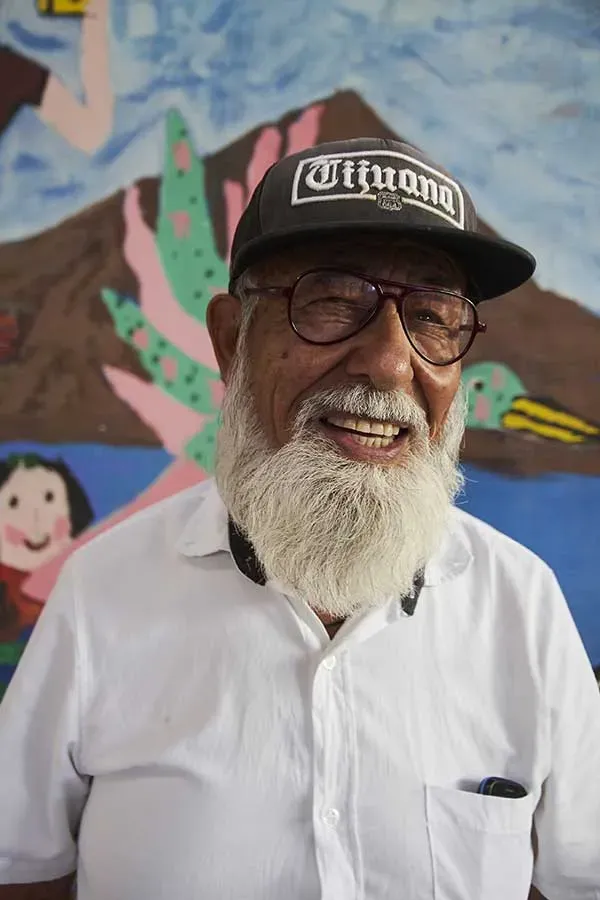
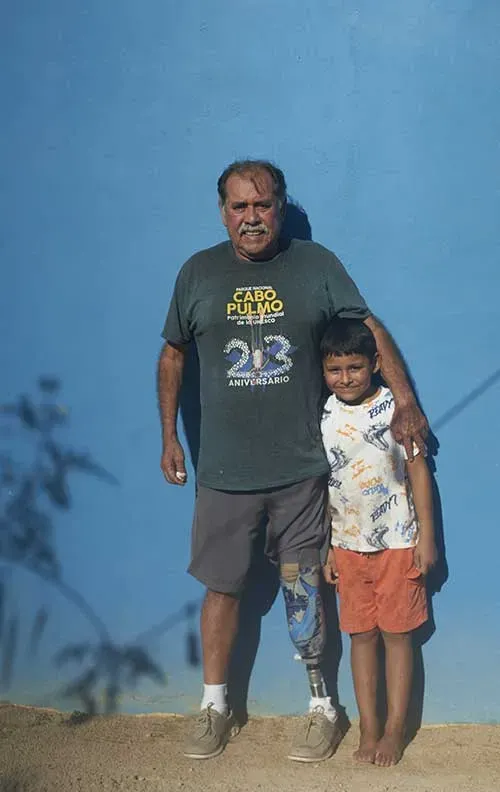
From his son’s restaurant, Mario Castro, one of the park’s founders, gazes at the horizon. “We worked so hard, and now they’re selling it to the highest bidder,” he laments. He lost a leg but still coordinates dive trips. His children and grandchildren remain here. “Sometimes I think about leaving, but they don’t want to leave this place,” he admits.
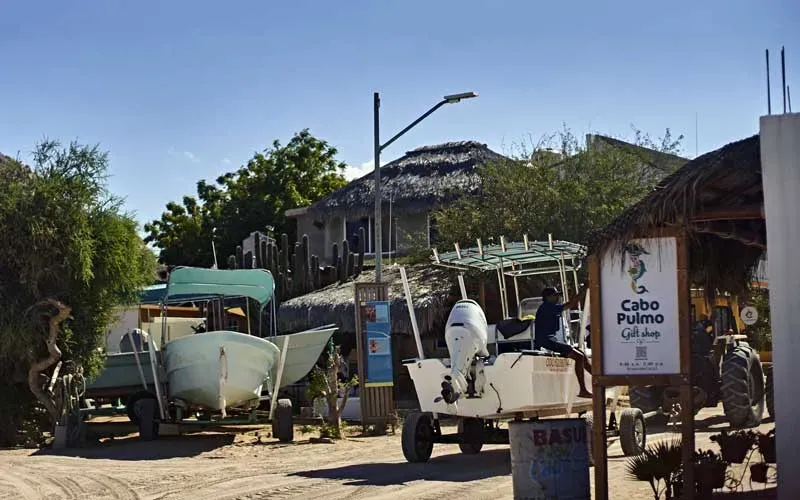
The shoreline keeps retreating. Boats come and go. Prices climb. Tourist developments move forward under the guise of sustainability, while social media paints a picture of a flawless sea. In Cabo Pulmo, the challenge is no longer surviving scarcity—it’s learning how to manage abundance.
“I don’t call it success, because success can be fleeting,” says Judith Castro. “I prefer to call it an example of community-based marine conservation. The day we stop caring for it, that success will vanish. But as long as we keep protecting, educating, and fighting for this place, it will stay alive. And if we manage to help other communities do the same, then all of this will have been worth it.”
PAST
The World's Aquarium, Depleted
Systematically plundered since the last century, the Gulf of California stands today as a reflection of failed public policies, institutional neglect, and—above all—the mistaken belief that it was an inexhaustible resource.
When Micheline Cariño speaks about the Gulf of California, her voice shifts from admiration to outrage. She lives in front of it, watches it every day, studies it as a historian, defends it as an environmentalist, and endures it as a witness to a long history of abuse.
“The plundering of the Gulf of California is devastating,” says the professor and researcher at the Autonomous University of Baja California Sur. “And in the face of dwindling fish stocks, the technoscientific and political response has been: add more technology and take what’s left. It’s an absolute disregard for resilience—a blindness to limits.”
For much of the 20th century, the Gulf of California was seen as a marine Eden—a sanctuary of life teeming with more than 800 fish species, 92 of them endemic, seven sea turtle species, and 40% of the planet's marine mammals.
Yet since colonial times, the region has been treated as a vast storehouse waiting to be emptied. “The sea has always been viewed as a warehouse—a stockpile you could reach into again and again without consequence,” says Cariño, director and co-author of the four-volume Nuestro mar, perhaps the most comprehensive work on the Gulf of California’s environmental history.
"And faced with the evidence of declining fish stocks, the techno-scientific and political response has been: add more technology and take what's left. It's an absolute lack of consideration for resilience, a blindness to the limits.”
Michelin Cariño, Professor-researcher at the Autonomous University of BCS
"It is possible that all the reefs in the Gulf of California are already at their minimum biomass and the decline will continue."
Fabio Favoretto, Researcher at the Scripps Institute of Oceanography
"We knew it was a beautiful garden. But we didn't know how important it was.”
Judith Castro, Member of the Cabo Pulmo Community
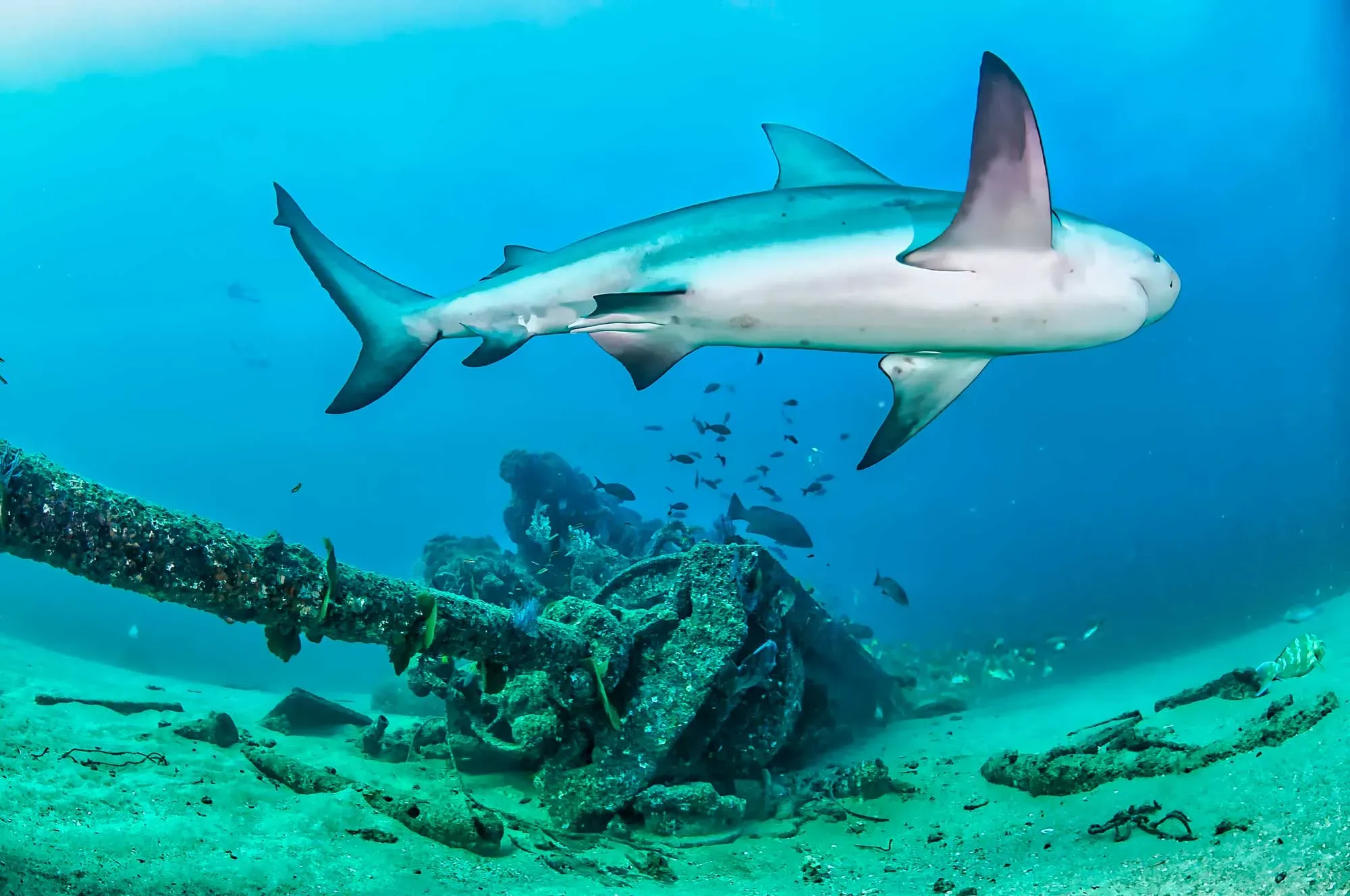
A Plundered Sea
The wounds of the Gulf of California have been open for over a century. The first wave of extraction glittered with the deceptive luster of pearls and mother-of-pearl—the “white gold” of the 19th century. With the arrival of mechanized diving suits, oyster beds were exploited to extinction by 1940. Then came sharks, sardines, and shrimp. Each industrial boom left behind a more desolate sea.
"Coastal fishermen took part, but were driven by the market, subsidies, and politics. The whole system was built to extract, not to protect,” Cariño explains.
The result was a bled-out ecosystem. The construction of the Hoover Dam in 1936 in the United States reduced the flow of the Colorado River, altering the dynamics of the Upper Gulf and leading to the collapse of emblematic species like the totoaba and the vaquita, which are also victims of international trafficking. In just five decades, the Gulf's total biomass fell by 60 to 80%, and today, seven out of every ten fisheries are overexploited or on the verge of collapse.
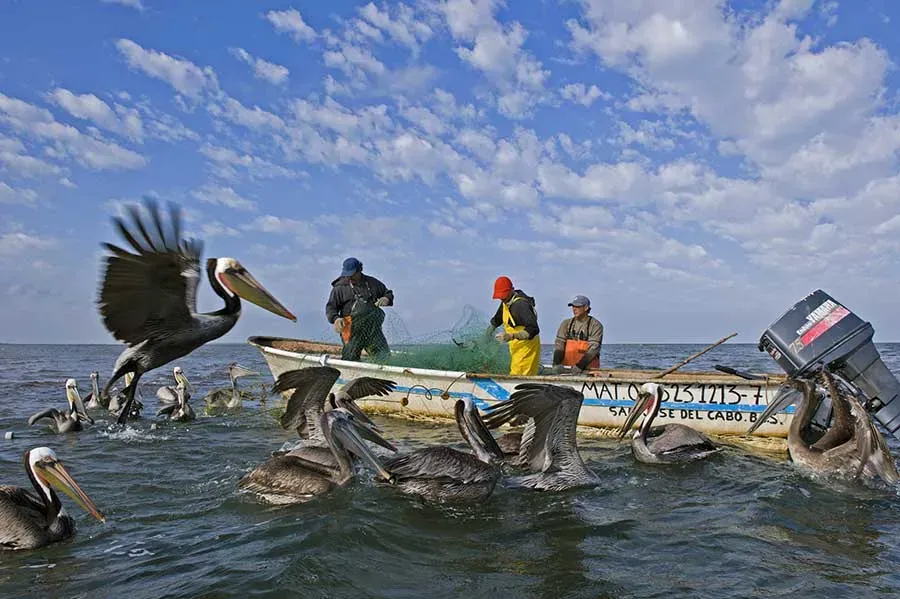
The Sea and Its People
Climate change has exacerbated the crisis. Recent studies show that in the past decade, the central Gulf’s water temperature has risen by an average of 1°C—enough to throw an entire ecosystem off balance. Heat alters microscopic plankton, the foundation of marine life, triggering—or already setting off—a chain reaction that ripples through the food web: less food for small fish, fewer small fish for larger ones, and an increasingly silent sea.
Along with the loss of biodiversity, the fishing culture—another source of life in the Gulf of California—is disappearing. “What’s being lost isn’t only biodiversity, but the biocultural heritage of fishing,” says Cariño. “It’s not just a job; it’s a way of life, a culture. An entire identity disappears when fishing resources are destroyed.” It was in this context that the story of Cabo Pulmo began.
“The story of Cabo Pulmo is not as rosy as it is often portrayed, as the fishermen suffered during the first ten years, since everything was prohibited, but the ecosystem had not yet recovered.”
Octavio Aburto, marine biologist
The Community's Dilemma
Before it became a global model for conservation, Cabo Pulmo was a small fishing village. But by the mid-1980s, a troubling pattern had emerged. “My father and brothers would go fishing and often come back with nothing,” recalls Judith Castro. “They would borrow money for gas and return only with debt.”
The Castro family had been bound to the reef for generations. The grandfather, Jesús Castro Fiol, was among the area’s first pearl divers. When the shells ran out, he became a scale fisherman, and his children inherited that trade. As fish grew scarce, young men like Mario Castro had to venture farther and farther out to sea to find a catch.
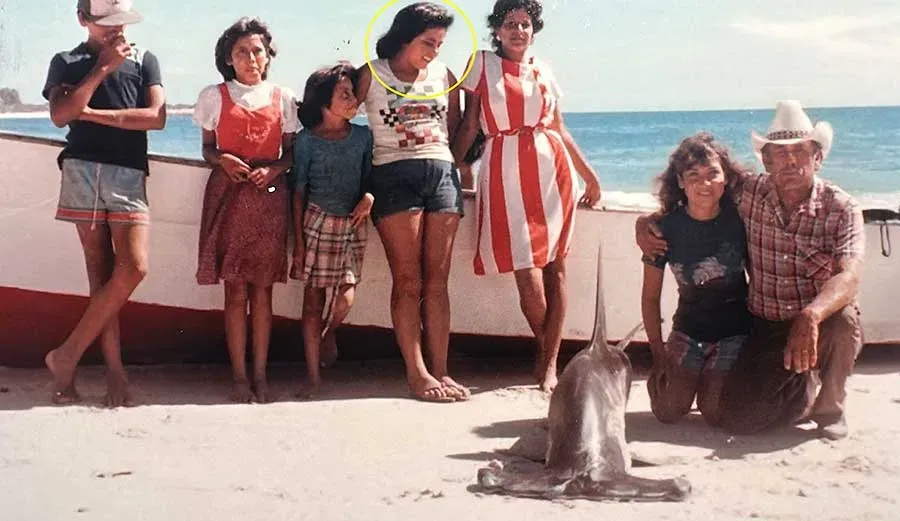
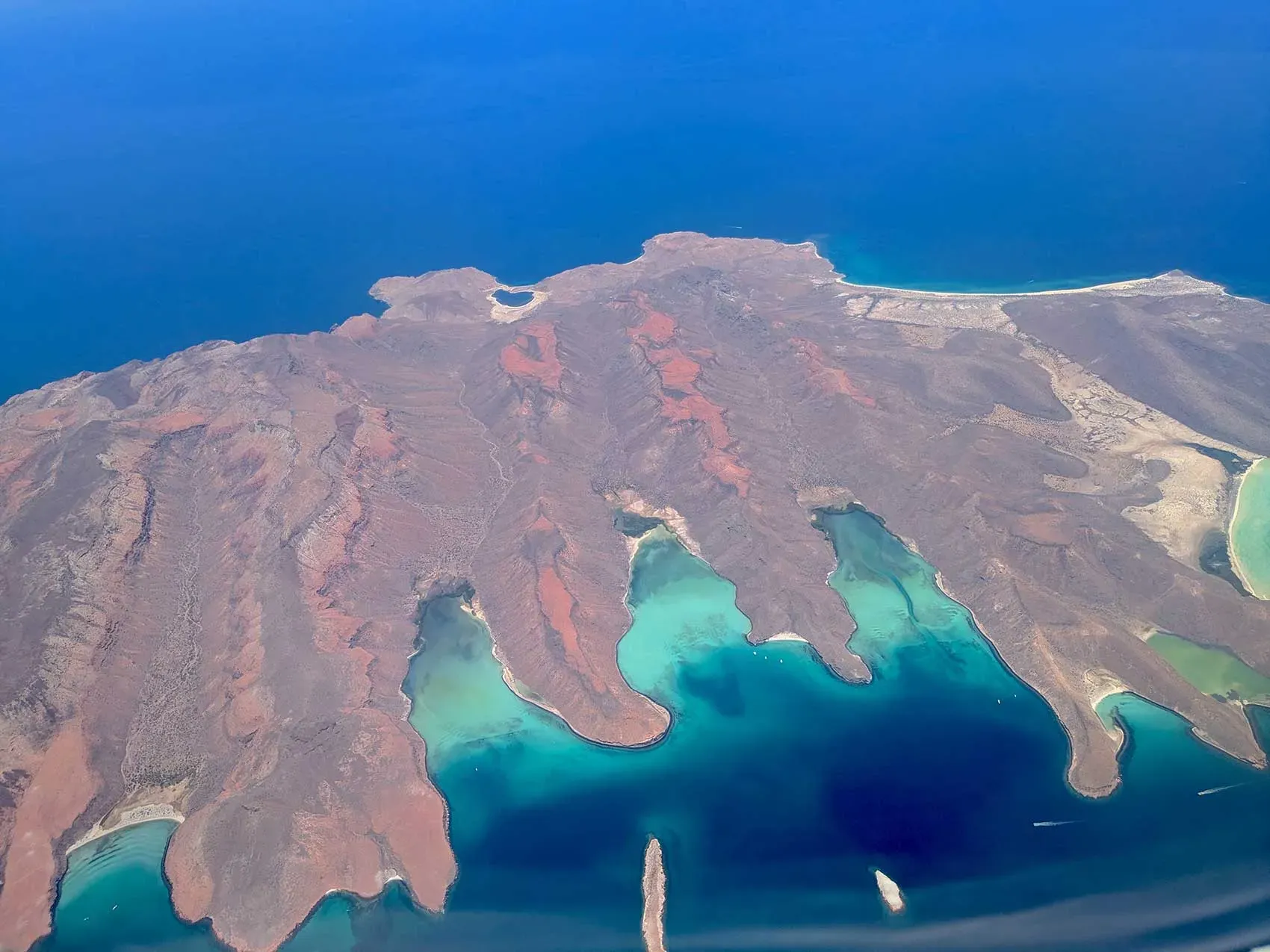
That was when researchers from the Autonomous University of Baja California Sur began visiting the community. They arrived with notebooks and cameras, took samples, talked with fishermen, and warned about the reef’s fragility. “We knew it was a beautiful garden, but we didn’t know how important it was,” says Judith. The bond with scientists grew stronger until, with the support of biologist Gabriela Anaya and professor Óscar Arizpe, the fishermen petitioned the government to create a protected area. On June 6, 1995, the decree establishing Cabo Pulmo National Park was published.
The early years were difficult. Fishing was banned, and no one knew how to do anything else. “Those were very hard years,” Judith recalls. “The closed area covered 7,000 hectares, and the ecosystem hadn’t yet recovered.” Octavio Aburto agrees: “Cabo Pulmo’s beginnings were far from idyllic. The fishermen struggled through the first decade, when everything was forbidden and the reward was not yet visible.”
In time, the sea responded. Corals began to grow again, fish returned, and sharks reappeared. “My dad said we were crazy,” Mario remembers. “But one day I brought him money from diving and told him, ‘It’s yours—from your panga.’ He couldn’t believe it.”
But the biological revival also drew the attention of new predators: the Cabo Cortés tourism project, which proposed thousands of hotel rooms, golf courses, and a marina facing the park. The fight against the development was “a turning point,” says Judith Castro. They called the press, organized talks, sought legal advice, and even traveled to Spain—the project’s country of origin—to defend the reef. Resistance turned into a movement, and the giant was defeated. “That’s when Cabo Pulmo became known around the world,” says Judith. “Everyone wanted to see the reef that had been saved by its own community.”
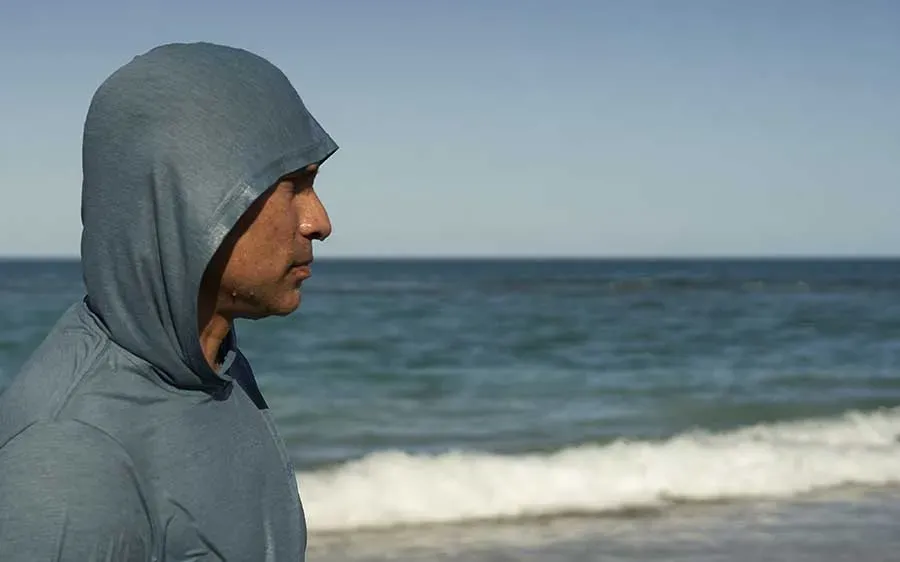
Replicating the Model
What began as a community decision—to stop fishing in order to save the reef—ended up offering an empirical lesson in how ecological and social prosperity can advance together. Octavio Aburto and the team of scientists who accompanied the process realized that this success had to be deeply understood: it needed to be broken down, its components identified, and turned into a model that others could replicate. The central question was: how were local leadership, social cohesion, the practical use of science, and—above all—tangible benefits for people cultivated?
The academic answer lies in Marine Prosperity Areas (MPpAs), a management model designed to understand and recreate, in other regions, the conditions that made Cabo Pulmo possible. A place that, as Aburto describes, managed to move “from theory to practice,” advancing ecological restoration and human well-being in tandem. A success measured in money, yes—but one that transcends economics. “In Cabo Pulmo there is prosperity because there is no vandalism, no prostitution, no alcoholism… There is a stronger, fairer society,” says Aburto.
Cabo Pulmo proved that conservation can also mean prosperity.
FUTURE
From "Paper Parks" to Real Prosperity
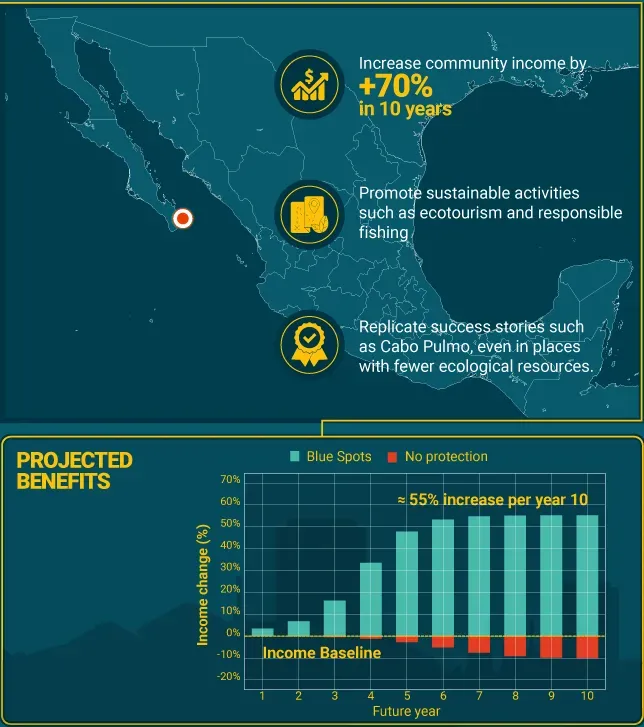
Amid the Gulf of California crisis, scientists have identified 30 priority zones that, while covering just 1% of Mexican waters, could protect 37% of critical habitats and raise local incomes by up to 70%.
It’s no surprise that the idea of prosperity as a starting point for ecological restoration was born in Cabo Pulmo—or, more precisely, in its reef. Diving there is like entering a symphony of life: schools of fish gliding like liquid mirrors, sharks emerging among jackfish, corals pulsing with their own rhythm. For those who have seen the depleted reefs of Cancún or Puerto Vallarta—where the absence of fish has become the landscape—the experience feels like a journey through time: this is what the seas were like before collapse.
Octavio Aburto’s photographs capture this abundance eloquently. Yet if the photographer documented it, the scientist has explained its origins. What makes Cabo Pulmo unique is not only its biodiversity, but also the web of diversities that sustain it—biological, cultural, social, and economic. “Cabo Pulmo showed that the ocean can heal if given time and respect,” Aburto says.
From this experience, scientists have learned that protecting an ecosystem is not enough: the lives that depend on it must also be safeguarded.
Using a sort of reverse social engineering, they analyzed the case to understand its mechanisms, its process, and its potential for replication. From that effort emerged the concept of Marine Prosperity Areas (MPpAs), proposing a new scientific framework to reconcile ecological restoration with the economic and social prosperity of coastal communities.
The idea began with a critical realization: for years, it was believed that protecting the sea would automatically improve the lives of those who depend on it. But evidence has shown the opposite. Too many Marine Protected Areas (MPAs) have become mere “paper parks”—declared polygons lacking enforcement, funding, or scientific monitoring, and most importantly, lacking tangible benefits for local communities.
Currently, fewer than 5% of MPAs in Mexico show verifiable ecological recovery. Globally, seven out of ten fail completely or partially. In the Gulf of California, a study on the effectiveness of protected areas found that out of 23,300 km² of reserves, only Cabo Pulmo meets its conservation goals.
Faced with this scenario, the proposal is a conservation model with a human face—one that breaks from the tradition of measuring success solely by tons of fish or hectares protected. Its core metric is socio-ecological prosperity: places where people can live well without depleting their environment. “The goal,” says marine ecologist Fabio Favoretto, “is to build well-being in order to regenerate the sea, not to wait for the sea to regenerate well-being.”
STEP BY STEP: THE BLUE SPOT INDEX
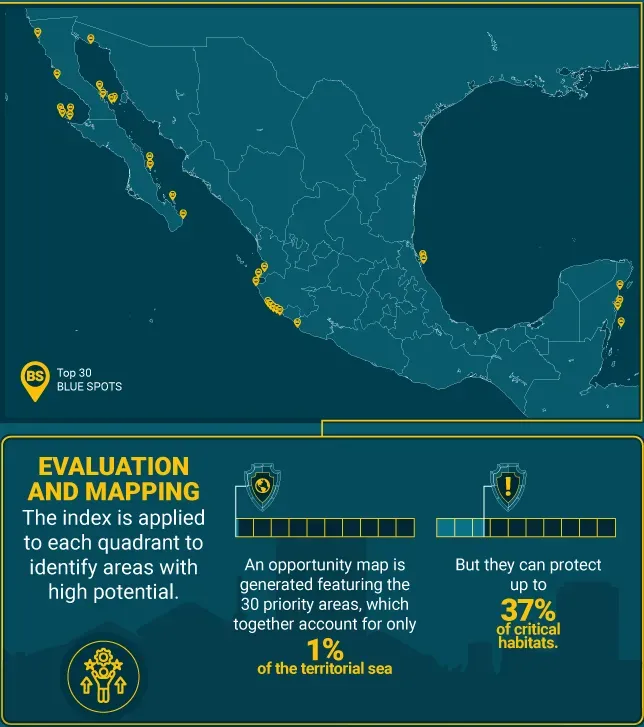


Locating the Blue Spots
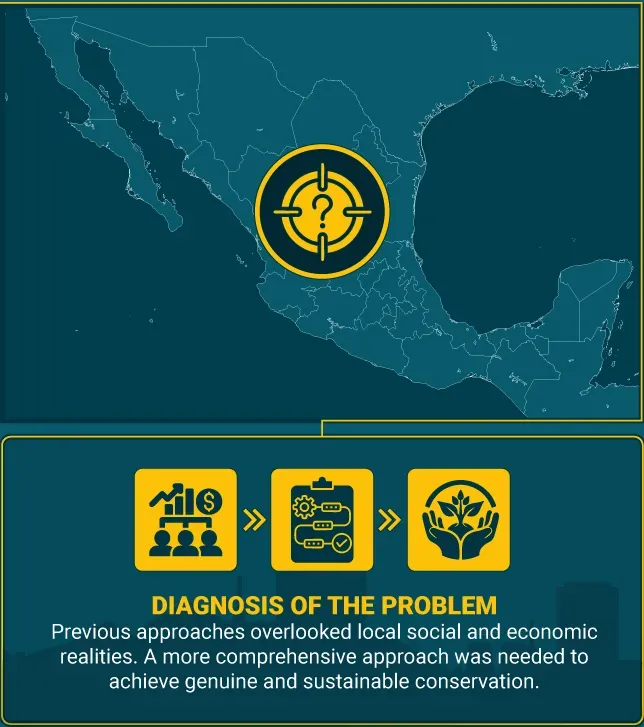
For years, marine conservation focused solely on ecology—on identifying biodiversity “hotspots” where protected areas could be established. But that approach left coastal communities out of the equation. Recognizing this limitation, researchers widened their lens toward “bright spots,” showing that success also depends on local governance and social capacity.
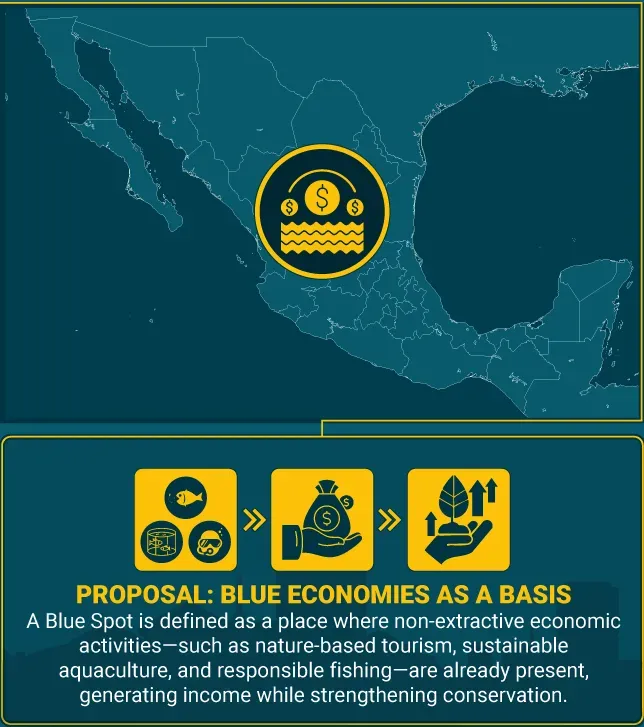
One of the innovative pillars of the MPpAs proposal is the concept of "Blue Spots." This approach integrates biology, governance, and economic viability to identify areas where non-extractive economies—such as diving tourism, wildlife observation, or sustainable aquaculture—already exist, generating income while fostering long-term conservation.
For that reason, one of the researchers’ greatest challenges has been to locate sites with real conditions for a sustainable model based on the nine pillars of MPpAs: community participation, strong governance, social investment, environmental education, monitoring, and more.
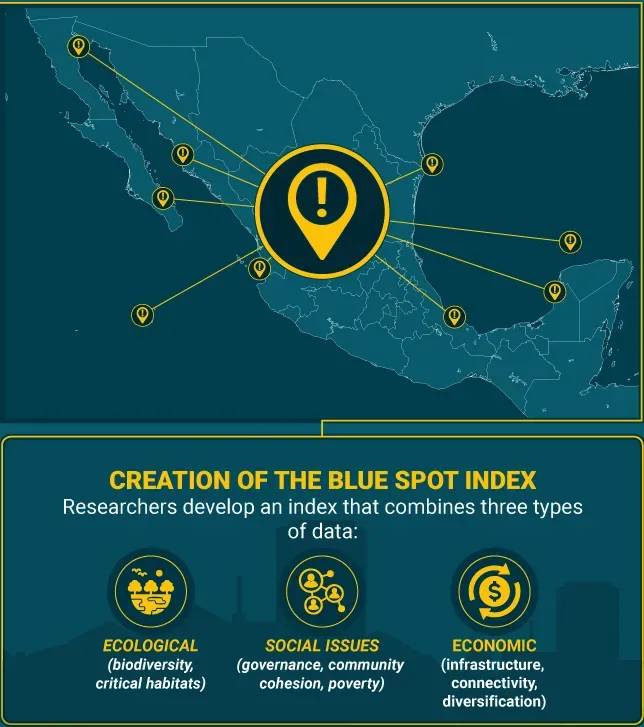
To achieve this, scientists created the Blue Spot Index—a tool that analyzes ecological factors (biodiversity, critical habitats), social factors (cohesion, poverty, governance), and economic factors (infrastructure, connectivity, and productive diversification).
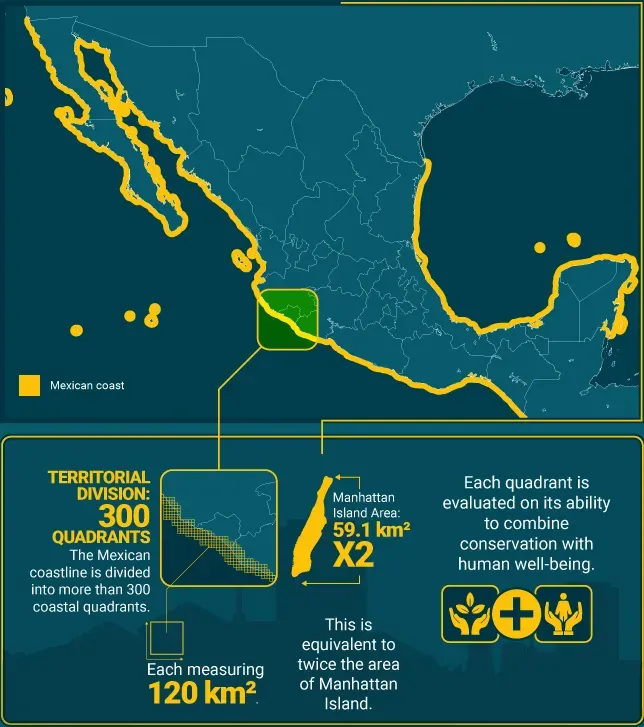
Using this method, Mexico’s coastline was divided into over 300 coastal quadrants, each covering 120 km²—twice the size of Manhattan Island. Within each, the potential to align ecological prosperity with human well-being was evaluated.
The result? An unprecedented map of opportunities for ecological and social development: 30 priority zones covering only 1% of Mexico’s territorial seas, yet capable of protecting up to 37% of its critical habitats—mangroves, seagrass beds, and reefs. These areas could also boost community incomes by more than 70% within a decade through sustainable economic activities such as ecotourism and responsible fishing.
Octavio Aburto, a researcher on the project, sums it up: “Any site in the Gulf of California that achieves good governance and fosters blue economies can reach—or even surpass—the success of Cabo Pulmo, even with fewer ecological resources.”
The 30x30 Horizon
As the world strives to meet the global 30×30 goal—protecting 30% of the planet by 2030—Cabo Pulmo stands as proof that conservation can also drive human well-being. The next step, says Octavio Aburto, is scaling the experience: “We’re envisioning the creation of ten Marine Prosperity Areas over the next ten years. Those ten areas in the Gulf of California could help a hundred communities spark economic growth and social well-being.”
Yet not everyone shares the same enthusiasm. Environmental historian Micheline Cariño warns that no model can be universally applied: “Each community has its own idiosyncrasies, history, challenges, people, and expectations.” What works in Cabo Pulmo, she adds, won’t necessarily work in La Reforma or El Manglito. Her warning is clear: prosperity cannot be imposed. “Top-down processes,” she says, “impoverish people—humanly and morally.” The only sustainable path is hyperlocal, horizontal, and participatory work grounded in respect and deep knowledge of the territory. “You must know the people, their context, and their history; build trust, and then engage in dialogue to co-design what they truly need.”
Infographic: The 9 pillars of intervention
Catalina López-Sagástegui, director of the Gulf of California Program at the Institute of the Americas and part of the team promoting MPpAs, agrees that every community defines well-being differently. “What works for Cabo Pulmo doesn’t necessarily work for Punta Abreojos, for example.” While INEGI statistics help measure progress, she stresses the importance of considering the subjective dimension of these indicators. In some communities, development might mean a new pier or paved streets; in others, like Cabo Pulmo, keeping the environment intact is part of well-being. “Both are valid,” she says, “because prosperity isn’t imposed—it’s built from what each community values.”
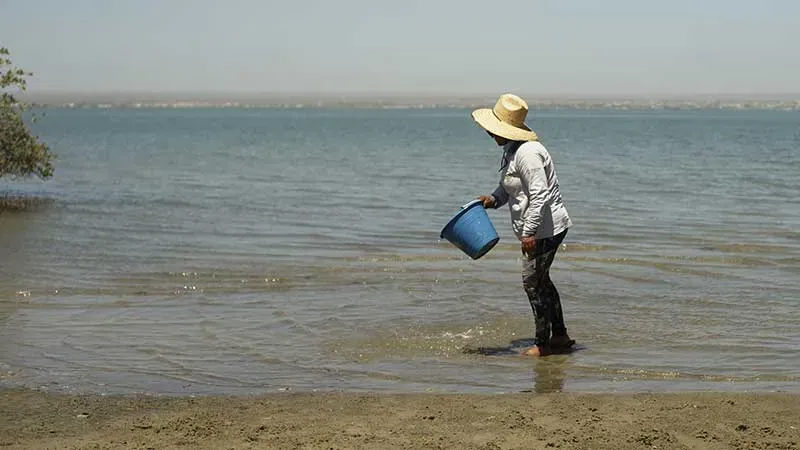
Aburto also identifies the challenge of sustainable financing. Nearly all the communities now held up as success stories—Cabo Pulmo, El Manglito, La Reforma—began with temporary subsidies or small philanthropic grants. Sustaining these processes for a decade—the estimated minimum time needed to begin discussing true ecological and social recovery—requires a financial architecture that doesn’t yet exist. “We need investments that breathe at nature’s rhythm, not at the pace of political cycles,” he says.
Another challenge lies in translating theory into real governance and aligning ecological and human timelines. Marine ecosystems take decades to recover, but communities need income now. That mismatch can break projects apart. “It’s not enough to declare areas—we must inhabit them with a future in mind,” warns economist Ricardo Cantú, co-author of the proposal.
Alejandro Robles, president of Noroeste Sustentable, points to the core issue: “We’ve divided the world into environmental, social, and economic categories. That’s been the mistake—not thinking systemically and integrally.” Integration, he adds, requires teamwork. For Aburto, there’s only one path forward: collective action. “The government can’t do it alone. Communities can’t do it alone. Businesses can’t either. Scientists can’t do it alone. Without joint action, we simply won’t make it.”
Deciding the Gulf of 2050 Today
In Cabo Pulmo, the sea still sets the rhythm of daily life. Mario Castro checks air tanks, instructs dive guides, and organizes excursions. His son Bryan prefers fishing; sometimes his six-year-old son Liam joins him. “The kid loves fishing,” he says proudly. Three generations bound by the same horizon: the sea.
This scene summarizes what Cabo Pulmo represents today: continuous care. The community now makes a living by showcasing and protecting the reef they once depleted. Yet this prosperity is fragile. Every new hotel along the coast, every boat operating without control, every visitor unaware of the area’s history tests that balance.
In just three decades, the village has transformed from a small fishing hamlet into a living conservation laboratory. Families who once cast their nets now run cooperatives, dive shops, restaurants, and educational projects. Women lead, youth prepare, children learn to swim before they learn to write. But success brings new pressures: tourism expands, waters warm, and corals show signs of stress. In response, the community reorganizes—just as it did thirty years ago. “Conservation isn’t defended once; it’s defended every day,” says Judith Castro.
Elsewhere along the Gulf’s coast, echoes of this transformation are beginning to surface. Communities seek to follow the same path: to protect, to learn, to prosper. They’re not looking to replicate the model, but to adapt it in their own way and at their own pace. “Prosperity isn’t a recipe,” says Aburto. “It’s a process that begins with people and ends in the sea.”
The future of the Gulf of California is not guaranteed—but it’s being decided now. Every child who learns that the sea is not inexhaustible helps chart the course for the decades ahead. Perhaps one day Liam will tell the story: that his grandfather was a fisherman, his father dived with sharks, and he learned to protect the reef they all shared. Perhaps then, the sea will speak again—not as a warning, but as a promise kept.
Infographic: Gradual prosperity between societies and ecosystems
Team
- General Editor: Iván Carrillo
- Deputy Editor: Aminetth Sánchez
- Art Editor: Miguel Ángel Garnica
- Editor Print Edition El Universal: Horacio Jiménez
- RRSS Editor: Raquel Villanueva Juárez
- Reporters: Aminetth Sánchez, Víctor Rodríguez, Raquel Zapien, Iván Carrillo
- Photographs: Eunice Adorno, Eduardo Hernández Montoya, Cruz Morales, Octavio Aburto, Iván Carrillo, Víctor R. Rodríguez
- Infographics: Luis Miguel Cruz Ceballos
- Scientific Advice: Catalina López Sagástegui, Fabio Favoretto, Eduardo León Solorzano
- Special Acknowledgments: dataMares, El Centro para Estudios Culturales y Ecológicos de Bahía Kino de Prescott College, Programa Marino del Golfo de California, Benigno Gustavo Guerrero Martínez, Ana Crisol Mendez Medina, Alondra Isaías León Vega, Miguel Ángel Alcantar Leyva