Story
 December 3, 2025
‘I Was Terrified’: Services Help Meet Mental Health Needs During Pregnancy After Stillbirth
Country:

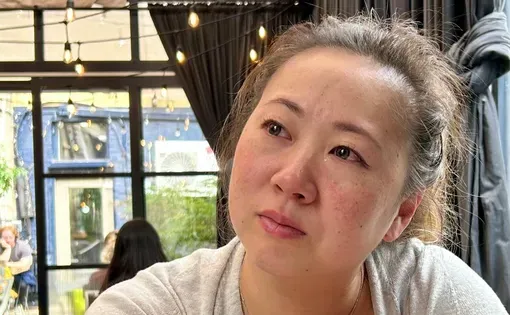
The emotional impact of a post-stillbirth pregnancy is often overlooked.
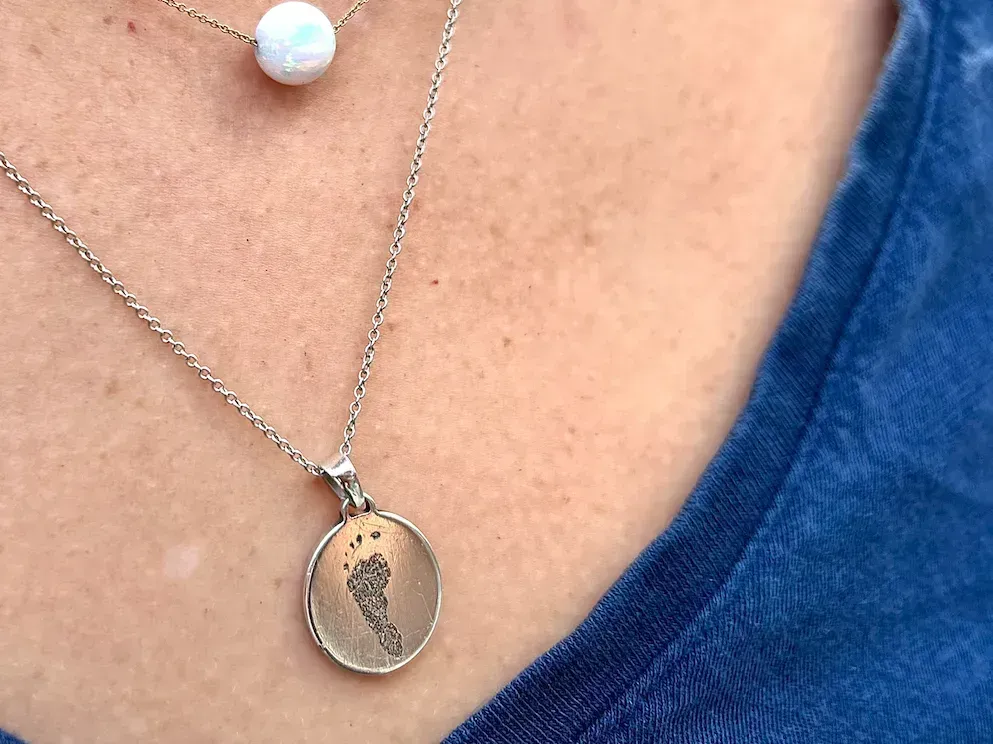
Stephanie Lee knew she wanted another baby and was consumed by the thought of a second pregnancy.
“I was obsessed with getting pregnant again,” she said. “I needed to have another baby.”
But her second pregnancy proved to be challenging. “I cried every single day,” Lee said. “Without a doubt. Every single day of that entire pregnancy. I was really scared.”
Her intense longing for another child and the emotional upheaval Lee experienced during her second pregnancy followed the loss of her first child, a daughter named Elodie, who was stillborn at 36 weeks’ gestation.
During a regularly scheduled prenatal appointment, Lee learned Elodie no longer had a heartbeat. As two doctors performed an ultrasound, she watched the screen and could see that her daughter wasn’t moving.

As a nonprofit journalism organization, we depend on your support to fund more than 170 reporting projects every year on critical global and local issues. Donate any amount today to become a Pulitzer Center Champion and receive exclusive benefits!
“She was just laying there,” Lee said. “Then they told me she was gone. I just couldn’t stop screaming.”
Lee and her husband took a bus home before checking into the hospital that afternoon for an induction. She delivered Elodie the next day. “It was horrible,” she said.
Lee, a registered nurse, worried about her own life during pregnancy. She had heard stories of women dying during or after labor and delivery, but she never considered the possibility of losing her child.
In the United States, about 21,000 babies are stillborn each year, which is about one in 175 pregnancies ending in stillbirth.
Amid the shock and grief of loss after a stillbirth, most women become pregnant again within 12 months. Lee was no exception.
After a colleague recommended Dr. Joanne Stone—system chair of the Raquel and Jaime Gilinski Department of Obstetrics, Gynecology and Reproductive Science at the Icahn School of Medicine at New York's Mount Sinai Hospital—Lee made an appointment for a preconception consultation to discuss what may have contributed to Elodie’s death, and to assess risk factors in a future pregnancy.
Six months after losing Elodie, Lee was pregnant again.
It was what Lee wanted, yet the following weeks and months were harder than expected, she said. She did not make plans in anticipation of the birth of her second child because she wasn’t sure her baby would be born alive. “I was terrified,” she said.
Other parents share Lee's perspective.
When Sarah Levin became pregnant after the stillbirth of her first child, a daughter named Ava, she, too, wondered if her second baby would die.
“I didn’t have the experience that [pregnancy] could go a different way,” she said.
Along with heightened anxiety, Levin said, she felt sadness during ultrasounds in her second pregnancy. It was difficult for her to be in the same place where she had found out Ava had died.
Stone tells patients who have had a previous loss to anticipate a psychologically challenging pregnancy.
“There is a ton of anxiety and fear about recurrence, and it really doesn’t go away until you deliver,” Stone said, adding that some patients continue to struggle with conditions such as anxiety, depression, and post-traumatic stress disorder even after giving birth to a healthy baby.
Almost 25% of stillbirths could potentially be prevented with sufficient prenatal care and monitoring, but the U.S. lags behind other wealthy countries in reducing the stillbirth rate. Research indicates that women who have had a stillbirth are at an increased risk for another stillbirth and that psychological distress increases in subsequent pregnancies.
This knowledge was the driving force in the collaboration between PUSH for Empowered Pregnancy, a nonprofit with a mission to end preventable stillbirth, and Mount Sinai to open a clinic specifically designed to care for women who are pregnant after loss. The Rainbow Clinic at Mount Sinai is led by Stone and is modeled on similar clinics in the United Kingdom.
The Rainbow Clinic offers patients specialized and personalized care. According to Stone, about 75% of patients have had a stillbirth, but those who have experienced any kind of perinatal loss, such as miscarriage or termination due to fetal abnormality, are eligible for care. She said psychological support is an important aspect of that care.
“You can’t just be excited, optimistic,” Stone said. “You lost a child. If I see somebody who’s not anxious [during pregnancy after loss], I wonder what’s going on.”
Standard prenatal care typically consists of 12-14 appointments over the course of a full-term pregnancy, but appointments and fetal monitoring occur more frequently at the Rainbow Clinic. Patients are encouraged to schedule appointments as often as they want, with many attending appointments weekly or more. Hearing the fetal heartbeat or seeing the baby via ultrasound provides a brief reprieve from the anxiety common in pregnancy after loss. Patients are comforted, in that moment, by the evidence that their baby is alive.
“I tell people, look, if you need to come in every day, come in every day,” Stone said. “Even if insurance doesn’t cover it, which it often won’t, it doesn’t really matter; we’ll just eat it. We care more about the well-being and emotional well-being [of patients] and making sure people feel supported.”
Samantha Banerjee, executive director of PUSH for Empowered Pregnancy, lost her daughter Alana to stillbirth two days shy of her due date. After two “absolutely harrowing” subsequent pregnancies, she developed an accredited training course for health care providers and birth workers who care for those pregnant after loss. It teaches providers how to administer trauma-informed care and has been used to train Rainbow Clinic staff.
One important aspect of the training is that it teaches providers how to communicate sensitively with patients. Lee said the first thing Stone asked her was what is the name of her stillborn daughter. Referring to Elodie by name humanized her, Lee said, and it showed that Stone understood the gravity of the loss as well as Lee's concerns about a new pregnancy, Lee said.
Lindsey Henke, a licensed clinical social worker certified in compassionate bereavement care and perinatal mental health, provides trauma treatment to clients who have had a perinatal loss.
“Pregnancy loss at any stage, the research has shown, is actually a trauma,” Henke said, explaining that it meets the criteria for trauma in the Diagnostic and Statistical Manual of Mental Illnesses.
Increased anxiety is a response to that trauma. After experiencing a stillbirth, one discovers that pregnancy isn’t a guarantee that a baby is coming home.
“You are someone who is grieving the loss of a child who you wished for, hoped for, and then you’re anticipating the life of another,” Henke said. “The trauma happened in your body. Then you have to spend nine months in your body carrying that trauma, grieving a baby you lost, and hoping through the fear that another baby will come here. It’s a very complex experience. You don’t get to take a break from it. Grief is embodied. Pregnancy is embodied. Trauma is embodied.”
Because pregnancy after loss is a hyper-vigilant, anxiety-producing state stemming from trauma, Henke recommends undergoing trauma treatment such as Eye Movement Desensitization and Reprocessing (EMDR).
According to the American Psychological Association, EMDR therapy is intended to help the brain reprocess traumatic memories by incorporating left-right eye movement known as bilateral stimulation. The emotional response to the memory, such as stress or anxiety, is reduced as clients simultaneously recall the traumatic memory and participate in bilateral stimulation. Such services can be difficult to access, though, in which case support groups or peer-to-peer support may be the next best thing.
“Part of the recovery from almost anything, and especially in grief, is finding people with similar lived experiences, so we feel less alone,” Henke said. “Even if we don’t have the same experience or experience the same things, knowing that we’re not the only one going through something can make it easier to bear.”
Avital Kedem, a licensed clinical social worker at the Rainbow Clinic, implemented a peer mentoring program in which current patients receive support from former patients.
“The unique one-to-one connection provides understanding, validation, support, and insight from someone who has faced a similar situation and truly understands the grief, joy, and challenges of pregnancy after loss,” Kedem said.
Lee worked with a therapist after losing Elodie and during her subsequent pregnancy. She said she believes mental well-being during pregnancy after loss can be improved within a medical setting through good communication, a high level of monitoring, and personalized care.
“There was a comfort in the support I had,” Lee said, referring to her experience at the Rainbow Clinic. “There, I didn’t feel this need to have to apologize for my loss. I didn’t have to explain myself, have to constantly be justifying why I am the way I am.”
She said doctors at the Rainbow Clinic understood that her “debilitating emotional and psychological state” could bring harm to her child.
Elia, Lee’s second daughter, was born via emergency C-section after her heart rate plummeted.
Lee remembers physicians rushing into her room. She was shaking and could feel the blood draining from her face. She and her husband were afraid they were going to lose another daughter. A C-section wasn’t the scenario Lee had hoped for, but once Elia was in her arms, breathing and crying, it didn’t matter how she got here—only that she was here with her parents.
“Without the Rainbow Clinic, my experience would have been vastly different,” Lee said. “I know I am so incredibly lucky to have had that. It’s a resource and support that many women don’t get.”
Stone is part of the U.S. Pregnancy After Loss Network, which aims to improve patient experiences, mental health outcomes, and birth outcomes during pregnancy after loss. There are three clinics within the USPAL Network, but six more clinics are expected to open within a year. The goal is to have at least one in every state, according to Stone. She said the Rainbow Clinic model requires acceptance of all types of insurance, including Medicaid, in an effort to make care accessible.
Lee has also added a son, Ethan, to her family, and while her third pregnancy was not without challenges, she said, the consistent care from the Rainbow Clinic helped. She already had relationships with providers and staff, and she felt comfort in not having to learn a new system. Familiarity with care helped ease distress.
With a son and a daughter in her arms, Lee appears to have what some consider to be an ideal situation, but there is more to her motherhood than meets the eye.
Having two more babies was helpful in Lee’s healing process, she said, but it wasn’t a solution to the loss of Elodie. The impact of loss doesn’t just go away when a new baby is born.
“The reality is that my children play with an urn,” Lee said.