Story
 October 6, 2025
Songs, Slippers, and Shared Tables: A Glimpse Into Filipino Lives in Austria
Country:

Filipino-Austrians reshape what international recruitment can look like.
What it means to belong to a diasporic community
At the end of my first week in Vienna, I sat in a small concert hall, attending an event organized by Halo Halo—a group that connects Filipinos living in German-speaking countries—alongside the Taiwanese Organization of Austria.
The concert’s theme was hope and love. The performers, many of them immigrants or children of immigrants, alternated between Filipino and Taiwanese songs—ballads that carried the weight of memory and folk tunes that evoked feelings of familiarity, even in an unfamiliar place.
Then, at the end of the concert, the performers came together on stage and sang Edelweiss, a song written for The Sound of Music, the Oscar-winning musical set in Austria.
They sang the lyrics in German first, then in English.
The final words echoed through the hall: “Bless the homeland forever.”

As a nonprofit journalism organization, we depend on your support to fund more than 170 reporting projects every year on critical global and local issues. Donate any amount today to become a Pulitzer Center Champion and receive exclusive benefits!
That moment stayed with me. It felt like the ultimate embodiment of what it means to belong to a diasporic community, to hold tightly to one’s roots while planting new ones in foreign soil. To carry multiple cultures in the same heart. And to find beauty in the spaces where they meet.
My reporting project, focused on Austria’s recruitment of nurses from the Philippines, gave me the chance to see how this actually looks, day by day, life by life.
Over multiple weeks, I sat down with nurses who had arrived in Austria as recently as a few months ago and others who had been there since the 1970s. Some had come straight from nursing school, barely in their 20s, unsure of what they’d find in a country they had never visited, communicating in a language they had never spoken.
And yet, here they were—decades later—still building lives, still bridging worlds.
Time and time again, I found myself thinking back to those four words from the concert: “Bless the homeland forever.”
I heard them in the voices of every person I spoke with—in their stories of homes left behind and homes created anew. In the ways they moved between languages, cultures, and identities.
One of the most powerful things I experienced was the warmth with which I was welcomed.
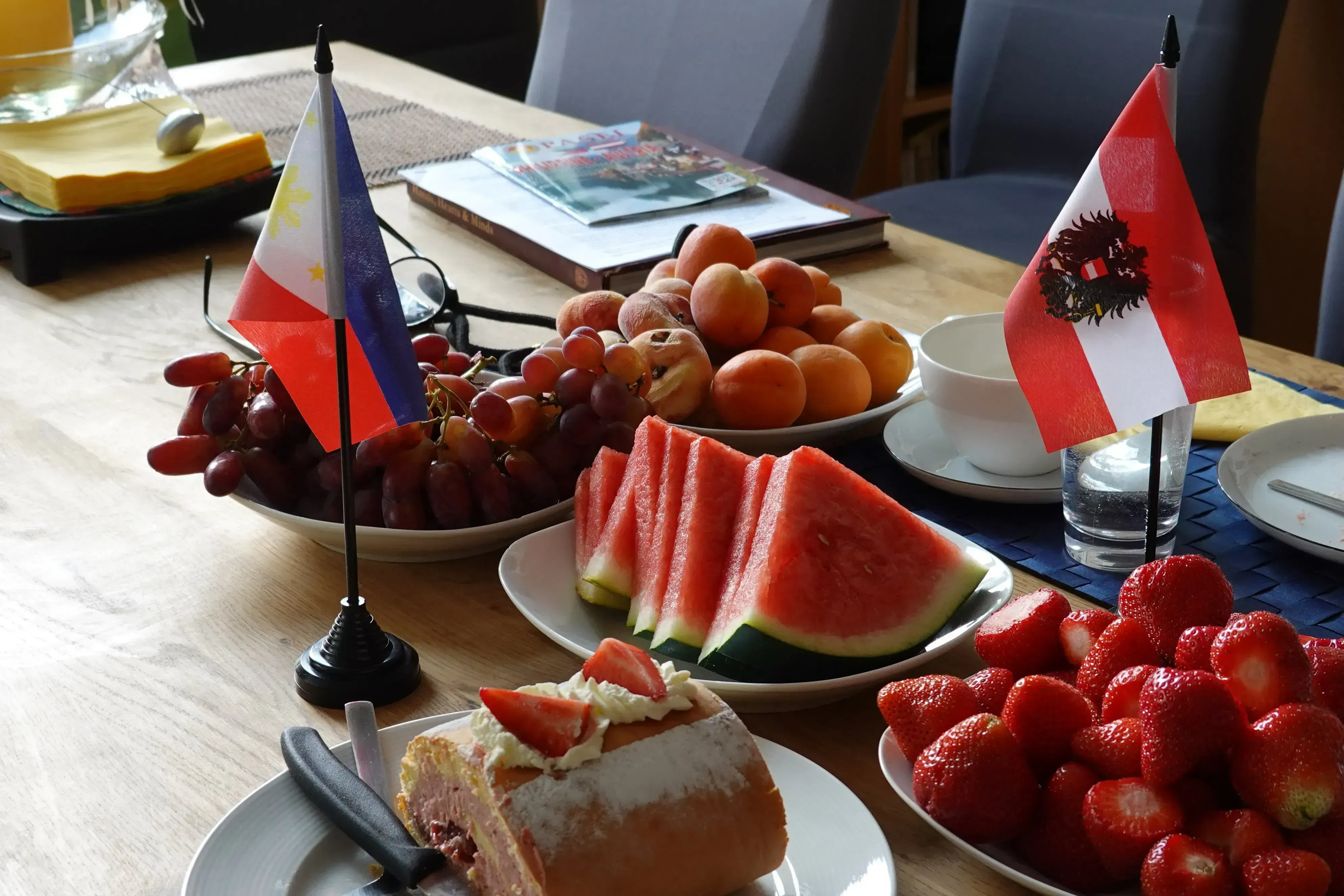
I stepped into strangers’ homes and was met with open arms—and tsinelas (slippers) to put on.
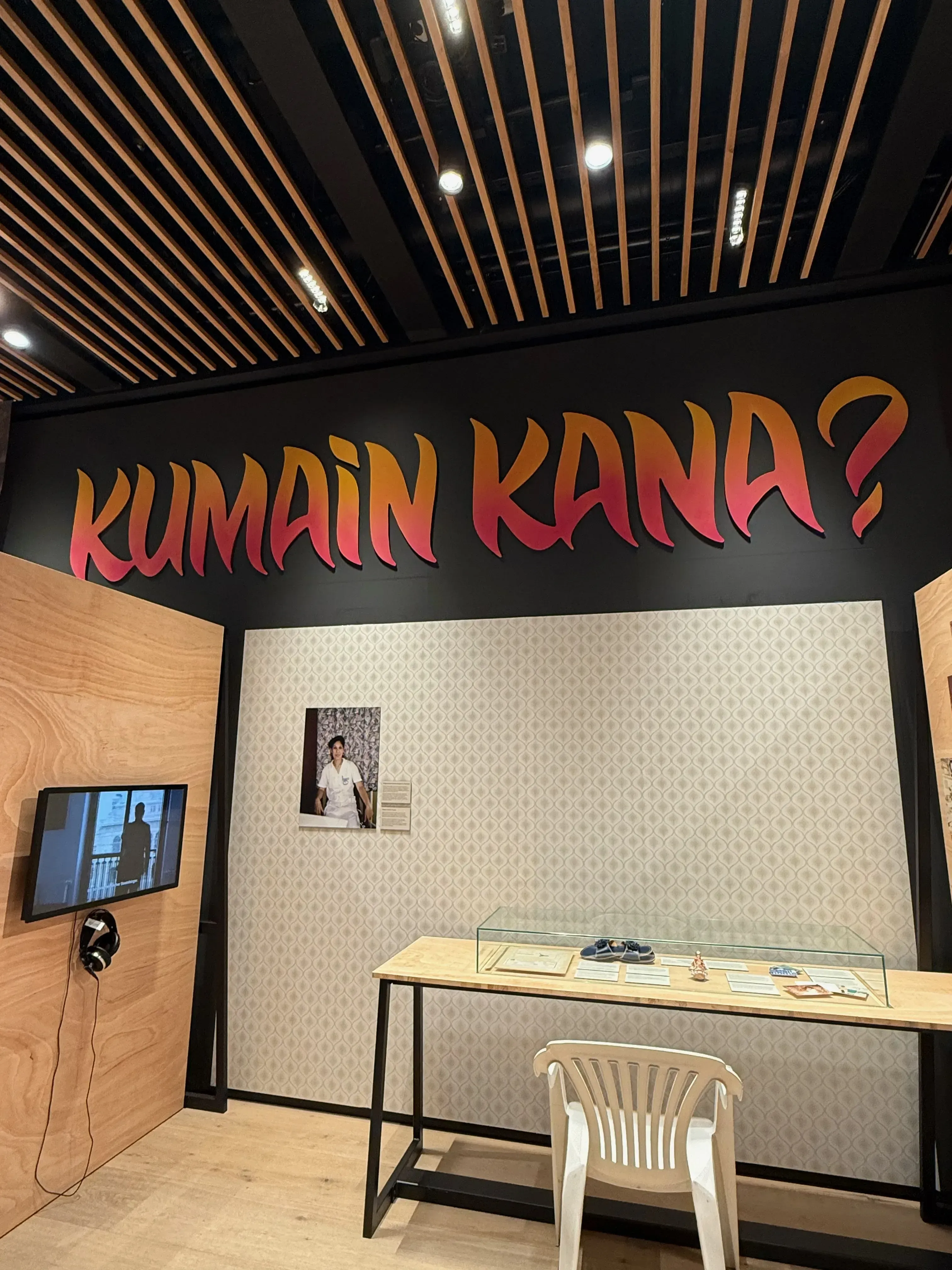
Within minutes, I was often seated at a dining table with food, dishes prepared not just to nourish but to connect. Sharing a meal became its own kind of language. More often than not, I wasn’t allowed to leave without baon, leftovers packed to take home.
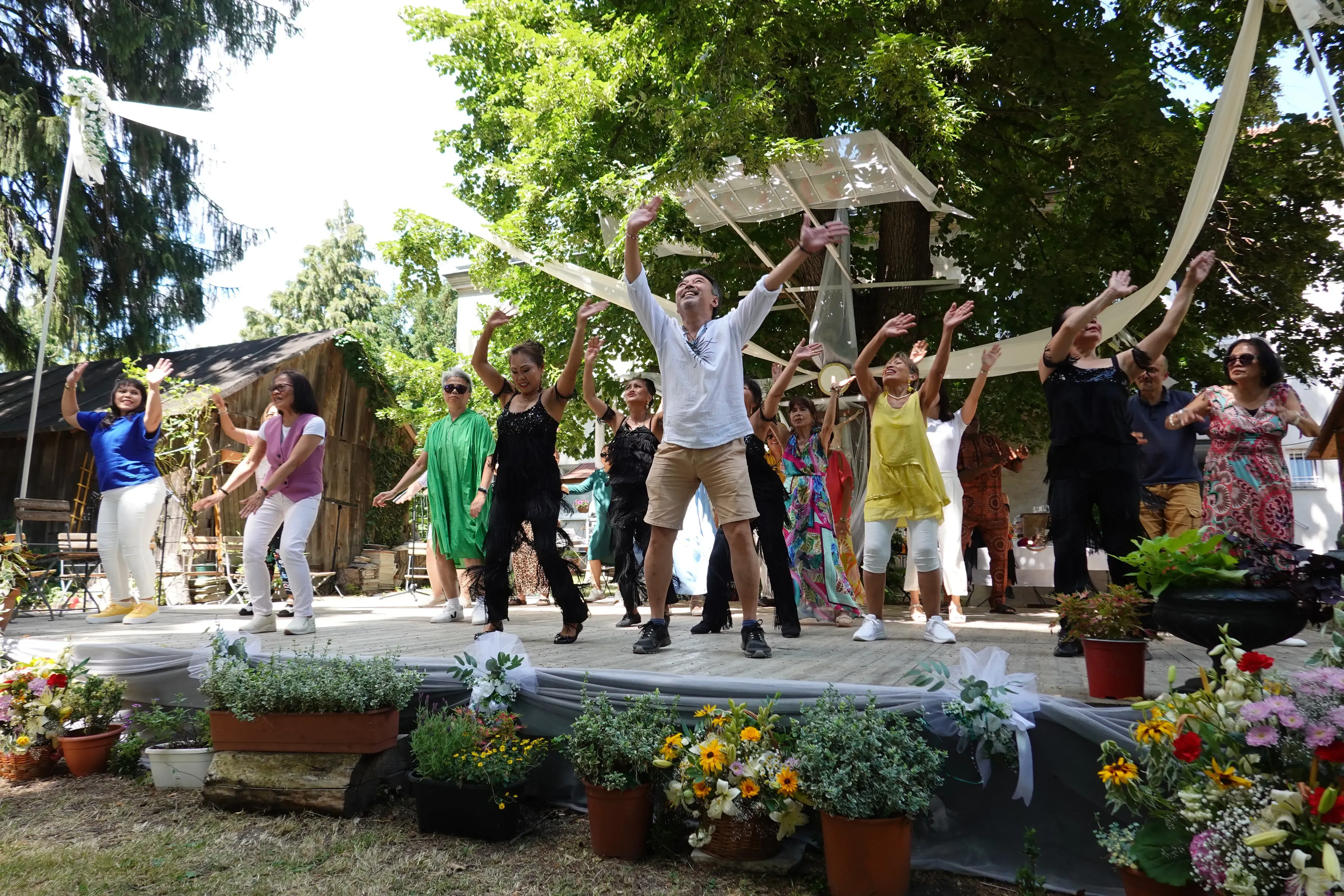
On one of my final days in the field, I attended a Pfarrfest, a festival at a church led by a Filipino priest.
Dances were performed, some traditional, some modern—and often the two would blur together, for example, a folk dance followed by a hip-hop beat, layered with contemporary moves.
Later, the music shifted, and people took turns singing karaoke, a staple of Filipino gatherings. Young or old, shy or confident, everyone seemed ready to grab the mic. They sang songs in German, English, and Tagalog, sometimes seamlessly slipping from one to another.
Once again, I witnessed the blending of old and new, Filipino and Austrian, a creative collision that reflected the people I had met over the course of my reporting.
My time in Austria taught me that the process of maintaining one’s culture while embracing a new one isn’t a straight line. It's filled with moments—music, meals, conversations—that remind us that belonging doesn’t require us to let go of where we came from. Instead, it asks us to build something new with what we carry.
To create a home, not by erasing the past, but by weaving it into the present. A home where the old world and the new don’t just coexist, they dance together.
“Bless the homeland forever”—and the space where the two worlds meet.