


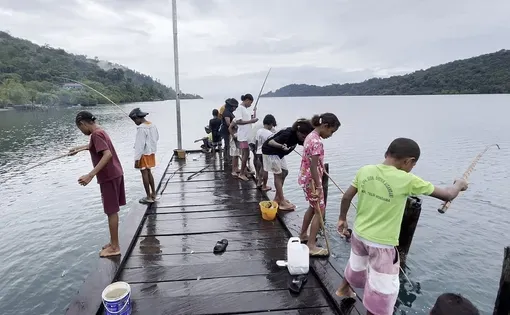
The contribution of Indigenous communities in relation to the marine ecosystem.

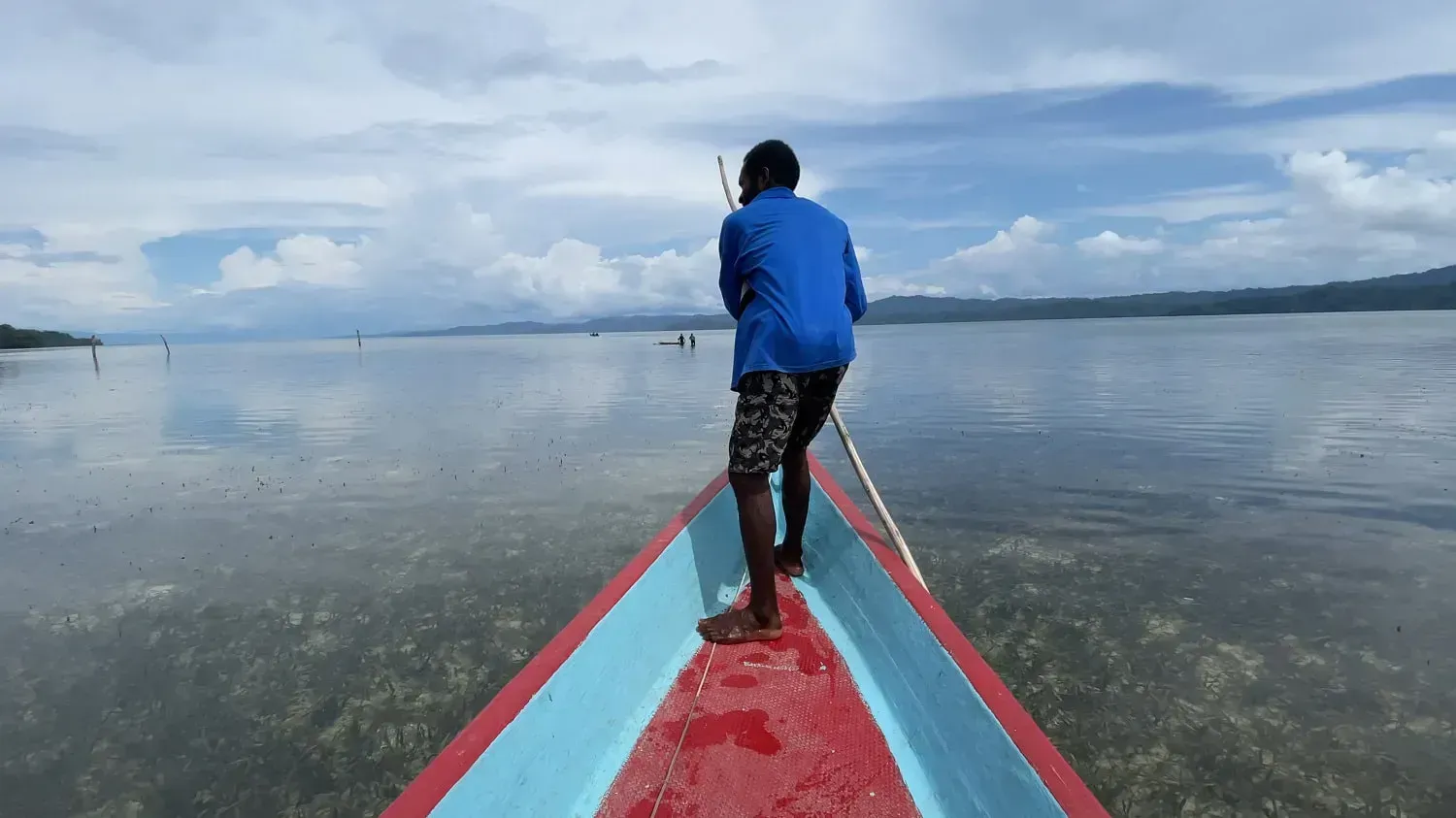
Protecting the environment and nature from the shoreline to the deepest sea has become a tradition of the Indigenous communities in Pulau Yop Meos, Menarbu, Sombokoro, and Aisandami Villages in Teluk Wondama Regency, West Papua Province. These efforts are supported by non-governmental environmental organizations and the Cenderawasih Bay National Park Authority. The role of religious leaders also strengthens the sasi tradition, which is called sawora and kadup in the local language.
Jayapura, Jubi — Indigenous peoples in Teluk Wondama recognize two categories of sasi, a traditional conservation model: one that prohibits harvesting certain species, and another that prohibits the harvesting of all species in a specific area. They also apply sasi to close off land areas, a customary conservation tradition that has existed for a long time. The tradition of marine sasi has strengthened as Indigenous communities observe signs of marine ecosystem degradation.
Unfriendly practices
Yosias Menarbu, a resident of Menarbu Village, stated there were various factors that degraded the marine ecosystems of Cenderawasih Bay in the 1990s, including the waters of Teluk Wondama Regency. During that time, fishers from outside Papua began entering Teluk Wondama’s waters. Additionally, local Indigenous people harvested more marine life due to increasing subsistence needs. Environmentally unfriendly fishing practices also began, quickly depleting marine populations.
“[They] used [poison] made from tuba root [a poisonous plant used for fishing]. [They also] used compressors to dive [and] pried corals with crowbars to collect clams or sea cucumbers attached to the coral,” said Menarbu.

As a nonprofit journalism organization, we depend on your support to fund more than 170 reporting projects every year on critical global and local issues. Donate any amount today to become a Pulitzer Center Champion and receive exclusive benefits!
According to Menarbu, such environmentally unfriendly fishing practices quickly reduced marine populations in Teluk Wondama and alarmed the Menarbu Village Indigenous community.
“That condition made the community agree to implement sasi or kadup,” he said.
Strengthening local wisdom
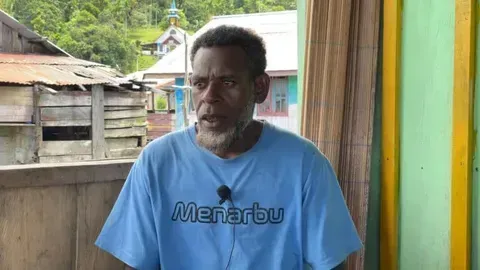
Menarbu said his village first implemented kadup in their coastal waters in 1995. The area was closed for six months. Kadup was reintroduced in 2018, and this time the waters of Menarbu were closed for two years. During that period, the 1,473.84-hectare kadup area was off-limits for all activities and opened only for two months during the local community’s fishing season.
In Sombokoro Village, resident Korneles Mnuari said that the World Wildlife Fund (WWF) Indonesia initiated the strengthening of local wisdom regarding sasi regulations in coastal villages, including Sombokoro. He recounted that in 2009, WWF launched the Marine Program in Teluk Wondama. Together with the Cenderawasih Bay National Park Authority (BBTNTC), they mapped marine zones and designated zoning for Cenderawasih Bay National Park (TNTC), strengthened the capacity of coastal Indigenous communities, and documented local wisdom.
The TNTC spans 1,453,500 hectares and is the largest marine national park in Indonesia. The waters of Teluk Wondama Regency lie within the park and cover an area of 3,959.53 square kilometers.
As part of the mapping and zoning program, Mnuari mentioned that WWF Indonesia’s Papua Program also conducted socioeconomic research that recorded growing risks of environmental damage.
“From the socioeconomic data, it was found that [people] still fished using harmful gear like explosives, potassium [or poison], and allowed outsiders to fish [in their waters], including the placement of fish aggregating devices (bagan) from outside,” said Mnuari.
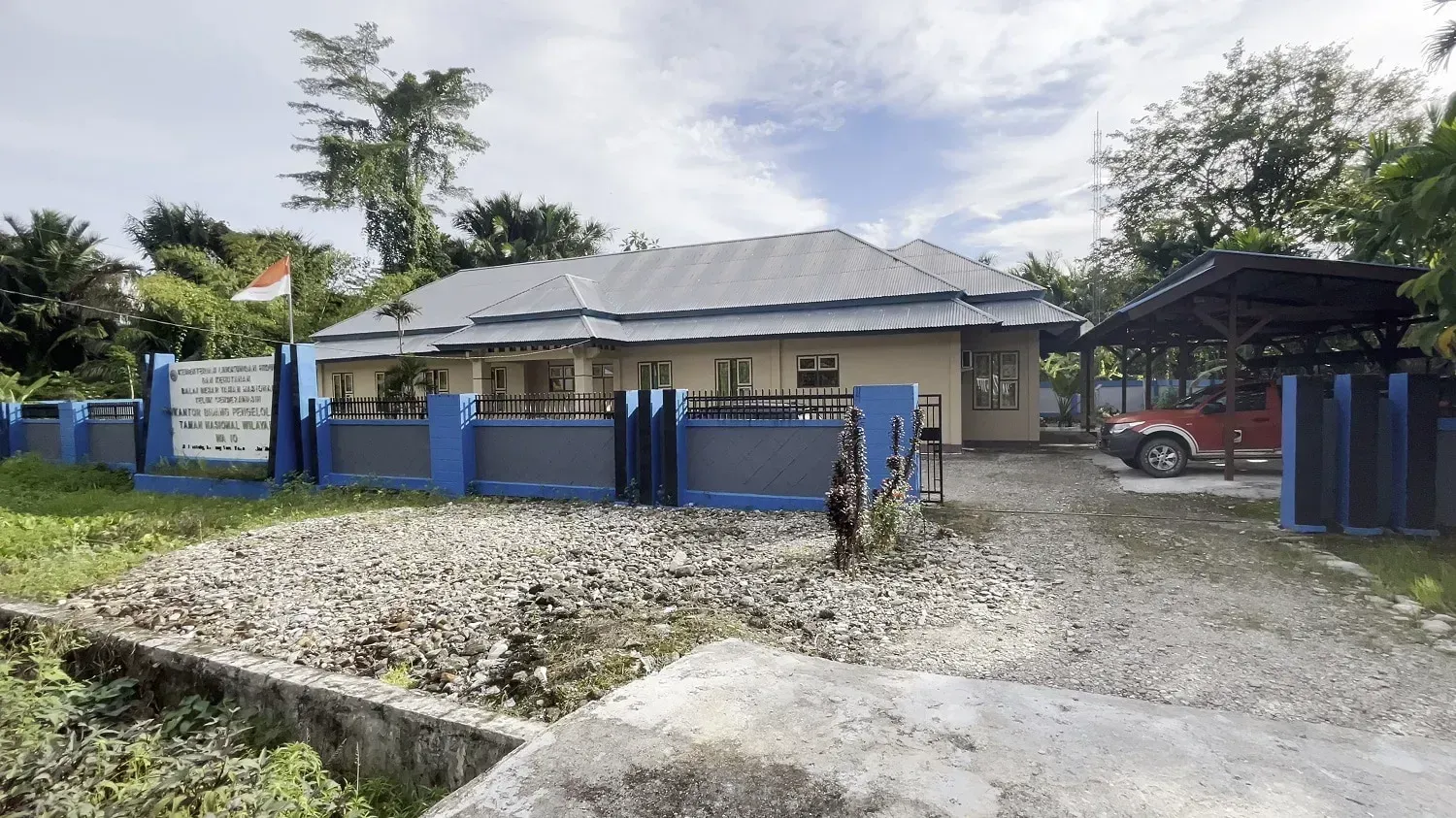
Documenting various local wisdoms became an important part of the environmental recovery campaign in Teluk Wondama.
“One program is the strengthening of local wisdom, because in Papua, we know the sea has owners [i.e., Indigenous peoples with customary rights to their waters]. WWF Indonesia’s Marine Program friends initiated strengthening of sasi rules around coastal villages,” said Feronika Manohas, Coordinator of Community-Based Conservation and Indigenous and Community Conserved Areas (ICCA) at WWF Indonesia’s Papua Program.
Documenting various local wisdoms became an important part of the environmental recovery campaign in Teluk Wondama.
“One program is the strengthening of local wisdom, because in Papua, we know the sea has owners [i.e., Indigenous peoples with customary rights to their waters]. WWF Indonesia’s Marine Program friends initiated strengthening of sasi rules around coastal villages,” said Feronika Manohas, Coordinator of Community-Based Conservation and Indigenous and Community Conserved Areas (ICCA) at WWF Indonesia’s Papua Program.
The efforts to restore the aquatic ecosystem of Wondama Bay
Both Menarbu and Mnuari acknowledged the involvement of the WWF Papua Program in revitalizing marine sasi as an effort to restore Teluk Wondama’s marine ecosystems. The involvement strengthened further after WWF Indonesia launched the KM Gurano Bintang mobile library boat in 2018. The Gurano Bintang team sailed to various coastal villages in Teluk Wondama, discussing environmental issues with Indigenous communities. The boat visited villages such as Yende, Aisandami, Reyop, Yop Meos, Dusner, and Sombokoro.
“The customary elder in Sombokoro Village requested advice from WWF regarding the entry of bagan businesses by Butonese entrepreneurs who rented fishing locations from customary authorities in Sombokoro. Each bagan paid Rp1.5 million per month to operate in Sombokoro’s waters,” said Korneles Mnuari.
That discussion led to the idea of establishing sasi in the waters of Sombokoro Village. The local community already had the sawora tradition to protect land areas from overexploitation. From that idea, Sombokoro’s Indigenous people drafted agreements and regulations for sawora in their marine area.
“We are simply reinforcing the local wisdom and culture that the community has had since their ancestors. This wisdom is supported by simple fishing gear, including diving with molo [or diving using] a spear gun,” Feronika Manohas said, confirming Korneles Mnuari’s statement,
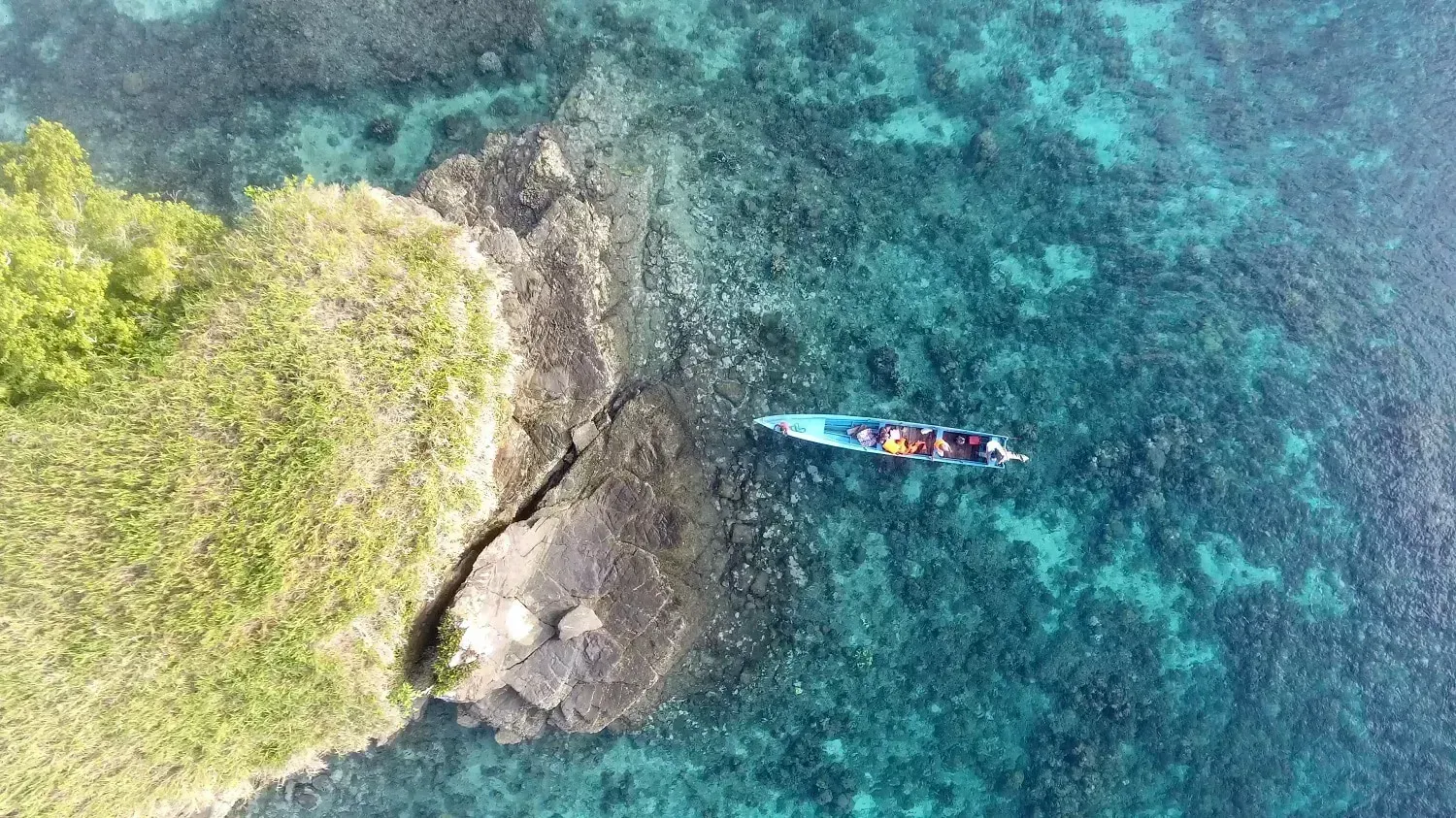
Menarbu added that WWF only helped formulate the agreements and operational rules for sawora. He said WWF didn’t bring new scientific knowledge but instead explored local wisdom and helped strengthen it into village regulations.
“In Papua, [Indigenous communities] already have their own local wisdom to protect forests and coasts. We just provide technical assistance [in formulating village rules] using scientific data, such as explaining coral conditions, [fish population], and [overall marine ecosystem],” said Manohas.
Efforts to strengthen the sawora and kadup traditions to restore Teluk Wondama’s marine ecosystem were well accepted because traditionally the Indigenous people already preserve pamali sites — sacred and off-limits areas. Prohibitions on activity in pamali areas are permanent, unlike the temporary restrictions of sawora or kadup.
Menarbu gave an example of a pamali site in Dusner, where residents are forbidden from even passing through, let alone conducting activities.
“In Menarbu, [there are also] pamali sites that must not be passed through [or used for] fishing,” he said.
Local wisdom and customary values
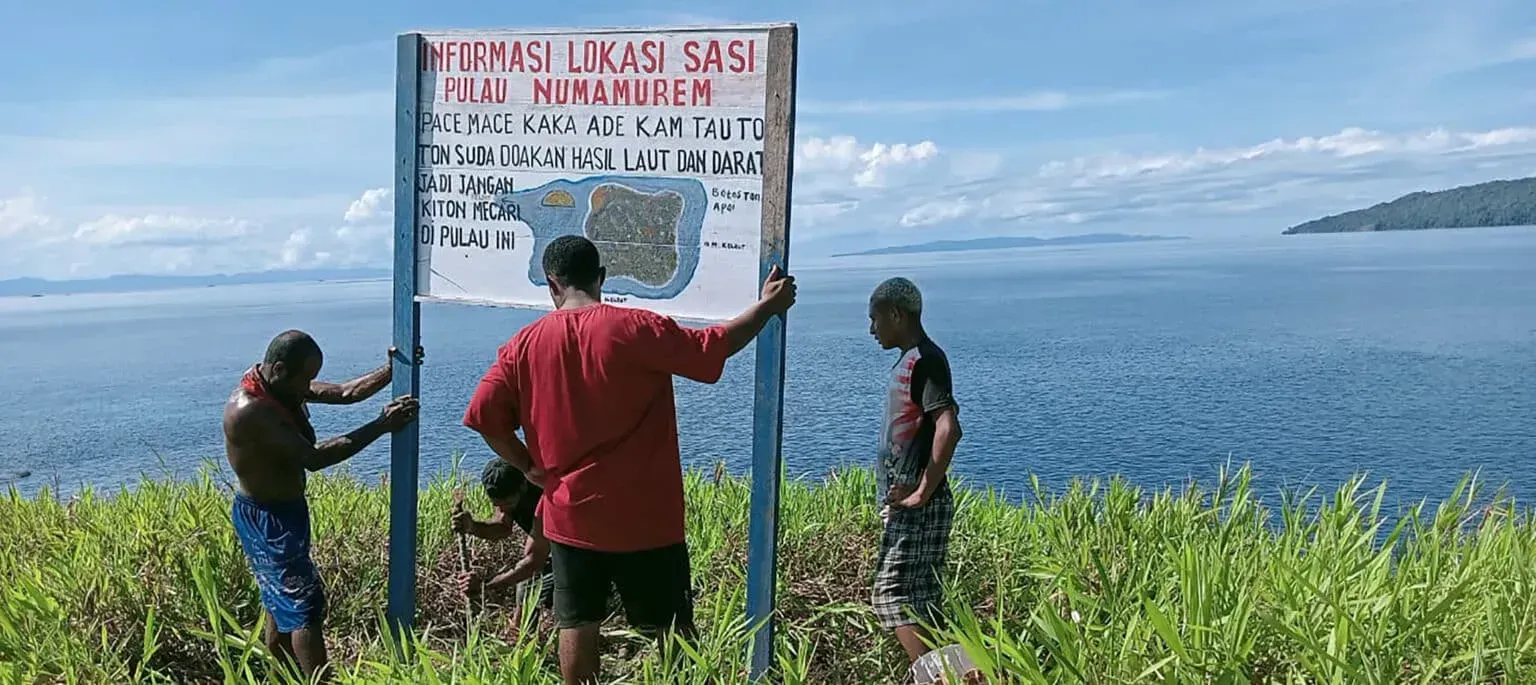
This prohibition was explained by anthropologist Dr. Hanro Yonathan Lekitoo—from the Faculty of Social and Political Sciences (FISIP) at Cenderawasih University—as closely related to Totemism.
“A totem is a living being or object considered sacred by a certain social group or tribe,” said Lekitoo.
He gave an example: Residents of Menarbu Village are forbidden to catch garfish. Some residents or clans are forbidden to eat wild boar, as the animal is their totem.
“Local wisdom in Indigenous communities has long been ingrained. [They have customary values that regulate] how to wisely utilize nature’s potential to meet daily needs, just enough, without greed,” said Lekitoo.
Because Indigenous communities in Teluk Wondama have long known sasi that prohibits harvesting certain species or all species in certain areas, the revitalization of sawora and kadup as marine sasi formalized through village rules was welcomed by the people.
Economic benefits and the role of the “Three Pillars”
Menarbu and Mnuari also acknowledged the economic benefits of sawora and kadup areas, as they provide real benefits for community welfare. Moreover, sawora and kadup were the best options for managing marine resources in Teluk Wondama, as the locals are not yet interested in aquaculture like sea cucumber, lobster, or seaweed farming.
“Aquaculture doesn’t work. So closing areas for some time is very appropriate for them,” he said.
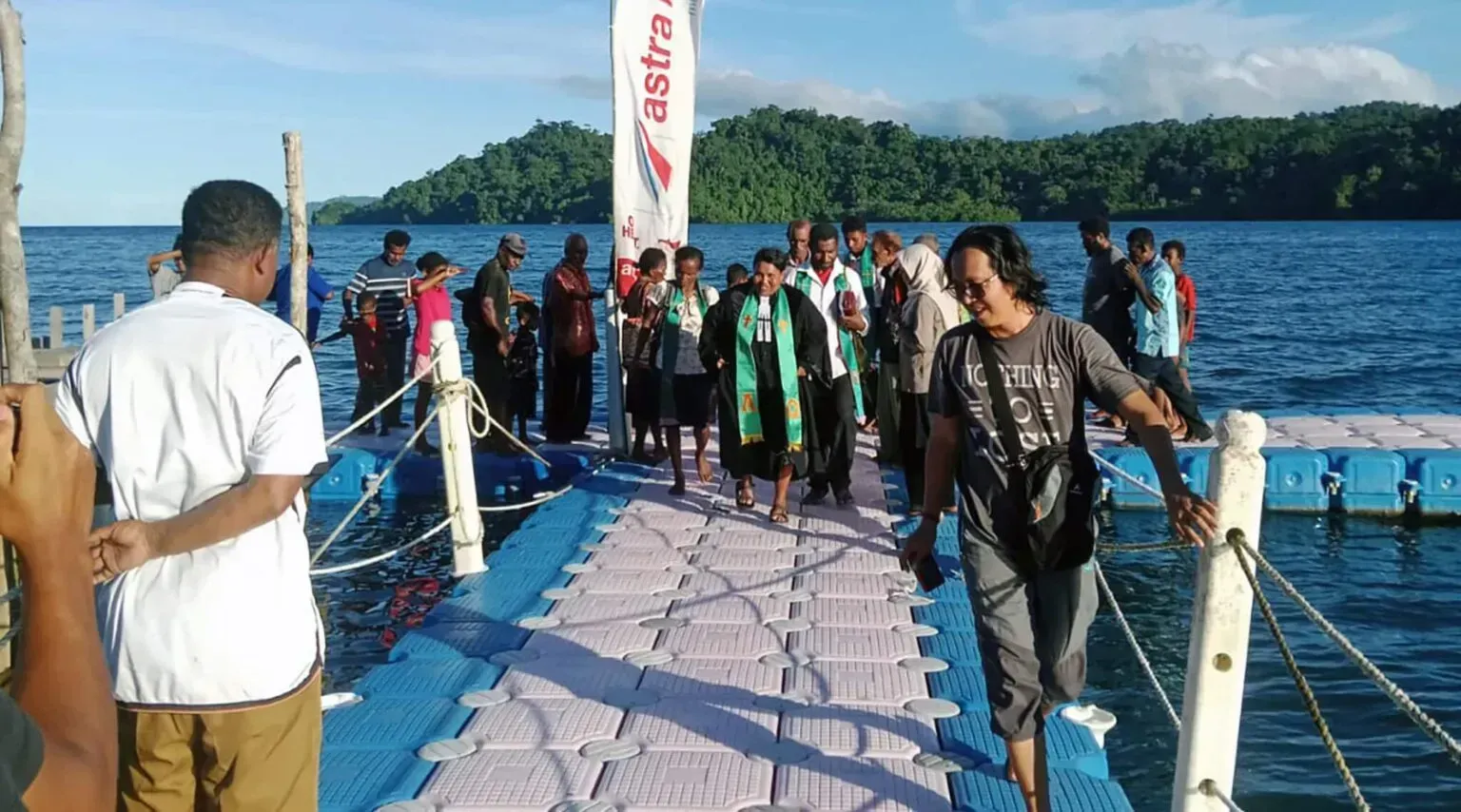
Strengthening the sawora and kadup traditions to restore Teluk Wondama’s marine ecosystems was also supported by religious leaders (the church). The head of Yop Meos Island Village, Eliezer Ayomi, said that setting sawora must involve the “three pillars”— the term for the three main stakeholders in each village: the church, traditional leaders, and the government.
“For example, if a bagan wants to fish near the village waters, there must be a consultation between the three pillars — the village government, customary leaders, and the church,” said Ayomi.
Pastor Leo Rumansara explained the church’s role in sasi opening and closing ceremonies. He said three GKI (Evangelical Christian Church) classes are always involved: GKI Teluk Wondama Classis, GKI Windesi Classis, and GKI Roon Island Classis.
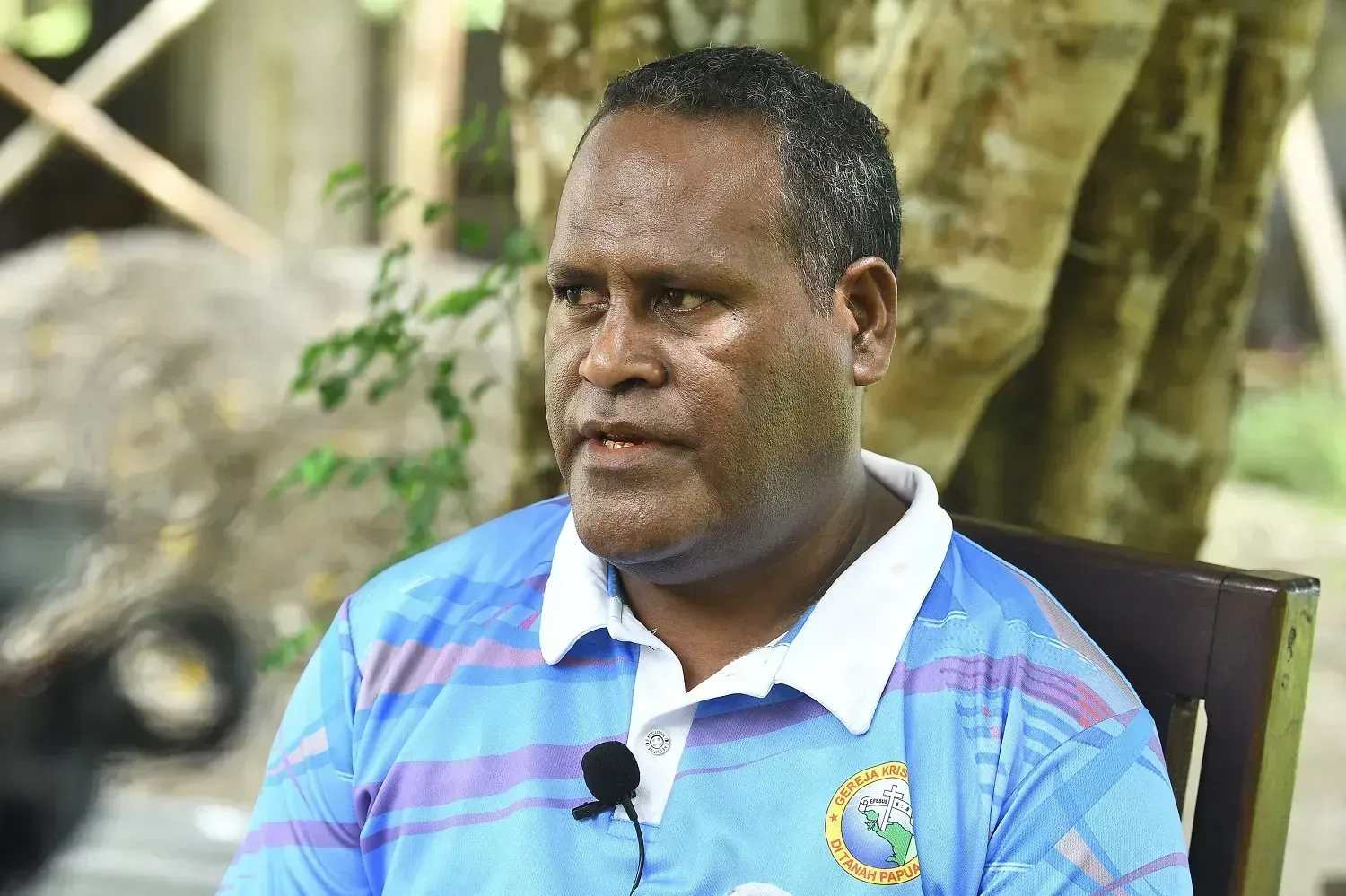
“This stems from the role of the Teluk Wondama GKI Classis, when it was led by Rev. Hans Wanma. From 2015 to 2020, [they] and all Indigenous institutions in Teluk Wondama declared their classis region as a Conservation Classis and emphasized the importance of sasi,” said Pastor Rumansara, now Secretary of GKI Teluk Wondama Classis.
This religious support influenced sawora or kadup opening and closing ceremonies. Cultural values and beliefs in nature transitioned into faith in religious teachings, especially Christian missionary teachings. Religious leaders also influenced the distribution of harvests during sasi openings. Rumansara explained that harvests during sasi opening in Menarbu and Sombokoro are offerings to God, equivalent to 10% of the community’s total harvest.
“So during the sasi closing ceremony, the pastor prays and releases fish, lobster, and sea cucumber back into the sea. During sasi opening, the pastor takes the harvest and blesses it,” said Rumansara.
Toni Mnuari, a customary leader from Sombokoro Village, said a similar thing happened in Aisandami. “[Residents harvested marine products from] the sasi area opened on December 5, 2024. [The harvest from the kadup opening ceremony was divided] with the rule that 50 percent was offered [to fund] the construction of GKI Sion Aisandami church. [The other] 50 percent was distributed [to] fishers who harvested from the kadup area,” he said.
Reporting Team
Reporters : Dominggus A Mampioper, Alberth Yomo, Adlu Raharusun, Alfian Putra Abdi
Photographer : Engelberth Wally
Videographers : Yuliana Lantipo, Anggi Sagita
Narrator : Natalia Andilan
Video Editor : Maurids Yansip
Infographic : Leonard Ohee
Editors : Victor Mambor, Aryo Wisanggeni, Syofiardi Bachyul
Translators : Nuevaterra Mambor, Dina Danomira, Elfriede Rumaseuw