Story
 August 19, 2025
When National Parks and Traditional Conservation Converge in Wondama Bay
Country:


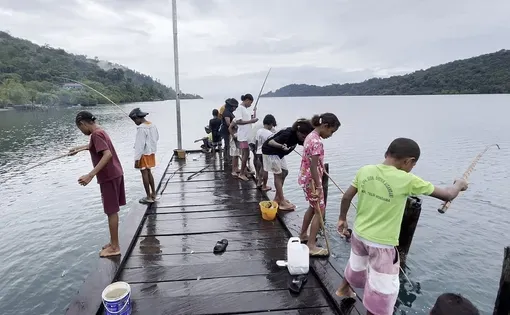
The contribution of Indigenous communities in relation to the marine ecosystem.

Traditional conservation practices of the Papuan people and modern conservation efforts carried out by the government through national parks can actually complement and reinforce each other. This is because traditional conservation practices among Papua communities have existed for a long time, based on local wisdom and customary laws.
JAYAPURA, Papua—With the backdrop of Duari Bay and expanses of mangrove forests and other trees, the homestays in Aisandai Village are the best choice. Visitors who enjoy natural surroundings will be treated to views of the sea and forest at the same time.
Generally, the facilities available at the homestays in Aisandami Village nearly meet the homestay standards for tourist villages as set by the Ministry of Tourism. The room size is 3 x 3 meters, the door has a lock, and there are mattresses or beds, pillows, sheets, blankets, trash bins, electricity, a small table, drinking facilities, a toilet, a bathroom, and adequate natural ventilation.
“I built this homestay myself,” said Oto Bosayor, starting the conversation while showing one of the homestays available.

As a nonprofit journalism organization, we depend on your support to fund more than 170 reporting projects every year on critical global and local issues. Donate any amount today to become a Pulitzer Center Champion and receive exclusive benefits!
He admitted that he used to be a seller of birds of paradise (Paradisaeidae), a bird native to Papua. On a good day, he could catch more than ten of these birds in the forest.
When he was a bird of paradise hunter, he admitted that it was very easy to make money, up to tens of millions of rupiah. Despite patrols, security, and inspections at the port, he managed to smuggle preserved birds of paradise to buyers in Manokwari, Nabire, and Sorong.
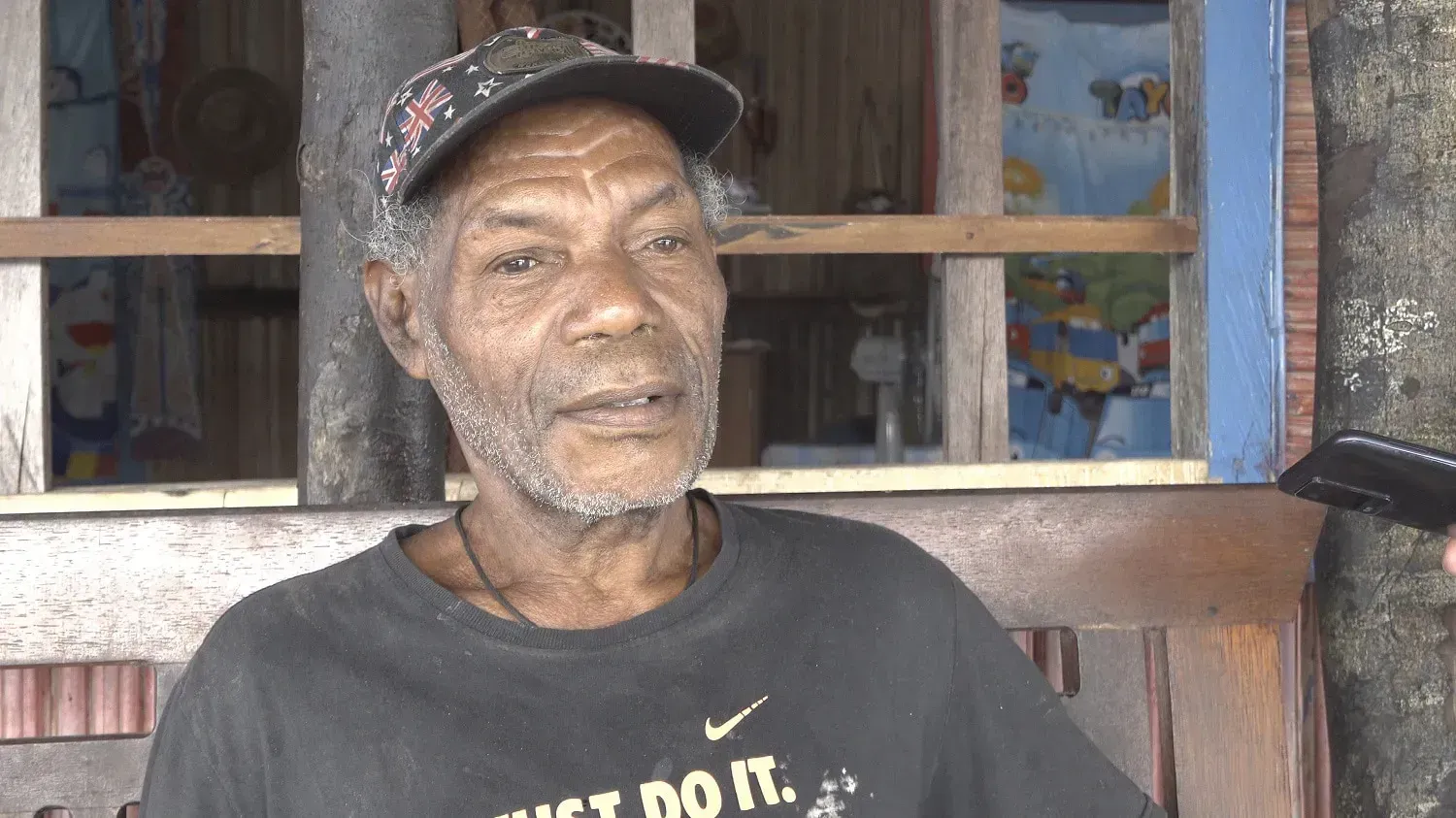
The attitude and activities of Tete Bosayor, his nickname, began to change when his village, Aisandami, was designated as part of the conservation area of Teluk Cenderawasih National Park (TNTC) by the Minister of Forestry on August 29, 2002. Since ceasing to be a bird of paradise hunter, Tete Bosayor has taken on various professions, from working as a laborer in oil palm plantations to becoming a foreman for road construction projects.
“But my income is not the same as that of bird of paradise hunters. Selling birds of paradise brings me a lot of money, while other jobs pay very little,” he said.
Preserving marine life
In 2016, the Wondama Bay Regency Government designated Aisandami Village as an eco-tourism village. Tete Bosayor’s perspective began to change. He even became a traditional leader encouraging the residents of Aisandami Village to refrain from catching marine life during certain periods (sasi) and became a pioneer in establishing homestays in Aisandami Village.
“Moreover, the community has taken the initiative to implement sasi in certain areas or for specific marine life,” he said.
The TNTC Office acknowledges the attitude of the Aisandami Village community as mentioned by Bosayor. According to Thesa, a field officer at the TNTC office, the indigenous community and the church have collaborated with the government to preserve the marine and mangrove ecosystems within the Teluk Cenderawasih National Park. Sasi activities in Aisandami, as Thesa explained, always involve thorough consultations. Typically, community groups visit the TNTC office to discuss whether a specific zone should be subject to sasi or not.
TNTC itself is divided into several zones: core zone, marine protection zone or forest zone, utilization zone, tourism zone, traditional zone, and special zone.
Based on data, Thesa explained, after three years of implementing sasi, the population of sea cucumbers and clams in the area has significantly increased.
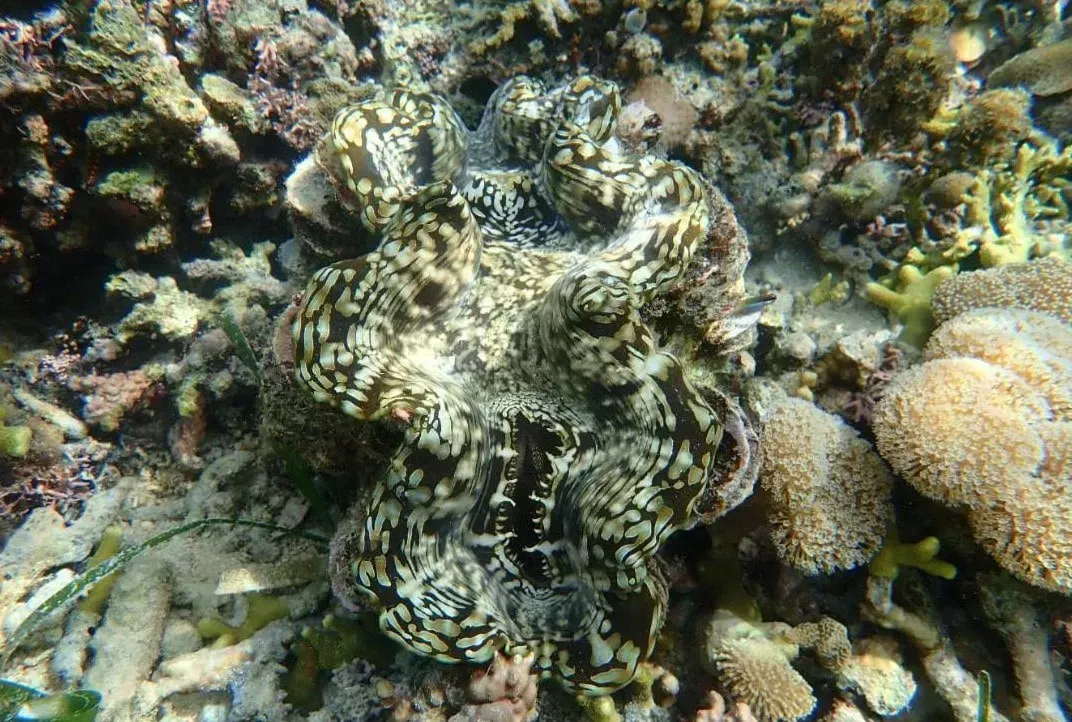
“Before sasi, kima were already rare. Now we see some starting to grow large,” he said.
Most of the conservation area of TNTC, or 89.8 percent, is ocean covering 1,305,500 hectares. The remaining 68,000 hectares are land areas. These land areas include 12,400 hectares (0.85 percent) of coastal areas, 55,800 hectares (3.84 percent) of land on islands, and 80,000 hectares (5.5 percent) of coral reefs.
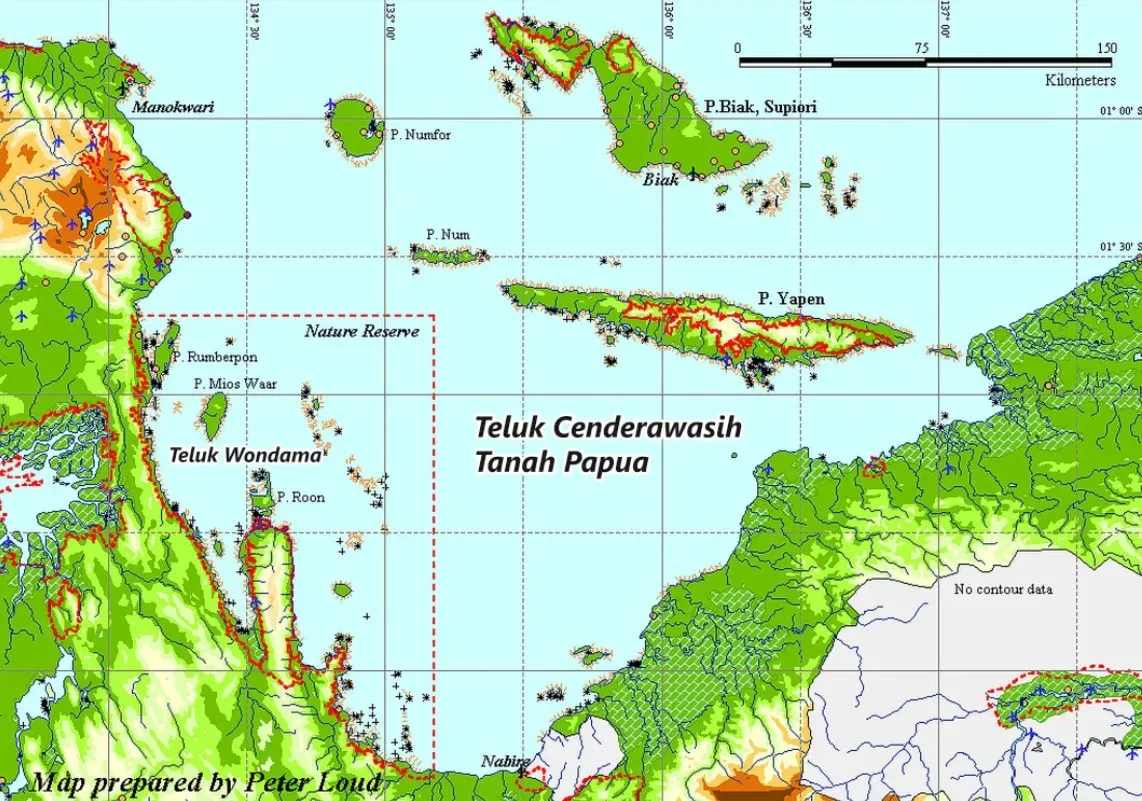
The TNTC area itself is located within the territories of two regencies from different provinces, namely Teluk Wondama Regency in West Papua Province and Nabire Regency in Central Papua Province. In Teluk Wondama Regency, 13 districts are included in this area. In Nabire, there are two districts.
In the core zone, particularly in the Auri Islands, Thesa stated that all human activities, including construction, are strictly prohibited. Conversely, in utilization and traditional zones, community activities are permitted, such as the sustainable use of natural resources. The traditional zone, spanning 500 hectares, serves as an access area for indigenous communities to manage their resources.
Bosayor added that TNTC staff typically conduct routine patrols between four and six times a year. During patrols, park rangers record fishermen’s activities, the fishing gear used, and monitor disturbances such as the use of compressors or illegal fishing gear.
“Sometimes we encounter prohibited practices, such as the use of compressors, and we provide education because they are dangerous to health and the ecosystem,” said Bosayor, who is often involved in these routine patrols.
The area, located in Cenderawasih Bay and along the Pacific Ocean coastline, is where the Australian continental plate and the Pacific Ocean plate meet. Due to its position at this plate boundary, the area is rich in natural resources, particularly marine resources.
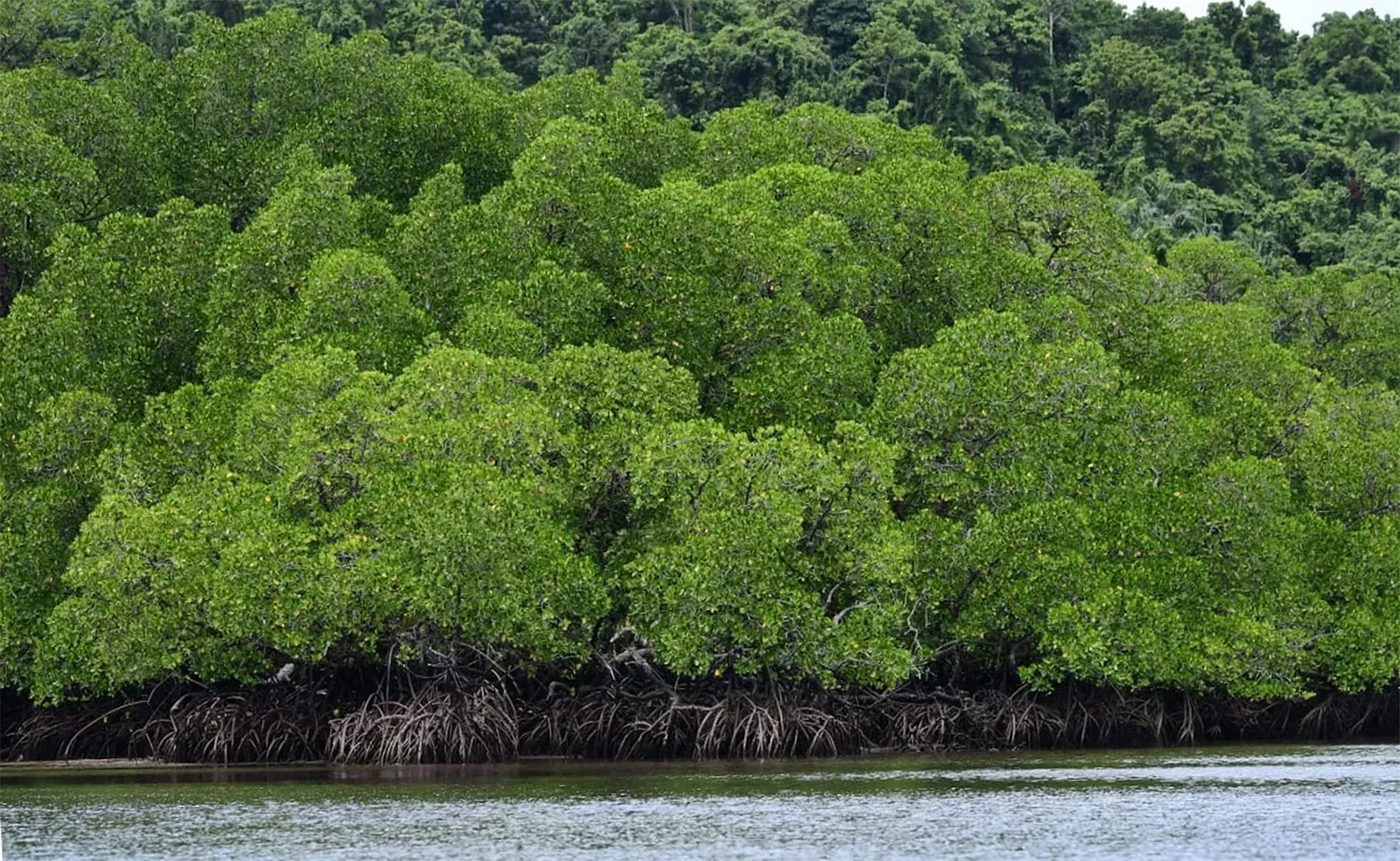
Additionally, it is abundant in biodiversity. At least 460 coral species, comprising 67 genera and 260 subgenera, are found in Cenderawasih Bay National Park. Meanwhile, two locations, Purup Island and Numamuram Strait, have a coral density of 220 species per hectare, representing the highest biodiversity in the Pacific Ocean.
Conservation efforts in the national park area, said Thesa, are also carried out through the formation of ecotourism and mangrove groups. This includes gender groups involving women in the village.
“Although there are no formal written regulations for the protection of endemic fish, the community is urged not to sell them commercially,” said Bosayor.
Bosayor said that the community in Aisandami village is already aware that ecosystems are interconnected, and that disturbances to one species can impact the health of the entire ecosystem, so everything needs to be protected.
“It does require lengthy discussions, but all parties support the continuation of sasi and conservation,” he said.
Traditional conservation practices of the Papuan people and modern conservation efforts carried out by the government through national parks can actually complement and reinforce each other. This is because traditional conservation practices among Papua communities have existed for a long time, based on local wisdom and customary laws. These customary laws include rules such as harvesting natural resources only at specific times, restricting fishing gear to those that do not cause damage, prohibiting entry into sacred or off-limits areas, and access rights based on customary land rights and clan affiliations.
Traditional concepts such as sasi, or the temporary closure of an area to protect and restore natural resources, are a semi-natural conservation system that has proven effective.
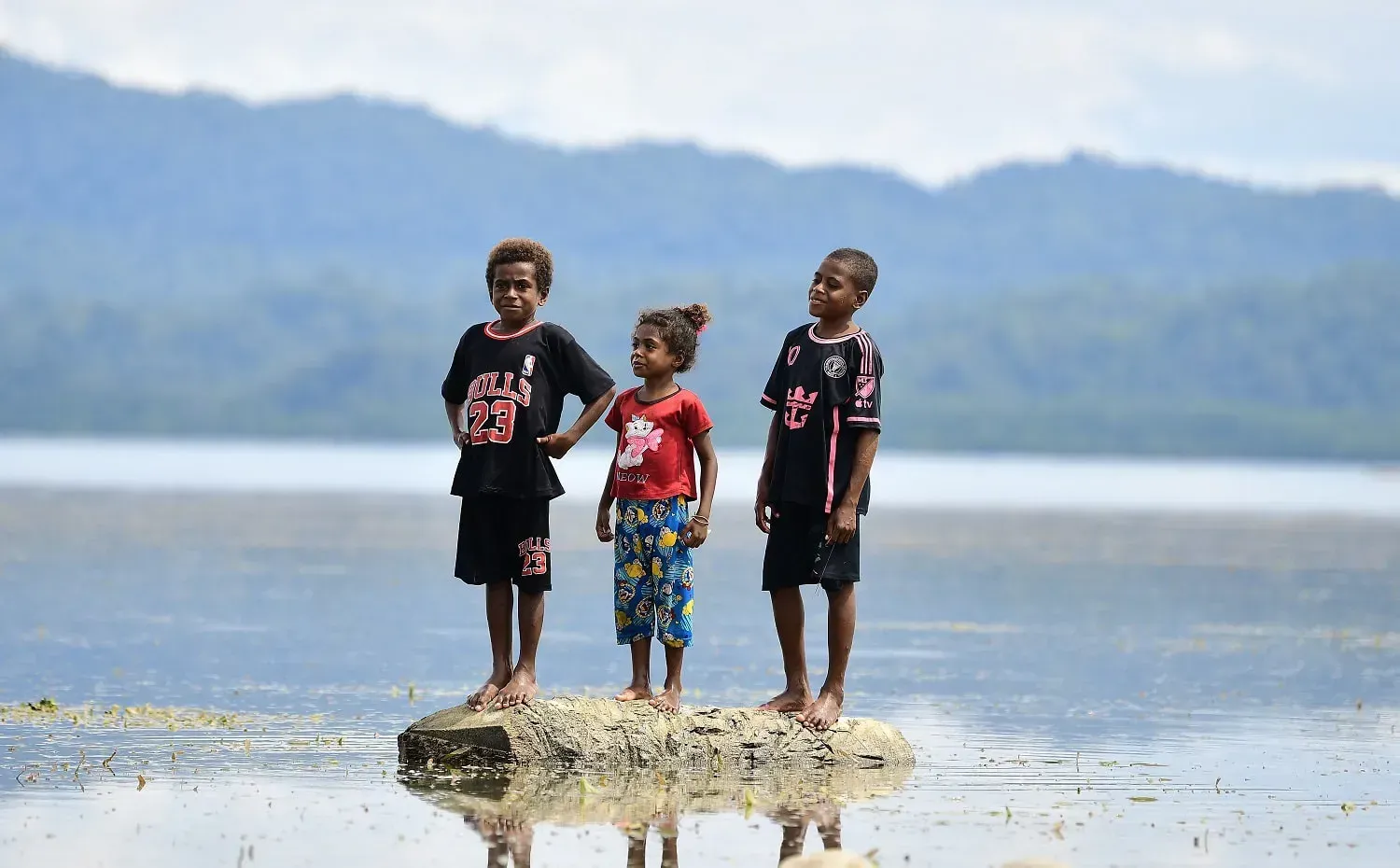
“Sasi is carried out based on community needs, such as to raise funds for church construction or children’s school fees. When sasi is opened, resources are harvested in a limited and responsible manner. This helps restore ecosystems, such as sea cucumbers and certain fish species,” said Mios Elieser Ayomi, Head of Yop Meos Island Village.
Sasi, which in the local language of the Wondama Bay community is called Kadup or Sawora, is similar to modern conservation strategies based on zoning and ecosystem restoration, making it potentially integrable into formal government schemes such as national parks or coastal area protection programs.
Facilitator between the communities and the government agencies
Bosayor acknowledged that in conservation practices in the waters of Wondama Bay, which are part of the TNTC area, non-governmental organizations such as the World Wildlife Fund (WWF) Indonesia Papua Program often act as facilitators between communities and government agencies, such as conservation offices. Efforts to strengthen local institutions and initiate operational funds for sasi management groups serve as a bridge between community-based conservation and formal institutional systems. Technical assistance, patrol funds, and training from external sources, such as those provided by WWF and the fisheries department, contribute to the sustainability of local conservation.
However, there are still challenges, such as market systems that affect the instability of the value of community catches. Sectoral egoism between clans makes it difficult to reach collective agreements, and external facilitators are still needed to unite interests.
On the other hand, Feronika Manohas, Coordinator of Community-Based Conservation and Community Conservation Areas for WWF Indonesia’s Papua Program, believes that if local practices such as Kadup and Sawora are valued, documented, and used as the basis for formal conservation policies, community confidence will increase.
“This will enable the government to gain support from the grassroots level and make conservation more sustainable and equitable,” she said.
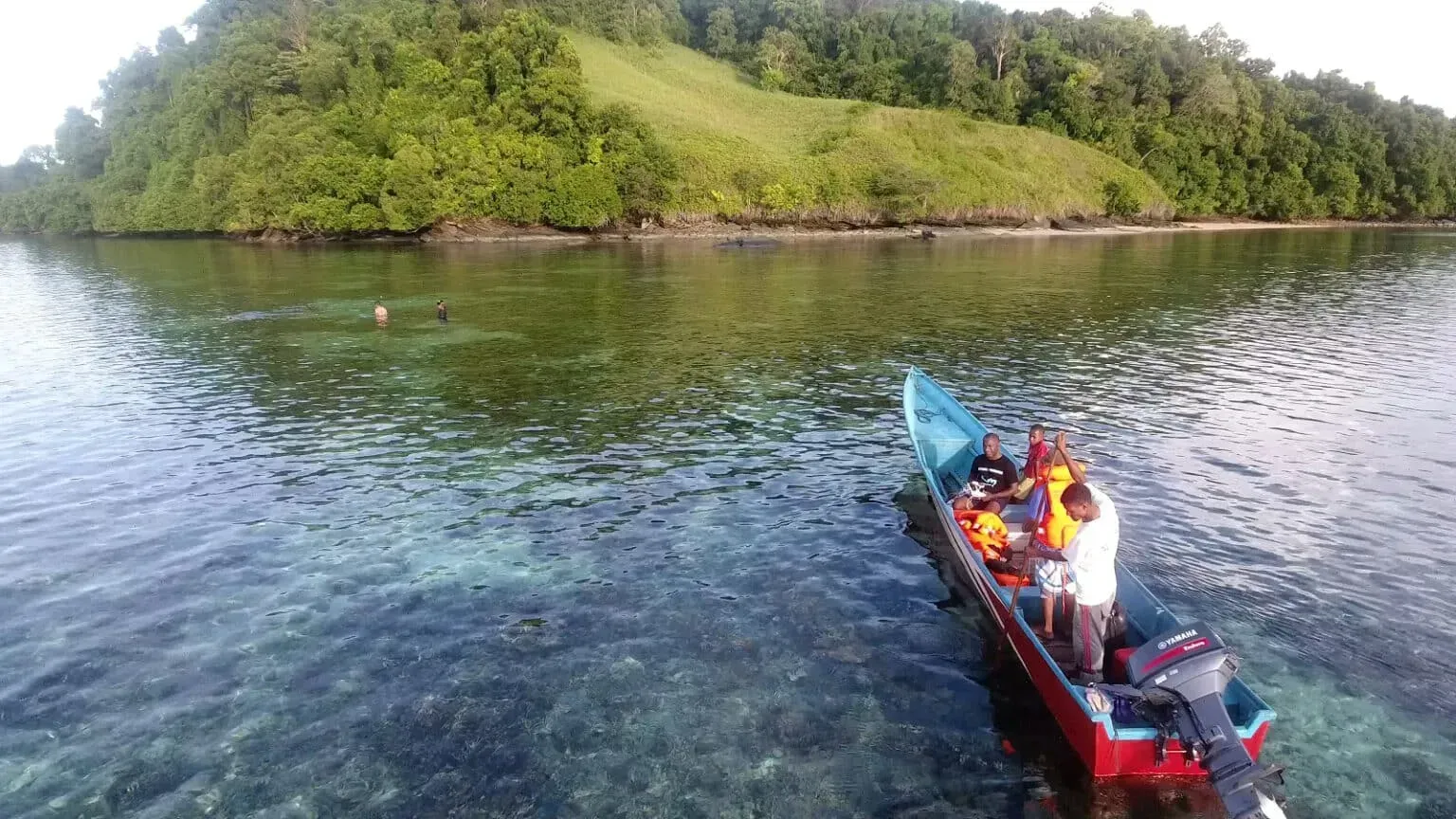
He emphasized that traditional conservation practices among Papuan communities are not separate from modern conservation, but rather a natural foundation that can form the core of national and global conservation policies, if properly facilitated. The integration of the two not only saves the environment, but also strengthens cultural identity and the sovereignty of indigenous peoples over their territories.
In the Wondama Bay area, not all sasi are enforced for a specific period of time; some are enforced permanently. Such sasi are typically enforced in areas that are sources of water and fish spawning grounds. These permanent sasi can be enforced in the core zone of a national park.
According to Ayomi, the people of Wondama Bay greatly respect sasi. They are afraid to engage in resource utilization activities in sasi locations during the closure period, as they believe the consequences could be illness or even death.
The Teluk Cenderawasih National Park Office combines these two types of traditional conservation with tourism activities. Specifically for permanent sasi locations, through zoning revisions, they are designated as diving and snorkeling sites. This zone will become a tourism zone based on traditional conservation.
However, these locations may only be accessed by BUMKam (Village-Owned Enterprises) managed by the village community as holders of IPPA (Permits for the Management of Natural Tourism) within the traditional, religious, and cultural zones.
“In the Teluk Cenderawasih National Park role model, indigenous communities as customary rights holders can access utilization zones, traditional zones, and cultural zones (religious and historical), depending on the type of activity carried out by the community,” explained Thesa.
For example, fishing activities are typically conducted in utilization zones and traditional zones. Meanwhile, sasi and tourism activities are directed toward cultural zones (religious and historical).
However, the challenge in managing TNTC, which has 48 villages in 15 districts with a total population of 7,926 people, is that 90 percent of the population relies on fishing and farming for their livelihood. They fall into the category of poor communities. Their lives depend entirely on the natural resources around them to meet their various needs.
For this reason, TNTC involves the community by providing access to community management as a third segment to promote eco-tourism based on traditional conservation. These activities are prepared in the religious and cultural customary zone, as well as a special rehabilitation zone in the sasi location, which can only be accessed by the Village-Owned Enterprise (BUMKam) holding a Nature Tourism Business Permit (NTBP).
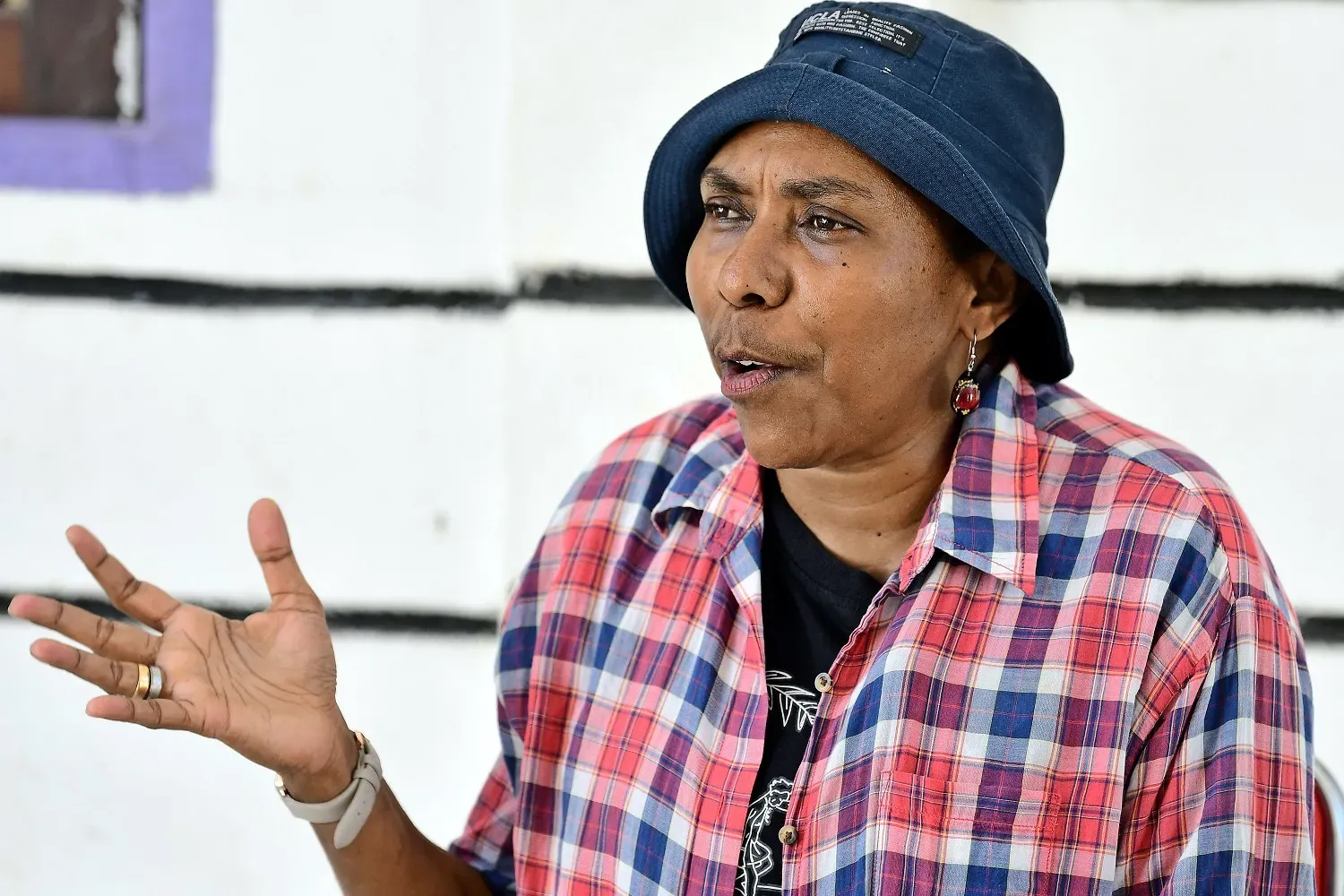
Regarding community involvement in the Teluk Cenderawasih National Park area, researcher and lecturer at the Faculty of Fisheries and Marine Sciences, University of Papua, Dr. Selvi Tebay S.Pi M.Si, proposed that the government provide compensation to communities that protect the conservation area.
According to Dr. Selvi, communities that practice traditional sasi and protect the area deserve recognition for their contribution to environmental conservation.
“My idea is this: what if we provide compensation to communities that protect their territory and carbon? Today, people can breathe because there are people who protect it,” she said.
She believes that communities protecting conservation areas need tangible support, not just symbolic recognition.
The form of compensation, Dr. Selvi explained, could include increasing the allocation of local government budgets (APBD) for regency, which would then be channeled into programs directly benefiting the communities protecting conservation areas.
“It could be in the form of programs, such as educating their children, or facilitating access to markets for Non-Timber Forest Products (NTFPs) and local products. Thus, conservation has economic value, communities can sell products, diversify their offerings, and the area remains protected,” she said.
Dr. Selvi revealed that in 2018 or 2019, West Papua conducted a fiscal study to assess the possibility of providing incentives to districts implementing conservation area protection. However, she is unaware of how far the study has been implemented.
“Since the region is preserving the area, how much of the conservation area is being protected? Does this then factor into the regional budget and become a consideration for increasing budget allocations?” she asked.
Reporting Team
Reporters : Dominggus A Mampioper, Alberth Yomo, Adlu Raharusun, Alfian Putra Abdi
Photographer : Engelberth Wally
Videographers : Yuliana Lantipo, Anggi Sagita
Narator : Natalia Andilan
Video Editor : Maurids Yansip
Infographic : Leonard Ohee
Editors : Victor Mambor, Aryo Wisanggeni, Syofiardi Bachyul
Translators : Nuevaterra Mambor, Dina Danomira, Elfriede Rumaseuw