Story
 August 28, 2025
In Post-War Ethiopia, Tigray’s Female Veterans Fear Being Forgotten
Country:


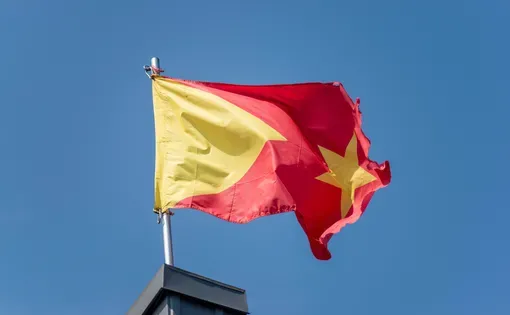
More than 30,000 female veterans of the Tigray Defense Forces await demobilization.
MEKELE, Ethiopia—Lying in a hospital bed, covered in a floral bedspread and surrounded by religious posters, Asmeret recounts walking for days in May 2021, determined to find a unit of the Tigray Defense Forces to join.
Since the outbreak of civil war between the Tigray region and the Ethiopian government in November 2020, she had heard stories of the horrific violence suffered by Tigrayan women like herself at the hands of Ethiopian forces as well as Eritrean troops fighting alongside them. Asmeret joined the TDF because she was determined not to be the victim of similar violations, which, according to human rights organizations, included rape and sexual torture. She and other female TDF veterans spoke with WPR on condition that they be identified by pseudonyms, for their protection.
In some ways, Asmeret’s story fits the narrative of the two-year war in Tigray, in which hundreds of thousands of people were killed and women were targeted with deliberately degrading and even genocidal violence. But in others, it underscores an underappreciated aspect of that war: Many of these women took up arms to defend themselves and their communities. According to some estimates, women constituted up to 30 percent of the TDF, which would make it among the most gender-inclusive nonstate armed groups in the world. For all the ways that these women suffered and sacrificed during the war, however, they are at risk of being left behind in Tigray’s postwar transition.

As a nonprofit journalism organization, we depend on your support to fund more than 170 reporting projects every year on critical global and local issues. Donate any amount today to become a Pulitzer Center Champion and receive exclusive benefits!
Sexual Violence and Women’s Mobilization
Despite widespread attention to wartime sexual violence in Tigray from policymakers and advocates, few have connected those violations to women’s participation in the armed rebellion there. Indeed, Asmeret was far from alone in joining the TDF in order to protect herself from sexual violence, while others also joined to avenge acts of violence they experienced or witnessed.
Luwan, a young medical professional, explained that part of the reason she joined the TDF was because “it felt like a matter of time” before she would be raped or killed by Ethiopian or Eritrean forces if she remained a civilian.
Amid the onslaught of aerial bombardment and occupation by Eritrean forces, Luwan’s parents forced her and their other daughters to stay in the house for safety, leaving her stuck inside the family home for a month. For an educated young professional like Luwan, the scale of the violence and the sharp constraints on her personal freedom were too much to bear. Before joining the TDF, she said, “I felt suffocated.”
Mihret, now 19, also traced her eagerness to join the TDF to the suffering and insecurity she felt at the hands of Ethiopian and Eritrean forces. Originally from western Tigray, she recalled moving from displacement camp to displacement camp with her family after the war broke out. Her younger siblings often cried from hunger, but her parents had left behind all their belongings and money to flee bombardment, leaving them unable to buy food to eat.
They were haunted by the possibility of their daughters being raped. Mihret remembers that the TDF originally turned her away three times before finally letting her join their ranks in 2021, after Tigrayan fighters retook Mekele, the regional capital, from the Ethiopian military. Her childhood had already been derailed by the outbreak of the COVID-19 pandemic, when her school was closed while she was in the seventh grade. The war then eviscerated any remaining chance she may have had for a normal adolescence. Faced with no good options, Mihret was proud to become a foot soldier in the TDF.
Women’s Roles in the TDF
Within the TDF, women played a variety of roles, including providing medical care to injured fighters, working in public outreach and documentation, and deploying as radio operators. But they also fought as foot soldiers in the trenches and hauled heavy weapons at the front. Veterans of the TDF also told us that some women rose to leadership ranks, though others noted that women faced a glass ceiling limiting their advancement.
Despite having joined the cause because of the dire human rights violations against women, some female veterans worry that “we are not going to get justice.”
In interviews, those who served in the TDF told us that the proportion of women in their units shifted over time. But several people estimated that 20 to 30 percent of TDF forces were female, and some said that as many as half of the people they served with were women.
One young man who served in the TDF as an intelligence officer explained that women were allowed to join from the very first day of the rebellion against Addis Ababa’s rule. So significant was women’s participation that the TDF appointed a “gender focal person” throughout various tiers of the organization responsible for both communicating women’s concerns up the chain of command and implementing the TDF’s gender-related policies.
Double Standards and ‘Double Responsibility’
Though the TDF facilitated high rates of women’s participation in a wide range of roles, the organization was not an egalitarian utopia. Some of the challenges that women faced were an outgrowth of the difficult conditions common to all wars. Female veterans underscored the difficulty of obtaining sanitary pads and other feminine hygiene products for their periods. One noted that as a result, women often had to fight in pants stained by their menstrual blood.
Other challenges grew out of the prevalent gender norms within the TDF. A male TDF veteran noted that women had a “double responsibility” as fighters in the organization: Not only did they fight, but they were also responsible for work traditionally done by women, like cooking and cleaning.
Luwan confirmed that her experience in the TDF was rife with double standards and stereotypical gender expectations. She lamented that she and other women had joined the TDF to fight but were often shunted into support work. She also described her frustration over seeing men being promoted to leadership roles over women who had more experience and contributed more actively. She added that female leaders were a rarity in the TDF, even though many were deserving.
In some instances, too, women who had joined the TDF to escape sexual violence found themselves sexually harassed, coerced into sexual relationships and even abused by male leaders. Internal mechanisms and the gender-focused representatives assigned throughout the TDF could help hold abusers accountable, but enforcement depended on leaders’ will, which varied within and among units.
For instance, one veteran wrote that some TDF leaders would “use their position to convince female fighters to give them favors.” In return, he added, senior officers could put women on their staff, which meant “having food and water on time, getting a relatively good shelter, staying fairly safe and rested and having access to supplies first, before the infantrymen.” This made it an especially desirable position amid the scarcity and insecurity of war.
Demobilization and Women’s Future in Tigray
In November 2022, the Pretoria Agreement brought about a formal end to the war between Ethiopian forces and the TDF. But while the fighting has officially ended, it’s unclear what the future holds for female TDF members. Like their wartime challenges, female veterans’ current situation is a function of both structural conditions and gender-specific vulnerabilities.
Internal displacement, economic precarity and political uncertainty are potent forces in all Tigrayans’ lives. For female veterans, these conditions are compounded by the ongoing threat of sexual violence at the hands of lingering Ethiopian and Eritrean armed groups, as well as from members of their own community. Female TDF veterans are also now confronting the fact that holding perpetrators of wartime sexual violence accountable is a distant prospect. Ambesa told us she was frustrated that, despite having joined the cause because of the dire human rights violations against women, “we are not going to get justice.”
Meanwhile, the Pretoria Agreement provided for a disarmament, demobilization and reintegration program to help TDF veterans return to civilian life. That process is reportedly underway, and many women veterans reported that it is prioritizing pregnant veterans and female veterans with children. But a 2023 report found that less than 13 percent of those registered for the program are female, which is significantly lower than the reported 30 percent prevalence of women in the TDF. That suggests something is wrong with the pipeline feeding TDF members into the program.
Asmeret was injured during her time with the TDF and now spends her days in the TDF-run medical facility where she spoke with us. She is grateful to the doctors who are trying their best to heal her. But the broken windows, leaking roof and hallways crowded with bunk beds are symbolic of the long road ahead for her and other female veterans.