Pulitzer Center Update February 4, 2026
When Stories Demand a Stage: Zambian Youth Turn Frustration into Advocacy
Country:

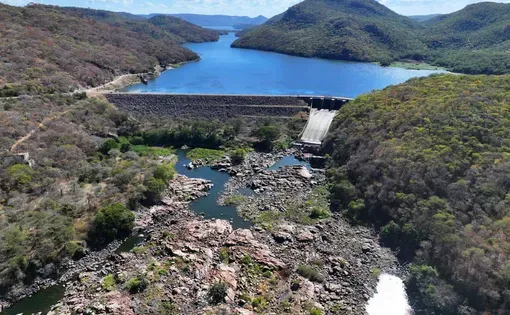
Climate change is significantly impacting hydropower generation.


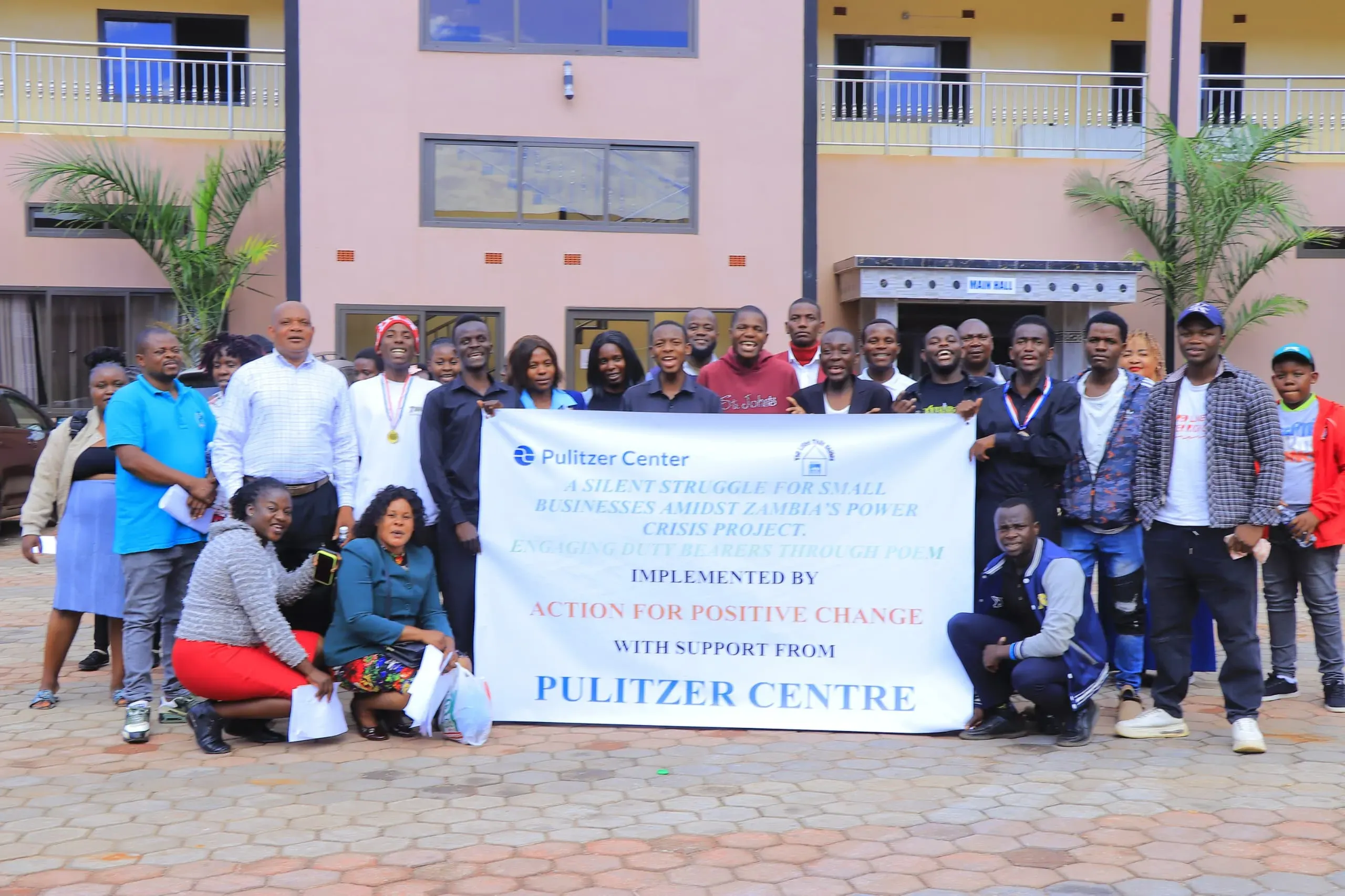
The Action for Positive Change (APC) discovered a potent formula for community engagement: authentic journalism meeting creative expression. Faced with practical obstacles like spotty internet, unreliable power to charge phones, and low digital literacy, the project team adapted their initial webinar and digital contest plan. Instead, they created a powerful, tangible civic forum where young people could move from silent struggle to public performance.
Between October and November 2025, APC implemented “A Silent Struggle for Small Businesses Amidst Zambia’s Power Crisis.” This Pulitzer Center-supported initiative reached deep into the dense, low-income urban communities of Chipata, Mchini, Magazine, Mchenga, and others, where livelihoods are tenuously tied to the electric grid. The project set out to amplify the voices of youth entrepreneurs running barbershops, salons, butcheries, and music studios who grapple with unreliable electricity for an average of just three hours a day. What began as a virtual exercise evolved into a dynamic, in-person dialogue and a public poetry contest, proving that a flexible, community-centered approach can drive powerful civic engagement.
From Virtual Plan to On-the-Ground Action
The project’s first adaptation was the translation of a planned webinar into an in-person, one-day stakeholder workshop at Eastern Comfort Lodge. This shift ensured that young entrepreneurs from all backgrounds, regardless of their access to technology or connectivity, could participate. The workshop brought together 55 young business owners for a frank, evidence-based dialogue with duty-bearers, including the Mayor of Chipata City.
Central to the discussion was a Pulitzer Center-supported story documenting the project’s own preliminary findings, shared on APC’s Facebook page. These findings painted a vivid picture of economic paralysis and emotional fatigue: young entrepreneurs waiting in bars for power to return, only to be unable to work when it did; businesses shut for days; and a pervasive sense of powerlessness. This storytelling grounded the dialogue in harsh, undeniable facts.
The impact was immediate and significant. Confronted with these direct testimonies, His Worship the Mayor of Chipata responded with a concrete commitment: the ongoing construction of a 100MW solar power plant in the Mazala area, with distribution set to begin by July 2026. He stated this was more than the entire province’s consumption, offering a tangible source of hope. Participants, while cautiously optimistic, voiced their need for accountability. As one young welder, Masauso Tembo, noted, “The information you have shared gives me and many of my colleagues a renewed sense of hope and relief… My only hope is that this infrastructure will benefit ordinary citizens and young entrepreneurs, and not only large investors, as has often been the case in the past.”
Poetry and Power: A Contest Finds Its Voice
The second component of the project, a digital poetry contest, underwent a similar, responsive transformation. While eight entries were submitted in written form, adjudicators from a local secondary school recommended a public performance format. They believed it would allow for a fairer assessment of the emotional delivery and audience connection. This pivot from digital to live performance proved to be a masterstroke in inclusivity and community mobilization.
The event was advertised on Radio Breeze 89.3 FM, attracting a crowd of 277 community members. The performers, 21 youth in three individual acts and six groups, took the stage not just to express anguish but to propose sophisticated solutions. Their poems referenced geothermal potential in Kapishya Hot Springs, questioned continued hydropower reliance, and challenged the government to explore nuclear energy, drawing direct comparisons to policies in Iceland, Kenya, and Ethiopia.
The performances transcended art, becoming a platform for sharp civic questioning. Attendees like Bernard Mussa asked pointedly, “Are you aware of these earlier [geothermal] studies, and if so, why has the government delayed implementing their findings?” The poems and the dialogue they sparked demonstrated a high level of research and a deep desire for systemic change, moving far beyond simple complaint.
The three winning groups were each awarded K10,000 and were officially crowned as Youth Ambassadors for Eastern Province. Mentored by activist Mr. Chinoya Muyeye, these 12 ambassadors are now tasked with a formal mandate: to serve as a bridge between young entrepreneurs and policymakers, advocating for sustainable energy solutions at the district, provincial, and national levels.
Key Outcomes and Enduring Impact
The project’s success is measured not only in numbers, 55 workshop participants, 277 audience members, 12 new Youth Ambassadors, but in the qualitative shift it created. Key outcomes included:
- Direct Policy Engagement: The project facilitated a rare, direct line of communication between affected youth and the Mayor’s office, yielding a specific, time-bound commitment on solar energy infrastructure.
- Elevation of Youth-Led Solutions: The poetry contest revealed that young people are not just victims of the crisis but critical thinkers proposing viable, researched alternatives like geothermal and diversified energy mixes.
- Creation of a Sustainable Advocacy Structure: The appointment and mentorship of Youth Ambassadors ensures that the advocacy sparked by the project has a structured pathway to continue, aiming to influence policy beyond the election cycle. As participant Joseph Ndolo urged, "This particular matter is too important to be politicized… It is painful for citizens to place their hope in a project only to see it abandoned after elections."
- Adaptation as a Model for Inclusivity: The project demonstrated how civic initiatives can successfully pivot from digital to physical formats to overcome local barriers, ensuring no voice is excluded due to a lack of technology.
The initiative also navigated the heightened political sensitivities of a pre-election period in Zambia, where public criticism can be misconstrued. By maintaining a strictly non-partisan, evidence-based, and solutions-oriented approach, APC ensured the dialogue remained constructive and difficult to dismiss.
Journalism as a Catalyst for Civic Performance
The Pulitzer Center-supported story provided the essential, credible foundation, but it was the act of bringing that story to life in a community hall that created real change. This project underscores a core principle of impactful journalism: that stories must be met with spaces where they can be heard, felt, and acted upon.
When a webinar wasn’t possible, a workshop was held. When a digital contest hit barriers, a public stage was built. In doing so, Action for Positive Change did more than report on a “silent struggle.” They gave it a microphone, an audience, and a path forward, proving that in the face of a national crisis, the most powerful energy source can often be the collective voice of a determined community. For more information on the project and to follow the ongoing work of the Youth Ambassadors, visit the Action for Positive Change Facebook page.