Pulitzer Center Update April 27, 2026
Reporting on Bangladeshi Scientist Fighting Cholera Inspires Creative Lesson for Maine 5th-Graders
Country:

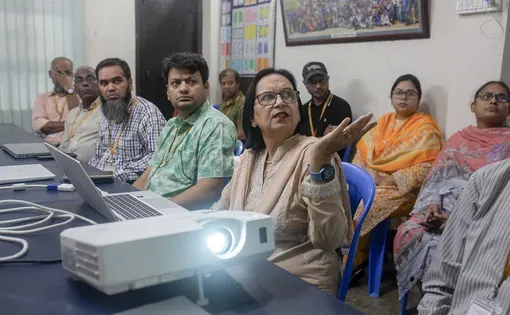
She leads the fight against cholera, a deadly infection that has surged globally.

Video of Fellow Amanda Bryant teaching “Clean Water Heroes: Inspiring Change” to her fifth-grade students in Maine. Video by Amanda Bryant.
Amanda Bryant is a fifth-grade social studies teacher at Mountain Valley Community School in Bryant Pond, Maine. Bryant created the lesson plan “Clean Water Heroes: Inspiring Change” as part of the fall 2025 Pulitzer Center Teacher Fellowship “Examining Interconnected Health Inequities Through Global Reporting,” reaching 68 students.
At the conclusion of the Fellowship, Bryant shared the following reflections on her experience developing and teaching the lesson.
What is the focus of your lesson plan, and why did you write this lesson for your community?
“I wrote this lesson because I realized that many students think of history as something that happened in the past and is now fixed, rather than something that is always changing and affecting their lives now. My main goal was to help my students see current events in a real-world way so they would understand that they are witnessing "living history."
— Teacher Fellow Amanda Bryant
My students are in fifth grade, and they all learn in different ways and have different levels of reading and writing skills. In my classroom, there are a lot of personalities with different backgrounds and experiences that make it a great place to learn. When I started writing this lesson plan, I wanted to make sure that the activities I included would work for everyone, no matter how knowledgeable or proficient they were.
Not only would it explain what cholera is in clear terms, but it would also let students express their understanding of what they learned in creative ways. I decided to include both visual and written aspects in the lesson to reach this goal. I began by reading a short passage that gave basic information about cholera to introduce the subject. This helped students who were more proficient in reading to learn more about the topic. I added pictures and diagrams to help explain important ideas for people who needed extra help.
How did you build this lesson with your community in mind?
I wrote this lesson because I realized that many students think of history as something that happened in the past and is now fixed, rather than something that is always changing and affecting their lives now. My main goal was to help my students see current events in a real-world way so they would understand that they are witnessing "living history."
Students too often live in a bubble around them. I made this lesson to break that bubble and show them stories and problems that happen outside of their own zip codes. The main point of this lesson is to connect the big picture with the small picture. I want my students to see how global problems affect their own lives. They can then connect these bigger ideas to their own communities in new ways. In the end, the goal is to give people power. I want my students to stop just watching the news and start getting involved by taking a stand and making a real difference.
What did your students learn while engaging with this lesson?
“Students showed what they had learned by linking global problems to local actions. They went from just remembering facts to being able to feel for others and solve problems … Students also showed that they knew that scientific solutions like vaccines work best when people in the community are educated about them …. The lesson changed students from passive observers into aspiring scientists and community activists who want to protect not just their own neighborhoods but the world just like Dr. Qadri.”
— Amanda Bryant
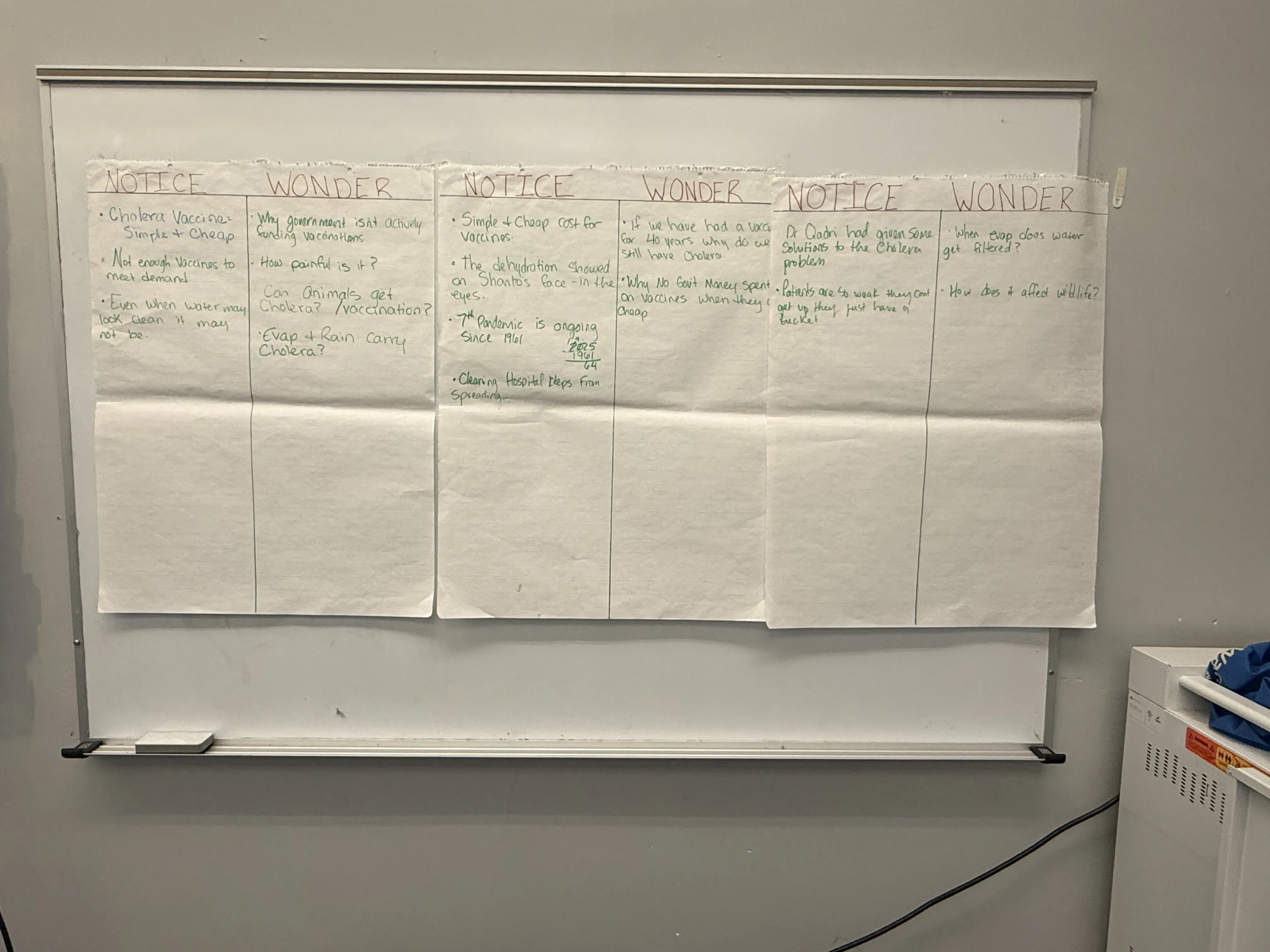
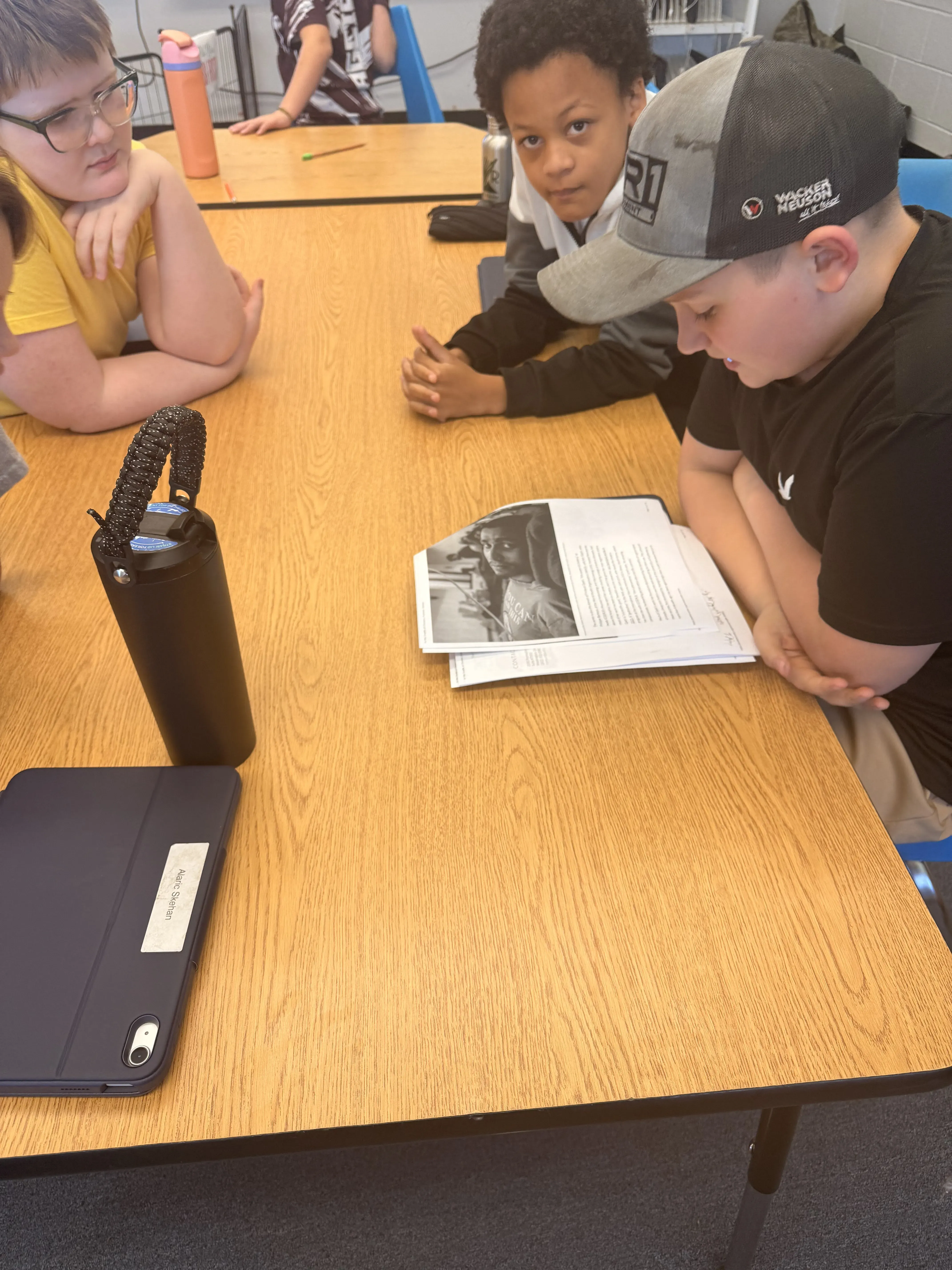
My lesson about Dr. Firdausi Qadri and her fight against cholera got the students very interested and made them think critically. The class learned about complicated public health issues, like how waterborne diseases spread and how to stop them (vaccines + hygiene), through "talk and jot" sessions and slide analysis.
Students showed what they had learned by linking global problems to local actions. They went from just remembering facts to being able to feel for others and solve problems. For instance, Braylon clearly stated the main issue when he said, "I learned that cholera spreads when water is dirty, so I would help make sure everyone has clean water to drink."
Students also showed that they knew that scientific solutions like vaccines work best when people in the community are educated about them. Raegan linked Dr. Qadri's research to everyday behaviors by saying, "Dr. Qadri showed that good hygiene can save lives, so I would remind people to wash their hands."
An episode of Global Pulse, a vaccines podcast created by students Ben, Zayden, and Tyrell. Audio provided by Amanda Bryant.
The lesson may have been most inspiring because it gave students a sense of control. Students didn't just learn about a problem; they wanted to help fix it. Kamber had a clear plan: "I would help health in my community by starting a Clean Water Team." We could check the water fountains and tell people not to waste water.
The lesson changed students from passive observers into aspiring scientists and community activists who want to protect not just their own neighborhoods but the world just like Dr. Qadri.
Below are quotes from student journals after learning about Dr. Quadri’s work with vaccines and cholera in Bangladesh:
- “If I could help make health better in my community or the world, I would teach people how important clean water is. I learned that cholera spreads when water is dirty, so I would help make sure everyone has clean water to drink.” — Braylon
- “I would help make health better by sharing facts about washing hands. Dr. Qadri showed that good hygiene can save lives, so I would remind people to wash their hands before eating and after using the bathroom.” — Raegan
- “If I could help the world be healthier, I would raise money to help scientists make vaccines. Vaccines helped stop cholera from spreading, and I want everyone to have medicine that keeps them safe.”— Lealynn
- “I would help my community by teaching my friends how to stay healthy. We could make posters at school about drinking clean water and staying away from germs.” —Isabel
- “I would help make health better by cleaning up trash in my neighborhood. Trash can get into water and make people sick, so keeping the environment clean helps everyone stay healthy.” — Isaiah G
- “If I could help the world, I would work at a clinic like Dr. Qadri. I would help people get medicine and learn how to stay healthy so we can stop diseases like cholera.” — Montana
- "I would help health in my community by starting a Clean Water Team. We could test water fountains and remind people not to waste water. Clean water keeps us strong.” — Kamber
- “I would help make health better by telling people not to drink water from places that look dirty. I learned that cholera spreads fast in dirty water, so we need to protect our water.” — Lily T
- “I learned that even water that looks clean can be full of bacteria that causes people to get sick. Dr. Qadri shows us that even with vaccines, we need everyone to participate and do their part to really get rid of cholera.” — Ben
What did you learn by creating and teaching this lesson?
A vaccine awareness poster created by students Aby and Adi for Amanda Bryant’s class. United States. 2025.
A water sanitation poster by students Kamber and Christy. Image by Amanda Bryant. United States. 2025.
What I learned in general: This lesson went very well. The information about Dr. Qadri really hit home with the class, which kept them very interested during the "talk and jot" and slide analysis. But the most important thing I learned is that it takes longer than I thought to do good creative work. The lesson plan had a timeline, but the students were so into the Performance Task that we needed a lot more time than we had planned to do their ideas justice. There was excitement, but the plans needed to be changed to fit their goals.
Advice for colleagues: If you want to teach this lesson, here are two important things to keep in mind:
Add "buffer" time for the performance task: don't rush through the last task. I realized that the amount of time suggested in the lesson plan wasn't enough for the students to do the work they wanted to do. I suggest either making the performance task a separate block or adding additional time to the lesson so that students may improve their work without feeling rushed.
Scaffold the "Podcast" option: A lot of students wanted to make a podcast but didn't know where to start. Before they ever hit "record" on Canva, we found success by slowing down and breaking the process down into steps.
The key is pre-production: We spent some time coming up with a creative name for the podcast and writing a script together.
Recording and visuals: After the script was finished, the students recorded the audio on Canva and then added graphics. This structure helped them go from a cool idea to a finished product they were happy with.