
“We have a tendency to destroy first and repair later.”
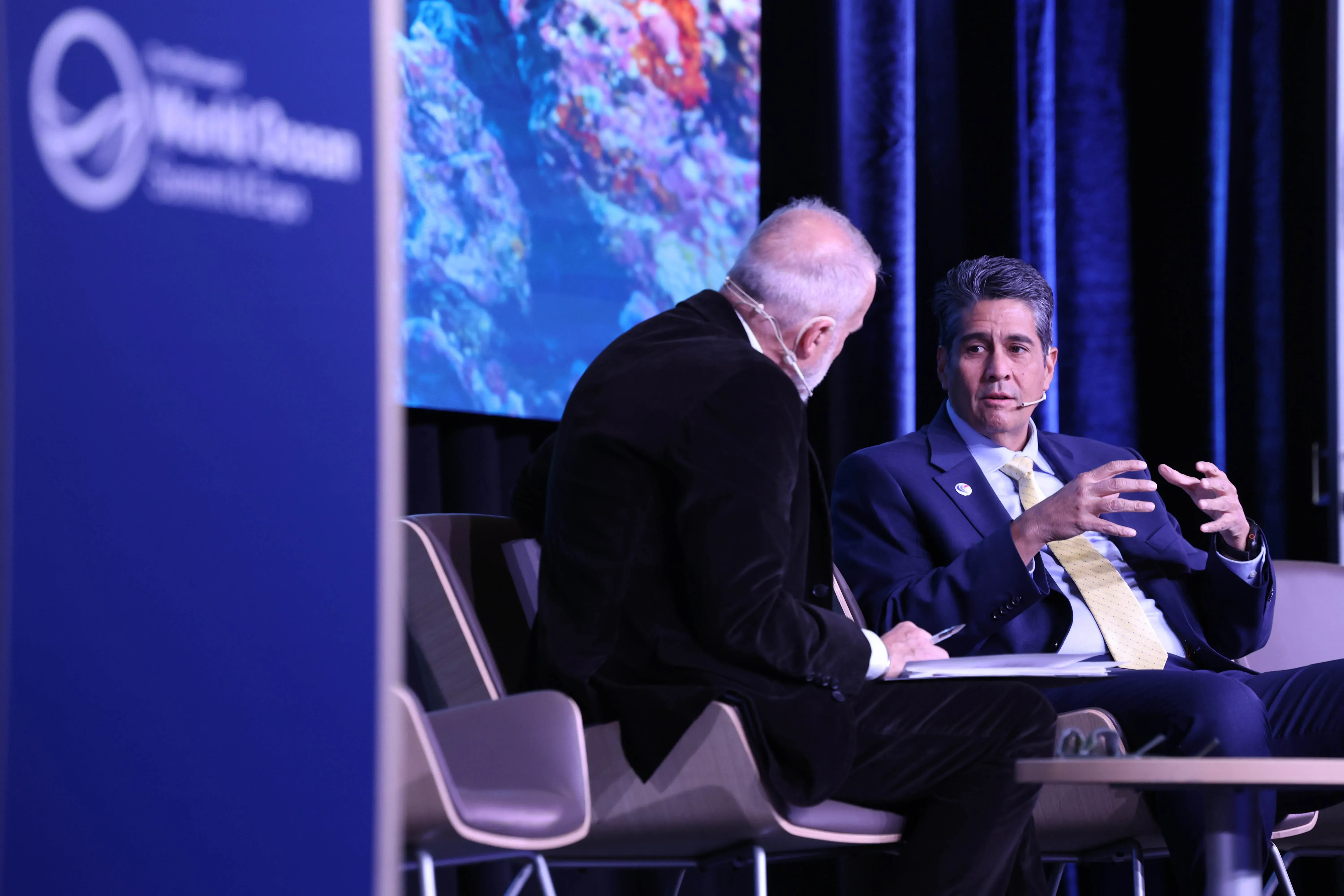
These words of the president of Palau, Surangel Whipps Jr., were met with murmuring agreement in a cold conference room at the Palais des congrès in Montreal during the 2026 Economist Ocean Summit in March.
Among the crowd of port directors, conservation presidents, politicians, and blue-economy entrepreneurs, I was diligently taking notes as Whipps discussed the role of technology in the enforcement of the High Seas Treaty, also known as the Biodiversity Beyond National Jurisdiction (BBNJ) Treaty.
The Pulitzer Center Data and Research team works with a lot of different technologies, tools, and data to support journalists covering the ocean. Leading this team, I went to the summit to learn about new resources and how to hold accountable the countries that ratified the BBNJ Treaty.
The treaty had just come into force two months earlier after two decades of negotiations and is meant to protect—so we won’t have to repair—international waters, or the two-thirds of our ocean that does not fall under any specific country’s jurisdiction.
Enforcing the BBNJ Treaty has two main obstacles. The first one is about money: Who will finance the implementation? The second one is about scope: How do we police such a huge, and previously unprotected, area of our planet? The answer to the latter seems to lie in new technologies.
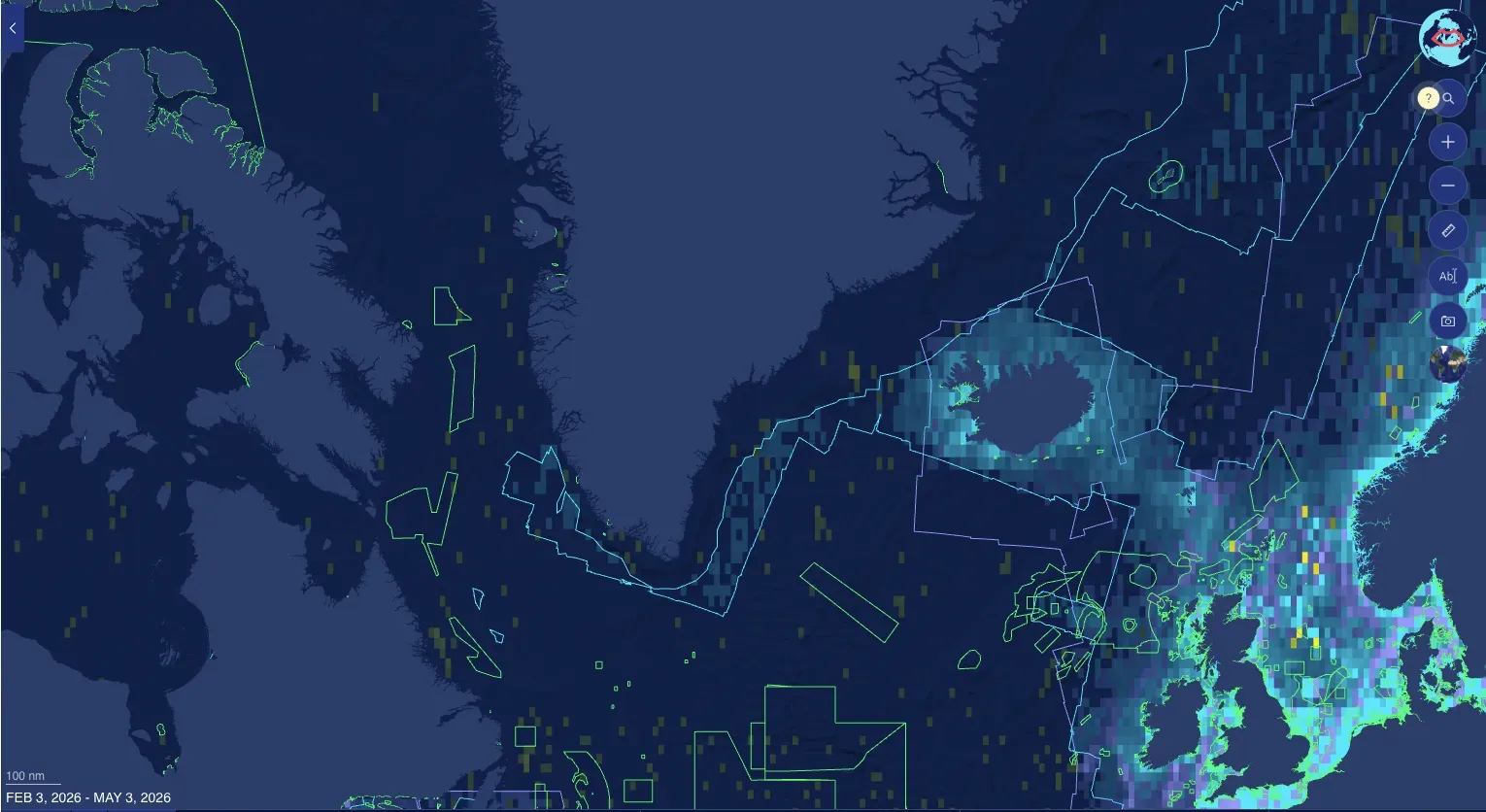
“UAVs and use of AI and technology to track dark fleets; these technologies should be accessible, and other countries could share them with us,” Whipps said. He was referring to Unmanned Aerial Vehicles, or drones, used to spot ships that are not sending out their AIS (Automatic Identification System) signal, a radio transmission that shows where a vessel is.
Often, when a ship is somewhere it shouldn’t be—like inside a marine protected area—or engaging in a dubious activity—like transferring illegal fish catch to another ship—a captain or other crew member will turn off the AIS signal. It’s something we encounter a lot when working on ocean investigations. We point journalists to other ways of finding out a vessel’s position, such as using pictures posted on social media and boat enthusiast websites or using high-resolution satellite imagery.
Energetic, vocal, and with a meticulous salt-and-pepper haircut, President Whipps often represents the environmental interests of small island nations at ocean and climate conferences. Palau is a country of more than 300 islands and less than 17,000 people situated in the western Pacific Ocean. When he mentioned sharing technologies, Whipps was also addressing the issue that big, rich countries have access to resources that small ones do not. The only way to enforce the BBNJ treaty is if governments share resources and knowledge.
Palau is estimated to have been settled about 3,000 years ago by people coming from islands to the west such as the Philippines and Indonesia. Protecting the ocean is a continuation of “what we have been practicing for thousands of years,” Whipps said.

At ocean, climate, and journalism conferences we are finally seeing a recognition of Indigenous knowledge and the vital role of Indigenous communities in protecting our planet from ourselves. There is a growing incentive to marry Indigenous knowledge with new technologies. Besides the Pacific, this is also relevant for the protection of rainforests near the equator, and the ocean in the Arctic region. For example, at the ocean summit, I learned that the largest and oldest beluga whale and plastics dataset in the world is from the Inuit Circumpolar Council Canada.
Our Oceans Editor Jessica Aldred and three journalists working on projects supported by the Pulitzer Center were also at the summit. Covering the rise of shipping in the Arctic and what this means for Indigenous residents, Ocean Reporting Network Fellow Karen Pinchin was thrilled to learn that Canada's Indigenous-led Marine Protected Areas (MPA) show a “stunning degree of recovery when local guardianship is involved.”
“If those MPAs now contain ‘the best of what is left on our planet,’ as one speaker said, then my takeaway was that protection is attainable and replicable worldwide,” Pinchin said.
Jenn Thornhill Verma, whose Pulitzer Center project looks into how wildlife caught in the Canadian Arctic end up in illegal markets, said she also saw a consensus that Indigenous leadership is essential to reach climate goals like 30x30. “This time it felt less like an argument and more a dependency,” she said.
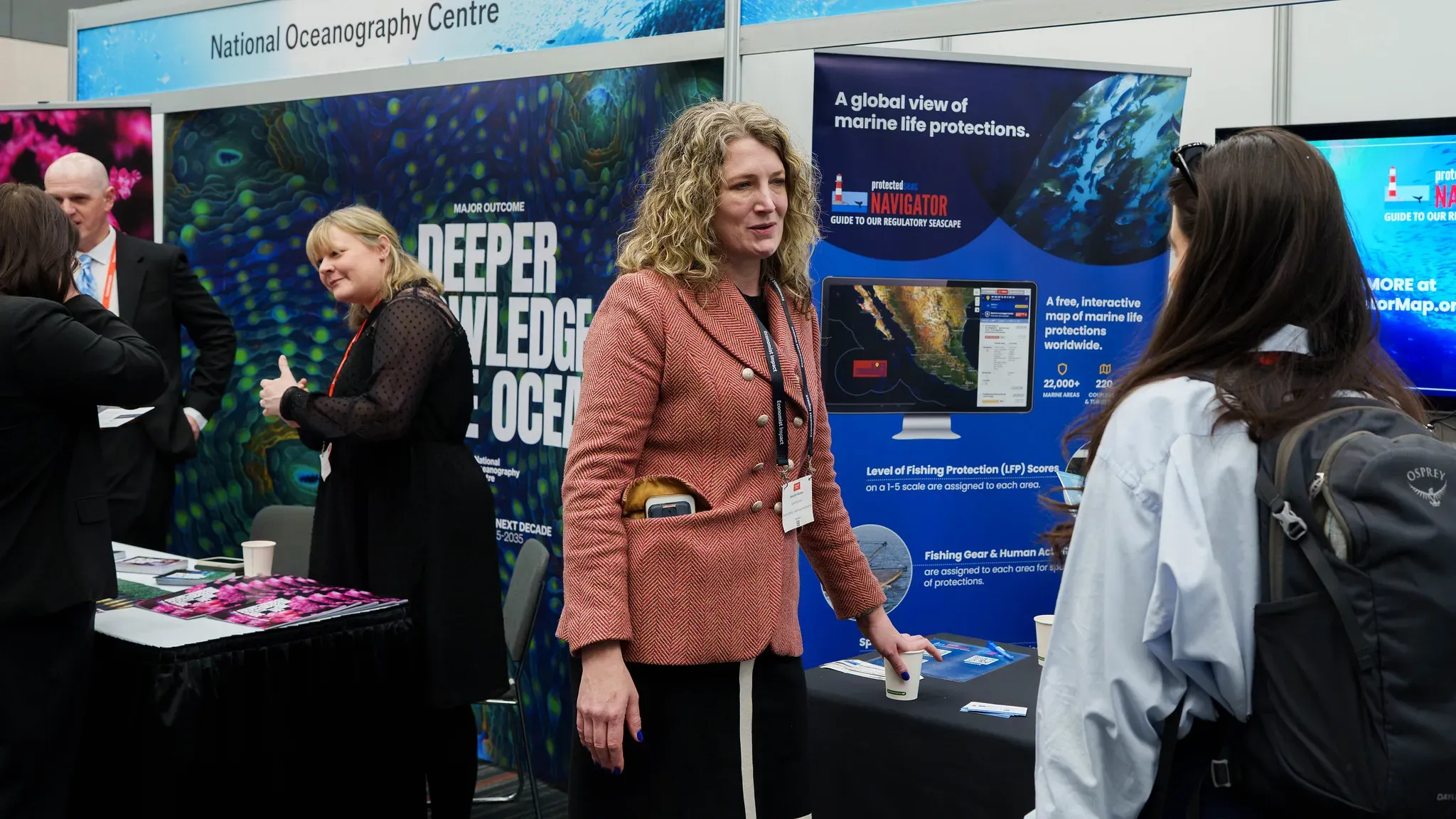
In a hall that hosted exposition booths, coffee, and snacks—making it a popular meeting spot between panels—organizations were showcasing new technologies and data.
The ocean regeneration outfit Wave had a computer where you could try out Ocean Central, a map that mixes ocean health and conservation data. The UK’s National Oceanography Center was there showing how they measure heat in the ocean using vertical moors. Members of the Seabed 2030 project were explaining how they are mapping the ocean floor with bathymetry data, and how they will make it all available online.
“I learned how critical ocean observation and monitoring is in informing emergent ocean industries,” said Allison Gacad, who is investigating Marine Carbon Dioxide Removal investments. “A project at the UK’s National Oceanography Centre, called SMARTEX, is generating deep-sea data in the equatorial pacific to inform rules for industry development, including whether or not to go ahead with deep sea mining to begin with.”
Being at a conference like this as some of the few journalists, we are always looking out for data we can use and for opportunities to collaborate. This can be a challenge. Businesses and academic organizations are sometimes protective about their data. For some it is their product—selling data is how they make money—and some have had negative experiences with how journalists interpreted the data. However, since the first time I attended the ocean summit three years ago in Lisbon, where I live—mainly to be close to the ocean—I am seeing that organizations are more open to collaboration and sharing knowledge.
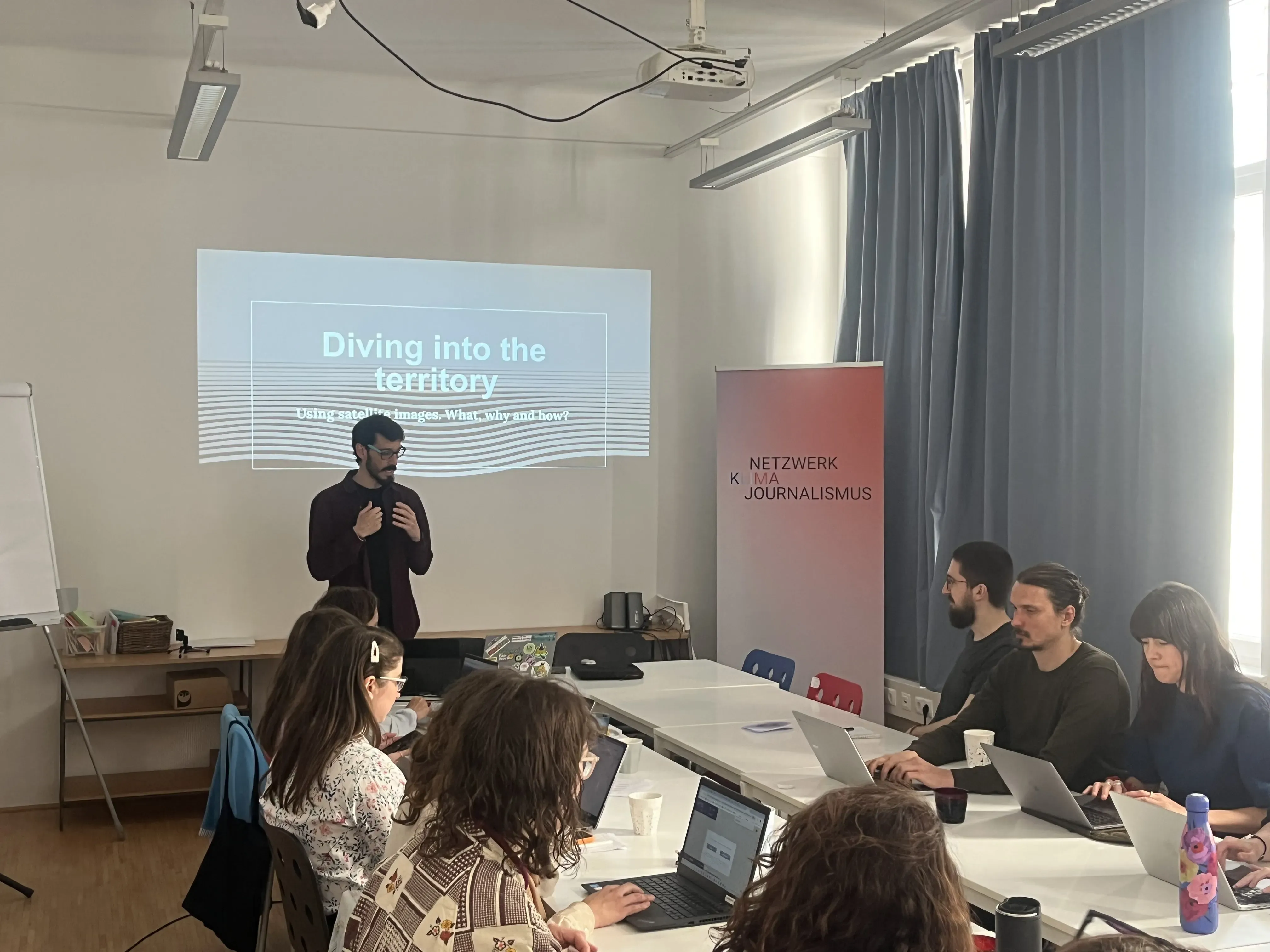
A month and a half later, I was in Vienna training climate journalists how to uncover the owners and investors behind companies. The data specialist on our team, Federico Rainis, was showing them how to use satellite imagery and geospatial data. The journalists from all over Europe – many more experienced than I am– were engaged and excited to learn these new methodologies. It made me think about how I have been giving variations of this training for the past seven years but there are still many reporters eager to learn new techniques to do deeper and more impactful reporting.
“I like to be an optimist and like to believe that a little progress is still progress,” President Whipps concluded in Montreal. “Governments come and go but what is important is the long-term goal.”
As we get into the middle of spring, I am also hopeful. I believe that this year we will share more technologies, more data, and more resources and methodologies, and we will expand our collaborations with non-journalistic organizations and Indigenous communities and reporters.
“As a planet we understand that the planet is getting too hot,” Whipps said. “We have made progress [...] we shouldn't give up.”

