Pulitzer Center Update April 9, 2026
Pulitzer Center Reporting Shows Why the Deep-Sea Mining Race Matters
Country:


As companies and governments rush to mine the sea, geopolitical tensions rise and the ocean's future...


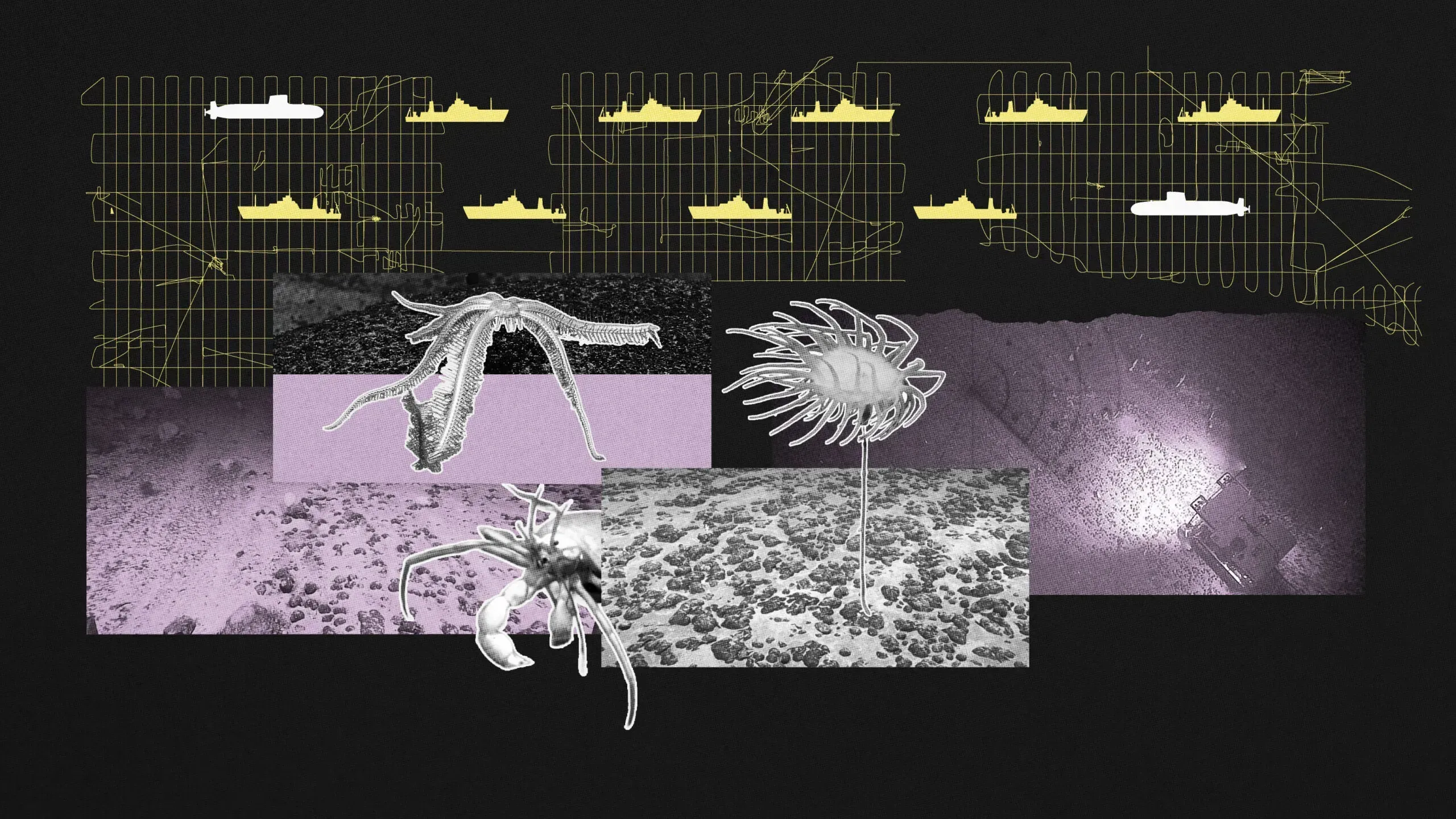
The race for critical minerals has become a defining geopolitical challenge of our times, playing out across remote Arctic frontiers, Southeast Asian archipelagos, and resource-rich African states.
As competition intensifies on land, it is beginning to spill into the planet’s last frontier: the deep sea, where vast deposits of cobalt, nickel, and other rare earth elements lie in waters beyond national jurisdiction.
In the last decade, private companies sponsored by nation states have been exploring areas of the seabed in a huge area of the Pacific.
Commercial mining cannot begin until the International Seabed Authority, the U.N.-affiliated body tasked with regulating mining in international waters, agrees on a mining code. Frustrated by delays in these long-running negotiations, some countries have begun advancing plans to mine within their own territorial waters, while others are pushing to accelerate the approval of international rules. The issue has risen up political and media agendas as NGOs and scientists warn of the irreversible damage to a fragile ecosystem that is barely understood.
Pulitzer Center-supported ocean reporting has examined many of these issues. A joint investigation by Ocean Reporting Network (ORN) Fellow Elizabeth Claire Alberts, of Mongabay, and Kara Fox, of CNN, however, is the first to show how China’s deep-sea research and exploration activities could also serve strategic military interests.
As part of Alberts’ yearlong ORN Fellowship, the reporters, supported by the Pulitzer Center’s Data and Research team, tracked eight Chinese state-owned research vessels over a five-year period. Analyzing data from MarineTraffic and information compiled by Deep-Sea Mining Watch, and comparing their findings with five areas of the seabed licensed to China for exploration, they found that more than 90% of the ships’ operational time appeared to be spent outside the designated contract areas, including in waters of strategic military interest, while roughly 6% was spent within the licensed exploration zones.
The investigation marks a new frontier both for deep-sea mining and for reporting on the industry, offering a fresh look at how the race for seabed minerals is increasingly linked to military strategy and global power. But whether it’s driven by commercial ambitions or strategic considerations, the warnings are clear: If deep-sea mining proceeds, it could come at significant and potentially irreversible cost to marine ecosystems—and to the ocean services on which millions of people depend.

Jessica Aldred
Senior Editor, Oceans Investigations
This message appeared in the April 10, 2026, edition of the Pulitzer Center's weekly newsletter. Subscribe today.

