Pulitzer Center Update December 19, 2025
Hear From the Photographers Featured in 'A Year in Photos'

Have you ever seen an image and wondered what it must have been like to get that shot?
As part of our annual "Year in Photos" publication, we ask the featured photographers to contribute an optional artist statement. The prompt typically consists of something along the lines of: "Tell us more about this photograph or project. What is its significance to you? Why is it important? Can you share what it was like to capture this image?"
We were blown away that close to 40 photographers chose to contribute statements this year.
Visual storytelling shapes our understanding of the world. As readers and consumers of media, it is rare to get the opportunity to hear from the people behind the lens. While the Pulitzer Center publishes a handful of statements in our "Year in Photos" publication, we are thrilled to share the full set of contributed statements with our audiences for the first time, as a companion piece to "Year in Photos."
The statements are curated in the same order as the "Year in Photos" sequence so viewers can follow along. We are intentionally not re-publishing the full set of images here, as we hope you'll explore the full interactive experience. We do, however, include supplemental media (video, illustrations, audio) where available. We hope these statements give additional context, nuance, and attention to these important, underreported stories.
Open two tabs and dive in!
Kurniadi Widodo
The Butterfly Effect: When Butterflies Go Extinct
Project Multatuli | Indonesia
"After the story was published, we had been receiving responses from readers who sent us their own photos of butterflies and other insects taken from their surroundings, sometimes noting or realizing their diminishing numbers. It really reminded us that stories from faraway places could not only inform but also persuade people to pay more attention to what's happening around them. Everything is connected. Small things matter."
Fernando Martinho
Brazil’s Second Largest Meat-Packing Plant Profits From Cattle Laundering, Illegal Deforestation, and Pressure on Indigenous Land
O Joio e O Trigo | Brazil
"Documenting the livestock production chain or the growth of industrial agriculture in the Amazon is extremely cruel and dangerous. Like most common environmental crimes in the region, such as logging, illegal mining, or land grabbing, these economic activities are the main drivers of deforestation, agrarian conflicts, and threats to the native peoples of the forest."
Nina Dietz
A Neighborhood Burned, a Home Saved, a Future in Question
Inside Climate News | United States
"In college, I had this art history professor, Shelley Rice, who casually rewired my worldview by insisting that cities are ideas. At nineteen, I was incredulous. Ideas, I was certain, existed in the realm of thoughts, not as physical locations you can point to on a map, let alone stroll around in. Over the course of the intervening term, she permanently changed my perspective by demonstrating how a city transforms when you alter the governing principle around which it functions. Once you see that every sewer line and power conduit is basically a value judgment poured into concrete or laid underground, it’s impossible to go back to thinking of infrastructure as inconsequential background noise. My ensuing tendency to write setting as character rather than backdrop has defined my reporting style unintentionally or otherwise.
The LA project made it feel even more literal.
It permanently alters your perspective of wealth and value when all that remains of a multi-million dollar house is an empty door frame and the spectacular view of the canyon it once overlooked.
There’s something about a ruin like that — clean, almost minimalistic in the worst possible way — that forces you to acknowledge how disasters reveal the skeleton of a place and all the choices that shaped it long before the fire ever started.
We pretend disasters are quick, dramatic episodes with tidy conclusions, but anyone who’s actually stuck around through the aftermath knows they stretch into years, sometimes decades, even if the news cycle has the attention span of a fruit fly. My work gravitates toward that long stretch of time when the cameras are gone and the real story is still unfolding — in the pipes, in the air, for the people trying to figure out how to keep living inside an idea that’s been stripped down to its studs."
Le Quynh
Rapid Development, Legal Changes Put Pressure on Vietnam’s Forestland
Mongabay | Vietnam
While reporting this story, I faced significant obstruction from both the project developer and local authorities when trying to meet residents on their homeland. Since taking this photo, I have felt sad and powerless as I have watched people being unjustly displaced to make way for private development projects that utilize forest land. Recent legal changes, often pushed through with a lack of critical scrutiny from experts, civil society groups, or people, have become an increasingly visible trend in Vietnam.
Quinn Glabicki
How Pittsburgh’s Alcoa Is Undermining a Rare Forest To Fuel Its Global Aluminum Empire
PublicSource | Australia
This image shows an excavator at an Alcoa bauxite mine deep in Western Australia's Northern Jarrah Forest in March. To capture this image, I hiked through the bush for several miles to the edge of an active site, following the sounds of blasting. It's an important image because it shows ongoing and expanding mining that is largely hidden from public view, visualizing a destructive process that scientists say threatens one of the world's most biodiverse ecosystems.
Marco Garro
Photo Essay: A Glacier-less Future?
ReVista | Peru
"En la fotografía se observa a un grupo de pobladores en las afueras de la ciudad de Huaraz procesando lana con agua del río Quilcay, uno de los varios ríos alimentados por glaciares de la Cordillera Blanca, cuyas aguas fluyen hoy con altos niveles de acidez y toxicidad debido al Drenaje Ácido de Roca —un proceso en el que rocas expuestas a consecuencia de retroceso glaciar reaccionan con el agua y liberan acidez y metales pesados—.
Este proyecto surgió de la necesidad de recorrer la Cordillera Blanca, desde el origen del deshielo hasta las comunidades que dependen de sus aguas, para comprender cómo el retroceso glaciar está alterando tanto la vida cotidiana como el ecosistema. A través de la fotografía del color del agua, las huellas dejadas en la tierra y los testimonios de quienes ya no pueden beber de sus ríos, quise hacer visible una crisis ambiental poco conocida y documentada. Para mí, este proyecto es una forma de hacer tangible una crisis ambiental que ya está ocurriendo y que exige atención urgente.
The photograph shows a group of villagers on the outskirts of the city of Huaraz processing wool with water from the Quilcay River, one of several rivers fed by glaciers in the Cordillera Blanca mountain range, whose waters now flow with high levels of acidity and toxicity due to acid rock drainage —a process in which rocks exposed as a result of glacial retreat react with water and release acidity and heavy metals.
This project arose from the need to travel through the Cordillera Blanca, from the source of the meltwater to the communities that depend on its waters, to understand how glacial retreat is altering both daily life and the ecosystem. Through photographs of the color of the water, the marks left on the earth, and the testimonies of those who can no longer drink from their rivers, I wanted to make visible a little-known and poorly documented environmental crisis. For me, this project is a way of making tangible an environmental crisis that is already happening and demands urgent attention."
Jason Gulley
A Dead Glacier Is a Loss. A Dying One Is a Threat.
The New York Times | Nepal
"I'm a geological scientist who began working in environmental and climate journalism when the COVID-19 pandemic temporarily shut down my field research program. My scientific career began 20 years ago as an undergraduate student trekking into Nepal's Khumbu region to study how warming climates were turning glaciers into dangerously unstable lakes that threatened villages below with catastrophic floods. Funding from the Pulitzer Center allowed me to return to the Khumbu as a journalist to document the impacts of these floods on Sherpa communities for the New York Times and raise international awareness of these little-known climate change disasters."
Florence Goupil
A Palm Oil Company, a Group of US Financiers, and the Destruction of Peru’s Rainforest
Business Insider | Peru
"Documentar el avance de la palma aceitera en comunidades indígenas me permitió comprender no solo la devastación inmediata del territorio, sino también sus efectos silenciosos a largo plazo. La transformación acelerada del bosque altera los sistemas de manejo ancestral de la tierra y rompe la relación cotidiana con árboles, animales y ciclos naturales. En este proceso, son las nuevas generaciones quienes cargan el impacto más profundo: crecer sin el bosque implica perder vínculos esenciales con la biodiversidad, la memoria y las formas de vida que sostienen su identidad.
Documenting the advance of oil palm plantations in Indigenous communities allowed me to understand not only the immediate devastation of the land, but also its silent long-term effects. The accelerated transformation of the forest alters ancestral land management systems and breaks the daily relationship with trees, animals, and natural cycles. In this process, it is the younger generations who bear the deepest impact: growing up without the forest means losing essential links to biodiversity, heritage, and the ways of life that sustain their identity."
Video courtesy of Business Insider.
Tristan Bove
The Iron Ladies of Lake Tanganyika
More To Her Story | Tanzania
"I took this photo in Kibirizi, a small fishing village on the Tanzanian shore of Lake Tanganyika, where fish catches have declined dramatically in recent years due to climate change and overfishing. In the photo, a woman arranges fish on a raised drying rack, a relatively new piece of more efficient fish processing equipment that has become ubiquitous around the lake in recent years. I met many men and women like the one depicted in this photo, who showed me that despite the challenges facing Lake Tanganyika, local communities are finding ways to adapt to their new reality."
Sofía López Mañán
The Poetic Resistance of Honey
Vist | Argentina
"Reporting in the Chaco taught me that through honey we can taste a forest — its trees, soil, and chemistry. Honey production can protect that forest, turning trees into guardians and offering vulnerable communities a horizontal economy. The story also helped bring Chaco honey to wider attention in Argentina, connecting local producers with others across the country and earning recognition from the City Council of Castelli."
Loren Holmes
Shrinking Prize: Challenges Mount for Alaska and Washington Fishing Crews As Halibut Decline
Anchorage Daily News | United States
"This project marks my fourth reporting trip in the Bering Sea. It is always a challenge to report on Alaska's commercial fishing industry - bad weather, cramped boats, and unpredictable storms can all throw a wrench into the most well-laid plans. I am grateful to the fishers who welcome us aboard and who allow us to share their stories with the world, especially the two fishermen we met this trip who have since passed away."
Myrto Papadopoulos
The Olive Oil Crisis
Bloomberg | Greece
"This story enabled me to examine a tradition that has profoundly shaped everyday life in Greece for generations. I grew up in a country where most families produce their own olive oil—a true “liquid gold” that has long been taken for granted simply because it has always been there. Reporting in several of Greece’s major olive-producing regions revealed the labor behind this familiar ritual and the pressures farmers now face as the climate crisis reshapes production in Greece and across the wider Mediterranean. I heard firsthand how theft, climate volatility, and dwindling labor have created a new and unsettling reality, while speaking with farmers who have tended the same trees for decades revealed both the vulnerability of their livelihoods and the quiet resilience with which they confront an uncertain future, much like the olive tree itself."
Hugh Kinsella Cunningham
This Glacier Sits Atop an African Mountain—and Threatens the Remote Villages Who Depend on It
The Telegraph | Uganda
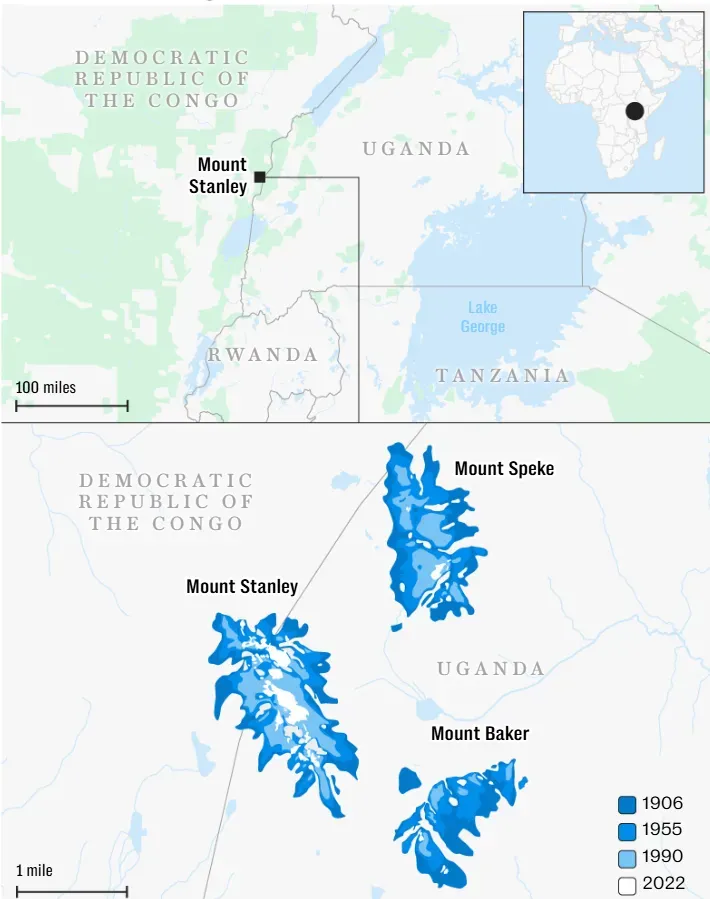
"This shot was taken at dawn in the Rwenzori mountains, on one of Africa’s last fading glaciers. This hike was the climax of a reporting trip to learn about how the environment and community life in the region is changing as the climate reaches a point of no return. The reward for hours of scrambling up rocks in the dark was a beautiful sunrise and witnessing gusts of wind twirling clouds over the peaks.
These mountains are between the jungles of Uganda and the Democratic Republic of Congo, and I had looked up at them for years in the distance while reporting from Congo. Getting to make this work finally was a dream project, and a little bittersweet. As beautiful as the region is, only 1 square kilometre of ice remains here, and within the next decade, the glacier could fully disappear, leaving bare rock and more frequent landslides as a legacy."
Saumya Khandelwal
Humans Killed Millions of Vultures. Now People Are Paying the Price.
The New York Times | India
"The dump yard with the vultures was where life and death came together all at once. While the carcasses of cattle were being dumped, live cattle roamed about, even as vultures and dogs fought for their share of the food. It was intense and humbling at the same time."
Adam Ferguson
The Manmade Clouds That Could Help Save the Great Barrier Reef
The New York Times Magazine | Australia
"Salt water mist is sprayed to create a fog - research to determine if man-made cloud cover can help slow coral bleaching. It's a rather formal and uncomplicated picture, but I saw and felt something eerie, perhaps even surreal. When I come back to this photo I wonder about the future and the myriad of human interventions we will use to manipulate the environment and mitigate the impact humans have had on it."
Sofia Moutinho
A Foundation of Trust
Science Magazine | Brazil
"To report on this story, I travelled to the Xingu Indigenous Territory, Brazil's first Indigenous reservation created in the 1960s in the traditional area between the Amazon forest and the Brazilian savannahs or Cerrado. I spent two weeks living among the Kuikuro in the Indigenous village of Ipatsé with a group of archeologists and other researchers. There, I observed their joint efforts to unearth the past of the Kuikuiro's ancestors. The Kuikuro have established a unique partnership with archaeologists over the last 30 years, working with them to study the early human occupation of the Amazon. Together, they have identified more than 20 ancient cities in the forest, showing that Indigenous peoples have lived in vast, complex, sustainable societies for millennia.
The Kuikuro are now being trained to use technologies such as Lidar to map their territory and further unearth their past. For me, it was powerful to witness the dynamics between the Kuikuro and the researchers, and to see how the Indigenous villagers are engaged in the research and are claiming more agency and representation. I saw Kuikuro people participating in hands-on excavation training, like digging pits in the forest, in places that had been their great-grandparents' houses, or even farther back, to their ancestors thousands of years ago. It was touching to see how important it is for them to unearth this past to keep their culture and history alive, and how they use archaeology as a political tool to strengthen their case for land rights and to have their millennial presence in that territory recognized by the 'whitemen.'"
Karl Mancini
Cultivating Soil To Save Wine
LATE | Argentina
"Reporting on wine and climate change in Argentina allowed me to witness how a global crisis reshapes not only landscapes and crops, but the very social fabric of the communities who depend on them. It is not an abstract threat but a daily struggle that reshapes lives, identities, and hopes. The story became even more urgent as the region is currently protesting water privatization and new mining projects that threaten to contaminate already fragile aquifers, showing how environmental stressors compound one another.
Winemakers, among them Micaela Kuri, the protagonist of my report, stand on the front lines alongside local residents and producers in these demonstrations. These days, the urgency of their fight echoes through every vineyard I photographed. For me, documenting these realities is both a responsibility and a way to stand beside them, to preserve the voices of those fighting to protect their land, their work, their resilience, and their future."
Muhammad Zaenuddin
How AI Hype Deepens Labor Exploitation in the Name of ‘Efficiency’
Project Multatuli | Indonesia
"On this occasion, I faced a new challenge to visualize a fresh and developing story about AI. A minimum access from the relevant agencies to report on this had pushed me to think beyond that: on how to present images that maintain the confidentiality of the subject's identity, but can represent the essence of the story about "The Impact of AI Automation in Indonesia" written by Antonia Timmerman and Rio Tuasikal.
These days, we are pushed, even forced, to adopt many AI tools that might not be beneficial for the work. Rather than freeing up time, enhancing creativity, or honing skills, these technologies can actually increase workloads, erode meaning and satisfaction in work, and dull creativity. Through this work, I attempt to capture this tension: between the promise of technology advancement and the realities experienced by workers in the field."
Sofia Yanjari
The Backyard of AI: A Map of the 21st Century Gold Rush
El País | Chile
"This project brings us closer to a reality that is not new in Latin America, where multinational giants come to extract resources, which only harm the community, without leaving any benefits. It is the eternal struggle against Goliath by small communities organized in the fight for the environment and their territory. Getting to know these people brings us closer to understanding how, once again, their resources, their land, and their lives are being exploited by foreigners."
Anita Pouchard Serra
Blocking the Clinics: Argentina’s President Javier Milei Takes the “Chainsaw” to Women’s Rights
The Dial | Argentina
"It has been very important to be able to report from four different regions of our country on the impact of cuts in terms of public policy and attacks on programs that protect and support women and diversity. Connecting with local realities in order to then have a global view of what is happening with Javier Milei's government. In each region, we met women who, despite everything, continue to support others in their region, even without the presence of the state."
Anonymous
Banana Boom, Soil Bust
Mekong Eye | Laos
The photographer is choosing to remain anonymous for safety reasons. We are grateful for their courageous work, and that they chose to share this thoughtful statement with the Pulitzer Center.
"I met these young Hmong girls at a Chinese-operated banana plantation in Oudomxay, northern Laos, during their brief midday break. Some are under fifteen, and all left school too early, laboring daily in hazardous conditions for barely enough wages to survive. Their stories exemplify the bittersweet reality of foreign capital flowing into Southeast Asia’s least developed country: while it can create pathways out of poverty, it also imposes risks on those with the least power. They also reveal how the burdens of a supply chain are unevenly distributed; the stability and affordability of goods in wealthier markets often come at the expense of the health and futures of vulnerable communities far away, exposing the deep inequalities entrenched in global trade."
Oupa Nkosi
A Shot at Survival: GBS Vaccine for Pregnant Women Nears Fruition
Science Magazine | South Africa
"To be honest, I did not know about the Guillain-Barré syndrome (GBS)- a leading cause of disease and death in infants up to 3 months old- before working on this incredible story. My research in preparation for the assignment about this rare and complicated disease did not make sense to me until I met and worked with journalist Leslie Roberts. Working on the story was very educational and a privilege in learning about the tenacious pediatrician Carol Baker, who discovered the fatal disease in the early 1970s but was dismissed. Today Baker’s revolutionary idea has prevented more infant deaths which has led me to document the love and affection between a mother and son, Jeniffer and Kanonelo Mankae."
Natalie Keyssar
Growing Up During Wartime
Rolling Stone | Ukraine
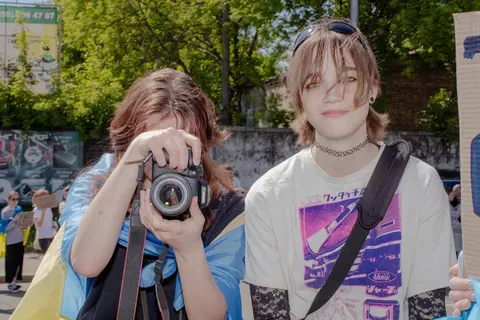
"This story was particularly important to me because of the urgent need to create stories that not only cover the ongoing humanitarian tragedy of the war in Ukraine, but to promote understanding of its long term effects on an entire generation. Working with these Ukrainian teenagers was a humbling lesson in their resilience and the profoundly unjust reality of what surviving this kind of brutality long term is doing to an entire generation. But I was constantly inspired by the Ukrainian youth's strength, determination not only to survive but to thrive, and commitment to helping each other and their communities. It was especially important to me to get to meet young Ukrainian photographer of immense talent Anna Donets, and end up not only photographing her and her friends but being able to publish her excellent and committed photography alongside my own in Rolling Stone Magazine. I'm so grateful to the Pulitzer Center for making this kind of deep and time consuming reporting possible, to my editor Sacha Lecca at Rolling Stone for his support in getting this story out there, and to Anna and all the other Ukrainian youth in this story for sharing so much with me during such difficult times."
Anna Donets
Growing Up During Wartime
Rolling Stone | Ukraine
Anna Donets is an aspiring photojournalist who just graduated from high school in Kyiv.
"I consider my photo series to be a reflection of how I see life in Ukraine through my own eyes, particularly in Kyiv. It includes both beautiful moments, such as Christmas celebrations, and deeply painful ones, like farewells to soldiers, Ukrainian Epiphany traditions, and volunteers helping after another Russian strike.
This is the reality of life here — we live in constant contrast, and it is evident in every aspect of our daily lives. While working on this series, I experienced the same emotional contrasts, from tears to laughter. In fact, I never planned for these images to become a single series; I was simply documenting everything around me, collecting moments of life during the war in Ukraine.
Photography is one of my personal ways to help Ukraine. I often say that I want to be 'the voice of Ukraine to the world,' and that is exactly what I am trying to do — to show the world what is happening here."
We laugh through sirens,
hide our smiles in subway shadows
classrooms flicker to life
beneath layers of concrete and fear.
We were packed into a gymnasium lined with mats,
as if growing up was a sport we could win.
We build drones in basements,
wire dreams into circuitry,
not for grades or fame,
but for fathers on the front.
We learn velocity and vengeance
like language. We are fluent.
— Excerpt from The Age We Never Chose, a poem written by 8th grader Kyle Pham. Inspired by the story Growing Up During Wartime.
Adam Rouhana
After Nonviolence: The End of Peaceful Resistance in Palestine
Harper's Magazine | West Bank, Palestine
"While reporting on this story in Palestine for Harper's, I viscerally experienced settler colonialism, rooted in what anthropologist Patrick Wolfe calls the logic of elimination with its "erase to replace” politics. The erasure of life during Israel's genocide in Gaza is a direct extension of this logic."
Rebecca Rosman
Assad Is Gone. But Can Syrians Go Home?
NPR | Turkey
"In June 2025, I traveled to southern Turkey to meet Syrian refugees living near the Turkey-Syria border. I wanted to answer one question -- six months after the fall of the Assad regime, were they ready to return home? The answer ...was... complicated. Every family I spoke to more or less said they wanted to go home. But it turns out, the longer you stay away, the harder it is to go back. To an extent, I expected this. There's logistical issues. Homes in Syria had been destroyed. Their kids now spoke better Turkish than Arabic. Could they trust this new guy in power? What I didn't expect was a much deeper issue, one that can't really be fixed just because the regime is gone. One woman, an activist whose friends and family were tortured - even killed - during the war, put it to me this way: can home every really be home again once it's been ravaged by civil war? When walking in front of your old house brings up PTSD, memories of friends tortured and killed by the regime?
The truth is, I could have done this reporting over zoom from my apartment in Paris. But I know for a fact that I never would have gotten so deep into this existential question without the opportunity to meet these families face to face. Without sitting in their living rooms over pistachio-filled Eid sweets and cardamom coffee, where we could speak freely, where they could show me photos, introduce me to their children and show me what daily life is like for them in Turkey. In other words, this kind of reporting would not have been possible without the Pulitzer Grant. For that, I am eternally grateful to the committee to supporting my work and helping me share these deeply human stories. Thank you."
Claire Wilmot
In Search of Ethiopia’s Garima Gospels
New Lines Magazine | Ethiopia
"Our investigation into Tigray’s post-war gold rush was the first of its kind, shedding light on the actors involved in an illicit economy that is tearing the region apart. Embassies, government officials, and rights groups have commended our reporting and have emphasized the need for further investigations into additional networks taking advantage of the breakdown in governance across the region. Further investigations will be crucial in the coming years, as gold prices are expected to continue to rise alongside global instability. In addition to this investigation, the Pulitzer Centre’s support allowed me to document other aspects of Tigray’s war that would have otherwise gone untold. The image above depicts the Gebre family, who lost their sons and grandsons in a massacre during the Tigray war, in a holy village known as Abba Garima, home to the world’s oldest ‘illuminated’ gospels."
Ulet Ifansasti
Fear and Raiders in Papua
The Gecko Project | Indonesia
"Papua's forests are Indonesia's last remaining stronghold, after forest cover on the islands of Sumatra and Kalimantan declined. Deforestation in Papua is occurring rapidly, and is now even more threatened by food estate and bioenergy projects that will clear more than 2 million hectares of forest.
When I was there and met the local people, it was heartbreaking to hear stories of their customary forests being destroyed. It was a very small village, but it was filled with military personnel working to clear the forest, and they also felt intimidated by the military presence there.
Human greed has led to the clearing of forests, making way for industries that now control hundreds of thousands of hectares of land in Papua. Plantation expansion has penetrated deep into the interior. This is the highest contributor to deforestation in Indonesia and will accelerate the climate crisis.
Forests are a source of food, medicine, and life for the Papuan people. Their lives are now increasingly miserable. Their food source (sago) is disappearing, animals are disappearing, clean air is polluted, and women have to walk longer distances to find their livelihoods. Furthermore, internal conflicts are inevitable."
Andrew Nelles
As Fracturing Harms UMC Brand, How a Zimbabwe High School Displays Pride in Denomination
The Tennessean | Zimbabwe
"It was an absolute honor to be able to visually document this story. The vibrant culture of the United Methodist Church in Zimbabwe was a pleasure to photograph. I owe a huge debt of gratitude to the people who welcomed us into their lives as we reported this project."
Behind the scenes: The United Methodist Church is on the verge of a historic decision following a costly splintering. Here's how it's shaping up in Zimbabwe. Video courtesy of The Tennessean.
Claire Thomas
Banished and Forgotten: A Story of Women Exiled Over Witchcraft
Dreamz 101.9 FM | Ghana
"I first visited the Gambaga so-called “witch camp” in northern Ghana in 2008 and witnessed how women accused of witchcraft are silenced, marginalized, and forced into exile — an experience that stayed with me for years. Returning in 2025 with support from the Pulitzer Center, I documented the present-day reality of their lives, shaped by fear, superstition, and profound social exclusion, but also by extraordinary resilience. My aim in this work is to honor these women , raise awareness of the injustice that has defined their lives for far too long."
Robin Tutenges
Between China, Kazakhstan, and Kyrgyzstan, the Uighurs Left to Their Fate on the ‘New Silk Roads’
Slate | Kyrgyzstan
"Documenting the history of the repression of ethnic minorities in Xinjiang and its internationalization in China’s neighboring countries was particularly challenging in the field. Constant pressure and threats paralyze the diasporas, especially the Uyghurs, as far as Kyrgyzstan and Kazakhstan, revealing the full extent of the machinery put in place by Beijing across Central Asia."
Diana Takacsova
Kenya’s Growing Carbon Market Is a Setback for Indigenous Land Rights
Earth Island Journal | Kenya
"For this story, we spent days in Olokirkirai town and undertook a full-day hike to the Mau Forest, visiting several areas affected by the evictions, where we saw firsthand the enduring impact of the evictions that displaced the Ogiek community. Together with community members’ testimonies, this was important in documenting the true scale of the latest evictions in the post-2017 ruling context, in which the African Court of Human and Peoples Rights in Arusha, Tanzania recognised the Ogiek as Indigenous peoples with rights to their ancestral land."
Paulo Mumia
Modern Agroforestry, Ancient History of Populations, Plants, and Fire Point to Solutions for the Future
InfoAmazonia | Brazil
"There are lives that create experiences and moments of change, and there are moments that change our lives. My first contact with the Korubo people felt to me like paradise on Earth, and living and sharing moments with them undoubtedly changed my views on things. The creative process itself slows down and enters a rhythm dictated by events and daily life, without rules or pre-choices. Things happen and are gifted to you to observe and photograph, but for that, you have to be open-hearted and open-minded, in sync with the Korubo and the Forest."
Marco Simoncelli
Beyond Fortresses: Charting a New Path for Conservation in Tanzania
The Chanzo Initiative | Tanzania
"This story touched me personally because I have known about the Maasai since childhood — they have always been part of my imagination thanks to my father’s stories. When I think of the savannah, I cannot separate it from the people who have safeguarded it for generations. Witnessing such a profound injustice, unfolding in front of tourists who often remain unaware of the eviction system they indirectly sustain, was deeply unsettling."
Tatsiana Chypsanava
Tūhoe Rising
New Zealand Geographic | New Zealand
"Working on this project deepened my connection with the Tūhoe community. Photographing this story was both a privilege and a responsibility—to document not just people and place, but also their enduring relationship with Te Urewera rainforest. Without the Pulitzer Center’s support, an important chapter of this project would not have been possible; the grant allowed me to share these stories internationally, secure further funding to continue the work, and ultimately contributed to this year's recognition at World Press Photo."
Iqbal Lubis
Honoring Local Beliefs, Celebrating the Forest
Iklimku | Indonesia
"Photographing local beliefs, such as the photo of Laurensius Kevin (21), a follower of the local Aluktodolo belief, reciting prayers to his ancestors before performing a house repair ritual in Toraja, and the photo of Hanira (70), a traditional Kajang woman, making thread for weaving cloth. This makes me even more convinced that the way the community treats the forest is actually in line with efforts to protect it from irresponsible hands. Through photography, I can help raise awareness and ensure that the Indigenous communities, who are the frontline defenders of their natural environment, are heard by the public and the world."
Octavio Jones
How Florida’s Manufactured Home Parks Are Growing Unaffordable
NPR | United States
"I was able to document my "Not So Forever Home" project for WUSF and the Pulitzer Center by combining strong visual reporting with a deep commitment to the people and neighborhoods at the heart of the story. I captured the lived experiences of families—and especially seniors—who moved to Florida in search of a retirement paradise, only to face unexpected housing instability and displacement. By spending time in the community and building trust, I created a body of work that not only illustrated these challenges but also amplified residents’ voices in a way that was authentic, empathetic, and deeply impactful."
Louie Palu
Seeing Political
Virginia Quarterly Review | United States
"Seeing Political is a political photography column spanning several months of photo essays publishing monthly up and to the semiquincentennial. I practice a curious genre these days, what’s best described as political photography. In 2019, I began looking for ways to deconstruct the layers of control and artifice built around political theater in Washington D.C. Bearing witness to this often requires a staging most of us aren’t even aware of. In that spirit, I went in search of the imperfect picture, doing all the things I’m not supposed to do—using flash, film, a six-by-six format, manual focus, no zoom. I wanted to disrupt my own mediation of the moment I’m capturing with street photography’s spontaneity to the processes of Congress, to re-conceive the frame in order to visualize beyond the setup and understand the recording mechanisms themselves—the control and performance—so we might better understand how the political process really works."
Lylee Gibbs
‘This Is Not Normal’; First Amendment Faces Extraordinary Pressures in the Wake of Kirk Assassination
Gateway Journalism Review | United States
"When I watched the line for baptisms grow by the minute, I really then began to understand the impact. I made this image while reporting on a vigil for Charlie Kirk shortly after his assassination in a southern Illinois town. When I arrived, I was surprised to find that they were also baptizing people in a pop-up pool in the middle of the town square. Through this reporting I understood the severity of impact this had on people, and how real the overlap of religion into politics is in rural America. I was expecting breaking-news reporting and stumbled across a more spiritual event."

