Pulitzer Center Update August 26, 2025
Behind the Story: Detour in Reporting Puts Pulitzer Center Photojournalist on the Right Track


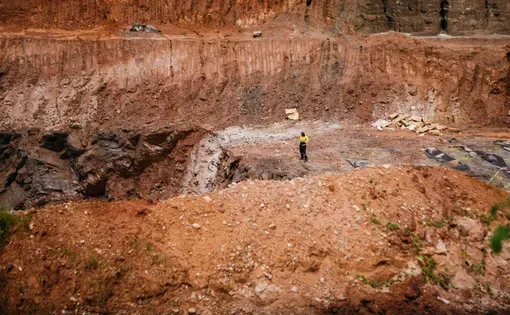
Power dynamics between China and the U.S. in securing natural resources from the Zambian Copperbelt

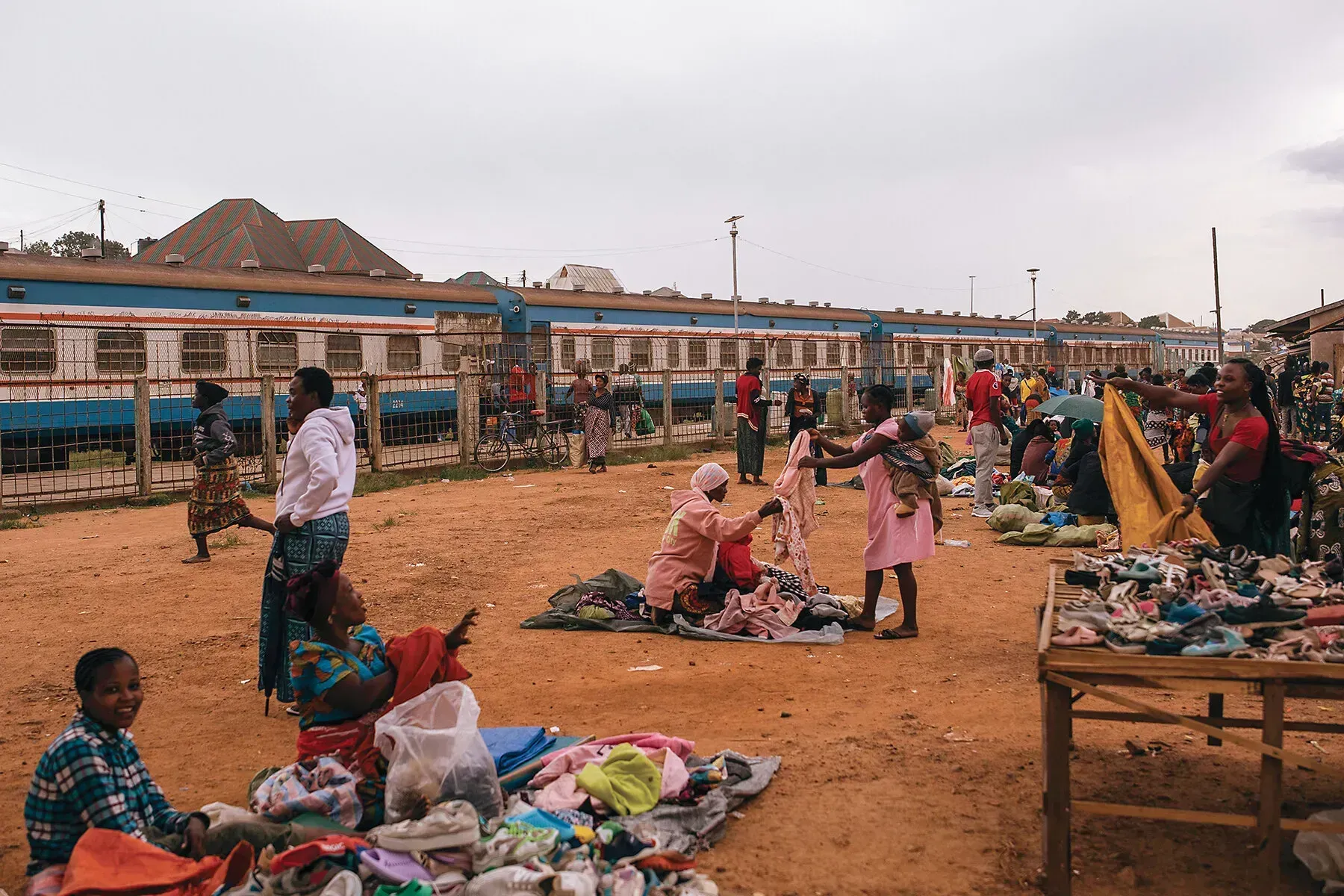
When Pulitzer Center grantee Kang-Chun Cheng pitched a project about the competition for access to critical minerals in Zambia’s Copperbelt, she didn’t think accessing the mines would be very difficult.
However, a few weeks prior to the trip, there was an acid spill at one of the largest mines in the country. So, when Cheng and her reporting partner arrived, officials were wary, assuming they were there to report on the accident.
After spending several days in unsuccessful negotiations with workers and officials, Cheng decided to pivot her article. Instead of a traditional reporting piece, she wrote candidly about the difficulties she faced in producing the article.
Cheng, a photojournalist, knew the lost days couldn’t be made up for. “In terms of text writing, you can call up researchers, you might have more avenues to bolster that. But in terms of documentary photography, you're either there or you're not. And unfortunately, we spent a good three days driving around trying to get access.”
Prior to her trip, Cheng read Africa's Freedom Railway: How a Chinese Development Project Changed Lives and Livelihoods in Tanzania by Jamie Monson. The book discussed the history of the Tanzania-Zambia Railway Authority, or TAZARA, which connects Zambia’s Copperbelt to the Indian Ocean.
By centering the TAZARA in her project, Cheng was able to illustrate the power play occurring on the ground as different international powers try to secure direct access to critical minerals needed for the “green transition.”
The railway was proposed jointly in the early 1960s by the presidents of Tanzania and Zambia in an effort to secure an independent transportation route from the Copperbelt, outside the reach of their still-colonized neighbors.
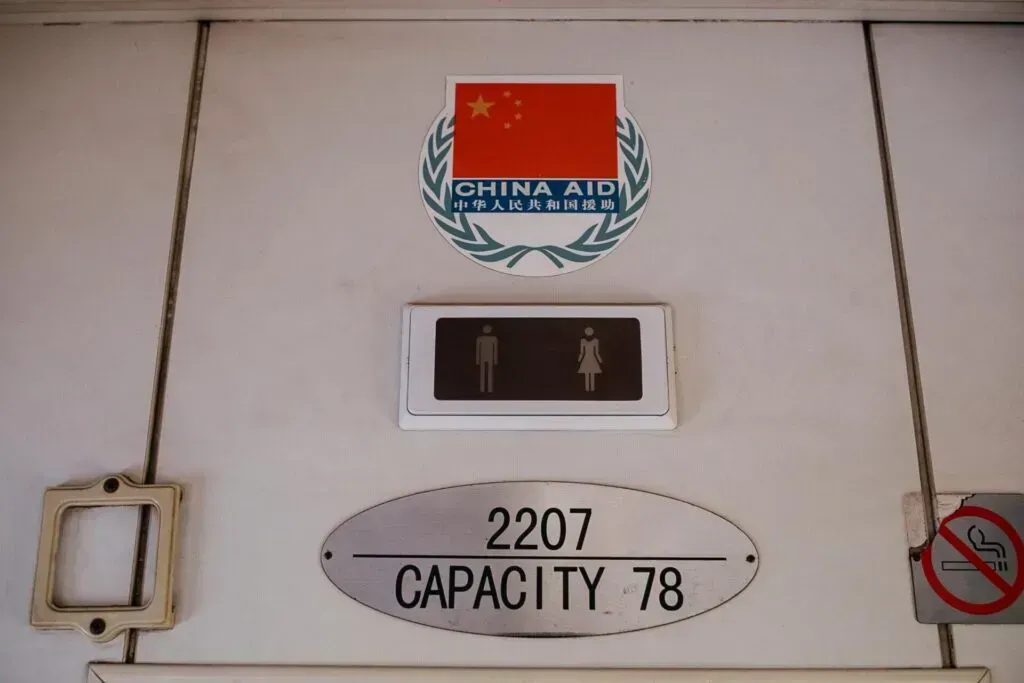
When the World Bank and United Nations declined to fund the project, China stepped up. At the time, the TAZARA railway was the largest single foreign investment made by China. Now, for the train’s 50th birthday, China promised $1 billion to revitalize it.
Pulitzer Center Editorial Intern Ella Beiser spoke with Cheng about journalistic problem-solving in the field and the role of visuals in storytelling. [During a 60-hour ride, Cheng took photos inside the TAZARA train.]
This interview has been edited for length and clarity.
Ella Beiser: How did you come up with the project idea, and when did you know it was a story that you wanted to tell?
Kang-Chun Cheng: For some years, I've done stories about Chinese intervention on the African continent, obviously a super, super broad topic. But especially with what's going on in the U.S. now and the talk of green energy and alternative energy transitions, a place like Zambia that is very much conflict-free compared to its neighbors, it just has been something that's been in the periphery of a lot of people's attention in the region.
And, we thought with the talk about the Lobito Corridor [a rail project that connects mineral resources in the Democratic Republic of Congo and Zambia to the port of Lobito in Angola], and then talks about China re-investing in the TAZARA railway, which has been happening a lot this year, we thought it would be a good opportunity to kind of revive it. And, taking the train to Zambia is a creative way to get to it.
Beiser: Why did you decide to write the story about your experience taking the TAZARA train?
Cheng: So I read this really interesting book called Africa’s Freedom Railway— well, it's more like an academic piece of literature turned into a book, and it was surprisingly palatable, about the history behind the TAZARA railway. I just felt like, with the current geopolitical climate, even things that happened half a century ago, it's more topical than ever.
So for instance, the Tanzanian-Zambian presence at the time, remember, this is in the 1960s, 1970s, it had the era of Pan-African liberation, a lot of like on the verge of post-colonial breaking away from these administrations and trying to figure out what it means to be an independent African nation. So the two presidents wanted a way to have a means of transport from the Copperbelt that bypassed all colonial military neighbors, and just something that's truly independent.
Audio courtesy of Ella Beiser. 2025.
They had requested support from the United Nations, the World Bank, all the big international players, and everyone denied it, saying it's not economically feasible. And I do think that there is some truth in that. So at present, it's not a cargo train, it's only a passenger train.
But this is when Mao Zedong, China’s leader, stepped in, and it became China's biggest single foreign investment. Obviously, that set a precedent for the other investments on the continent, decades down the line and even today.
But I just thought the history behind that was quite interesting. And then again, being on the ground speaking to Zambians, it did kind of corroborate that brotherly nature between China and Zambia that was emphasized in the book.
And again, not trying to paint this in an overly romanticized life, but I do feel that there is a lot of anti-Chinese sentiment. There's a lot of paranoia about Chinese and foreign investments. I think a lot of it is very much justifiable. It's very understandable, but there's obviously layers of, yeah, there's racial, racial terms to this.
I'll just use Kenya as an example. For instance, here, British people were former colonizers, but currently in society, you have this term called “Kenyan Cowboys,” which stands for white Kenyans who are born and raised here.
From a kind of a stereotypical perspective, they tend to be pretty isolated, they have a very specific attitude for things. And there is this distance and very specific space they occupy in Kenya.
That being said, among normal civilian Kenyans, there is this ingrained deference for white Kenyans. On the other hand, you have a more abrasive attitude towards Indians and Chinese people. So there is definitely a racial element to this. And there has been really interesting literature out there that points to a lot of really deep conditioning behind this subconscious. But one explanation for this is that the average African/Black Kenyan, they do see white people more as the model to aspire to, unlike Indians or Chinese people.
I'm going on a bit of a tangent, but I'm setting this up because this is something that, even before it became super prevalent, I do feel like the Communist Chinese party had some kind of an insight into this.
So now, in having Chinese companies work in Tanzania and Zambia, they made it very clear that there are certain rules you abide by out of deference and respect for local populations. So that was probably my main takeaway from reading that book, and it was really touching on different levels.
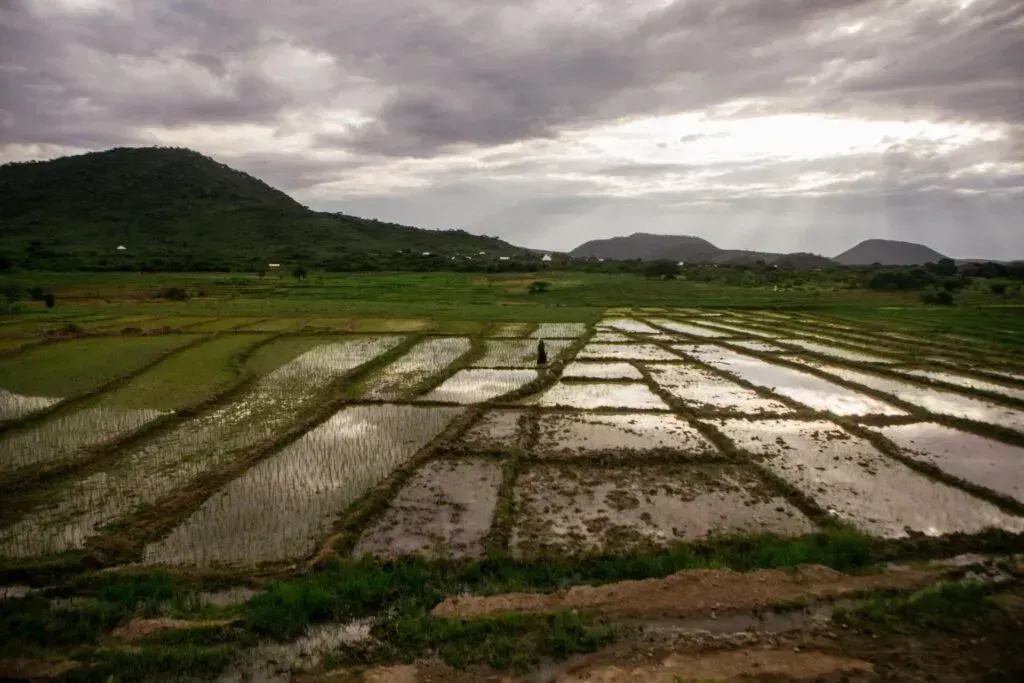
Being on the ground within the Copperbelt, whether it was our driver/producer, or just speaking to Zambians working in mines, like people did make comments with caveats like, “Oh, Zambia and China, they're old friends; we’re brothers.”
There's obviously a give-and-take in all of these scenarios, whether it's 50 years ago or today.
Beiser: Through reading your work, I’ve noticed you often use first person to describe where you are, what you’re doing, and the challenges you are facing. Why do you use first person and how does that change the reader's experience?
Cheng: So for my story, for the Xylom [a nonprofit news outlet], I ended up writing it in first person because of the circumstances that happened with the reporting project. I think the main factor for that was we really didn't get the access that we wanted on the ground level. And in terms of photography, it's just not something you can make up for. In terms of text writing, you can call up researchers, you might have more avenues to bolster that. But in terms of documentary photography, you're either there or you're not. And, unfortunately, we spent a good three days driving around trying to get access.
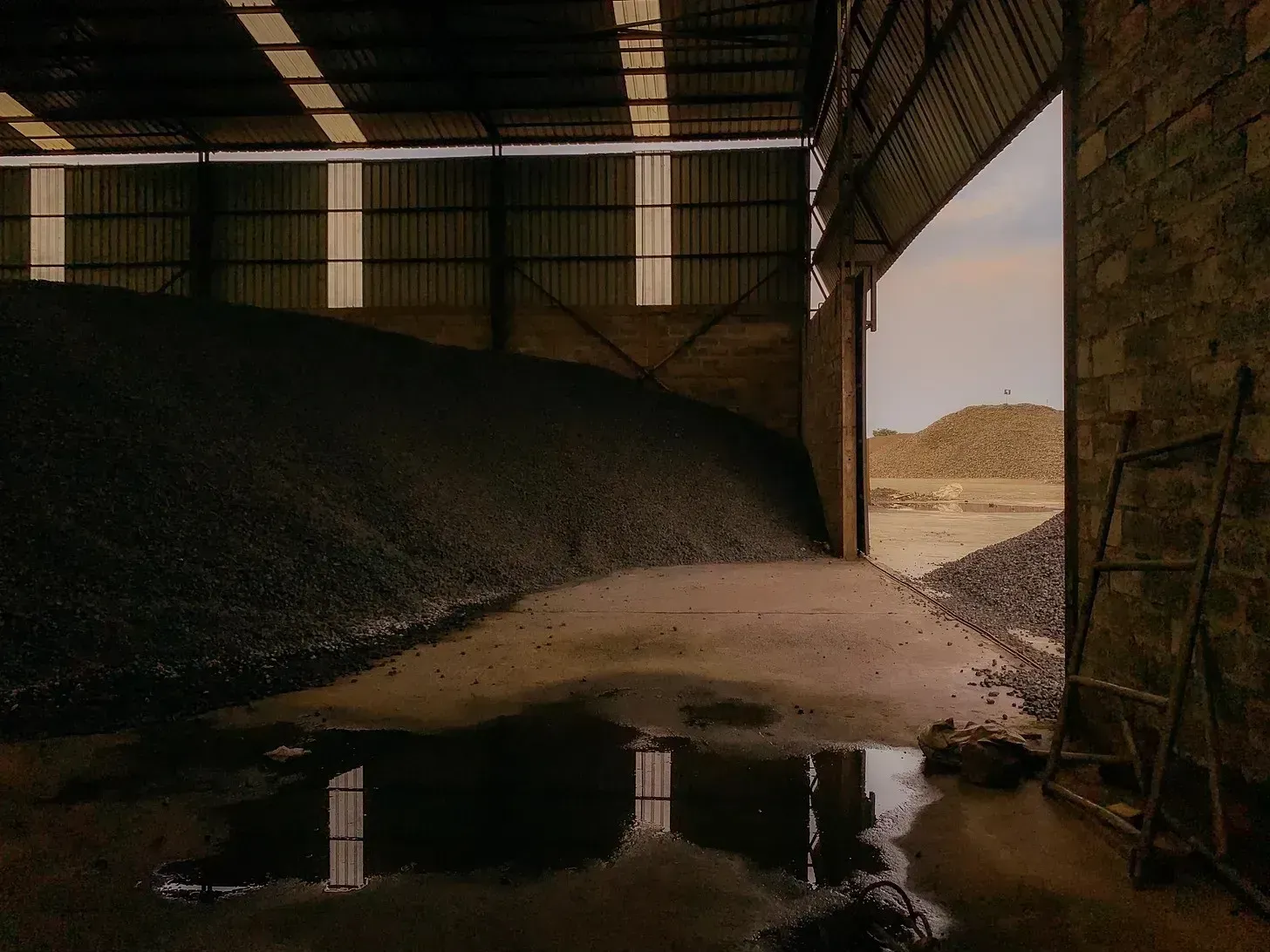
And it was one of those situations where the producer was working with, and I think this is completely unintentional, he over-promised the access.
But there are also things that happened completely out of all of our control. I'll just name a couple of things. And the Zambian accreditation office was really suspicious of why we had pushed things back so [they were] giving us a hard time because just a week prior to us visiting there, there was a huge damn leakage and poisoning in the Copperbelt. There was some acid spill or something like that. And just really poor timing, because everyone assumed we're going there to report on that, but no, we had this planned months in advance. It just happened to be a bad coincidence.
So something that's already a very sensitive topic, critical minerals, mining, that obviously was something that really tipped it over the edge. And I also think that you can see the bureaucracy in these places.
I would say my limited experience accessing mines, gold mines, coal mines in Kenya and Tanzania, it's a lot more straightforward. You get to speak to someone who either works there or in the community and then they give you access and that’s been really successful in those other places, kind of being in the mines, walking around freely, speaking to people, photographing, etc.
We were just not prepared for the three, four mines that we were planning on going to, everyone was completely blocking off access and just being extremely suspicious. And I can understand from an employee perspective, right? Like no one wants to be the person that the access is traced back to, like, “Oh, so you were the one who told, like, these foreigners, it's OK to visit. Why?” You could lose your job.
So because of the access issues, I thought it would be, instead of trying to write around it, just make it a bit more of a personal experience. And because I am the editor at large at the Xylom, I have a bit more creative license, I'd say.
Alex, the editor-in-chief, is super cool and very understanding. I think [he’s] always trying to, one, have things work for me, but [he’s] also interested in finding different ways to engage beyond the very traditional form of journalism, which is obviously great. But in this case, I told him after the fact, I had pitched this as a normal reported feature. I said, “Hey, with everything that happened, I think if I wrote about it from a first-person perspective it might be more interesting for readers.” Not exactly field notes, but get a little bit of a sense of why a story like this at this time was really difficult to produce in the way that we envisioned.
I guess it also comes from a bit of my personal proclivity, like I personally really enjoy reading first person. I enjoy reading a bit about behind the scenes.
Beiser: What purpose do the photos serve in this particular story and how did you think through the visuals that you wanted to include?
Cheng: I think ideally I would have been free to walk around when people are at work, because, especially if you have a grant-funded project about Copperbelt mining, I think at least my expectation is to see people mining, right? And I think that's most people's expectation. And I just had very little of that. So those were all kinds of like skirting around the edges. And again, there were things that happened like it was raining the whole time we were there, right? Those are things that are not really in your control.
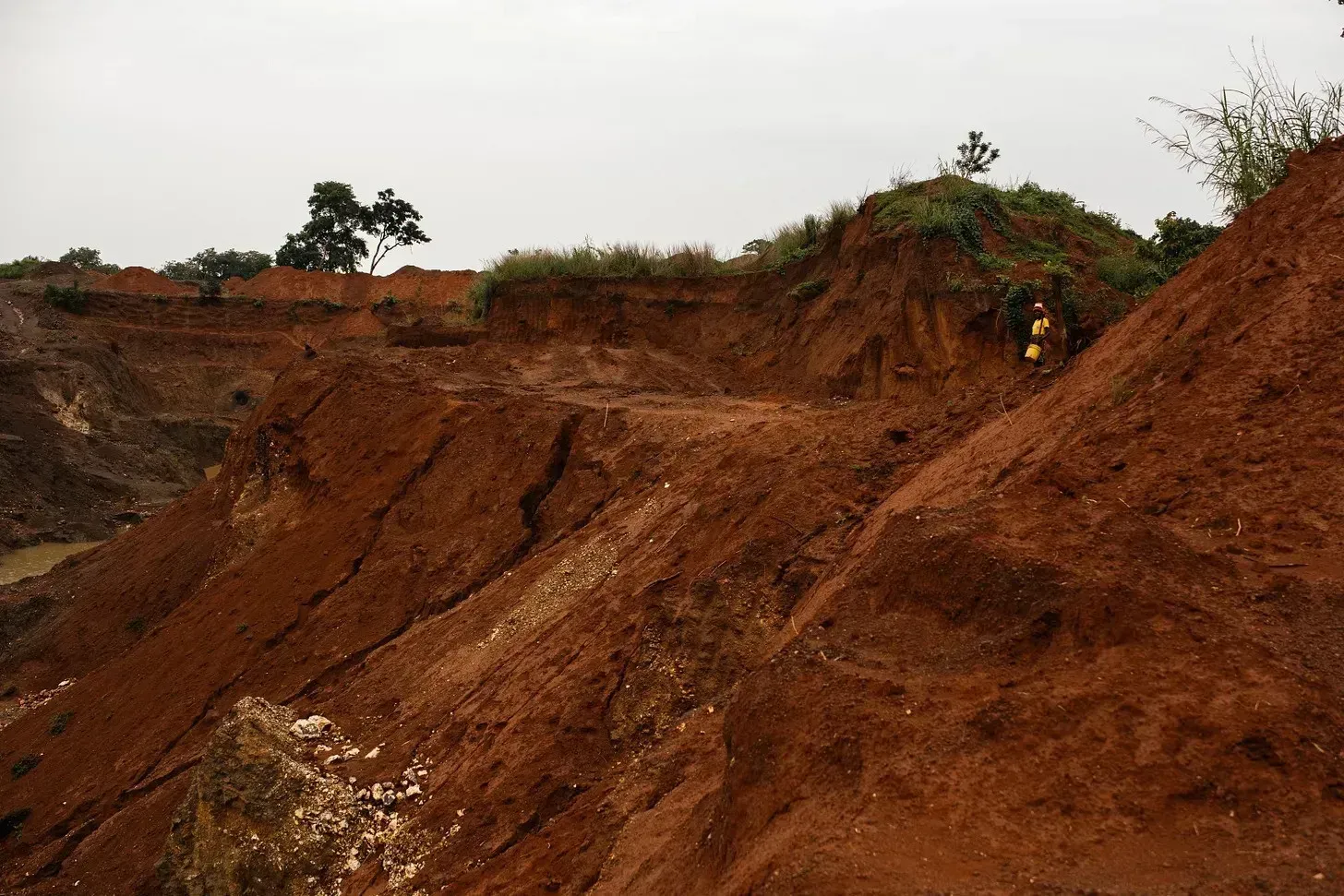
The question is a little bit philosophical even. How much do visuals matter in reporting? And, of course, as a photojournalist, I'm super biased.
I'm someone who enjoys looking at documentary photography. I feel like it's [a] really good scene-setter, really good sense of place. It kind of draws a reader in. Making a place that is probably foreign, and likely most people will never get to visit themselves, and just really immersing yourself in that situation. So that's usually my motivation.
Audio courtesy of Ella Beiser. 2025.
And this is something I think all photojournalists will tell you: I'm going through a bit of a re-working of my style. I don't want things necessarily to look like hard news, even though that can be exciting. I would like things to go in a bit more of a poetic or soft direction.
But of course, if you have very difficult/limited access, that all kind of goes out the window, because if you do have something like five minutes here, three minutes here, you're doing what you can.
But ideally, you would have days, even longer, to build up these relationships with people. And I think that's every photojournalist/writer's dream. And, unfortunately, that's not always the case.
Beiser: When you say that you want things to go in a more poetic or soft direction. What does that mean in practice? And why do you want that?
Cheng: I think in practice it means spending more time, building up relationships with people. I do think a lot of the contexts that I work in, people are usually pretty welcoming, as in, they want you to see where they live. They want you to meet their relatives and their friends and such, right? That's a very good portal to access.
But what would really help is having time just like hanging out, right? And, unfortunately, in places that are difficult/expensive to be in, like, we just have limited time, and we don't really have the luxury of just kind of hanging out and seeing what happens, and then people get used to your presence and ignore you, and then that's when things become very interesting.
I'm not looking for things to be posed or for people to be actively showing me things. I just want to be there and forgotten and then hopefully put my observational skills to the test and notice the interpersonal stuff going on amongst people and how they're related to each other, not just how they're related to me.
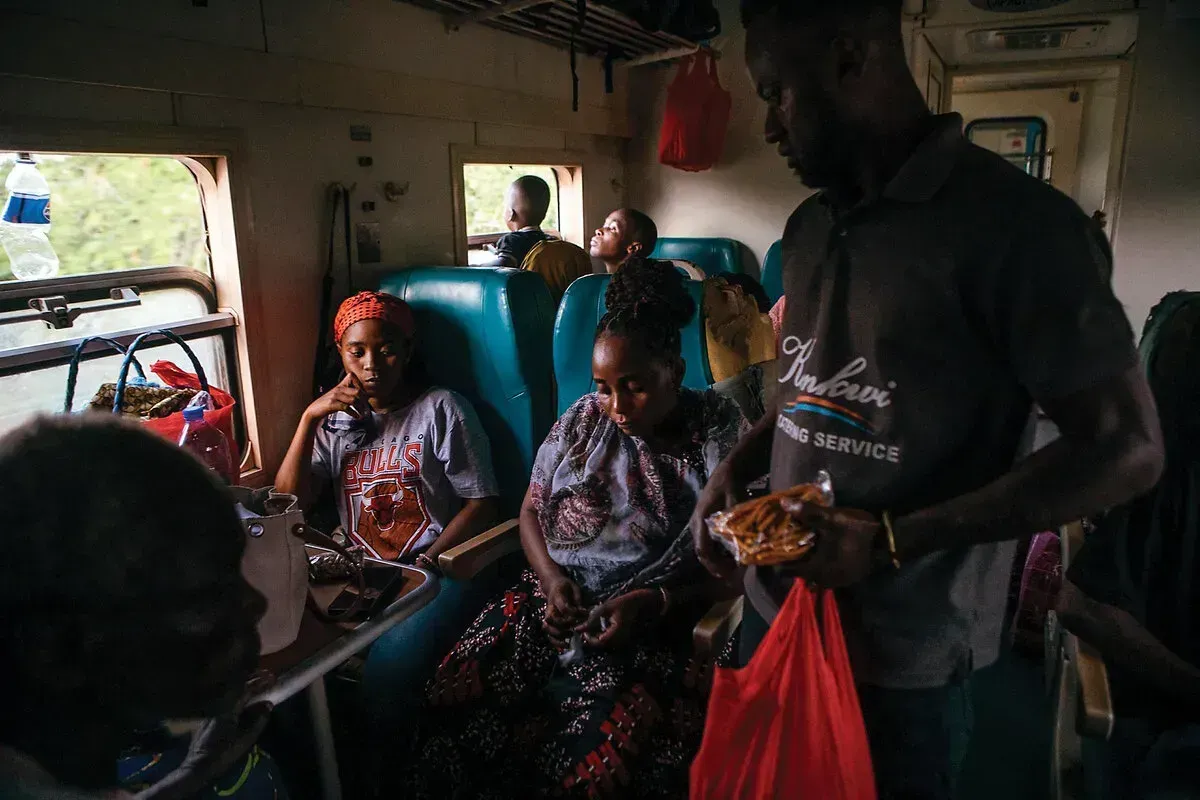
Audio courtesy of Ella Beiser. 2025.
Cheng: Reporting is like problem-solving, right? You learn not to have things dead set in a certain way, because you're never going to get what you want, really, or like what you plan for. So it's always about, “OK, what's plan B, C, etc.”
I think also, whether it's journalistically or photographically speaking, a lot of the time, the interesting stuff happens from when you have the luxury of just hanging out. Someone wants to show you something, someone says something interesting that you weren't necessarily expecting. That's the best part.
We're not going out there to report because we know exactly what the story is, and we want to tell it a certain way. We have a framework, we've done our research, and we have an idea and what happens on the ground, our interactions on the ground, it shapes what the story becomes.
And I think that's something I really love about my job and being relatively independent. Because I'm not part of a newsroom, I don't face the editorial pressures of, "Oh, we want things to take a certain direction.”
A takeaway was don't underestimate how complicated access can be in a country that is relatively calm on the surface. Right again, Zambia doesn't have any history of conflict, unlike a lot of its neighbors. And I think because of the peacefulness, I was like, “Oh, it's going to chill, we can just go in.” We have this producer who seems super on top of things, very professional. We're going to get what we would like what we planned for over the course of two months, and that wasn’t really what happened.
But again, I am proud of all of us for writing around this.
Caption for homepage photo: A Tanzania-Zambia Railway Authority [TAZARA] train. Image by yuzu2020/Shutterstock. 2020.