Pulitzer Center Update October 30, 2025
After Pulitzer Center-Supported Story, NGOs Call for Probe Into Illegal Deforestation in Brazil
Country:



Investigating environmental degradation in the Brazilian rainforest
The following is an English translation of an article originally published in Portuguese in Folha de S.Paulo.
A Pulitzer Center-supported story prompted non-governmental organizations to call on the Brazilian Federal Supreme Court to investigate machinery purchased with parliamentary amendments and used in illegal deforestation.
- The petition is based on an investigation that was published in Folha de S.Paulo about a road in Acre that led to degradation and invasion of Indigenous land.
- Legal requests are included in the Supreme Court's main case on parliamentary amendments, reported by Minister Flávio Dino.
Anti-corruption entities have asked the Supreme Court (STF) to open an investigation into the case of machinery purchased with parliamentary amendments that paved the way for illegal deforestation and invasion of Indigenous land in the interior of Acre, as revealed by Folha de S.Paulo in an October 11, 2025, publication.
The petition, signed by the Brazilian section of Transparency International, Transparência Brasil, and Contas Abertas, also requests that the STF call on the Federal Police and environmental agencies to “comment on the evidence and risks of using machinery purchased with funds from amendments to carry out illegal acts of deforestation and environmental degradation.”
The entities involved requested that “the description of [the machinery's] immediate purposes be included among the socio-environmental criteria analyzed by government agencies in the evaluation of amendments for the acquisition of machinery, with the presentation of any licenses when they include the construction of roads and branches.”
The document was filed on Tuesday, October 21, in the main STF case on parliamentary amendments, whose rapporteur is Minister Flávio Dino.
The requests were based on publications in the series Poder e Devastação, or The Impact of Parliamentary Amendments on the Degradation of the Brazilian Rainforest, which began on October 11 in Folha with support from the Pulitzer Center's Rainforest Investigations Network.
The first report in the series showed that since 2015, Congress members and senators allocated parliamentary amendments that have brought 1,648 heavy machines to the states of the Legal Amazon, with a total of resources at least three times greater than that of environmental protection actions in the Amazon rainforest region.
Enforcement agents, authorities, environmentalists, and Indigenous leaders interviewed by the newspaper associate the widespread distribution of equipment with deforestation and the opening of illegal roads by city governments and other public agencies, combining pro-development rhetoric with violations of the law.
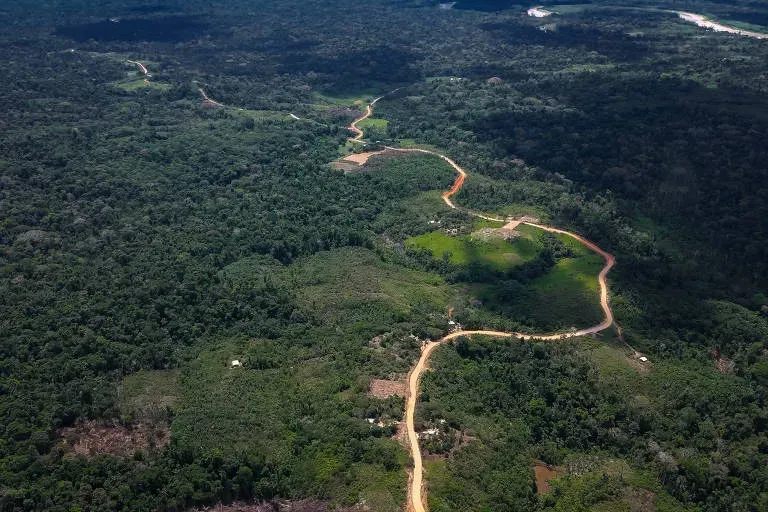
Next, Folha reported on a specific case involving a road between the municipalities of Porto Walter (AC) and Cruzeiro do Sul (AC), investigating the environmental impacts caused by a lack of planning and technical criteria in the use of amendments.
This report showed that federal deputy Zezinho Barbary (PP-AC) used his share of funds to regularize the construction of a road opened with illegal deforestation during the period when he himself was mayor of Porto Walter. The construction led the road to pass through his family's rural property and later invade a demarcated Indigenous land.
Barbary said in an interview with Folha that he “would do it all again” and described the requirements of environmental law as “bureaucracy.” He also stated that his conduct sought to respond to the demands of the local population and bring the city out of isolation. He denies having acted for his own benefit.
According to the petition filed with the STF, this reported fact “clearly illustrates how funds from parliamentary amendments, distributed to projects and initiatives without any assessment of socio-environmental risks, end up enabling illegal conduct with serious impacts on the environment and Indigenous peoples in the Amazon.”
The text of the document points out that “according to journalistic investigations, recent parliamentary amendments by federal deputy Zezinho Barbary are intended to regularize roads opened in violation of environmental legislation and with evidence of conflict of interest—since these roads directly benefit members of his family.”
It will now be up to Dino, rapporteur for the case, to decide on the measures requested in the petition filed by the anti-corruption entities.