

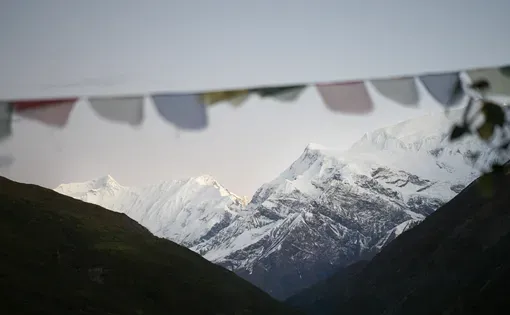
How an unprecedented storm in Nepal affected villages high in the mountains
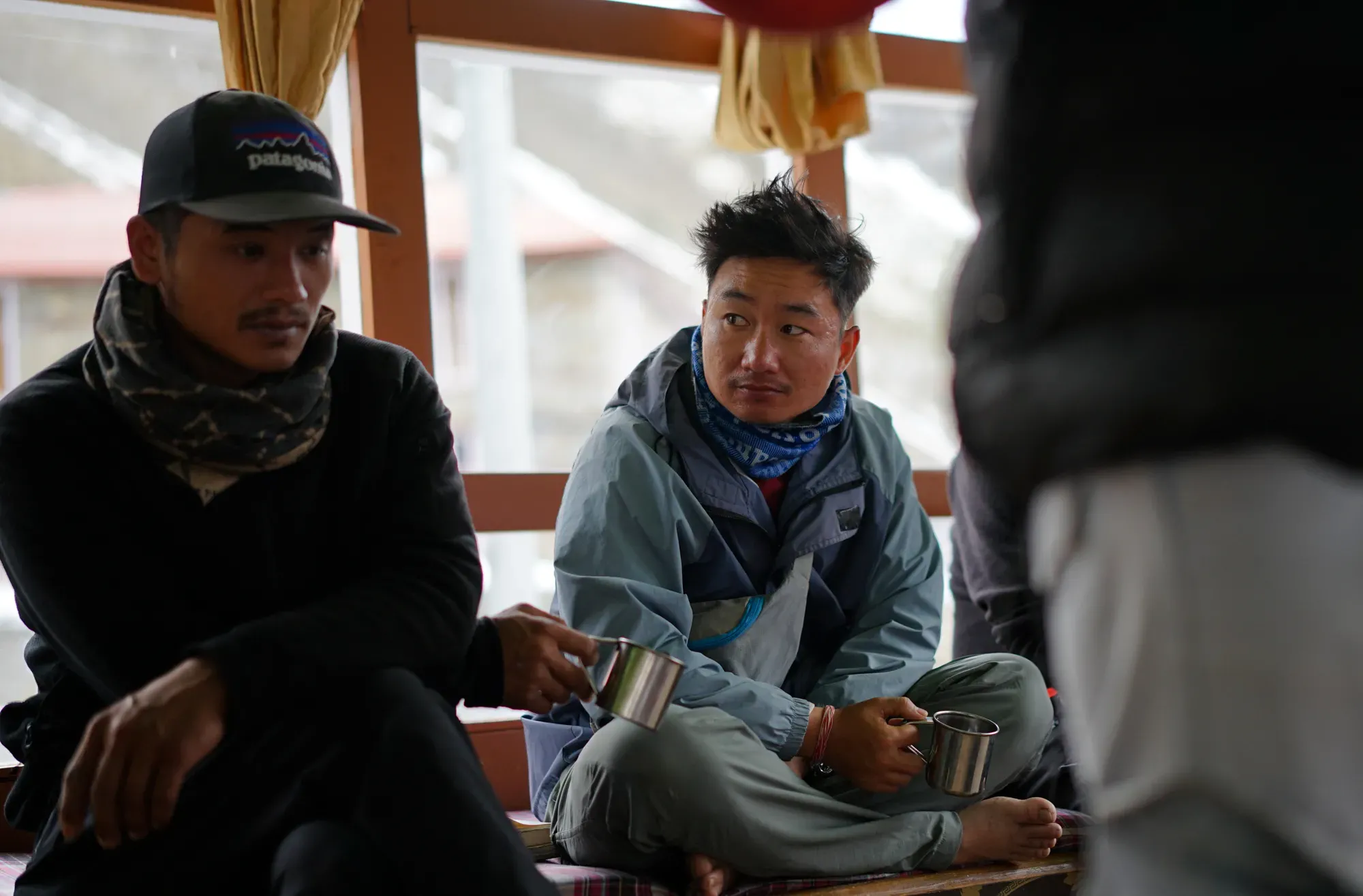
September 30, 2024, Nepal: An urge to run comes in the form of panicked voices around me before I even see the rocks. They have only just begun to crumble above me, providing an early warning signal. My eyes dart back to the snowy trail, and I lock in on the narrow section ahead, trying to avoid looking at the near-vertical drop to my right. Unlike me, the rocks are not afraid of the 50-meter (164-foot) descent into the river below. I don’t understand the shouts of Nepali around me, but I hear the English word “run”—and I follow instructions.
My feet sink into snowy boot prints that were much firmer during our ascent to Tilicho Lake just a few hours before. This faster pace is too much for the melting snow. I am distinctly aware of the blood pulsing in my ears, head, and stomach as my heart rate rises to match my panic. A familiar damp scent of earthy rock remnants wafts from the ground. The colors that once seemed so permanent around me now blend together, mirroring my frantic movements. Without turning around, I sense that the pebbles falling from the hillside are multiplying. The rocks hit the riverbed with a piercing crunch that echoes across the once-peaceful scree fields surrounding me.
I closely follow the commands of my guide, Tila, as we make our way back to Tilicho Base Camp.
In autumn 2024, I landed in Kathmandu on assignment as a Reporting Fellow for the Pulitzer Center. I sought to understand how climate change affects people living and working in some of the highest places on the planet and embarked on a two-week trip along Nepal’s popular Annapurna Circuit Trek (ACT).
In Upper Pisang, I met a teahouse owner named Narbu Chhiring Gurung, also known as Japes, who told me about increased avalanche frequency in the valley. Japes was there when a local search party found the lifeless bodies of climbers who had been buried in a slide on Annapurna II in 2019. The thinning trees they clung to had somehow survived the tragedy. In Tal, principal Shyam Krishna Panta walked me through the faded brick ruins of what was once the only school in the village. The building was the largest infrastructural casualty in a flood that destroyed much of Tal three years prior. An older couple there told me they had crawled through wet dirt on their hands and knees to escape the same flooding. With each interview along the trek, I encountered more stories like these—of lives disrupted by the increasingly relentless environment.
About five days into the trek, a late, post-monsoon storm raged through Nepal. On September 27, after hiking along the lower-elevation sections of the ACT, I woke up in a teahouse at almost 12,000 feet in Ngawal. I noticed a glassiness in the eyes of the teahouse owners as they watched their buckwheat and apple harvest for the year become buried under wet snow. We spent the next 24 hours snowed in. I listened to the conversations of the others in the teahouse; I couldn’t understand the language, but the tones of pain in their voices were clear. So, I sat with the heartbreak that emerged within the hushed voices and tense silences. For the first time, I was experiencing the real impact of climate change on these mountains and their people.
As we waited out the storm, Tila and I watched videos of homes getting swept down rivers. The whole country was feeling the impacts of the extreme weather. It was the highest recorded rainfall in Nepal since 2002 and it eventually claimed more than 200 lives. However, while the effects of the flood still raged below, the clouds parted in the mountains just three days after the initial storm, and we had bluebird skies for the 19-mile and almost 5,000-foot climb to Tilicho Lake.
Ironically, I felt safer there, thousands of feet high, than I would have in the towns below that were downstream of the flooding river. It felt selfish to be above the threat that continued to seethe.
The teahouse owners, trekking guides, and even ex–mountaineering guides that I met on the way to Tilicho all shared a similar sentiment: The environment was becoming more unpredictable, and safety was harder to guarantee. Word had spread along the ACT that Tilicho Lake was unreachable because of the storm, so many trekkers had forgone the lake route. Fewer trekkers staying in Tilicho Base Camp meant less business for the guesthouse owners. In the wake of the storm, Tila explained that it was becoming harder to predict how much money she can make in a season when treks are canceled or become unsafe because of the weather.
I grew up in a ski town in Colorado that depends on winter. Over my past 23 years, I have seen the community hold its breath each winter, praying for snow. In a place in which everything revolves around the ski season, so does it inherently center around the snowfall. At home, climate change was screaming at us at all times, whether or not we explicitly speak its name. In Nepal, where people have thrived at high altitudes for over four millennia, this is understood to the extremes.
The day after leaving the teahouse in Ngawal, I sat down with Annapurna Conservation Area Project’s accountant, Umakanta Sapkota, in the ACAP office in Manang— one of the last villages before Tilicho Base Camp. He candidly spoke about how difficult it can be to promote environmental advocacy while also appealing to local interests. Sapkota said that locals often don’t listen to ACAP representatives when they tell them not to cut down trees that help block landslides. Residents often sell the wood from these trees to guesthouses.
“ACAP says that if conservation is done now, it will be better for future generations,” Sapkota said. “Locals say if they can’t survive now by making money, why should they worry about the future?”
This blunt conversation reminded me that within local communities, adaptations to climate change are complex. Even those who understand these environments the best are conflicted.
As I continued on my trek, I began to more deeply understand the widespread impacts of climate change in this part of the world. It isn’t defined only by its consequences on the mountains. The storms on the highest peaks manifest as floods in the rivers miles below, and droughts simultaneously force climate refugees out of the cold desert of Upper Mustang—contradictory effects of the same cause. Nature doesn’t care about those living along its course, about whether it wipes out a new climbing route or devastates a village of families who have lived there for generations.
The sky slowly distinguishes itself from the blur of the trail as we descend past the rockfall and make it back to base camp unscathed. I let out a deep breath that I hadn’t realized I had been holding in. In the last stretches of unsteady trail, I let my mind process how I had only momentarily experienced a threat that those living here face with graver impacts each warming year: Route conditions matter, but so does the safety of the Nepali men who left the Tilicho Base Camp at 2 a.m., ahead of our hike, to begin clearing snow from the path. Those of us who participate in the mountaineering industry have a responsibility to address climate change in the mountains. But when we worry about climate change, are we thinking about the owners of the Ngawal teahouse and their crops, or are we thinking about needing different gear as the exposure on the routes we climb changes?
It felt hypocritical to be thinking about these lost voices on the ground in the climate crisis as I was actively participating in what the mainstream media sees when it thinks about climate change and mountaineering. Climate change impacts routes and weather windows. But here, at the highest places on Earth, it’s also changing the day-to-day lives of those along its path, and their ability to stay in their generational homes.
The dusty air has settled by the time I make my way to the dining room at base camp. The familiar scent of dhal bhat instantly assures me of my new sense of safety. The clear blue sky above now seems like a taunt—a misleading mask that feels so contrary to the harrowing rockslide escape. I take my long-awaited seat at a table in the teahouse and my legs go limp from exhaustion. I watch the guides and porters around me do the same as they recount stories of the grim descent. There is a shared sentiment that this will not be the last close call. I will leave the Himalayas, but the Nepali people will continue to exist here—attempting to adapt to a changing world while carrying the burden of my carbon emissions on their fragile environment. And often, it’s their voices that are lost.