

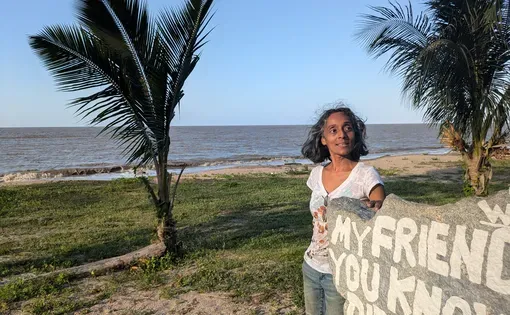
Guyana’s queer community knows what’s at stake with the climate crisis.
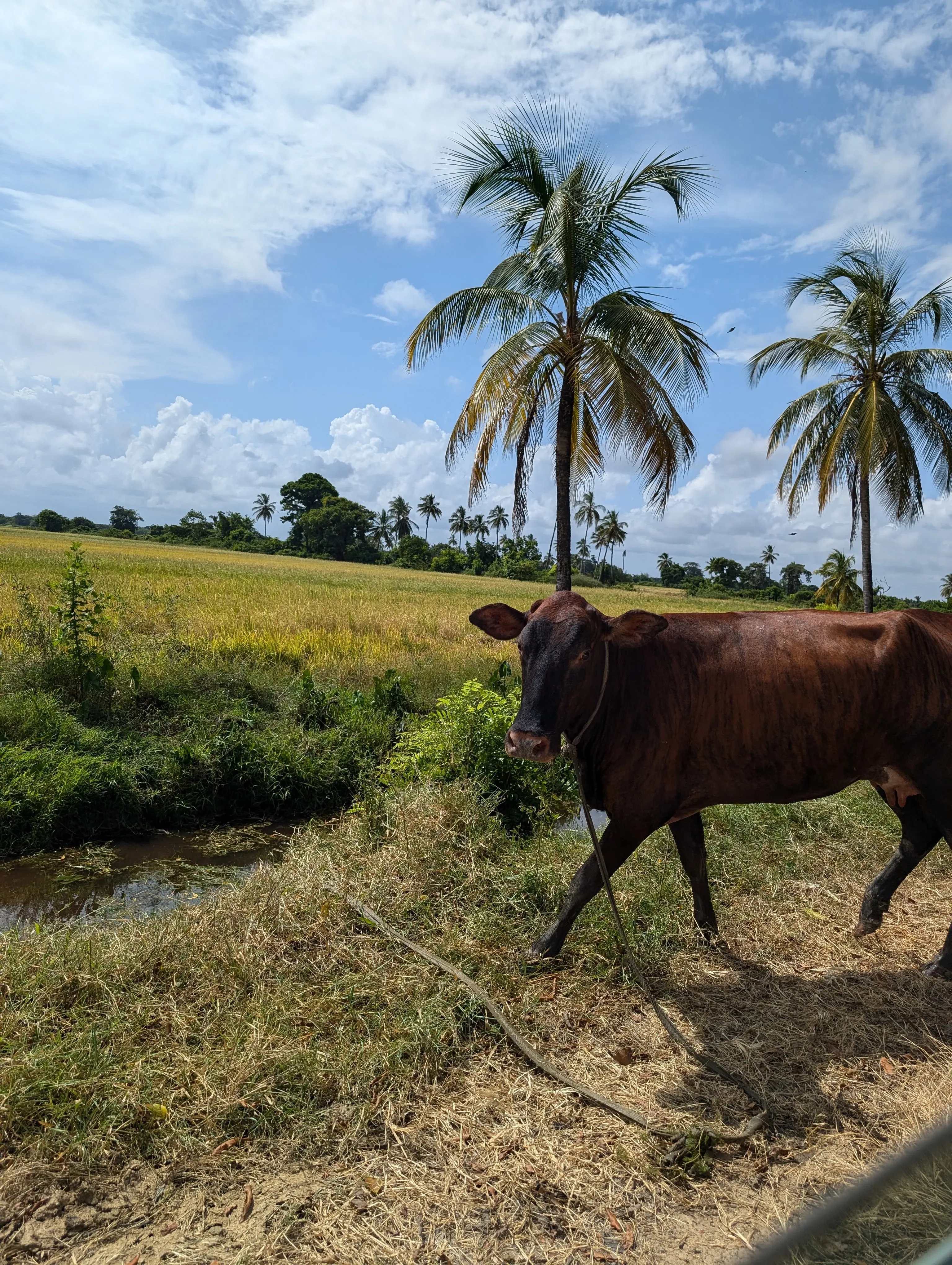
“Auntie, watch yourself!” Menakshi Babulall says to a cow standing in the middle of a dirt road.
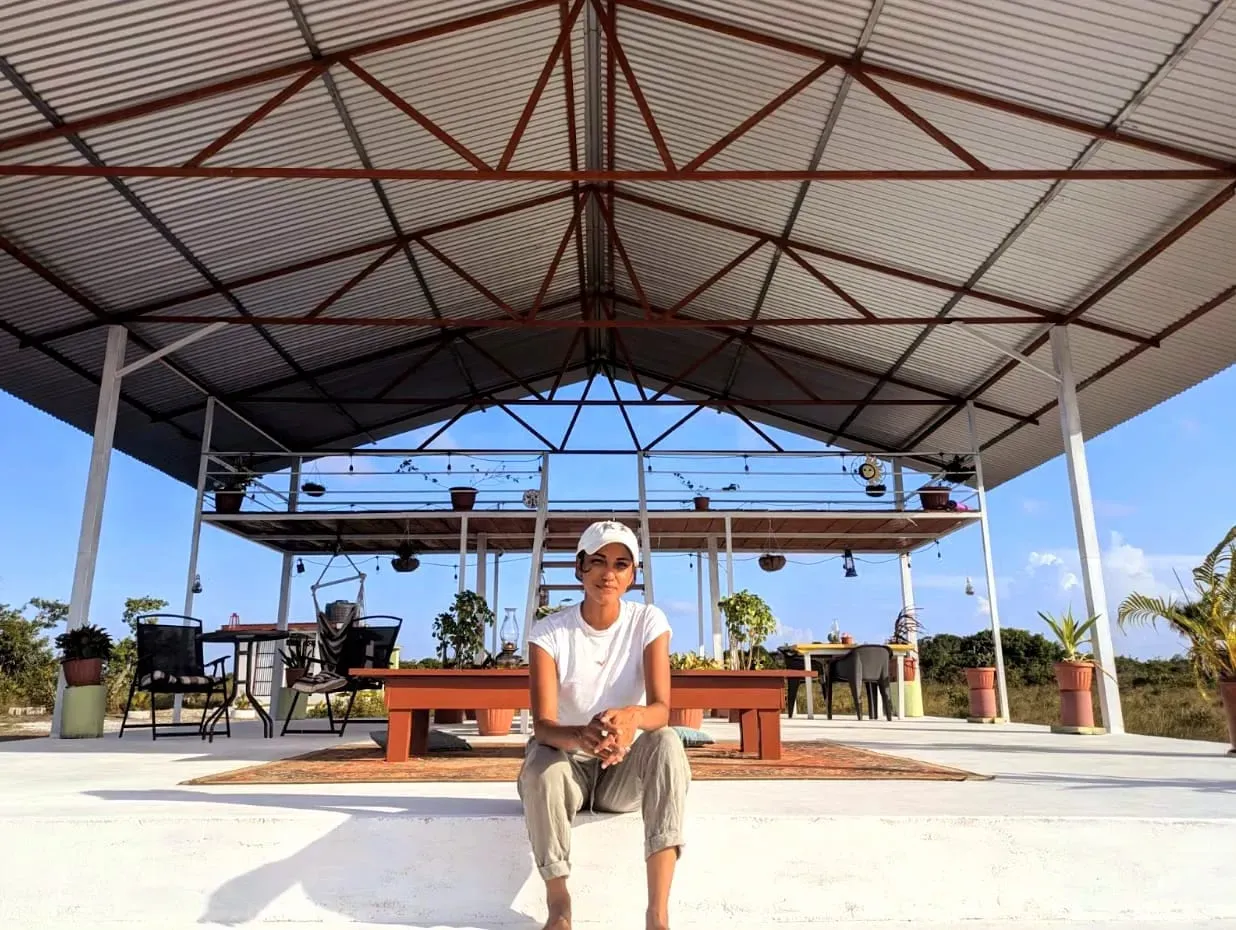
We’re driving in the back of Queenstown village on the Essequibo Coast of Guyana, where Menashki has spent most of her early childhood. The windows are down, exchanging what little cool air we had from the AC for sticky, familiar heat. Menakshi maneuvers around the cow with a deftness reserved for locals. It’s clear she has been down this road, again and again. At the end is her work-in-progress, Vaksana—set to be Guyana’s first women’s eco-retreat center that’s unapologetically LGBTQ+ inclusive.
“I wanted to be explicit because it’s part of providing that safety. Like: You're not an afterthought. You're part of the foundation of what we're creating,” she told me in an interview over WhatsApp before I visited. “We're the only country on this continent where it’s still illegal to be homosexual. We don't have open safe spaces.”
As a nonprofit journalism organization, we depend on your support to fund more than 170 reporting projects every year on critical global and local issues. Donate any amount today to become a Pulitzer Center Champion and receive exclusive benefits!
When I learned about Menakshi, a queer “comebackee” who spent most of her youth in Queenstown, left for Toronto, and returned at the start of the pandemic to launch Vaksana, I knew I had to make it a priority on my reporting trip—not only for my story about how queerness and climate intersect, but to remember Guyana’s contours.
Guyana was the start of life as I now know it, the place where my husband Craig and I had all of our firsts. We met while both serving as Peace Corps volunteers two decades ago when I’d interrupted a burgeoning career in arts and culture journalism and opted instead to travel the world. My feelings about the institution are complicated, but they are not about this country, which I have loved since my first week there, when, during a blackout, locals kept telling jokes and dancing as the generator hummed and encouraged me to do the same.
Save for last summer when I visited for Pride in the capital city of Georgetown, it had been years since I traveled around Guyana, swimming in its refreshing black waters or hearing the steady sounds of frogs at night. With Vaksana, I could do both.
The road reminds me of the bumpy backdam road near my old house in New Amsterdam. It filled with moon-like craters of water when it rained, sometimes preventing me from going to the wooden building where I taught middle schoolers. I am here with Menakshi right now because of my former students—some of whom had grown up to embrace their queer identity despite the law or Bible telling them otherwise. They made me curious about what it meant to be queer in Guyana in contemporary times. And while I didn’t set out to report a climate story, the theme kept emerging. I’ve learned to listen to my instinct over the years.
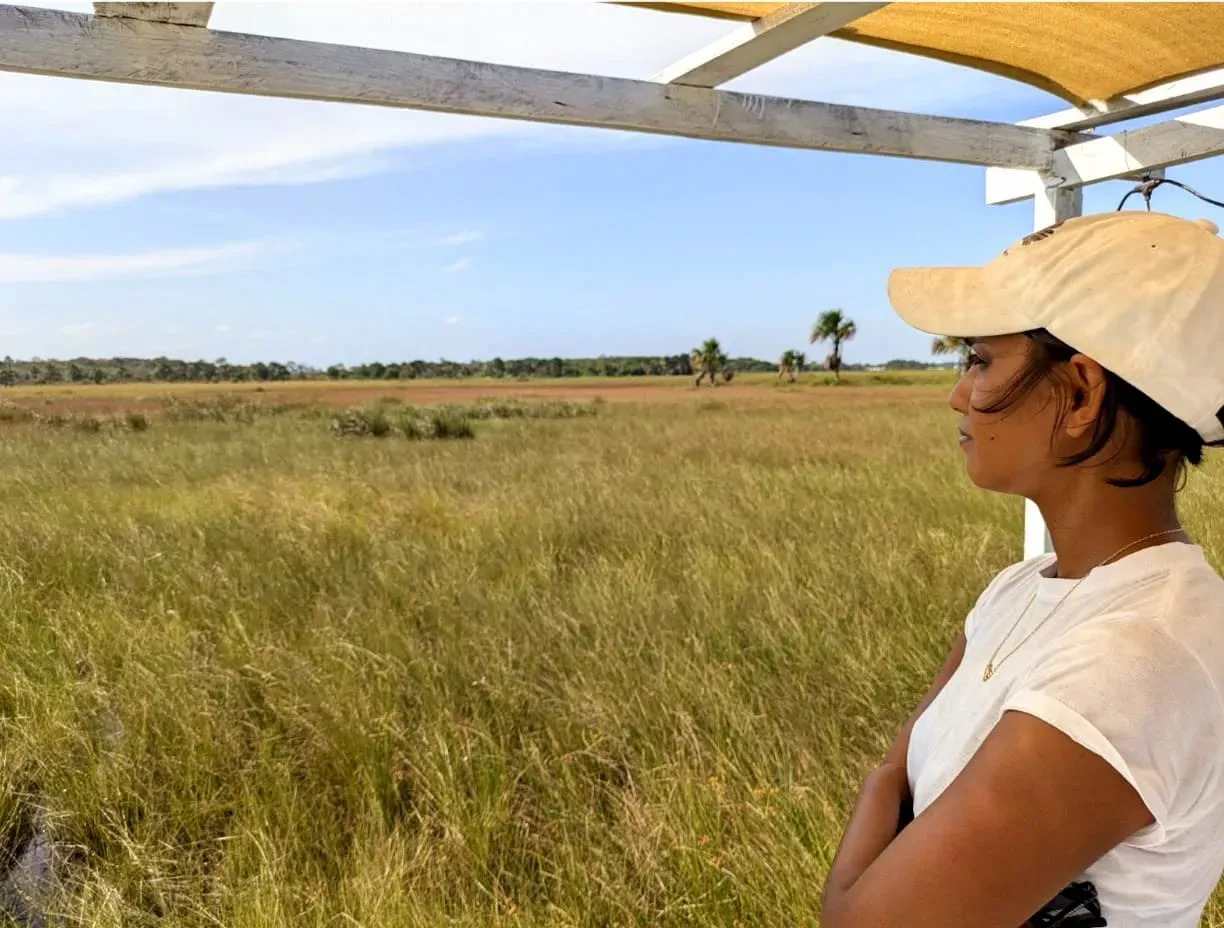
When we arrive at Vaksana, we pull up to an open-air white platform. Nearby, glamping structures with troolie palm roofs are in the process of renovation. There are tires filled with plants, solar-powered sinks, a pair of hammocks flanking a fire pit. Menakshi has already hosted a half-day retreat for GuyBow, a nonprofit that supports LBTQ+ women. Eventually, she hopes Vaksana can be a community hub where both queer and straight women can come to connect with nature to rest and rejuvenate.
It's an ideal setting. Glittering palm trees, whose fronds are used to make kites for Easter, dot an expansive wetlands landscape, although there’s barely an inch of water due to the dry weather. In the distance is Capoey Lake and the surrounding Indigenous village. We walk out on a long wooden plank into the wetlands to get a better look. Menakshi points to the sky, talks about how the curvature of the Earth on the equator makes it feel like a dome.
“You don't need television here,” she says.
When I was a little girl, we'd often go to my grandparents' summer house on Montauk, the southernmost tip of Long Island. It was where my mother would hold her breath looking for my face to emerge from the tumbling ocean waves, where my father would take me fishing with him on the jetties. The sky was clearer there. If we’d arrive at night, I'd inevitably point upwards in amazement. “I remember the stars!” I’d say, as if they were a poster that never got taken down. I recognize in Menakshi that same awe.
Soon, it’s time for lunch. We sit cross-legged on the floor of the white structure and eat a meal Auntie Bingo has prepared for us, roti and baigan choka. Vaksana means “rest” in Sanskrit and I am calm for the first time in days. Georgetown, while exhilarating, is an assault on the senses. The lack of trees made my headphones so hot on my audio recorder that they’d melt, the black specks sticking to my sweaty skin. Here, the slight breeze is noticeable. There are no car horns, no dancehall blasting. There’s only stillness.
For dessert, I eat a sugar apple for the first time ever and gaff. We talk about how it was in Queenstown where Menakshi had her first girlfriend in high school, a fact she and I are both amazed at because it's rural Guyana of all places. Yet her queerness hasn’t really been an issue in the community, she tells me. And now, there are young queer folks on her block who are out and about, a vibrant counterculture around her.
“Just by existing,” she says, “We’re changing the conversation a little bit.”
At home, it’s been more complicated with her Indo-Guyanese parents, including her dad who wasn’t accepting at first but eventually came around. I can relate to the whole complicated dad thing. Dad and I fought before he died 17 years ago. We never had the chance to make up, and I never got to say goodbye on his deathbed. Living in the Pacific Northwest, there are no streets or parks or restaurants that randomly summon a memory of place. He never made it to my now home.
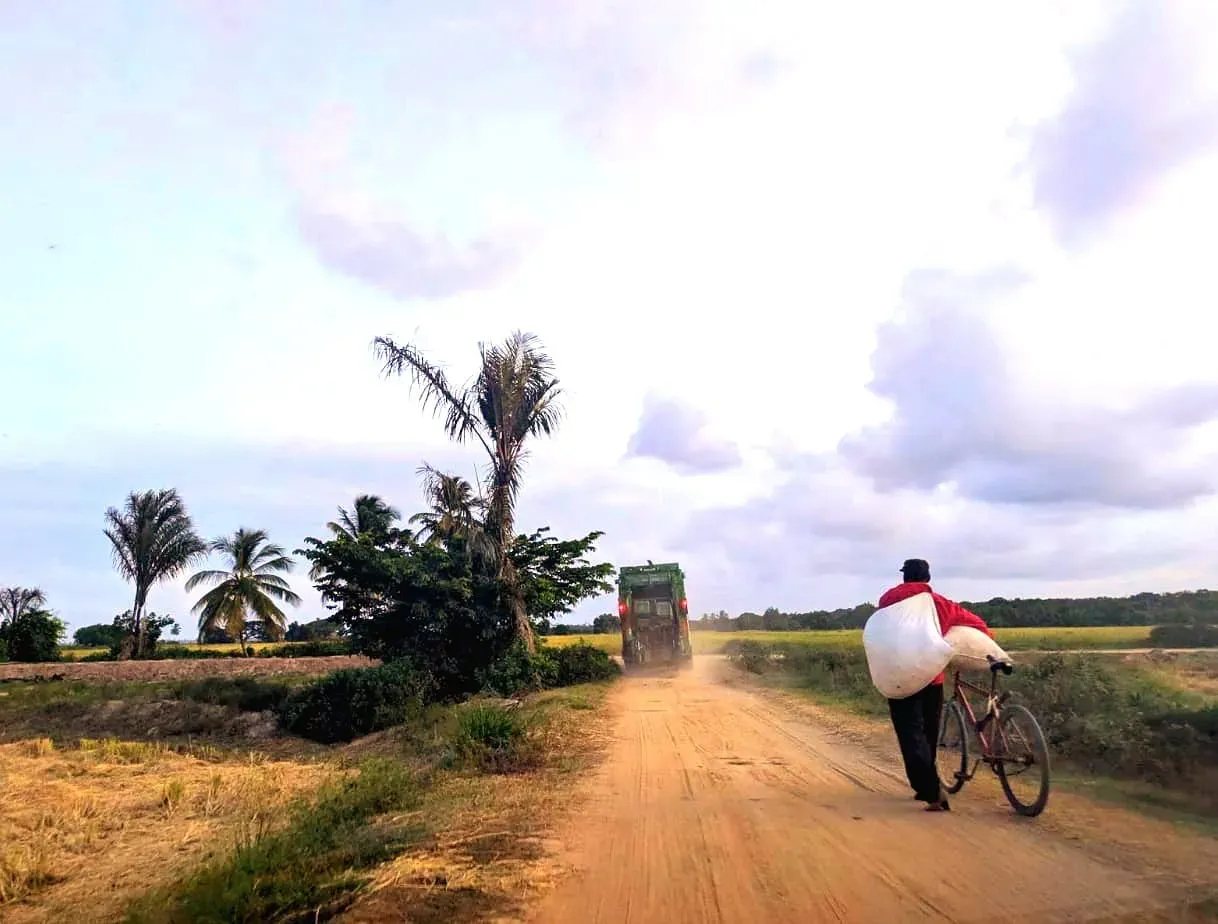
The next day we go to Capoey Lake. We drive further down the backdam road, rice fields surrounding us, and are stuck following a garbage truck. It’s going to a dumpsite, where it is unclear whether it has the Environmental Protection Agency's approval for development. The land is porous and contaminants can leak into the groundwater, potentially impacting Capoey village and Vaksana. The wetlands play a crucial role by acting as a filtration system before water enters the canals and lake.
Menakshi has been in dialogue with Capoey’s Toshao, an elected leader, to petition for a change to the dumpsite’s location. For locals, the lake is the center of the community. And for visitors, there’s a saying in Guyana: If you swim in the black water, it means you’re going to come back. I go for a swim in its lukewarm waters the color of tea, and float before the dragonflies come to buzz hello.
I remember.
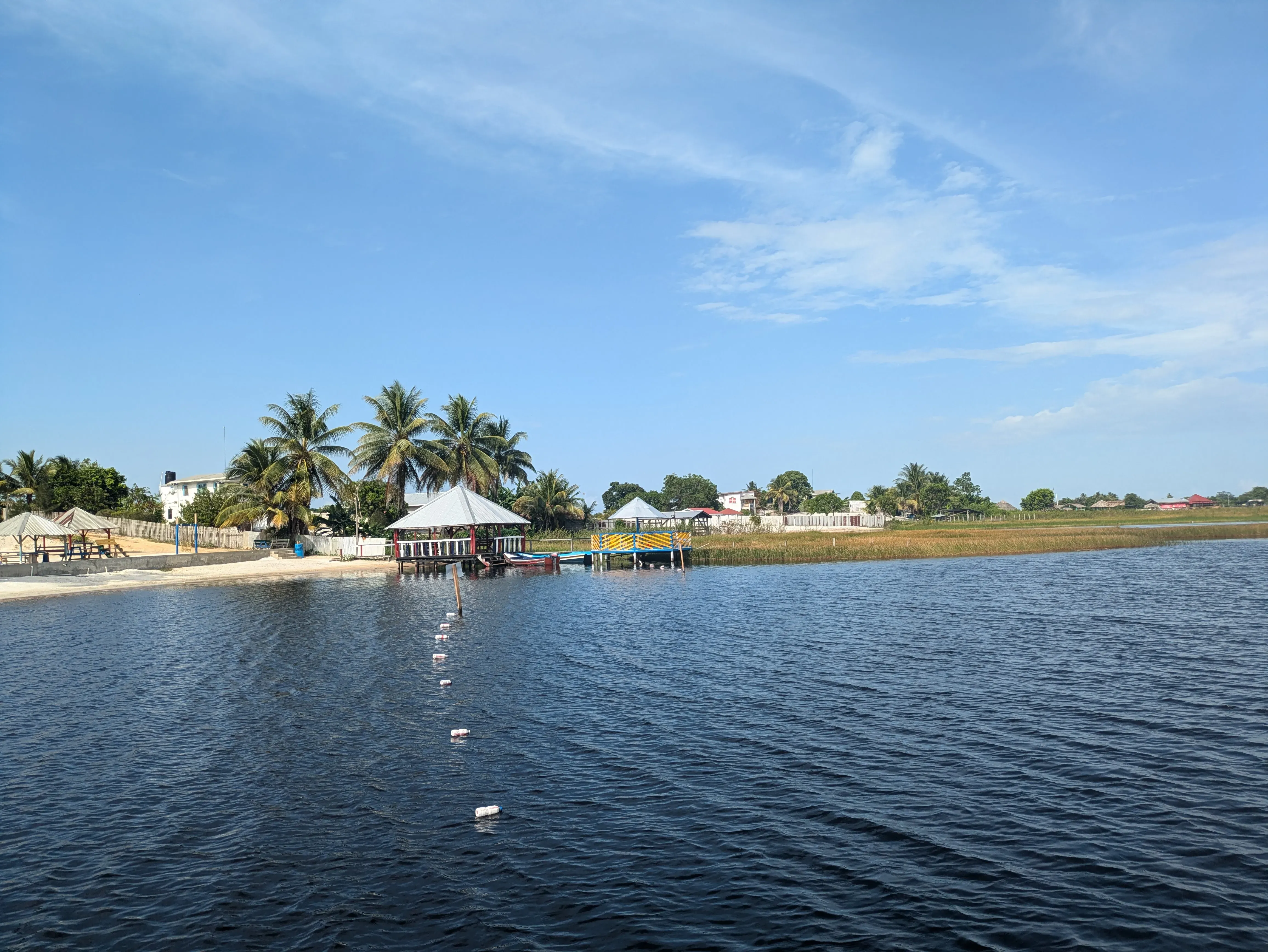
Guyana is the last place Dad visited me. I swam in that same black water with him at Lake Mainstay resort, a half hour away. At night, we drank rum and shared stories while the rain thundered onto a thatched roof. He laughed while telling me and Craig about my mom’s new boyfriend who clumsily rode a unicycle, delighted in our (poor) retelling of Guyanese folklore like the mischievous Baccoos. This was the uncomplicated side of him in Guyana. The one who loved to travel, who saw the world through less angry eyes, who asked questions as if he were back in grade school. I hadn’t expected Vaksana to reconnect me to this fundamental part of myself.
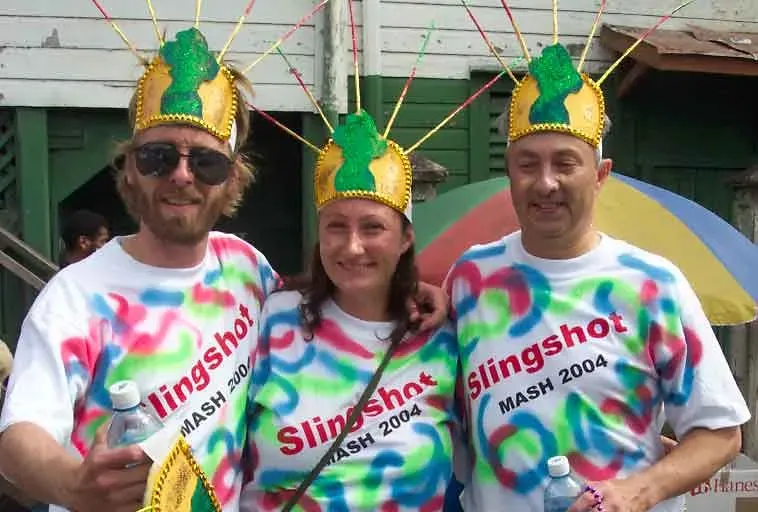
This memory activates the others. Later in Georgetown, I will pass by the rooftop bar where Dad danced with a woman who invited us to join the Mashramani parade. I will drive down the street where we donned a gemstone-laden headpiece and twirled our waists to soca on Slingshot’s float. I will go to a Hard Rock Cafe, a favorite of Dad’s as he played guitar, and sing “Who Will Stop the Rain?” by Creedence Clearwater Revival with an older Canadian security guard. The song was also one of Dad’s favorites, and for a moment, I will pretend it's him.
That is then. This is now.
In the evening, Menakshi encourages hammock time to gaze at the bright stars poking through the black dome. I remember, again. Right before I left for the Peace Corps, I’d written an article about an artist who featured guitars in her work. I told Dad I’d thought of him while reporting. He cut out the printed story and kept it on his desk the entire two years I was in Guyana.
It’s taken me a long while to return to journalism. I am older now, past the point of parents preserving their children’s art. With this story, however, I can’t help but think he would have done the same.