


Project
Ugandans Fight Against Sugarcane
How sugarcane reshaped Uganda’s farmland, food supply, and culture
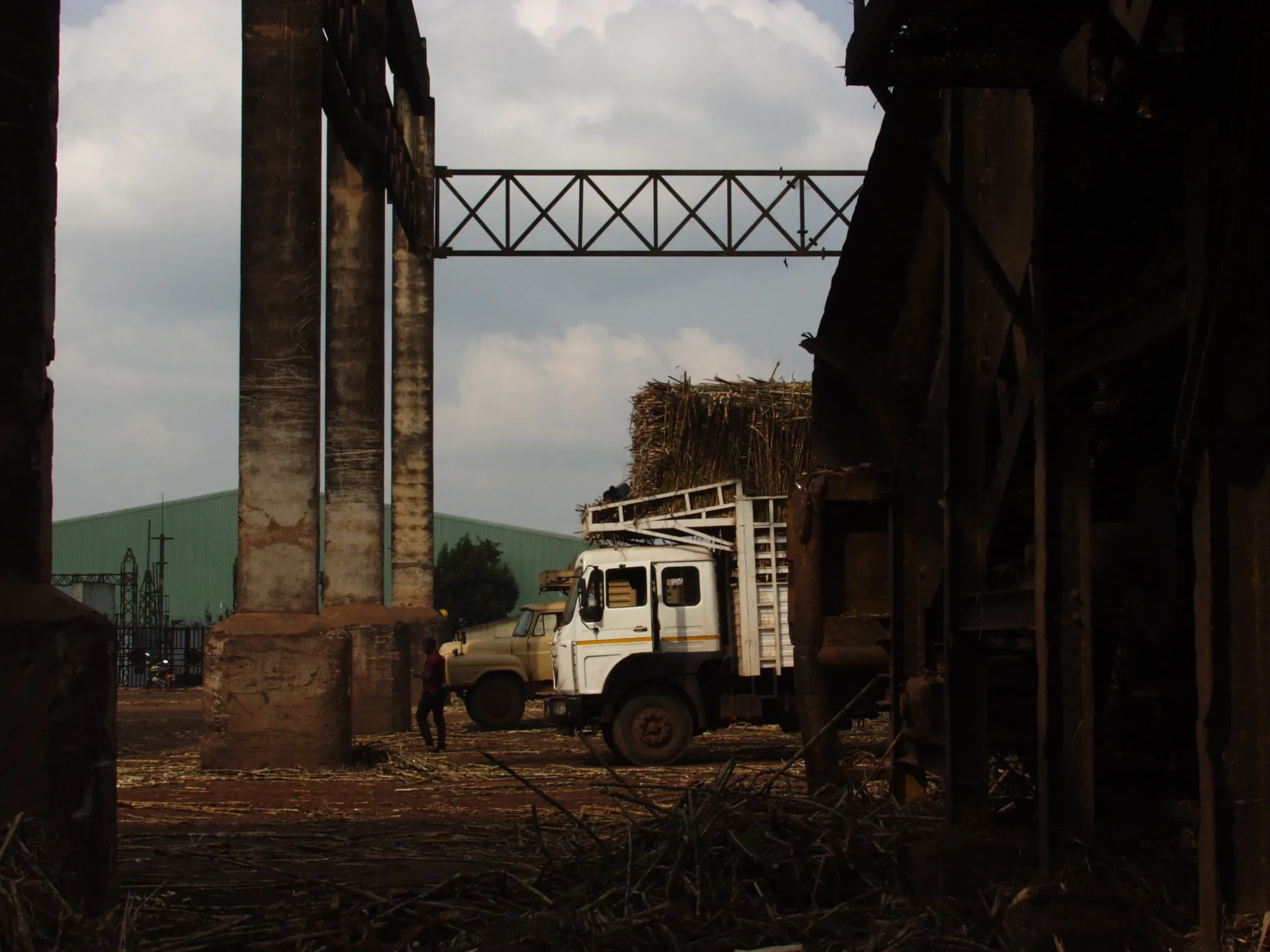
Ambercourt market awakes to the sound of diesel engines.
Under the last wash of moonlight, traders shuffle in from across Jinja, reed baskets balanced on their heads. Bundled in jackets against the Nile’s chill, they hurry to claim space before the first shoppers arrive.
The vendors slip past a row of idling trucks, their baskets swaying. They know the real competition is not with one another, but with what the trucks carry. Pallets of tomatoes, onions, and greens are heaved down, black smoke curling through the air. The food being offloaded has made the long journey from Kenya. Food is increasingly being shipped in from Uganda’s neighbors, cheap prices disrupting the livelihoods of local farmers.
But it wasn’t always like this.

As a nonprofit journalism organization, we depend on your support to fund more than 170 reporting projects every year on critical global and local issues. Donate any amount today to become a Pulitzer Center Champion and receive exclusive benefits!
Otimong Jamada is a smallholder farmer from Budondo, a rural subcounty on the northern edge of Jinja, in Busoga, a kingdom and cultural region in eastern Uganda made up of 11 districts. Budondo’s red-brown soil and generous rainfall once made it one of Busoga’s most productive food baskets, supplying bananas, maize, and coffee to nearby markets. Jamada remembers when the stalls at Ambercourt overflowed with crops grown just down the road from his village, a 20-minute ride on the back of a boda boda motorcycle taxi.
Today, Budondo’s fields are dominated by one crop: sugarcane. What once fed the region now feeds the sugar mills. And for farmers like Jamada, the promise of cash has come at the cost of food security.
Before sugarcane, Jamada grew coffee. For much of the 20th century, coffee was the backbone of smallholder farming in Busoga. But in the 1990s and early 2000s, coffee wilt disease spread across the region, devastating yields and leaving farmers with nothing. A brief turn to vanilla offered hope when global prices spiked in the early 2000s, but the market soon collapsed, wiping out savings and leaving families like Jamada’s searching once again for a way to survive.
Sugar’s Grip on Busoga
Sugarcane is not new to Busoga. The first commercial plantations date back to the 1930s under colonial rule. But it was at this moment of vulnerability, after coffee and vanilla failed, that the sugar millers expanded their reach into smallholder villages. Companies like Mehta Group, which runs Lugazi Sugar, offered loans, tractors, and cane cuttings, requiring only that farmers commit their land.
Millers convinced farmers that sugarcane would bring more money than food crops — and with far less effort. Unlike maize or beans, cane demanded little attention: Plant it, weed a few times, then wait. After 18 months, the harvest promised a lump sum payout that seemed irresistible.
The reality, however, soon set in. When the price of sugarcane tanked, many farmers tried to remove their crops to plant food. Sugarcane drained the soil of its nutrients, leaving fields unable to sustain food crops once the cane was cleared.
“They fooled us,” Jamada said. “We didn’t know that sugarcane affects the soil.”
Trees were cut down to make way for cane, leaving fields exposed to wind and drought. Food that once grew in abundance — jackfruit, mangoes, bananas — became scarce.
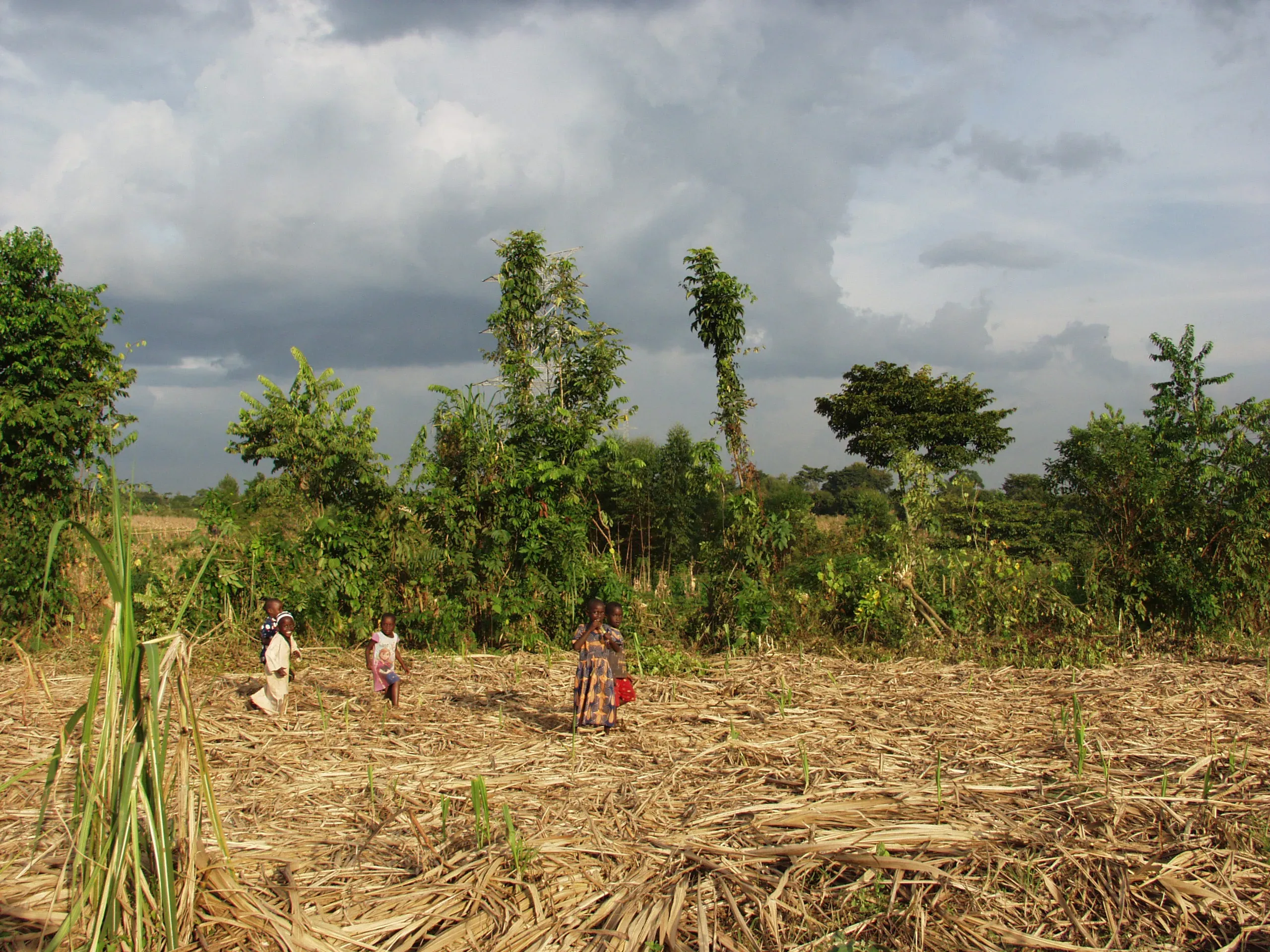
“We’re getting maize from Kenya. Tomatoes from Kenya. Mangoes from Kenya,” Jamada said. “We used to get food from the village. Now, we get food from town. The order has changed. Simply because of sugarcane.”
The struggles in Budondo are not isolated. Across Busoga, sugarcane has transformed once-fertile food baskets into monoculture landscapes. The Ugandan government is well aware of the crisis; President Yoweri Museveni has acknowledged the food insecurity facing cane-growing regions. But while urging smallholder farmers with less than ten acres to abandon cane, the state continues to champion the industry for its economic contributions. Official policies reflect this ambivalence. The 2010 National Sugar Policy recommends that 30 percent of land within a 25-kilometer radius of a mill be reserved for cane, with the remaining 70 percent left for food and other crops. On the ground, however, enforcement is absent, and cane dominates.
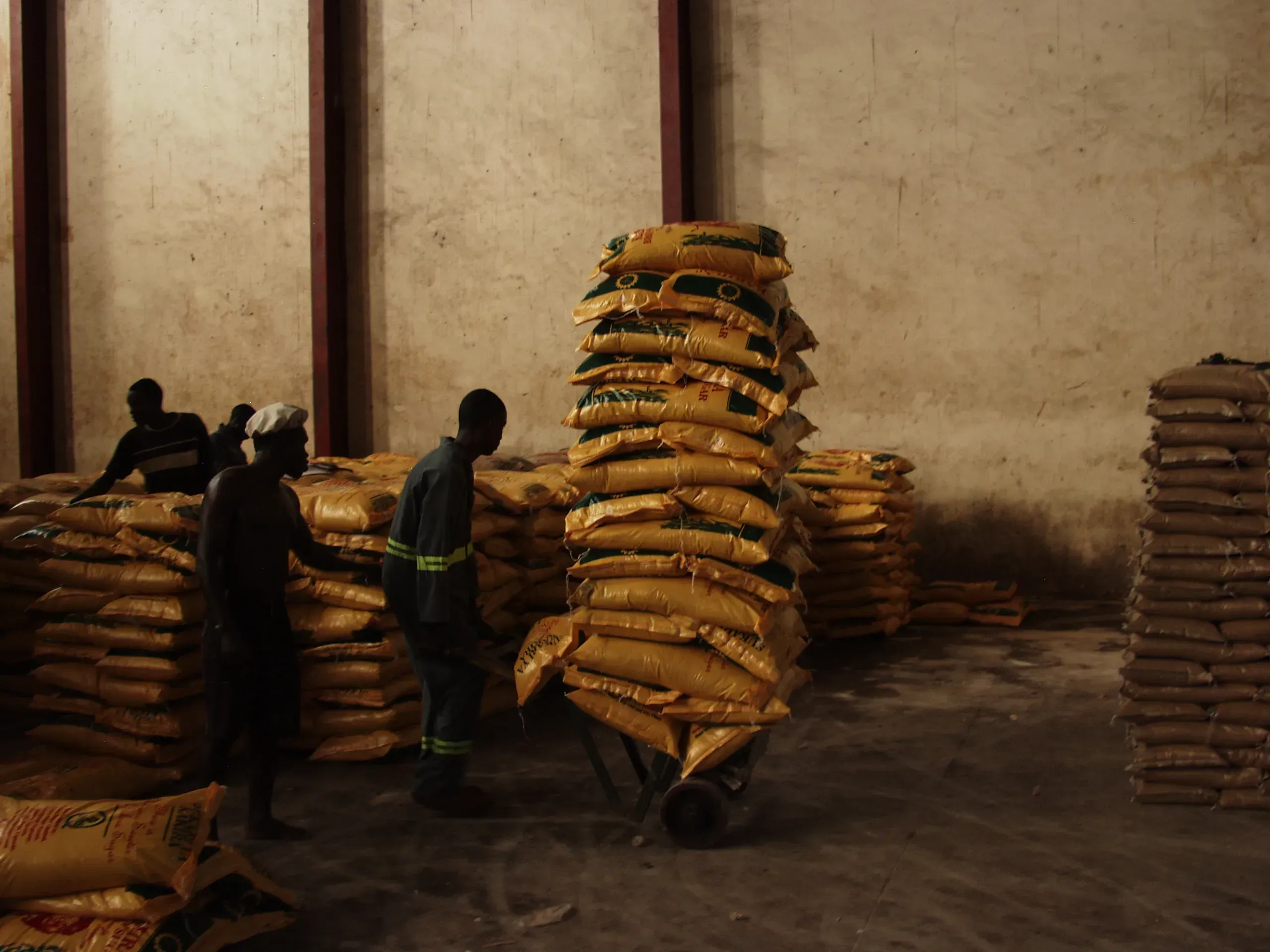
Part of the reason is the entrenched power of the millers. Companies like the Mehta Group, a family-owned conglomerate that operates Lugazi Sugar in central Uganda, and the Madhvani Group, one of Uganda’s largest businesses with extensive cane estates and its flagship Kakira Sugar Works, not only control the market but also wield political influence, sponsoring campaigns and insulating themselves from scrutiny. Farmers accuse millers of manipulating prices — dropping them when supply is high, slightly raising them only when growers threaten to abandon cane. Complaints of faulty weighing machines, unexplained deductions for “immature” cane, and opaque payments are widespread. While millers profit handsomely from byproducts like spirits and electricity, farmers are paid only for raw cane, their share of the true value chain hidden from view.
Attempts at reform have faltered. The 2020 Sugar Act was meant to empower growers through a sugar council and a guaranteed share of byproduct profits. But implementation has been slow and enforcement weak, according to John Odwori, a parliamentary candidate and former cane farmer.
“The law is silent,” Odwori said. “It exists on paper, but for those on the ground nothing has changed.”
Local leaders say they lack the authority to confront millers or dictate what landowners plant, relying instead on “sensitization” campaigns that rarely change behavior. Kasolo Alton, who was elected mayor of Jinja City in 2021, said real power rests with the central government.
“Everything is controlled by the central government,” he explained. “People own their land … you can guide them, but you can’t force them.”
Government initiatives like the Parish Development Model provide modest grants to vulnerable households, but without coordination or cooperative structures, the money often fails to build lasting resilience. A grant of 1 million shillings, he said, “cannot do anything” unless it is channeled through cooperatives where farmers can plan and act collectively.
For many farmers in the Jinja District and wider Busoga sub-region, sugarcane has become less a livelihood than a trap.
“We are totally stuck,” said Musisi Kyambadde, a sugarcane farmer in Wakisi, a subcounty on the banks of the Nile in Njeru Municipality. “We’ve been stranded.”
Oscar Kumi, a longtime sugarcane farmer in Kakira, remembers when cane prices collapsed around 2018. It was, he said, “suffocating.” Farmers were so desperate they begged him to help clear their land just so they could plant food again.
“They would call me and say, ‘Just help me harvest, so that I can plow it down and plant something else. So my kids will have something to eat.’” Kumi said. “Some people gave away cane for no cost, or sold a truck of 10 tons at a hundred thousand [shillings]. It was horrible.”
Even walking away from cane is nearly impossible. Removing it requires tractors, which farmers say are unaffordable and whose drivers overcharge. And when the cane is finally gone, the land itself is exhausted.
Farmers say they face these hardships with little support from government or local leaders.
“They don’t support us at all,” Kumi said. “They protect the mill to a certain extent.”
Others point out that millers operate with impunity because politicians depend on them for campaign financing, making it nearly impossible to hold them accountable.
“Can you criticize your sponsor? You cannot,” Odwori said.
This sense of abandonment is compounded by the collapse of farmer organizations. In Wakisi, farmer Kowa Magoola recalled that earlier attempts to unite fell apart once prices dropped, leaving individuals to fend for themselves.
“You suffer alone,” Magoola said.
And still, despite the regrets and suffering, many see no way out. Farmers in Budondo said they continue planting cane because they have no viable alternatives, with other crops failing or markets collapsing.
“We don’t really have an alternative … If you can find an alternative, I don’t think you would see one person who would keep farming sugarcane,” Jamada said.
Planting a Different Future
Across Busoga, where sugarcane has stripped soils and narrowed choices, Girls4Climate Action is working to show that alternatives exist. Their vision begins with a simple premise: Women, who bear the brunt of climate change and food insecurity, can also lead the way out. Through their Climate Resilience Program, they have established “climate resilience hubs,” spaces that serve as both classrooms and farms. Here, new methods are made visible.
“We demonstrate the different climate smart agriculture practices that women can utilize to increase their resilience to climate shocks,” explained Patience Ataliba, who directs the program.
The goal, she said, is to make it vivid that there are other options.
“You don’t have to entirely depend, for example, on rain for you to grow something, or you don’t have to have a very big acre of land. You can diversify whatever you’re growing, whatever you’re doing.”
This philosophy rests on community ownership. Ataliba stresses that the most effective answers come from within.
“Real solutions from the people from the community, not solutions from elsewhere,” Ataliba said.
By drawing on locally available materials and Indigenous knowledge, she said, these practices are “more acceptable” and easier to adopt. The hubs also act as bridges between generations. Rural women share the local seeds and techniques they have relied on for decades, while students contribute technical expertise through entrepreneurship academies that encourage women to turn climate solutions into green businesses.
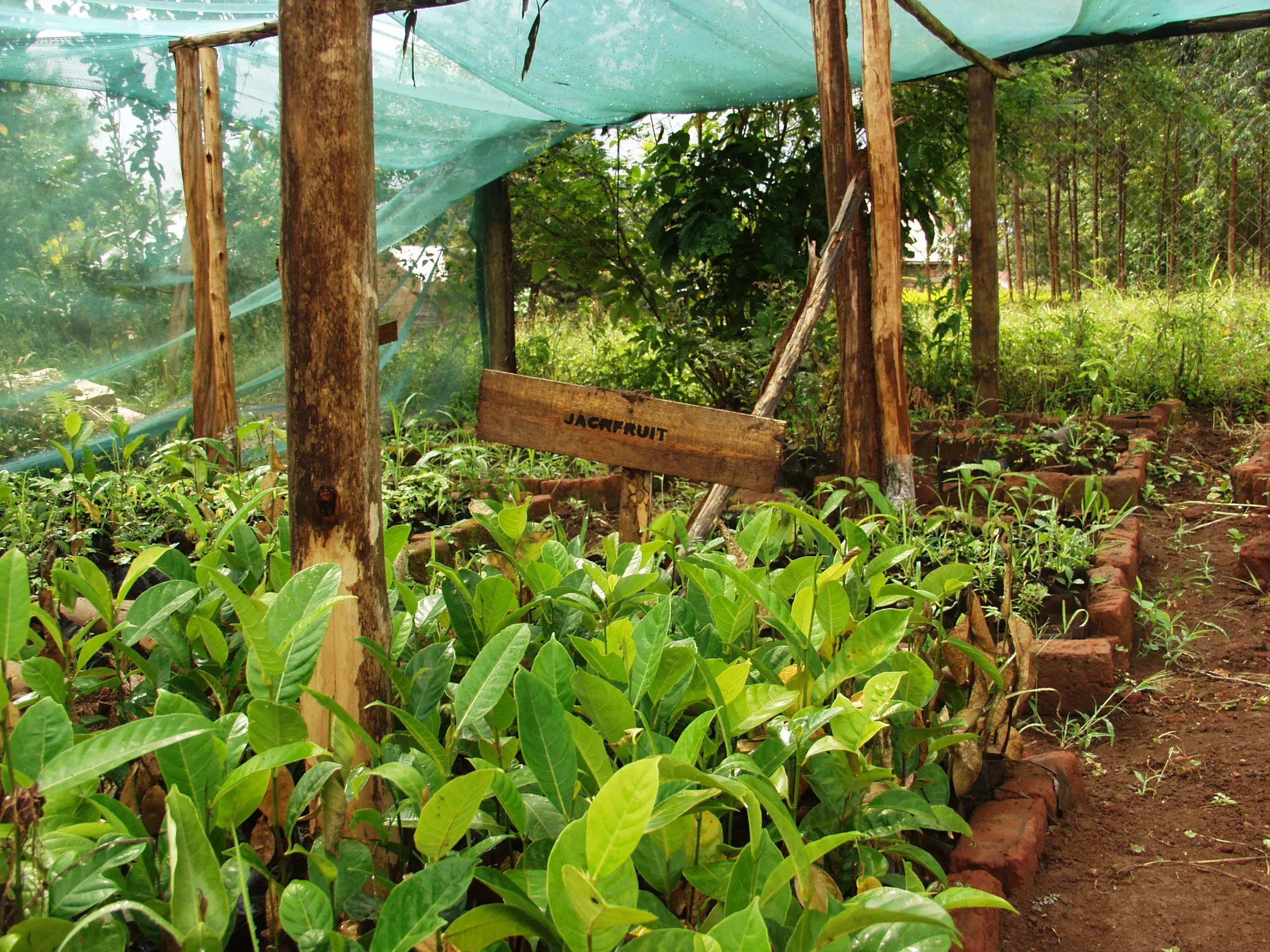
The approach comes alive in the work of Shamirah Mutesi, a 19-year-old who leads one of the hubs. She describes days spent making bio-fertilizers and bio-pesticides from household materials, tending vegetables in the greenhouse, and collecting indigenous seeds from jackfruit and other fruits.
“We use local seeds,” Mutesi said. “They survive without being sprayed every time with pesticides. They don’t need a lot of input, a lot of chemicals.”
She contrasts this with GMOs, which offer quick money because they grow fast, but ultimately spoil the soil. For her, the shift back to Indigenous practices is both a necessity and a growing awareness.
“People are reflecting on what they’ve been doing, how they can improve,” Mutesi said.
Change Begins
A few kilometers away back in Budondo, a different kind of experiment is unfolding. At night, families gather around fires as they once did generations ago. The conversations are led by Isaac Imaka, a journalist and community organizer who is trying to revive the old practice of ebikomi: fireside talks where elders once taught history and passed down knowledge.
“My grandfather had a farm. In the evening we’d sit around the fire and they’d call the boys and they’d teach us about the history of your community,” Imaka said.
For Imaka, the purpose now is to rebuild food systems.
“I talk to 40 guys around the fire — elders, church leaders, farmers. So, we can approach the problem as a community. I’m just a facilitator. The village must do the heavy lifting.”
Imaka’s urgency comes from seeing Budondo’s decline. His vision is to bring back abundance, but also to ensure farmers can profit from it.
“Because the whole world is monetized, people should be able to make money from what they grow through agriculture.” Out of the ebikomi have come group farming initiatives. “We have five groups who are growing,” he explained. “Collard greens can submerge the market when they are ready, and they grow really fast.”
Miria, a farmer in Budondo, is part of one of these groups. For years she grew finger millet but found the returns disappointing. When Imaka came with new ideas, she decided to join.
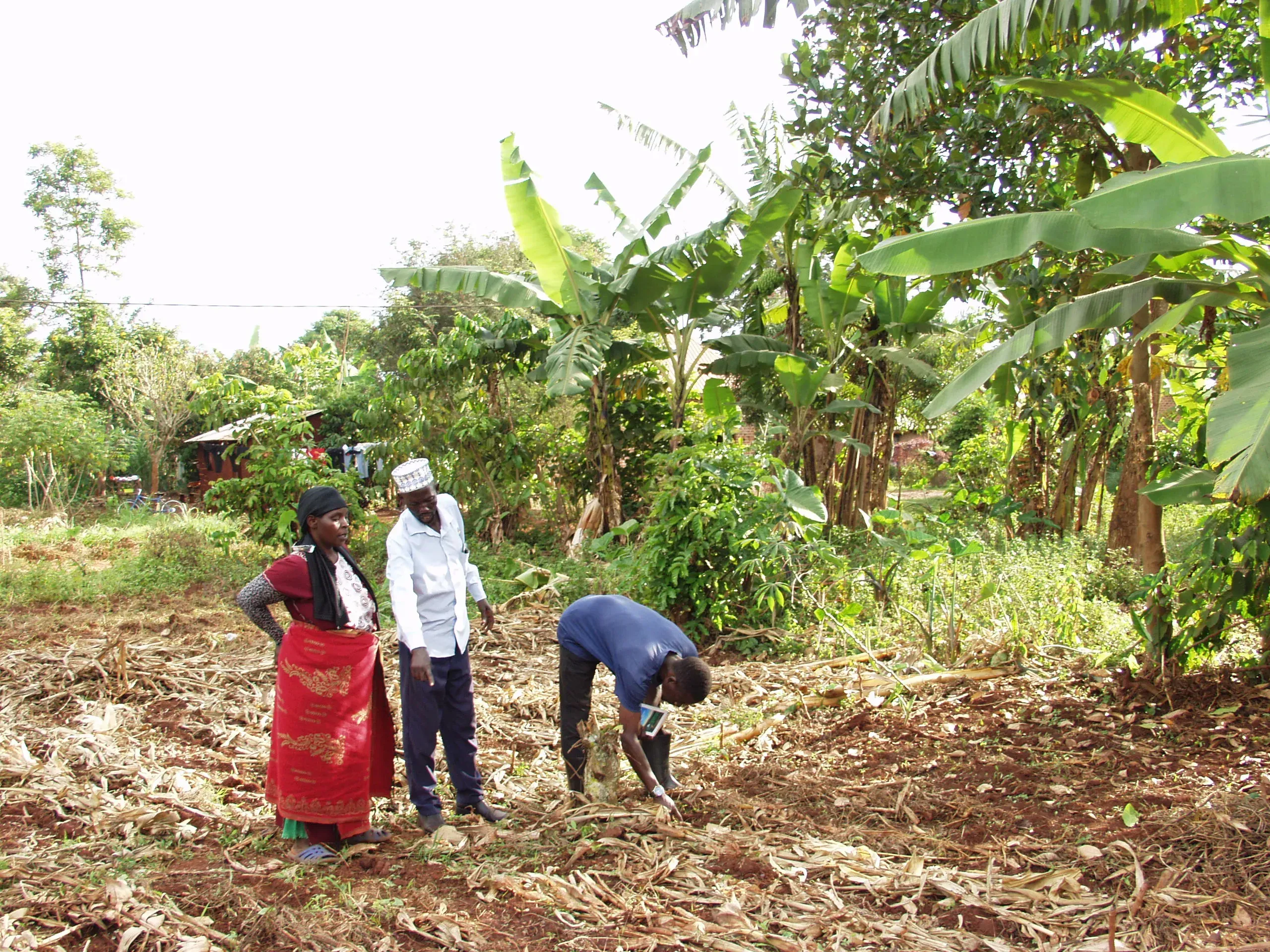
“I had never seen this kind of farming,” she said, describing the shared approach.
Her group has 50 members, with 30 committed to collective farming. Each member maintains his or her own garden, but when harvest comes, they sell together at a common market.
“It’s good, but it’s a bit expensive,” she admitted, pointing to the cost of seeds. Even so, she is determined to persuade her peers to stick with it.
“We all come together, work together, and then see how we can move at the same pace.”
For farmers like Miria, these small shifts are a way to reclaim land from cane and restore it to feeding families. And for veterans like Otimong Jamada, who remembers when Budondo’s hillsides were full of matooke and coffee, the change is overdue.
“We are hoping that the changes in the farming will pique interest and that things will change,” he said. “Because the need is very important. If we cut away an acre of sugarcane, maybe we can get much more out of something like growing bananas. With time, people will change. It’s very important. But mindset is not something that can go in just a week.”