Story
 December 15, 2025
Resilience and Reinvention: The Evolution of Chilean Youth Activism
Country:

Chile’s youth are redefining activism.
“We have to put our hope into a longer time period, because if we just put it in the short term, we’re gonna lose.” With this reflection, Juan José Martin, a former student leader and environmental activist who later served as a delegate in Chile’s Constitutional Convention, captures both the disillusionment and resilience shaping a new generation of youth activism in Chile. His words highlight the tension between the urgency of the immediate crisis and the patience required for lasting transformation.
That patience is tested by a climate of widespread pessimism. According to the prominent think tank Centro de Estudios Públicos (CEP), only 14% of Chileans believe the country is progressing. While this is an increase from just 6% in 2019, it underscores how limited optimism remains. For many young people, the gap between their aspirations and the reality of political stagnation is a defining feature of this era. Yet, the persistence of youth activism lies in its ability to adapt and endure despite these setbacks.
From the student protests of the 1970s to the 2006 Penguin Revolution and the 2011-2012 education mobilizations, young people in Chile have consistently occupied a central role in pushing for social and political change. In virtually all of these movements, university and high school students acted as both organizers and symbols of broader societal discontent. As Dr. Leonidas Montes notes, “They were revolutionaries—but revolutionaries from universities.” Montes emphasizes how movements grew out of formal educational spaces even as their ambitions extended beyond campus walls.

As a nonprofit journalism organization, we depend on your support to fund more than 170 reporting projects every year on critical global and local issues. Donate any amount today to become a Pulitzer Center Champion and receive exclusive benefits!
However, despite their consistent success in amplifying their causes, Chilean youth movements have struggled with longevity. Jeffrey Davidow, a former U.S. diplomat and political observer in Santiago, observes that, “students tend to push, in Chile, further to the left farther than society is willing to adopt.” In other words, activist movements often face waning public support and quickly lose steam, leading many to question their legitimacy in the first place.
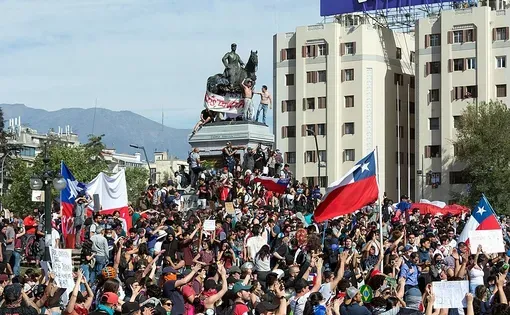
One such movement was the Estallido Social, a watershed moment in Chilean politics. The commotion began in late 2019 with mass protests over a metro fare hike, but quickly grew into a nationwide uprising against unaffordability, inequality, and economic stagnation. Young people’s anger with the government found sympathy among older Chileans fed up with issues such as the privatized pension system, and mounting pressure produced demands for a constitutional referendum. The movement’s scale and intensity ultimately helped propel the election of then-35-year-old president Gabriel Boric in 2021.
This mass mobilization, however, was accompanied by a sense of exhaustion. Mauricio Salgado, a social scientist, said of the period: “You were kind of intoxicated of violence during that period of time,” highlighting how continuous confrontation and unrest contributed to public fatigue. Empirical data mirrors this shift in sentiment: Surveys indicate that support for the Estallido declined from 55% in December 2019 to just 23% in 2022. Analysts attribute this trend to a combination of protest fatigue, unmet demands, and rising concerns about violence, which together discouraged broad public participation in street mobilization.
Public sentiment has now shifted decisively toward security and economic concerns. Economist Leonidas Montes said, “Nobody would ever dare to talk about a new constitution now,” reflecting how the electorate has reprioritized practical concerns like jobs and safety over ideological transformation. National concern over crime has doubled, rising from 26% in 2019 to 50–60% today, overshadowing structural issues such as pensions and inequality. This shift in priorities coincides with declining confidence in formal politics: Salgado notes, “People in general don’t believe [in] that,” referring to growing mistrust in the Boric administration and political institutions more broadly.
Sociologist Nicolás Angelcos Gutíerrez further emphasizes this sentiment among youth: “The disconnection from politics that existed before the Estallido remains. Furthermore, the levels of neighborhood organization and mobilization that were achieved during the Estallido declined after it.” For progressive movements with predominantly young membership bases, such an environment has amplified both obstacles and opposition.
Darikson Sisejkovic of Movimiento de Integración y Liberación Homosexual (MOVILH), a prominent LGBTQ+ activist group, emphasizes the growing challenges facing progressive movements, compounded by waning political engagement. “The way of doing mobile activism was very different when I arrived…[Now] there's no political will to make changes…and that makes things very difficult.” His observation reflects a broader pattern in post-Estallido Chile, where the energy and widespread mobilization of 2019 have given way to political retrenchment, cautious institutional participation, and the rise of conservative currents that limit the space for youth activism.
Thus, in the aftermath of the Estallido Social and the post-Estallido conservative shift, Chilean youth activism has entered a period of fragmentation and cautious reimagination. While the mass mobilization and intensity of 2019–2020 have waned, the underlying infrastructure of youth networks, social organizations, and cultural initiatives endures. As Juan José Martin reflects, “We are still alive. We are still trying to do stuff, but…with less momentum.” Platforms like Cverde and other local youth networks continue to provide organizing space, albeit with reduced visibility and energy compared to the peak of the Estallido.
At the same time, popular culture has emerged as a critical avenue for youth expression and activism. Gutíerrez emphasizes, “There’s a whole world of popular youth culture… that’s quite different,” pointing to music—particularly trap and other local genres—as a vehicle for political messaging and community engagement. Salgado further notes that public support for activism persists, but increasingly hinges on demonstrations being peaceful and tied to specific, actionable demands, particularly in sectors like education and health.
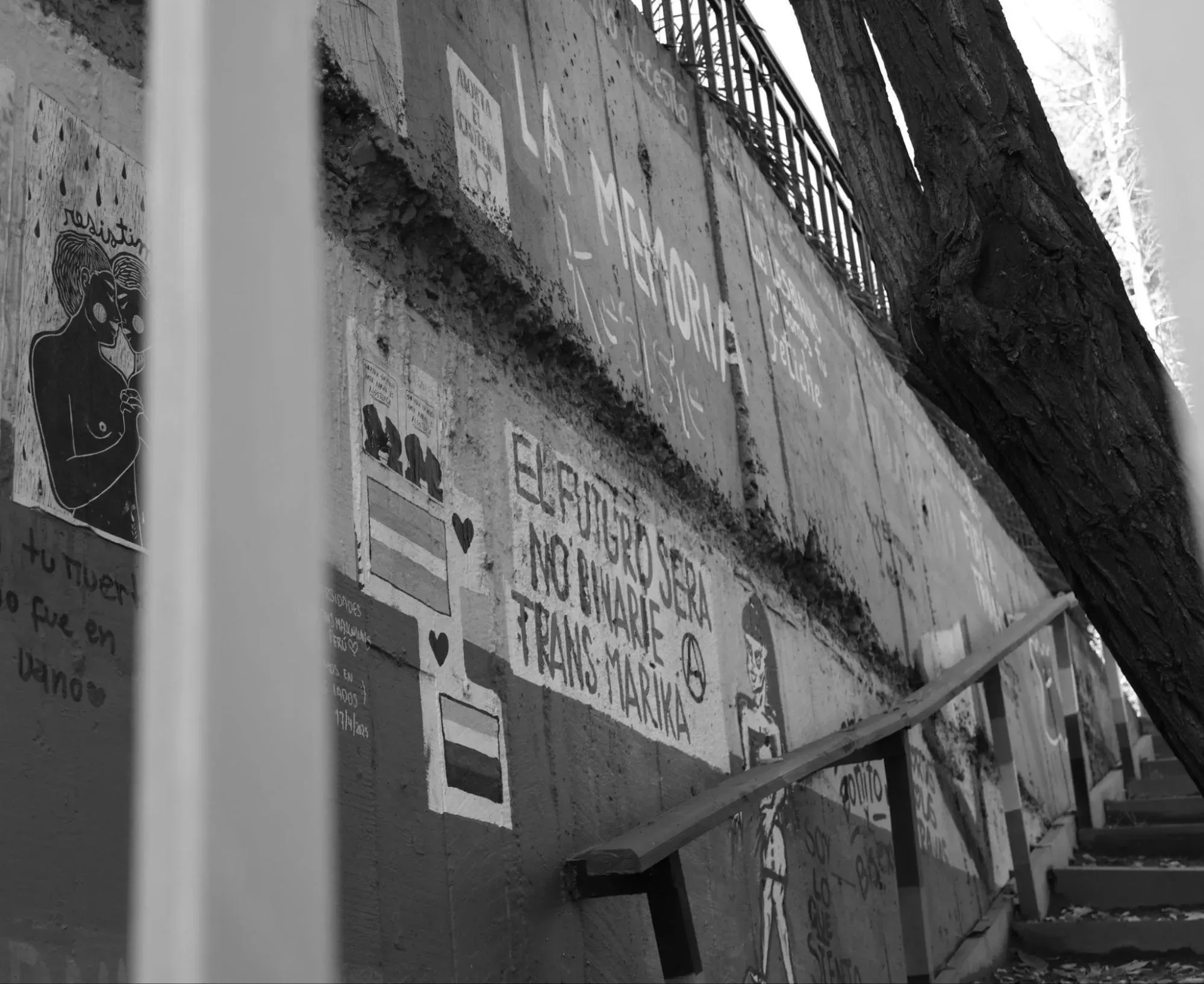
Previous generations of activists have left a lasting impact that continues to shape contemporary efforts. One clear example is street art and murals. As Gutiérrez notes, “there's a certain muralism that's more of a leftist tradition…in the Estallido, it was very impressive." Today, Santiago’s neighborhoods remain filled with these striking political murals and graffiti, which not only serve as reminders of earlier struggles but also spark dialogue, inspire new creative expression, and motivate citizens to continue pushing for change.
Broader national data underscores both the challenges and enduring potential of grassroots engagement. While 50% of Chileans now view the Estallido as bad or very bad for the country, 13% still identify the “possibility of mobilization” as a key lesson, reflecting a persistent desire for citizen-driven change beneath the surface. This duality illustrates the delicate balance that contemporary youth activism must strike: remaining responsive to political realities while nurturing long-term, tangible objectives.
Despite setbacks, the spirit of the Estallido persists, not in bursts of revolutionary fervor but in measured, strategic, and inclusive forms of engagement. Even as large-scale protests have declined, young people are finding new ways to get involved—through culture, online platforms, and smaller networks—reshaping how they organize amidst broader divisiveness and disillusionment.
The sustainability of these efforts hinges on their ability to bridge cultural and class divides, adapt tactics to contemporary constraints, and maintain focus on concrete goals, from environmental justice to education and health. Juan José Martin captures this ethos, claiming, “[It] is still what bonds us, between people and organizations, and through cultures and ages.”