Story
 September 12, 2025
Lesotho HIV Patient Urges President Trump To Stop Politicising HIV
Country:


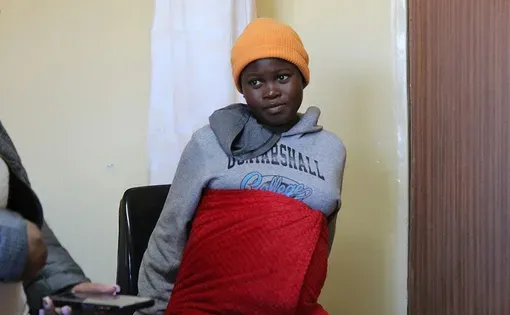
The economic and human costs that result from the U.S. decision to slash foreign aid to Lesotho.
The Pulitzer Center's support for this reporting was made possible through the Stavros Niarchos Foundation (SNF).
When Kananelo Khalla, who has lived with HIV since birth, held his new-born son for the first time, a wave of relief washed over him – his son was HIV-negative. Khalla’s journey with HIV has been marked by loss: two siblings, infected at birth, and his father – all HIV-positive – died from Aids-related illnesses more than two decades ago.
But, for Khalla and his immediate family, the cycle of HIV ended with him. When he began planning for a family, he ensured his viral load was undetectable, protecting both his partner and his child from the virus.
“I disclosed my status to her,” Khalla began to explain, adding “after each check-up, I explained everything to her, my viral load was undetectable, so we protected ourselves properly.”

As a nonprofit journalism organization, we depend on your support to fund more than 170 reporting projects every year on critical global and local issues. Donate any amount today to become a Pulitzer Center Champion and receive exclusive benefits!
He explained that when his partner became pregnant, she immediately started her antenatal care. As part of this, she was tested for HIV – a mandatory medical procedure introduced in Lesotho and across the globe in the early 2000s to prevent the transmission of HIV from mother to child.
“Today, we have Prevention of Mother-To-Child Transmission (PMTCT) programme. It’s easier now to protect children from HIV infection,” Khalla told Public Eye.
Looking back, Khalla reflected on how different things were in his own childhood. “The health services were different back then.”
“Parents weren’t taking proper steps to protect their children. So, I kept getting sick until I was tested at Baylor in 2007, and it was revealed that I had been living with HIV,” he said, remembering how easily the virus could pass from mother to child, as it happened with him and his two late siblings.
On August 5, 2025, Lesotho’s Ministry of Health convened a meeting in Maseru to disseminate the Strategic Plan for the Triple Elimination of HIV, Syphilis, and Hepatitis B. The Ministry’s PMTCT Programme Manager, Mangose Sithole, noted that in 2013 and 2017, Lesotho made it mandatory for all HIV-positive pregnant and breastfeeding women to begin lifelong antiretroviral treatment immediately after diagnosis – a major step toward eliminating paediatric HIV.
Seven years after the 2017 policy shift, 94 out of every 100 HIV-positive pregnant women in Lesotho were receiving ARVs. “We are at 94 percent with our pregnant women, which means we still need to work even harder,” said ‘Masebeo Koto from the Ministry of Health during the August 5, 2025, meeting.
Koto added: “We can see that because of the PMTCT program, we are now seeing the infections going down because of the programme.”

When Khalla’s child was born in 2019, he became one of the quiet beneficiaries of the PMTCT programme. His mother was not HIV-positive, but routine testing every three months during pregnancy was mandatory – a policy that gave Khalla peace of mind and the reassurance that his son would be protected.
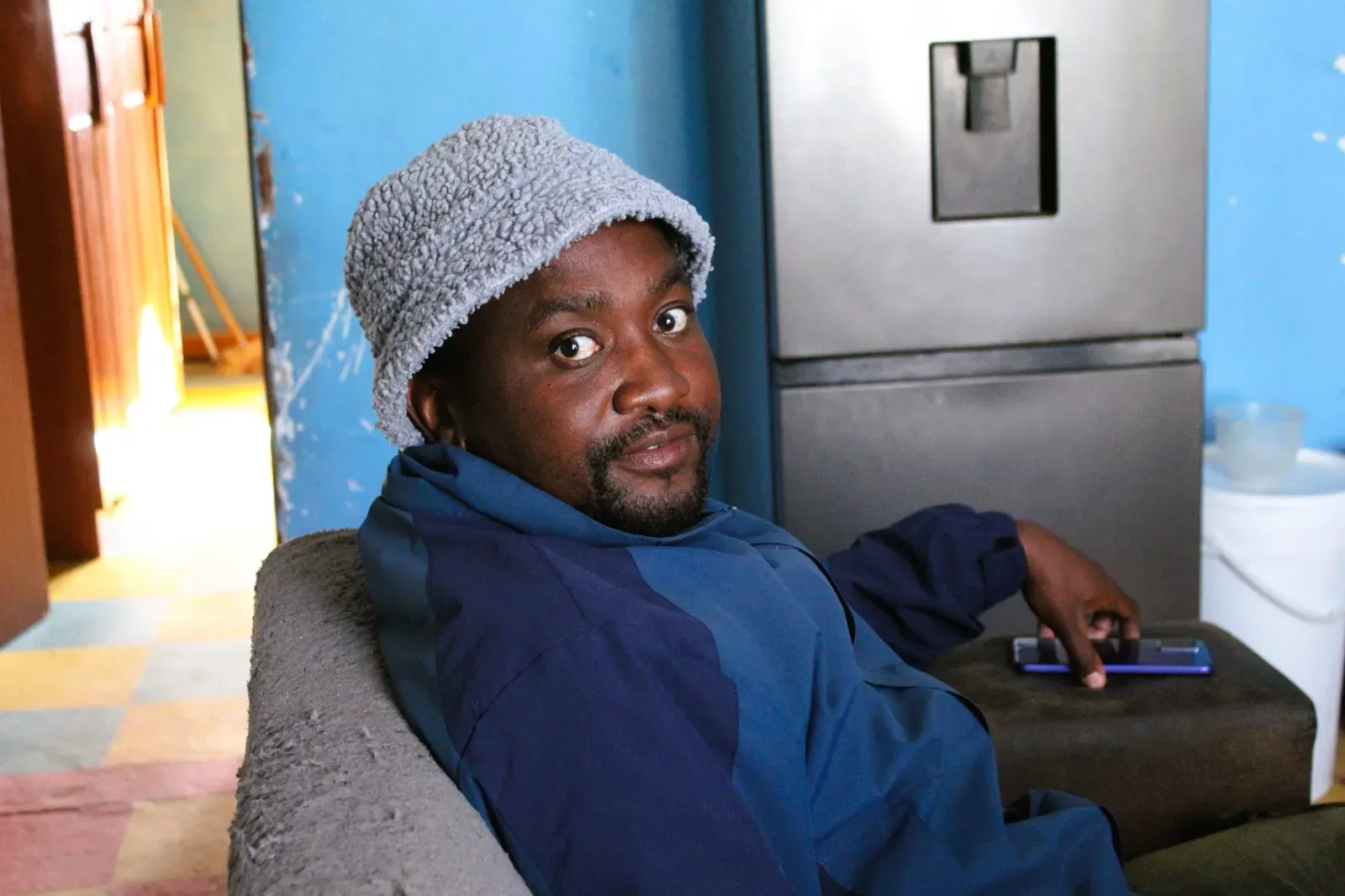
A closer look at two generations of Khalla men
This is because Khalla remembers the scars of growing up HIV-positive as if it were yesterday. In July 2025, he reflected on his childhood: “The journey wasn’t easy.”
“I faced stigma from other children. My cheeks would bruise, and I didn’t have the energy to play. I was teased a lot. As a child, I didn’t understand the care I needed, and I couldn’t even explain what was wrong,” he said.
The father of one recalled how frequent illnesses – lumps, rashes from sunburn, and bouts of diarrhoea – kept him out of school for long periods.
“I kept getting sick until I tested HIV-positive at Baylor Clinic in 2007. When I first began treatment, I was treated for both TB and HIV, a co-infection,” he said, his calm voice at odds with the pain reflected in his eyes.
He added: “But when I started attending sessions at Baylor and met other children living with HIV, I started understanding my condition. We were taught how to take care of ourselves. Still, it wasn’t easy, I had to skip school often to take TB treatment.”
Khalla’s challenges were compounded by his mother’s struggles as a street vendor, who sometimes could not raise the M7 (about $0.40) needed for his daily transport to the Domicilliary Health Centre, where he took TB medication for six months.

“Sometimes she couldn’t afford transport, and I walked. Some organisations chipped in when needed. It was tough. Organisations visited me at school and home, and other children wondered why. I made up stories, saying I was an orphan receiving help,” he explained.
“It makes me proud that my child is HIV-free,” he finally said, his voice soft with emotion.
“It shows that HIV can stop with me – it doesn’t have to be passed down to future generations.”
He reflected further, a hint of his own childhood struggle in his words: “Between my son and me, the difference is huge. I used to visit clinics three to five times a month. He only needs to go once every few months.”

‘HIV should not be politicised’
He then directed his words to US President Donald Trump regarding the January 2025 cuts to foreign aid.
“HIV should not be politicised. We were close to ending it. I would ask him to reconsider and restore funding for a future free of HIV,” Khalla said.
Khalla’s words underscore just how vital US support has been in the fight against HIV – a lifeline that has saved countless lives in Lesotho and beyond. According to the US Foreign Assistance website, Lesotho received a total of $115 447 721 in US funding between 2001 and 2025, with HIV/Aids among the top-funded sectors at $73.61 million.
This information is based on data accessed by this journalist on September 9, 2025, with the website indicating it was last updated on August 22, 2025.
Yet this crucial support faced a sudden threat. In January 2025, US President Donald Trump signed an executive order cutting foreign aid to countries including Lesotho. On September 5, 2025, US Embassy in Maseru reported that the $6 million initial funding provided in July 2025 will continue supporting lifesaving HIV care and treatment services in the four districts of Maseru, Mohale’s Hoek, Mafeteng and Thaba-Tseka – leaving six other districts, including Mokhotlong, Botha-Bothe, Leribe, Berea, Quthing and Qacha’s Nek, without the same level of support.
Meanwhile, a study published in April 2025 noted that USAID’s relief budget accounts for 43 percent of global humanitarian financing.
“Its unexpected reduction represents serious implications for the global health sector, threatening lives of millions, like those in Tanzania, eSwatini, and Lesotho, where the USAID provided HIV treatment and support to more than 350 000 people (Global Health Council, 2025). Without USAID assistance, these people are defenceless against HIV,” read the report published by Society for Science and Education.
At 30, Khalla knows all too well the human toll of the aid cuts on people living with and without HIV in Lesotho. This is because he is not only HIV-positive himself but also served as a Youth Ambassador for the Elizabeth Glaser Paediatric Aids Foundation (EGPAF) in Lesotho – from 2017 until the foreign aid cuts in March 2025 ended his role.
“I supported young people because I understood their struggles. I helped them stay on treatment and believe in themselves,” Khalla said, expressing fear that without support, adherence to medication among youth will decline.
“Infections will rise,” he warned, recalling from his own experience living with HIV that without proper support, young people often struggle to adhere to treatment, causing their viral loads to soar.
He fears that without solid HIV/Aids funding from countries like the US, there are risks that HIV will become generational again.
“Without psychosocial, emotional, and spiritual support, people may default and co-infections will rise. Treatment access will drop.”