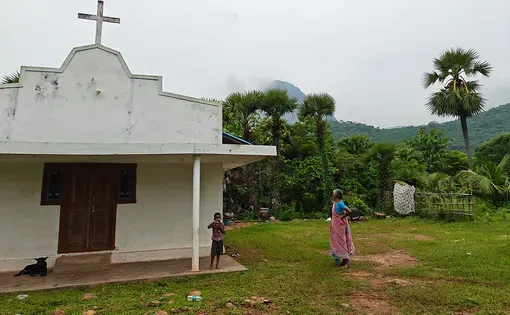
The already complex governance of land systems in India is now threatened by digitalization and...
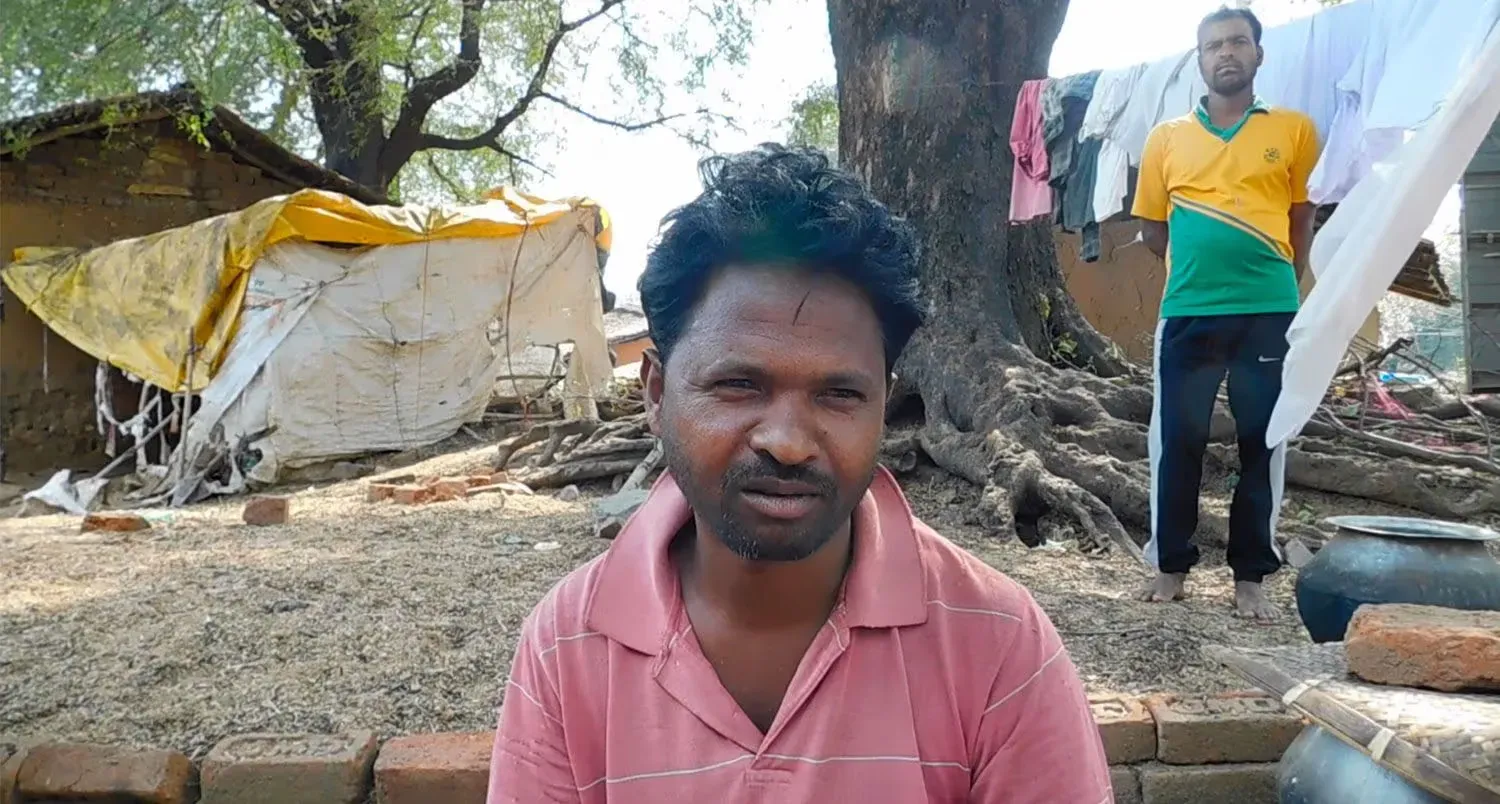
For Jharkhand’s Adivasis, the digitisation of land records is a new front of struggle. As ancestral holdings are shifted online — without consent or notification — families find their holdings mysteriously reduced, boundaries redrawn, and the fight to seek rectifications punishing
In the eastern Indian state of Jharkhand, Basingh Munda stands in a field ringed by commemorative plaques honouring his ancestors. Generations ago, those forefathers joined the 1899 Munda uprising led by revered tribal leader Birsa Munda against colonial rulers’ alienation of indigenous people.
Over a century later, Adivasi farmers like Basingh, in his forties and belonging to the Munda tribe, face a new form of dispossession. Over the past eight years, the government has digitised their land records, without their consent and without notifying them. In the process, hundreds of farmers have found their land holdings suddenly shrinking in official documents, their boundaries shifting, and ownership quietly slipping away.
It is April, and spring flowers bloom all along the road to Daragama in Khunti district, 33 kilometres from state capital Ranchi. Just days after the Sarhul festival, an indigenous celebration of nature, the local market is bustling with activity.

As a nonprofit journalism organization, we depend on your support to fund more than 170 reporting projects every year on critical global and local issues. Donate any amount today to become a Pulitzer Center Champion and receive exclusive benefits!
In a clearing outside their homes, Basingh and several others gather in the shade of palash (flame of the forest) and peepul trees, chatting in Mundari, their language.
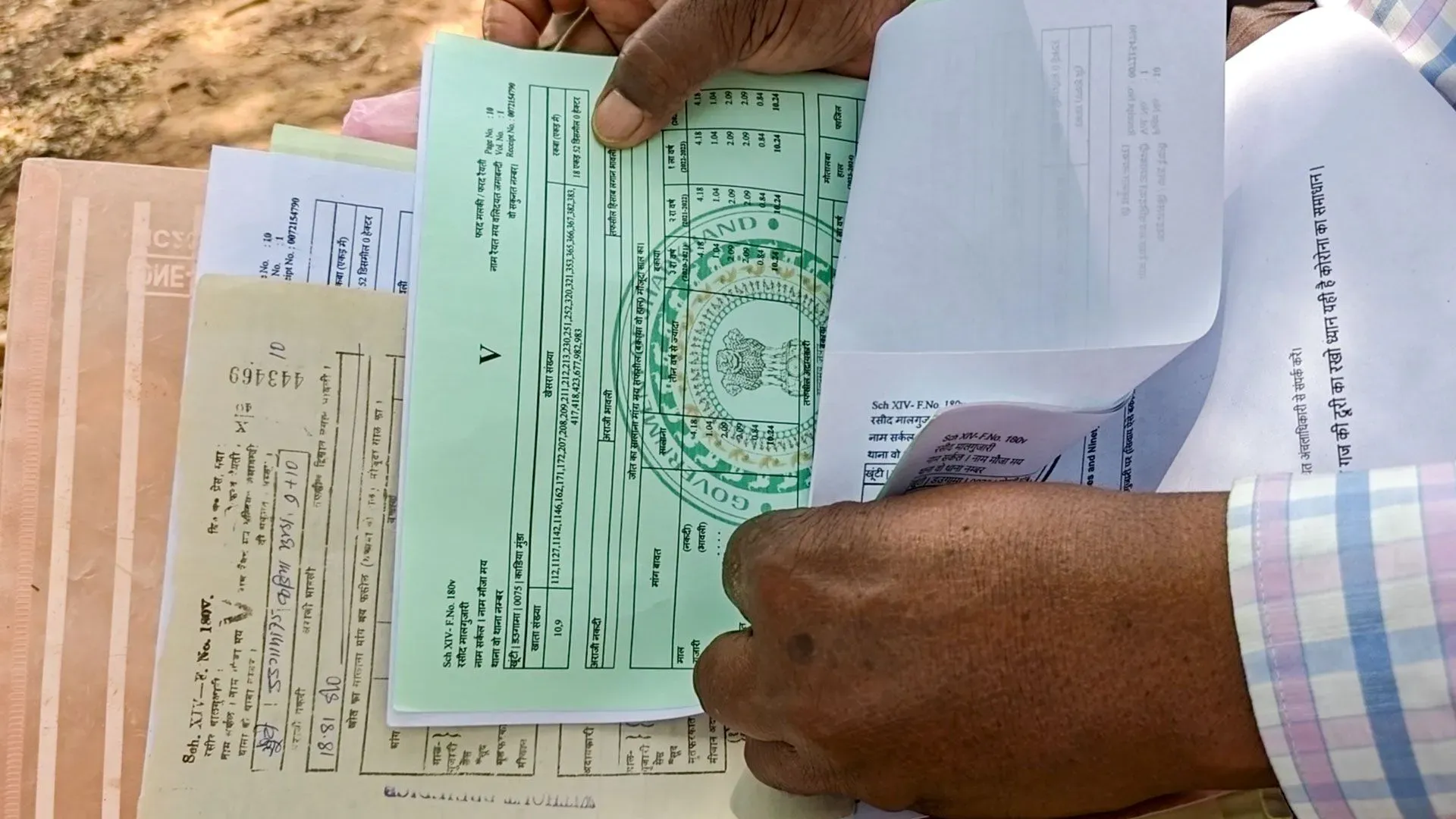
In 2023, Basingh received an online tax receipt from the land and revenue department office in Khunti, located 20 kilometres away. The land owned by Basingh and his brothers, on which the family grows paddy and millets, was recorded incorrectly in the receipt as 52 acres and 5 dismil, instead of 52 acres and 52 dismil.
A dismil is a land measurement unit common in central and eastern India, equivalent to 435.6 square feet, or one hundredth of an acre, the word itself coming from ‘decimal.’ One dismil is thus the size of an average one-bedroom apartment in Mumbai, and Basingh’s land holding shrunk in official records, overnight and without warning, by 47 dismil.
Basingh was not alone.
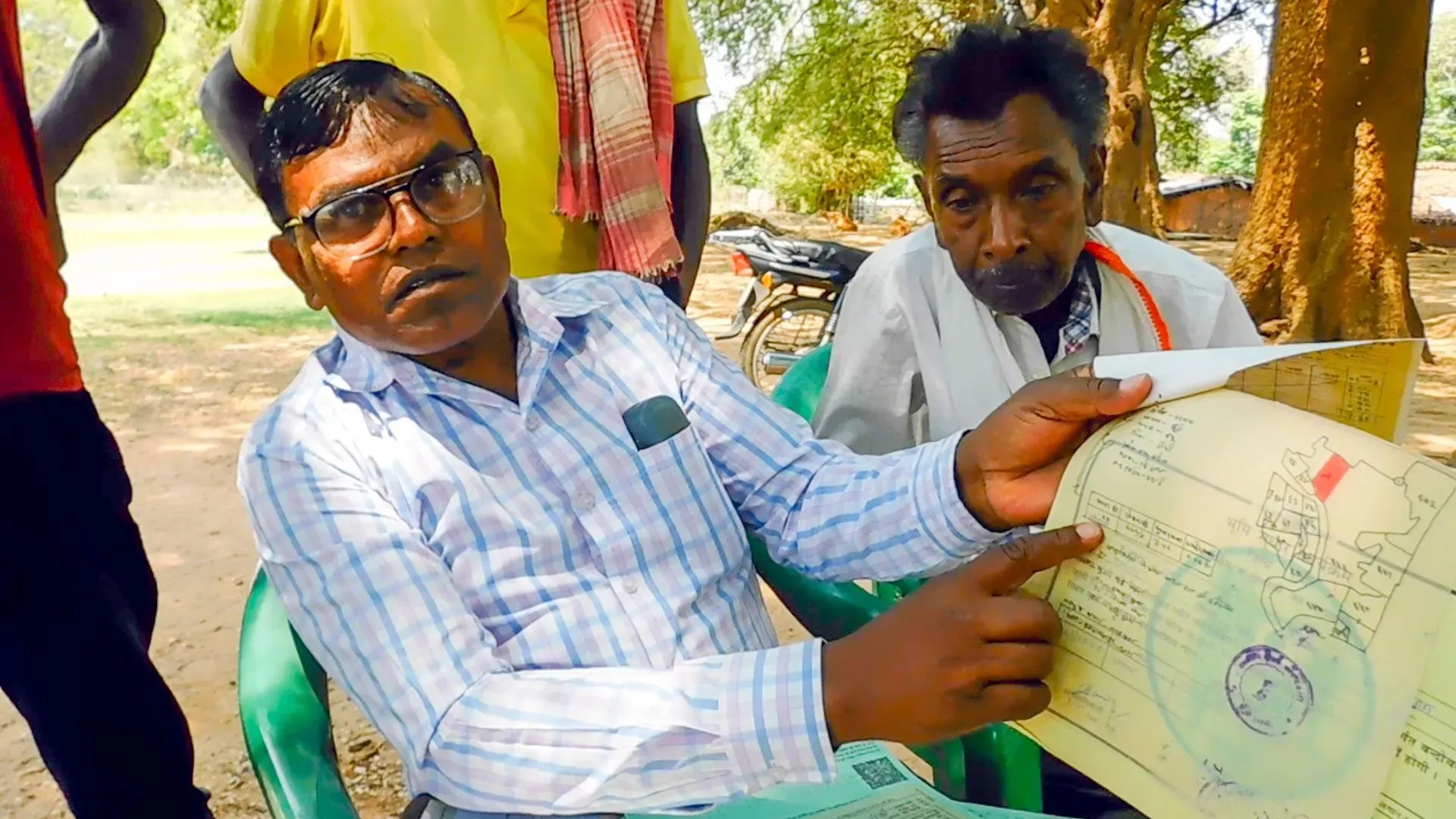
“There were many manipulations in the land records. Before digitisation, the rakba [acreage] of our khata [tracts of land collectively owned by one group] was different. In recent online records and receipts, some plots have been removed, and the rakba has been reduced,” Basingh says. Not notified when their land records are digitised, landowners often catch mistakes inadvertently, he adds.
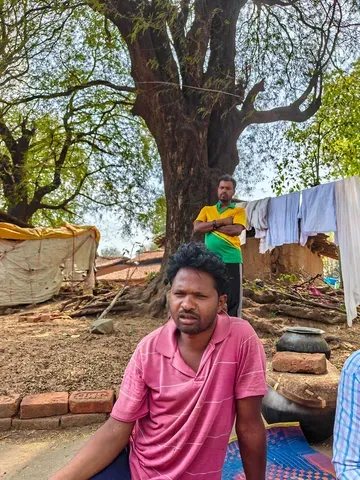
Lali Devi, a tribal farmer in her late thirties who leased farm land in Tatha village in Barwadih block in Latehar district in 2017, had fenced it and installed an irrigation pump and valve. In 2023, however, she stopped farming on the plot after being assaulted, her clothes torn in public — the attack followed months of being threatened to vacate the land. A third person had managed to register the land in their name when records were digitised, she says. “This land broker who belongs to the Baniya community threatened me for months to vacate the land. The land wasn’t theirs, so how could they ask me to leave?” she asks.
According to Devi, she was beaten up in August 2023 to dissuade her from farming on the land. She lost possession of the land and also her equipment. “Because of digitisation, many poor people have lost their lands. A lot of cases of land forgery have taken place here,” she says.
Digitised land records were intended to deliver conclusive land titles across India. They now also guide eligibility — and exclusion — from welfare schemes; they are integrated with tree cover mapping or recording land use changes through GIS; and will soon be used to create models for precision farming, weather forecasting, soil analysis, etc. Digitised land data is thus key to decision-making in several sectors, including real estate, mining and climate. However, the foundational step — the creation of a smart registry — is marked by a disconnect with ground reality, shows the experience of Jharkhand, a state where indigenous people comprise nearly a third of the population.
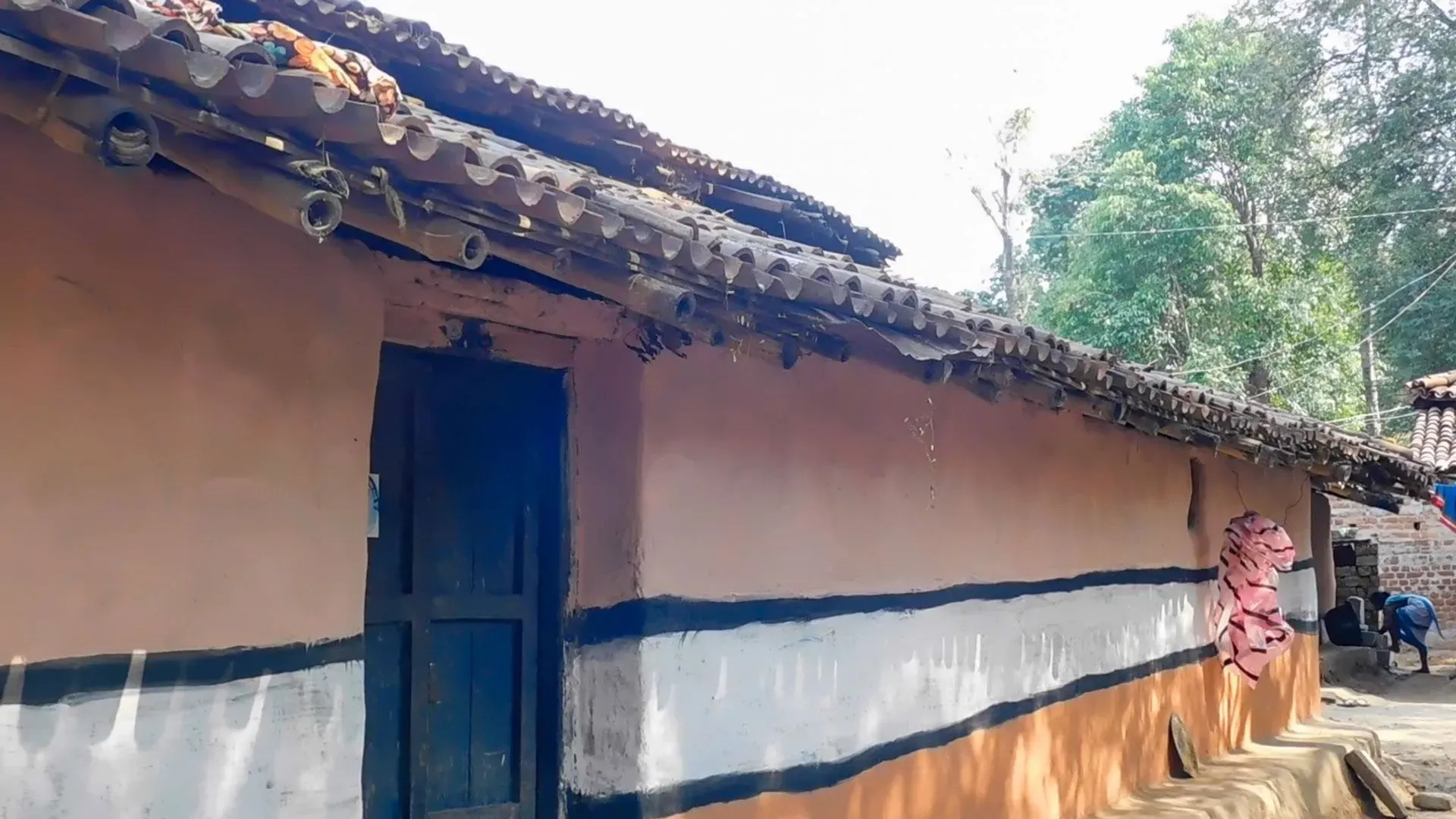
Daragama village has a population of around 500 people, mostly belonging to the Munda and Oraon tribes. The region is surrounded by ancient geological rock formations, and is also known for lac or natural resin made by insects (Kerria lacca).
In Daragama, most records bear the names of land owners’ deceased forefathers.
Activist Kalyan Nag, a parasocial worker from nearby Katud village, runs the local public distribution system (PDS) shop with his wife. “I’m a first-generation learner who often didn’t have money to buy a belt or a kurta,” says Nag, who has often had to supplement his income by doing day jobs as a gardener, shop-keeping assistant, etc.
On hard copies of digitised records, Nag points out examples where the original area held by villagers, with documents to prove their ownership, has officially been reduced. For instance, in Halka No. 5, Thana No. 75, Khata No. 27, the owner’s land shrank by 47 dismil; in Khata No. 26 by 18 dismil; and in Khata No. 9 by 29 dismil.
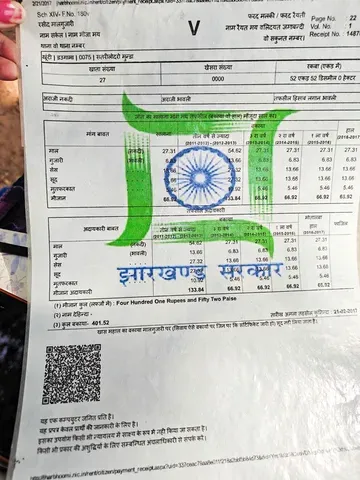
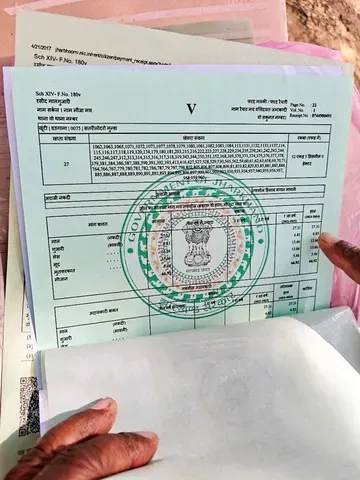
Basingh’s land records continue to be in the name of his late great grandfather. “This too has been a source of contention, where the authorities have not clearly identified whose land it is,” he says.
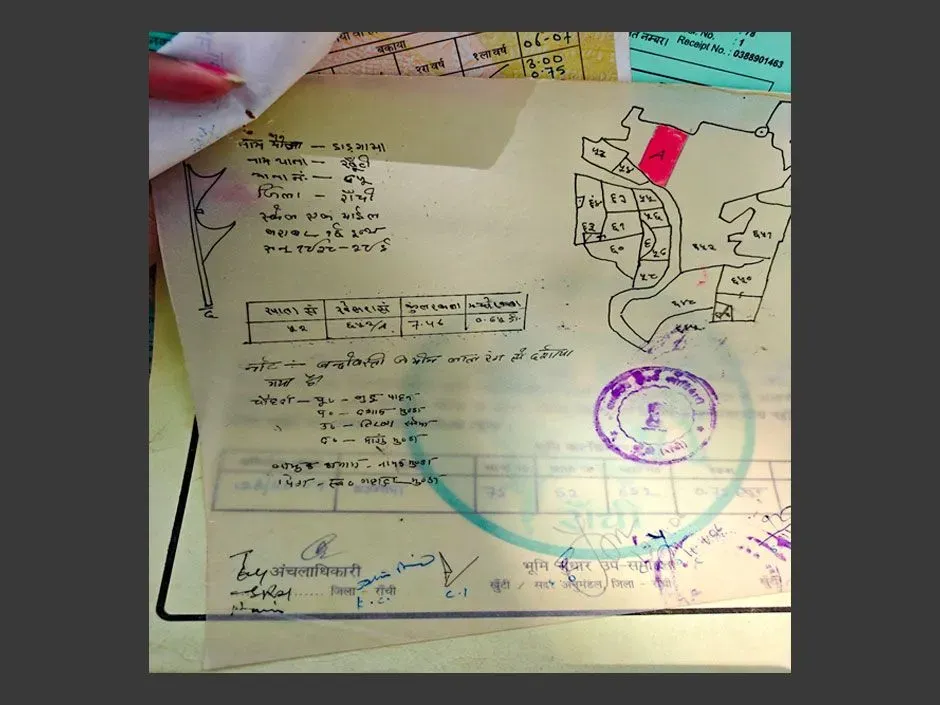
Until about six years ago, revenue department officials drew family trees indicating a clear lineage of land-owners, a document available in government offices and courts. “Now it is no longer possible to get these documents,” says Nag, who has worked on the issue for a decade.
In 2017, a social worker taught Basingh how to fill and submit online applications for government schemes, but most other residents of Daragama don’t know how to log into the revenue department’s land records websites to verify if lands in their possession are correctly recorded.
About 250 kilometres away, in Garhwa district, tribal affairs researcher and activist Manickchand Korwa has strikingly similar observations.
A resident of Kusumati village, Korwa says, “Our entire [Korwa] community is at risk of being displaced because of the fraudulent and incorrect transfer of lands to Pandits [a title used by several Brahmin sub-castes in Jharkhand] and people of other castes.” The Korwas, whose traditional lifestyle is closely associated with nature, are listed as a particularly vulnerable tribal group (PVTG) in Jharkhand.
According to him, Adivasi families have lost, in official records and due to digitisation, about 100 acres of tribal land. “Resourceful people and politicians know that a tribal will not travel to Patna to get the original copy of the land records.” Patna is the capital of the neighbouring state of Bihar, where record rooms were originally maintained before the state of Jharkhand was carved out in 2000.
Manickchand Korwa has also investigated several other cases of ownership changes, including some dating back to 2019, in which he has periodically submitted complaints in 2021, 2022 and 2025 seeking rectification of records.
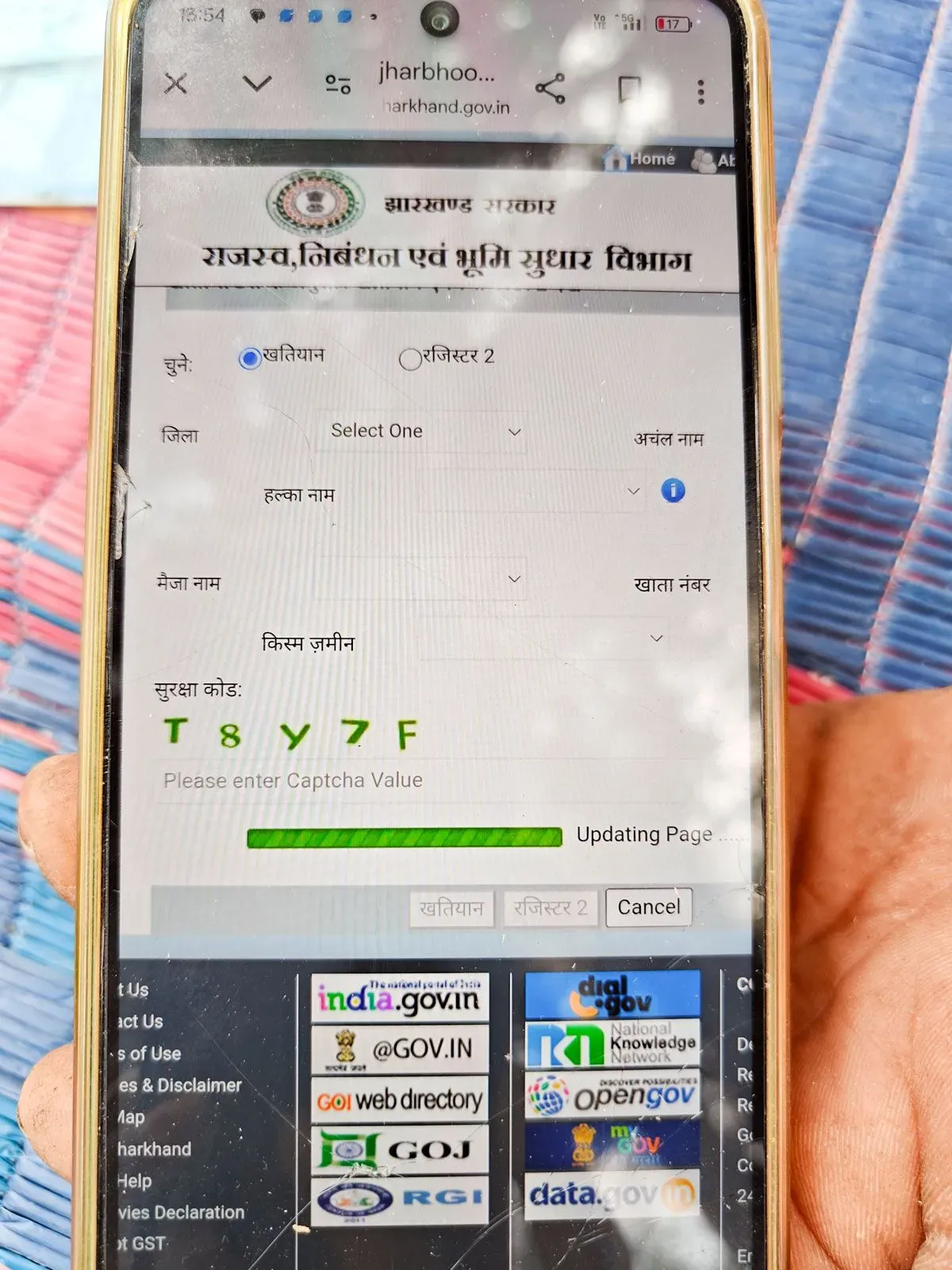
The Indian government began digitising land records in 2016 under the Digital India Land Records Modernisation Programme (DILRMP). In 2024, addressing Parliament’s budget session Prime Minister Narendra Modi even made a mention of the DILRMP, which received a budgetary allocation of Rs. 141 crores for 2024-25.
The project’s stated objectives, according to its official website, included “improving real time information on land… optimizing use of land resources… reducing land disputes,” and more. Artificial intelligence and machine learning models would help achieve these objectives, the government said. “Deep learning pretrained models can be used to extract features from raw data, such as detecting trees, digitizing building footprints, or generating land-cover maps,” the blog on the Government of India website states.
On the ground, however, Jharkhand’s experience reveals a starkly different reality, with Adivasi communities bearing the brunt.
“We suspect that the government started the online process with a certain [ill] motivation,” says Basingh. Members from multiple villages in the Sanyukt Gram Sabha Samiti (joint village council) in Khunti have raised the issue of shrinking plot sizes and inexplicably reduced rakba, he says.
Jharkhand had three kinds of land records — Khatiyan 1 (details of plots, owners’ lineage, tenancies, other landholders such as Mundari khuntkattidars or Mundas with customary rights over former forest lands); Khatiyan 2 (communitarian rights, right to cut trees, grazing rights, rights over forest produce such as mahua), and a third category that includes cadastral maps and village notes.
A survey by Save The Khatiyan, a group of activists, lawyers and researchers, found that most online processes had skipped the village notes section, which includes information on village area, cultivable area, irrigated area, socio-economic organisation, information on pending land disputes in the village, etc.

There were other grave errors.
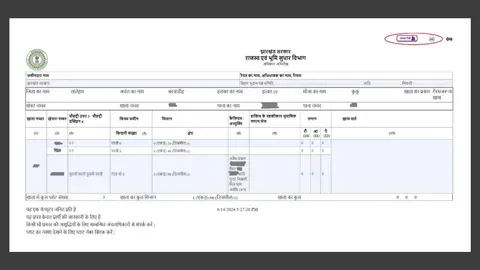
Surveys by Save the Khatiyan and others under the leadership of activists such as Dayamani Barla and Jharkhand lawyer Rashmi Katyayan revealed cases where tenure holders’ names, Khewat numbers (unique numbers assigned by revenue department officials) and plot numbers were missing or incorrectly entered. Sometimes the plot number was marked as 0, or bore someone else’s name. “This is a crucial mistake because in the case of disputes, the courts will take the printout of the (tax) receipts as final evidence of which plot belongs to someone,” said the report by Save The Khatiyan.
A 2020 state government circular noted that all records had been moved online, but acknowledged the errors in the process. In areas where the hereditary clan leadership system with the titles of Munda, Manki and Pradhan holds sway, land taxes were therefore collected manually and deposited to the circle officer instead of through an online system.
Another circular noted the problems in digitisation where settlement records were issued before 1 January 1946, one year before independence.
Correcting these erroneous records is an uphill task. Villagers may have to skip a day of work on the farm or in the forest to submit the applications. Daragama, for example, is 20 km away from the revenue office in Khunti, and villagers have to travel in shared rickshaws called vikrams, with the last mile covered on foot or riding pillion with a passing motorcyclist. Often, more than one visit is needed. Elina Horo, a tribal activist who lives in Ranchi, says tribals sometimes spend as much as Rs. 60,000 - Rs. 70,000 to rectify errors.
Flora Nag, a resident of Katud village and Kalyan Nag’s partner, says many women aren’t aware of the digitisation of land records. Land records traditionally listed men as owners, and these then passed on to male ascendants. “This hasn’t been rectified; the digitisation process has not taken that into account,” she says.
Basingh and his two brothers’ families grow rice, grains, madua (ragi), urad (black gram), dalhanandtelhan (oilseeds). In the Rabi or winter crop season, they grow tomatoes, potatoes, peas and radish. An industrious farmer, Basingh is also a bee-keeper, and sells honey in the local market, something he also did as a school-boy, to earn his school fees.
In January 2025, Basingh was shocked to see that the status of his land had not changed despite several requests in 2023 and 2024 when he visited the office and submitted his documents. “Earlier, local officials would periodically visit villages, discuss conflicts and competing claims with villagers and accordingly update the records,” says Nag. “That was the way to do it.”
Villagers also worry over the security of their newly digitised data. Physical records were hard to access — a stranger seeking them would raise suspicions. “With digitisation, anyone can see the exact details, including the location of drains, roads, rivers, houses, etc.,” says Nag.
The lack of safeguards for accessing information online has led to conflicts too. Rashmi Katyayan, a senior lawyer and consultant to the departments of land and revenue in Jharkhand, says, “There have been conflicts within families after the name of one member has been changed. Fraudsters have also targeted women when they have come to know that a plot of land belongs to them.” In one incident he describes, fraudsters tried to change land records of plots in Jharkhand by visiting the National Informatics Centre, the nodal agency for land digitisation, in Pune.
In 2023, cadastral and revision maps were stolen from a high security office in Ranchi. “The theft meant that there was nothing to verify the online maps against,” says Katyayan.
According to advocate Mihir Desai, senior counsel at the Bombay High Court, India lacks protections for data. “Registered land documents are seen as public documents and hence they should be available to the public,” he says. “But it is one thing that the nature of the document is public, and another to make all the documents available online.”
Online land records systems can be secured, for instance, by allowing access only to persons with genuine or legal interest.
“Land markets favour those with deep pockets, and digitised records benefit those who can access digital data. The landless poor and tribals are unlikely to benefit from these measures, and could possibly be worse off,” says Namita Wahi, founding director of the Land Rights Initiative, also senior fellow at the Delhi-based think-tank Centre for Policy Research.
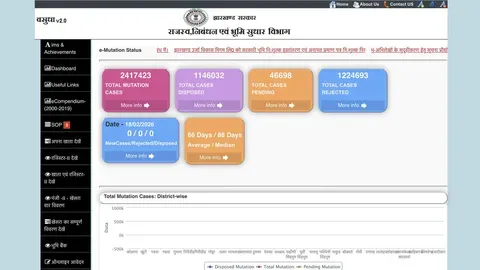
Circle inspector Sukesh Ranjan says there are benefits of land records digitisation, now complete in Khunti district. “You remember earlier how we used to go to the banks to withdraw money? And then how banks were made online? This is the same thing,” he says.
Ranjan acknowledges, however, that there are missing records, and that correction of mistakes continues even eight years after it was initiated. Ranjan couldn’t say when all grievances related to the digitisation process might be resolved.
Digitisation of land records also involves, in the future, linking personal identification data including Aadhaar numbers, India’s unique citizen identification number, bank account details and biometrics to the land data.
In 2015-16, while studying the functioning of India’s workfare programme, the National Rural Employment Guarantee Act, activist James Herenj came across hundreds of cases in Jharkhand where wages were not credited, or workers were denied work. Upon further investigation, filing right to information requests, and after visiting several government offices and banks, he found 17 different reasons due to which people were not receiving their NREGA payments. They were all related to problems with the operation or understanding of technology and online systems.
In 2017, the news of the starvation death of a young girl named Santoshi Kumari in Jharkhand’s Simdega district thrust activists’ fears to the foreground — the girl’s Aadhaar card could not be linked to the PDS, and she had failed to receive the free foodgrain under the scheme. “Before dying, Kumari had kept asking for some rice,” Herenj says.
Aadhaar cards, held by more than 1.1 billion Indians, use fingerprints and iris scans to identify people. With Aadhaar-linkage mandatory for various welfare, pension and employment schemes, poor people with little to no knowledge of technology who may also face internet connectivity challenges are often denied welfare benefits.
“In 2017, the Raghubar Das government digitised land records and advertised this as a great achievement,” says Herenj. “They outsourced the technical know-how to outside agencies. Land issues are extremely complex, and the technology is being developed by graduates from engineering colleges such as IIT Mumbai or Delhi, who have no idea what is happening on the ground. How will outsiders understand the nitty gritties?”
Herenj says at the time, nobody fully understood the possible fallouts of digitising land records, even though an on-ground verification process for better transparency was also missing.
The experience of people in Khunti, says Herenj, is an experiment by the Indian government, which has been otherwise unable to cast aside Jharkhand’s traditional tribal elders, “to exclude tribals.”
Editor: Kavitha Iyer
Photo editor: Binaifer Bharucha
Video editor: Urja