


Project
Shallow Graves
ISIS has been destroyed, but will Iraq’s campaign of revenge help bring about its resurgence?
A September morning in Baghdad. Traffic halted at checkpoints and roadblocks as bureaucrats filed behind blast walls and the temperature climbed to a hundred and fifteen degrees. At the Central Criminal Court, a guard ran his baton along the bars of a small cell holding dozens of terrorism suspects awaiting trial. They were crammed on a wooden bench and on the floor, a sweaty tangle of limbs and dejected expressions. Many were sick or injured—covered in scabies, their joints twisted and their bones cracked. Iraqi prisons have a uniform code—different colors for pretrial suspects, convicts, and those on death row—but several who had not yet seen a judge or a lawyer were already dressed as if they had been sentenced to death.
Down the hall, the aroma of Nescafé and cigarettes filled a windowless room, where defense lawyers sat on couches, balancing stacks of paper on their laps. Most were staring at their phones; others sat in silence, arms crossed, eyes closed. In terrorism cases, lawyers are usually denied access to their clients until the hearing begins.
Shortly after ten o’clock, three judges in long black robes shuffled into Courtroom 2 and sat at the bench. Suhail Abdullah Sahar, a bald, middle-aged man with a thin, jowly face, sat in the center. There were twenty-one cases on his docket that day, sixteen related to terrorism. He quietly read out a name; a security officer shouted it down the hall to one of his colleagues, who shouted it to the guard, who shouted it into the cell. Out came a young man named Ahmed. A security officer led him to a wooden cage in the middle of the courtroom. Judge Sahar accused him of having joined ISIS in Qayyarah, a small town south of Mosul.
“Sir, I swear, I have never been to Qayyarah,” Ahmed said.
Sahar was skeptical. “I have a written confession here, with your thumbprint on it,” he said.
“Sir, I swear, I gave my thumbprint on a blank paper,” Ahmed replied. “And I was tortured by the security services.” Sahar listed Ahmed’s supposed jihadi associates; Ahmed denied knowing any of them.
“Enough evidence,” the prosecutor said. “I ask for a guilty verdict.”
Ahmed had no lawyer, and so Sahar called upon an elderly state attorney named Hussein, who was seated in the gallery, to spontaneously craft a defense. Hussein walked over to a lectern, repeated from memory what Ahmed had said, and, without requesting his release, concluded with a plea for “mercy in his sentencing.”
Ahmed wept as he was led out of the room. His trial had lasted four and a half minutes.
Watch “The Backstory”: Ben Taub on the future of Iraq, following the Islamic State’s defeat in Mosul.
The next suspect insisted that he had been arrested by mistake—that his name was similar to that of someone in ISIS. A private defense lawyer explained that his client had confessed to ISIS affiliation under torture—he had a medical examination to prove it—but none of the judges appeared to be listening. As the lawyer spoke, they cracked jokes, signed documents, and beckoned their assistants to collect folders from the bench. Sahar yawned. The trial lasted eight minutes.
The third suspect was a twenty-three-year-old from a village near Mosul, charged with ISIS affiliation and arrested while in a displaced-persons camp.
“When did you join ISIS?” Sahar asked.
“I didn’t join,” the suspect replied.
“Then why did you thumbprint this confession?”
“They blindfolded me and made me do it.”
“Enough evidence—I ask for a guilty verdict,” the prosecutor said.
The suspect’s defense lawyer carefully explained that regional intelligence reports showed that the suspect had been mistaken for someone with a similar name. In terrorism trials, the mere presence of a private defense lawyer can signal the suspect’s likely innocence; most lawyers refuse to take on ambiguous cases, out of fear that the security services will harass them for perceived links to the Islamic State. (Last year, Iraqi courts issued arrest warrants for at least fifteen defense lawyers and charged them with ISIS affiliation.) But, as the lawyer spoke, the judges tended to administrative tasks. The trial was over in nine minutes. “I hate ISIS—they blew up my house!” the suspect shouted, in tears, as he was led out of court.
By noon, Sahar had presided over ten trials, involving twenty suspects. The courtroom lost power twice, but Sahar kept going in the dark, skimming documents by the light of his cell phone. The final case before lunch involved three defendants, all badly injured. As they limped into the courtroom, a security officer put three plastic chairs in the cage. The last suspect to appear was a bald, bespectacled man in his mid-thirties, named Louai; he was hunched over a pair of short wooden crutches, and moved as if one of his legs were paralyzed and his vertebrae were no longer aligned. Courtroom 2 was silent, except for the sounds of him struggling toward the cage.
Sahar questioned the other suspects first. One, named Haidar, who wore a back brace, said that he had been mistakenly arrested for a car-bomb attack, in 2014, and that in the course of an interrogation, to make the torture stop, he had started naming random people, including Louai. Judge Sahar then called upon Louai, who rose from his chair and gripped the cage to support himself. “I went to sell my car in the market,” he said. “Then Haidar called me, and I was ambushed, arrested.” He spoke in an urgent, high-pitched tone, but he stuttered and slurred his words; during interrogations, he said, officers had beaten him so badly that he suffered a blood clot in his brain. “They also broke my back!” he shouted. “They broke my feet and hands! I can barely walk!”
“Enough evidence—I ask for a guilty verdict,” the prosecutor said. It was the only phrase she uttered in court that morning.
Haidar’s lawyer noted that there was no witness and no material evidence, and that his request for a medical examination, to prove that Haidar had been tortured, had been rejected. Louai’s lawyer explained that Louai’s confession had been coerced and made no sense: he had said that he remotely detonated the car bomb, when, in fact, the police had concluded that it was a suicide attack.
Louai had spent four years in pretrial detention, and, during the two or three minutes allotted to his defense, the judges had been talking among themselves. “I haven’t seen a judge until now!” he shouted.
“Take them out,” Sahar said. A security officer opened the cage. It took Louai nearly two minutes to limp to the door. Sahar took a lunch break, then ordered his execution.
The Islamic State has been mostly destroyed on the battlefield, but the war is far from over. Air strikes cannot kill an idea, and so it has fallen to Iraq’s fractured security, intelligence, and justice systems to try to finish the task. But, insofar as there is a strategy, it seems almost perfectly crafted to bring about the opposite of its intent. American and Iraqi military officials spent years planning the campaign to rid Iraq of ISIS, as if the absence of the jihadis would automatically lead Iraq toward the bright democratic future that George W. Bush’s Administration had envisaged when U.S. forces invaded the country, in 2003. But ISIS has always derived much of its dangerous appeal from the corruption and cruelty of the Iraqi state.
For three years, the Islamic State controlled half of Syria and a third of Iraq, a swath of territory approximately the size of Great Britain, which included millions of people. Several members of its senior leadership had been high-level military and intelligence officers in Saddam Hussein’s Baathist regime; they combined the structural prowess of a police state with the cosmic certainty of radical jihadism. The group blew up mosques and ancient archeological sites, and pursued a campaign of ethnic cleansing through mass murder and sexual slavery. It conscripted local bureaucrats, doctors, and teachers, often on pain of death, and devoted enormous effort to radicalizing a generation of children and inuring them to violence, suffering, and loss. At the height of its success, in 2014, there was a real possibility that ISIS would capture Baghdad, and the Iraqi state would collapse. Now, more than a year after ISIS lost Mosul—its largest source of legitimacy, wealth, and power—hundreds of thousands of civilians are suffering at the hands of their liberators. Anyone with a perceived connection to ISIS, however tenuous or unclear, is being killed or cast out of society.
Not long ago, I met with a senior Iraqi intelligence official who is deeply involved in counterterrorism operations. For three hours, over tea and cigarettes, he described systematic criminality within the security forces, detailing patterns of battlefield executions, murders in detention centers, and coverups organized by the state. He spoke as a witness, but also as a participant; although he is in a position to have stopped certain abuses, by intervening he would have risked incurring accusations that he is sympathetic to the group he has sought to destroy.
He believes that the Iraqi government’s response is as much a tactical blunder as it is a moral one; it plays directly into the jihadis’ narrative—that Sunnis, who make up a minority of the Iraqi population, cannot live safely under a government dominated by Shiites. “The reaction is one of vengeance—it is not well thought out,” he told me. “We rarely abide by the law.”
Thousands of men and boys have been convicted of ISIS affiliation, and hundreds have been hanged. But, according to the senior intelligence official, these cases represent only a small fraction of the total number of detainees. “A few of the suspects are sent to court, but only to maintain the illusion that we have a justice system,” he said.
Suspects are tried under a law that makes no distinction between a person who “assists terrorists” and one who commits violent crimes on behalf of an extremist group. The conviction rate is around ninety-eight per cent. Family members of the accused rarely show up to watch the hearings, out of fear that they will be detained, too. It’s not uncommon for relatives to be rounded up by the security forces and sent to remote desert camps, where they are denied food, medical services, and access to documents. “We’re deleting thousands of families from Iraqi society,” the official told me. “This is not just revenge on ISIS. This is revenge on Sunnis.”
Nine years ago, two C.I.A. officers walked into an Iraqi prison and saw a hallway filled with hooded men, about to be executed for supposed affiliation with Al Qaeda in Iraq, the group that gave birth to ISIS. “We were hammering A.Q.I., but the Iraqi government was just rounding up Sunnis,” one of the C.I.A. officers recalled. “And, for a moment, it worked.” But, instead of releasing the innocents, the Iraqi government sentenced them to death. “So, of course, they came back,” the officer said, of Al Qaeda in Iraq. “What do you expect? You literally killed their dads.”
Iraq is now entering one of the most delicate moments in its recent history. To the extent that ISIS functioned as a state, it was entirely predatory. But, by having lost on the battlefield rather than being toppled by its own depravity, the caliphate lives on as a fantasy of Islamic justice and governance which is measured against the corrupt reality of the Iraqi state. What is at stake, in this post-conflict period, is whether the Iraqi government can win over the segment of the population for whom ISIS seemed a viable alternative.
On an August night in 2011, eight jihadi commanders were sent across the border from Iraq into Syria by their leader, Abu Bakr al-Baghdadi, to infiltrate Syria’s nascent revolution. By late 2012, they had amassed hundreds of followers from dozens of countries, and were running training camps near Aleppo. During the next year, ISIS helped the rebels in key battles against the Syrian regime, but as the group became stronger its strategic focus shifted to the formation of a caliphate.
In June, 2014, a few hundred ISIS fighters stormed back east across the desert, in mud-caked pickup trucks, and captured the Iraqi city of Mosul, essentially by mistake. In the preceding months, ISIS had taken over Ramadi, Falluja, and Samarra. But Mosul, with almost two million residents, was the economic center of northern Iraq. The group’s plan was to take a few neighborhoods on Mosul’s western banks and break into a prison, to swell its ranks. Within a week, some sixty thousand Iraqi soldiers and federal police officers, many of whom were reluctant to die in defense of a Sunni city, had shed their uniforms and run away.
For Mosul’s residents, the announcement of a caliphate from within their city meant that the rest of their lives would be defined by their proximity to ISIS. Some religious minorities, like Christians, could remain in the city, if they paid a religious tax, but Yazidis and Shiites faced enslavement or slaughter. Half a million civilians fled Mosul. The Islamic State found some support, owing to the abuses that Sunnis had suffered at the hands of the Iraqi government. But most citizens were stuck feigning allegiance to survive, despite the certainty that any compromise with the group would eventually taint them if Mosul were freed.
Some residents spent the next three years waiting out the situation—reading, smoking, counting the days until liberation. For others, interaction with the jihadis was not optional. The Islamic State did not dismantle the Iraqi bureaucracy; it appropriated it, and expanded it. There were departments in charge of alms-giving, the distribution of war spoils, hospitals, and the maintenance and health of rivers. Some institutions operated with greater efficiency and less corruption than before. But, for many bureaucrats, continuing in their duties meant participating in a sectarian criminal enterprise. The role of the estate authorities, for example, shifted from settling everyday land disputes to expropriating and redistributing Shiite property and homes.
For months, the Mosul civil defense—the city’s professional firefighters and rescue workers—continued to respond to gas and electrical fires. But soon Iraqi and U.S. forces began conducting sporadic bombing raids, and ISIS informed the rescuers that if they didn’t help retrieve wounded jihadis from the rubble they would be killed.
The Iraqi government stopped paying salaries—“If they paid us, ISIS might take the money,” a young civil-defense worker whom I’ll call Mohammad told me—and so the rescuers risked their lives to save ISIS fighters for free. “Fortunately, coalition planes never hit a civil-defense vehicle,” Mohammad said. But, he recalled, “this started to make problems for us, because ISIS thought we were coöperating with the coalition.” Mohammad fell under particular scrutiny; he speaks near-fluent English, which he learned by watching American films. In 2015, he quit the civil defense and went into hiding. ISIS fighters set fire to his house and his car.
The ground campaign to take back Mosul began in earnest in the fall of 2016. Until then, Iraq’s factions and militias had little incentive to coöperate. For the Kurds, ISIS’s invasion of Mosul had created a power vacuum, which they used to seize oil-rich territory and to try to renegotiate the boundaries of Kurdistan within Iraq. Shiite paramilitary groups, some of which had carried out thousands of attacks against American troops in the previous decade, had mobilized to prevent ISIS from capturing Baghdad, but it was another two years before the Iraqi government integrated them into the armed forces. It was a Faustian bargain; the most powerful militias, which are collectively known as the Hashd al-Sha’abi, are trained, equipped, and funded by Iran’s Revolutionary Guard, and have a reputation for carrying out the kinds of sectarian abuses that had led many Sunnis to welcome the jihadis in Mosul. “Without the Hashd al-Sha’abi, there would be no security in this country,” the senior Iraqi intelligence official told me. “And yet, with them, there is no rule of law. They are above the Army, the law, and the sovereignty of Iraq.”
The Kurds attacked Mosul from the north and the east. Iraqi security forces approached from the south. American special-operations forces went in, too—officially in a supporting role, but they nevertheless frequently ended up in combat. The U.S.-led coalition decided to leave open the west as a kind of escape valve; this would allow ISIS members to be picked off as they fled into the desert, toward Syria.
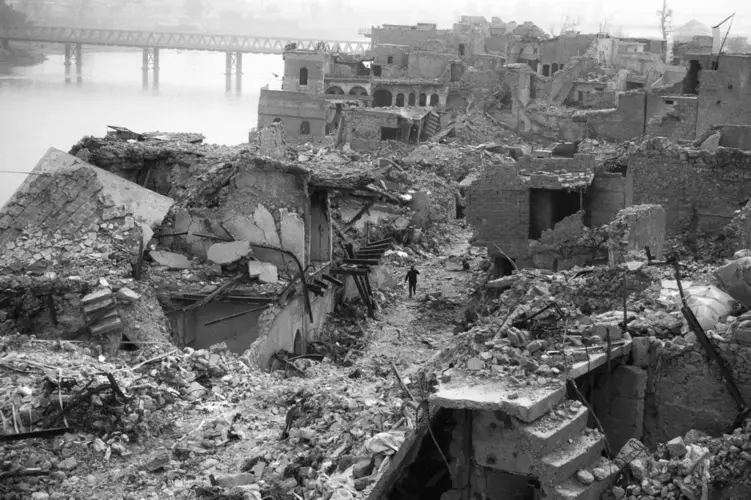
What followed was the most intense urban combat since the Second World War. Air strikes pummelled villages and towns in Mosul’s periphery, so ISIS contracted its territory, retreating to the city, along with thousands of civilians. “They told us that the Iraqi security forces would kill the men and rape the women,” a young woman from the village of Shirqat told me. “We trusted ISIS more than the Iraqi state.” Other villagers, who had spent years awaiting liberation, were loaded onto buses at gunpoint by ISIS fighters, and packed into Mosul’s front-line neighborhoods, to be used as human shields. In the ensuing months, the jihadis murdered hundreds of people who tried to escape, and hung bodies from electrical pylons.
By early 2017, Mosul was half free. The city is bisected by the Tigris River. Its east side has wide avenues and low buildings. Backed by coalition airpower, East Mosul was taken mostly by élite Iraqi counterterrorism forces, fighting house to house. They took care to minimize civilian casualties, and suffered tremendous losses of their own. By the end of the battle for East Mosul, as much as seventy-five per cent of the counterterrorism forces had been injured or killed.
The combat was much worse in West Mosul—especially in the Old City, a densely populated warren of alleyways, tunnels, and souks nestled against the banks of the Tigris. Its streets were too narrow for armored vehicles to pass through, and jihadis could easily slip between roofs and alleys and basements. To an outside force, it was practically impenetrable. The coalition bombed all five of Mosul’s bridges and sealed off the western escape valve, while thousands of Iraqi soldiers, federal police officers, and Hashd fighters besieged the Old City.
The Old City was home to Mosul’s richest history and poorest residents. Thenoon Younnes Abdullah, a middle-aged father with a bushy mustache, dyed brown, had spent the past couple of decades working as a day laborer, until his body gave out; to provide for his wife, Alaa, and their four children, he resorted to selling bootleg gasoline. Like most of his neighbors, he resented the ISIS fighters, who swaggered through the souks, flush with cash, telling him how to live—especially the foreigners, who barely spoke Arabic and had no connection to Mosul. Some of them had converted to Islam only a few months before coming to Iraq for the jihad. Abdullah’s family had lived in the same cluster of houses, on the same block, with the same neighboring families, for as many generations as he could remember.
For three years, the Iraqi Army had told civilians to stay at home and wait for liberation, and Abdullah and his family had listened. Now, as the Army encircled the Old City, electricity and water supplies were cut off, and life became impossible. People began to starve. The jihadis were breaking into homes, stealing food, and digging tunnels between basements, to pass undetected. They set up firing positions on people’s roofs, and stockpiled explosives in living rooms. Anyone who resisted was killed.
The coalition concluded that the Old City could not be captured according to the rules of engagement that had governed the battle in East Mosul, so it loosened its requirements for calling in an air strike. In March, the U.S. dropped a five-hundred-pound bomb on a roof in the Old City, in an effort to kill two ISIS snipers. The explosion killed a hundred and five civilians who had been sheltering inside the building. Survivors reported that there were no ISIS fighters in the vicinity at the time of the strike.
One night, when the shelling relented, Abdullah and his family hurried downhill to the banks of the Tigris, carrying inner tubes and two large coolers. None of them knew how to swim. Abdullah helped the kids into the coolers—two in each—and he and Alaa climbed onto the inner tubes, clinging to the children and each other as they floated downstream, to liberated territory.
By early July, ISIS fighters had killed thousands of government troops and police officers, and Iraqi commanders were under enormous pressure to finish the battle. The next few weeks were a bloodbath. ISIS fighters who surrendered were executed on the spot. Iraqi security forces filmed themselves hurling captives off a cliff, then shooting them as they lay dying on the rocks below. Helicopters buzzed the Tigris, bombing people as they tried to swim across. The troops assumed that anyone still living in theOld City sided with the Islamic State. For the rest of the month, corpses bobbed downstream, dressed in civilian clothes. “We killed them all—Daesh, men, women, and children,” an Iraqi Army officer told a Middle Eastern news site, using the Arabic acronym for ISIS. As he spoke, his colleagues dragged a suspect through the streets by a rope tied around his neck. “We are doing the same thing as ISIS. People went down to the river to get water, because they were dying of thirst, and we killed them.”
When the battle was over, soldiers used construction equipment to shovel rubble into the entrances of ISIS tunnels—ostensibly to suffocate any remaining jihadis, but also to mingle corpses and concrete, thereby obscuring the scale of the atrocities. As late as March of this year, journalists were still finding the bodies of women and children on the riverbanks, blindfolded, with their hands tied behind their backs and bullet holes in their skulls.
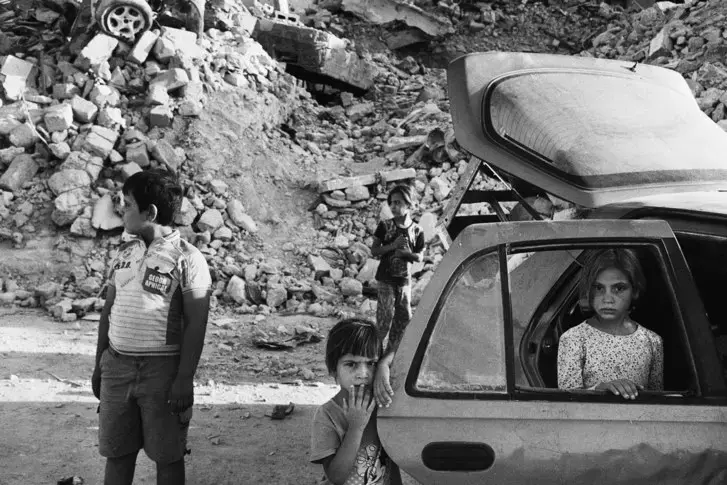
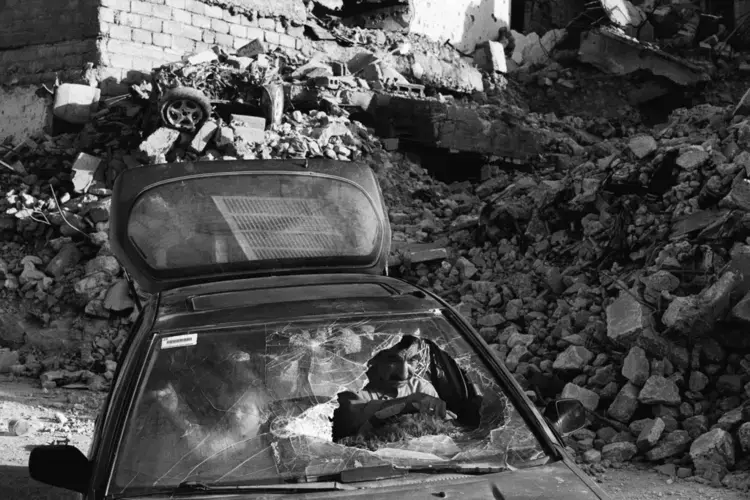
A year and a half after Iraq declared victory, the Old City is in ruins. Sunlight gleams through bullet holes in tin garage doors. Massive blocks of concrete dangle from broken roofs. The floors of apartment buildings remain as they fell, in layers, having crushed whatever was between them. The U.N. estimates that the battle for Mosul has left behind around ten million tons of rubble. Some stone structures have landed at odd angles, to disorienting effect, as if gravity were pulling in every direction. There are burned-out power lines, and staircases to nowhere. It is completely silent. Near the site of an old post office, there is a single intact traffic light. It changes every thirty seconds, for no one. Every few feet you catch the smell of desiccated corpses. Also inescapable is the scale of history, obliterated. Many of the buildings were continuously inhabited from the seventh century until the second week of July, 2017. To walk through the Old City is to tread on its final generations’ graves.
Shortly after the battle ended, Mohammad returned to his job in the civil defense. Every day, locals lined up outside a temporary fire station in West Mosul and asked for help retrieving the bodies of their relatives. “We recorded their names and gave them a date,” he recalled. “And when their date came they would come with us to the Old City and show us the house that had been hit by an air strike, and we would dig until we could take out the body.”
The coalition has acknowledged a civilian death toll in the low hundreds. But the West Mosul civil defense has retrieved thousands of corpses from the Old City. Last December, the Associated Press obtained a list of nearly ten thousand civilians whose bodies had been registered at the local morgue. Most had been crushed to death by falling concrete; for others, the cause of death had been entered into the morgue’s database simply as “blown to pieces.” (Thomas Veale, a U.S. Army colonel and a spokesman for the coalition, told the A.P. that it was “irresponsible” to draw attention to civilian casualties in West Mosul. If not for the coalition’s campaign, he said, Iraqis would have suffered years of “needless death and mutilation” at the hands of “terrorists who lack any ethical or moral standards.”)
“All of them are civilians,” Mohammad said. “When we find unknown bodies, we leave them behind,” because there would be no way to apply for a death certificate or to return a corpse to its family for burial. “Sometimes people come here and tell us that they have dead relatives in the Old City, but we know that they are not from the Old City,” Mohammad said. “They are from Qayyarah or Shirqat,” towns where the Islamic State had more support. When that happens, civil-defense workers infer an ISIS link and refuse to retrieve the corpse.
The skeletons in the rubble have not been picked clean by animals, or bleached white by the sun. There are fingernails and yellow teeth and dusty clumps of hair. Bone fragments line the roads, amid scraps of fabric and leather and glass. Near the river, I saw a torso dangling loosely from a mess of twisted rebar—swaying hands, fractured skull. Blackened ligaments drooped from the arms. “Daesh,” a stranger said to me, smoking a cigarette, pointing at the corpse. He kept moving.
Nearby, I met Thenoon Younnes Abdullah. He waved, and carefully wound his way down a three-story pile of rubble—the site of his former home—with his ten-year-old son. The family had returned to salvage whatever they could. Everything of any value had already been looted, but they rescued a broken generator, and tied it to the back of their car.
Abdullah told me that, after the battle, his cousins were the first in his family to return to the Old City; as soon as they opened their door, they were blown apart by I.E.D.s. Months later, when Abdullah arrived, he found his own house in ruins, and several dead ISIS fighters inside. He also found Alaa’s mother’s corpse; she had stayed behind, too frail to run away.
Abdullah led me up the hill of tangled metal and concrete, and we entered his house by ducking under a staircase, through a hole in the bathroom wall. On the floor of the dining room were three stains, where fluids had leaked out as the bodies decomposed. Abdullah’s brother died across the street, but his body hasn’t been found.
It was difficult to move. The floor was littered with debris, but I noticed transistors, ball bearings, and other bomb-making materials scattered about. Then, on my way out, my foot knocked over a concrete block and uncovered an I.E.D. I stopped, and noticed two other unexploded bombs a few feet away, as well as four detonators. We climbed back out through the hole in the bathroom wall, and came down the hill, past an ISIS corpse in rotting leather sandals.
Reconstruction in the Old City will cost billions of dollars, according to the U.N., but, aside from the exorbitant cost, I had the impression that the Iraqi government has been content to leave it in ruins, as a kind of punishment. Abdullah told me that he had seen no evidence of institutional cleanup—only posters from N.G.O.s, warning about the perils of walking in areas filled with unexploded ordnance, which still regularly kills people in the Old City.
Abdullah and his family piled into their car and headed to another part of the city, where they were staying in an abandoned, mostly destroyed building. He navigated by peering through a hole in the windshield, caused by shelling more than a year earlier.
The war against the Islamic State displaced a million people in Nineveh Province. Civilians who had fled ISIS at the outset, in 2014, were asked by Kurdish and Iraqi intelligence officers to inform on neighbors who had assisted the group. The names were then entered into databases of terrorism suspects, available to Iraqi security branches, including the Hashd militias. As the war dragged on, the lists became increasingly unreliable. People reported their enemies, and wielded the threat of denunciation in personal, tribal, and workplace disputes. “We have thousands of suspects in custody whose names were falsely reported, or are based on incorrect information, and they are treated as ISIS members,” the senior Iraqi intelligence official told me. He said that some Hashd fighters ran an extortion racket, demanding thousands of dollars from civilians and adding their names to the terrorism database if they couldn’t pay.
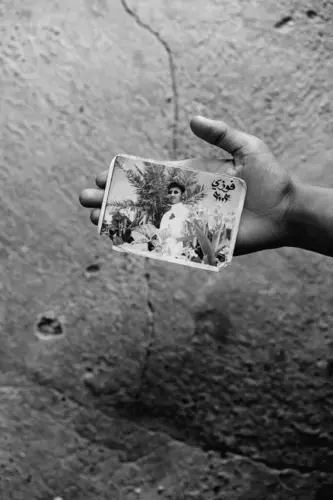

To many members of the Iraqi security forces, all civilians who hadn’t fled ISIS were suspicious. Some soldiers regarded beards as a marker of affiliation, even though the jihadis had punished men who shaved. Others, by contrast, singled out men who had recently shaved or cut their hair, believing that the men were trying to evade detection. Injuries, too, attracted accusations of complicity; how could anyone know whether people who had barely survived shelling and air strikes were targets or merely collateral?
As civilians marched out of Mosul, toward camps for the displaced, masked informants stood at checkpoints, pointing out individuals who, they claimed, had worked with the Islamic State. Some of the informants were children, but that didn’t matter in court—a suspect would never find out who had denounced him, or what was said.
All suspects were supposed to be handed over to the counterterrorism services, for an in-depth security screening. In practice, however, many captives faced vigilante justice in the streets. In October, 2016, Iraqi security forces filmed themselves executing a captive in Qayyarah, an hour south of Mosul. They also tied the bodies of several dead ISIS fighters to the back of a Nissan pickup truck and dragged them through Qayyarah’s main road, while villagers cheered; children kicked the corpses, and a man stood on one of the bodies, surfing. According to Human Rights Watch, which obtained thirteen videos from the scene, a man from a nearby village came to Qayyarah after hearing that the man who had killed his father and three of his uncles was among the dead fighters. He beheaded the man and cut out his heart, then presented it as a gift to his mother.
Elsewhere in Iraq, security forces filmed themselves punching, kicking, and whipping men in ad-hoc detention sites, including school classrooms. They dragged suspects by the hair, stepped on their heads, slammed knees into their faces, and threw furniture at them. They beat people unconscious; they beat people to death. They filmed themselves gunning down captives in open fields and stabbing them in the face with knives. A group of Hashd members struggled to interrogate six foreign fighters who couldn’t speak Arabic; in the end, they shot them, doused them in gasoline, and lit them on fire—including two who were still alive. A federal police officer filmed himself beheading captives, including minors, and posted the videos to his Facebook account. He told a Swedish reporter that he had decapitated fifty people so far, all while they were still alive; as he paraded through the streets holding severed heads aloft, other uniformed police officers and soldiers cheered and marched alongside him. All through northern and western Iraq, anti-ISIS forces kept lists of people they wanted to kill. They hung bodies from telephone poles, and encouraged civilians to desecrate the corpses of their former jihadi oppressors. The irony was not lost on the killers—they knew that they were mirroring the Islamic State’s worst acts.
The Iraqi government has sought to minimize attention to such atrocities. Haider al-Abadi, who served as Prime Minister between 2014 and October, 2018, dismissed them as “individual acts” for which the perpetrators would be held to account. But there have been no meaningful investigations. According to the senior Iraqi intelligence official, “all Hashd violations are carried out with the knowledge and approval of the national-security apparatus, in all governorates.” He added that the government has provided official cover for numerous civilian massacres, by organizing press conferences and lying about the provenance of mass graves. “The Iraqi government brought in journalists and said, ‘Look, ISIS killed these civilians,’ when in fact it was the Hashd al-Sha’abi,” he said. “The reality is totally different from what ends up in the media. At least ISIS had the courage to not hide its crimes.”
Suspects who survived their capture were taken to detention facilities in and around Mosul. Iraqi law stipulates that suspects must be brought before an investigative judge within twenty-four hours of arrest, but many people languished in custody for months. Although there were only around eight thousand ISIS fighters living in Mosul, and far fewer in the surrounding villages, the lists of wanted people grew to some hundred thousand names. Dank, windowless cells held a hundred or more detainees each. Some facilities had no budget for food. Injuries that had been incurred on the battlefield, or during interrogation sessions, grew infected and gangrenous. Amputations were common, and detainees routinely died of suffocation or disease.
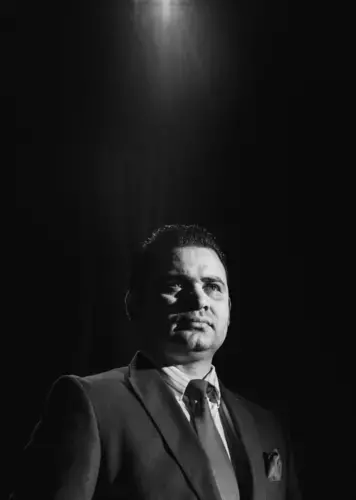
“Hundreds of innocent people have been detained because their names are similar to those of wanted people, and the state is doing nothing to solve this,” the senior Iraqi intelligence official told me. (Mohammad is thought to be the most common name in the world.) Others are held on the basis of uncontrollable facts of identity: the suspect was a Sunni male of fighting age, from a village where the jihadis enjoyed widespread toleration or support; the suspect was the wife, father, brother, or cousin of a fighter; the suspect was a member of a rural tribe whose leader had pledged fealty to Abu Bakr al-Baghdadi. If someone is found innocent and released, no letter is sent to the entire security establishment to clear his name. “He might be arrested again, and this time not get released,” the official said.
In late August, I met a seventeen-year-old ISIS fighter inside a facility in Iraqi Kurdistan that is holding dozens of minors who have been convicted of ISIS-related crimes. His name was Noor, and, along with another teenager, named Ahmad, he volunteered for an interview. In April, 2016, when Noor was fourteen, one of his friends recruited him to attend an ISIS training camp. He wouldn’t specify what attracted him to the Islamic State, saying only, “If there was something I didn’t like about the group, I would not have joined.” That October, he was captured by Kurdish forces near the town of Bashiqa, dressed like a member of ISIS, with long sleeves and pants stopping above the ankles, and carrying a Kalashnikov. Noor was the only jihadi in his family—he told me that he had joined ISIS without his parents’ knowledge or permission—but, last year, members of a Hashd group arrested his relatives, expropriated their home and property, and sent them to detention camps.
As Noor spoke, Ahmad looked uncomfortable. He said that he wanted to talk, but not with Noor in the room. A prison worker escorted Noor back to his cell.
“I’ve been here for two years and eight months, trapped with all these jihadi kids!” Ahmad said in a rush. “But I’m not ISIS! They picked me up by mistake!” One of his cousins had been recruited, but no one in his immediate family had joined. Nevertheless, when Kurdish forces liberated his town, intelligence officers detained Ahmad and tortured him until he made a false confession. He lifted his shirt to reveal faint lines all over his back, from whipping and beating, and a twisted knot of a scar on his upper arm. At this point, Kurdish prison workers said that the interview was over. “I showed the judge that I had been tortured,” Ahmad continued. But the judge told him that an unnamed witness had claimed he had carried a gun, and sentenced him to five years.
The pace of arrests has recently slowed. In Mosul, there are now only two or three raids per week. Most of them are carried out by an Iraqi swat team, with assistance from the United States military, which provides intelligence—names, addresses, sometimes a photograph—as well as vehicles, arms, and air support. In return, American soldiers are given access to detention facilities, to collect the fingerprints and eye scans of high-value targets. Sometimes they take suspects away, returning them days or weeks later, when they’ve finished their own interrogations.
The most powerful Shiite paramilitary units have a similar relationship with the Iranian Revolutionary Guard. Security and intelligence officers from the Hashd still patrol the ruins of the Old City, occasionally making arrests. On August 30th, a group of them, dressed in plain clothes, detained me in front of the ruins of Thenoon Younnes Abdullah’s home, and questioned me for three hours. They photographed my face, passport, and Iraqi visa, and the commander, a wide-faced man who goes by AbuAli, warned that I would be arrested if I returned to the Old City. Then two Hashd intelligence officers grabbed their Kalashnikovs, got into my car, and, with a follow vehicle, escorted me across the bridge to East Mosul. During the drive, the two men showed me cell-phone photos and videos of supposed ISIS fighters they had killed all over Iraq. I asked whether their unit shares intelligence with, or receives it from, any foreign governments. “We refuse to talk about this,” one of them, who was wearing bluejeans and a Gucci baseball cap, said. “Because America is not friendly with Iran.”
Pretrial detention can last years, and even if detainees don’t die from the conditions they may still never see the inside of a courtroom. Thousands of files have been misplaced within the bureaucracy, as detainees have been transferred among sites run by overlapping security agencies—meaning that, on paper, the suspects are missing. “Hundreds more have been killed during interrogations,” the senior Iraqi intelligence official told me. Ministry of Health officials, he said, usually classify the cause of death as “unknown” or “heart attack,” and then dispose of the corpse.
The process is so corrupt that, according to the official, “only the poor ISIS members go to court. The wealthy ones can buy their way out of the system.” Unable to trust their colleagues in other departments not to release ISIS members, some intelligence officers have resorted to murdering high-value detainees.
Not long ago, the senior intelligence official looked on as a group of his subordinates beat a Saudi fighter with iron bars, inside an ad-hoc detention center near Mosul. The fighter taunted his interrogators, saying that if he recovered he would return to the battlefield and fight them again. They broke his arms and legs, and threw cinder blocks onto his back. “Who knows, exactly, when he died,” the official said. “But he wanted to become a martyr, and so the interrogators obliged.”
I asked him whether the Iraqi government notifies foreign embassies when its intelligence officers kill their citizens. He said that most European fighters are referred to the judiciary unscathed, because their identities are widely known, and their fates are scrutinized by the international press. “But most of the Arab foreign fighters do not make it to court,” he said. “We do not tell their governments what happens to them, and their governments do not ask.”
In Baghdad, the relentless pace of trials struck me as so incongruous with the lack of evidence, the certainty of convictions, and the severity of sentences that I began to wonder whether judges had access to secret intelligence reports that they weren’t sharing in court. One evening, I visited the office of Munir Haddad, a magistrate who presided over the trial of Saddam Hussein. It was a troubled proceeding—defense lawyers were assassinated, and the Prime Minister pressured judges into issuing a death sentence—but, compared with the ISIS trials, Haddad said, “I believe the process was reasonably transparent. Saddam had lawyers. Only six or seven people were executed. These days, in terrorism courts, at least twenty-five people are sentenced to death every single day.”
Haddad lit a cigarette and threw his legs over an elegant wooden chair. Ali Shimari, a handsome young lawyer, sat next to him. Haddad left the bench years ago; he and Shimari now work as a team, defending terrorism suspects whom they believe to be innocent. That morning, Shimari had sat through the same hearings that I had. “Everything that the judge saw, the lawyers saw, too,” he said. “There’s usually no evidence, just the confession.”
I asked Shimari if the arbitrary nature of the trials frustrated him. “What can I do?” he replied, shrugging. “I’m a defense lawyer. I can’t tell the judge to pay attention. You can try once or twice, but it has no effect.”
Haddad laughed. “We are not in America,” he said. “It’s not possible to argue with the judge, because if you do he’ll just take it out on your client. As a lawyer, you just have to accept the humiliation.”
I asked Haddad whether, as a former judge in Iraq’s highest-profile tribunal, he believed that judges see their role as meting out a kind of cosmic justice, even if the truth lies beyond the kinds of evidence that can plausibly be collected. “ISIS has so many victims,” he said. “There have to be convictions.”
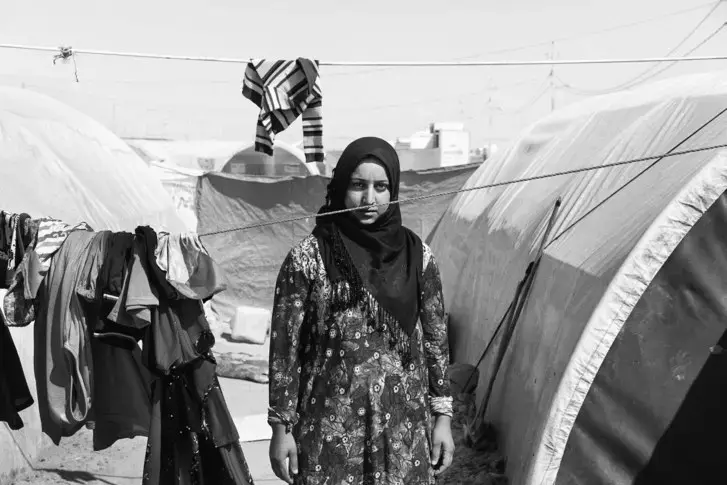
Thaer Abd Ali al-Juboori, the spokesman for the Ministry of Justice, told me much the same thing. “Human-rights groups focus on the rights of suspects, but what about the rights of the victims and their families?” he said. “We have undergone thousands of terrorist attacks. There is immense public pressure on the judicial authorities.” He continued, “9/11 left three thousand people dead. The whole world obsessed over this attack. We cried for your innocent deaths. But, here in Iraq, we have had a terrorist death toll that has exceeded that by a factor of a hundred. Where is the sympathy that we have shown to the victims of 9/11? This is what Iraqis are upset about. We fight terrorists every day, on behalf of the rest of the world. And no one cares about our suffering.”
The amount of time that convicts spend on the waiting list to be hanged fluctuates between months and years, because each execution order requires a signature from the President of Iraq. Barham Salih, a progressive Kurd, who was imprisoned and tortured by Saddam Hussein’s regime, assumed the Presidency in October.
In the past, Salih has distinguished himself through his opposition to capital punishment. In 2002, when he was Prime Minister of the eastern part of Kurdistan, he refused to sign the death warrant for an unrepentant Al Qaeda sympathizer who had attempted to kill him. “I think this is a fundamental question of what type of society we want,” Salih said at the time. “I don’t believe that anyone, or the state, should take people’s lives.” Sixteen years later, it’s not clear that any Iraqi Presidency could survive such a stance. Throughout the ISIS period, in the aftermath of terrorist attacks, the Iraqi government has carried out mass executions in order to mollify an outraged public. I wrote to Salih’s press secretary, Lukman Faily, several times, to ask whether Salih is signing execution orders, but did not hear back.
Execution orders are carried out by the Ministry of Justice. In 2009, Al Qaeda operatives detonated a car bomb outside the ministry’s headquarters, killing thirty-five employees. Four years later, terrorists attacked the replacement headquarters. “Every time we publicized an execution, we would get attacked,” Juboori recalled. Afterward, staffers demanded to be moved to the Green Zone or to have the task of executing convicts referred to a different department. But after a few days they gave up and went back to work. “We have to earn a living,” Juboori said. Today, the ministry occasionally publishes the numbers of people executed, but leaves out the names; by obscuring the identities, Juboori said, the ministry can accede to the public’s demand for results while minimizing the likelihood of retaliatory attacks.
To human-rights groups and foreign officials, the Ministry of Justice’s opacity is a source of frustration. “Often we would find out about mass executions by reading about them on the justice minister’s Facebook page,” a European diplomat, who spent much of the past three years in Baghdad, told me. “There will be some notification saying that they’ve killed forty-two terrorists. O.K., but who? Of which nationalities?” Juboori denied that this was the case; after a foreign fighter is executed, he said, his colleagues put the body in a refrigerated chamber, and inform the relevant embassy.
The Iraqi judiciary has also exposed the willingness of Western liberal democracies to quietly regard due process as a strategic disadvantage. During the battle for Mosul, France deployed élite soldiers to track and kill its own citizens. Some five thousand Europeans joined ISIS, and, of the thousand or more who have returned to their home countries, very few have been charged with crimes, owing to the near-impossibility of collecting court-level evidence in a foreign war zone. European intelligence agencies are overwhelmed; to carry out comprehensive surveillance on a single target requires a team of around thirty people. And so countries that have outlawed capital punishment are tacitly encouraging Iraq to eliminate their jihadi citizens. “If the Iraqi government were just rounding up and killing Iraqis in this way, we could be more vocal” in criticizing it, the European diplomat said. “But we don’t have any idea what to do about our own citizens. There is no policy.”
For many terrorism convicts, a stop before the gallows is a spot on Iraqi state television, as participants in a reality show called “In the Grip of the Law.” Prisoners explain on camera how they supposedly plotted and committed heinous acts, sometimes visiting the scenes of their crimes. They also renounce terrorism, and agree that they deserve to die. One afternoon in September, the host, Ahmad Hassan, welcomed me to the studios of Al Iraqiya, shook my hand, and threatened to sue me if I misquoted him. He recalled an incident in which a foreign journalist had quoted him as saying “jihadis” when he had actually said “ISIS terrorist gangs”; in the days after publication, Iraqi politicians and security officials asked him why he’d used a word that could be perceived in a neutral light.
Just off the set, a director was working on an upcoming episode. A man in an orange jumpsuit was sobbing onscreen. The director spliced in footage from an ISIS video, featuring a mass execution. “This is Mowafaq Ahmad Shihab—he’s from a first-class ISIS family,” Hassan told me. “Most of his sons worked for the ISIS terrorist gangs.” In the ISIS footage, a masked man lifted a pistol to the head of a kneeling hostage. “His son will now carry out an execution of some prisoners,” Hassan said, as the footage rolled on. “And what Mowafaq confessed in the investigation is that he was helping his son execute innocent citizens.”
He pointed to a figure in the crowd. “Mowafaq is in the background,” he said. To my eye, there was practically no resemblance: the man in the ISIS video had a full head of white hair, whereas Mowafaq was mostly bald, and what hair he had was black, except for a bit of gray in his beard. When the show aired, two weeks later, the clip was blurred to obscure the differences. But there was still an inconsistency between the episode and its trailer: the arrows for Mowafaq pointed to two different men.
According to Hassan, the show, which airs on Friday evenings, has millions of viewers. “In the Grip of the Law” is dependent on the involvement of the legal and security-intelligence establishments, and glorifies their work. “It’s the only program in this country that increases public trust and confidence in the security forces and judicial offices,” Mujahid Aboalhail, the head of Al Iraqiya, told me. “It passes the message to the whole world that the fate of these terrorists is in the grip of the law!”
Hassan walked over to the set where he films his opening statements. He took off his jacket and sat behind a large wooden desk—clear, except for a single lamp. Behind him was a map of Baghdad, decorated with images of police reports and mug shots of various suspects. He wore a white shirt with light-blue pinstripes, a deep-red tie, and an oversized watch; his black hair was slicked back, shining under the stage lights. Hassan put his elbows on the table and scowled—the caricature of a TV detective. There was a bookshelf filled with evidence binders, but they were empty.
“Ask me what you would like to know,” Hassan said. I led off with a biographical question. He ignored it, unlocked his phone, and started reading aloud a prepared statement, occasionally stopping in the middle of a phrase in order to catch his breath. “The idea for this program came to me because Iraq suffered many terrorist attacks, lots of vicious acts of bloodshed,” he read. “This program doesn’t just do interviews. It also shows CCTV, weapons, car bombs, explosives—actual evidence. This has helped maintain pressure against terror groups. It also helps spread awareness to security forces about how terrorist groups operate. It also gives awareness to the citizens to beware terrorist tactics, and helps citizens gain confidence in the security-intelligence establishment.” He paused. “Do you want me to talk about how I pick the prisoners?”
“Is that in the statement?” I asked.
“I have written a set of responses to questions I expect you to ask.”
Hassan insisted that he merely offers prisoners “a chance to repent,” and that they take him up on it because they “feel regret.” But the substance and tone of their confessions raise questions. In Mowafaq’s episode, he is marched down a sealed-off street in Mosul, handcuffed and blindfolded, and forced to kneel in front of a line of masked members of the security forces. His blindfold is removed; they’re holding automatic weapons. It looks like the lead-up to a street execution—the director used a split screen to mirror the ISIS tape—and, as Hassan questions him, it’s not at all clear that Mowafaq, who has already been sentenced to death, knows otherwise.
On July 10, 2017, a twenty-five-year-old woman from Shirqat, who goes by Umm Saleh, arrived at a camp for the internally displaced, just outside Qayyarah. She had spent the previous week running between buildings in Mosul’s Old City, where an air strike on a school had killed her father, her brothers, and one of her sisters. Umm Saleh’s husband survived the explosion, but amid the chaos the couple lost track of each other, and so she left Mosul with their three children, carrying the youngest in her arms. Members of the Iraqi security forces robbed and harassed Umm Saleh at every checkpoint. Many of them obscured their faces with balaclavas and masks, and had patches on their uniforms of the skull worn by the Punisher, a Marvel Comics antihero who kidnaps, extorts, and murders people in the pursuit of his own conception of justice; the skull is the last thing that his victims see before they die. “If the Americans weren’t behind us, we would burn you,” a soldier told Umm Saleh. She had left Mosul with some cash and gold but arrived in Qayyarah penniless.
Umm Saleh expected to reunite there with her husband. He hadn’t joined ISIS, but his brothers had been conscripted as fighters. Because he hadn’t denounced them or severed ties, on the way to the displaced-persons camp he was picked out of line during a security screening, and taken away.
One day, a member of the Iraqi security forces visited the camp, promising to look into the cases of detainees, for a fee of a thousand dollars. Umm Saleh’s mother and sister sold all their gold to pay the bribe, and Umm Saleh gave him her husband’s name. The soldier took the money and never came back.
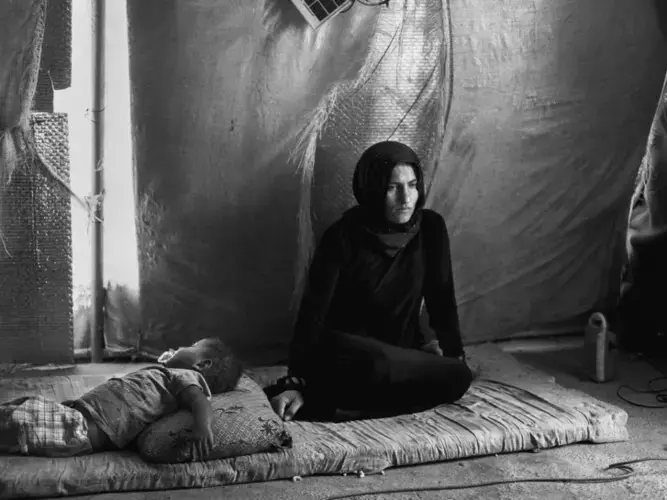
At the camp, Umm Saleh was placed in a sector populated by widows of the Islamic State who had also grown up in Shirqat. Because Umm Saleh’s husband was mistaken for an ISIS fighter, she is now perceived by camp administrators and guards as the female head of an ISIS family. Her children are growing up fatherless and isolated from the rest of society, unable to attend Iraqi schools. “People look at us differently,” another woman in the sector told me. “Even small children in the camp point at my children and say, ‘ISIS! ISIS!’ ” The government refuses to recognize or replace Umm Saleh’s infant son’s birth certificate, because it was issued by the Islamic State; as with tens of thousands of other Iraqi children, his own country has rendered him effectively stateless. The camp is now Umm Saleh’s de-facto prison; Iraqi security forces stole her identity card at a checkpoint, and without it she cannot leave.
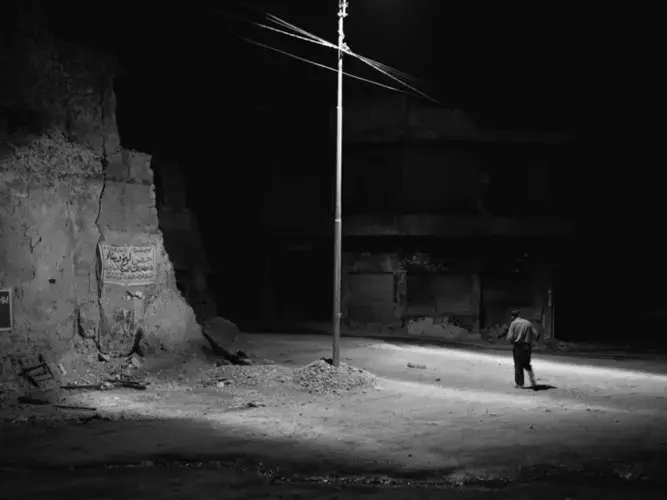
At night, Umm Saleh and the other women in her sector try to avoid the camp toilets, which are unlit, to minimize the chances of being raped by guards. Members of armed groups routinely enter the camp to harass them, rob them, assault them, or burn down their tents. One night, three Hashd fighters raped a young woman named Amani while she was washing inside her tent. “One of them had a shop that I used to visit in Shirqat,” she told me. “Another was my neighbor.” During the attack, they berated her for her ISIS affiliation.
Amani was abandoned at birth, grew up in an orphanage, and married when she was around fourteen. Two years later, ISIS came to Shirqat. Her husband joined, and forced Amani to move with him to Mosul. She was miserable; she hated having to cover her face in public. She became pregnant, and soon afterward her husband went to fight in the Makhoul Mountains, where he met and married another woman. A few months later, he fled with his new bride to Syria, and divorced Amani by phone. She deleted his number and escaped from ISIS territory. When she reached Qayyarah, she tried to legally divorce her husband, but wasn’t able to, because her I.D. had expired and her husband wasn’t present. The Iraqi government refuses to issue her a new I.D., because it considers her an ISIS wife. Without documentation, she has no freedom of movement, and is deprived of access to Iraqi civil services. She wants to return to Shirqat, but fears that, even if she made it out of the camp, she would be detained or killed by Hashd fighters or by her former neighbors. “I have not seen happiness at any moment in my life,” Amani said, tears streaming down her cheeks.
In another sector, a frail, eighty-two-year-old man named Hellou Hamad, who was also from Shirqat, was lying on a filthy mattress, unable to get up. He had been sent to the camp more than a year ago, because three of his sons had joined the Islamic State. “I tried to stop them, but they were bored and single and jobless,” he told me. The surrounding tents were populated by his female relatives and their children. Many kids in the camp urinate uncontrollably in the night, as a result of the trauma induced by the war; among the women, there are high rates of suicide. “Our houses were burned—we are rejected by our community,” Hamad told me. “I am the only man in this block. All the others are in prison or dead.”
There are eight camps in the desert near Qayyarah, housing roughly a hundred and fifty thousand people. During the war, most residents were people who had been displaced by the Islamic State. But now the proportion of ISIS-linked families is growing, as those who are unaffiliated return to their villages. The largest of the facilities is Airstrip Camp, which I visited twice in late August; between my visits, more than eleven hundred ISIS-linked Iraqi men, women, and children arrived in Qayyarah from a camp in eastern Syria. The journey had taken two days, and the Iraqi government had transported them from the border in open trucks, in hundred-and-fifteen-degree weather, without providing food or water. At least one person died.
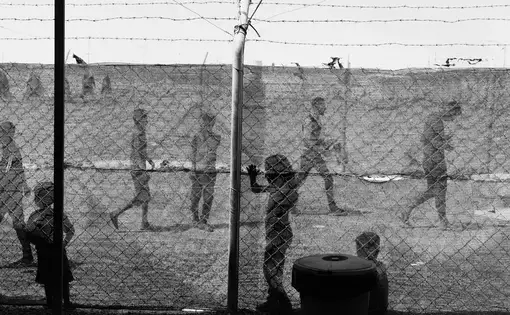
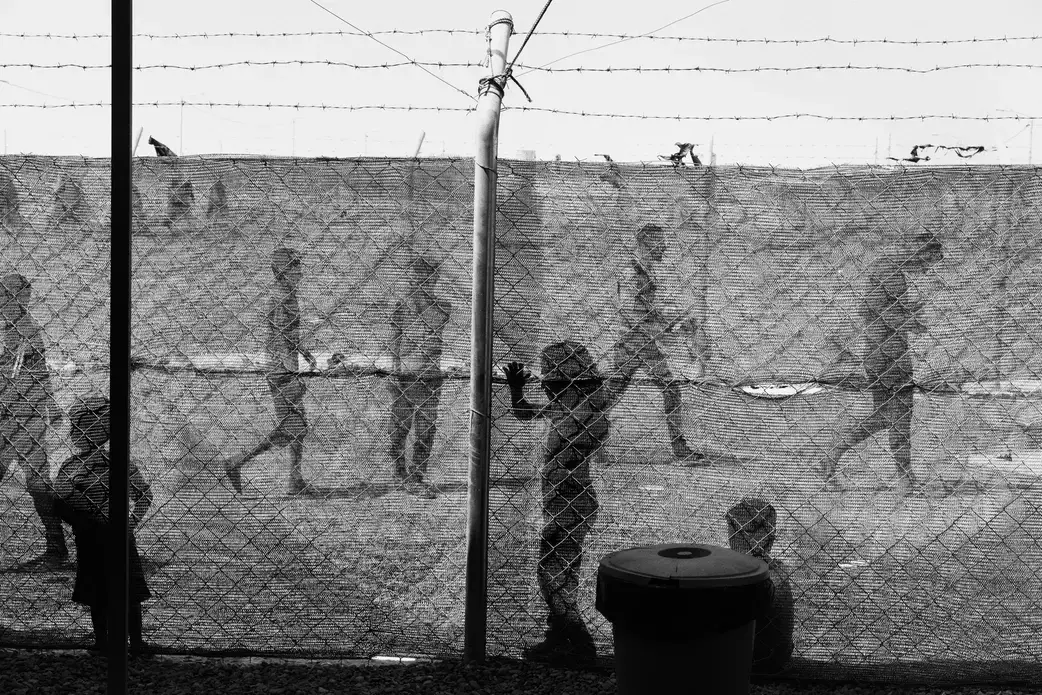
At the entrance to Airstrip Camp, down a long, unpaved road, men holding machine guns stood in the shade of a cinder-block hut, near a tattered Iraqi flag. Inside were tents covered in dust—blue canvas turned a deep brown, held to the ground with rope and sandbags caked in mud. Clotheslines and gullies of green sewage separated the tents, and the camp’s razor-wire fence had caught thousands of plastic bags, which thrashed noisily in the breeze. Children hauled wheelbarrows and carts filled with water jugs and sacks of grain. On the horizon, a surveillance balloon floated above Qayyarah’s air base, from which the U.S. military had staged much of the Mosul campaign.
One of my visits coincided with that of the country head of a major international N.G.O. “This is set up like a concentration camp,” he said, gesturing at the fence. “All the barbed wire, the division of sectors. There are no social spaces. There are no spaces for the children to play. There are no places for people to gather. There’s one entrance in and out. And have you seen the guys at the entrance? Most of them are from militias.”
Throughout Nineveh Province, camp administrators and workers routinely deprive ISIS-linked families of food, clean water, and medical services. The N.G.O. country director told me that he had travelled more than two hundred miles from Baghdad, “to make sure that our Iraqi staff are not falling into these types of revenge attitudes.” He added, “They say, ‘These people killed my family, and now I have to help them?’ ” In some camps, humanitarian workers offer aid in exchange for sex. Many women are pregnant from having been raped by the security forces or from having sex to feed themselves and their children. Although the fighting has ended, “these camps are meant to stay,” the N.G.O. director said. “If you are ten years old now, and you have no food, no assistance, and your mother has to prostitute herself to survive, and the whole of Iraqi society blames you because you were close to ISIS—in two, three, four years, what are you going to do? It’s clear. The seeds for the next conflict are all here.”
At a police compound in West Mosul, I asked a colonel named Mezhar Sedoon whether he thought that the camps are creating more security problems than they are solving. “Some of the mothers in the camp are raising ISIS children, but others have become prostitutes,” he said. He laughed. “Money-money, [expletive]!” he said in English. “I’d rather they become whores than raise terrorists!”
Some women try to carry out abortions inside their tents. Others give birth, and discard the babies in unpopulated parts of the camp. Those who are found alive often end up in the care of Sukaina Mohammad Ali Younnis, an Iraqi government official who is in charge of women’s and children’s issues in Mosul. Over tea in Erbil, the capital of Iraqi Kurdistan, she showed me hundreds of photographs of children she has found in camps, on the streets, and dead in trash cans. Earlier this year, she saw someone throw a bundle out of a car, and found that it was a baby boy. She showed me a video of herself cradling him in the back of an ambulance, as blood bubbled out of his nostrils. He died on the way to the hospital.
Outside the camps, thousands of other children have been abandoned or orphaned by the war. Many of them were born to Yazidi women who had been kidnapped by ISIS and forced into sexual slavery. “After ISIS, the Yazidis accepted the women back into the community, but not their half-ISIS babies,” Younnis said. “They force the women to turn over their children to the orphanage. Every day, these women call me, wanting to know how their children are doing.”
Hundreds of small children are living in Iraqi prisons. Those whose parents were foreign fighters are often present in the courtroom when their mothers are sentenced to death. Iraqi children whom ISIS trained to become fighters and potential suicide bombers are imprisoned, as if their lives were irredeemable. “They are useless in interrogations—they just cry,” the senior Iraqi intelligence official said. “We are holding children as young as twelve in cells with hard-core jihadi fighters.”
Thousands of children in Mosul live on the street, searching through the trash for scrap to sell. “After their parents were killed or imprisoned, their relatives refused to take them in,” Younnis said. “They are seen as tainted, even if they were too young to absorb the ideology.” Many of them hang out in traffic and at checkpoints, choking on dust and diesel, trying to wipe down windshields or sell water and tissues to passing motorists. “They will do anything for fifty dollars,” she said. “I go to many government officials, asking to find ways to help these kids, but they all say, ‘It’s not my area of responsibility.’ ”
“The camps are a time bomb,” Younnis continued. “The fathers are in prison or dead. The mothers are being raped. They will raise the kids accordingly, and their sons will seek revenge. This won’t just affect Mosul, or Nineveh, or Iraq. This will affect the whole world.”
One morning in Mosul, I was told that an ardent supporter of ISIS, who goes by Umm Hamad, wanted to speak with me, in the market by the Saddam neighborhood. All three of her sons had been ISIS commanders, and were now dead, but she had evaded deportation to the camps. My interpreter and I parked near a vegetable stand, fifty feet from an Iraqi Army checkpoint. There was another checkpoint a couple of hundred feet behind us, and no access to the side streets. For a moment, I wondered if it was a setup. Then two women approached the car, opened the back door, and climbed in.
“I’m still proud of what they did,” Umm Hamad said, of her sons. She doesn’t think of them as having lost—only of having proved that it was possible for a jihadi group to control territory, and to govern. Already, since its defeat in Mosul, ISIS has set up checkpoints and carried out abductions and assassinations in several Iraqi provinces. Its leadership has reportedly buried large quantities of weapons and cash in tunnels and sand berms, to be unearthed in the years to come. According to the Pentagon, ISIS is “more capable” now than Al Qaeda in Iraq was at its peak, in 2007, and there are still some thirty thousand fighters operating in Syria and Iraq. Citing the camps, Umm Hamad told me that she expects the Islamic State to return to Mosul. “Not soon, but more powerful than before,” she said.
The other woman was Umm Hamad’s niece. She was in her twenties, and spoke softly and wistfully of the past. “Everyone in my family welcomed the Islamic State, except my youngest brother,” she said. “He hated them.” Throughout the occupation, she and her other brothers had tried to convince him of the merits of the caliphate, to no avail. Then he was arrested by the Iraqi security forces, under suspicion of ISIS affiliation. He was twelve years old. She has no idea where he is, or when he will get out of prison—she knows only that, if the government doesn’t kill him, by the time it lets him go it will have taught him that she was right. ♦