

How an urban redevelopment project has become a vehicle for elite land capture
Dharavi is being treated as a “slum housing problem” even though it functions as a dense economic system built around live-work housing, informal industries, migrant labour, and neighbourhood economies. Residents fear the plan misses this point.
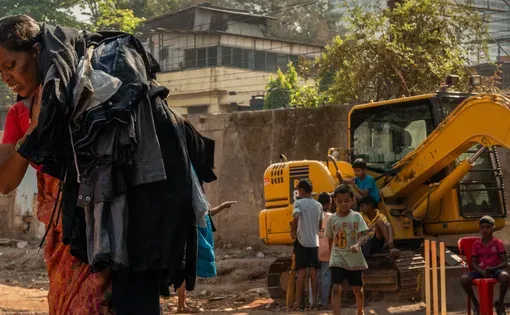
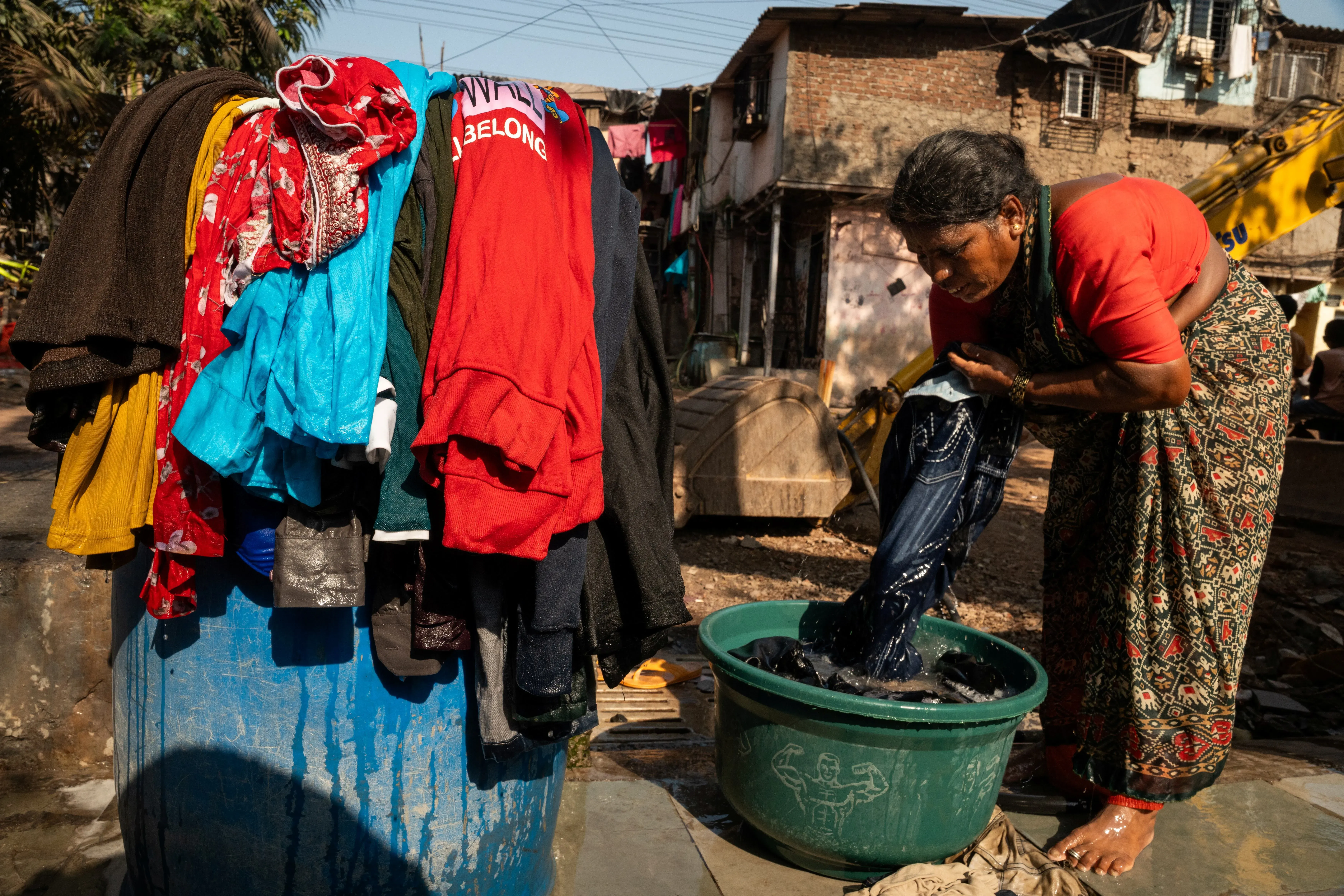
Lakshmi’s body moves in a fixed tempo. She is bent over a low concrete platform under the foot overbridge to Sion railway station in Mumbai. Her hands grip the cuff of a salwar, scrub it hard, then strike it against the stone. The cloth slaps against the platform, again and again. She wrings it into the water to rinse out the detergent, then wrings it tight until the last droplets fall in sharp flashes. The motion repeats without pause. Her shoulders tighten, release, and tighten again.
Around her lie small heaps of clothes collected from the lanes next to what was once the dhobi ghat of Dharavi. Shirts and trousers, stiff with dust and grease from nearby sweatshops.
Lakshmi is 42. “At least 50 clothes a day. Ten rupees per piece,” she says, almost to herself. If the rhythm holds, it comes to about Rs.500. A hundred goes into detergent and cleaning agents. Four hundred remains for her and her husband, for a day’s labour that seeps into her bones.
She has done this work since her marriage at 17 in Dharavi. Originally from Mahbubnagar in Telangana, Lakshmi moved to Mumbai after marrying into a family already settled in the city. “Almost 30 families at that time were doing the work of a dhobi. This was the lane of the dhobis,” she says. “Our mothers-in-law, their in-laws, even their fathers found space in this city. We made the gutters and this swampy land into something livable. Got clean water and made a living out of laundry.”

As a nonprofit journalism organization, we depend on your support to fund more than 170 reporting projects every year on critical global and local issues. Donate any amount today to become a Pulitzer Center Champion and receive exclusive benefits!
For years, that stretch of the dhobi ghat, home to around 30 households, held work and housing together. In 2017, it was demolished, along with a temple, in the name of drainage improvement.
Lakshmi was allotted a rehabilitation flat in Mahul, nearly 20 kilometres away in a heavily polluted industrial belt where thousands of evicted Mumbai residents have been resettled since 2017.
“Absolutely useless,” she says. “Most families, when they got houses in Mahul, returned to Telangana. They were not able to sustain work there. I came back to Dharavi because this is where our daily clientele is.” Her allotted flat now lies locked, while she pays Rs.10,000 a month in rent in Dharavi, where she once had her own housing. “You can choose to get out of Dharavi, or be forced out,” she adds. “But whoever has once lived in this city within the city of Bambai will come back to Dharavi.”
Her work is tied closely to Dharavi and to the social ties her family has built here. “Now there are model units in Dharavi with automated washing machines, which charge almost as much. The work of dhobis here has reduced significantly. But we are sustaining because the households that used to give us work still give us work.”
A decade after she lost her home, the threat returns. This time, Lakshmi risks losing even her rented room. Alongside her, nearly a million residents fear that their housing and livelihoods may also be affected as the settlement prepares to be redeveloped by the Adani Group.
A prime address, a contested bid
Dharavi, in the centre of Mumbai, entered the global imagination through Slumdog Millionaire. Long before that, its central location had already made it one of the city’s most valuable stretches of land in a real estate market that ranks among the world’s most expensive.
Multiple attempts to redevelop Dharavi have failed over the decades. The reasons are layered: the scale of nearly a million residents packed into about 2.1 sq km, the complexity of its informal economies, and the value of the land it occupies.
In November 2022, Adani Properties, the real estate arm of the Adani Group, won the bid with an investment offer of Rs.5,069 crore (about $612 million), beating DLF’s bid of Rs.2,025 crore. Opposition parties and Dharavi residents’ groups have alleged that the ruling BJP tweaked the tender conditions to ensure the contract went to Adani after an earlier tender, won by the Dubai-based SecLink Group in 2019, was cancelled.
The redevelopment will be carried out through Navbharat Mega Developers Private Limited (NMDPL, formerly Dharavi Redevelopment Project Pvt Ltd), a special purpose vehicle in which the Adani Group holds 80 per cent and the Maharashtra government, through the Slum Rehabilitation Authority, holds 20 per cent. Existing residents are to be rehoused, while Adani Realty secures development rights over land in the heart of the city. The entire project has been estimated to be worth up to $2.4 billion, with the latest master plan approved by Chief Minister Devendra Fadnavis pegging the total investment at Rs.95,790 crore.
Gautam Adani has described the project as “a historic opportunity to create a new Dharavi of dignity, safety and inclusiveness”, one that would result in a “state-of-the-art, world-class city reflecting a resurgent, self-assured India finding its place on the global stage”.
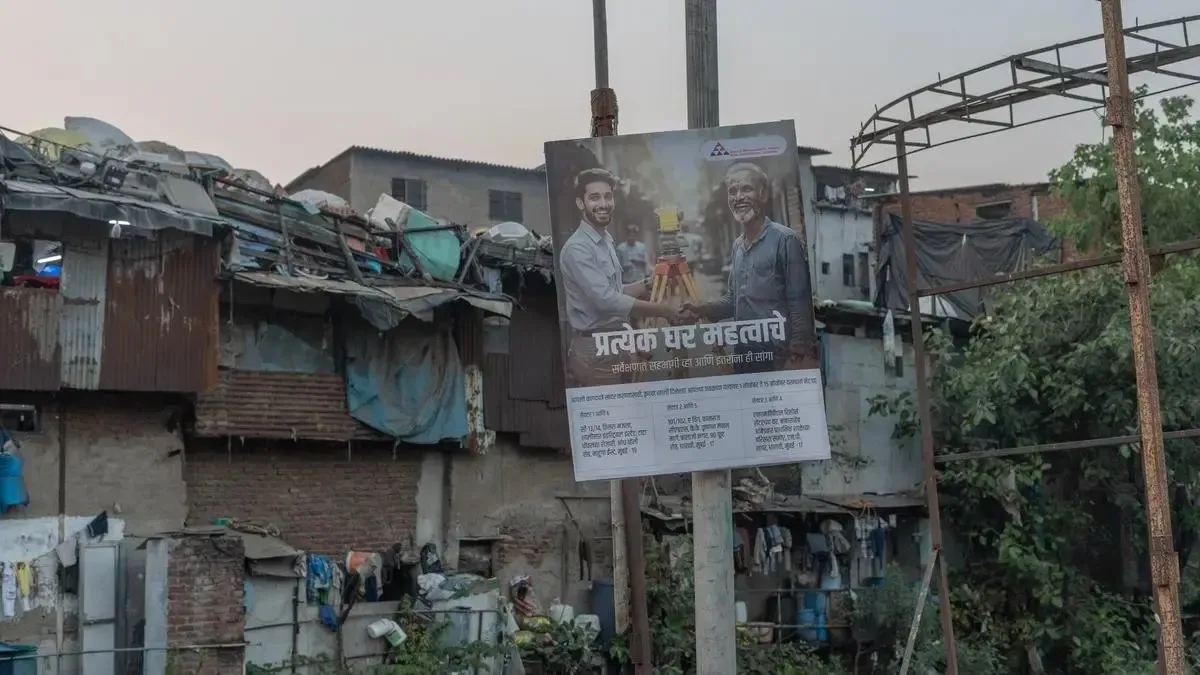
Across Dharavi, posters of the redevelopment project echo this vision. The visuals show residents in pressed clothes moving through broad, orderly streets, lingering in open, sunlit spaces. The pictures feel distinct from the rhythms that sustain the settlement now and the dense economies that structure everyday life.
“If even we dhobis couldn’t be moved without losing everything, how will they do this for all of Dharavi?” Lakshmi asks. Her question is reflected in the protests already unfolding against the planned demolition and reconstruction.
Workshops, kilns, and homes
Purushotam Nakabhai Tank does not keep track of his age anymore; he places himself somewhere in his 50s. Time, for him, is counted in generations. His family arrived in Dharavi from Gujarat’s Saurashtra region with the craft of pottery. His grandparents were among the early settlers of Kumbharwada, a neighbourhood established in the late 19th and early 20th centuries, where some families today trace their presence across five generations.
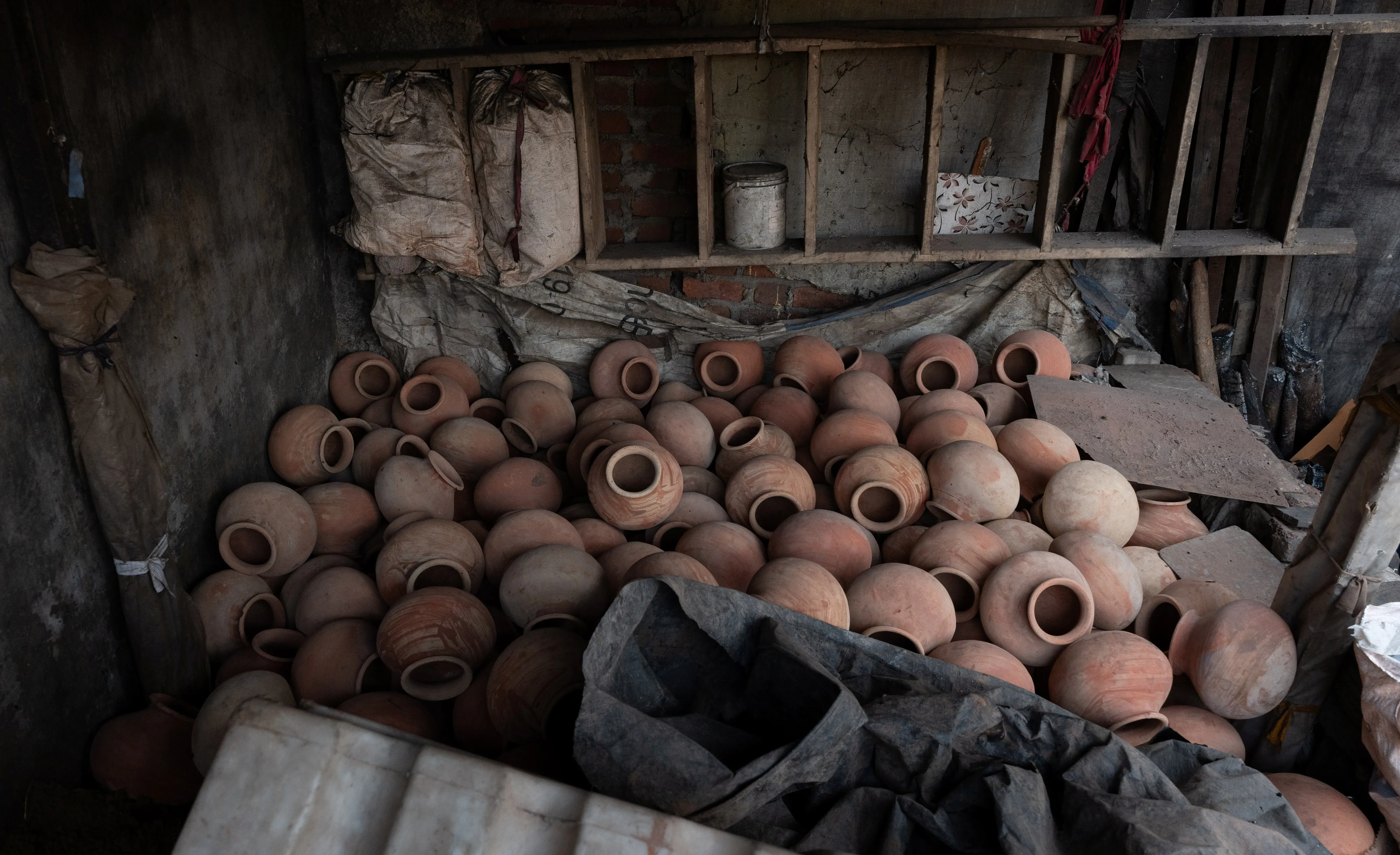
In Kumbharwada, around 1,500 families continue the craft across five lanes, though some local accounts put the figure closer to 10,000 if extended families are included. The ground floors of most houses function as workshops for shaping, storing, and packing pottery, while upper levels serve as living spaces. The streets also operate as shared workyards, lined with kilns across the wada, some owned, some used in common. Clay is mixed and wedged in corners, pots are dried along edges, and firing happens in the open.
Purushotam has worked with clay in this shared order for as long as he can remember. Redevelopment, he says, arrives as a disruption. “We don’t know what we will get. They say there will be both a house and a workshop, but the plan suggests otherwise,” he says. “When all of this is only being said, how do we trust a man whose only stake here is the return?”
Under the eligibility criteria notified by the Maharashtra government, residents who can prove occupancy before January 1, 2000, qualify for a free 350 sq ft flat within Dharavi. Eligible commercial and industrial units are entitled to 225 sq ft (about 20.9 sq m) carpet area or their existing area, whichever is less, free of cost; those with ground-floor carpet area above 250 sq ft can purchase additional space at construction cost. Residents who settled between January 1, 2000, and January 1, 2011 (after 1 January 2000 but on or before 1 January 2011), may receive 300 sq ft units within the Mumbai Metropolitan Region (MMR) at a subsidised price of Rs.2.5 lakh under the Pradhan Mantri Awas Yojana.
A government resolution dated October 4, 2024, extended benefits to upper-floor tenement holders who can prove occupancy before November 15, 2022, but those eligible would be relocated to 300 sq ft homes outside Dharavi, within the Mumbai Metropolitan Region, under a hire-purchase scheme. Residents’ groups argue that this still amounts to displacement from the trades and networks that gave them a living, even if it expands the count of “eligible” households.
“A large number of industrial and commercial units will be rendered ineligible under this clause, especially when many enterprises operate across floors,” Ansar Ahmed Shaikh, president of the Dharavi Businessmen Welfare Association, told Scroll.in.
Purushotam’s case fits this picture. He owns a 70-by-20-foot plot, about 1,400 sq ft, spread across three floors. The ground functions as a workshop; the upper two floors house a family of seven. “I don’t know if I’ll be eligible for a house or a workshop,” he says. “Upper floors are mostly treated as ineligible under the plan, or shifted out. Either way, it comes down to a 225 sq ft workspace or a 350 sq ft house, if I declare it as one. How does that compare with what I have now?”
In Dharavi, the question of housing is inseparable from the question of work. Often described as a $1–2 billion economy, the settlement sustains over 200,000 workers across leather, garments, pottery, food processing, fishing, and plastic recycling.
“Even where the plan says units exceeding 250 sq ft can purchase additional space at construction cost, it is unclear how this will apply to larger factories operating on substantial plots,” Shaikh said. “How much will they be able to retain, and at what cost?”
S.V.R. Srinivas, the former Chief Executive Officer of the Dharavi Redevelopment Project, told The Migration Story that the authority is exploring “all possible options” to protect livelihoods and businesses. Units deemed ineligible, those on upper floors or established after 2000, would be offered space within the redeveloped residential buildings.
“In every residential building, 10 per cent of the built-up area will be reserved as commercial spaces, which the housing society can rent out to businesses,” Srinivas said.
When asked how rents would be kept affordable for Dharavi’s existing entrepreneurs, the authority said no rent caps are currently planned. On the ground, business owners said they were largely unaware of these rental proposals, and many doubted they could afford the rents after redevelopment. “If people already running successful enterprises also own a place at this moment, why would they go for ‘development’ to just become tenants now?” Shaikh said.
Purushotam says that even if his unit is replaced like-for-like, the work in Kumbharwada remains inseparable from its shared spatial logic. “How do we demarcate a workstation when the entire wada is our workspace?” he asks. “Our pots dry on the streets, our kilns shift and expand in the open. How will we do this work once we are moved into towers?”
A city without a master plan
What Purushotam describes, where space is continually shared and reused, runs across Dharavi’s spread of work. Papads dry on the street sides. Scrap arrives in the 13th Compound and spills onto the streets for sorting. Leather hangs from doorways, stitched in units that open into lanes. Vendors wedge themselves into corners, tailors align machines to doorways for light, barbers occupy passages to migrant housing, and tin containers stack along pathways outside bakeries supplying pav. At different hours, the same stretch shifts function, production, storage, and sale, so that the street itself becomes an extension of the workshop.
Urban researchers argue that this is not an absence of planning but a different kind of order. “Dharavi’s evolution as a self-built city follows its own internal logic, rooted in a deeply communal use of space,” said Samidha Patil, an architect and partner of Urbz, a design and research collective with an office in Dharavi. “Dharavi is a homegrown city rather than a slum. Space, even when congested, follows a tight logic here. Not an inch, whether on the street or inside a house, is wasted.”
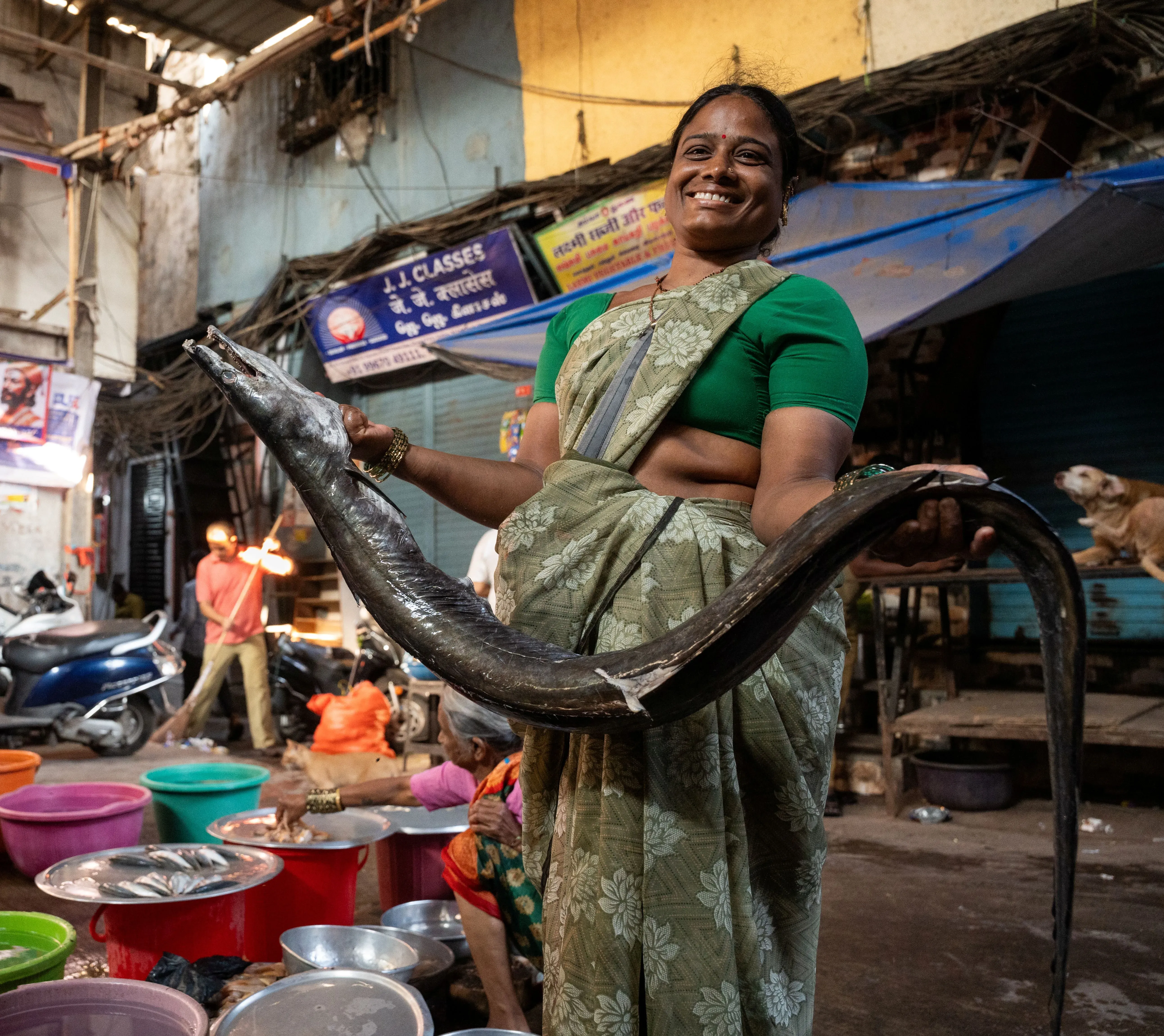
In Laxmi Chawl, that logic gathers into a daily fish market. Around 8 AM in the morning, the central square fills with fisherwomen arriving for the day’s trade. Fish brought in from Crawford Market, pomfret, surmai, bombil, rawas, bangda, crabs, prawns, are sorted into tubs filled with water and ice and arranged for sale throughout the day.
“All of it you see here will be finished by the end of the day. People know where to come for fresh fish,” said Pushpa Mahadev Sadaphule, who has sold fish at the same spot for over 20 years. “Our house is right there. We go back, check on the children, bring our lunch, come back and sit here,” she said, gesturing to the buildings around her. “Rare are the days when something is left unsold. And even then, we just take it back home and store it.”
That short distance between square and home is what makes the arrangement work. Houses here absorb work as it demands. Unsold fish become inventory stored indoors; tools and goods move in and out through the day.
“Dharavi is unique in the way people live and work,” Patil said. “Work and residence are not separate categories here. In many cases, the same unit shifts between living and production. In others, ground floors function as workshops while upper floors hold families.”
The arrangement has roots in the shift that followed the decline of Mumbai’s textile mills in the 1970s and 1980s, when production moved into homes. Over time, clusters of such live-work units, what Urbz refers to as tool-houses, came to define entire neighbourhoods, each specialising in a particular trade. Together, they form interdependent systems where proximity reduces cost and risk.
This merging of living and working space, Patil suggests, cannot be easily translated into standardised rehabilitation flats, where the unit is fixed and the room to expand into work is largely absent.
Numbers that do not add up
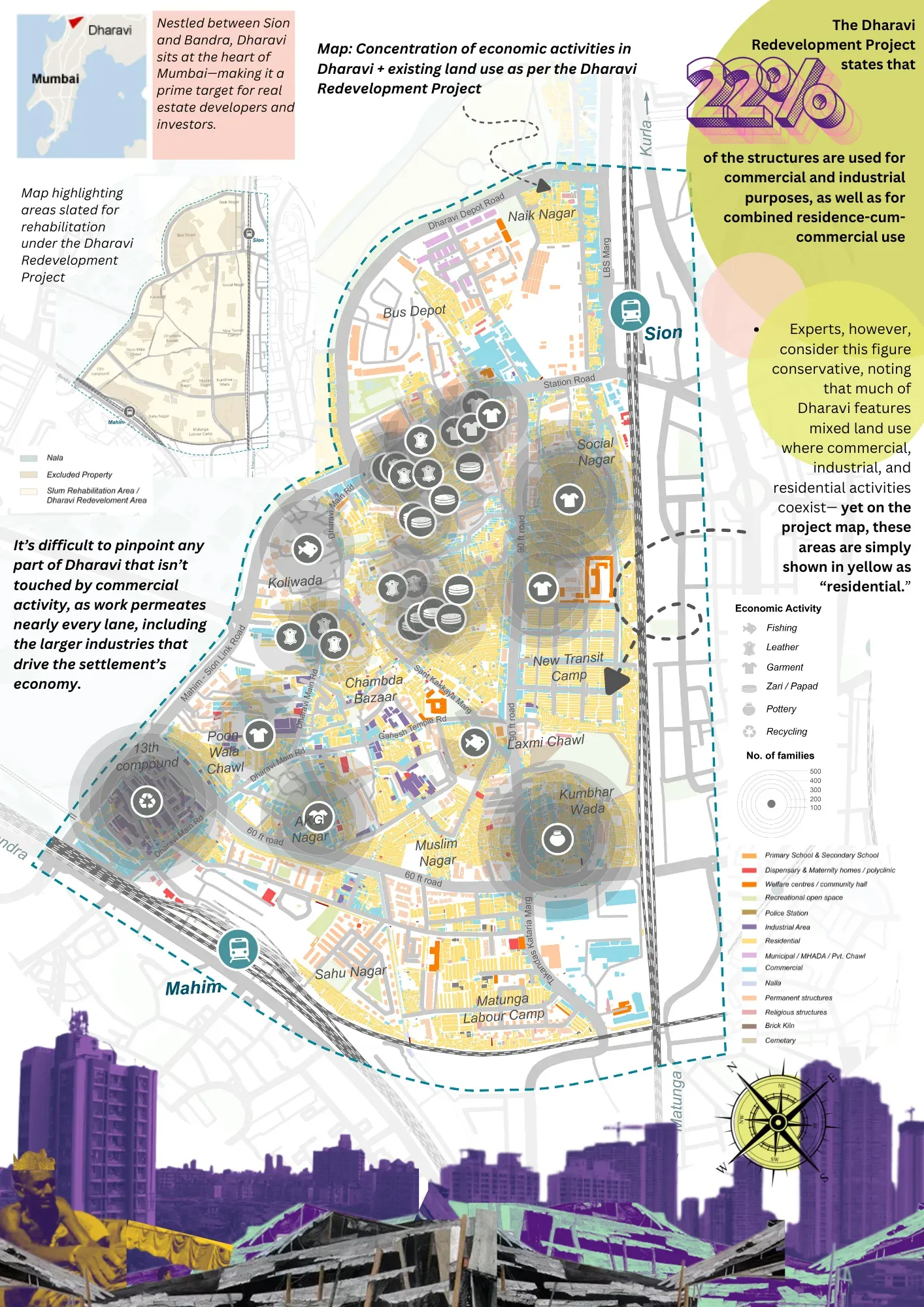
The Dharavi Redevelopment Project acknowledges the home-based nature of work in the settlement, stating that “22 per cent of the structures are used for commercial and industrial as well as residence-cum-commercial purposes.”
Both experts and members of the Dharavi Businessmen Welfare Association contest this figure. “It is difficult to accept a number like 22 per cent when almost every corner of Dharavi speaks of work,” said Shweta Tambe Damle, founder of the Habitat & Livelihood Welfare Association and part of the Working Peoples’ Coalition. “Step into homes and you’ll find some form of production, whether it’s idli-vada being prepared to supply the city’s breakfast, a tiffin service, or a zari [embroidery] unit operating out of a rented space. Even restricting it to shops and commercial units, the number still falls short.”
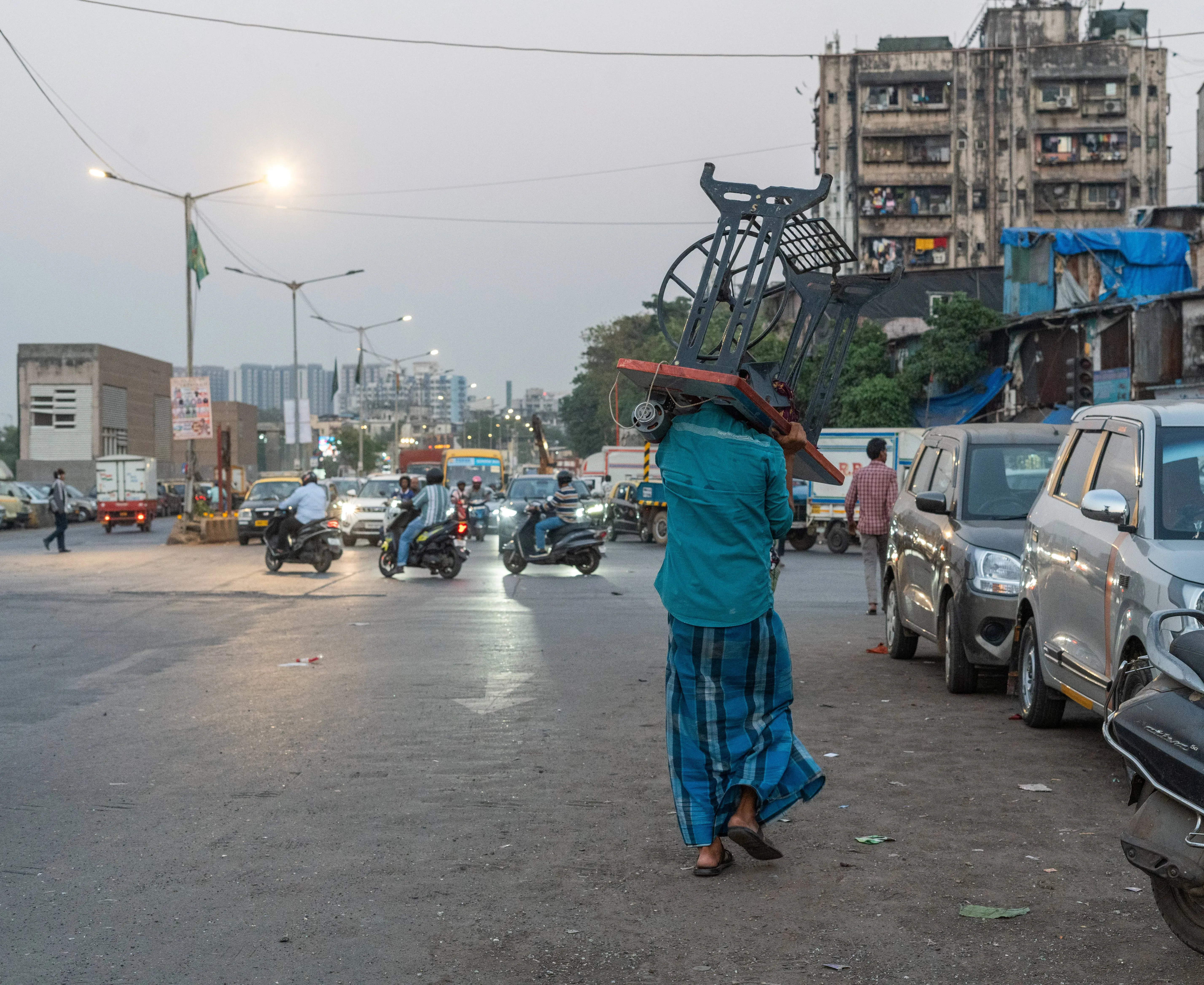
Under the Dharavi Redevelopment Project, fresh surveys are being conducted by the Adani Group to enumerate residential, commercial, and industrial units across the settlement. These exercises have already identified upwards of 20,000 industrial and commercial units alone. Yet the development plan provides for the construction of only around 13,468 such units.
The gap remains even when all units are considered. “There are at least one lakh ground-floor structures in Dharavi eligible for rehabilitation, in addition to 1.5 to 2 lakh tenants occupying upper floors,” said Rajendra Korde, president of the Dharavi Redevelopment Samiti. “Against this, the plan provides for roughly 72,000 units, 49,832 for residential rehabilitation, 8,700 renewal units, and 13,468 industrial and commercial units. What happens to those left out?”
Korde added, “If the survey of tenants is yet to be completed, how has a master plan with projected units already been approved?” Damle argued that the projections are constrained by the data they rely on. “These estimates are largely based on a 2007–08 survey by the Maharashtra Social Housing and Action League (MASHAL), appointed by the government to map Dharavi, which estimated the population at around four lakh.” That survey remained incomplete and does not account for the settlement’s growth over the past two decades, with local groups now placing the population closer to a million. “A fresh survey should have preceded the development plan,” Damle said.
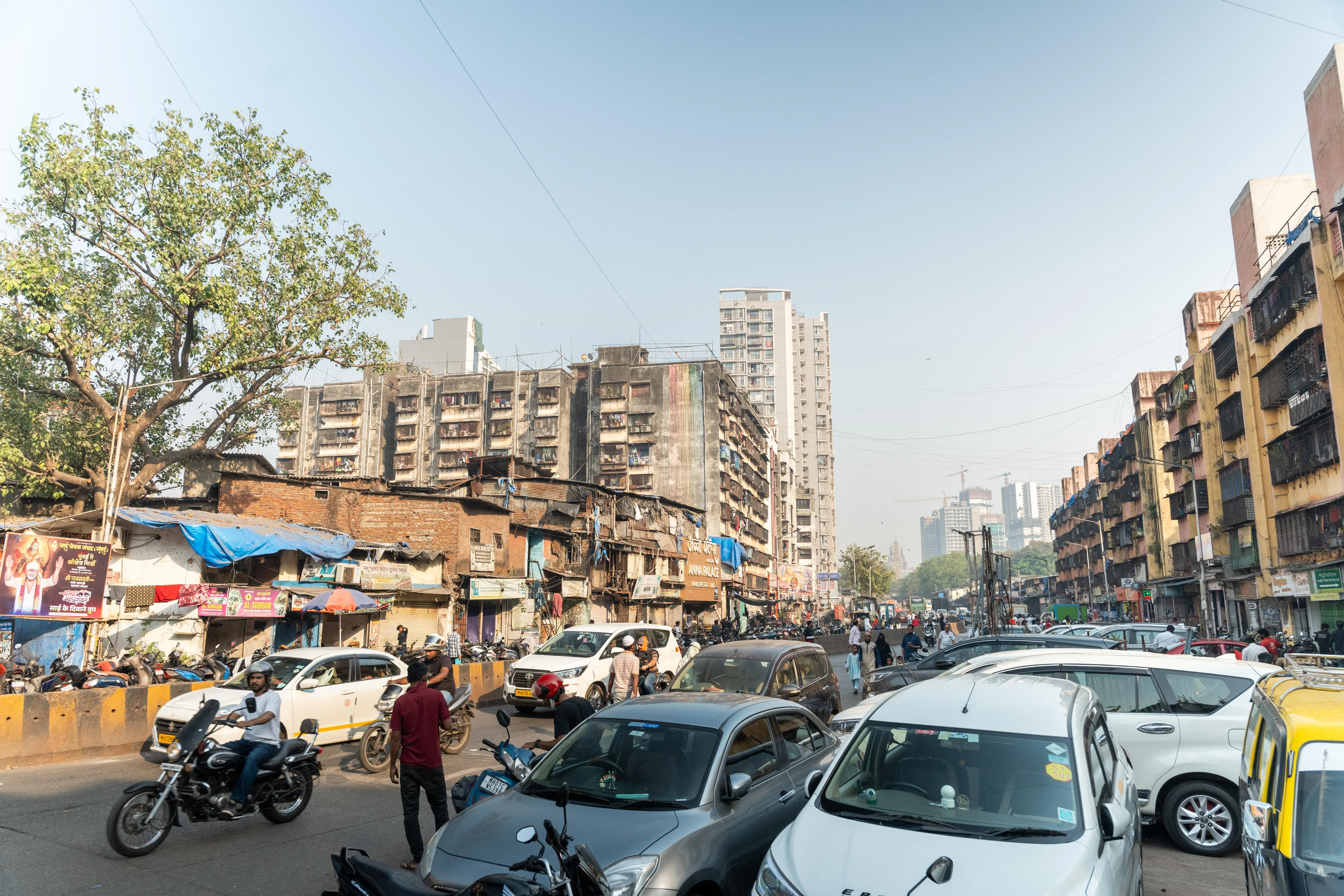
A floating workforce, mostly invisible to the plan
Saddam Hussain, 27, arrived in Dharavi not long ago. He lives in the 13th Compound, having migrated from Samastipur in Bihar through friends already working in the waste recycling units here.
He rents a room measuring roughly four by seven feet, rising to about seven feet, so low that the fan hangs just above his reach. The space holds both his work and his life. A bag of clothes hangs from the wall alongside a few belongings. “Five thousand rupees in rent is a lot in a city like this,” he says, laughing lightly. At night, he pushes his barber chair, picked up from a scrap dealer and repaired, into a corner, lays out a mat, and sleeps on the floor.
This room is his only anchor in the city. Meals come from a small kitchen on the lane or from friends in the neighbouring recycling unit, who cook for him at times. Back in his village, he says, there was work, skills he had learned from his father, and a steady base of clients. “There is work back home, but my parents are still alive. I can earn here and send money back.”
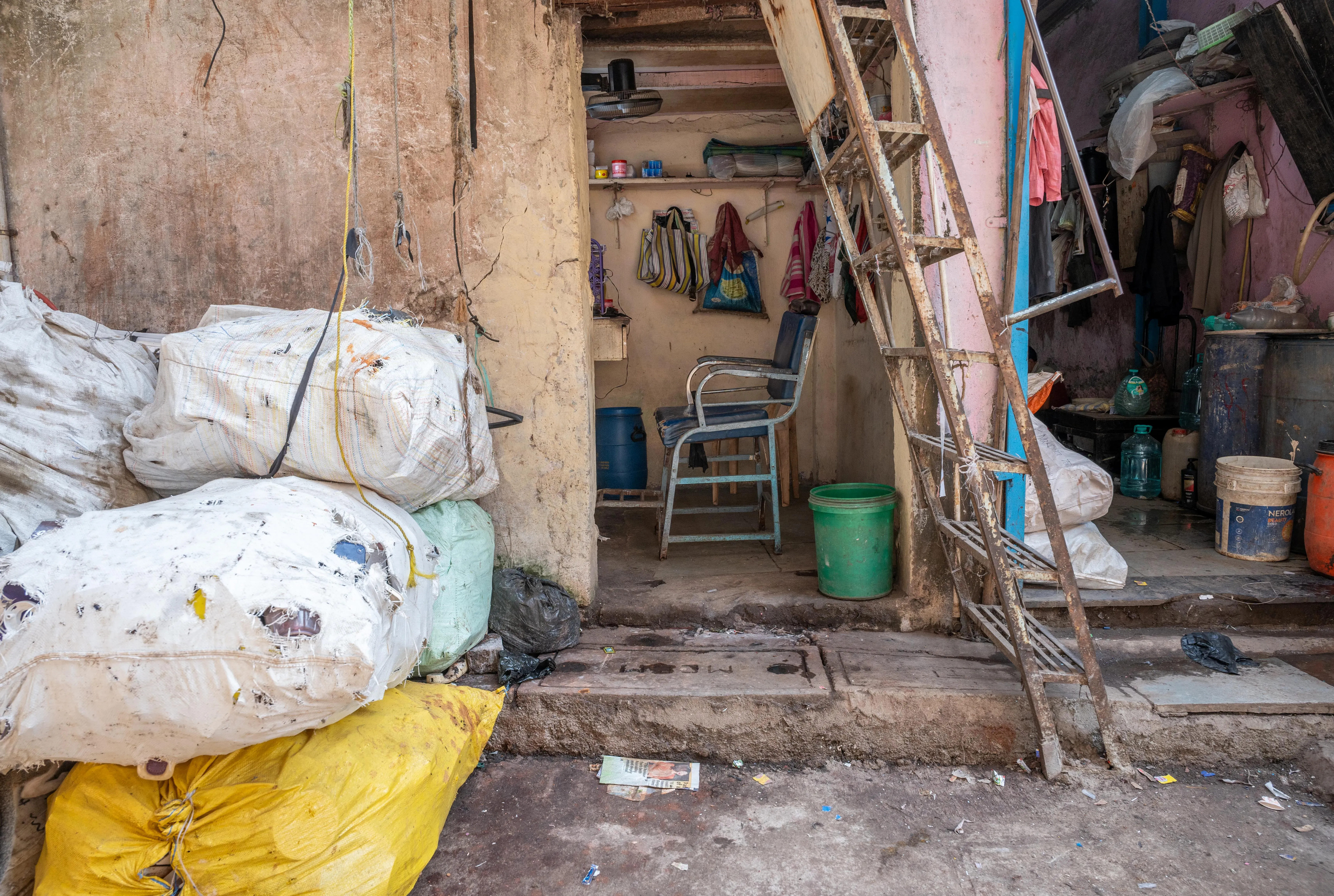
For now, Dharavi allows him to do that. But the prospect of redevelopment leaves him uncertain. “I don’t know what I will end up doing. Maybe I will have to return to my village.” His uncertainty mirrors that of a much larger, less visible workforce. Dharavi holds a large floating population, migrant workers who arrive seasonally and often stay on, moving between trades. From garment and zari workers, many from Bihar, to those in waste recycling units, their presence is folded into the same compressed spaces.
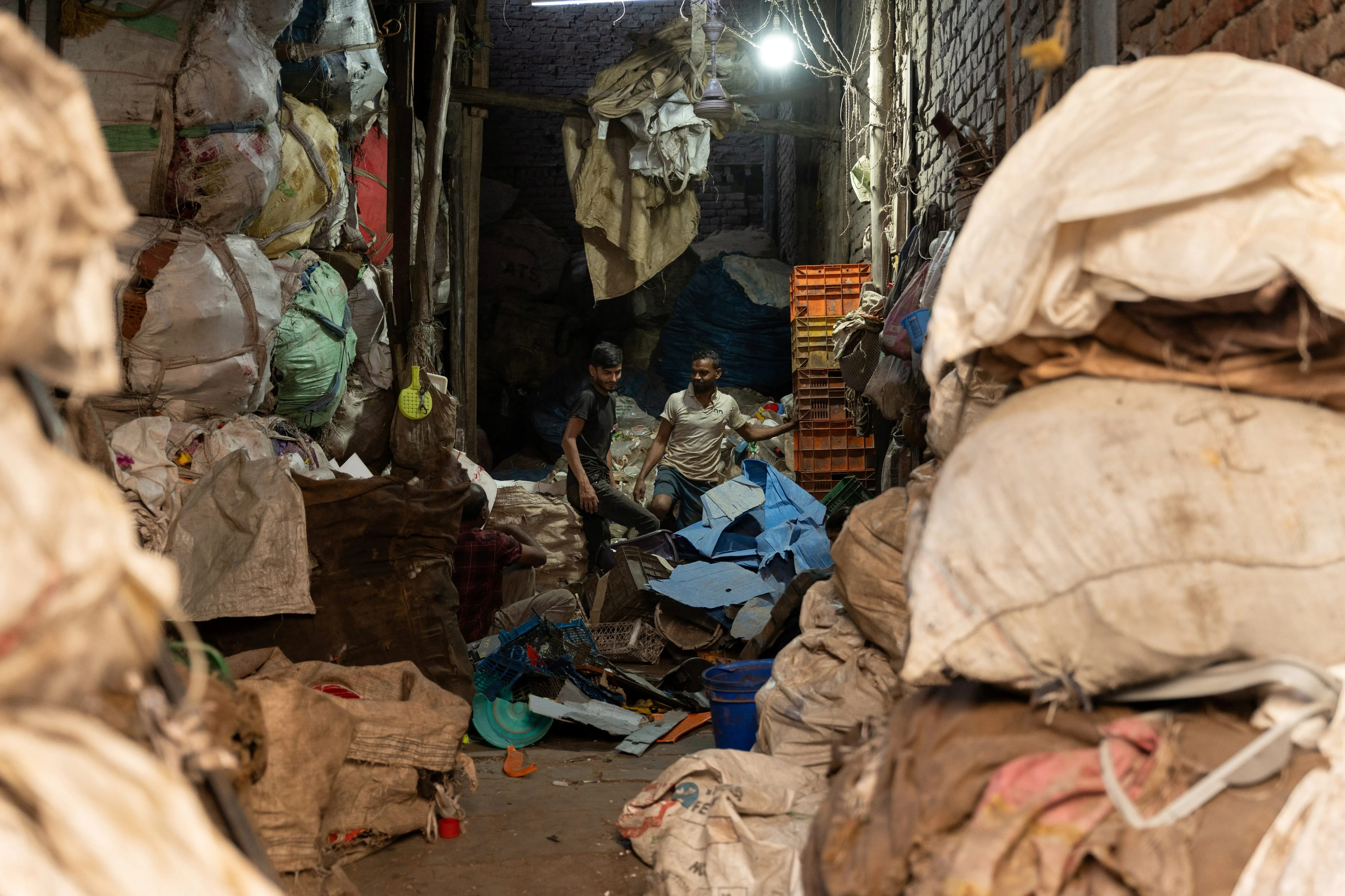
In several workshops, bags belonging to single migrant men hang from walls; by day, the room is a site of sorting and packing, by night, it clears into a place to sleep. Some units carve out narrow lofts, barely three feet high, where workers cook, rest, and store what little they own. Holding on to even a sliver of space within these shared walls matters, but staying depends on consistent work, not where they sleep.
“If the factory moves out of Dharavi, I’ll move with it, wherever it goes. And if it shuts down, I’ll find work somewhere else,” said Mohammad Akbar, who has worked in a garment unit for seven years. He shrugged: “It’s a big city. I’ll find something, maybe on a sewing machine.” This floating workforce remains largely outside the project’s frame, unlikely to qualify for housing, yet central to Dharavi’s economy. “This redevelopment will not just disrupt residents, but also the massive floating population that sustains Dharavi’s economy, people who are rarely counted, but are essential to how it functions,” Damle said.
Who is the new Dharavi for?
Beyond questions of ownership or eligibility, residents and researchers say the plan risks undermining the network of work that sustains Dharavi. Where will street vendors, who rely on daily foot traffic and the proximity of other businesses, go once lanes are cleared or rerouted? How will small workshops, which feed into larger supply chains, continue to operate if spatial continuity is lost?
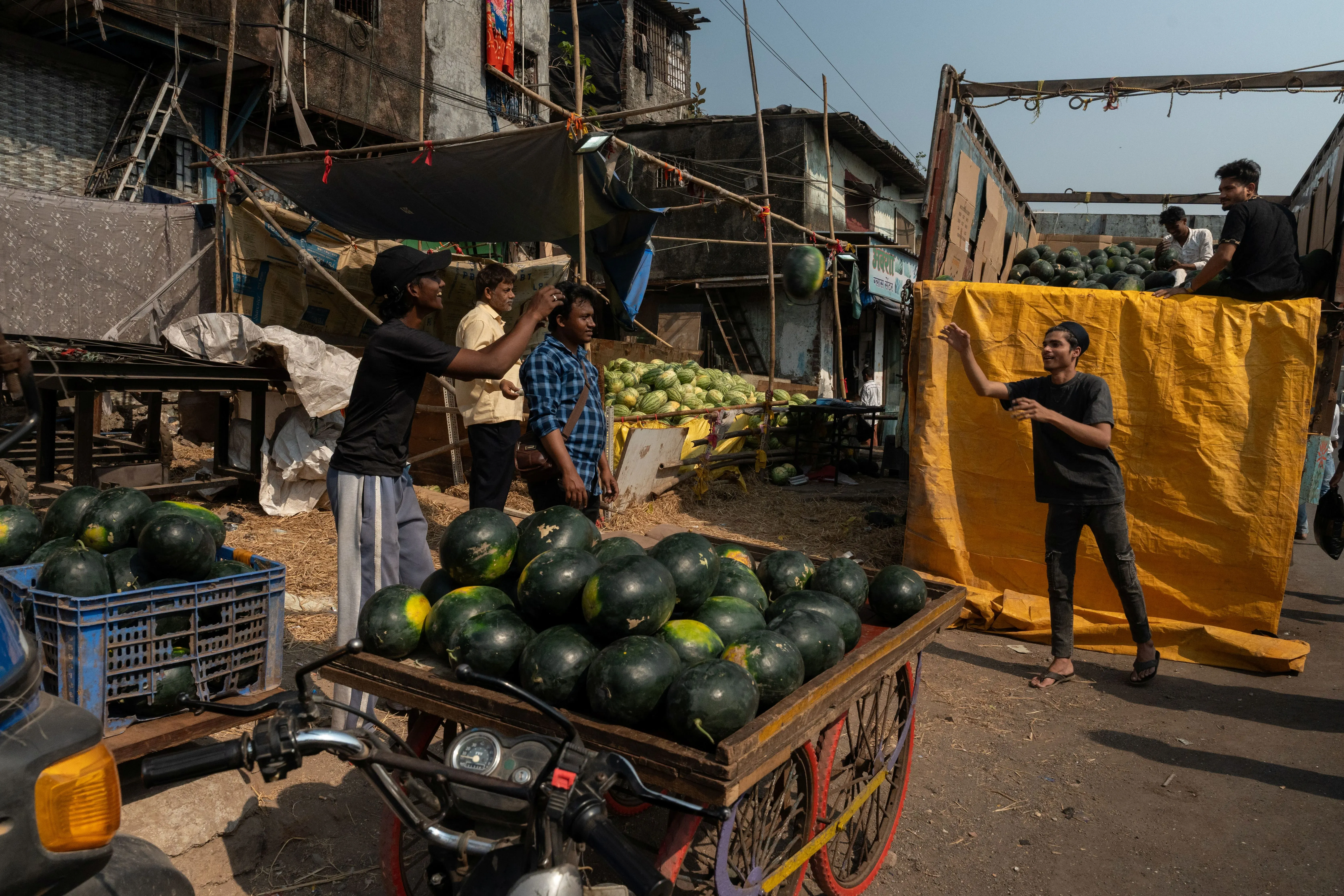
Community interdependence forms the backbone of life here. Tiffin services provide daily meals to migrant labourers, who then staff various units. These chains run on proximity to slaughterhouses and wholesale food markets. Waste from textile units feeds the furnaces in Kumbharwada. The network extends into houses: owners generate income from rent collected on each floor, while business operators gain affordable space to run their enterprises without bearing maintenance costs. Migrant workers often live in these units rent-free, which lets them focus on work without the burden of Mumbai’s high living costs.
“We built our lives on this swamp. Now that it’s become the city’s centre, they want us gone,” Pushpa said. She paused, then shooed away a cat edging toward the fish, sometimes letting it snatch one anyway. “This cat is like Adani in this machi [fish] business. No stake in buying the fish, but still here to take a share.”
Many residents have refused to participate in the Adani survey. Srinivas maintains that the project does not require residents’ approval, since the developer has been appointed by the State government, and that more than 50 per cent of people had already “agreed” to the plan.
Hussain Indorewala, an urban researcher who teaches at the Kamla Raheja Vidyanidhi Institute of Architecture (KRVIA), said the project “is really not for the residents”
“The whole scheme is essentially a real estate development plan,” Indorewala said. “By moving families out, they are clearing land for the developer. This is prime real estate near BKC [Bandra-Kurla Complex].” Godson Wilson, a photographer and cinematographer who grew up in Dharavi, said: “Every YouTube video and even media coverage only wants to emphasise the dirt and everything that needs fixing, while ignoring much of what is working here. This has stigmatised our lives to the extent that even saying you come from Dharavi carries a sense of shame.”
In principle, residents say, redevelopment that brings clean running water, basic sanitation, and improved housing is necessary. The problem, they argue, lies in the model. “Dharavi has not been allowed to complete its transformation from slum to neighbourhood,” Patil said. “The neighbourhood holds significant potential for improvement from within, and these efforts should be backed by the administration. Instead of bulldozing, residents should be supported in strengthening their own public services, just as they have long invested in their homes and businesses.”
Indorewala said, “Dharavi’s vitality is built by its residents, while its hardships stem from State neglect. Even its immense land value is the product of their labour. They transformed a swamp into habitable land and created an industrial economy that provides homes and jobs to millions.”
Under the current plan, Adani, holding 80 per cent of the special purpose vehicle, would gain 14 crore sq ft of buildable area over the next two decades. Property research firms place average flat rates in Dharavi at around Rs.11,000–12,000 per sq ft, with prime plots commanding higher rates. By comparison, average rates in the neighbouring Bandra-Kurla Complex (BKC), one of India’s most expensive business districts, range between Rs.40,000 and Rs.56,000 per sq ft, with premium residential projects touching Rs.70,000.
“In this making of land prices, even if attainable in Dharavi, who will it serve?” Indorewala asked.
Wilson said: “It’s their way of assimilating Dharavi into the high-rises of BKC. They don’t want to see the blue shanties from the Mumbai skyline when they arrive on flights.”