Story
 April 29, 2025
How Is Bangladesh Preparing Farmers for Increasingly Salty Soil?
Country:

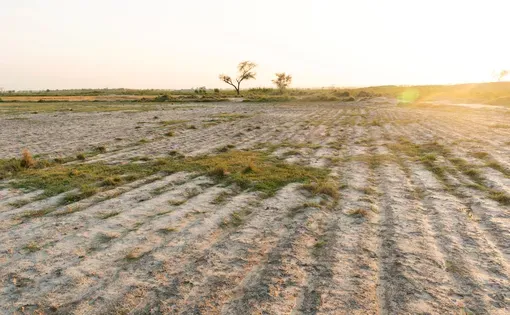
Farmers with salt-affected land are turning to saline agriculture.
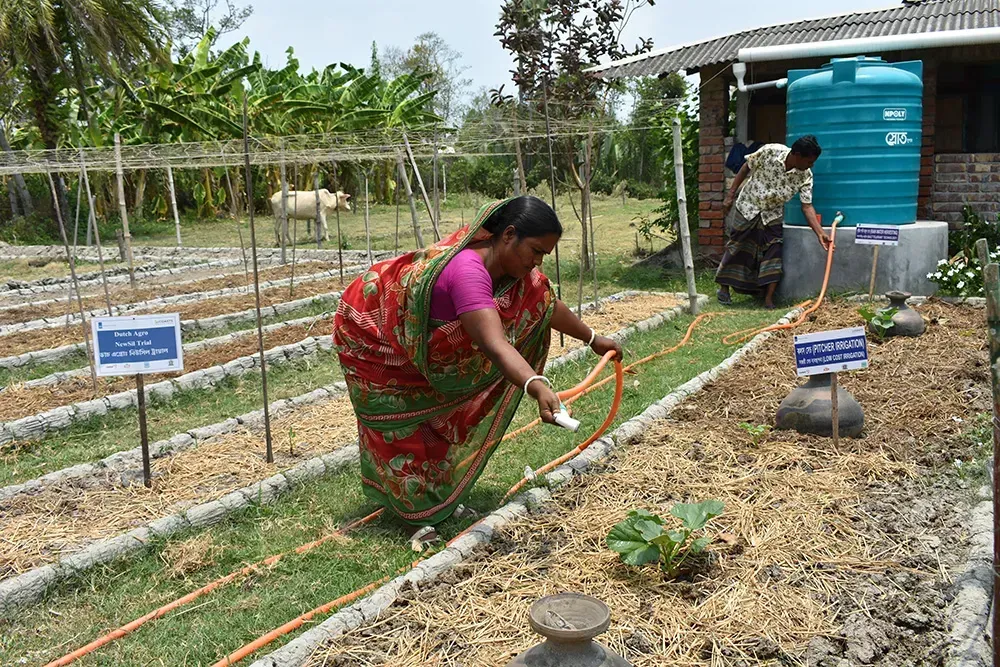
Tens of thousands of Bangladeshi farmers are being trained to farm on soils getting saltier due to climate change.
- Soils along Bangladesh coast becoming more salinated
- Many crops will not grow in dry season when soil is saltier
- Country tries to educate farmers on how to cope
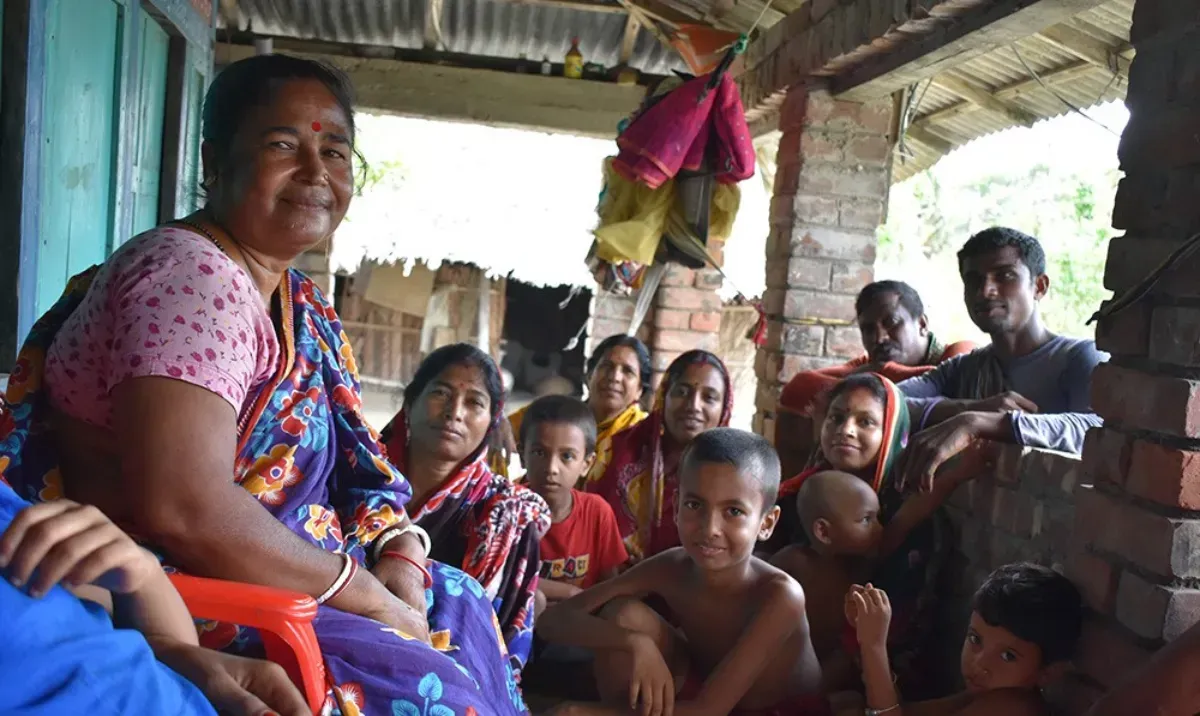
KHULNA, Bangladesh — Bangladeshi smallholder farmer Rita Bashar proudly cracked open her accounts ledger and pointed to the early months of last year's dry season when she made about $240 from her vegetable crop.
It was something Bashar could not even imagine two years before when nothing at all would grow in the dry season on her land near Rampal, about 60 miles (97 km) up the Rupsa River from the Bay of Bengal. The soil was simply too salty.
With the extra money, she says, "I bought the cow," nodding to a scrawny beast tied to the tree in front of her home.

As a nonprofit journalism organization, we depend on your support to fund more than 170 reporting projects every year on critical global and local issues. Donate any amount today to become a Pulitzer Center Champion and receive exclusive benefits!
Soil and water salinity devastates crops during Bangladesh's lengthy dry season, meaning much of the coastal farmland lies fallow outside the rainy season when most farmers grow rice.
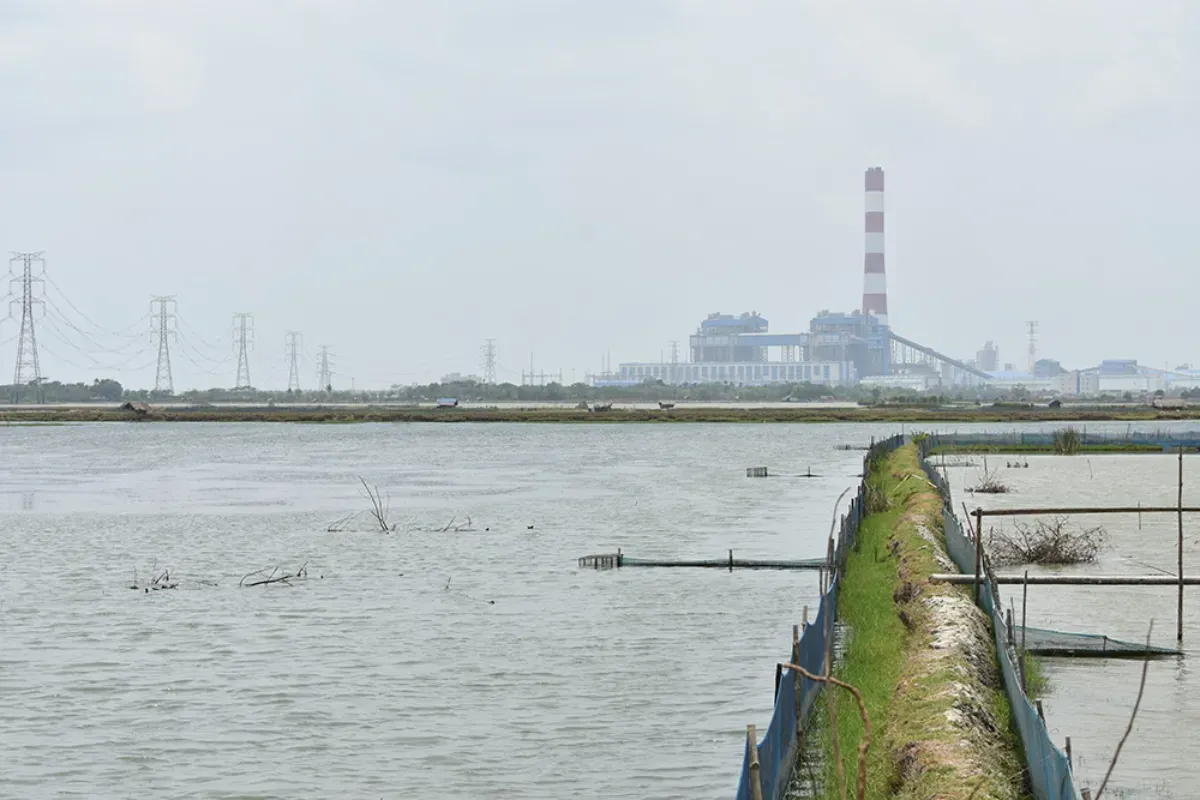
Storm surges and cyclones have led to increased saltwater intrusion, while poor water management and decades of saltwater shrimp farming have exacerbated the problem.
Climate change is making matters worse. The United Nations Food and Agriculture Organization predicts half of all arable land worldwide will be affected by salinity by 2050.
Already, the global economic damage costs more than $27 billion a year, according to one estimate in the Natural Resources Forum, an academic journal on sustainable development published on behalf of the United Nations.
However, supported by foreign aid, Bangladesh's Ministry of Agriculture has partnered with a gaggle of NGOs to train tens of thousands of farmers like Bashar on what crops to grow in salty soils and how to grow them.
Better farming faces rising tide of challenges
Bashar now has access to salt-tolerant seeds and has raised her planting beds and dug drainage channels. The training has taught her to use rice-straw mulch to prevent evaporation that increases salinity.
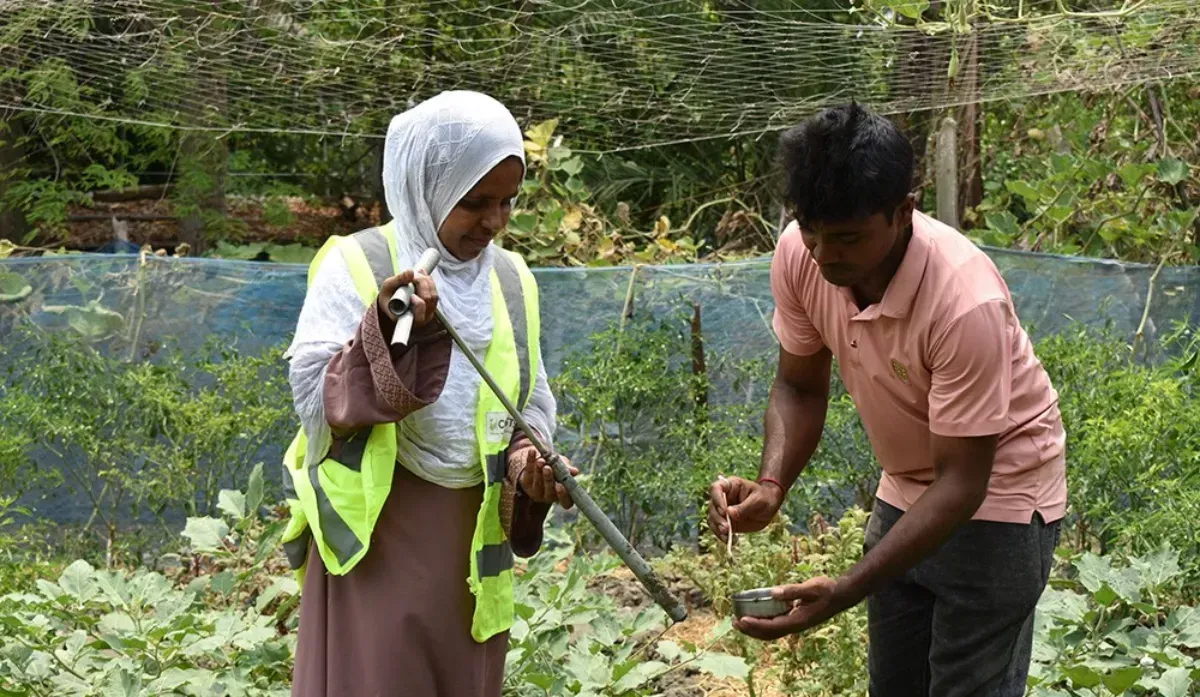
Using a simple, inexpensive salinity meter provided by Cordaid, one of the partner NGOs, Bashar can now test her own soil and also has a low-tech rainwater irrigation system.
According to the Bangladesh Rice Research Institute, the amount of land brought back into production in the region during the dry season when soil salinity is highest has increased 270% since 2016, though the institute said that result had not been independently verified.
For Bashar and tens of thousands like her, the programme in Bangladesh has been a success, but not an unqualified one. The threat of climate change and perennial lack of freshwater is threatening everything she has achieved.
"Back 20 years, 15 years, the raining pattern was not uneven," said Mazharul Anwar, head of the On-Farm Research Division at the Bangladesh Agriculture Research Institute, one of the programme partners. "Now the raining pattern is changed."
Last year, in April, an extreme heat wave made evaporation-induced salinity worse in this part of the country while months later, stronger than usual rains caused devastating flooding.
But at the end of the dry season, when salinity levels peak, Bashar still had a few salt-tolerant vegetables growing, though her mango trees had suffered too much salt to produce fruit.
Shrimp farming adds to the problem
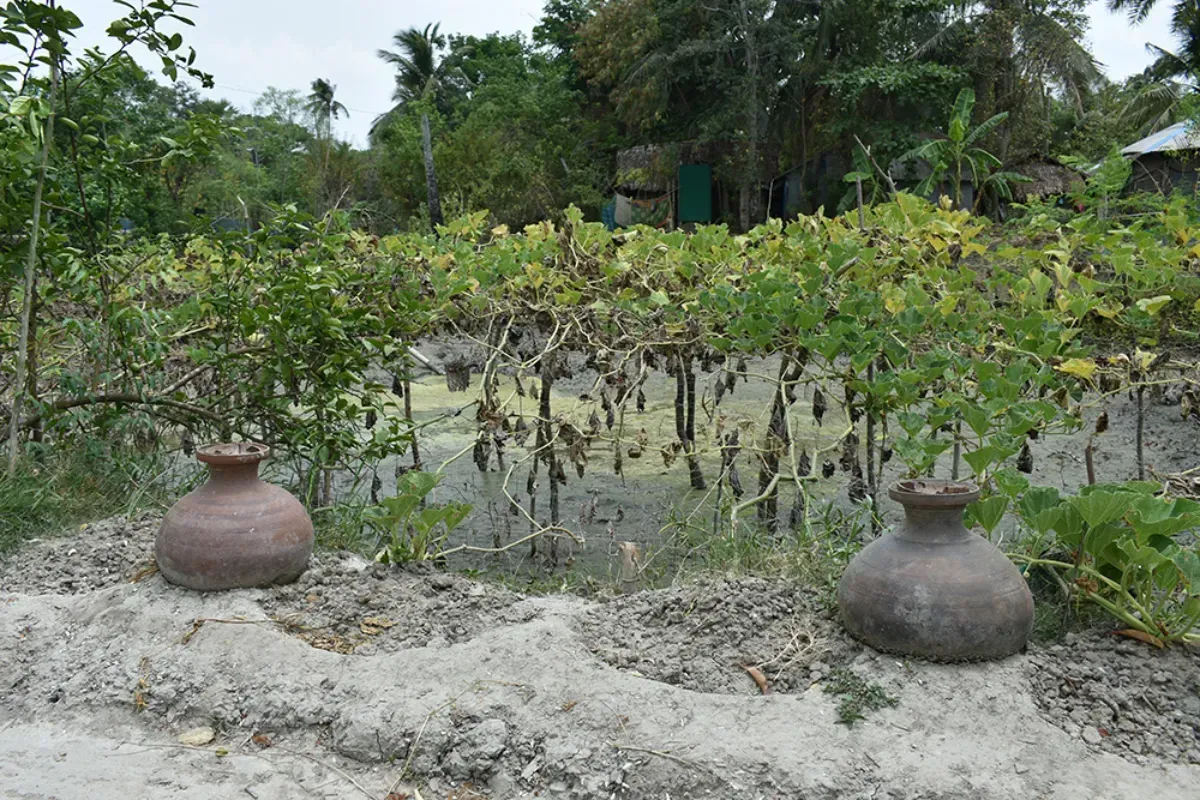
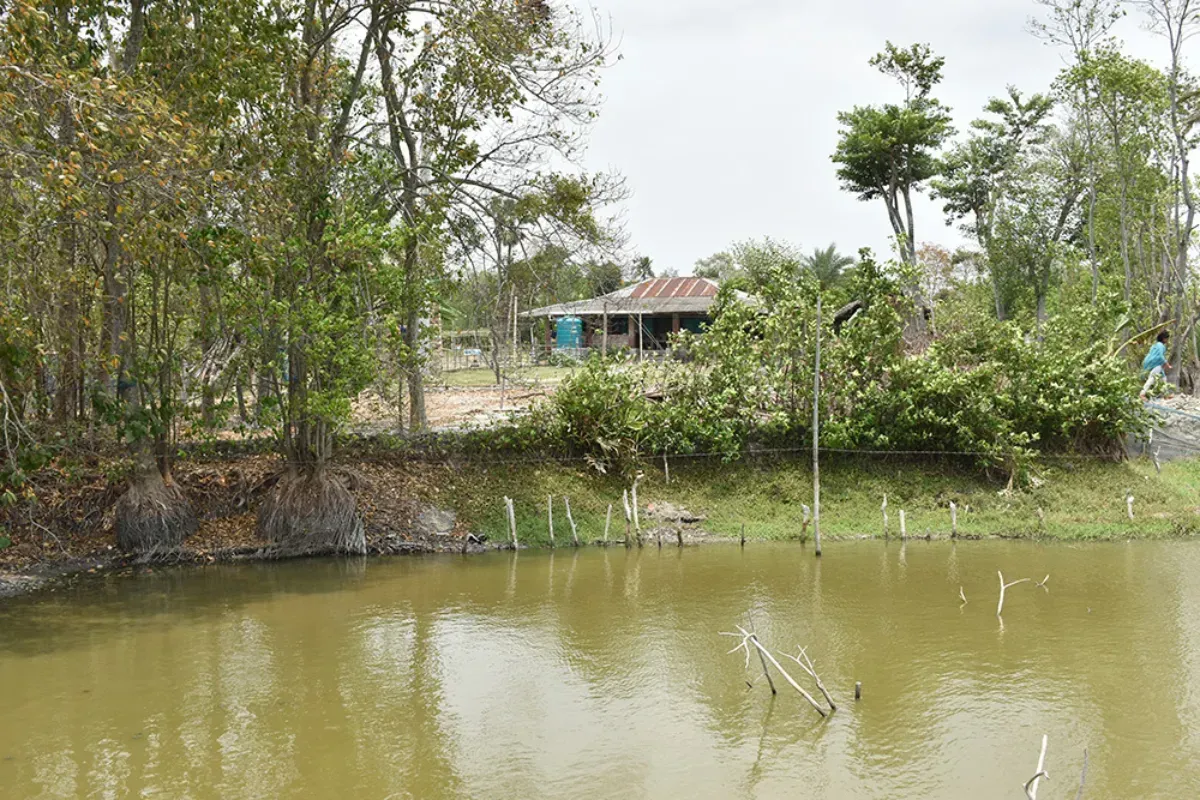
Compounding the problem is the widespread cultivation of shrimp that took off in Bangladesh's coastal region in the 1980s. Like many others, Bashar and her husband dug a shrimp pond and filled it with saltwater, but that seeps into their already salinated fields and freshwater fish pond.
Zainal Abedin, Cordaid's former programme coordinator, said farmers know their land will never be completely salt-free.
"They understand climate change's negative impact," he said. "All coastal farmers are suffering."
But Bangladesh has overcome serious food problems before.
Anwar pointed out that Bangladesh fought to become self-sufficient in rice production, though some Bangladeshi news reports dispute that the country is completely self-reliant.
Even so, between 1970 and 2023, rice production more than tripled from 10.82` million tons to about 41.3 million tons.
"So now we are trying to (become) self-sufficient in nutrition," he said. Programmes like this that enable millions of smallholders such as Bashar and her family to grow nutritious produce to feed themselves, make a living and stay on their land are helping.
Otherwise, 25 million people could migrate from coastal areas in the coming decades, according to Douwe Dijkstra, country director for Bangladesh at Cordaid.
Sitting on her porch with her daughter and a group of women she has taught to farm using the same techniques, Bashar can see her cow. For now, she gets fresh milk from it.
Once it has matured, she says, she intends to sell it. Then she plans to buy two or three more and add another income stream to her farm.
Editing by Jon Hemming