


This project investigates the root causes behind the surge in migration from Senegal to the European...
Follow the Money travelled to the West African coast and discovered how fishing companies from Spain and France are plundering Senegalese waters while siphoning off the profits. As Senegal strives to tackle illegal fishing amid tensions with the EU, local officials warn that many local fishermen fear for the future while more and more young people are seeking a better life in Europe.
What is this about:
- Last year, the European Commission issued a formal warning to Senegal over illegal fishing off the West African nation’s coast, as well as the lack of monitoring and control of trawlers sailing under the Senegalese flag. Negotiations on a mutual fisheries agreement were subsequently suspended.
- Research by Follow the Money shows that at least a fifth of the vessels that fish under the Senegalese flag are owned by European parent companies. They siphon not only fish but also profits out of Senegal.
Why is this important
- This has a major impact on Senegal itself: Catches are falling drastically while officials warn that migration from the country to the EU is increasing.
- The Commission is failing to call such EU companies to order and is instead focusing on stopping migrants.
How was this investigated?
- FTM investigated this by speaking to several fishermen in coastal communities in Senegal and visiting the port of Dakar. Reporters also analysed ownership structures of fishing vessels and interviewed local officials.
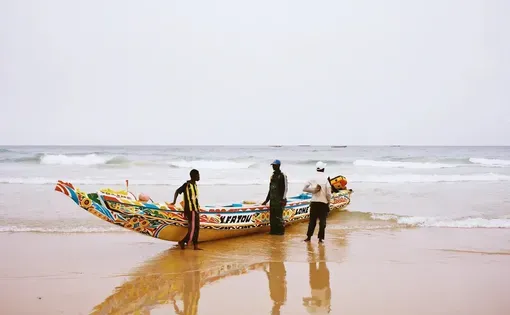
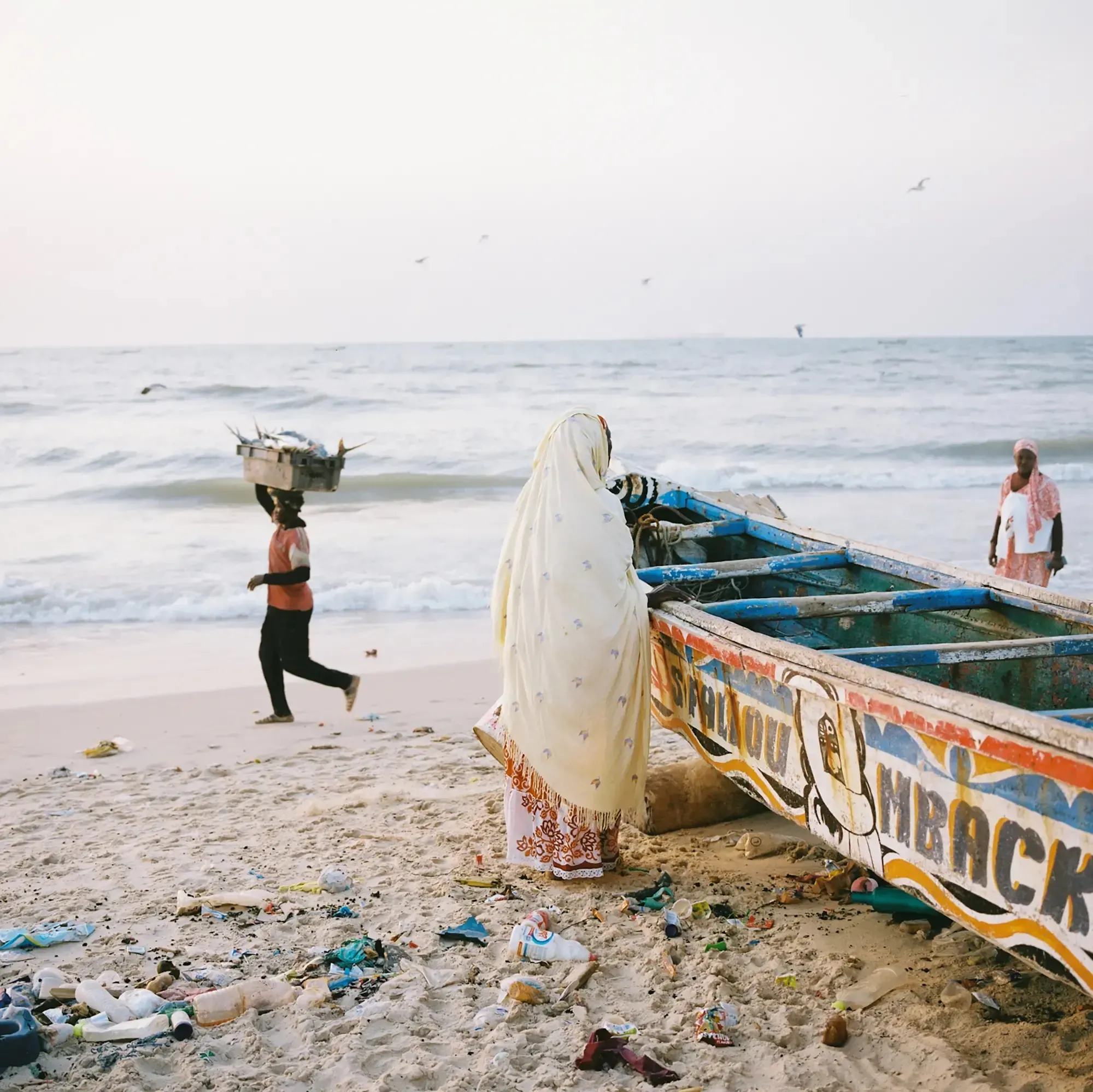
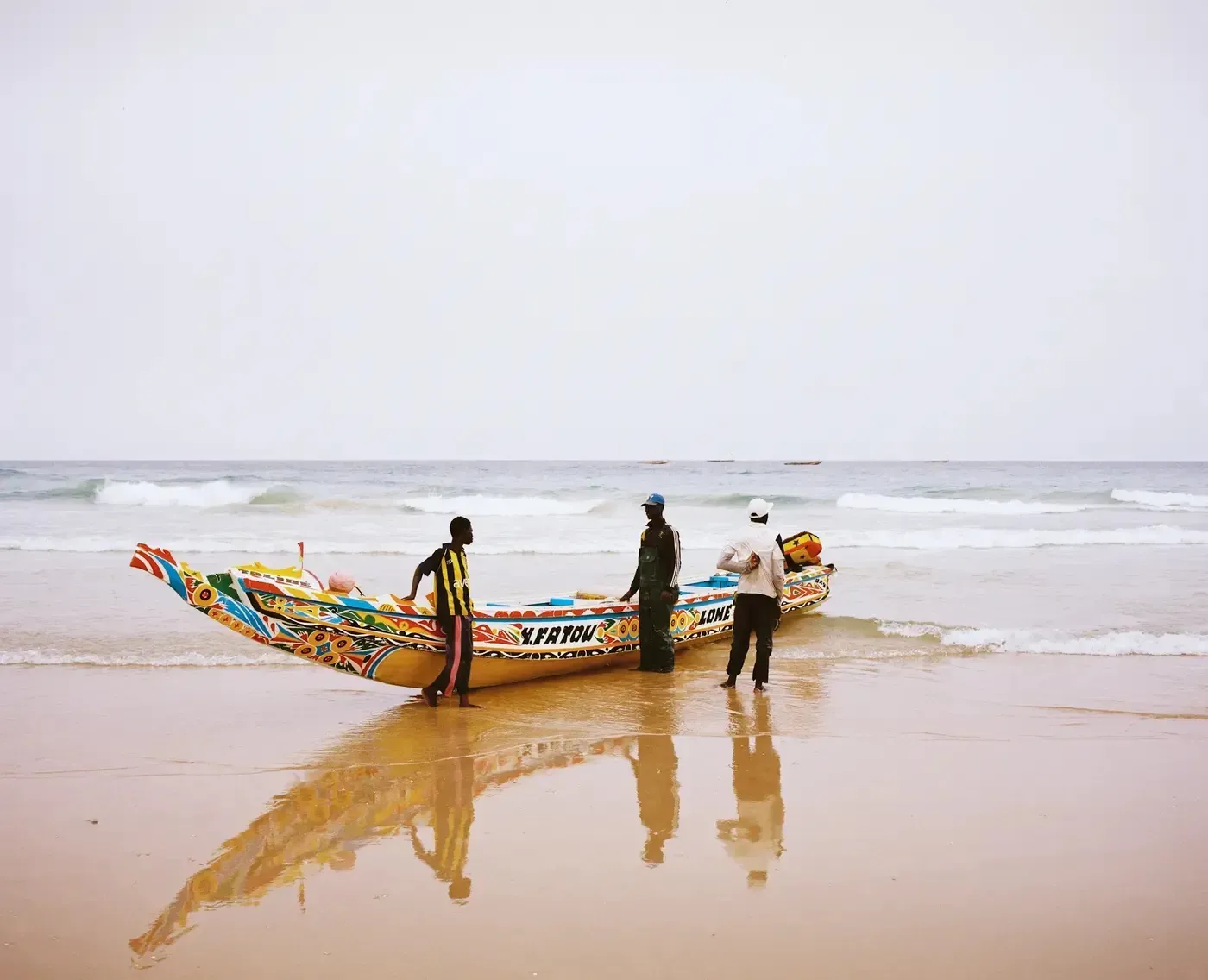
On a beach in northern Senegal, Amadou Diague watched as several fishermen skilfully guided their canoes ashore to deliver the day’s catch.
As seagulls circled above the brightly painted boats — locally known as pirogues — young boys removed the crates of sardines and took them to a nearby market square to be sold immediately.
According to Diague, who retired from fishing about two years ago, this is the lifeblood of his community, Guet N'Dar, a neighbourhood of fishermen located near the West African nation’s second city of Saint Louis.

As a nonprofit journalism organization, we depend on your support to fund more than 170 reporting projects every year on critical global and local issues. Donate any amount today to become a Pulitzer Center Champion and receive exclusive benefits!
But it faces a growing threat. Fewer fish are being brought ashore because foreign trawlers are emptying the sea at the expense of local livelihoods, Diague warned.
“These big trawlers come close to the coast to catch fish where they are not supposed to,” the 52-year-old told Follow the Money one afternoon in mid-December. “They hide behind the Senegalese flag. But we all know that it is actually the Spanish who come to steal our fish.”
First-of-its-kind research by FTM found that at least a fifth of the 132 industrial fishing trawlers flying the Senegalese flag are owned by joint ventures with EU-based parent companies.
For years, the European Commission encouraged the creation of such joint ventures through a major fisheries treaty with the former French colony.
The promise was that international cooperation would boost Senegal’s fishing industry and spur economic development.
“They hide behind the Senegalese flag. But we all know that it is actually the Spanish who come to steal our fish.”
But in practice, companies are getting around restrictions on foreign ships by owning Senegalese-registered vessels. This allows them to plunder the seas and siphon off profits to parent companies in China, France, and Spain, according to local fishermen, campaigners, and officials.
Who’s flying the flag?
During a visit to the port of Dakar — Senegal’s capital — in mid-December, FTM came across the Kanbal III trawler, which has hit headlines in recent years for all the wrong reasons. The vessel has been accused by activists of illegal fishing in the region, and it was arrested in 2022 in nearby Liberia for violating safety regulations.
The Kanbal III, which flies the Senegalese flag, had been moored at the pier of the fishing company Soperka for several weeks when FTM visited in December, according to data from the ship-tracking website MarineTraffic.
On paper, Soperka is more than half Senegalese-owned. Yet the company is a subsidiary of Spanish fishing conglomerate Grupo Pereira, which markets a wide range of fish worldwide — from hake fillets and shrimp to canned sardines and tuna. The Kanbal III appears on Grupo Pereira’s website as part of its international fleet.
Grupo Pereira did not respond to requests for comment.
Near the trawler’s berth at the port in Dakar, FTM observed the warehouse of a French multinational and several ships bearing Chinese names docked nearby.
“All the boats you see here are sailing under the Senegalese flag, but are in fact Spanish, French, or Chinese,” a port employee said during FTM’s incognito visit.
“What they usually do is pick a Senegalese director and then give him money. But the bosses of such joint ventures are in Europe,” the employee said.
These covert corporate structures make it virtually impossible to take action against ships that commit abuses, or to prosecute the ultimate owners who profit.
All the while, Senegal’s fish stocks are dwindling and the industry is struggling with a downturn in export earnings, with some officials warning that failing to tackle the issue could drive more young people to migrate and seek a better life in Europe.
Fishy practices
For European fishing companies, owning boats that fly the Senegalese flag offers them major advantages.
Under previous fisheries agreements between the Commission and Senegal, EU-flagged vessels could only catch tuna and hake.
By setting up joint ventures with Senegalese partners, EU companies were also authorised to fish other species, such as sardines and shrimp.
They also gained access to fishing zones in neighbouring countries such as Liberia and Gambia through bilateral treaties, and paid less for port fees and fishing rights.
History of fishing treaties
In 1979, the European Community — the predecessor to the EU — concluded the first fisheries agreement with Senegal, covering both trawler fishing and tuna fishing.
In the mid-2000s, small-scale fishermen in Senegal complained about the treaty, mainly in protest against trawler fishing because it hugely affected their catches.
Due to this pressure, Senegal’s then-president decided not to renew the treaty when it expired in 2006. After the deal ended, many European companies set up Senegalese ventures to continue fishing under the country’s flag. Several Chinese and Korean companies did the same.
In 2014, a new Senegalese government signed a new and much more limited deal with the EU known as a sustainable fisheries partnership agreement (SFPA).
After an extension in 2019, it remained in force until it expired in November 2024.
Under the terms of the SFPA, a maximum of 45 EU fishing vessels, all from France or Spain, were allowed to fish in Senegalese waters — but only for tuna and hake.
In return, Senegal received an annual sum of 1.7 million euros from Brussels, plus compensation per tonne of fish caught.
The success of the treaty is questionable. Over the past five years, far fewer than the 45 permitted EU boats have requested permission to fish in Senegal; in 2024, only nine Spanish and eight French vessels had a permit. According to transponder data, some of these vessels have rarely been in Senegalese waters in the past year.
At the end of May last year, the Commission issued a “yellow card” to Senegal for what it described as “several years of deficiencies and a lack of cooperation” in the fight against illegal, unreported, and unregulated (IUU) fishing.
The Commission criticised the country for failing to adequately monitor and control Senegalese-flagged ships in extraterritorial waters as well as foreign fishing vessels in the port of Dakar. It also flagged illegal exports from Senegal to the EU market.
About six months later — in mid-November — the EU’s delegation to Senegal announced that it would not renew the fisheries agreement with the country, and could not consider doing so without seeing “sufficient progress” to stop IUU fishing.
Following the announcement, Senegalese officials said the decision not to renew the treaty was made by their government, rather than the EU. Fatou Diouf, the fisheries minister, said this was done to allow for an assessment of the country’s resources.
Aliou Ba, a campaigner at Greenpeace Africa, said the EU is guilty of hypocrisy.
“The EU narrative is that fishing should be legal,” Ba told FTM. “Then they issued a warning to the Senegalese authorities because Chinese boats can fish illegally here with impunity. They do not mention that European trawlers do the same.”
Because Senegal’s authorities did not disclose which boats had been granted fishing licenses, it was very difficult for local fishermen and civil society organisations to find out who exactly was fishing off their coast – and whether they were doing so legally.
According to a 2022 study in the journal Frontiers in Marine Science, 38 per cent of vessels that were identified as EU-flagged or owned by entities in the EU committed at least one reported criminal offence in West Africa between 2000 and 2020.
For example, during a joint operation between the Sea Shepherd conservation group and Liberia’s coast guard in February 2017, a Spanish-owned trawler flagged to Senegal was arrested. An inspection found violations of 26 laws and regulations.
About five-and-a-half years later, this partnership led to the arrest of the Kanbal III, which was found to have several safety violations including life raft issues, fire extinguisher problems, and expired emergency transponders.
In recent years, campaigners have also accused the ship of using the Senegalese flag to secretly fish for valuable red shrimp in Liberia while it was officially on a research mission, and of tampering with its nets to catch more fish than allowed.
Sea change
The situation in Senegal changed in April 2024 when a new government came into power under Bassirou Diomaye Faye, the country’s youngest ever president.
The 45-year-old had campaigned on promises to invest in the fishing sector, support local fishermen, and review the nation’s agreement with the EU, among other steps.
Within a month of taking office, his administration published a list of the 132 vessels registered in Senegal and authorised to fish in the country.
Of these boats, 26 appear to have ties to Spanish parent companies. For example, six fishing boats belonging to Soperka are registered as Senegalese — but all are listed as part of Grupo Pereira’s international fleet on the company’s website.
Advocates for sustainable fishing welcomed the release of the registry as a step forward for transparency and efforts to tackle illegal fishing in the region.
In the small coastal town of Kayar just north of Dakar, Mbor Mbengue — the chairman of the local fisheries council — said the number of trawlers at sea had fallen sharply as a result.
“Since the new government announced who has a fishing licence, many foreign trawlers have simply not set sail,” he told FTM in an interview in mid-December.
“That says enough about the amount of illegal activity that is taking place at sea,” Mbengue said. “Many boats with European owners are fishing in such a way that there is absolutely nothing left for us.”
Rough forecast
Senegal is a country of fishermen.
Its west coast lies at the convergence of two particularly productive fishing zones — the Atlantic Ocean area around the Canary Islands and the Gulf of Guinea.
The fishing industry accounts for 3.2 per cent of Senegal’s GDP and 10.2 per cent of its exports, and generated $400 million (370 million euros) in value in 2021, according to the latest available research by the U.S. Department of Agriculture.
At least 600,000 people out of a population of about 18 million are estimated to rely on fishing for their livelihood.
When local canoes bring their catch ashore, it is sold at auctions on the beach to traders or fisherwomen who dry or smoke the fish to sell at markets. Families buy it and take it home to make the national dish thieboudienne (rice with fish and herbs).
But fishing is not just a way of life. The government sees it as a driver of economic development and has implemented financial incentives to boost industrial fishing.
For example, companies that export more than 80 per cent of the fish they catch or process receive a 50 per cent tax reduction and are exempt from import duties.
“The fish disappears, but there is no money in return.”
The Senegalese government had hoped this would bring in foreign exchange through exports. In practice, the tax breaks have proved to be a magnet for fishing companies from around the world.
This primarily benefits the privileged few while threatening food security and the livelihoods of fishermen and women who work in fish processing and trade.
A 2017 report by Greenpeace cited research showing that as little as 4 per cent of the value of fish exported from the region flowed back to West African countries.
But tracing exactly how this money flows is extremely difficult, according to Bassirou Diarra, a campaigner with the Environmental Justice Foundation (EJF).
“Financial flows and ownership structures in the fishing industry are very unclear across the board,” he told FTM in Dakar.
“You can go to the port and see that the entire management team of such a joint venture comes from Spain. We often try to use our customs contacts to find out import and export data. Banks and governments are very opaque about that.”
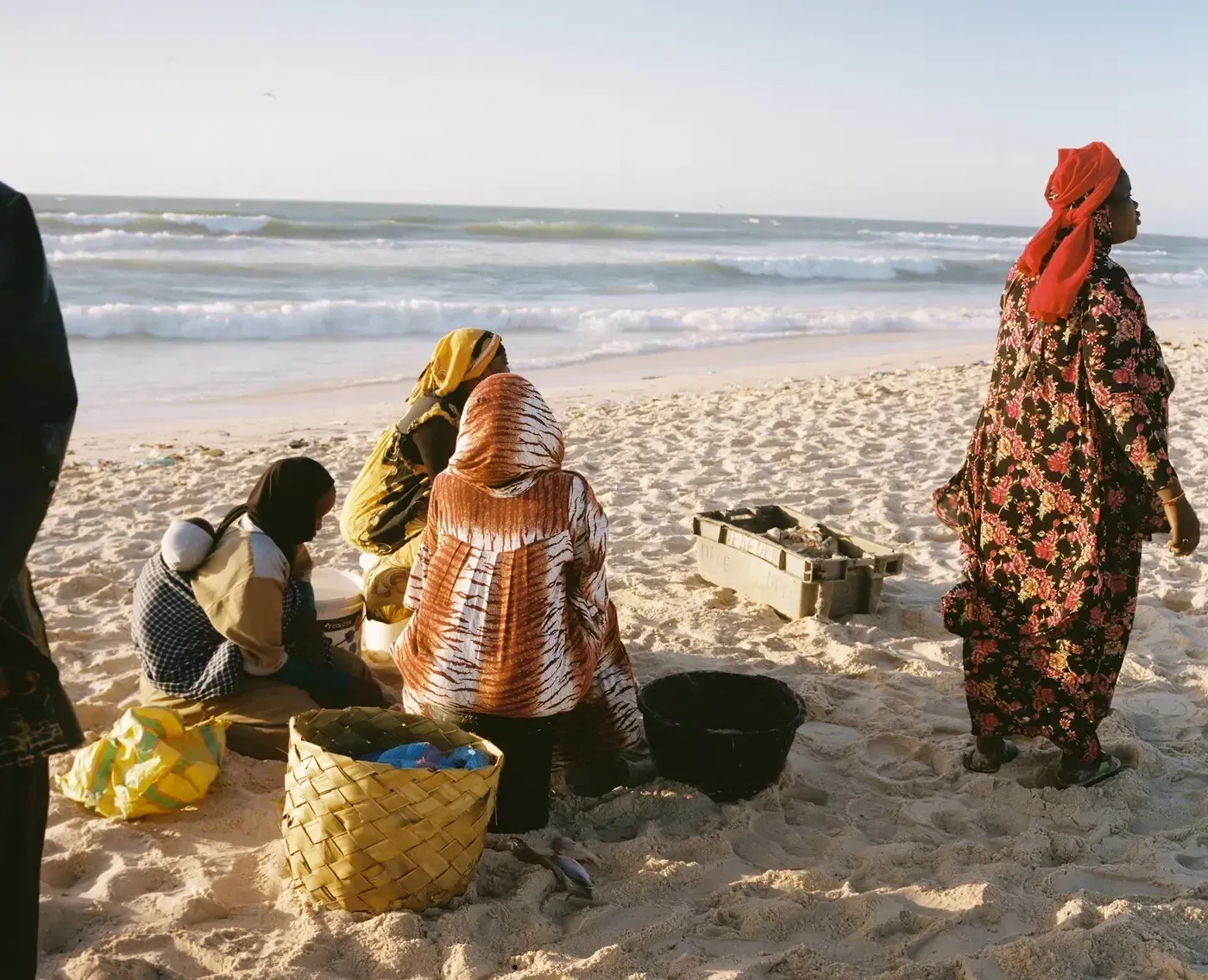
While exact figures are almost impossible to determine, it is clear that West African countries are losing billions.
West Africa’s central bank (La Banque Centrale des États de l’Afrique de l’Ouest – BCEAO) sounded the alarm last year about missing foreign currency.
In 2022 and 2023, the BCEAO lost $8.8 billion (8.1 billion euros) because export companies failed to meet obligations to deposit part of their foreign profits with the central bank.
The Senegalese government itself has warned that the “increase in frozen products” exported by the country’s fishing sector to the EU “does not go hand in hand with the trade value”. Money earned from fish exports actually showed “a downward trend” between 2015 and 2020.
“The fish disappears, but there is no money in return,” said Diarra of the EJF.
As a result — and despite the growing demand for fish — Senegal’s young people are leaving the industry and seeking opportunities overseas, according to Boun Daouda Soumaré, director of the Municipal Development Agency of Saint Louis.
“For years, our government has taken too little action against foreign fishing companies, because a small group of powerful people in Dakar also profits,” he told FTM from his office in the historic heart of the city. “One result is that young people who cannot find work are now leaving for Europe as migrants.”
Last October, one month before the EU said it would not renew the fisheries treaty, the Commission announced a new package of 30 million euros to help Senegal prevent irregular migration. This followed a previous investment of 5.75 million euros.
‘The theft has to stop’
Fish stocks near the coast of Senegal are increasingly under threat, according to research by the U.N. Food and Agriculture Organization (FAO).
This is partly due to population growth in Senegal, as local fishermen are catching more and more sardines for the country’s food supply.
It is these fishermen who land the most fish: According to government catch data, the artisanal sector is meant to bring onshore about 80 per cent of all Senegalese catch.
But the negative impacts of industrial fishing are more severe than the statistics indicate. In a 2019 policy evaluation, EU researchers warned that there is no reliable data about how big the amount of bycatch is that is a result of industrial trawling.
“When it's dark, they turn off their lights and cover their markers to remain unrecognisable.”
Industrial trawlers also violate the rule that they are not allowed to fish within the 12-nautical-mile (22-kilometre) coastal zone reserved for wooden canoes that catch sardines, according to the fishermen interviewed by FTM. Several of them said that there are frequent incidents near the coast in which trawlers and small boats collide.
“There have even been fatalities,” said fisherman Boly Fall, who lives in a suburb of Saint Louis.
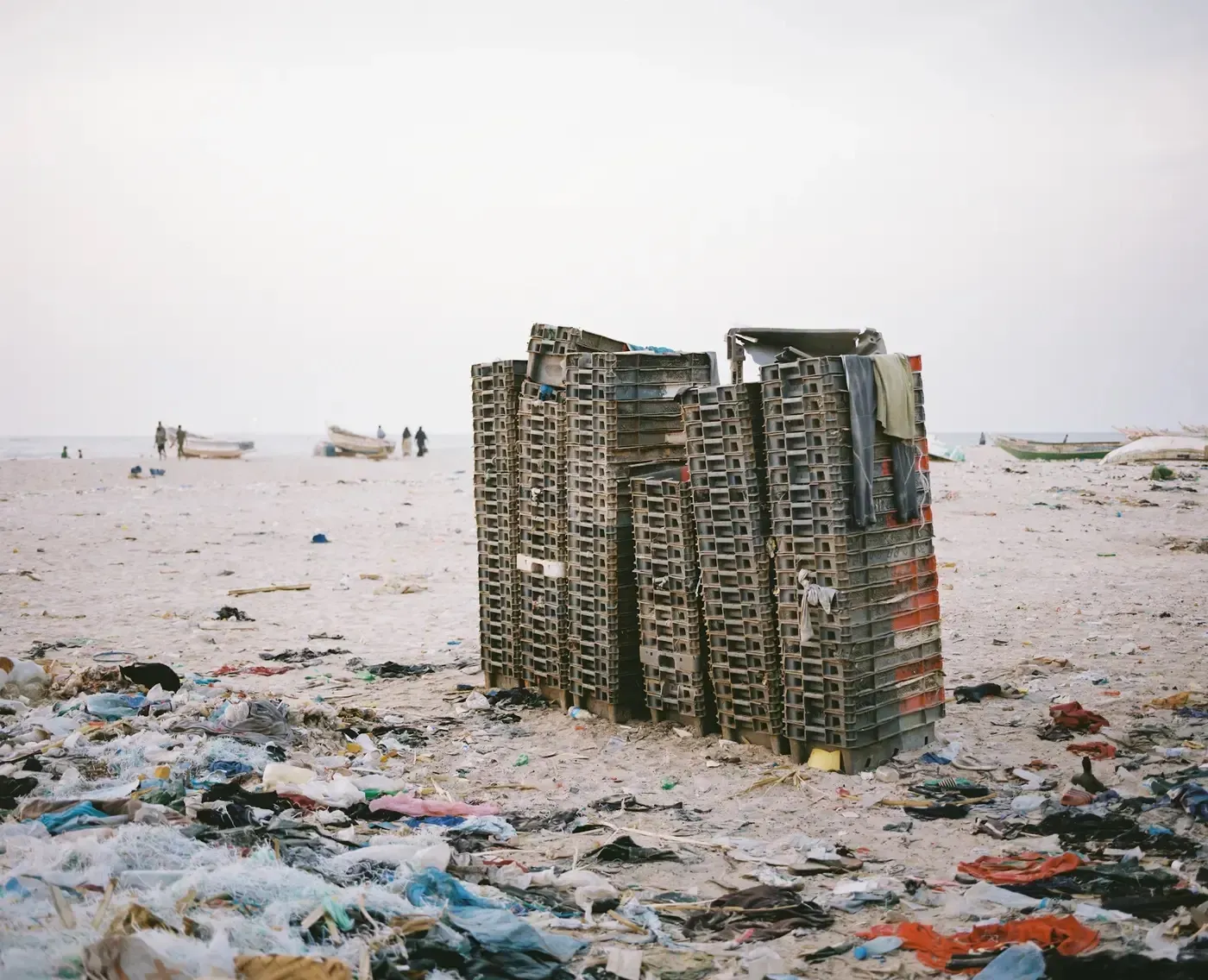
“When it's dark, they turn off their lights and cover their markers to remain unrecognisable,” he added. “That leads to collisions because you can't see those big boats coming.”
On the beach in nearby Guet N'Dar, the retired fisherman Diague said that trawlers were in direct competition with local fishermen for the same species of fish.
“Initially, mainly Chinese boats fished very close to the coast for sardines,” he said, standing in a hut built of fishing nets and corrugated iron on the edge of the beach.
“The Europeans copied that and now mainly come at night, so that we don't recognise them.”
As the sun set off the coast, a large, dark shadow appeared on the horizon.
The fishermen explained that a naval ship has been protecting their wooden boats from aggressive foreign trawlers since Faye’s government took office last year.
Local fishermen are increasingly venturing into neighbouring Mauritania’s waters to fish for octopus because their own fishing grounds are depleted, Diague said.
“If a large trawler secretly smuggles fish ashore, no one bats an eyelid,” he said. “But if we want to bring octopus back across the border, we are hunted down by the border police.”
“It is good that our new government is finally cracking down on those foreign boats,” Diague added. “The theft of our fish has to stop.”