


Project
From Destruction to Speculation
How data center companies are working to avoid regulation at the local and federal levels.
Leia esta história em português.
Eldorado do Sul opens its doors to a multi-billion dollar data center that hides its environmental impacts and ignores the local population.
AI City was conceived amidst the chaos of a flood that affected 80% of the city. The company behind the data center seeks to take advantage of relaxed regulations to maintain a near total lack of transparency.
- Just months after the floods that devastated Eldorado do Sul, Scala AI announced a massive R$ 3 billion investment in a data center in the city. The project has been dubbed 'AI City'.
- Even without any report demonstrating the benefits and impacts, the City Council approved a law that facilitates licensing and prioritizes the implementation of the municipality's economic policy.
- City residents are mostly unaware of the project—and to this day, they suffer the consequences of the 2024 floods and a lack of aid pledged to rebuilding.
- The data center will be located on an area equivalent to more than 540 soccer fields along the BR-290 highway, purchased for R$38 million. Because of its higher elevation, the land was protected from flooding.
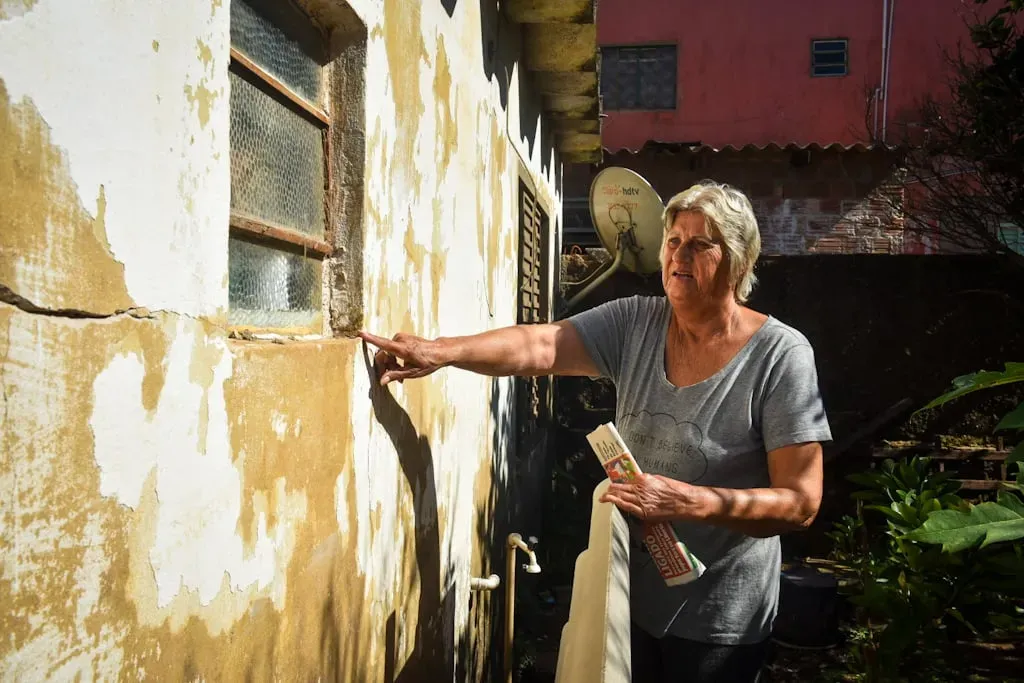
Maria Nelly Andersen points to a series of cracks on the wall of her home and a faded mark showing the height that the water reached during the historic flood in Rio Grande do Sul in May 2024. A year later, still trying to save her home from collapsing, she was surprised when asked about the mega data center set to be built in the city. “What is that? Will it help stop another flood?” she asked.
Not only will it fail to help, but it will bring an increased risk of environmental problems to Eldorado do Sul, one of the cities most severely affected by the flood, where over 80% of homes were submerged and about 30,000 people displaced.
The data center—a massive building filled with powerful computers running 24/7 to process internet activity—consumes a tremendous amount of energy and water to cool the supercomputers. The one planned for Eldorado do Sul is so large it’s been nicknamed AI City.
As a nonprofit journalism organization, we depend on your support to fund journalism covering underreported issues around the world. Donate any amount today to become a Pulitzer Center Champion and receive exclusive benefits!
With one of the world’s cleanest energy grids, Brazil has become a target for mega-projects and has even dangled tax incentives to attract them.
Enticed by the promise of economic gain, the federal government has overlooked the environmental risks of these projects—going as far as to prevent the Ministry of the Environment from participating in policy discussions around data centers.
The mega data center about to break ground in Eldorado do Sul has implications beyond the environment. Maria and many residents were unaware that the billion-real project would be constructed in a higher, flood-free area of the city. This placement is due to a strategy devised during recovery efforts from the latest flood that was informed by no public consultation and a total lack of transparency around the economic, social, and environmental impacts of the project.
The promise of generating jobs and income after the city's destruction has united city hall and the state government of Rio Grande do Sul.
Since 2024, the project has been spearheaded by Brazilian company Scala Data Centers, with an initial investment estimated at R$ 3 billion.
Yet despite being promoted as a positive development, no one in city government wanted to talk about the project. When The Intercept visited Eldorado do Sul and requested interviews, a communications advisor said the administration had “no interest,” offering no further explanation.
Meanwhile, without consulting any public study outlining the benefits or drawbacks of the data center, the City Council approved a law in December of 2024 to enable its construction. The law streamlines the permitting process and declares that the implementation of a so-called "technology hub" will be a priority in the city’s economic policy.
The Intercept also asked the state government for studies on the project’s risks and impacts. Using the Access to Information Act, we requested full reports, environmental impact assessments, and technical memos. The response from the State Secretariat for Economic Development under Governor Eduardo Leite was that the project is still in progress and no further information is available at the moment.
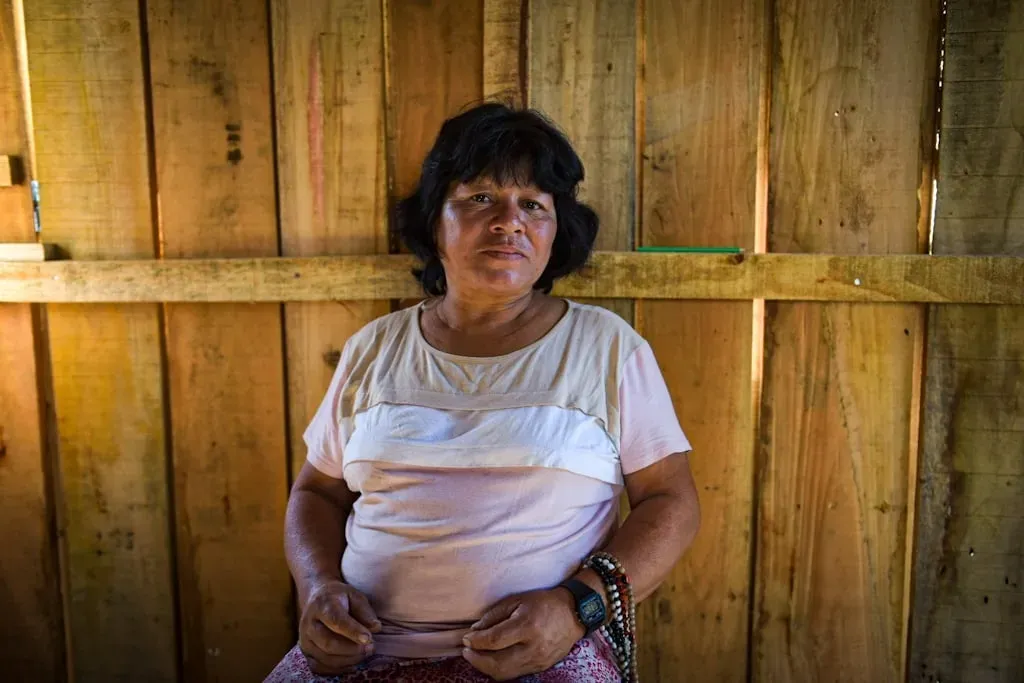
Maria Nelly, meanwhile, still awaits funds pledged to her by the federal government to buy a new home elsewhere. In that wait, she says she’s already missed several opportunities. When asked if she still wants to stay in Eldorado do Sul, she replies: “I’d like to stay, but we don’t have the chance,” she says, pointing to the water stain on the wall.
‘Do you think the people will work at the data center? Negative’
Scala Data Centers announced the billion-real project in Eldorado do Sul just five months after the city was devastated by the flood. At the time, the R$3 billion investment was presented with a hopeful tone, presaging brighter days amid the environmental catastrophe.
Governor Eduardo Leite of the PSD said the announcement put Rio Grande do Sul “in an even more strategic position in the eyes of the world’s major tech companies.”
Although marketed as a Brazilian company, Scala is actually a foreign enterprise. It was founded in 2020 after the American investment fund Digital Colony acquired data centers from UOL Diveo, the IT arm of the UOL Group. Scala received an initial investment of US$400 million, according to the company.
In Eldorado do Sul, the initial project has a planned capacity of 54 megawatts, but the full complex aims for 4,750 MW. In an interview with the newspaper Zero Hora, Eduardo Leite proudly stated that this figure is equivalent to the electricity consumption of the entire state of Rio de Janeiro.
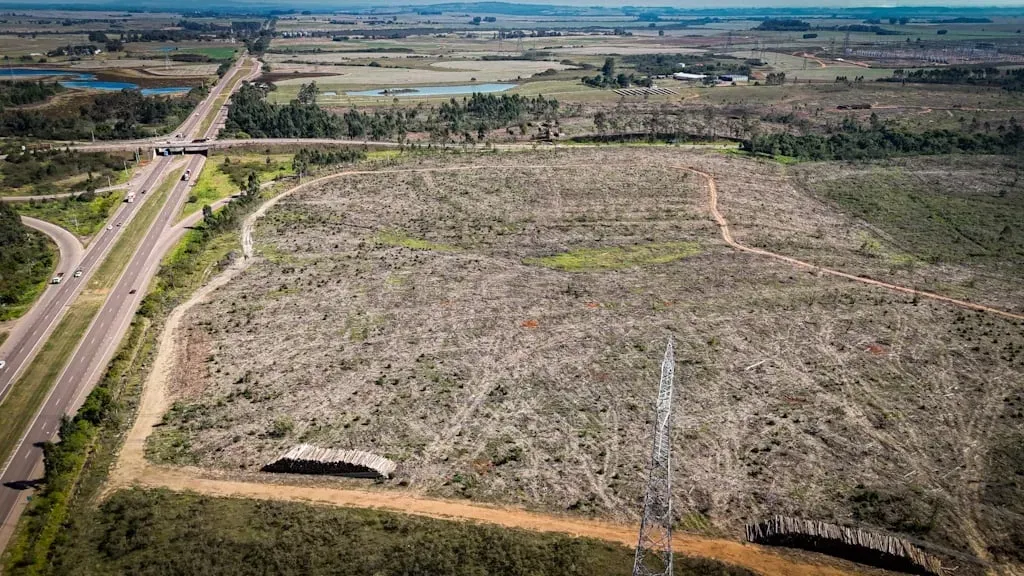
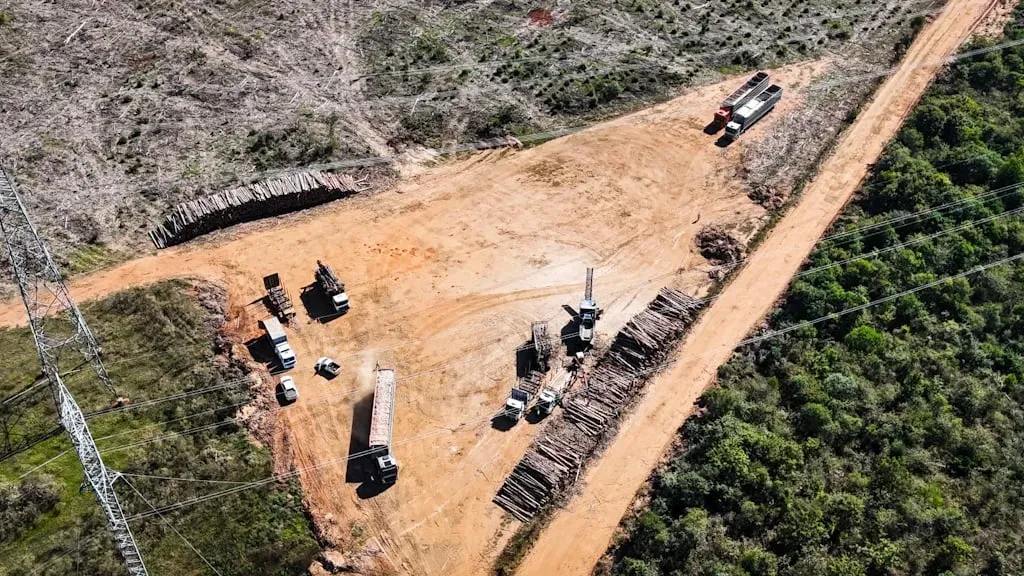
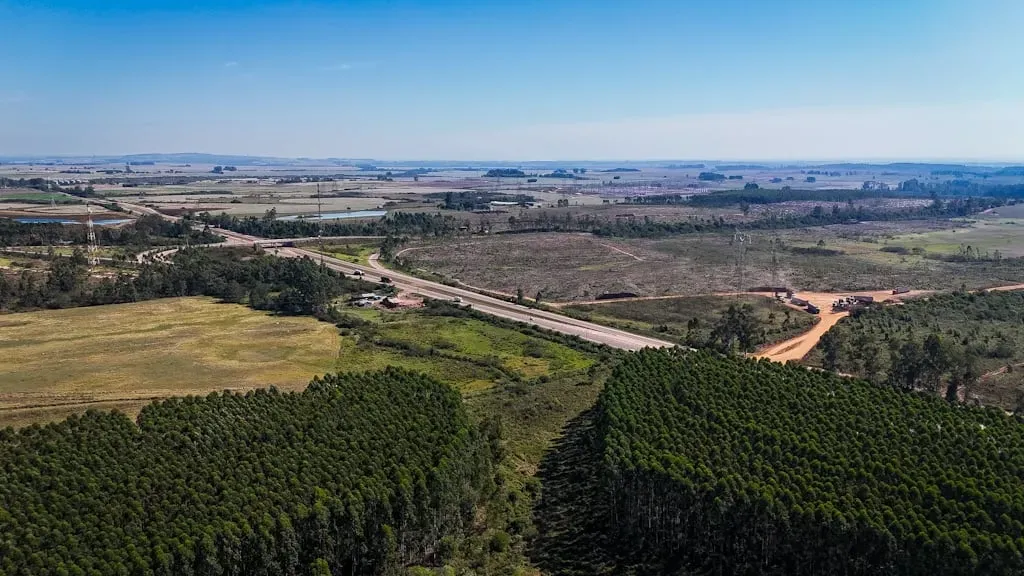
In September 2024, Scala purchased the 3.5 million-square-meter plot (about 540 football fields) for the project—located along the BR-290 at the intersection with the RS-401 highway. Because it was on higher ground, the plot was spared from the floods in May 2024.
According to the deed obtained by The Intercept from the city’s property registry, the land was previously used by an agribusiness for eucalyptus production and cost R$38 million to purchase. When we visited in early May, the land had been cleared, and trucks loaded with timber were leaving the site.
Public announcements by Scala and the Leite government project a total investment of up to R$500 billion if the center reaches full capacity. That number is eye-catching, but a closer look reveals that very little of it will benefit society. According to a 2023 study by the Brazilian Agency for Industrial Development (ABDI), commissioned by the federal government, about 60% of data center investments go toward purchasing expensive equipment like chips and GPUs.
It’s worth noting that data centers are not major sources of tax revenue for municipalities or states—especially in Brazil. One reason is that the forthcoming national data center policy under the Lula administration is based primarily on tax breaks and exemptions. In practice, this means the government forgoes collecting taxes from these companies to make Brazil a more attractive investment destination.
Data centers are not major sources of tax revenue for municipalities or states—especially in Brazil.
However, for companies in this sector, it appears that forgoing federal taxes “doesn’t resolve the whole problem,” per Scala’s founder and CEO, Marcos Peigo. At a May 2025 event, Peigo declared that state tax reductions are also necessary.
In the United States, where mega data centers are already widespread, these tax incentives are proving costly. A report by Good Jobs First, a nonprofit that monitors corporate subsidies, found that at least 10 U.S. states are now losing over $100 million per year in tax revenue to data centers.
According to public statements from the state government and Scala, the project is expected to create 3,000 direct and indirect jobs in its first phase. What is left unsaid, however, is that although construction requires significant manpower, operating the data center requires very few employees.
The Stargate data center in Texas, a U.S. government and AI industry joint venture, illustrates this point. Currently, 1,500 people are working on its construction, but only 100 will work there once it’s operational, according to local development agency data published by The Wall Street Journal.
In Eldorado do Sul, no such breakdown is publicly available—since the company, city hall, and state government haven’t confirmed whether such studies exist.
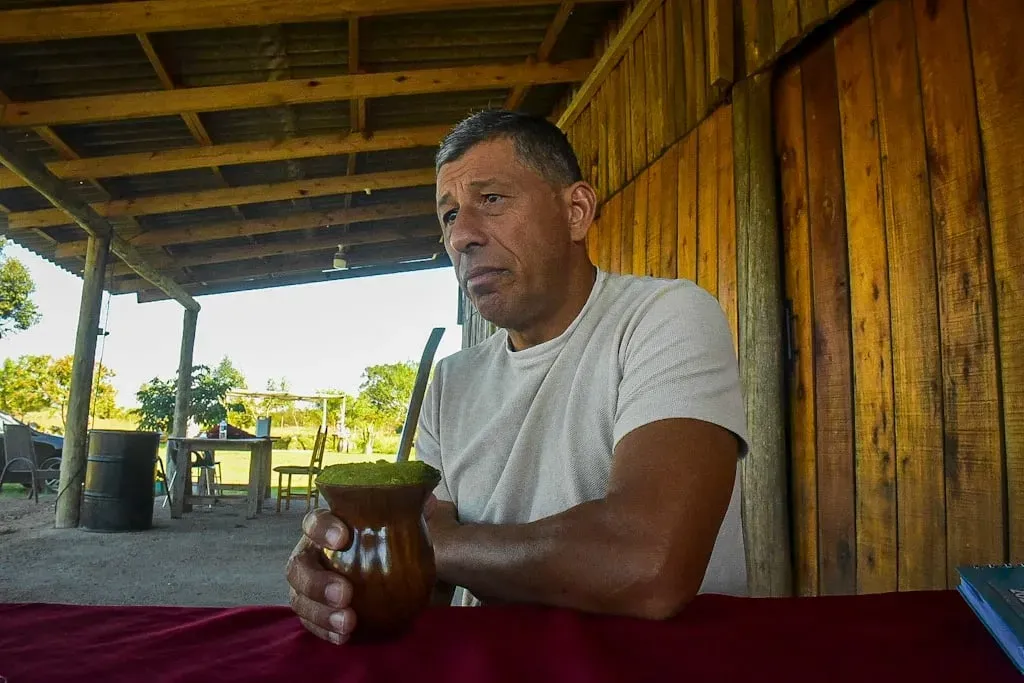
João Cardozo, known as Tigre, an agroecologist, organic rice producer, and former city councilor for the Workers’ Party (PT), is skeptical of the job pledges. “You think the population will work in the data center? No way. How many locals work at Dell? Most people don’t have a college degree or technical training for that,” he told The Intercept during an interview at his farm.
“Will it bring more jobs? Maybe 10, 100, or 1,000. But if the data center brings jobs, will it stop the floods? Will people stop losing everything? Does it solve the problem? No, it doesn’t,” he said.
In rural areas, concern over the so-called AI City is already present. The municipality is home to many organic rice farms and other crops, especially in agrarian reform settlements. Combined, organic and conventional rice production in Rio Grande do Sul accounts for 70% of Brazil’s total, according to the National Supply Company (Conab).
Tigre says it’s unclear where the cooling water for the data center will come from—and there’s fear it could impact rice farming, which requires large volumes of water. He also points out that all the water for agriculture and human consumption comes from the Jacuí and Guaíba Rivers.
“Eldorado do Sul, Guaíba, Porto Alegre, and the surrounding region all depend on the rivers. So the water will surely come from the rivers or large wells. That’s what we want to know too—there’s no clarity on where it will come from or how much will be used,” he says.
He believes that justifying the construction of the data center purely on the basis of job creation misleads the public. “People buy into the idea because of jobs. They think they’ll earn more and be able to work there. But no one is talking about how it will affect the electricity grid, since the company uses a lot of power, for example. No one says anything. What study explains that? We don’t know,” he reflects.
Indigenous people near the billion-dollar ‘AI City’ remain homeless
Just three kilometers from the land where the data center will be built, along the RS-401 highway, an improvised camp is home to the remaining members of the Tekoa Pekuruty village of the Mbyá-Guarani people.
In May 2024, around 40 residents had to flee their village after being awoken by rapidly rising water. After, without warning, the National Department of Transport Infrastructure (DNIT) destroyed the village with bulldozers and machinery.
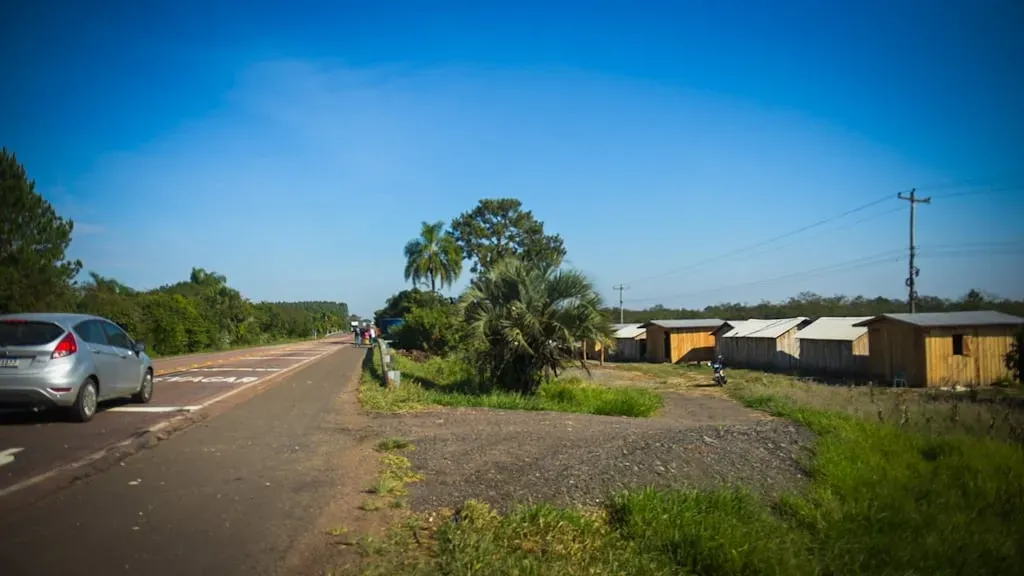
“I lost everything, even the seeds of avati [corn in Tupi-Guarani]. But it wasn’t the flood that took everything—it wasn’t the water. It was DNIT who buried everything in the ground,” said Laura, wife of Chief Estevão. “Then DNIT promised to pay us, but to this day we’ve received nothing.”
For decades, the Mbyá-Guarani have fought to have their claim to the land recognized, but the area has been the subject of a dispute since 2013 due to the establishment of the BR-290 highway, which cuts across the state.
In contrast to the swift implementation of the neighboring data center, the Indigenous people have been waiting since 2018 for the purchase of a 300-hectare area to relocate their village to. In early 2025, the Federal Court ordered DNIT to buy the land and build homes and schools.
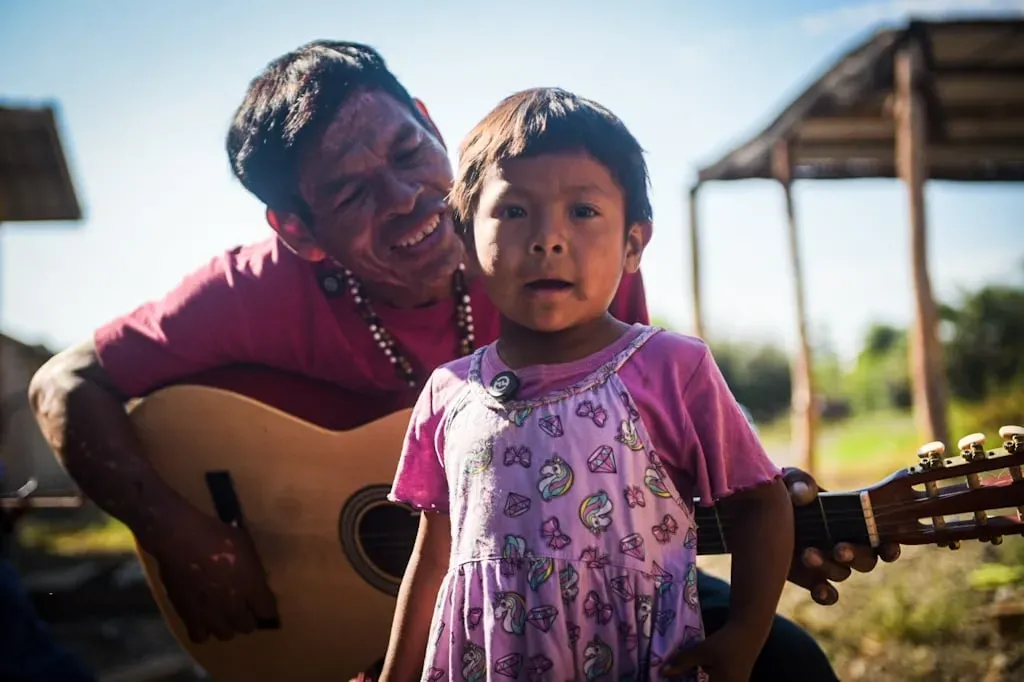
When we visited the residents of Pekuruty, they immediately mentioned their hopes of reclaiming their village, but they had no idea that a mega data center would be built near where they live.
The Guarani people also say they were not consulted—nor even informed—of the arrival of the development near their village. The lack of consultation violates Convention 169 of the International Labour Organization (ILO), of which Brazil is a signatory.
“No one was informed; no one knows what’s being talked about. These people have been waiting for some gesture from the government for decades, and unfortunately, they continue to be treated as if they’re invisible,” said Artemio Soares, an Indigenous activist and teacher who teaches at Pekuruty and other villages in the region.
The Guarani people also say they were not consulted—nor even informed—of the arrival of the development near their village.
In early May, the southern regional coordination of the Indigenous Missionary Council (Cimi) reached out to the Federal Public Prosecutor’s Office (MPF) and the Federal Public Defender’s Office, to obtain more information about Scala’s project. Cimi also raised concerns about the potential environmental impact and the lack of consultation with Indigenous communities in the region.
On the 8th of last month, after becoming aware of the case through the petition, the MPF requested detailed information about the project from the State Secretary for the Environment, the Secretary for Innovation, Science and Technology, and the Governor’s Chief of Staff.
According to the MPF, the Secretary of Economic Development (Sedec) stated that there is a protocol of understanding with Scala, which is considered non-binding, and that no formal request for environmental licensing had been submitted to Fepam or Ibama up to that point. The Secretary also noted that determining which authority will oversee the licensing depends on the nature of the project, but that the environmental licensing process “will require informed consultation with Indigenous communities.”
The State Public Prosecutor’s Office has also been monitoring the case since February, when it formally requested Scala to report on the current stage of the project and to present environmental and neighborhood impact studies. In March, Scala responded, saying it had acquired land in the municipality but had not yet started to build, which is why no documentation had yet been submitted to the authorities.
“Where’s the study showing it’s viable to build?”
Eldorado do Sul is still trying to recover its rhythm after the 2024 flood. Many homes remain closed and have been abandoned by residents who can’t afford to lose everything again. Numerous properties still bear watermarks on their walls.
Some neighborhoods, such as Cidade Verde, where Maria Nelly Andersen lives, have emptied out because residents gave up trying to rebuild their lives in Eldorado do Sul and chose to start over elsewhere.
Amidst all this, a law was created in Eldorado do Sul to meet Scala’s demands for installing the data center. Approved in December 2024, the proposal expanded the municipality’s urban boundary to accommodate the development and streamlined the licensing processes. The law allows different types of licenses to be processed simultaneously. It also authorizes self-declared licensing—a mechanism aimed at speeding up construction processes—but one that relies solely on the company’s own assessment, iincluding the analysis of potential environmental risks.
Experts interviewed by The Intercept pointed out problems with the legislation. For Geisa Rorato, professor in the Department of Urbanism at the Federal University of Rio Grande do Sul (UFRGS), it’s notable that the law explicitly names Scala, as if it had been tailor-made for the company.
She also highlights the lack of public discussion and transparency in the decision-making process and warns about the absence of impact studies.
“Where’s the study showing it’s viable to build there? To obtain an environmental license, we need impact studies. If we have a solid master plan, it should require a neighborhood impact study to identify what consequences the project may have and, if needed, compel the developer to take action,” Rorato emphasizes.
To her, the process seems reversed: first came the decision to build, then the law was changed, and only afterward will there be impact studies.
This relaxation of public oversight in favor of private companies—often at the expense of environmental protections—has been happening at the state level since Governor Eduardo Leite’s first term. In 2019, Leite reformed the state’s Environmental Code, eliminating nearly 500 provisions.
One of the changes was the creation of a tool that allows self-licensing, where the applicant can issue their own permit without prior analysis by environmental agencies.
“The state steps aside and lets the developer, architect, or builder decide whether the project is appropriate for that location, under the given environmental and social conditions,” explains Heleniza Campos, professor in the Department of Urbanism at UFRGS.
“This absence of state oversight is dangerous because developers will obviously want to use the maximum amount of the environment that they can,” the expert adds.
Rorato believes more coordination is urgently needed between municipal and state levels to tackle challenges like this. Especially because, she says, in metropolitan regions like Eldorado do Sul, a single municipality’s master plan is insufficient to address the impact of a development of this scale.
“When you have high-impact activities that go beyond the municipal boundaries, it needs to be addressed on a larger scale,” says the professor.
For Campos, also from UFRGS, the data center project in Eldorado do Sul should even be of interest to other states, since the development sits atop the Guarani Aquifer—a heavily compromised watershed that spans eight Brazilian states as well as parts of Argentina and Paraguay.
The Case of the Mine
The feeling of uncertainty about a major development project and its impact isn’t new to Eldorado do Sul residents. Just over ten years ago, a similar situation stirred the community: the case of the Guaíba Mine.
In 2014, the mining company Copelmi sought authorization to install what would have been the largest open-pit coal mine in Brazil, covering 5,000 hectares between the municipalities of Eldorado do Sul and Charqueadas. Backed by billion-dollar investments from China and the U.S., the project aimed to extract 166 million tons of coal over 26 years of operation.
In 2022, the Federal Court annulled the project’s environmental licensing process, in response to a civil lawsuit filed by Indigenous rights groups arguing that local communities were not consulted—precisely the issue now being raised by Cimi.
At the time, multiple civil society organizations and activists came together to demand more information from the company and greater public participation in the licensing process. One of their demands was for public hearings. A former councilman recalls that it took legal action to gain access to annexes containing technical information about the project.
In February 2025, Copelmi officially withdrew the project. Had it gone forward, the mine might well have worsened the impact of the 2024 flood.
“Last year’s flood could have broken open the mine pit and polluted the whole area with heavy metals and other substances,” said Emiliano Maldonado, lawyer and professor at the UFRGS Law School, and member of the Coordination Committee Against Mega-Mining, one of the organizations involved in the case.
He recalls that, as happened in December to pave the way for the Scala data center, Eldorado do Sul’s master plan was also altered during the process to implement the Guaíba Mine. At the time, the Court of Rio Grande do Sul ruled that the change violated residents’ right to information and consultation.
For Maldonado and others interviewed, the priority now must be ensuring public access to information about the data center project. “To this day, we have no clear information about the project, and access to that is a basic right, so we can properly assess it and raise potential harms, irregularities, and issues that public authorities and licensing bodies must consider for a project of this scale.”
For Tigre, public hearings will be essential to inform and empower the population. “I hope the legislative and executive branches—both municipal and state—open up space for the owners and directors of these companies to talk with the public, hear our concerns, and explain what a data center is, what benefits it could bring to the city, and what harm.”
Translated by Elias Bresnick.

