

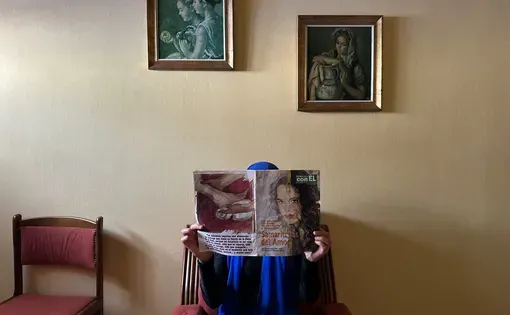
Many migrant Moroccan women encounter abuse in Spain.
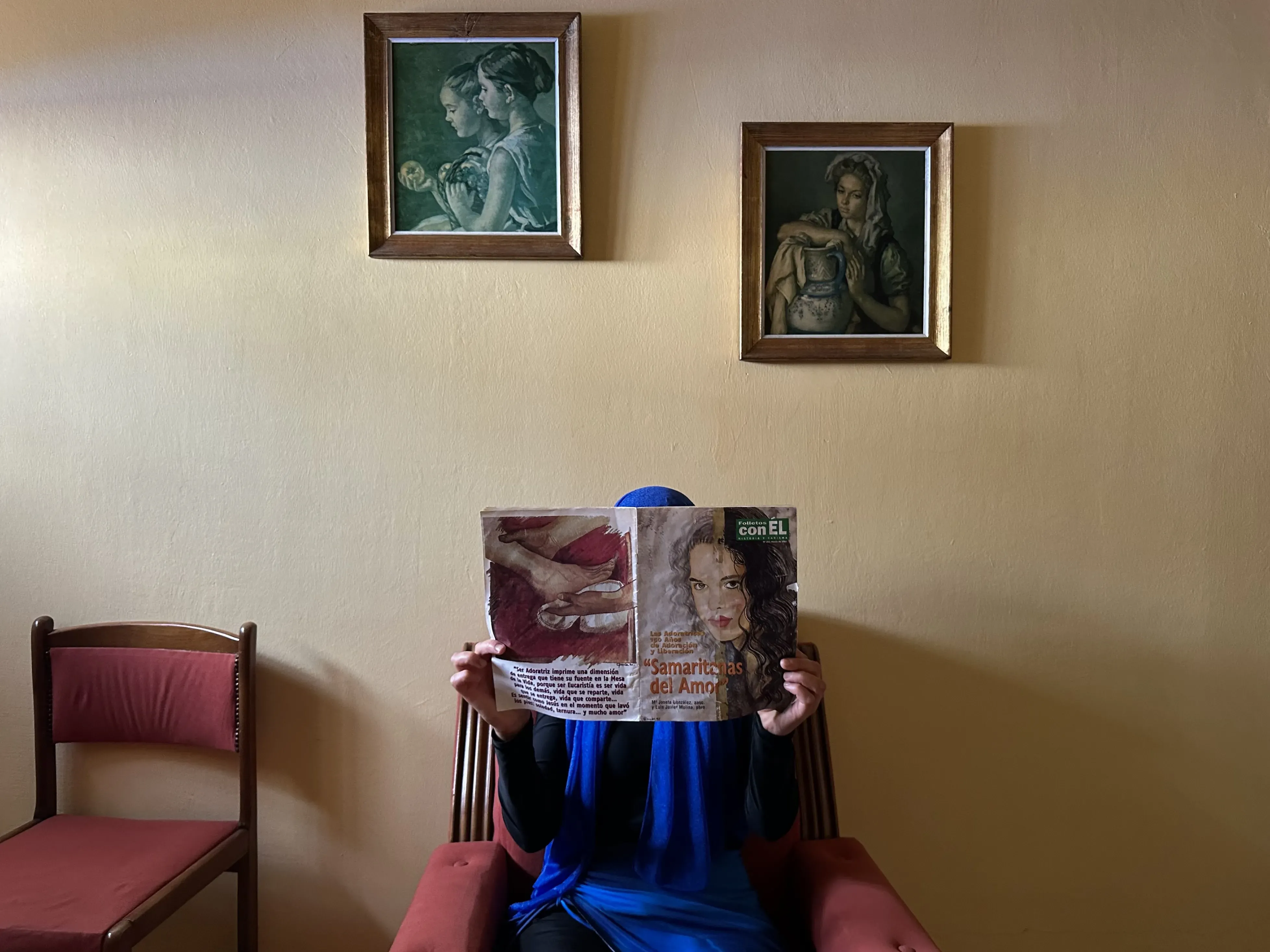
Naima* sits in the convent, the aroma of Maghrebi mint tea surrounds her as the kettle faintly begins to cry. She takes a moment to collect her thoughts before continuing. “I did not come here to work, to make money, to find a better life. I was brought here to marry.” Naima goes on to recount the past decade of her life in Ceuta, confined to her mother-in-law’s house, while attending to her husband and his family with no support system, no knowledge of the Spanish language, and no papers. “It is like you are a person but don’t exist. I lived here for 15 years without existing. Where did the 15 years go?”
In the Spanish town of Ceuta, located at the tip of North Africa, Naima’s story is a reflection of a societal pattern of migratory manipulation and domestic violence. For decades, Spanish men, typically of Moroccan heritage, have sought out women on the other side of the border to marry. Like many others, Naima says her husband promised her companionship and security, assuring her family that she would be well taken care of. However, when she came to Spain, she encountered a life of physical abuse and emotional neglect.
Following Ceuta’s laws, Naima’s mother-in-law had the sole authority to legalize her stay. As the proprietor of their house, it was in her power to extend to Niama the padrón—or proof of residency. By withholding this, she denied Naima access to healthcare, education, and employment. For years, Naima’s husband confined her to the domestic sphere, and she was not allowed to socialize with others, take her daughter to school, or visit her family in Morocco, for fear that she would escape.

As a nonprofit journalism organization, we depend on your support to fund more than 170 reporting projects every year on critical global and local issues. Donate any amount today to become a Pulitzer Center Champion and receive exclusive benefits!
Throughout her marriage, Naima pleaded endlessly with her husband and his family to grant her a padrón, not for reasons of employment or education, but for healthcare. As an undocumented migrant, her only options to seek medical attention were at a Spanish urgent care or by crossing the border to a Moroccan clinic. Even during pregnancy, Naima’s husband refused her a medical card. After years of neglect, Naima and her daughter finally left.
Naima is just one out of countless Moroccan women brought to Ceuta who are forcibly left undocumented by their new Spanish families, according to experts who estimate there are hundreds just like her throughout Ceuta. In recent years, border politics between Spain and Morocco have only worsened their situation.
As an externalized European border, Ceuta is a part of Spain but is exempt from the Schengen zone policy of free movement. "The migrants who arrive in Ceuta can’t cross [to mainland Spain] because Ceuta has two borders, one physical and the other bureaucratic,” says Paula Domingo, co-founder of Asociación Elín, a nonprofit organization in Ceuta focused on migrant integration and immigration policy reform.
The physical border Domingo refers to is the 10-meter-high fence that hugs Ceuta’s periphery, separating Spain’s territory from the surrounding Moroccan towns. Despite its barbed wire exterior and armed watch towers, it is Ceuta’s invisible bureaucratic border that proves most fatal for women like Naima.
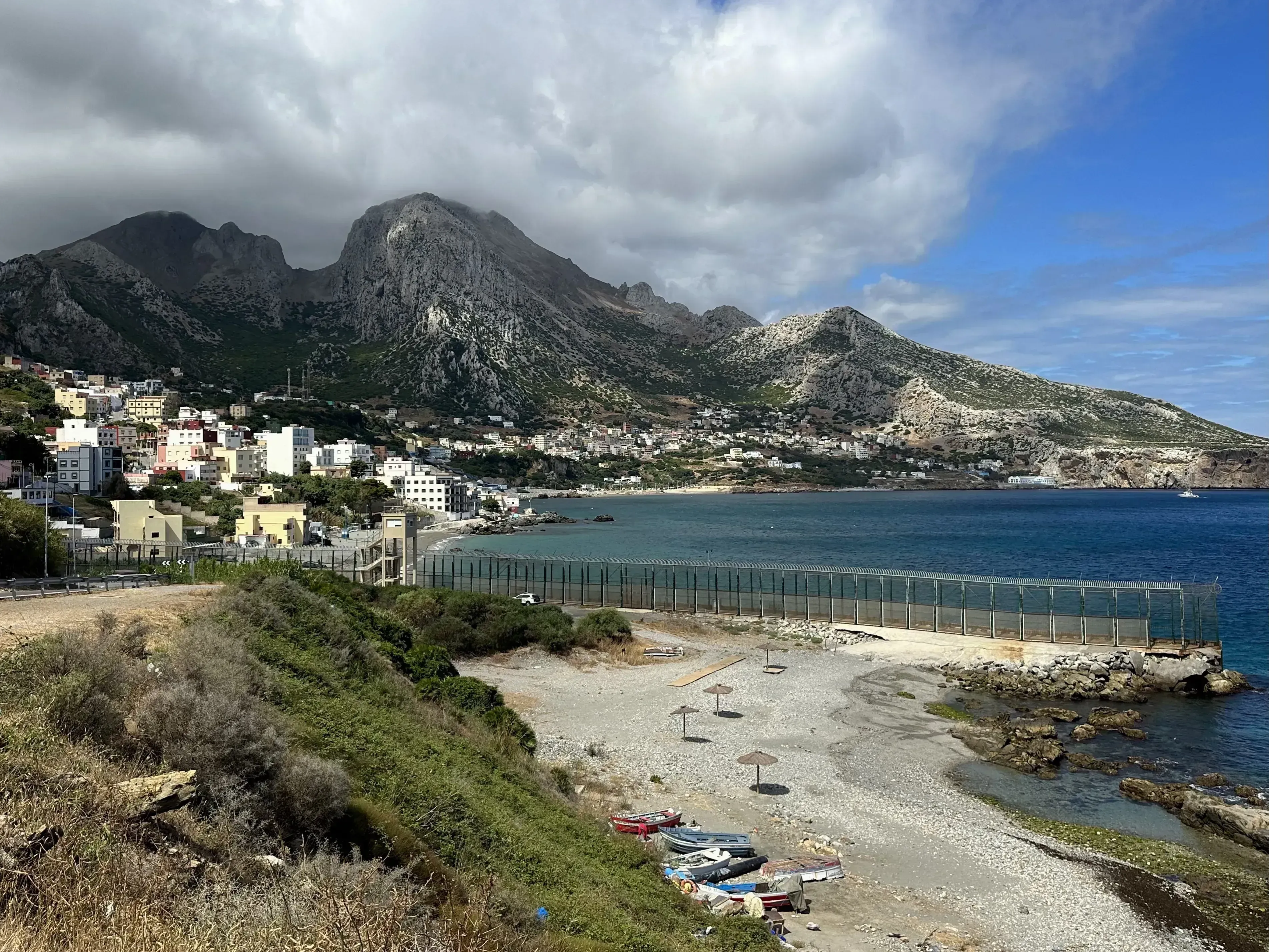
Before the COVID-19 pandemic, border policies allowed Spaniards and Moroccans alike to cross between Ceuta and its neighboring Moroccan cities by showing proof of either a Spanish or Moroccan passport. In March 2020, following COVID-19 guidelines, passage between the two countries stopped. During this time, the border became the focus of a year-long diplomatic crisis between Spain and Morocco. When the border eventually reopened in May 2022, Morocco imposed a new policy on its citizens, where a passport was no longer enough to legally cross into Spain. Instead, Moroccans required a Spanish visa to enter Ceuta.
Domingo says that historically, Morocco’s motives for implementing the visa system were largely political. “Morocco thinks Ceuta is a stolen city. They say Ceuta is a Moroccan city occupied by Spain.” In light of fluctuating relations between the two countries, the visa policy is another way for Morocco to assert dominance over the critical land border, demonstrating its power to affect the flow of migration into Spain. The threat of Morocco neglecting its responsibility to regulate its side of the border puts diplomatic pressure on Spain to maintain good relations in the region.
Since its implementation, critics of the visa policy point to its economic and social consequences. Meanwhile, advocates say that Moroccan women in Ceuta have suffered in silence, invisible and unheard. Since visa approval is costly and requires proof of contracted work, visas are largely out of reach for Moroccan women, especially those living undocumented in Spain. They have been cut off from their homeland, their families, and one of their only forms of healthcare. Without a visa or pádron, they are now confined to Ceuta, trapped in the 7 square mile town.
“The abuse has only gotten worse in recent years,” says Naima. “Our husbands know we have nowhere to go.”
In the face of this crisis, Ceuta’s disorganized and underfunded social service network has left most women without the resources and support they need. However, there is one organization that continuously shows up for migrant domestic violence survivors. Throughout the community, they are known as las monjas or the nuns.
Founded in 1845 by St. Maria Micaela, the Congregation of the Sisters Adorers, or Adoratrices, runs safehouses for women in convents throughout Spain, focused on the liberation and rehabilitation of survivors of gender violence.
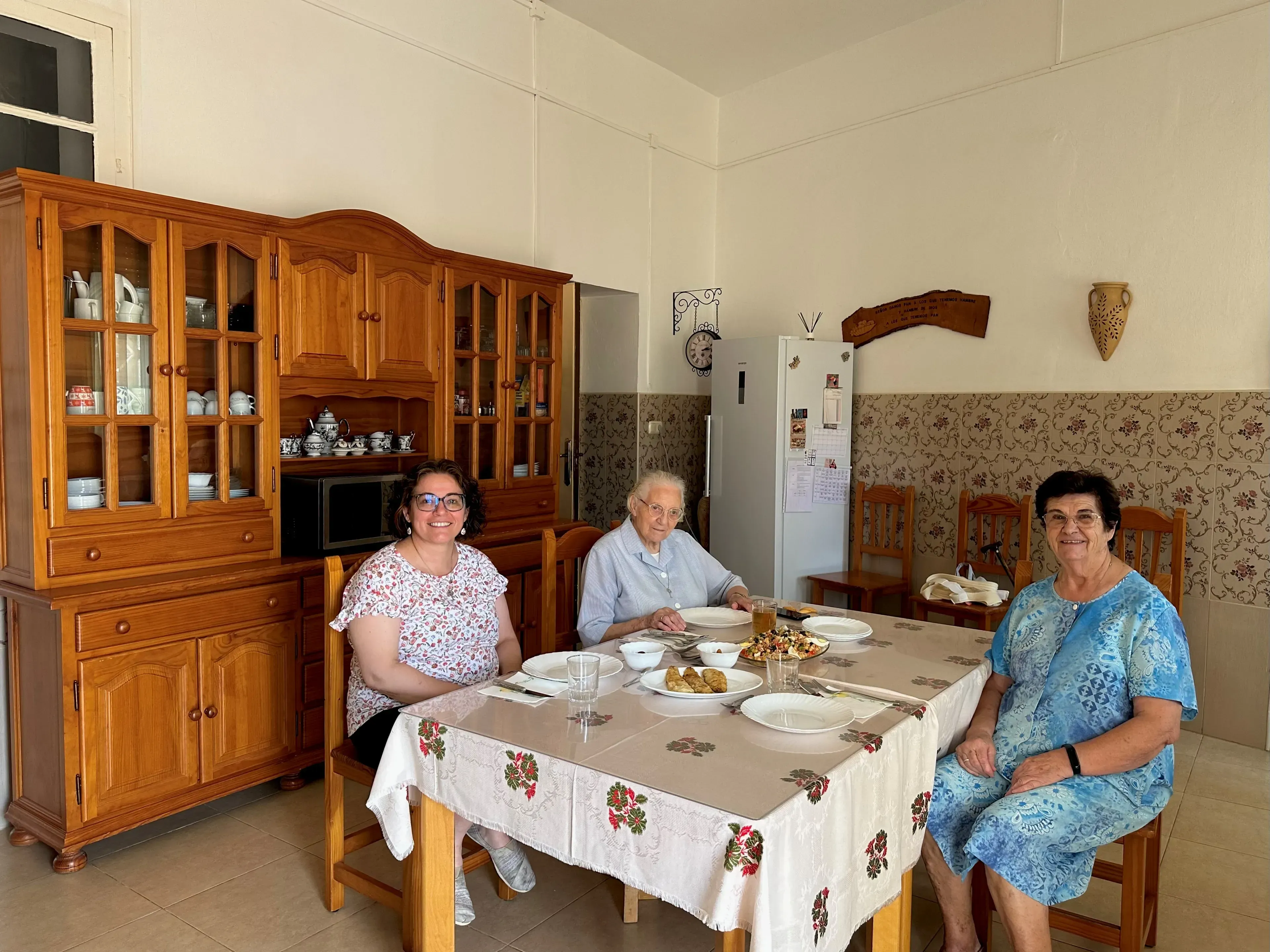
“Here, we do everything,” says Sister Ana, one of the nuns at Ceuta’s convent. Sister Ana explains that a woman can live in Ceuta for over a decade without understanding its bureaucratic systems. As part of their work, the nuns guide them through the processes. At Adoratrices, the women learn Spanish, receive their residency, finalize their divorces, attend doctor appointments, find employment, and receive childcare services. “Really, whatever it is she might need, we try to offer it,” Sister Ana tells me. In the past decade, Adoratrices has hosted over 300 women and children at their center, providing each family a healing environment and a new start.

More than a social service, Adoratrices is a community. It provides the women who live there with something many have not felt since arriving in Ceuta—a sense of belonging. “Here, I feel it is my home,” says Naima. “You find a family.”
Sister Ana attributes much of Adoratrices’ success to its mission of forming deep interpersonal relationships with the women that extend past a transactional dynamic of social worker and client. In living together, sharing meals together, and even partaking in one another’s faith practices, the nuns and migrant women become integral parts of each other’s lives. This physical, emotional, and spiritual support from Adoratrices fosters a sense of empowerment in the women.
Nour*, a survivor of domestic violence who stayed at the shelter, tells me, “If I had known what Adoratrices was like during my marriage, I would have left my husband that day. I wouldn't have stayed another minute with him.”
Las monjas do not perform miracles, but they do save lives. After almost two years of living in the convent, Naima has finally signed a lease for her first apartment and is ready to leave. She tells me of her dreams for her daughter to study and move forward with her life, explaining, “I never want her to have to depend on a man in the way I did.”
Although Adoratrices is an effective safety net, it is not the solution to the ingrained pattern of domestic violence, say advocates for domestic violence survivors. Men in Ceuta continue to seek women in Morocco to marry, isolate, and imprison. When asked about possible solutions, Naima was vocal about the need for policy reform and government intervention.
“If a [Spanish] man is going to bring a [Moroccan] woman to marry, [he needs to] arrange her situation and legalize her papers. If he is not capable of doing that, then I prefer that the government prohibit the marriage.”
However, Naima’s call for action largely falls upon deaf ears. While organizations like Adoratrices continue to do what they can to support domestic violence survivors, countless migrant women in Ceuta remain unreachable, hidden behind closed doors.
*Naima and Nour’s names have been altered to conceal personal information for the safety of themselves and their families.