Story
 November 21, 2025
Analysis: How Imitation Standardizes Taste, Suppresses Copyright, and Dulls Artistic Work
Country:


Project
Automation Fever
The impacts of automation tools that are often glossed over by companies and policy makers
“I had no idea,” said filmmaker Hanung Bramantyo, when we informed him that the script of his 2013 film Soekarno appeared among materials reportedly used by tech companies like Apple and Anthropic to train their generative AI models.
When asked how he felt about it, Hanung paused before choosing his words carefully.
“It’s possible that the production house, Multivision, was contacted. I’ll have to check,” he said. “Otherwise, we can take legal action. That’s a copyright violation.”
"Hanung’s film is not the only Indonesian work believed to have ended up in those illegally scraped datasets. The Atlantic’s investigation also listed scripts by Timo Tjahjanto and Mira Lesmana, along with books by Intan Paramaditha and Pramoedya Ananta Toer."
When it comes to generative AI, the director of Ayat-Ayat Cinta and Habibie & Ainun finds himself conflicted. Just minutes earlier, he conceded that, “with great reluctance,” he might one day use AI to cut production costs for historical films.
He explained that making historical films in Indonesia is prohibitively expensive. Because very few heritage sites are well preserved, directors often have to build entire sets from scratch.
Production costs can reach 50 to 60 billion rupiah. To break even, a film would need to attract at least two million viewers to theaters, a target that is extremely difficult to reach.
In Indonesia, “Only dramas, comedies, or horror films ever reach two million viewers,” Hanung said.
For him, generative AI presents a dilemma. He acknowledges the copyright issues inherent in the technology, yet also believes there is no way to avoid it entirely. He has even begun imagining how the role of a director might evolve in the years ahead.
“Perhaps one day we’ll be directing inside virtual environments,” he mused.
Like most people, Hanung understands that human creativity has always evolved alongside the invention of new tools. Most also accept that a certain degree of adaptation is inevitable if one wishes to reap the benefits of innovation.
"But when a technology demands that the public participate in deeply exploitative systems—such as the mass theft of creative works to train AI models—some observers are starting to ask: is the sacrifice worth the reward? "
“So far, I’m seeing more problems than actual benefits,” said film critic Eric Sasono. Besides copyright issues, he pointed to the deeper biases embedded within generative AI systems.
“We already know how poorly AI performs when asked to depict people of color or Indigenous communities,” he said. “Those biases have long been preserved within the dominant bodies of knowledge that these systems draw from.”
The instant convenience of AI can also reduce the economic value of creative work and those who make it. It threatens livelihoods while flooding the world with even more content.
On September 30, 2025, OpenAI released Sora 2, capable of generating videos with more complex, life-like motion: dogs running and playing, skateboarders landing kickflips, and Olympic athletes performing flawless routines, all rendered with striking realism.
The debut of Sora 2, alongside an AI-generated “actor” named Tilly Norwood, sent shockwaves throughout Hollywood. Industry figures condemned it as an “insult to artistry.” In Indonesia, too, AI has already begun replacing storyboard artists, VFX specialists, and voice actors.
Generative AI marks the latest chapter in Big Tech’s two-decade dominance. Its rise, led by OpenAI, mirrors the playbook of earlier tech giants like Spotify and Netflix.
The two giant platforms cemented their control over the films we watch and the music we hear through algorithms powered by AI. Those algorithms appear in recommendation features and automated playlists.
Although digital platforms like Spotify and Netflix promise greater exposure, easier distribution, and seemingly wider room for creative exploration by Indonesian artists, observers note that they also draw creators into systems where they have little control over the value of their work or their bargaining power.
These systems have a profound impact on artists’ economic rights, intellectual property protection, and the traditional contexts of art-making, while erecting rigid boundaries of taste and aesthetics for every user.
Many fail to realize that Big Tech’s influence goes far beyond distribution. It now shapes what the market desires and how artists create. The result is a cultural landscape that moves to the rhythm of algorithms and corporate policy, rather than to the slow, instinctive pulse of human imagination.
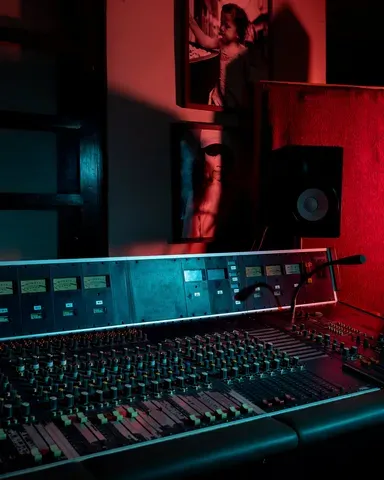
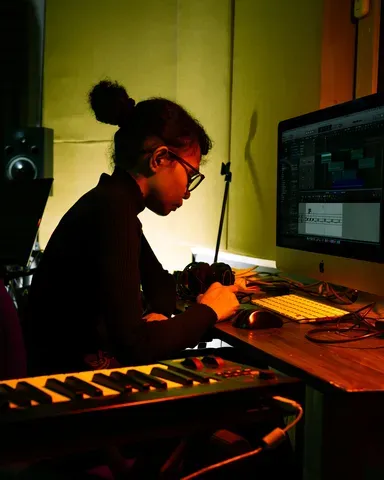
Mardial recently lost one of his biggest clients. The rapper, dancer, and electronic artist also makes a living producing jingles for advertisements. But this year, one of the major brands he regularly worked with has stopped reaching out. Mardial suspects the client has switched to Suno, an AI music-generation tool.
“I knew it was AI the second I heard the new jingle,” he said. “I recognized the voice of Suno’s built-in vocalist and the familiar texture of its sound. The AI doesn’t just sample [fragments of a track], it copies the whole thing, down to the last note.”
The rise of generative AI tools like Suno has also changed the way he collaborates with clients. In the past, a client would send a brief, along with lyrics and references, which Mardial would then interpret through his own original and creative arrangement. Now, they send him AI-generated samples from Suno and expect him to replicate them. Clients have also become less receptive to feedback.
“From a professional standpoint, the music sounds awful. It’s unmistakably AI,” Mardial said. “But when we suggest alternatives, the client says, ‘Why doesn’t it sound like the [Suno] version we sent you?’ In the end, it’s the machine calling the shots.”
AI music generators such as Suno and Udio can produce voices, melodies, and even entire tracks in the style of household names like The Beatles or Mariah Carey.
Yet according to findings from the International Confederation of Music Publishers (ICMP), these models are trained on vast global music catalogues taken without consent or compensation. As of September, the ICMP has filed lawsuits against OpenAI, Suno, and Udio, calling it “the largest copyright infringement case in history.”
Since 2023, actors, writers, and artists across Hollywood, the United States, and parts of Europe have mobilized to defend their livelihoods, copyrights, and job security from the rise of generative AI. They have gone on strikes, organized protests, published open letters, and taken technology companies to court. Some have also created counter-tools such as Nightshade and Glaze, which embed “poison” into digital artworks to stop AI bots from scraping them.
These efforts have yet to succeed fully. Court cases remain ongoing, strikes have not met all of the artists’ demands, and protection tools are not always effective. Still, many artists in those countries now recognize the scale of exploitation by tech companies and are beginning to build collective ways to protect themselves.
In Indonesia, awareness of this widespread exploitation remains limited. There is also a notable reluctance to speak publicly about it, a hesitation we encountered when interviewing several prominent figures for this story.
“Unfortunately, Ryan cannot speak nor comment further on AI,” said an assistant to Ryan Adriandhy, director of Jumbo. Intan Paramaditha, whose work appears among the illegally scraped datasets used by AI companies, also did not respond to multiple requests for comment. Timo Tjahjanto, another filmmaker whose screenplay was found in an AI training dataset, sent only a single-word reply: “Damn.” Several other filmmakers we contacted never responded.
"According to the Jakarta Arts Council (DKJ), views on generative AI are split between pure artists and creative industry workers. Iman Fattah, a musician, technologist, and DKJ board member, said that pure artists tend to see AI as an opportunity for exploration, expression, and streamlining certain creative processes."
This view is echoed by songwriter and former HiVI! member Ezra Mandira, who believes that AI can shorten the prototyping stage of a song and assist in the mixing and mastering process.
“But after prototyping, you have to re-record everything to make it feel human. That’s one possible approach, where AI helps in the ideation stage. As for mixing, it’s actually something that can easily be replaced by AI,” said Ezra, who also works as a lecturer at SAE Indonesia and Bakrie University.
On the other hand, creative workers in commercial industries such as copywriting and graphic design see AI as a threat to their livelihoods. One by one, they are losing jobs and bargaining power.
“Rates are getting slashed because corporations can now say, ‘We can just make this with AI.’ They’ve started bargaining down the fees of creative workers,” said Aquino Hayunta, another DKJ board member.
Throughout history, artists have embraced technology to create and reach wider audiences. Many artists are technologists, and many technologists are artists: think Leonardo da Vinci. Technology has always influenced art, and art has always shaped technology in return. The two have long shared a symbiotic relationship built on a shared passion for creation and discovery.
If you were a teenager in the 2000s, you probably remember MySpace and SoundCloud. Soon after, bands like Efek Rumah Kaca, HiVi!, and TheOvertunes began uploading their music videos to YouTube in the 2010s, drawing millions of views and launching their careers. The explosion of internet culture spelled the beginning of the end for shops selling cassette tapes and other physical media.
In the years that followed, however, digital technology companies grew dominant as middlemen between creators and audiences. Tech companies became not only distributors but also producers of creative work.
Netflix, for instance, now produces original films, often in collaboration with local directors. The same trend extends to other platforms like HBO Max, Amazon Prime, Disney+, and Indonesia’s own Vidio.
For veteran local directors like Hanung Bramantyo, making films for digital platforms has become an attractive option, offering far less financial risks than making films exclusively for cinemas.
By 2022, data showed that Netflix had become Indonesia’s most popular video-on-demand app.
Meanwhile, Apple Music entered Indonesia in 2015, followed by Spotify a year later. In less than a decade, Spotify has become the dominant music streaming platform in the country, chosen by more than 50 percent of Indonesian users according to a Populix survey.
Because of this extraordinary dominance in both distribution and production, the once-symbiotic relationship between technology and the arts has begun to shift. “The dependence on these platforms for distribution isn’t just for artists, it’s for us as audiences too,” said Hafez Gumay, advocacy manager at the Indonesian Coalition of the Arts (Koalisi Seni Indonesia – KSI). “As simple as it sounds, those platforms are the only distribution channels available.”
"This dominance in distribution has had a profound impact on artists’ economic rights and on the availability of creative space, which in turn shapes the forms and aesthetics that emerge."
It is no secret that most musicians do not rely on royalties from digital platforms as their main source of income. The artists we spoke to said that most of their earnings come from live shows, brand sponsorships, and merchandise.
Spotify, for instance, no longer pays artists based on a per-stream rate. Since 2024, it has used a new model called “stream share,” which allocates a monthly royalty pool according to each catalog’s share of total streams. The money goes to rights holders—record labels, distributors, and others—who then split it with the musicians according to their individual contracts.
“If you’re a major label and your catalog makes up 20 percent of all streams on a service during a given royalty period, you’re entitled to 20 percent of the eligible royalty pool,” explained Liz Pelly, author of Mood Machine, a book about music streaming platforms.
Naturally, this system puts independent musicians working under smaller labels at a disadvantage.
According to government data, royalty payments in Indonesia are lower compared to other countries. The same pattern applies to other streaming services such as Apple Music, YouTube Music, and Joox, each with its own formula.
But across platforms, a study by the Indonesian Coalition of the Arts (KSI) found that the largest share of royalties goes to intermediaries, not musicians.
Despite the small payouts, the musicians we interviewed said that having a presence on streaming platforms remains essential. Ezra Mandira, formerly of HiVi!, explained that artists can use analytics to better understand their audience and identify opportunities for brand collaborations. This is also echoed by Cholil Mahmud of Efek Rumah Kaca.
“Because Spotify has such a huge user base, I assume that staying active there is a way of marketing yourself,” said Cholil Mahmud, who also serves as acting chair of the Federation of Indonesian Musicians’ Unions (FESMI).
In the end, both musicians and listeners have little choice but to connect through digital platforms.
Within this ecosystem, tech companies remain the clear winners, taking most of the gain while musicians must fight harder and longer to build the kind of online presence that can lead to live shows or brand deals.
"So how can artists stay visible on these platforms? According to Aris Setyawan, a musician, researcher, and co-founder of serunai.co, many have begun tweaking their song structures to fit the algorithms and rules set by streaming services."
This is where Big Tech’s influence on artistic form and aesthetics becomes most tangible. Spotify, for instance, counts a stream once a listener has heard at least thirty seconds of a track.
“That automatically makes musicians think, ‘How do I make the first thirty seconds catchy?’” said Aris. “And it changes the arrangement pattern, too. You used to have an intro and a verse before a chorus, and so on. But now, many songs start off with a chorus.”
If everyone follows that logic, he warned, the music we hear will eventually sound the same.
A similar pattern is unfolding in film. Because viewers often keep Netflix playing in the background while doing other tasks, “it creates a kind of fear [among filmmakers] that their work isn’t being watched with full attention,” said film critic Eric Sasono.
As a result, filmmakers have begun writing dialogue that resembles television soap operas, where characters constantly state what they feel or do.
“When there’s a big pivotal scene showing the main character’s sadness, acting sad and playing sad music are still not enough. The character also has to declare, ‘I’m so sad,’” Eric said. “The audience is no longer given a moment to pause and take in what’s on the screen, the way they would in a cinema.”
Fortunately, Eric noted, film distribution in Indonesia has not been completely overtaken by digital platforms. Indonesians still enjoy going to the cinema. That gives local filmmakers more freedom to explore dialogue and imagery that are not always in sync, “crafted intentionally to create emotional depth,” he said.
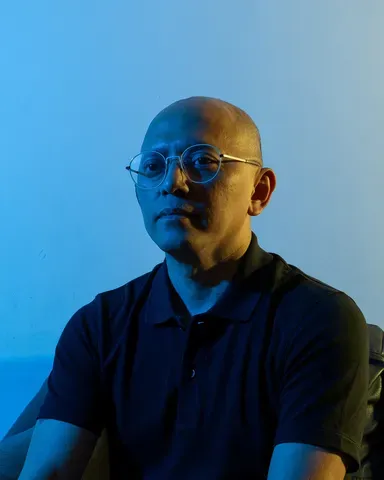
At the same time, algorithms tend to trap users within narrow corridors of taste. They keep promoting what is already popular, which becomes the template for other creators to follow.
A recent study in Indonesia found that the most popular songs on Spotify are often newly released (or remixed older tracks), louder in decibel level, non-instrumental, and heavy on digital or electronic sounds.
Even so, several musicians told us that their new songs often struggle to compete with older, already popular hits. The pattern has made Cholil Mahmud of Efek Rumah Kaca question his listeners’ preferences.
“This new album of mine, is it just not good? Or do people simply prefer the older stuff? Or maybe it’s because of [Spotify’s] features?” he said.
The Leveling of Taste, Loss of Discovery, and Copyright Issues
The contradictory ecosystem created by digital platforms, which expands access to film and music while simultaneously trapping users inside taste bubbles, has resulted in a paradox that leaves audiences exhausted and creators disoriented.
Fajar Zakri, an avid Spotify user who loves curating playlists, admits to feeling tired of algorithmic recommendations and market oversaturation. To find new music, he now turns to sites such as Pitchfork, Consequence, Stereogum, Slant, and BrooklynVegan instead of relying solely on what platforms suggest.
“We can and should define our own taste. We still have that authority as consumers,” Fajar said. To curb oversaturation and protect quality, he hopes curatorship will make a comeback in the music scene, rather than leaving everything to today’s hyper-personalized algorithmic recommendations.
For film critic and Screenpasta reviewer Jeko Iqbal Reza, this saturation and algorithmic confinement have pushed filmmakers into an identity crisis. Many feel pressured to create what algorithms predict will sell: usually horror, or what Jeko calls the “middle-class slice-of-life.”
“We are constantly being spoon-fed those genres on streaming platforms,” Jeko said.
When filmmakers try to break free from those algorithmic boundaries while still appealing to the widest audience possible, the result is often a film that looks polished but lacks a clear message.
“Cinematically, it’s top-notch, but the storytelling isn’t sharp,” Jeko said.
"In such a contradictory ecosystem, there is little room to enrich or broaden aesthetic range and market sensibility. Both users and creators seem trapped in their own loops."
“Tech companies treat our tastes as fixed, when in fact, people are getting fatigued,” said Eric Sasono. “Many spend an hour scrolling through Netflix and end up watching nothing,” he added
The fatigue grows alongside the loss of the discovery effect, i.e., the thrill of finding a new film or song by chance. It is a paradox of abundance: an ecosystem that offers too many options and, in doing so, dulls our sense of wonder.
“We gain convenience but lose curiosity,” wrote Tiffany Ng in MIT Technology Review, reflecting on the fading discovery effect in music.
Until the early 2000s, said Eric, going to the cinema to discover something new was a ritual. People would show up without knowing what they wanted to watch, briefly scan the posters, and buy tickets with little expectation.
“Now people already know which films are trending on social media. Posters are released in countdowns, discussed by influencers, and analyzed in advance. Everything moves quickly, full of anticipation and expectation,” Eric said.
Fajar, the music enthusiast, feels much the same way.
“What made radio or music channels special in the era of physical releases was the element of surprise. You never knew which artist, song, or video would play next. That unpredictability made listening to the radio or watching music programs exciting,” he said.
“When you already know exactly what you want to hear or watch on Spotify or YouTube, that sense of surprise disappears. As a result, our tastes stagnate or even shrink,” he added.
It is within this environment, where Big Tech wields immense sway over distribution, aesthetics, and taste, that generative AI has entered the scene. Any attempt to measure the impact of generative AI on art and culture must therefore account for the effects of the earlier wave of digitalization.
"Will it deepen the hole we’ve already dug, or help us climb out of it?"
Generative AI systems rely on original works to create new ones. When those original works are themselves biased, that bias risks being amplified in the AI’s output.
“And when it happens on a massive scale, [those biases] are reproduced again and again,” said film critic Eric Sasono.
In addition to the growing risk of bias, cultural observers have also expressed concern about what they call a further homogenization of taste, or what journalist and cultural critic Kyle Chaka referred to as the “flattening of culture.”
"This could happen once everyone uses generative AI for creative work. When the technology starts feeding on its own outputs, artworks will increasingly resemble one another, leaving little space for originality."
The drift toward similarity has already been documented in a 2024 study. Researchers found that writers who used AI produced better work individually, but when viewed collectively, their stories showed less diversity. In other words, AI improved individual quality but reduced collective creativity, resulting in more bland and monotonous works.
When this creative dulling meets platform algorithms that already shape and discipline public taste, observers fear that art and culture may stagnate. Creators will keep producing to satisfy algorithms, while audiences will keep consuming whatever those algorithms deliver.
“Our tastes are becoming one large echo chamber, because it’s getting harder to escape the algorithms engineered around our profiles,” said Iman Fattah of the Jakarta Arts Council’s Music Committee.
These concerns are part of what keep the band TheOvertunes committed to human creativity. After experimenting with generative AI and feeling disappointed with the results, the group decided to revisit Indonesian literature as inspiration for their songwriting.
“Perhaps we’ve already been influenced by this computational paradigm, that we are starting to think about what kind of input we should give, as if human beings are nothing more than just processors,” said Reuben Nathaniel, a member of TheOvertunes who now studies AI and sustainable development.
For creators, critics, and audiences alike, the relationship between art and technology must be approached with care. They warn that the artistic process should never be handed over entirely to automation, because without the act of creation, we lose what makes us human.
“Once you strip the expression away from the humans, we become nothing but machines,” said Aquino Hayunta of DKJ.
"Artists and cultural observers we spoke with hope that the state will take steps to protect the arts from AI’s potential impact on culture and creativity."
“Denmark, for instance, has ruled that a person’s face is protected by copyright, so it cannot be freely used [by AI],” said Eric Sasono. Unfortunately, “that kind of vision is completely absent in Indonesia.”
However, discussing copyright in Indonesia remains complicated. The legal frameworks are still vague, and when authorities tried to enforce royalty payments in mid-2025, it triggered public backlash that made many even more skeptical of the royalty system.
Public discussion around copyright and generative AI has been overshadowed by the recent controversy over music being played in cafés. Perhaps this is why many artists are reluctant to speak up: while copyright protection is necessary, its overly strict enforcement could stifle the circulation of creative works.
“Copyright, when applied too rigidly, actually limits the space for encountering and interacting with art, and that engagement itself is essential,” said Aquino Hayunta of the Jakarta Arts Council (DKJ).
In the case of music played in cafés, Aquino said, it would be absurd to expect every small venue to pay royalties simply for entertaining their patrons. Generative AI, however, is an entirely different matter. The power imbalance is vast: these companies operate with enormous capital, and control access to the very information that fuels their systems.
“When the power dynamic is that unequal, the rights of artists must be fully respected. Any work used to train an AI model should be compensated with proper copyright payments to its creators,” said Aquino.
AI companies often justify their actions by arguing that they only use creative works already available to the public online, protected under the legal concept of fair use. The fair use clause indeed applies to research and educational purposes, as well as to cases where a work is quoted or remixed by fans for personal enjoyment.
However, the use of creative works by AI companies differs from those cases, both in scale and in commercial intent.
“They are running full-scale businesses using those machines, so the fair use argument should no longer apply,” said Hafez Gumay of Koalisi Seni Indonesia (KSI).
Some of the artists we interviewed, such as Wok The Rock, said they would not object to their work being used to train AI models so long as they receive proper credit. This view aligns with Creative Commons principles, which permit reuse for non-commercial purposes provided attribution is given.
Former HiVi! member Ezra Mandira and Reuben Nathaniel of TheOvertunes, however, prefer a compensation framework. Yet both acknowledge that given Indonesia’s weak copyright enforcement, implementing compensation mechanisms would be a challenge.
“It depends on how much AI companies are willing to invest to secure the rights of artists whose work is used for training,” Ezra said.
“It’s tricky. We still don’t know how to track whether our master recordings have been used as training data,” said Reuben.
But musicians like Mardial fear that AI companies will eventually prey on artists who lack such protection.
“They’ll probably go after those without legal backing, especially independent artists,” he said.
In the end, the artists and cultural observers we interviewed placed their hopes in public education about AI, so that society and policymakers can better understand the potential ethical, legal, and cultural implications of generative AI.
They also called on the government to establish clear regulations on AI to protect the economic and moral rights of artists, including the copyright of both their works and their likenesses. Such regulations, they said, should require technology companies to provide opt-out mechanisms for creators who do not wish their works to be used for AI training. Transparency in data collection and usage is also essential.
“This is important not only for the arts but for human rights as a whole,” Aquino said. “To ensure that AI models are free from gender, class, or racial biases, among others, we must know where the data comes from and how it is processed.”
If tech companies fail to comply with standards in their AI development, the government should impose sanctions.
“From the artists’ side, we also want mandatory labelling for any work produced by AI,” Aquino added.