Story
 December 3, 2025
14 Years in Wisconsin. A New Life in El Salvador. She’s Trying To Accept It.
Country:


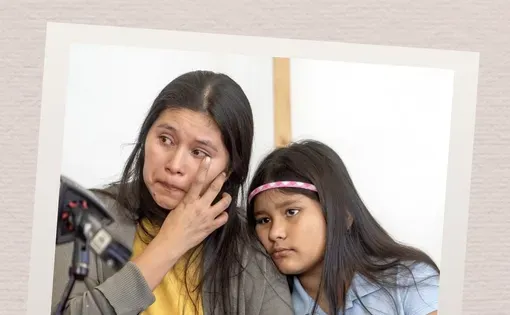
A mother's story challenges the Trump administration assertion that its priority is deporting...
EL PALMARCITO, EL SALVADOR — Yessenia Ruano still clings to a sliver of hope she and her family may return soon to the United States.
She can't let go.
But her reality now is far removed from life as a teacher's aide at her twin daughters’ bilingual school in Milwaukee.
Half a year has passed since U.S. immigration officials gave her no choice but to board an airplane to her native El Salvador, leaving behind heartbroken supporters of her fight against deportation. She represents the kind of people often caught up in President Donald Trump's goal of deporting 1 million immigrants each year: well-established in her community, active in her church, no criminal record.

The flight was the first ever for her children, Paola and Elizabeth, both 10 years old and born in Milwaukee.
Yessenia's husband, Miguel Guerra, stayed behind to settle the family's affairs and rent out the home they own on Milwaukee's south side. Then he joined his wife and daughters in the country he grew up in as well.
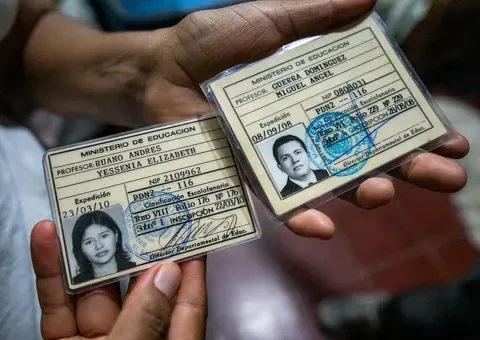
Yessenia, 38, has tried to accept their circumstances and keep her faith in the future.
It's a slow process.
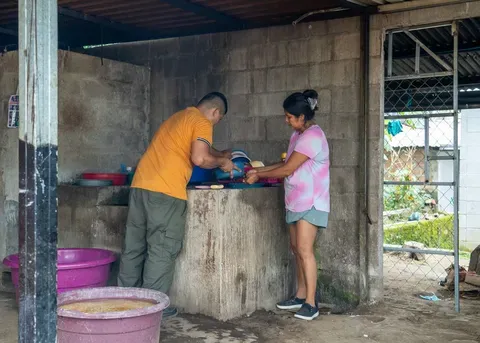
The four of them, along with their dog, Copitos, live in San Alfonso near the Pacific Ocean. They share a small room with three twin beds pushed together in the home of Miguel's mother. Other relatives also live in the house.
An air conditioning unit keeps their room cool, so the girls prefer to spend downtime there, playing Minecraft on their iPads. The air in the rest of the house is thick and humid.
The town is close to tourist spots and beaches known for surfing. The girls have developed rashes from the heat, so most afternoons, Yessenia takes them to swim at a beach or a nearby river to cool off.
Miguel’s brother Tony, a 30-year-old nurse at a public hospital, added plumbing so the toilet can flush if water is poured in the tank. Tony lives in the house, too. A shower stall is outside; it draws water from a rain collection basin.
Yessenia's family stores its belongings — clothes, report cards, bug spray, stuffed animals — in rainbow-colored plastic drawer organizers, the type Americans use to corral crafts and supplies.
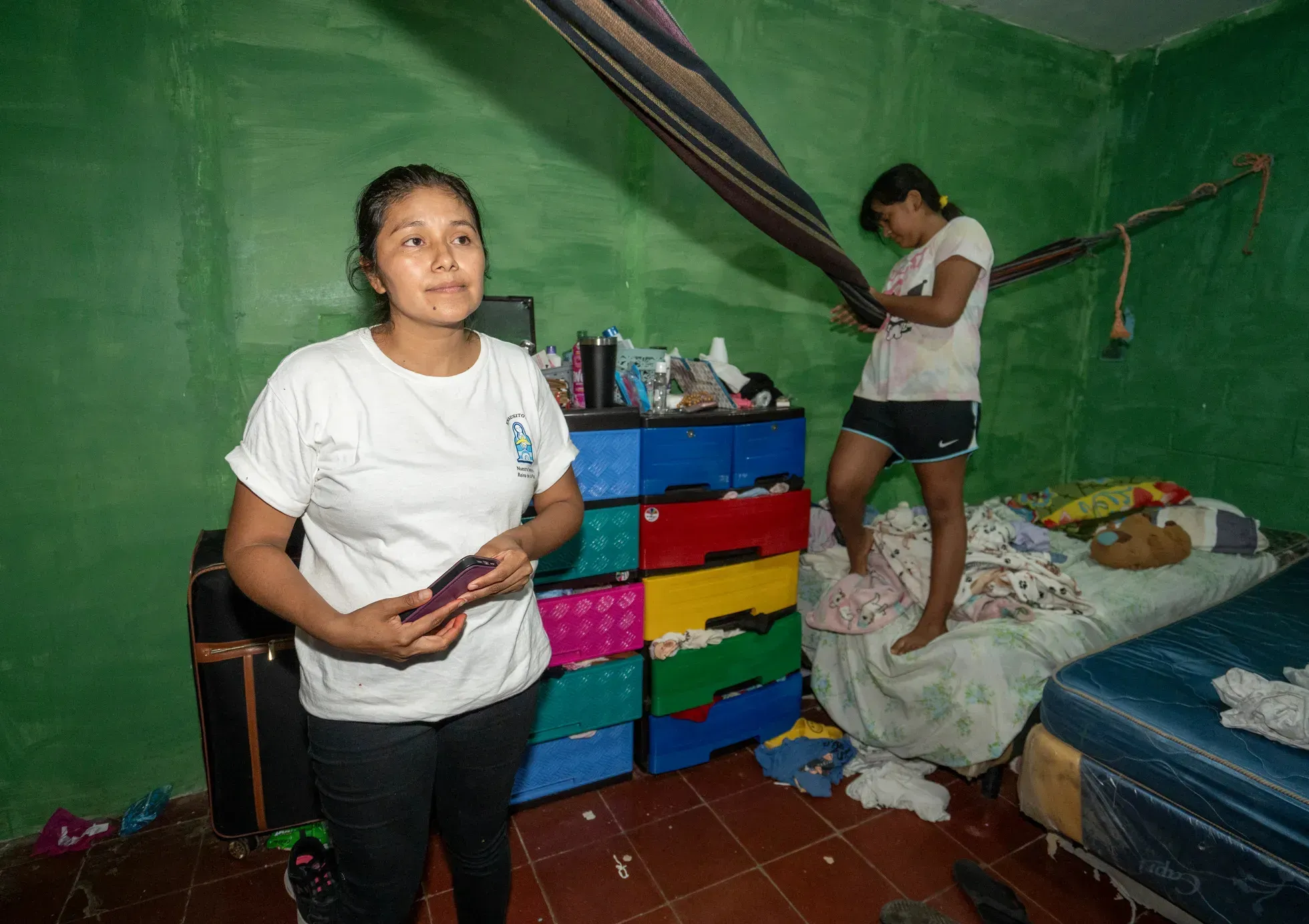
Four cargo boxes arrived recently with items from their Milwaukee home. Yessenia and Miguel opened one box and stopped. It contained an ice cream maker, drills, a stock pot. Where would they put such things?
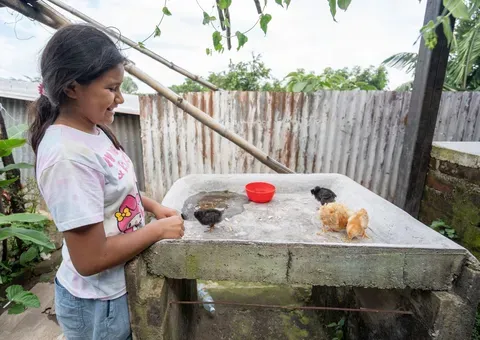
The family has tried to conform to life in San Alfonso. Elizabeth fosters her love of animals by feeding and caring for a flock of chickens.
But this isn't home, at least not yet.
Evenings after school in Milwaukee were filled with trampoline parks, dance classes and play dates. Now, even their mom's beloved pupusas with mozzarella cheese are absent. Mozzarella is too expensive and hard to find, and they don’t like the crumbly Salvadoran cheese she has to use.
Elizabeth and Paola dream of traveling. Paola is learning French on Duolingo and talks about going to Paris, or perhaps Italy. Elizabeth envisions what it would be like to return to Milwaukee and surprise her cousins by appearing at their bedroom door, or by jumping out from under one of their beds.
As U.S. citizens, they did not have to leave. But Yessenia could not leave them behind. Their first real opportunity to move back would be attending a U.S. university. They could petition for their parents to join them at age 21.
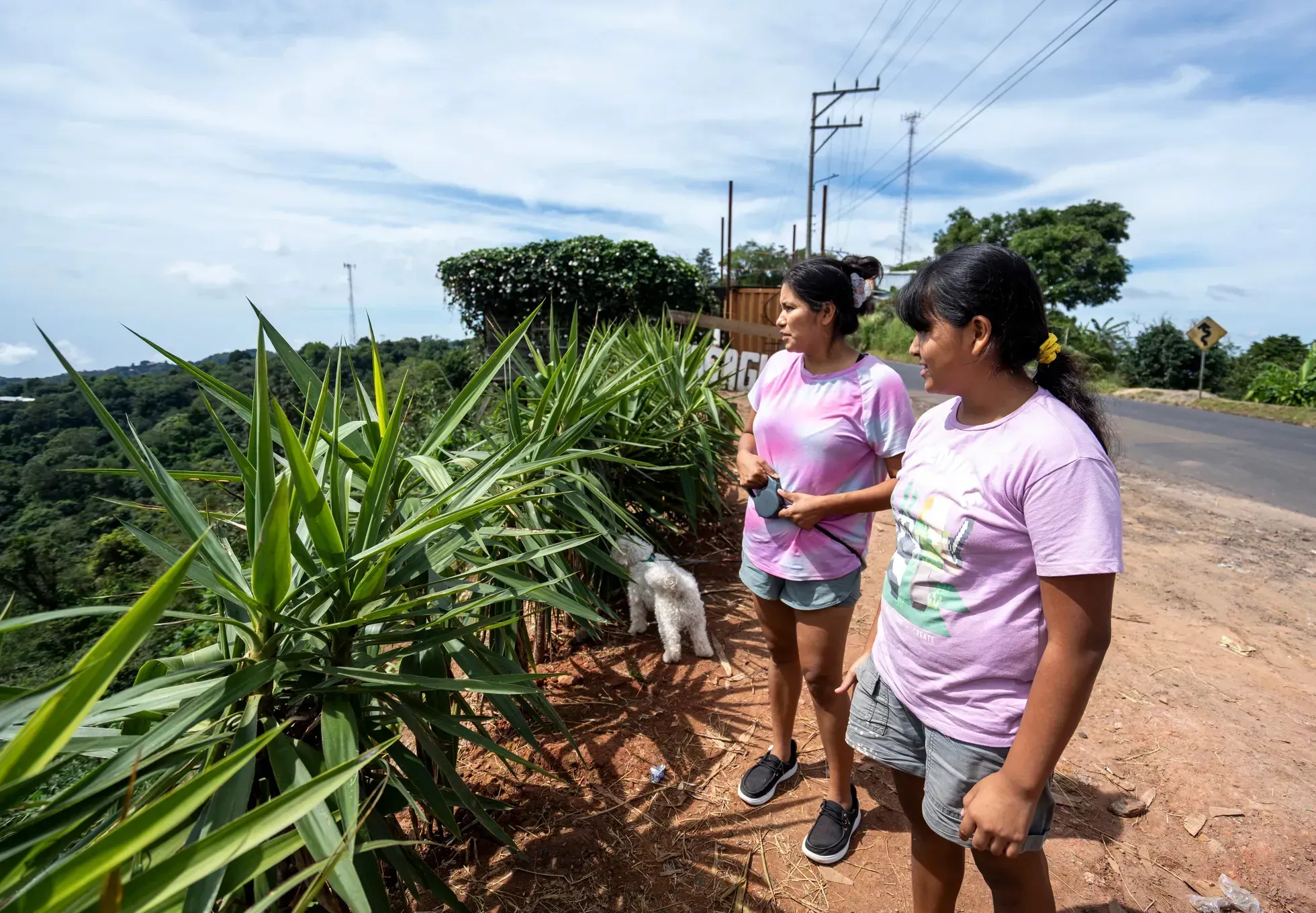
For now, Yessenia and Miguel have enrolled their daughters in a good school for the area, but as the start of their schooling approaches in January, the parents are concerned. School days are only four hours, and the girls know little Salvadoran history or geography.
They worry Paola won’t be challenged in math. She was in the 98th percentile among Wisconsin fourth graders. Advanced or gifted programs aren’t available at the new school.
Yessenia and Miguel, who mostly speak Spanish, also worry the girls will lose their English proficiency. They looked into the cost of an American school in San Salvador, but at nearly $10,000 per year for each student in middle school, it was prohibitive.
Reflecting one day on her life in Milwaukee, Yessenia gestures like she’s clearing a chalkboard.
“Erased,” she says. “New story. Another movie.”
Photo Gallery: Former Milwaukee Teacher’s Aide Builds a New Life in El Salvador
In Wisconsin, Yessenia built a better life for herself
In many respects, Yessenia's concerns for her daughters echo those she had for herself when she was about their age.
She grew up wanting more out of life than the remote mountain village of El Rosario could offer. At 14 years old, she left to move in with an aunt and uncle along the coast. She attended a better high school and earned cash working at their roadside restaurant.
She became the first in her family to go to college, earning a literature degree and a teaching license in 2009. Her plan was to graduate, get a well-paying job as a teacher, buy a house and start the rest of her life.
Instead, she found herself teaching at a low-paying school and being harassed and threatened by gang members who, one day, snatched a gold ring and earrings off her body.
In 2011, out of “fear and necessity,” she paid coyotes, or traffickers, $3,000 to cross into the United States, she says.
She was caught and quickly deported by U.S. agents. She recalls the traffickers telling her to “go back to eat some pupusas and come right back.” The fee she’d paid was good for two tries.
The second time, Yessenia filled a backpack with three pairs of jeans, three shirts, one pair of shoes and two medications. To cross the Río Grande into Texas, she had to abandon her belongings, except for $100 she tucked in her bra.
She was taken with 30 people through underground tunnels into a house in El Paso, where she was given one meal a day and kept more than a week. While in the house, she was sexually abused, she says.
One day, the traffickers told the group to start walking through the Chihuahuan Desert toward San Antonio. Led by the traffickers and with limited water and no food, the group walked for three days, sleeping outside. An immigration officer found them under some trees, Yessenia says.
She told U.S. Immigration and Customs agents agents she feared returning to El Salvador. They put her in detention, where she waited six months for an interview to allow her to apply for a status similar to asylum. Once her case was opened, a friend paid her $5,000 bond and she flew to Wisconsin, where she received a legal work permit.
Yessenia worked at Palermo’s Pizza, then was hired by Milwaukee Public Schools as a teacher's aide at ALBA School, short for Academia de Lenguaje y Bellas Artes. She worked with children who were falling behind, and filled in as a substitute when needed. She found the community of parents and teachers welcoming and tight-knit. She loved the school, and appreciated having a good job in her chosen field.
For the next dozen years, she attended regular check-in appointments with ICE while waiting for her case to be heard. When a judge raised some questions about it, she withdrew her claim, acting on questionable advice from an attorney. Technically, that left her exposed to deportation, but the Biden administration wasn't removing people like her at the time.
Realizing the mistake, Yessenia applied for a trafficking victims' visa, or T visa, available to immigrants who were victims of human trafficking. She based the application on her second experience with the traffickers.
In the past, that application would have protected her. But the Trump administration axed deportation safeguards for T visa applicants.
Fearful she would be detained and then deported, Yessenia went public before her February ICE appointment, hoping attention to her plight might help. Friends, co-workers and immigrant-rights activists rallied around her, arguing a valued employee, engaged in her community, with a clean record and American children, should not be deported.
ICE gave Yessenia more time for another federal agency to consider her T visa application. At her April appointment, they told Yessenia to buy an airplane ticket. In May, they told her she had to leave within days.
Her daughter Paola has asked why Yessenia didn’t just go into hiding instead of agreeing to deport herself. Yessenia responded she would have worried every time she left home about ICE agents picking her up. She couldn't risk detention, away from her daughters, potentially for months.
It was worth it, she says, to work hard in the United States and give her daughters a “vida digna” — a decent life.
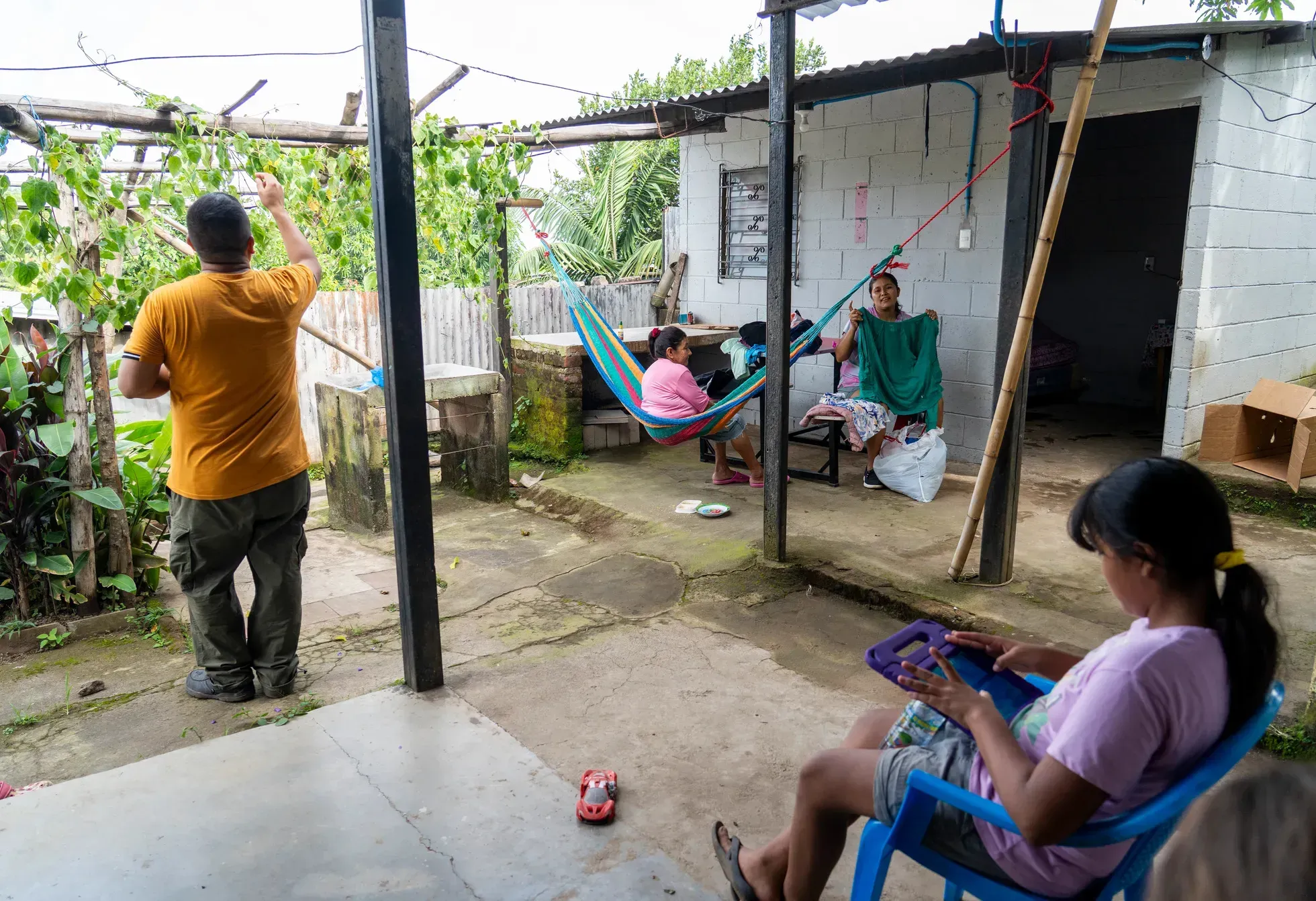
Conflicted feelings mark return to remote hometown
After miles on bumpy, unpaved roads, the village of El Rosario appears abruptly from thick green brush. It's where Yessenia and the girls headed when they first arrived from the United States.
Outside one of the first buildings, coffee beans lay on tarps, toasting in the sun. The crop is why the town exists. Yessenia grew up harvesting coffee with her family, her small mother hauling 100-pound baskets on her back.
When Yessenia was as old as her daughters are now, she could carry only 50 pounds. I'll never be able to do this, she remembers thinking. She would need to do something different.
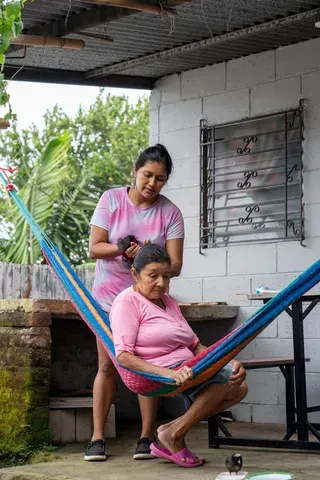
About a year ago, Yessenia bought her mother, Elba, a house in El Rosario. It’s connected to her sister’s house by an outdoor patio.
In the first weeks after leaving the United States, it was relaxing to be back in the town where she grew up. But she was reminded again how different she is from her siblings, who are content with simple lives in this remote area, she says.
As the days wore on, Yessenia and her daughters cried often. The twins were away from their friends, their school, their father. They had no connection to these relatives in El Rosario. Yessenia tried to console them, saying, “It’s just a process.” But she had trouble accepting it, too.
Then Paola and Elizabeth became ill — fever, stomachaches, vomiting. Without a car, the only way to see a doctor was a two-hour bus ride starting at 4 a.m.
Yessenia realized, “If someone gets truly sick here, they die.” That revelation fueled the family's move to San Alfonso once Miguel arrived.
On this trip back to the mountain village, children and chickens toddle around, and Elba scrubs laundry in an outdoor basin. Inside, the American action series “S.W.A.T.” streams on a big TV; Paola and Elizabeth run to inspect the room with the concrete floor where they slept the first two months in El Salvador.
Yessenia unloads a garbage bag full of hand-me-downs she’d packed in Milwaukee. Sitting on a picnic bench, she goes through the clothes, offering items to her mother.
There’s a green zip-up sweatshirt Yessenia recalls wearing for a spirit day at ALBA. There’s a thick winter coat Miguel got from his Palermo's Pizza factory job. It might be too warm for her mother, Yessenia warns.
“For me, it was a gift to work there, to get to know so many people from different countries, and to make that connection. I miss it too much.”
Yessenia Ruano, who worked as a Milwaukee Public Schools teacher’s aide
On the bookshelf is a title that’s given her strength: “Only Faith Finds Hope in the Impossible.” She says God has everything under control.
But if she thinks much about what ALBA students are doing on any given day — the familiar routines she and her children aren’t taking part in — she feels “destroyed,” she says.
Yessenia finds meaning in the phrase, “No one’s a prophet in their own land.” She believes it was her purpose to help children and their families succeed in Milwaukee.
“For me, it was a gift to work there, to get to know so many people from different countries, and to make that connection,” she says. “I miss it too much.”
The El Salvador that Yessenia and Miguel knew is now gone
Life in El Salvador is different in almost every way since Yessenia fled gang violence and economic insecurity 14 years ago. President Nayib Bukele, an ally of Trump, has initiated a state of emergency in his country and cracked down on gangs by arresting more than 80,000 people. Human rights organizations contend many are being held without due process in notorious prisons and are subjected to harsh, violent treatment.
With less street crime, El Salvador is in the middle of a major transition, with foreign investors and tourists pouring in. On a weekday, the beachfront in the city of La Libertad is bustling with locals boarding buses, selling wares or doing roadwork. Large signs in the area proclaim in English, “Surf City under Construction.” A concrete pier built by the Chinese government stretches into the Pacific.
The government’s job-training programs and its openness to foreign investment aren’t winning over retornados, or returning deported Salvadorans. The rising cost of living has become untenable for many locals.
Yessenia and Miguel are trying to chart new career paths. They enrolled in a free pastry course for retornados. There are about two dozen students, several of whom admit they want to try to return to the United States soon.
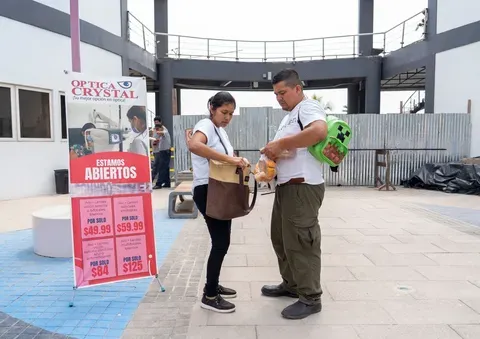
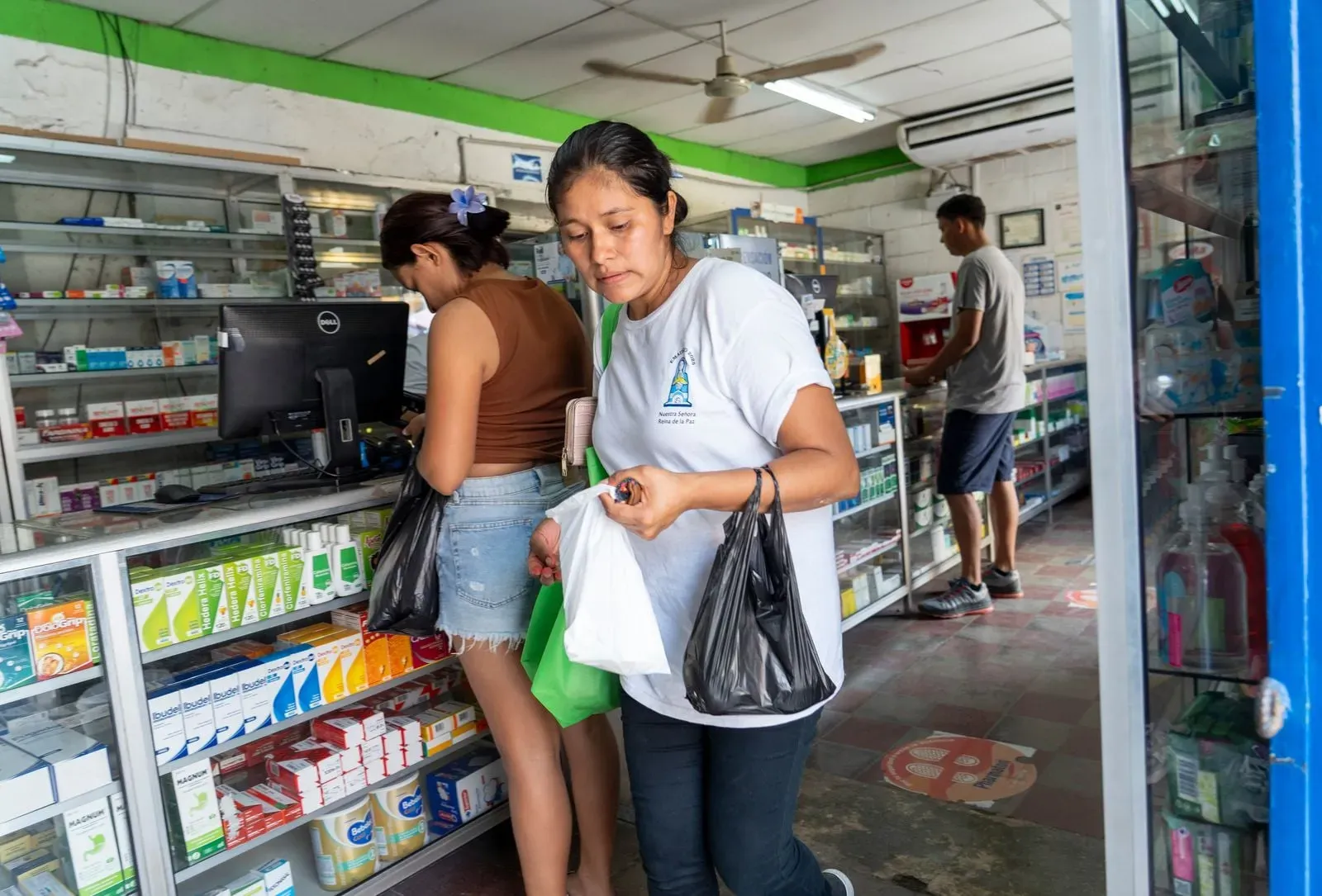
On a recent afternoon, following a class on sweet breads, Yessenia walks to a grocery store to pick up food for dinner. She shops in small batches, with so many relatives keeping food in the refrigerator at her mother-in-law’s house.
Grocery prices are on par or more expensive than Wisconsin prices, Yessenia has noticed. To cut costs, she’s given up her nightly routine of a yogurt cup with granola. Chicken drumsticks are double what she paid in Milwaukee. American fast food joints, which have proliferated in the years Yessenia was away, offer U.S. prices to Salvadorans whose monthly salaries are, on average, one-tenth of what a U.S. worker makes, according to Bureau of Labor Statistics data.
After the grocery stop, Yessenia walks down a sidewalk packed with street vendors, and steps into a pharmacy to buy probiotics for persistent stomach pains that began when she arrived in El Salvador. Later, in the car with Miguel, she marvels at the price. Ten pills for $20. She regrets not bringing some from Milwaukee, where she got 100 pills for less.
These days, many of Miguel and Yessenia’s conversations revolve around the cost of building a home, or the price of gasoline, or the daily wages they could earn in various jobs.
For years, the two sent money to their mothers and paid for doctor visits for siblings’ families. Now back in El Salvador, the subject of their finances is difficult. They’re not wealthy, like their families assume, and without their Milwaukee jobs, they can’t afford to keep supporting relatives. The only way they're staying afloat is by collecting rent on their Milwaukee house.
The way Yessenia and Miguel view it, someone can work hard in the United States and make a good living. In El Salvador, people work hard and are still poor. Plus, they say, jobs — well-paying or not — are hard to come by here.
Both Yessenia and Miguel are still certified to be teachers in the country, but competition is high for permanent teaching positions and pay is low, they say. The pastry course, and Saturday electrician classes they take together, are steps toward a range of potential careers.
With her English skills, Yessenia could work at a beach hotel. The family could open a restaurant, or maybe a little shop in their neighborhood, selling smoothies and coffee drinks. Maybe Yessenia could start a homework club, tutoring local kids. A lot is on the table.
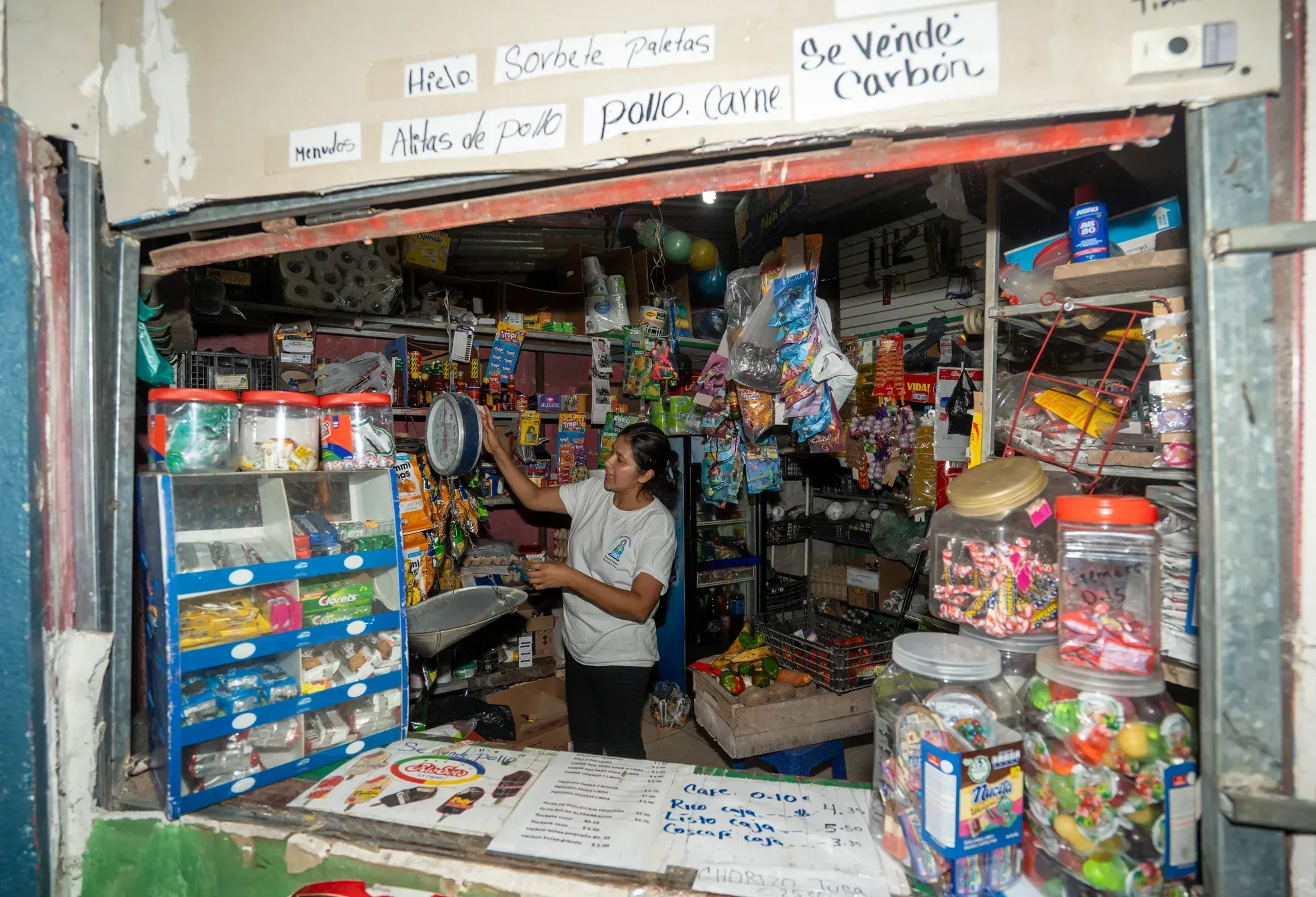
For now, she helps as a cashier at her brother-in-law’s small convenience store outside their home, selling bags of chips and candy to neighbors from a walk-up window.
The family still laughs, because they must
The family is working on building a house of their own, a short walk away from Miguel's mother. It could be six to seven months before it’s ready to move in, if building permits are approved on time. For now, it’s a 90-square-meter slab of concrete littered with dead leaves and trash.
Yessenia longs to have her own kitchen again, and space for everyone to spread out. There will be two or three bedrooms along the back wall, a kitchen at the front, a yard for the kids to play, and mango and coconut trees, she says. The couple bought the land a decade ago and “should have done more,” Yessenia says, before the cost of construction and materials rose.
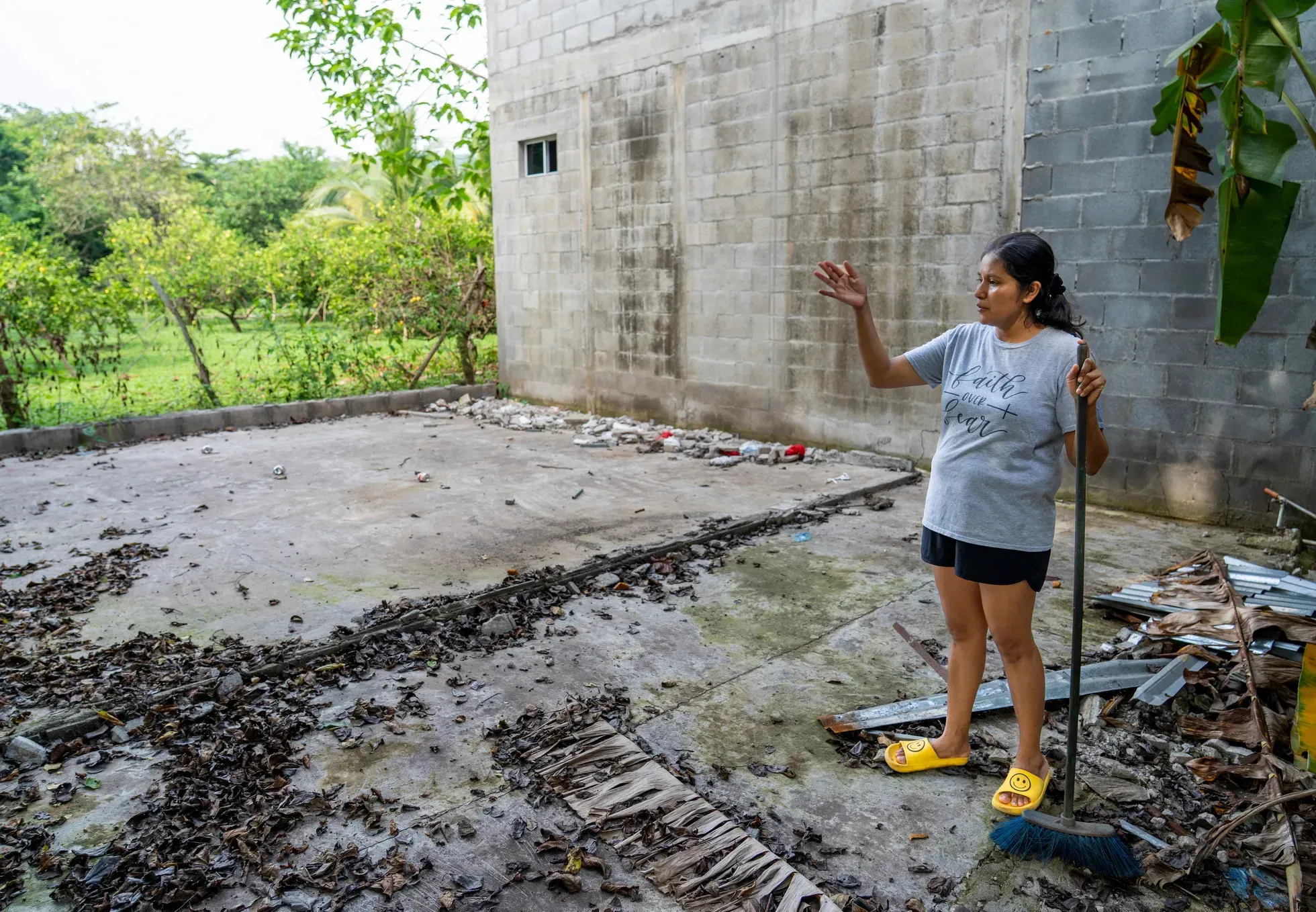
Wedged under the gate to the property one day is a piece of mail. Miguel picks it up. It's an electric bill for the concrete slab: $25.
They laugh. As with many other moments since arriving, the moment is ridiculous to the point of comical.
As difficult and uncertain as their situation is, the family laughs often. They have to; the alternative would be unbearable.
One hot day, as the family piles into the pickup truck and hauls in a panting Copitos, they joke about what the dog must be thinking.
“Copitos says, ‘Why did I come with these Salvadorans? Why wasn’t I adopted by another family?’” Yessenia riffs.
Miguel adds, “Why wasn’t I adopted by someone with papers?"
An unlikely activist keeps speaking out
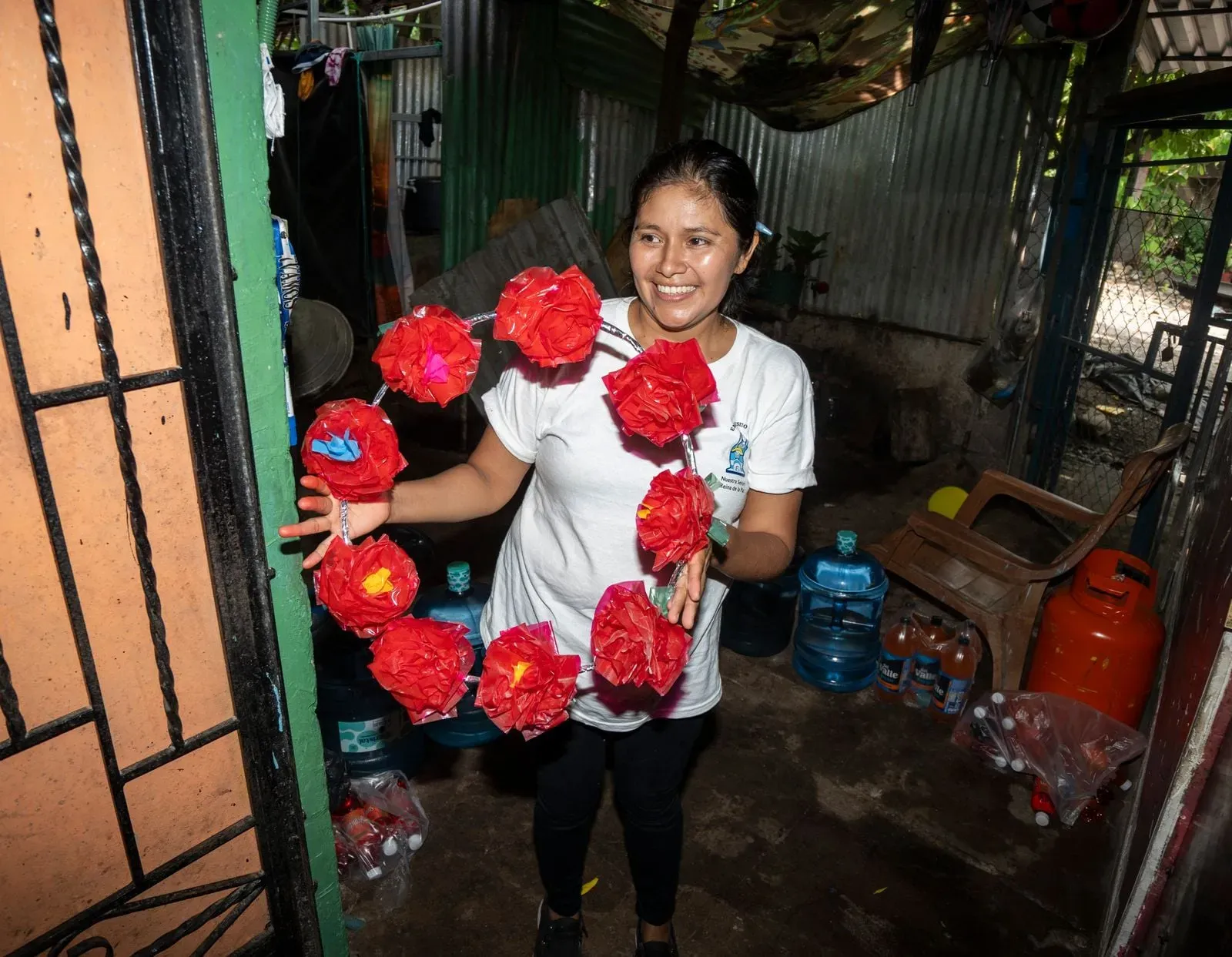
When Yessenia went public with her story in February, she thought of it more as a way to stay with her daughters in Milwaukee than a public act of immigration activism.
“I didn’t know what was happening,” she says one afternoon, sitting on a plastic stool outside her mother-in-law’s home in San Alfonso, chickens and a kitten milling around.
She stayed in the spotlight until leaving Milwaukee, and has remained undaunted even as the Trump administration steps up deportation efforts and fights in court over its aggressive arrest tactics. Although many immigrants and deportees are wary of drawing attention, she reassures herself: Keep talking and don’t be afraid to be on camera.
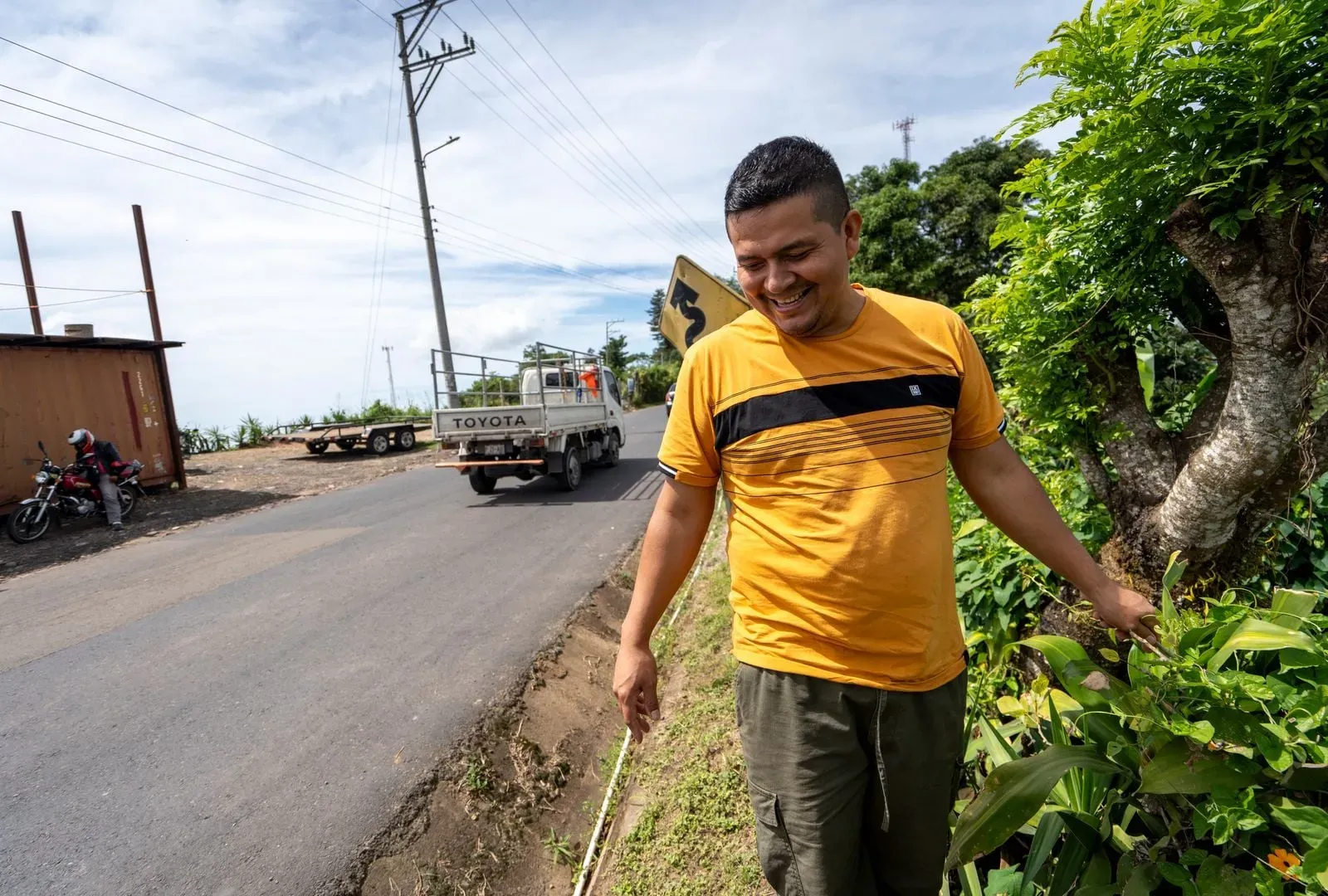
“My objective now, I think, is letting people know how life is for immigrants,” she says.
She also wants other immigrants to prepare for the possibility of deportation, to save money and make plans. Don’t think it won’t happen.
On social media, some are critical of her choice to immigrate without papers back in 2011. Others question how she could have been legally employed by MPS all these years, and why she didn’t "just become" a U.S. citizen. Some applaud her forced self-deportation.
She and Miguel have many responses. For now, Yessenia answers simply: “Some people will never understand. Even if I can explain it and re-explain it, maybe they will never be open-minded.”
Those critics forget their ancestors often were like her, she says, immigrants searching for a better life. And referencing the Indigenous peoples who occupied North America before European colonization, she points to her brown skin.
“Americans, we’re like this,” she says.
“There’s a lot of people who are exactly like me, who are trying to do everything as legally as we can.”
Miguel Guerra, about telling his co-workers he owns a home, never took government benefits and always paid taxes
Before he left his job of more than a decade as a line lead at Palermo’s Pizza, Miguel talked to some white colleagues about Trump’s immigration crackdown. He told them he owns a home, never took government benefits and always paid taxes.
“There’s a lot of people who are exactly like me, who are trying to do everything as legally as we can,” he said to them.
At the factory, his co-workers didn’t know his real name was Miguel. He left behind $37,000 in his 401K, he says, and won’t ever receive the Social Security payments deducted from each paycheck.
After he decided to return to El Salvador, he says, his boss lamented that immigrants like Miguel are hard workers but have little opportunity to stay.
In the end, Yessenia has no choice but to keep going
When Yessenia flew to El Salvador with her daughters, Miguel considered remaining in Milwaukee for a year to keep earning money and bolster their savings. He had never interacted with the immigration system and wasn’t on ICE's radar.
But when he returned from the airport to their quiet house, he cried. He’d never been away from wife and daughters.
He spent two months working and packing up the house. He felt lonely and empty, and he lost weight. The girls would call and ask when he was joining them.
For Miguel, being in San Alfonso means life out of the shadows. When he passes a police officer, he’s more assured because he now has a driver’s license. He went to a doctor for the first time in 18 years. He’s becoming familiar with his neighbors and calls out greetings from his truck.
He doesn’t see much point in speaking publicly. He urges Yessenia to set her immigration fight aside, to settle into her new life. But he knows she's not there yet.
“She’s not defeated,” he says. “She wants to go back right away.”
Yessenia is now a plaintiff in a new federal lawsuit brought by California immigrant advocates arguing she should have been protected from deportation because her trafficking victims’ visa case was still open.
She acknowledges she would return to Milwaukee if her attorneys in the lawsuit said she could.
“Miguel says, ‘Jessy, let it all go, the T visa isn’t going to happen,’” she says. “But I was happy with my life. I hold onto a little hope that a miracle will happen.”
It doesn't help that in 2017, Salvadoran gang members killed her brother, Luis Ernesto, when he was 37. One of the men convicted in his killing is set to be released soon, she says, raising concerns about her family's safety.
One night, she and Miguel open the three remaining cargo boxes. Looking at belongings that once filled their Milwaukee home, Yessenia tells herself, “Accept it.”
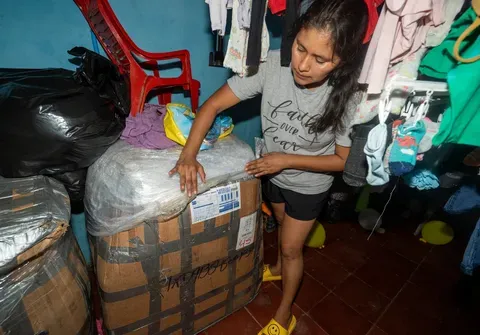
And yet, living in her mother-in-law’s home, uprooted from the life she worked so hard to build for herself — it’s still just too much.
“I’m not OK,” she says the next day, becoming tearful. “I’m seeing the reality, and I’m going to put in the effort. But it affects us a lot.”
She has no choice but to keep going. To the pastry class. To the river with the girls to cool off. To their property to prep it for construction.
“I have to adapt to the process,” she says. “What’s helping me is that the sea is beautiful, the nature. And always believing, as a believer in God, that there’s a purpose in why things are happening in this way, and that something better will come.”
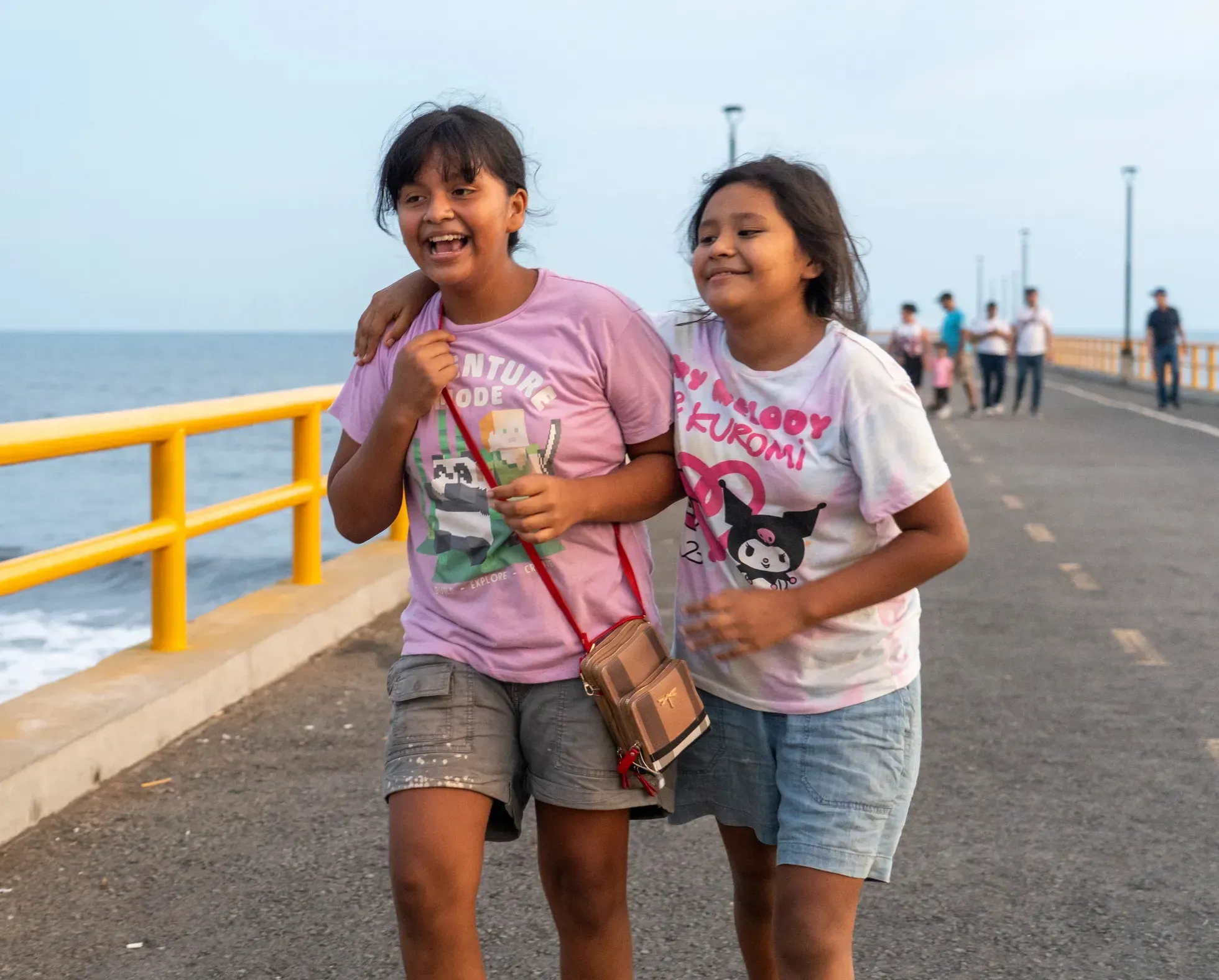
One evening, the family stops by the new concrete pier. Yessenia and the girls look out over the waves crashing on the beach.
Miguel strikes up a conversation with a man out for a stroll. It turns out the man was deported from the United States three years ago. Now he’s enjoying the evening with his wife and infant.
“Step by step, you establish yourself,” he says.
Walking back in, the girls joke around and playfully chase each other.
As the sun sets, Yessenia and Miguel head to their truck, the girls climbing in after them.
Ahead of them is a winding, curving drive home in the dark.
Interviews and other communications in the reporting of this story were primarily conducted in Spanish. The quotes were provided in either Spanish or English. Quotes in Spanish were translated by the reporter.