Project June 25, 2025
The Terror Killing the Green Wall Project in West African Countries
Country:


The Great Green Wall—launched in 2007 to combat desertification by afforesting 8,000 kilometers (4,971 miles) across the Sahel by 2030—is faltering under escalating insecurity. Preliminary findings show that many communities in the 11 African countries where the project is to be executed are heavily affected by terrorism and insurgency, particularly in Nigeria, Niger, and Burkina Faso. This widespread insecurity makes environmental work exceedingly challenging and, in many cases, impossible.
In Nigeria’s Zamfara, Katsina, and Sokoto states, Niger’s Tillabéri and Tahoua regions, and Burkina Faso’s Boucle du Mouhoun and Centre-Nord areas, jihadist insurgents and armed groups have rendered these communities perilous, leading to the abandonment of crucial reforestation sites. Environmental workers and local communities are caught in the crossfire, struggling to sustain the project amid daily threats to their lives.
As of 2022, the Great Green Wall has afforested only 4 million hectares—just 4% of its 100-million-hectare target—in over 15 years. With less than five years until the 2030 deadline, the project's success is slipping away unless security in these hotspots is restored. Considered the last hope for many African nations to prevent desertification, this initiative is at risk of failure.
In this reporting project, journalists travel to some of the affected communities in Burkina Faso, Niger, and Nigeria to document the human impact of these conflicts and the environmental disruptions, such as desert encroachment, windstorms, land degradation, and flooding. They interview locals, ecological workers, and victims of armed violence for a multi-platform report.
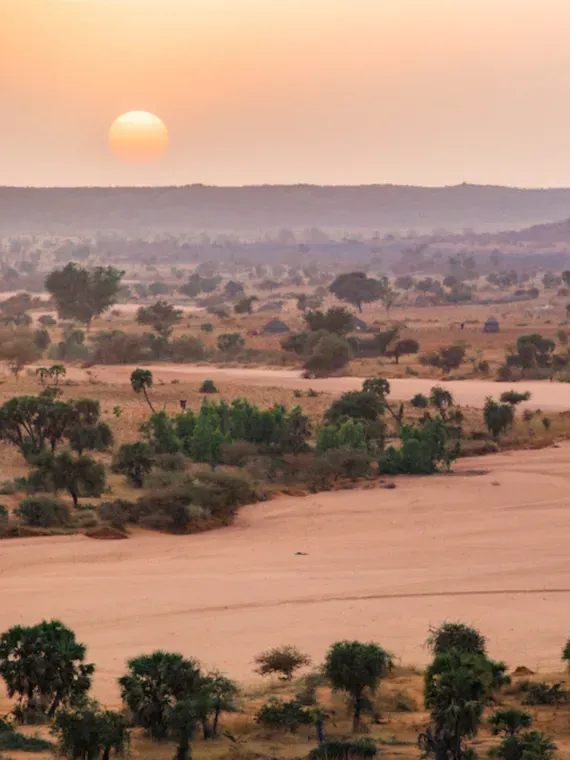
Caption: Sunset over the Sahel in Niger. Image by Harmattan Toujours/Shutterstock.


