
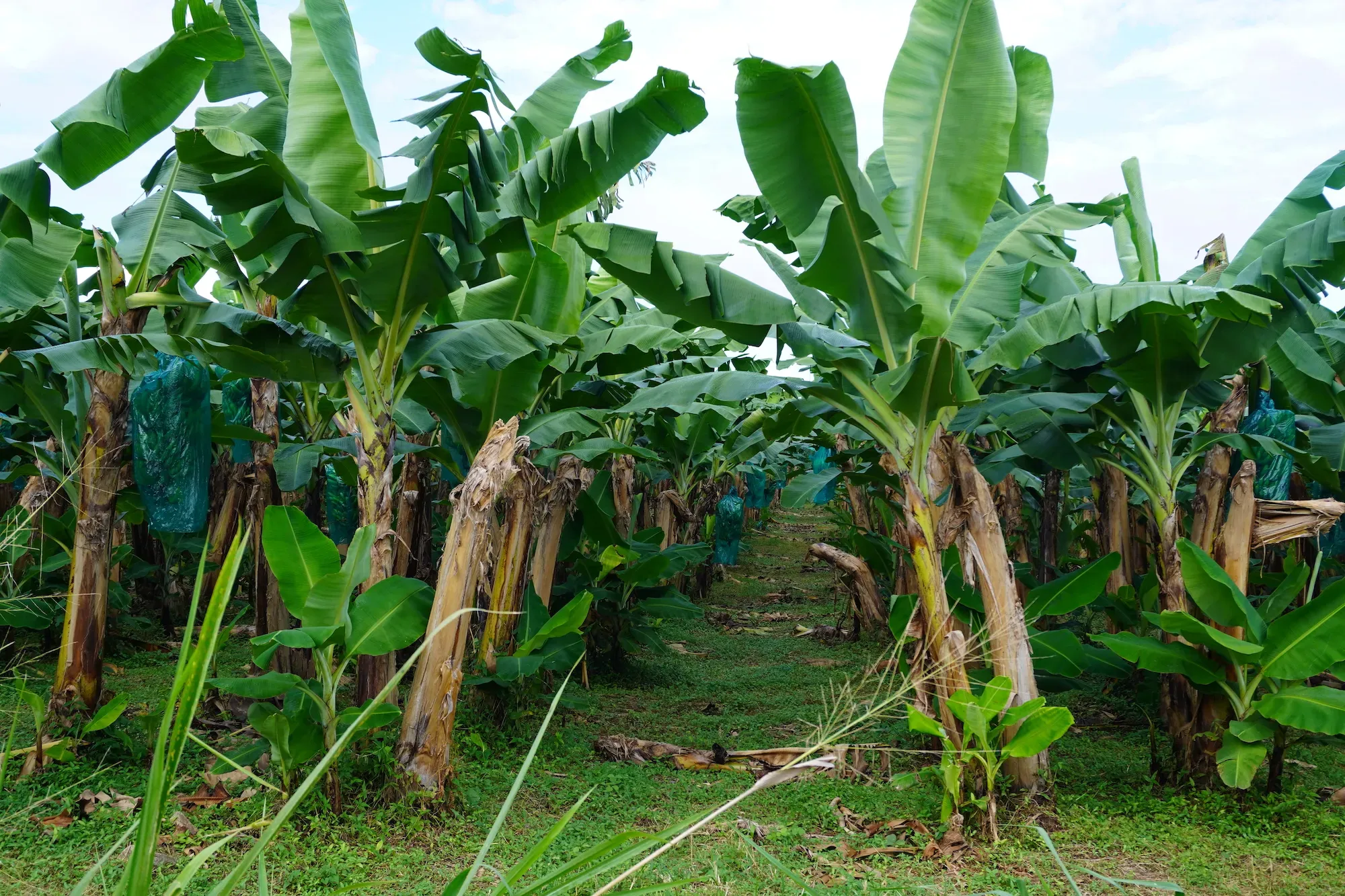
For more than 20 years, a toxic pesticide blanketed the banana fields of Guadeloupe and Martinique, two French territories in the Caribbean. Today, plantation workers and local communities are left to grapple with the lasting scars of exposure to the toxin. They are fighting for accountability from the French government and their employers, recognition for their suffering, and reparations.
France permitted the use of chlordecone in Guadeloupe and Martinique for decades after other countries had banned it. In 1993, 14 years after the World Health Organization classified it as a carcinogen, France finally requested that banana farmers cease its use.
In the French Antilles, chlordecone seeped into the very fabric of life, contaminating soil and water for 700 years. Local communities remain exposed through drinking water and various locally grown foods, with more than 90 percent of the population showing traces of chlordecone in their blood. Guadeloupe and Martinique report some of the world’s highest rates of prostate and stomach cancers—rates significantly higher than those seen in mainland France.
Advocates for local communities are seeking to hold the French government accountable for permitting chlordecone’s use in its overseas territories. They’re also pointing to persisting imbalances of power and wealth: Less than one percent of the population controls the land, industries, and food imports.
In this project, journalist Mathilde Augustin will examine the ongoing impact of chlordecone poisoning on the people of Guadeloupe and Martinique—from challenges in growing safe and affordable food and accessing clean water to the broader health crisis facing these communities.
