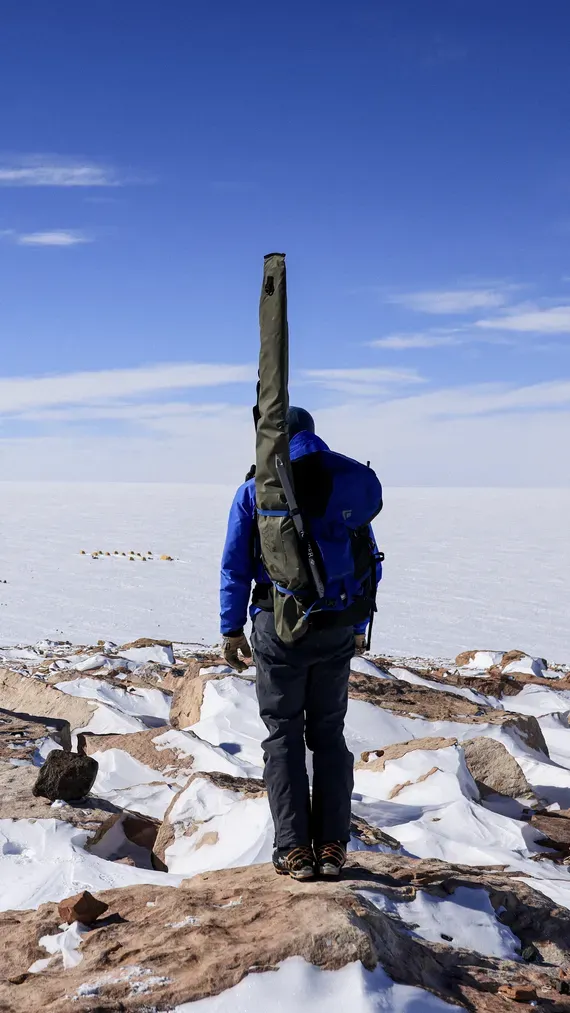

The world is rapidly warming, and in no place is this change more visible than the Greenland ice sheet. It's the largest mass of land-based ice in the Northern Hemisphere, covering an area of 656,000 square miles. Climatologists estimate that if the sheet melted completely, global sea level would rise by 24 feet. Even melting one tenth of the mass would cause significant impacts in coastal cities around the world—from New York to Jakarta to Rio de Janeiro.
What is known is that the sheet is melting, right now. It has lost 5,500,000,000,000 tons of ice since 2002. If you sequentially dumped that amount of meltwater into Olympic-size natatoriums, you could provide a personal 660,000-gallon lap pool for every person living in Africa and Europe—all 2.2 billion of them.
What isn't known is how, exactly, the ice sheet comes apart. But researchers from Columbia University and the University of Buffalo are racing to understand how it might further destabilize in the near future.
In May and June of 2024, journalist Jeffery DelViscio spent a month on the sheet with an expedition of nine. Their aim? To drill through ice down to the bedrock below, sampling some of the rarest rocks in world--rocks that record the last time that Greenland was actually green.


