Pulitzer Center Update October 5, 2026
Pulitzer Reporting Inspires Oregon Students Creating Community Based Photojournalism Projects
Country:

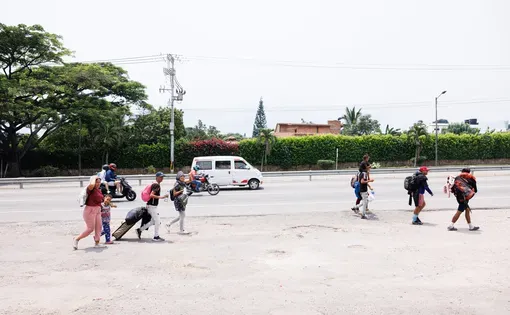
Students analyze how photo projects are composed to empathize with and humanize the stories of migrants and immigrants, evaluate how their communities are represented in local media, and then compose...
Charles Sanderson, a creative writing and vocal justice teacher at Woodburn High School in Woodburn, Oregon, created the lesson plan, A Different Lens: Reclaiming Our Stories With Counter Narrative Photojournalism, as a part of the spring 2025 Teacher Fellowship for alumni, “Global Issues, Local Contexts: News for Civic Knowledge and Engagement.” His lesson reached 125 students. At the conclusion of the Fellowship, Sanderson shared the following reflections on his experience developing and teaching the lesson.
How did you build this lesson with your community in mind?
Eighty-eight percent of my students can trace their ancestry to what is now Mexico, Central America, or South America. At the same time, a majority are born in the United States. Despite massive opportunity gaps and many students needing to work from a young age, my students routinely win regional and national writing competitions, get published widely, and perform in front of audiences of thousands. Valeria Ruiz Tapia has been published by the American Academy of Poets. Award-winning poet Danez Smith described Mariana Bartolo Colon’s poem with the following: “The poet’s searching prayer, which at first turns towards faith before taking us to such a rebellious and firm-footed finale, moved me to tears. “espíritu santo, / amor del padre y del hijo, / ¿qué es del amor para las madres e hijas?” That question is one yet to be answered, but this poem puts God and world to task. This poem is a battle cry for the women and girls of the world.”
Nevertheless, these accolades go unreported by local media. Instead, the stories covered by local and state outlets cover are about trauma: deaths of students, numerous teacher resignations, and fear and confusion in our community because of the Trump administration’s immigration crackdown. In addition, they publish misinformation such as “The city is made up largely of immigrant Mexican or Latino residents.” For one, this is simply not true. 31% of our residents were born outside the United States. However, they are also implying that to be Mexican means you are not American.
This coverage of our community causes internalized oppression. Thus, by the time students arrive in my class, they often lack academic, intellectual, and even linguistic self esteem despite being multilingual. Belen, a freshman at Yale, didn’t think she was a writer, but it was her writing that got her into any Ivy League school. Valeria—mentioned above—similarly did not see herself as a writer when she first arrived in my classroom.
This unit was an attempt to push back against the narratives that others want to tell about our community and tell our stories with a different lens.
What is the focus of your lesson plan, and why did you write this lesson for your community?
I was deeply moved by the photography of Chicago-based journalist Anthony Vazquez because he tells a very different story about migrants, especially Venezuelan migrants, than most of what I’ve seen. Instead of focusing on the trauma, Anthony humanizes the migrants he meets, helping us see moments of joy, connection, and hope.
At the start of the unit, I looked at the coverage of our community, and I was shocked. Every single story was negative except one that was rather benign. I reached out to a journalist I knew at the outlet to encourage them to share some of the success stories of my amazing students, and I have yet to receive a response. I then reached out to another journalist and shared an annotated list with links of stories they could cover. This time I got a response, but I felt like I was gaslit. I followed up again, and this time the reporter made some changes to their site and let me know, “I’m planning to talk with my editor early next week about general reflections on our coverage of Woodburn moving forward.”
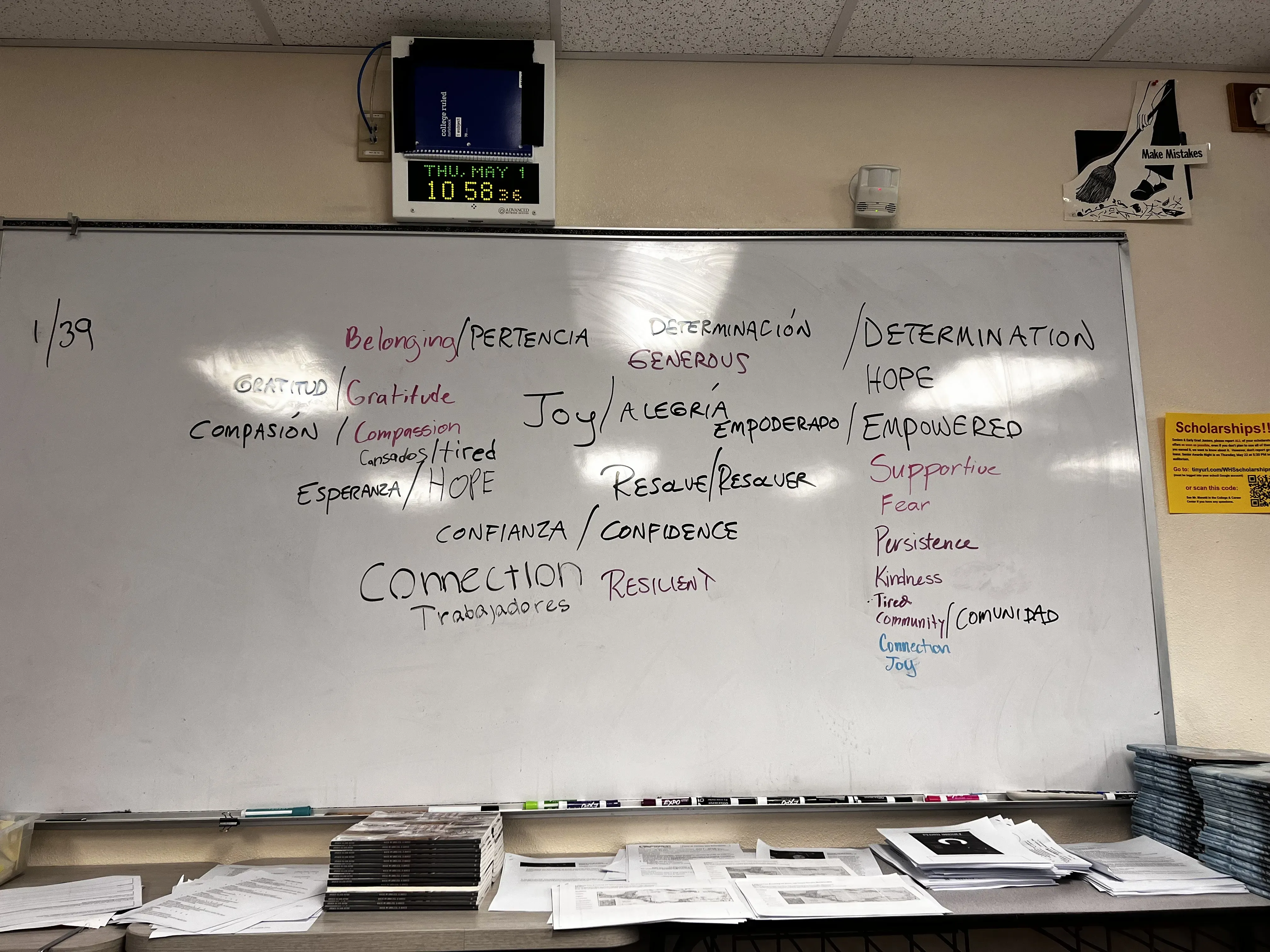
Our unit had two basic components. First, we explored Anthony Vazquez’s work, thinking about the emotions he evokes and what we believe he is trying to communicate about the lives of people who are forced to migrate. Then we grabbed our cameras (phones) and became photojournalists enlisted with telling counternarratives about our community that would foster empathy.
What did your students learn while engaging with this lesson?
The following quotes capture strong examples from students’ final projects about what they learned in the lesson:
“In a place like Woodburn it can be easy to assume that everyone shares the same story: immigrant roots and similar cultures, families, and struggles. But when you look closer, you realize that within our community and shared experiences, each person carries something uniquely their own,” Valeria Ruiz Tapia, Emory University class of 2029 and Woodburn High School alumna, wrote in the slideshow for her final project in this unit.
She added, “There’s authenticity and power all around: In the way people are kind to each other, in the way they celebrate their roots, hold on to their traditions, in the art they create, the hospitality they show, the resilience they carry without mentioning it or maybe even without realizing it. So many stories that may seem ordinary at first but are actually full of extraordinary people. This slideshow made me reflect and reminded me that even if sometimes our backgrounds overlap, our voices, dreams, and journeys are all deeply personal. If we listen closely and try to see others fully, we begin to understand the richness and beauty that lives in each person’s story. And there are many in Woodburn.”
“When you look at me, a white kid in a Hispanic town, you would probably think I’m an outsider, but I’ve been changed by the culture, and I’m so grateful for it,” student Isaac Lesh wrote.
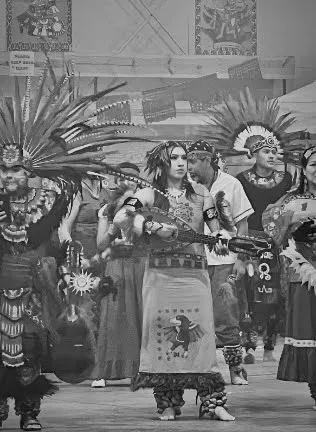
“I personally think it’s hard for people’s voices to be heard in such a small town, especially Woodburn, so knowing that her voice was heard even outside of Woodburn can be inspirational,” student Sheccid Castillo wrote in her final project about Belen Mendoza Cortes, a Woodburn High School graduate and freshman at Yale University, performing at the Portland Book Festival in front of two thousand people at the Arlene Schnitzer Concert Hall. “It’s never too late to dance into your identity.”
What did you learn by creating and teaching this lesson?
I was incredibly invested in the heart of this unit—the use of photojournalism to humanize those who are often marginalized. The challenges facing migrants across the globe and those who are trying to make it to the United States are in my head and heart everyday. As a result, the work of Anthony Vazquez instantly hit me in my heart of hearts. However, when I shared his work with my students, I didn’t get the same sort of reaction. In fact, some students presented as being uninterested. When I tried to tease out why, I got very little in response.
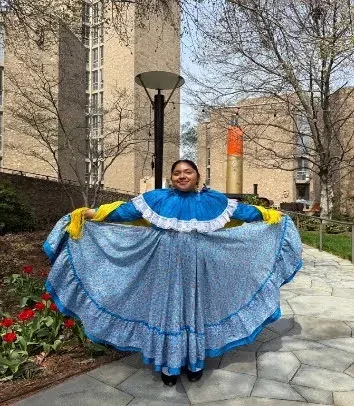
On the other hand, I had many students dive deep into both Anthony’s work as well as taking great care with their own projects. Isaac Lesh wrote about being white yet participating in traditional Mexican dance. Vicky Schastlyvyy highlighted what makes her little sister so special, reminding us, “It illustrates the importance of taking small steps to remain determined and happy—and how we should always strive to look higher for a better future.” Sheccid Castillo tells us, “It’s never too late for anything, and always remember to embrace who you are.”
Valeria Ruiz Tapia, a senior who will attend Emory University on a full ride next year, powerfully highlights the unique and inspiring stories of two of her friends; however, she also wrote about me, and that’s when the tears started to flow, especially when I read, “He is constantly encouraging students to reflect on themselves, understand others, and build real empathy, and that belief he holds and shows in authenticity has changed lives, including mine. Mr. Sanderson doesn't just teach writing; he teaches people how to take up space, use their voice, and write their truth with courage.” I do every assignment my students do, and this was no different, and Valeria was the subject of one of my stories.
Another positive outcome of this unit was when I pushed back against Oregon Public Broadcasting’s coverage of our community. It took several emails. However, through my advocacy, I received the following message: “I talked with our digital producers today about updating the Woodburn tag page. I found at least six stories from recent years that should have been on that page, so thanks for bringing it to our attention! They're adding those now. And I'm planning to talk with my editor early next week about general reflections on our coverage of Woodburn moving forward.”
I plan on making a couple significant changes to this unit when I teach it next year. First, I am going to find out whose voices my students don’t hear often enough in the news and what communities they see being portrayed primarily in a negative light. Then I will build out an annotated library that includes a wide-range of photojournalism that helps humanize populations who are often marginalized. I hope this will help more students find communities they are interested in learning more about while providing other students options if they don’t want to engage in content that is too close to home.