
Project
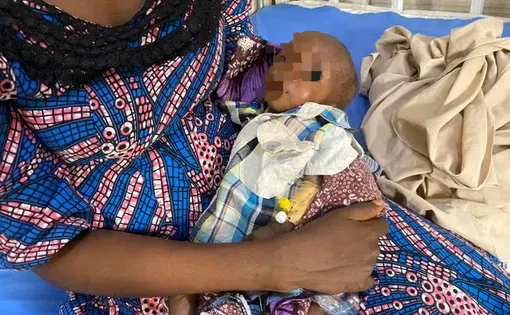
Surviving on Hope
According to UNICEF, Nigeria had the highest number of malnourished children in Africa and the...

Imagine you, or someone close to you, are waiting for chemotherapy and the hospital tells you the medication is unavailable. It’s not because you can’t afford it, or it can’t be purchased. The medicine is in the hospital’s hands, but it’s defective. It can’t be used.
This is what happened to thousands of families in Peru. Over six years, Peru's Ministry of Health purchased more than 140,000 cancer drugs that contained bacteria or glass particles, or, didn’t have the right concentration of medicine described on the label. Instead of delivering lifesaving medicine, the vials ended up in the trash. Some patients went untreated for weeks. The Peruvian government kept on buying drugs from the same manufacturers despite their quality problems.
How do we even know about this?
In this case, it is because of the work of terrific investigative journalists at Salud con Lupa in Peru and the Bureau of Investigative Journalism in the U.K., with support from the Pulitzer Center.
Because of this investigation, change did happen, finally. The Peruvian government launched inspections of 26 manufacturing plants in India and China, and there are efforts underway to improve the government’s drug safety practices.
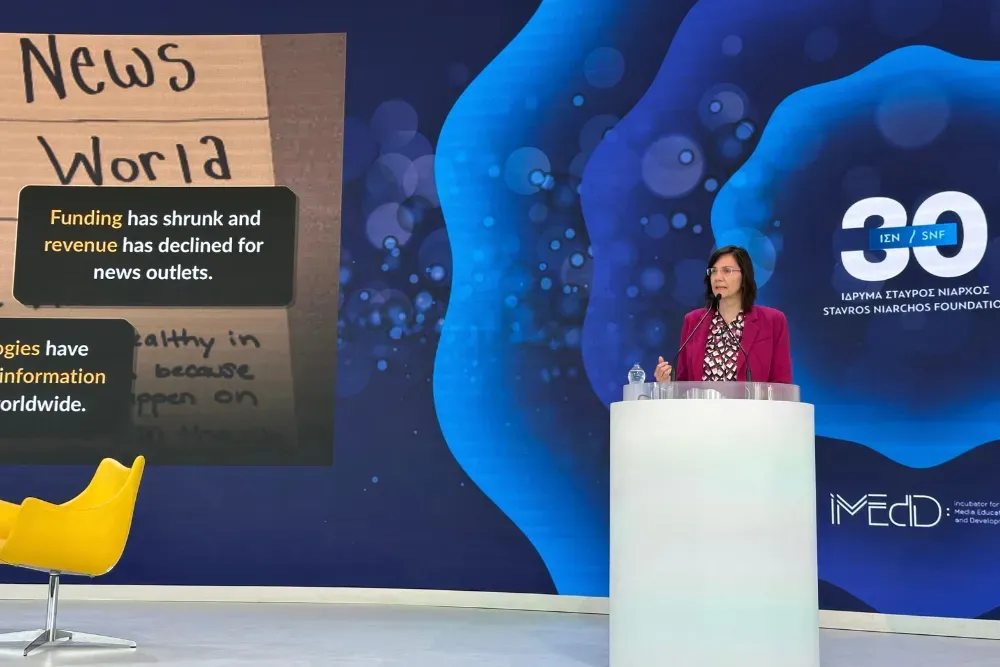
“We can’t fix problems that we don’t know about,” Pulitzer Center President and CEO Lisa Gibbs said during her keynote at the Stavros Niarchos Foundation’s SNF Nostos conference in Athens, Greece, earlier this week, highlighting the project Chemotherapy at Risk as an example from the 2,801 stories the Center has supported on global health issues over the past two decades.
Catch up on the keynote here, and learn more about Gibbs’ perspectives on the future of journalism in this interview with IMEdD.
Center-supported global health reporting covers health inequalities and scientific research across borders. In northern Nigeria, a story finds the direct effects of USAID funding cuts on clinic shelves, where nutritional supplements for children are vanishing. In the United States, a story explores new research calling the gut microbiome “the next frontier of cancer prevention and care.” In Croatia, we hear from the scientist who has spent decades researching BPC-157, a peptide gaining popularity within the “Make America Healthy Again” movement. And in Mozambique and South Africa, a story looks at what’s left for HIV prevention after funding cuts, and the people committed to keep fighting the epidemic.
All of these stories and more are what we at the Pulitzer Center call “Breakthrough Journalism”: “journalism that isn’t just noise, or the headline that you scroll through … it’s journalism in service: in service to truth, to our communities, and to our society,” Gibbs said.
Gibbs explained that while both journalism and public health are facing deep challenges of funding, distrust, and misinformation, there is reason for optimism.
“Journalists are resilient,” she said. “They are used to operating in difficult situations, asking the questions that people don’t want asked. And I do believe that journalism can strengthen trust, not just for the sake of journalism itself, but for other sectors too.”
Best,

Sarah Swan
Director of Communications & Audience Engagement
This message appeared in the June 26, 2026, edition of the Pulitzer Center's weekly newsletter. Subscribe today.



