Pulitzer Center Update June 4, 2026
The Pulitzer Center Shares the Power of Journalism in Health Reporting at High School Journalism Conventions

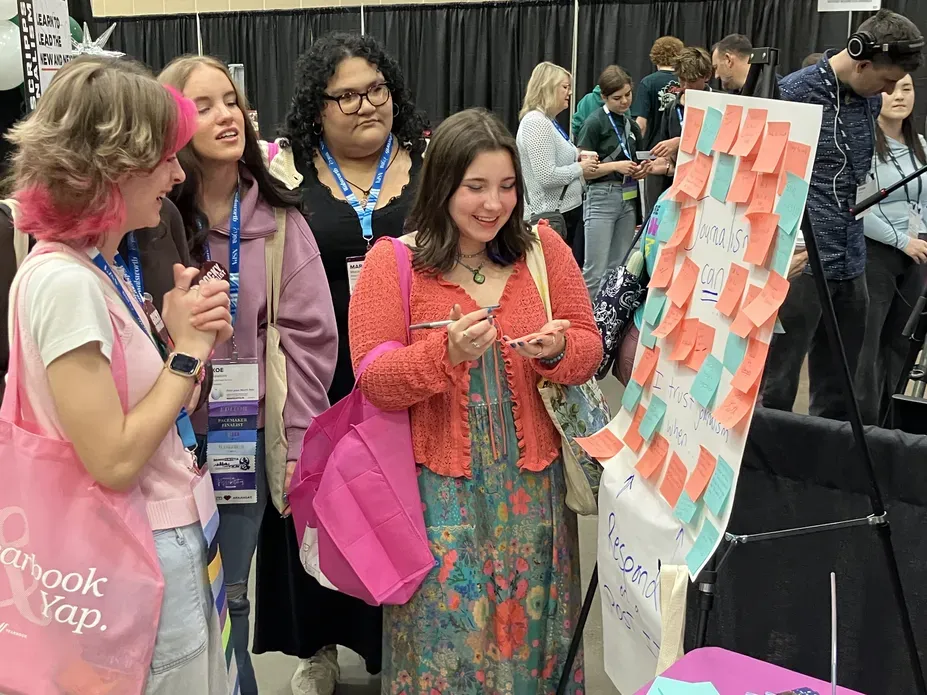
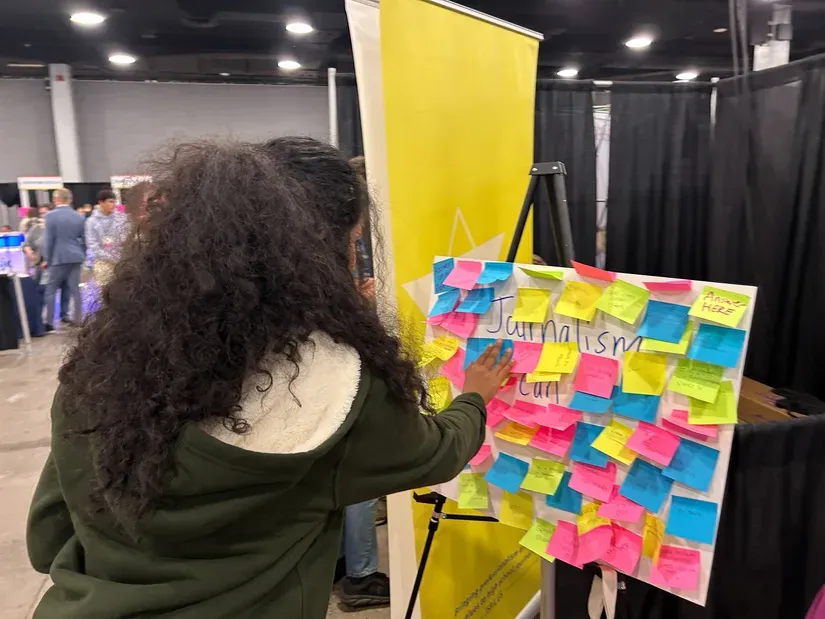
“Journalism can open your mind.” “Stop misinformation.” “Save democracy.” “Change the world.”
These are a few of the dozens of responses high school students shared when we asked them a question: “What can journalism do?”
The Pulitzer Center’s K-12 Education team met over 1,000 high school reporters and their teachers at the fall 2025 and spring 2026 National High School Journalism Conventions, hosted by the Journalism Education Association (JEA) and the National Scholastic Press Association (NSPA). The JEA/NSPA convention is the largest national gathering of high school journalists, advisers, and journalism teachers, making space for students to hone their craft, build community, and explore career paths.
During the two-day conferences in Nashville (fall 2025) and Minneapolis (spring 2026), our Education team connected with students through skill-building workshops, one-on-one career conversations, and an exhibit hall booth where we shared the Pulitzer Center’s approach to journalism and our resources on global health.
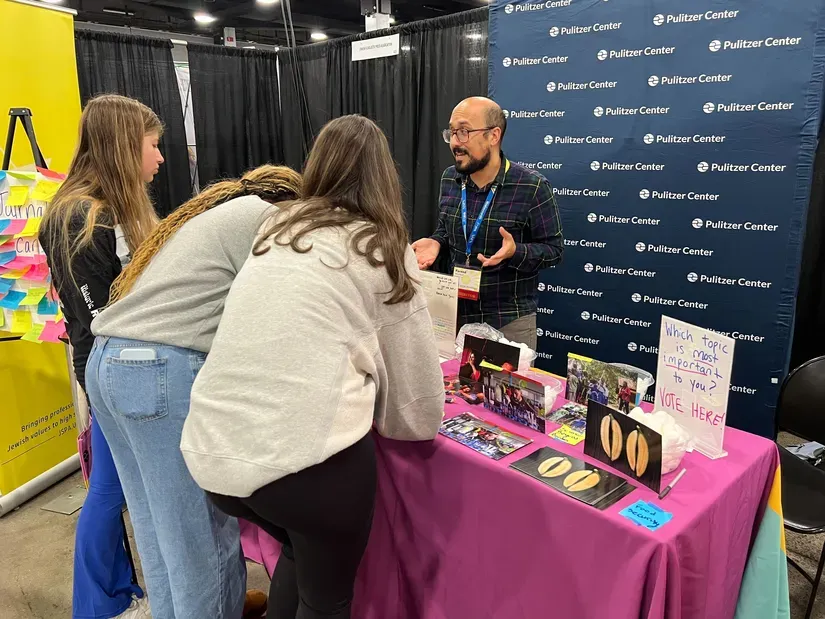
At the Pulitzer Center booth, students voted for the health issue they considered most relevant to their lives, such as health misinformation or inequality in health care access. They then explored a finding from our journalist-grantees’ recent reporting on the topic they chose and discussed how the global concern connects to their communities—and how they, as journalists, might cover systemic health issues locally. You can access some of the informational postcards students explored here!
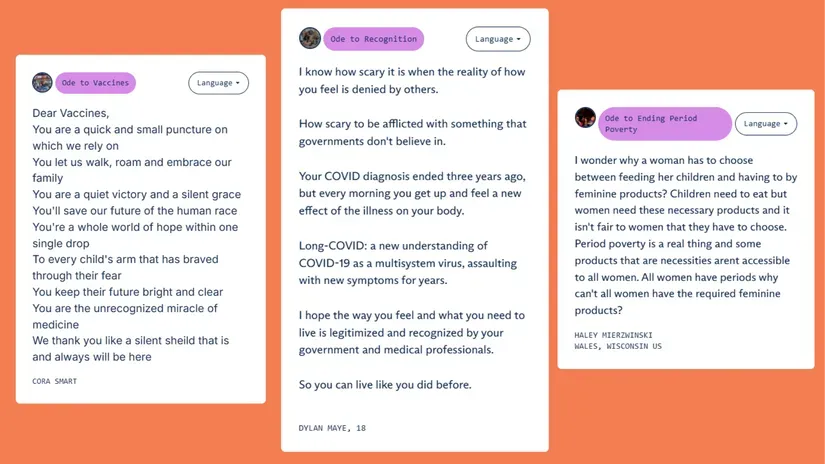
At the fall 2025 convention, our three workshops focused on science journalism and reporting on health issues. Students analyzed approaches Pulitzer Center grantees have taken to storytelling about global health, and how students can replicate them to dig deeper into systemic issues in their communities. They explored techniques journalists use to make science reporting more accessible and actionable for audiences. In addition, they wrote poems that take a stand against health misinformation through the Center’s Ode to Healthy Futures platform. You can explore the complete gallery of poems here.
In spring 2026, our workshops were part of the convention’s DEI strand and centered the relationship between journalism and mental health. Pulitzer Center StoryReach U.S. Fellow Andy Steiner led a deep dive into her experience as a mental health beat reporter for MinnPost, a local news nonprofit in Minneapolis/St. Paul. She also held career-focused conversations with students during JEA/NSPA’s networking hours. Other staff-led workshops introduced strategies students can use to report on mental health, and explored how creative expression can support healthy processing of current events, making in-depth engagement with the news feel sustainable.
The Pulitzer Center team left both conventions feeling inspired by the dedication, insight, and ambition of young reporters from across the country. We look forward to seeing how they fulfill the many purposes of journalism, which, they tell us, can “make truth clearer,” “uplift the voices of others,” and “save lives.”