Pulitzer Center Update April 28, 2026
After Grantee's Investigation, Colombian President Calls for Change To Protect Forests
Country:


This project takes an in-depth look at the impacts of public loans on Colombian biodiversity. These...
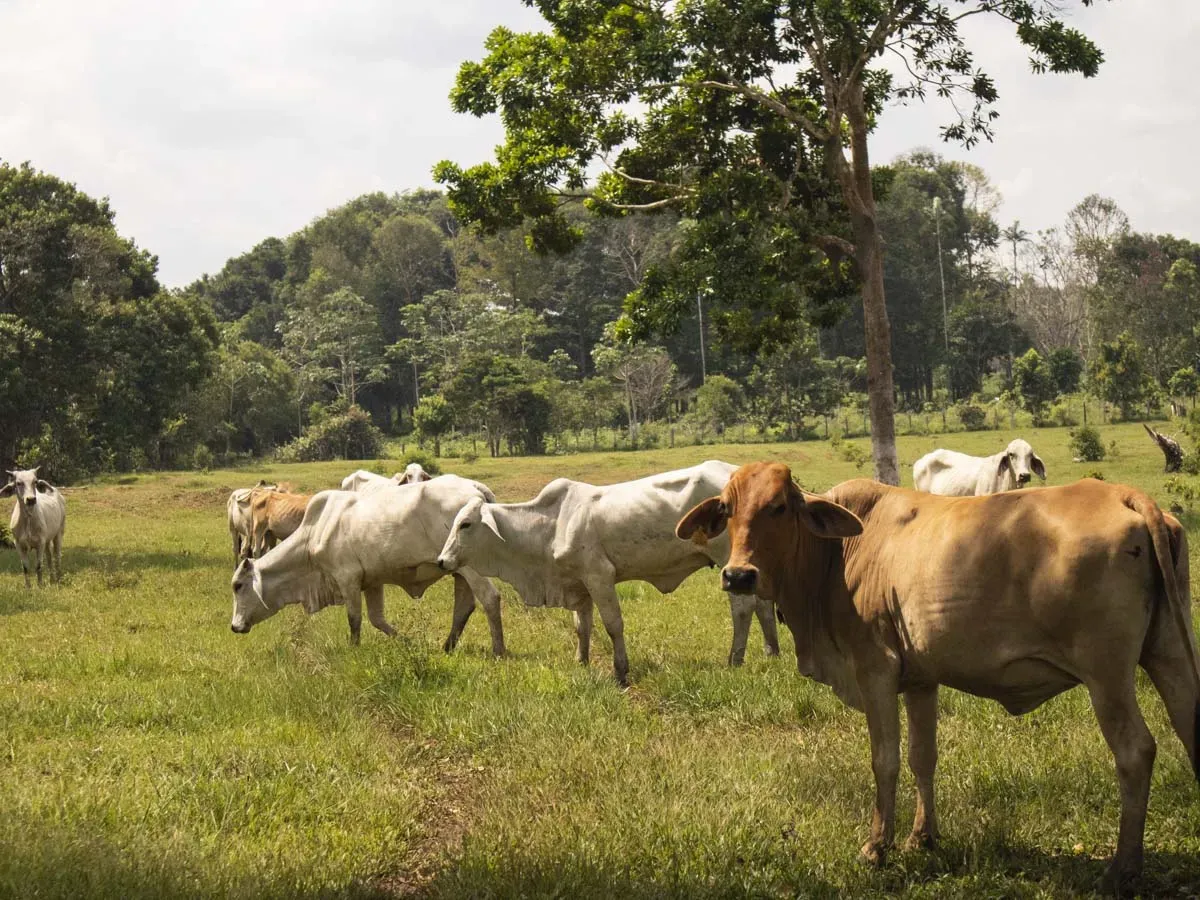
Colombian president urges Finagro to halt livestock loans that drive deforestation in the Amazon
An investigation by Pulitzer Center grantee Julio Caicedo, titled "En la Amazonía, Finagro destina casi la mitad del crédito a vacas" ("In the Amazon, Finagro Allocates Almost Half of Its Credit to Cattle"), revealed that Finagro—a Colombian government entity acting as a second-tier bank—allocated at least 1.5 trillion pesos in loans to extensive cattle ranching in areas linked to deforestation between 2018 and 2025.
The agency, which is part of the Ministry of Agriculture, operates under the following model: it provides capital to banks and cooperatives so that they can grant loans to producers.
The investigation sparked a public conversation and a political debate about the use of public funds that may be linked to activities promoting deforestation in the Amazon.
The impact of data: the president's response
The publication of these findings, reported by La Silla Vacía, not only provided evidence regarding the use of these public funds but also prompted an immediate response.
Colombian President Gustavo Petro, via his social media accounts, highlighted the urgency of addressing this investigation and stated that Finagro should immediately halt the granting of loans for activities that may be linked to deforestation in the Amazon.
Between research and statistics
In the published report, preliminary data from 2025 show a 6% increase in deforestation in the Amazon. Meanwhile, the Fund for Life—one of Colombia’s main public instruments for preventing deforestation—suffered a 75% cut in its budget for this year, and other lines of state investment continued to prioritize extensive cattle ranching.
The institutional response was launched following media pressure after the report was published. Irene Vélez, Colombia’s acting minister of the environment, confirmed that technical teams from the Ministry of Agriculture and Finagro are already holding emergency meetings to examine incentives that could be linked to the deforestation revealed in this investigation.
“The president said it from the start: We cannot encourage livestock farming there,” said Vélez, who acknowledged that the journalistic investigation brought the issue to the forefront of ministerial debate.
The right to know: a shield against deforestation
This case is not merely a political dispute—it is a victory for access to environmental information. The use of public data from Finagro, Ideam, and Banco Agrario shows that transparency is the most effective tool for citizen oversight.
The legal framework in Colombia has seen significant progress. The recent Constitutional Court ruling T-534 of 2024, which requires supermarket chains to disclose the origin of the meat sold in their stores, along with the full implementation of the Escazú Agreement, establishes that environmental traceability is a matter of public interest. Under the “principle of maximum disclosure,” the state has a proactive obligation to disclose the destination of its investments and the impact they have on ecosystems.
The need for active citizen oversight
The Finagro case not only requires an internal review by various government agencies, such as the Ministry of Agriculture and the Ministry of the Environment. It also calls for evidence-based public oversight.
Its effects remain to be seen, but a presidential order has already been issued, and meetings are underway among the various ministries to address the findings of this investigative report.