Pulitzer Center Update May 1, 2026
As Press Freedom Day Nears, We're Reminded Why Journalism Is Vital
Country:

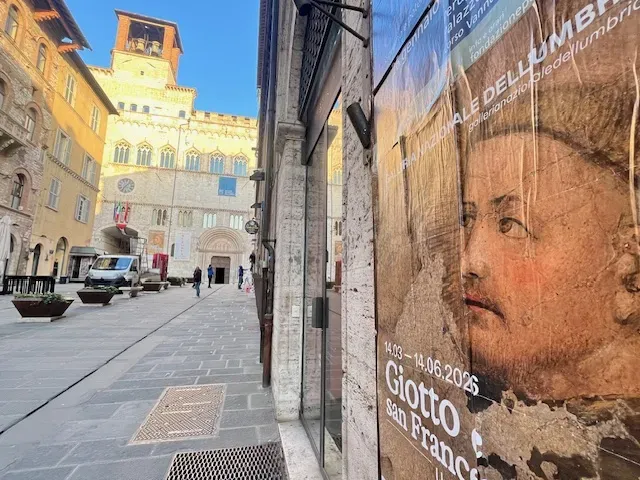
International Journalism Festival in Italy inspires the Pulitzer Center.
"The way to right wrongs is to turn the light of truth upon them.”
Ida B. Wells—the pioneering Black journalist and activist for women's rights and the suffrage movement—captures perfectly the role and value of journalism in upholding truth and exposing injustice.
Over 100 years on from when she spoke those words, we see that journalism isn’t just important in today’s complex world—it’s vital.
Public interest reporting lies at the very core of a healthy democracy: shining a light on truth, demanding transparency, and holding power to account.
In an era challenged by misinformation and disinformation, generative AI, and deepening inequalities and authoritarianism, protecting press freedom is harder than ever—but it’s also more urgent than ever.
I’ve just passed the six-month mark as director of editorial programs at the Pulitzer Center. It’s been a deeply inspiring, energising, and instructive period, and I feel incredibly proud to work for an organization that supports in-depth journalism on issues such as human rights, climate change, peace and conflict, global health, and artificial intelligence. Our core philosophy is that stories, and storytellers, have the power to change the world. As World Press Freedom Day (May 3) approaches, it feels especially clear to me just how essential the Pulitzer Center's work is.
Knowledge and impact sit at the heart of what we do. Our philosophy is rooted in breakthrough journalism, which doesn’t just inform, it also helps people make sense of a complex, noisy, disconnected world and discover their place in it. Breakthrough journalism follows the facts, supports civic engagement, and moves people to work together to find solutions.
While the challenges for press freedom remain significant, the commitment to public interest reporting among the journalism community also stands firm.
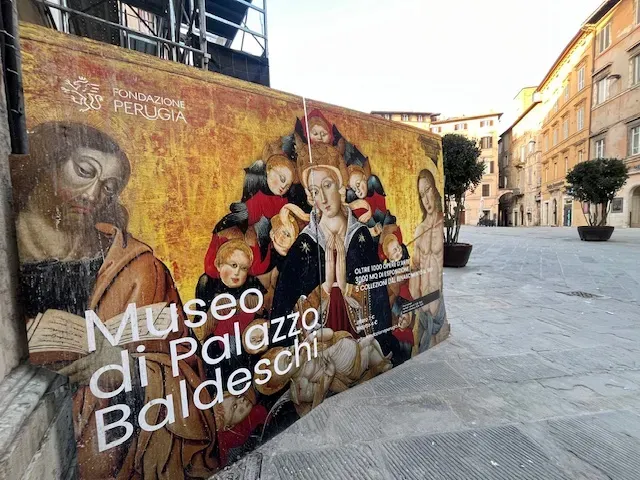
That was clear at the International Journalism Festival (IJF) in Perugia, Italy, held April 14-17, 2026. It’s Europe’s largest annual media gathering, where leaders and practitioners come together to tackle the biggest challenges facing our time. With around 500 speakers across 150 sessions, the scale was extraordinary and the determination to serve audiences was palpable.
It’s hard not to come away from the festival feeling inspired by the resilience and courage of journalists from around the globe.
This year’s IJF program covered everything, including the landscape of conflict reporting—where surveillance drones, cyberattacks, and disinformation campaigns have become new weapons of war. Local and international journalists have to navigate these perils in order to document the truth.
Other sessions covered reaching new audiences in innovative ways, understanding the trends that are shaping global consumption, hearing why the gender lens in journalism still needs work, discussing the impact of chatbox news, and debating solutions to newsroom sustainability. These sessions also celebrated the power of transnational collaborations, which have, through the decades, exposed global scandals, protected threatened reporters, and reached millions of people worldwide.
It’s impossible to access every session at IJF. But what you do palpably get is a glimpse into the collective global power of journalism, and its ability to innovate, connect, and shift in order to meet the challenges of the world we find ourselves in.
And, on a personal note, it’s a relief to step back from the relentless daily news agenda, and instead focus on underreported geographies and issues and, of course, to hear from so many talented people in our field.
There are simply too many panels to mention, but here are a few highlights that, on World Press Freedom Day, are a reminder that journalism matters.
'Reporting During Gender Apartheid in Afghanistan'
The panel "Reporting During Gender Apartheid in Afghanistan" explored how nearly five years into Taliban rule, Afghan women are being systematically silenced under what many in the international community describe as gender apartheid.
Making their voices heard is both dangerous and difficult. Female Afghan journalists are being forced to work in clandestine conditions, while female reporters from abroad are routinely denied visas to enter the country.
Despite these barriers, their journalism courageously continues. I would urge you all to watch the session in this video. Zahra Joya and Amie Ferris-Rotman, both speakers on the panel, collaborated on this Center-supported project one year after the fall of Kabul.
Syrians Telling Their Own Stories
One year after the fall of the Bashar al-Assad regime, Syria’s media sector is undergoing its most profound transformation in decades. The story didn't end with Assad. Syrians are telling their own stories with greater freedom, but within the context of obstacles, including weak legal and regulatory frameworks, deep social fragmentation, and a long-standing crisis of public trust.
The panel "Syria’s New Media Landscape: Taking Stock One Year On" explored how the nation's emerging media ecosystem is linking the past and present to future democratic aspirations. All power to Hadi Al Khatib, Arwa Damon, and Kholoud Helmi, who offered a firsthand assessment of how Syrians are rebuilding their media landscape and what this pivotal moment means for the country’s democratic future.
The Dark Web and Children's Safety
One of the first events of the IJF week was a screening of BBC Eye’s The Darkest Web, which tells the story of U.S. agent Greg Squire and an extraordinary global team of undercover officers taking on the almost impossible, infiltrating the darkest corners of the internet to rescue children. The documentary, made by the BBC World Service’s investigative unit, BBC Eye, was commissioned for Storyville, the BBC’s award-winning strand showcasing the very best in international documentaries, and is accompanied by a six-part World of Secrets podcast.
The film and post-screening panel—led by Liz Gibbons, controller of global journalism at BBC World Service, and director Sam Piranty—were utterly compelling. The film took seven years to make, requiring trust, patience, and forensic work across multiple geographies around the globe. At its core is journalism in the public interest, combining powerful ingredients of cross-border narratives, accountability, and human-focused storytelling, all of which result in a highly potent piece of filmmaking.
Public service broadcasting at its best, this is exactly the type of journalism and the kind of storytelling that audiences around the world deserve to hear.
Live and Performative Journalism
In today’s fractured media landscape, cutting through the noise is getting more difficult. This means newsrooms and media outlets are taking a more innovative and intentional approach to storytelling in order to build audience trust and connection.
In an age of news fatigue, distrust, and disengagement, the panel on “live journalism” offered an intriguing and inspiring conversation about taking journalism onto the stage: into theaters, neighborhoods, and public spaces, turning factual reporting into shared human experiences.
Performative journalism was a definite theme. In the session "Performative journalism to save the craft," moderated by Pulitzer Center Executive Editor Marina Walker Guevara and featuring journalist Cristian Alarcón, asked whether journalism can save itself by turning into art. The answer? A resounding yes.
I’m proud to say that Alarcón is a Center grantee, and I urge you to check out Testosterone: The Dehumanizing Conversion, his performative investigation that explores how the hormone was used in children and teenagers as part of conversion therapy. The project draws on Alarcón's personal experience—he underwent conversion therapy with testosterone at the age of 8—and seeks out other stories in the region, focusing on Colombia and Ecuador. The discovery of archives and testimonies reveals stories that have been hidden or legitimized by medical, religious, and family institutions.
Storytelling and Human Connection
Community building and its role in journalism was another definite moment for hope, illustrated by the strategies of three independent media outlets: Daily Maverick, Republik, and CORRECTIV.
The session "Human-made, mission-driven: Reinventing membership media in the age of AI-slop," which I moderated, reminded me that in this era of AI slop, there really is nothing like the power of human connection in storytelling.
Journalism is nothing without you, our audience.
Discussing how we tell the story using unusual collaborations and working with content creators also gave much food for thought. A personal highlight was the dawn mobile photography run by professors Rob Layton and Aphrodite Salas. It reminded me of the power of creativity, seeing the story through a different lens and the role of visual storytelling in creating memorable narratives.
To say that today’s information ecosystem is compromised is an understatement. We are in a messy and chaotic media environment, from platform challenges to deepfakes and newsroom sustainability.
Courage and conviction are everything. My work at the Pulitzer Center and the recent trip to IJF have buoyed me to see that the global journalism community stands together. The world is changing, but our determination to serve you—our audiences—remains as solid as it has ever been.
I hope you will join us in marking World Press Freedom Day this May 3, and in supporting our work for today and in the days, months, and years to come.
If you are interested in supporting the Pulitzer Center, please click here to donate. Give any amount to become a Pulitzer Center Champion and receive exclusive benefits.
This message appeared in the May 1, 2026, edition of the Pulitzer Center's weekly newsletter. Subscribe today.


