Pulitzer Center Update March 25, 2026
Pulitzer Center Shares Tools for Expanding Investigative Journalism's Reach at South Africa Conference
Country:

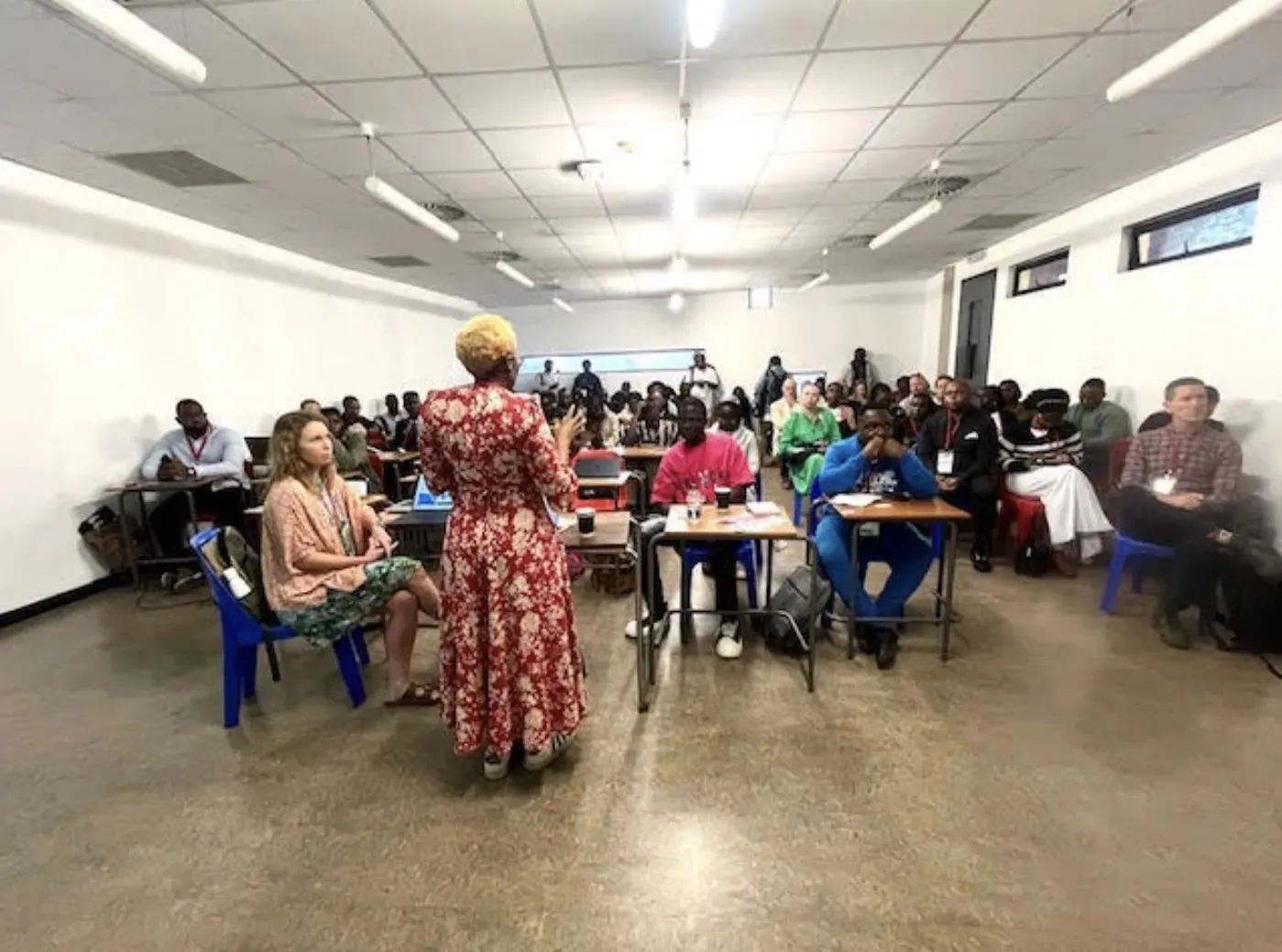
Investigative journalism plays a vital role in a world shaped by conflict, misinformation, and rapid technological change. Its rigor is built on in-depth research, meticulous verification, cross-checking, and analysis. It tackles powerful interests, exposes abuses, and contributes to transparency, sometimes at the cost of journalists' lives.
However, in a saturated media environment, facts revealed in investigative journalism can quickly be swallowed up or drowned out by the constant flow of information, and it's at risk of failing to have the expected impact. This raises an important question: How should we extend the life of our investigations and enable them to reach a wide audience and inspire change?
One possible solution is to capitalize on conferences and journalism events, spaces that allow us to present our investigations, share ideas with our peers, learn about new tools, and inspire other journalists.
The African Investigative Journalism Conference (AIJC) is one such event.
Staff, grantees, and Fellows from the Pulitzer Center, which supports investigative journalism on underreported topics of global interest, participated in the annual conference.
AIJC 2026: Call for proposals
The AIJC's call for proposals for 2026 is currently open.
For all those who love in-depth investigative journalism, now is the time to submit innovative and high-impact investigative topics. The Pulitzer Center is planning to participate, and we strongly encourage journalists, our grantees, and Fellows to seize this opportunity to share findings and lessons learned from their investigations and take their work beyond media outlets.
Lessons learned at AIJC 2025
AIJC 25 was held on November 5-7, 2025, at the University of the Witwatersrand in Johannesburg.
A delegation from the Pulitzer Center, along with grantees and Fellows, attended the event, which, as usual, brought together journalists and editors from Africa and beyond.
"The AIJC 25 reminded me that investigative journalism is not just about revealing facts, it is about building bridges between data, communities, and those in power," said Jérémie Kyaswekera, an investigative journalist from the Democratic Republic of Congo.
“Attending the African Investigative Journalism Conference 2025 didn’t just sharpen my skills, it reshaped how I think about growth in investigative journalism," said Billy Ntaote, a Lesotho-based investigative journalist and a Pulitzer Center grantee.
'Eye-opening': Pulitzer Center-led sessions
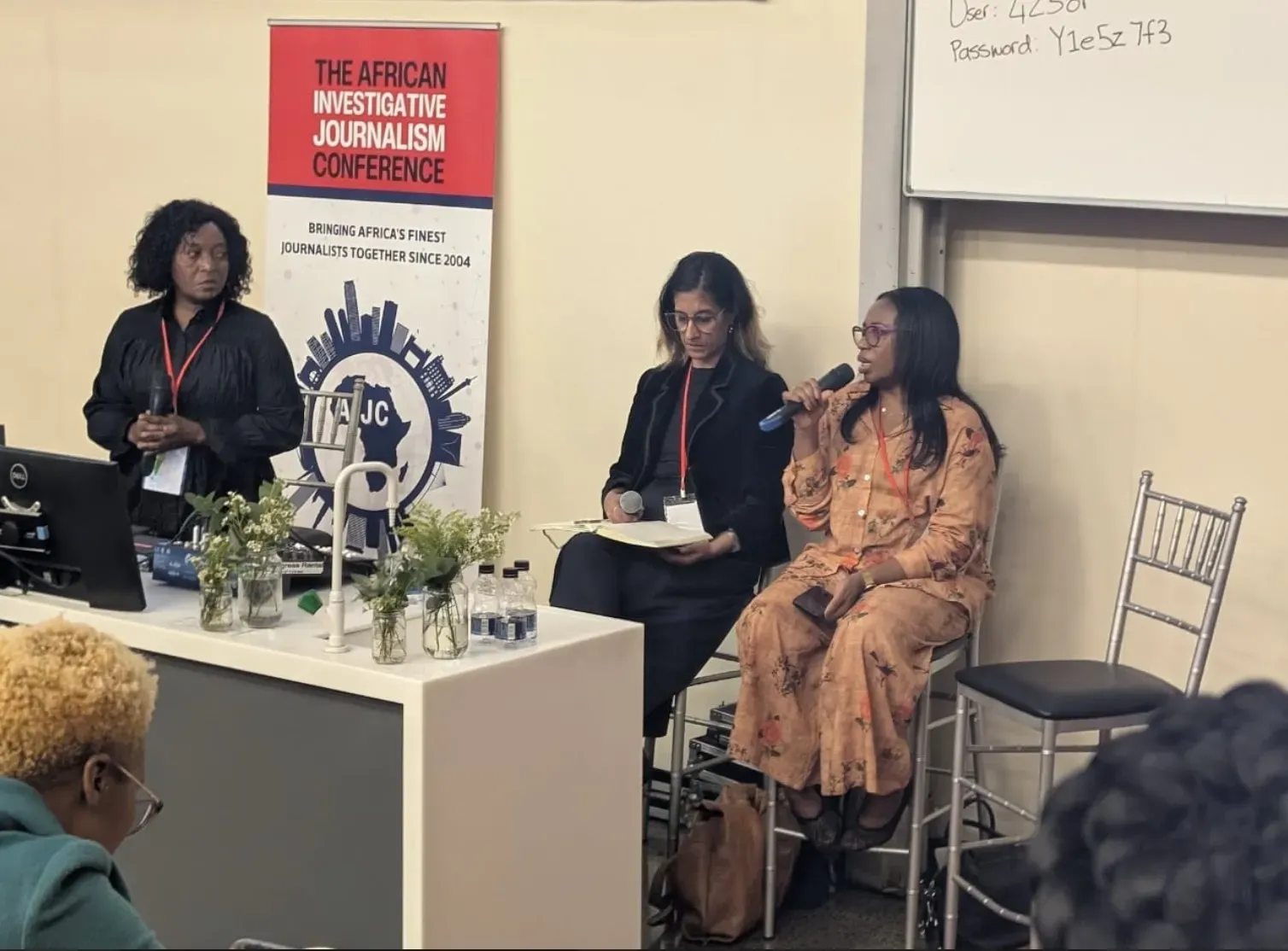
The Pulitzer Center led three sessions at the AIJC:
The networking session titled “Strengthening Climate and Environmental Journalism in Africa” highlighted how the Pulitzer Center supports journalists worldwide in reporting urgent, underreported topics, including climate change, health, labor, conflict, and human rights.
Participants were informed about the Pulitzer Center's support and funding opportunities, as well as its full operating model, which involves independent reporting, education, and engagement. This model amplifies stories' reach.
"Through sessions highlighting opportunities from the Pulitzer Center, I saw new pathways for reporting on climate, health, and human rights," Ntaote said.
The second session, “Exposing Africa’s Carbon Credit Deal Profiteers: OSINT and Money Tracking,’’ offered a practical approach to investigative techniques.
Two 2024 Pulitzer Center Rainforest Investigations Fellows—Elodie Toto (from Mongabay) and freelance investigative journalist Linda Ngari—showcased how to use OSINT and financial tools to track money in the carbon credit market, enabling journalists to better understand who profits and who does not.
"I was encouraged to see a good number of people join the session, given it was an early-morning session on the last day. Not only this, but the Q&A session was also very engaging, with some journalists also sharing their experiences. For example, how one hid their identity while working on a story about a REDD+ project in Ghana. This showed me that there is a lot of interest in covering the topic in Africa," Ngari said.
"During this session, I noticed that many people were interested in this work and wanted to understand it and follow in my footsteps. It was a great pleasure to share my work with this professional audience. Their questions generated new ideas and opportunities for collaboration, and it really motivated me to continue in this direction," Toto said.
After the session, a few participants who wanted to learn more about carbon credits chatted with the speakers to get more insights. Nigerian participant Ibrahim Adeyemi, a Pulitzer Center AI Accountability Fellow, said he enjoyed the session on carbon credits. “The session taught me how to investigate carbon credit deals in Africa. I specifically learned the techniques to uncover the flow of money in the African carbon credit markets. It was really an eye-opening session.”
The third session was titled “Humans, Hype, and Consequences: Investigating Artificial Intelligence (AI) in Africa Communities and Beyond."
AI Fellows Kathryn Cleary and Naipanoi Lepapa adapted slides from the Pulitzer Center's AI Spotlight Series to present a session on reporting AI impacts in African communities. They covered the history of AI, common reporting mistakes, frameworks for investigating AI supply chains, human labor behind AI, environmental and community impacts, and how AI models are used by public and private institutions.
They also shared personal reporting experiences: Cleary on human labor powering AI development, and Lepapa on the risks of implementing new algorithmic systems without consent or safeguards.
Prior to the main conference, some participants attended a masterclass focused on OSINT, digital forensics, geolocation, chronolocation, and online verification techniques. It was led by Bellingcat, a Netherlands-based journalism group, and hosted by the AIJC at the Wits Centre for Journalism.
“The masterclass reinforced my conviction that in times of crisis, our rigor in methodology, techniques, and open-source tools is our greatest strength,” participant Jérémie Kyaswekera said.
Hopes for AIJC 2026
The AIJC is more than just a professional event. Beyond its various sessions, the conference offers a space for discussion and networking for journalists, including members of the Pulitzer Center.
These conversations about investigative work are often the source of new story ideas and lead to collaborative or transnational investigations.
For 2026, journalists can seize the opportunity to take their reporting beyond their outlets' readers and inform, mobilize, and contribute to change.

