Pulitzer Center Update March 4, 2026
Behind the Story: How Reporting Duo Overcame Challenges to Unravel Rare Earth Mining Web
Country:

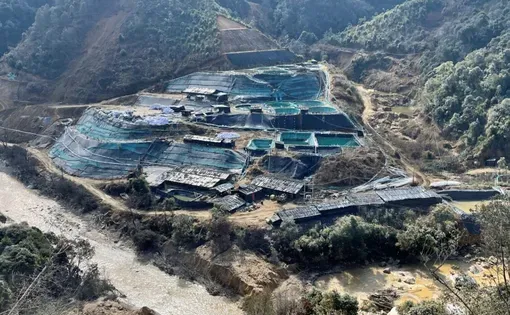
Myanmar’s rare earth mining industry is lucrative, but it lacks regulatory safeguards.


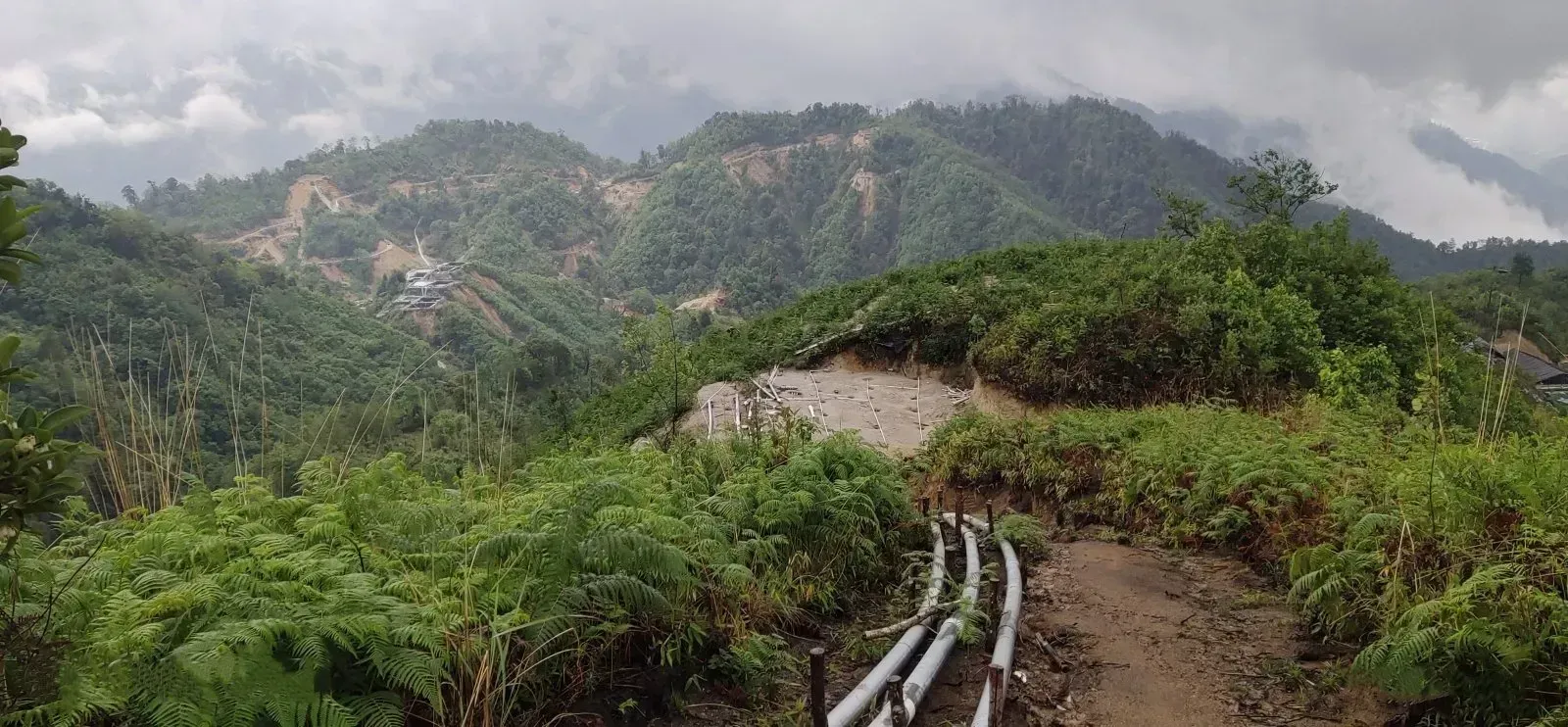
“Once you begin to uncover something, you cannot stop wanting to know more,” Pulitzer Center grantee Jauman Naw said. “It stays in your mind and becomes difficult to let go of.”
Naw and fellow grantee Emily Fishbein are working to unravel the web of rare earth mining sites in Kachin State in Myanmar to show how they feed into supply chains and global politics, as well as the repercussions on local communities.
These mines, located along the border with China, are controlled by armed groups who “are partnering with Chinese businesspeople in order to exploit resources, often with the complicity of the Burmese military,” Fishbein said.
In 2021, a military coup in Myanmar triggered the collapse of the rule of law, restrictions on the press, human rights abuses, and a civil war.
Since then, Naw—who is from Myanmar and the ethnic Kachin minority—has been writing under a pseudonym for his safety, and Fishbein has been unable to return to Myanmar.
Despite these barriers, Naw and Fishbein have adapted to the challenges, leveraging remote-reporting techniques including examining customs data, doing social media analysis, and interviewing sources over Signal, an instant messaging service.
“The factors that make these stories difficult to reach are the same factors that make them important to cover,” said Fishbein.
Pulitzer Center Editorial Intern Ella Beiser spoke with Fishbein and Naw about their reporting and its challenges.
This interview has been edited for length and clarity. Naw is using a pseudonym to protect his identity. He was interviewed via email.
Ella Beiser: Will you introduce yourself and the work that you do as a journalist?
Emily Fishbein: My name is Emily Fishbein. I'm a freelance journalist and I focus on Myanmar. I try as much as possible to write using a collaborative approach with local journalists or people interested in exploring journalism who are from Myanmar and especially from the communities that we are covering, who have an interest in those topics. I especially write about environmental justice, human rights, and social justice.
Jauman Naw: I am a student from Myanmar and belong to the ethnic Kachin minority. I have been using a pseudonym since the military coup in Myanmar. Of course, I would prefer to use my real identity, but the current situation has not allowed me to do so safely. I may still need to remain connected to Myanmar, and I have witnessed many journalist colleagues being arrested by the military junta. For these reasons, I made a deliberate decision to take precautions to protect my own safety as well as the security of my sources.
Beiser: How does the rare earth mining industry fit into what's going on in Myanmar right now?
Fishbein: The first thing about Myanmar is there was a military coup in 2021 and that set off a spiral of events, including a collapse in the rule of law, the military imposing restrictions on media access, but also incredible human rights abuses against the civilian population, and then widespread civil war. The public initially turned to peaceful protests, and then after those protests were cracked down on with violence, there was an armed uprising. So, there's war across Myanmar, and then alongside that, also a huge rush to exploit Myanmar's natural resources.
And this builds on what was already happening before the coup, where there were already these huge risk factors of armed conflict in the country, weak rule of law. And then the location of Myanmar, sharing a long border with China, which is the primary, we can say, investor in resource economies in Myanmar.
So the main pattern would be that armed groups along Myanmar's border with China are partnering with Chinese businesspeople in order to exploit resources, often with the complicity of the Burmese military, in some cases, anyways.
The boom in rare earth mining in Myanmar sort of coincided with a global interest, or rising interest, in rare earth elements, which are considered like critical minerals by a lot of governments; so that means, like, geo-strategically important and valuable in a lot of modern technologies.
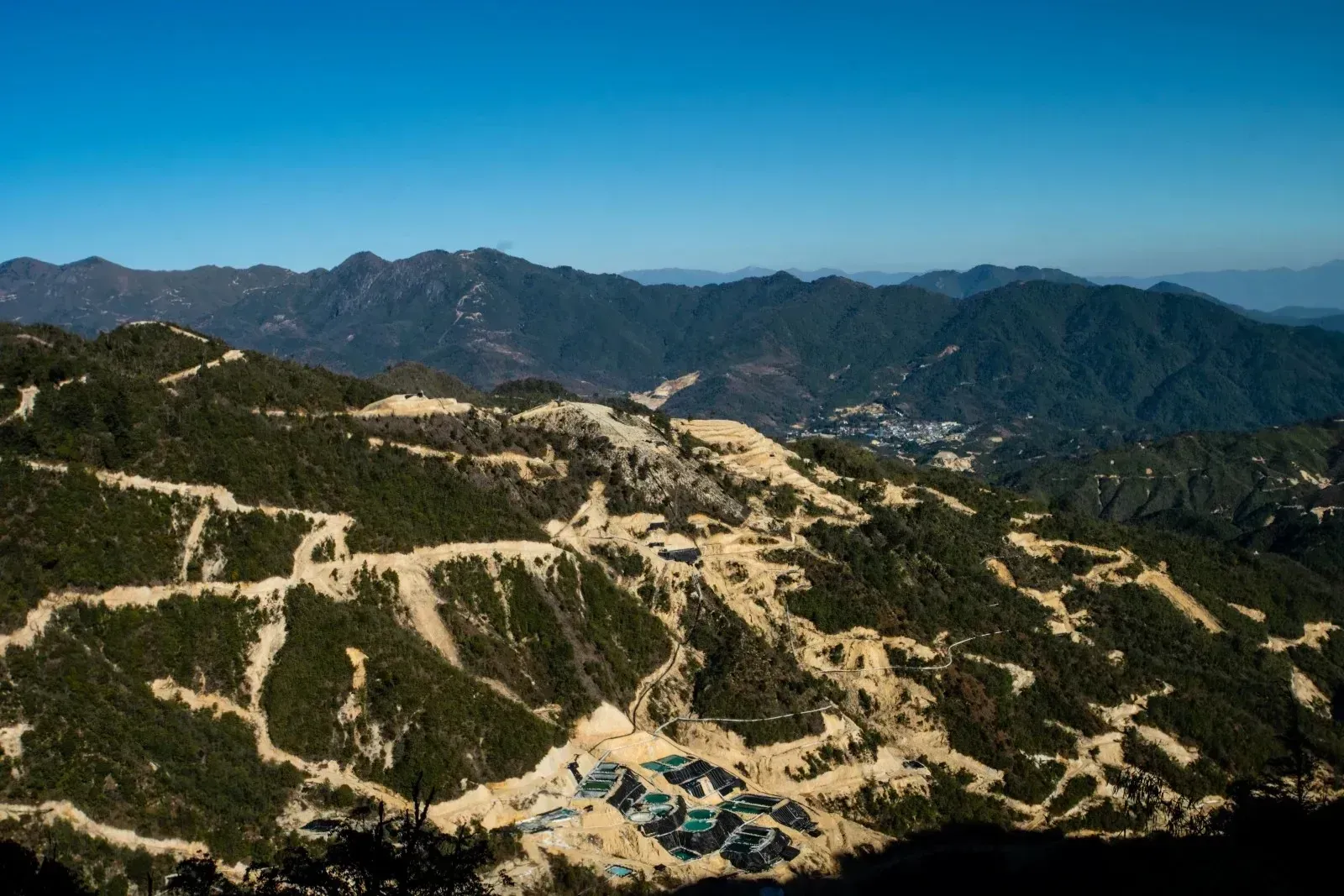
Myanmar has exploitable deposits of rare earths along the border with China. And at the same time, it's very environmentally damaging to mine them. And so initially, a lot of this rare supply was mined in China, but as China began to restrict rare earth mining within its own borders, a lot of that mining moved into Myanmar, where there was less regulation, and it was easier for mining operators to have free rein to do what they wanted without any consequences.
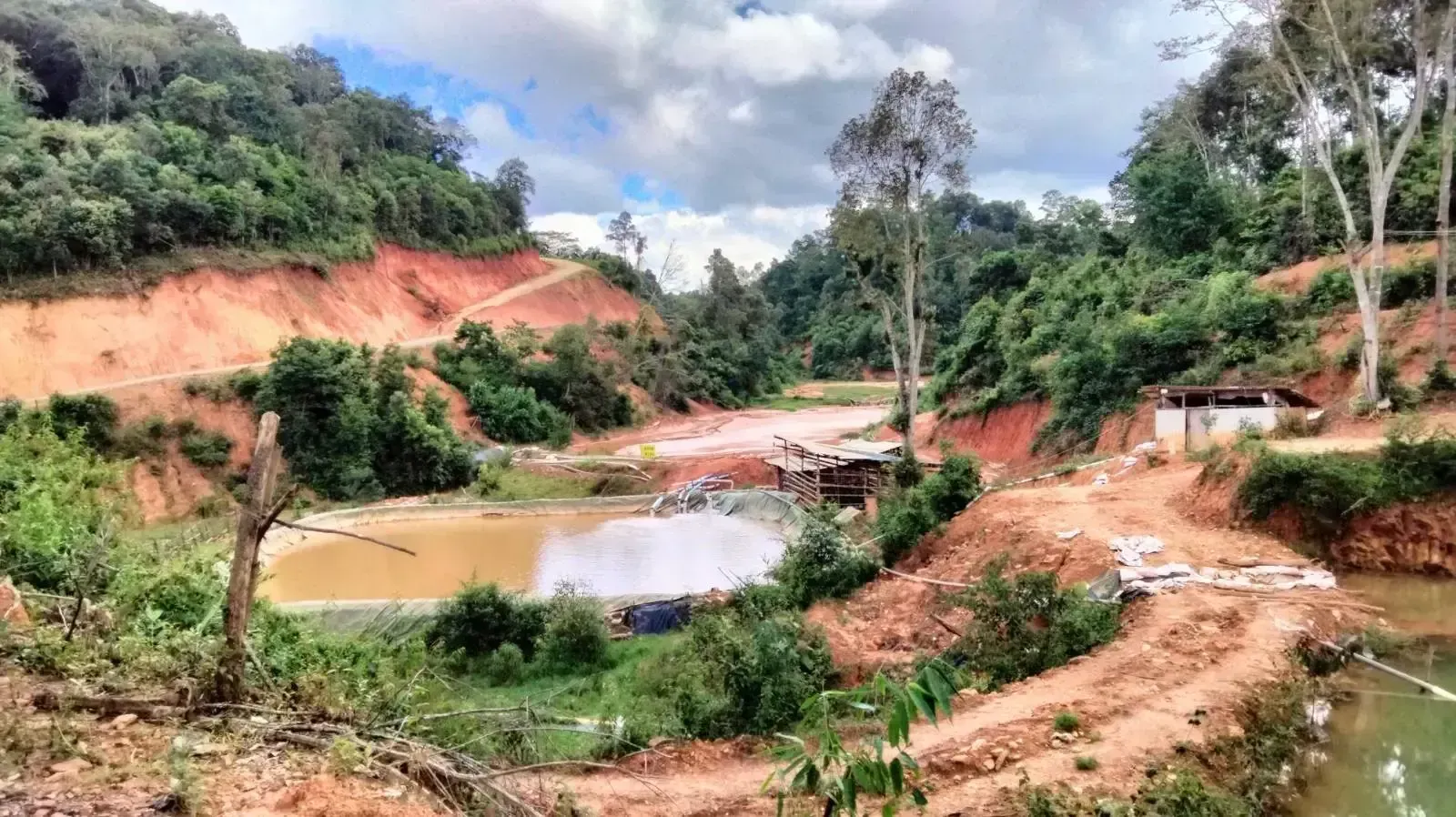
Beiser: Could you describe the project that you are working on for the Pulitzer Center?
Fishbein: This work builds on research that my teammates and I had already been doing since around 2019, which was when this story broke in Myanmar that this mineral mining that was going on along its border with China was connected to global supply chains. Even though the mining was already happening for almost a decade before that, people didn't know that it was rare earth. A lot of the workers just knew they were doing mineral mining for Chinese companies.
Once that connection was made, local teammates and I started interviewing people and learning about the industry. But we faced a lot of limitations and challenges to report on it. A big one of them being that, as freelancers, we didn't really have sufficient resources or capacity to give a lot of time to this kind of story where we didn't know exactly where it was going, and it's very challenging to cover.
So we were chipping away at it for the last, almost, five years and then when this Fellowship (by the Pulitzer Center's Rainforest Investigations Network) opportunity came up, I applied as a way to really dedicate a lot of time to this story in particular. Especially with two main factors in mind: One being that it has become more of a global story, especially now with the U.S.-China trade war, and other global factors making readers around the world more interested in rare earths, and then at the same time the harmful impacts in Myanmar getting bigger and bigger.
Through the project, we've been mainly looking at four themes: the geopolitical context, both within Myanmar and globally; the business networks tied to rare earth mining in Myanmar; supply chains (how rare earth mined in Myanmar is connected to global supply chains for electric vehicles, wind turbines, other technologies). And then the fourth would be the harmful impacts in Myanmar, impacts on health, the environment, local livelihoods, worker safety, and other things in the country.
Various external and internal factors have combined to make (the China-Myanmar) border region an area where extractive and often exploitative industries can flourish.
I think it gives me a big motivation to cover it because sometimes these issues are overlooked in the media until they have an impact on Western readers, but often they have quite a long history.
Beiser: Can you expand on remote-reporting techniques and how you've been developing those skills?
Fishbein: So I guess the first thing to say is that the topics that I have been covering through my reporting, especially with the Pulitzer Center, are very politically sensitive in Myanmar. And even before the military coup, it was extremely difficult to physically access areas where mining or other forms of environmental exploitation were occurring.
So these topics and areas I think lend themselves well to remote-reporting techniques. So for this particular project, my teammate and I have not been able to physically access those areas, although we did identify another reporting partner who did some very low-profile ground reporting. But primarily we've been using remote techniques, which would include interviewing people over Signal or other online methods, and then using mapping, using social media analysis, looking at customs data, looking at corporate data, and other ways to piece together a story that is very difficult to get information about.
Just to give a sense, the rare earth mining sites that we cover in Myanmar, I think the last ground reporting visit that I know of, of any journalist from or covering Myanmar, was in 2019, until we did our project.
It's quite frustrating not to be able to go there, but at the same time, we can see the extreme barriers and risks. And we believe that just because we can't go should not be a reason that it isn't covered, because the the factors that make these stories difficult to reach are the same factors that make them important to cover.
Naw: In my conversations with sources, there were times when I felt I was not getting complete or precise answers, and at other times I sensed gaps that needed to be filled with additional evidence. This led me to begin searching for information on social media and other online platforms. Some of what I found directly addressed the questions I was trying to answer and provided concrete evidence that strengthened the stories we were telling and that readers needed to know.
When I first started gathering online materials, I did not even know that this approach was called open-source investigation. I simply searched for whatever information I needed, like people, companies, photographs, maps, documents, and other digital traces. At that first stage, both Emily and I knew very little about open-source investigation. We learned by doing, gradually improving our skills and sharing our findings with each other. I taught myself by watching videos on open-source investigation techniques on YouTube. Looking back, it may sound unconventional, but that was how I started.
Over time, I was able to participate in more structured training on online research methods, which allowed me to learn new tools and investigative techniques. These skills became central to my work, and I developed a strong commitment to using them. Although my capacity remains limited and I still face certain constraints, I routinely investigate websites, social media platforms such as Facebook and TikTok, and tools like Google Maps.
I examine posts in multiple languages and closely analyze user interactions and comments. To preserve evidence, I download relevant videos and images, take screenshots to record posting dates and account details, and save links to the original sources.
Emily and I maintained a dedicated Signal group specifically for our rare earth mining investigation. I shared all of my findings there, along with my assessments of particular accounts and the reasoning behind my conclusions. We cross-checked and verified the sources and materials we collected to ensure their reliability and accuracy. All videos, photographs, and screenshots were carefully archived, both on Google Drive and on my laptop, to maintain a secure and organized record of our investigation.
Emily and I often say that this kind of investigation is like a cancer: Once you begin to uncover something, you cannot stop wanting to know more. It stays in your mind and becomes difficult to let go of. We remain deeply focused on the investigation, constantly tracing possible connections and closely examining what is missing or intentionally left unseen.
Beiser: How do you create color in your stories and build source relationships when you can’t be there physically?
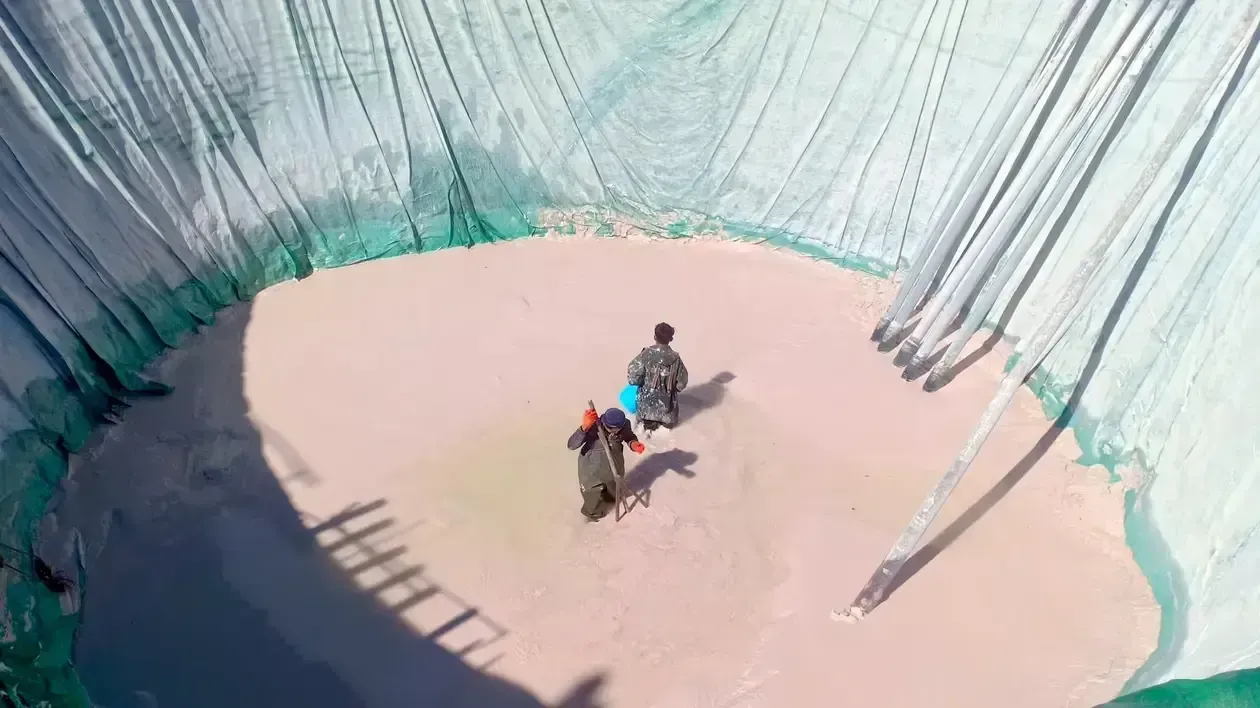
Fishbein: Particularly interesting to me is that social media has been such a useful tool because one of the few ways to visualize this has been posts by workers, especially who are maybe not able to openly talk about their work with journalists, but are still posting things.
We can find quite a bit of social media footage of the mining areas, which helps to give a visualization, as well as to give a sense of the labor conditions, environmental risks, and things like that. And then, as well, we've developed source networks over the years from covering other extractive industries in the same areas, so jade mining, gold mining, and other environmental issues in these areas. It's often the same networks or the same people who are impacted by this and working to expose it, so working through those networks to get in contact with sources, and then a lot of sort of creative trial and error. I can say it often takes a long time.
Beiser: Do you have an audience in mind as you write? And how does that impact how you write?
Fishbein: I think about that all the time in my work. I think with a country like Myanmar—and I'm sure this is true for a lot of other Fellows of the Pulitzer Center—there might not be a huge interest from international readers, especially Western readers might not initially see why the story would be relevant to them.
So, part of my reporting is to try to connect a local story with global issues and global readers. But I would say that that is just one part, and maybe not the main part, of what I do because I think ultimately accountability relates to international pressure, but it also relates to very, very local pressure. So sometimes the audience for my story might be more people within Myanmar. So it could be like local ethnic armed groups and the ways that they govern natural resources and mining. It could be local, civil society, and activist readers, to give them a platform for their voices to be heard and to give them a sense of how to engage with this topic. It could be businesspeople engaging in the mining industry to realize that they can't get away with it without anyone noticing.
So there could be a lot of different readers who might get something from the story. Or it could be something as simple as giving mining workers a sense that their … struggles are not invisible.
For my reporting partners, it’s an opportunity to really do some deep work on understanding and covering their own communities and areas affecting them.
Beiser: Where did the idea for your collaborative approach come from?
Fishbein: I think I've always sort of questioned or challenged this idea of being, or never identified myself as, a foreign correspondent, and wondered a lot about what that means and what qualifications I would have to be an expert or authority on another place that isn't the place that I'm from.
I try to challenge that in some ways, or re-address that, by partnering with people who, in my opinion, would be more of an expert on those areas. And I think part of it is to give those reporting partners a chance to explore issues that they see as significant and for me to learn from them.
So my reporting partners might be the ones who are better able to navigate the local context, to identify sources, to do social media and other online research in the local language, to help differentiate between authentic and inauthentic information. A lot of things that could be challenging for me to do as an outsider.
And then also give me a different lens or way of looking at the story. And then I think something else that I see as unique about my approach is that I don't always work with people from traditional journalism backgrounds, but that I often work with people who may come from a civil society, academic, or other background, but who might have an interest in that particular topic, or in exploring journalism.
Beiser: Has the collaborative approach changed over the years?
Fishbein: I would say overall, the underlying goal or approach is similar in terms of this collaborative model, but it's developed over the years. Unfortunately, I have not been able to be based in Myanmar or to do ground reporting for most—nearly all—of the stories that I cover, and my reporting partners also have less and less access over time.
So even though they are generally from the areas that we cover, many of them are unable to go to those areas anymore because of the repressive environment in Myanmar. So we've had to increasingly rely on remote-reporting techniques and especially using digital tools to conduct our investigations. And this particular Fellowship and project has been a really good opportunity to explore some of those tools in more detail.
Beiser: Naw, what has the experience been like on your end?
Emily and I have known each other for nearly seven years. We first met in 2018 (if I am not mistaken), when I was working with a non-governmental organization (NGO) focusing primarily on land-grabbing and environmental issues in Kachin State. At that time, I was working with 10 communities affected by land confiscation, conducting research, providing training, and documenting cases.
At the time, I had no prior experience in journalism. I was unfamiliar with how media organizations operated or how editorial processes worked. My background was primarily in research and case documentation, and my investigative skills were still quite basic.
That first journey as a freelance journalist remains a powerful and memorable experience for me. Collaborating with Emily has been an incredibly rewarding experience.
Beiser: Fishbein, how did you become interested in Myanmar as a country and rare earth mining as a topic?
Fishbein: I definitely came to the topic of Myanmar before the field of journalism, by long shot. So I started out my professional career as a refugee resettlement case manager in the United States. And many refugees resettling in the United States were from Myanmar. So that was my initial exposure. So I started learning the language and trying to understand some of the factors contributing to there being refugees from Myanmar.
And then I got the opportunity to move to Myanmar in 2015 with the organization that I was working for at the time, which is the International Rescue Committee. So I initially worked in the humanitarian sector in Myanmar, and through that, was living in conflict-affected areas in Myanmar and in Bangladesh as well.
Around 2018-2019, (I) began exploring journalism as a way to try to, from a personal perspective, gain a deeper understanding of a lot of these issues that were driving conflict and displacement in the country. But also to try to have an impact or bring something positive to the country. Because I felt like, in a way, I was taking more than giving sometimes. So I wanted to have a way to give back and do something meaningful … to promote justice and accountability in Myanmar.
Beiser: Naw, why are you interested in the topic of rare earth mining?
Naw: When Emily and I first began investigating rare earth mining in 2019, we met a local activist from Chipwi who had been actively working on the issue for some time. One evening, we visited him at his home in Myitkyina and began asking questions about the rare earth mining industry, which was still relatively new to me at that time. The discussion was deeply engaging, and it quickly became clear that significant environmental damage and pollution were already occurring. Due to various constraints, we were unable to focus on rare earth mining immediately; nevertheless, that meeting marked the first moment when our attention was drawn to this issue.
In the years that followed, we resumed and expanded our investigations into rare earth mining. We engaged with mining workers, civil society organizations, environmental activists, local community members, and other relevant actors. This work has been ongoing, sometimes paused and then resumed, but our core focus has remained consistent.
If I am asked why I am particularly interested in investigating the rare earth mining industry, I must point to the broader factors that drive my interest in extractive industries and environmental issues.
Across Kachin State, from east to west and from north to south, multiple forms of resource extraction are taking place, largely driven by conflict and militarization. Governance structures are fragmented and unclear, accountability mechanisms are absent, and the voices of local communities are routinely marginalized. Meanwhile, environmental pollution continues unchecked, with little meaningful response.
I believe it is crucial to bring attention to these issues and to amplify the voices of affected communities. This is why I am committed to presenting evidence-based and insightful analysis of the extractive industry and its impacts on local communities and the environment.
Beiser: Is there anything else that was important to the project that you would like to add?
Fishbein: Coming back to collaboration, this project, for me, has really been a way to hone the collaborative model and also to strengthen a particular collaboration with one reporting partner who I've been working with for a long time, and that we've been able to grow a lot through this project.
For me, as a freelancer, you're often just jumping from one story to the next, pitching, writing, it's like a wheel, and you don't really have a chance to take a deep breath and reassess: “What is my strategy?” “How am I going to pursue this very convoluted or complicated story?” “How can I take a topic that seems like a big tangle of clues and questions and make something meaningful out of it?”
It felt quite daunting. And it's still a work in progress, but I feel that this Fellowship was a way to untangle that knot and start to pull out individual threads and really pursue them.