
The following reflection was written by Veronica Jones, recipient of the 2025 1619 Impact Grant. Jones and her team at the La Unique Bookstore and Cultural Arts Center in Camden, New Jersey, facilitated a community engagement project exploring the focus theme of Democracy.
The Democracy How? project engaged 400 Camden County, New Jersey, students, teachers, and community members with the issues surrounding democracy and the African American experience through the lens of The 1619 Project. We explored these themes through a variety of community engagements generating intellectual discourse about democracy and the intersection of race and slavery in the United States’ founding documents. As a Camden County community member, former educator, and educational leader, I was able to bring together a wide network of educators and educational leaders who are committed to this work. Using La Unique Bookstore and Cultural Arts Center as our home base, we were able to use a grassroots, intergenerational approach to exploring 1619 themes, build community locally, and even expand to other states.
Our goal in establishing this community space for discussion and learning was to facilitate community education and set a foundation for activism around issues of democracy. Our project had several components, which made for a variety of entry points into themes of slavery and democracy. Our engagement opportunities included both classroom-based and public online studies of The 1619 Project books, 1619 viewing and listening parties to immerse our community in 1619 themes, and a daylong public forum for learning and conversation around the 250th anniversary of the Declaration of Independence and the relevance of The 1619 Project.
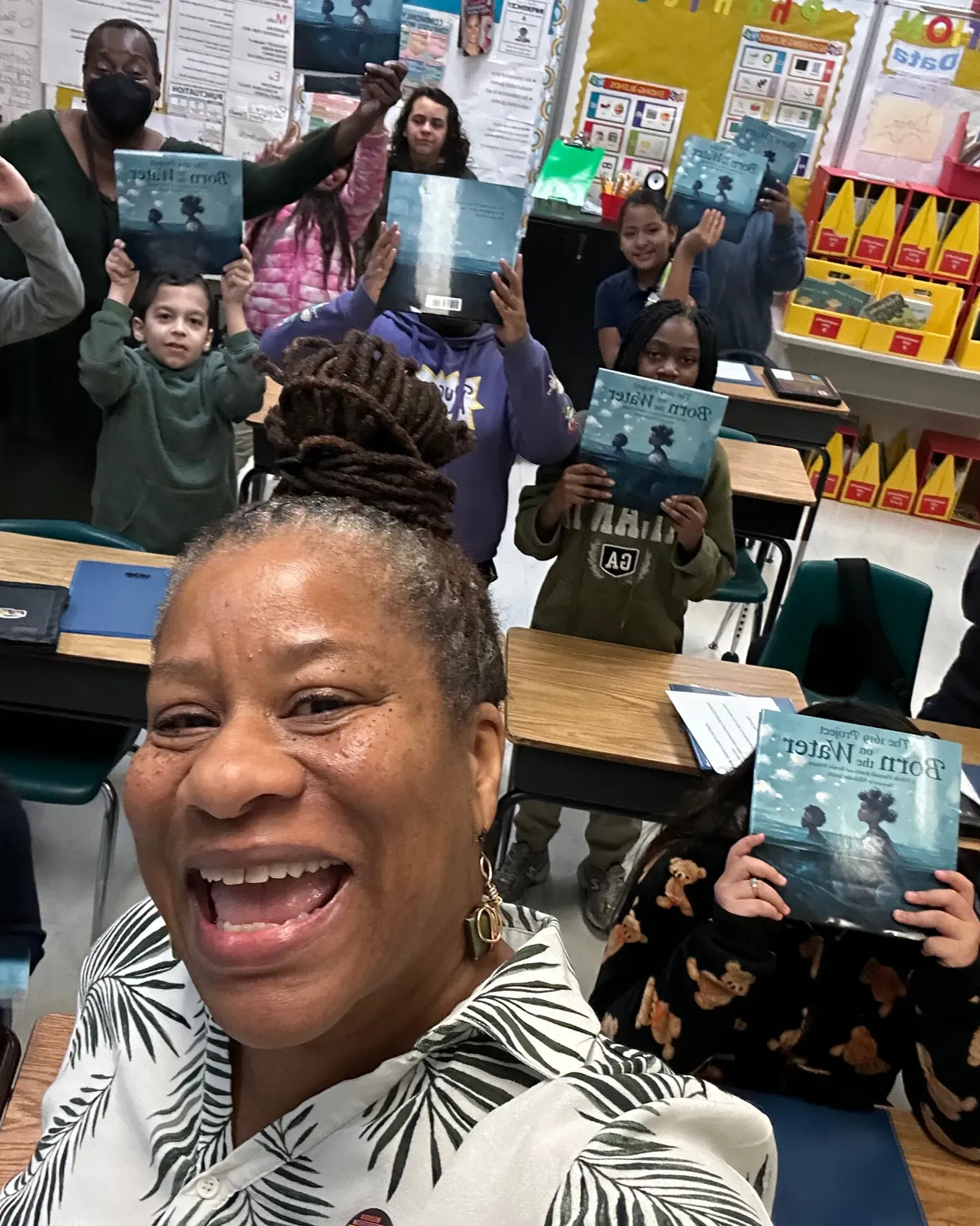
Participants in our online book club ranged from ages 27 to 75. We met weekly from October 1, 2025 to January 7, 2026 to read and discuss selected chapters from The 1619 Project: A New Origin Story. The community members in the public group were so engaged that the La Unique Bookstore has decided to continue the program into 2026, reading other books on hard topics. Students engaging with 1619 in classrooms read Born on the Water. Our efforts supported an ethnically and racially diverse group of teachers and students in grades 5-11. Teachers focused on creating safe and respectful classrooms where hard conversations could take place. They developed lessons focused on how to interpret and “read” illustrations, predicting, drawing conclusions, and inference. Students also discussed the differences between forced migration, immigration, and enslavement. The challenge I gave to each teacher was to lead the students to understanding the idea of being born on water. We found that the students were very open to understanding about slavery and really connected to the trauma and resilience of enslaved people.
College students were our main audience for the viewing of the 1619 docuseries, Episode 1: “Democracy.” Student leaders at Rutgers University and Camden County College utilized their networks to bring together students, community members, and a local journalist from NJ.com for a successful and dynamic conversation around the docuseries episode. The online 1619 podcast listening party turned out to be a cross-country event, with participants joining from as far away as California. We listened to and discussed the podcast’s Episode 2: “The Economy that Slavery Built.”
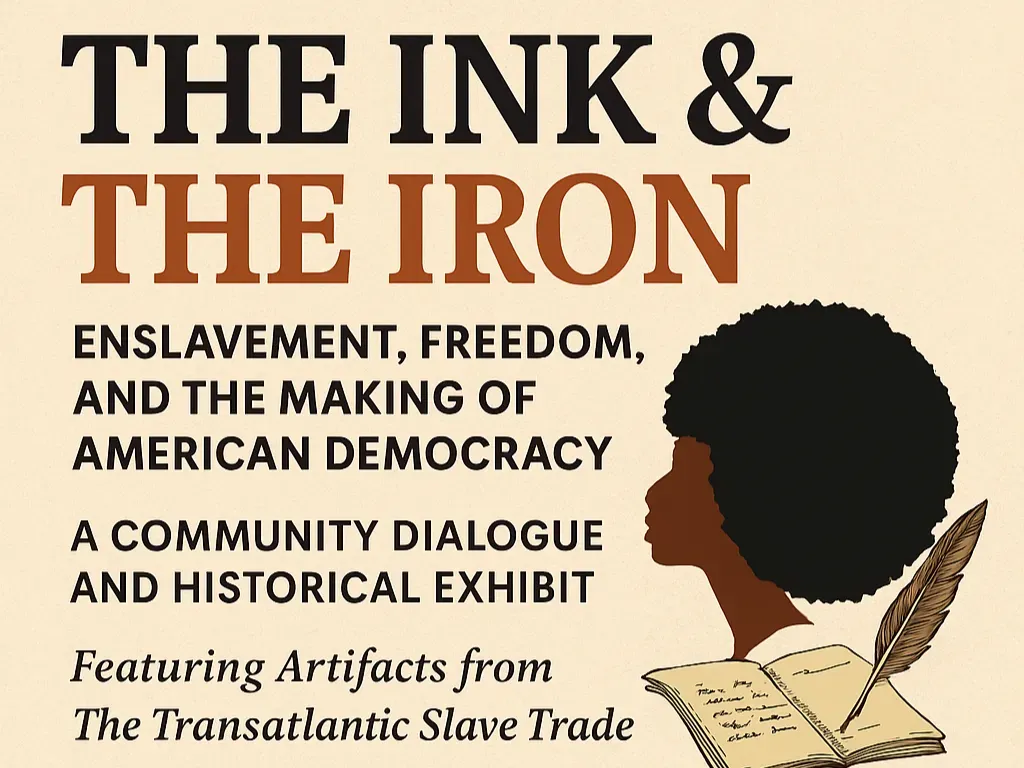
Our culminating event, titled “The Ink and The Iron,” exemplified the Democracy How? project’s goals by bringing together an intergenerational group of participants and audience members (ages 10-92) for a full day of in-person presentations on “Enslavement, Freedom, and the Making of American Democracy.”
Presenters included historians who spoke on topics including the creation of the Declaration of Independence, the U.S. Constitution, and the Emancipation Proclamation, and the intersection of the question of slavery in America; a museum curator who shared artifacts from the transatlantic slave route and on U.S. plantations to control Black bodies; and a representative from the New Jersey Amistad Commission who presented teacher and family resources it had available and the NJ Amistad Mandate.
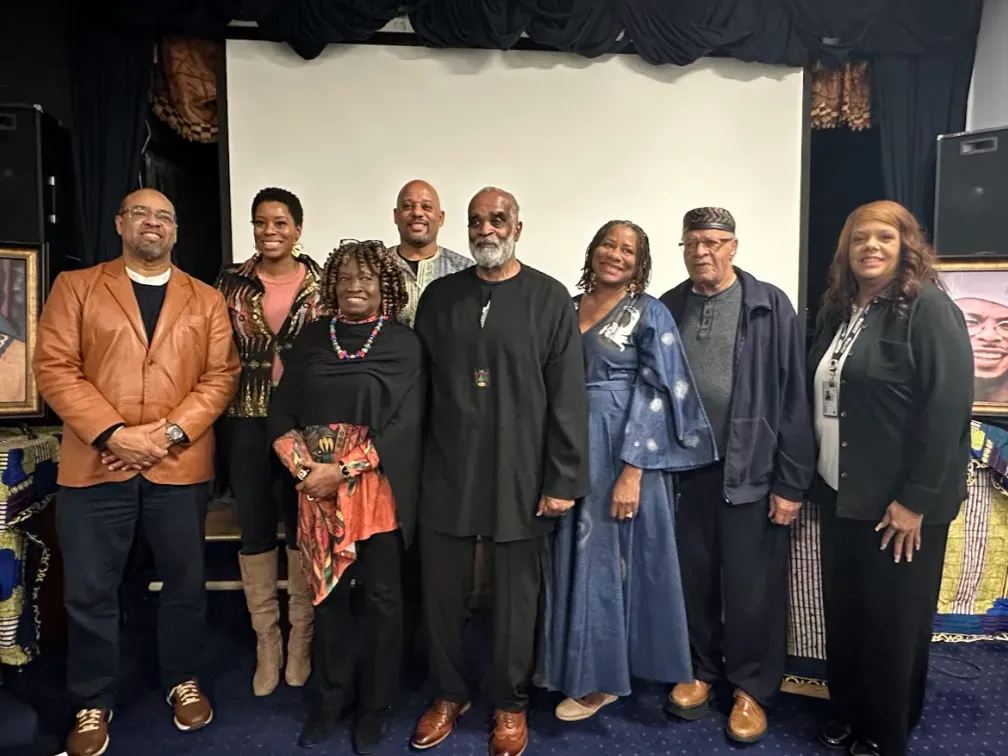
A highlight of the event was a reading of Frederick Douglass’ speech “What to the Slave is the 4th of July” by an intergenerational trio ( ages 10, 30, and 50)! The event included food and book and resource giveaways. It was a strong conclusion to the project and helped establish La Unique Bookstore as a hub for critical discourse.
The Importance of Community and Commitment
The Democracy How? project was just an idea when I started participating in the 1619 Summer Incubator and Grant program. Building it all from scratch with only the provided grant funds was a very heavy lift. However, the number of people talking about democracy right now and our attendance at other events engaging with similar topics encouraged us to bring this work to Camden. It helped me understand both that the work was very important and that it was doable.
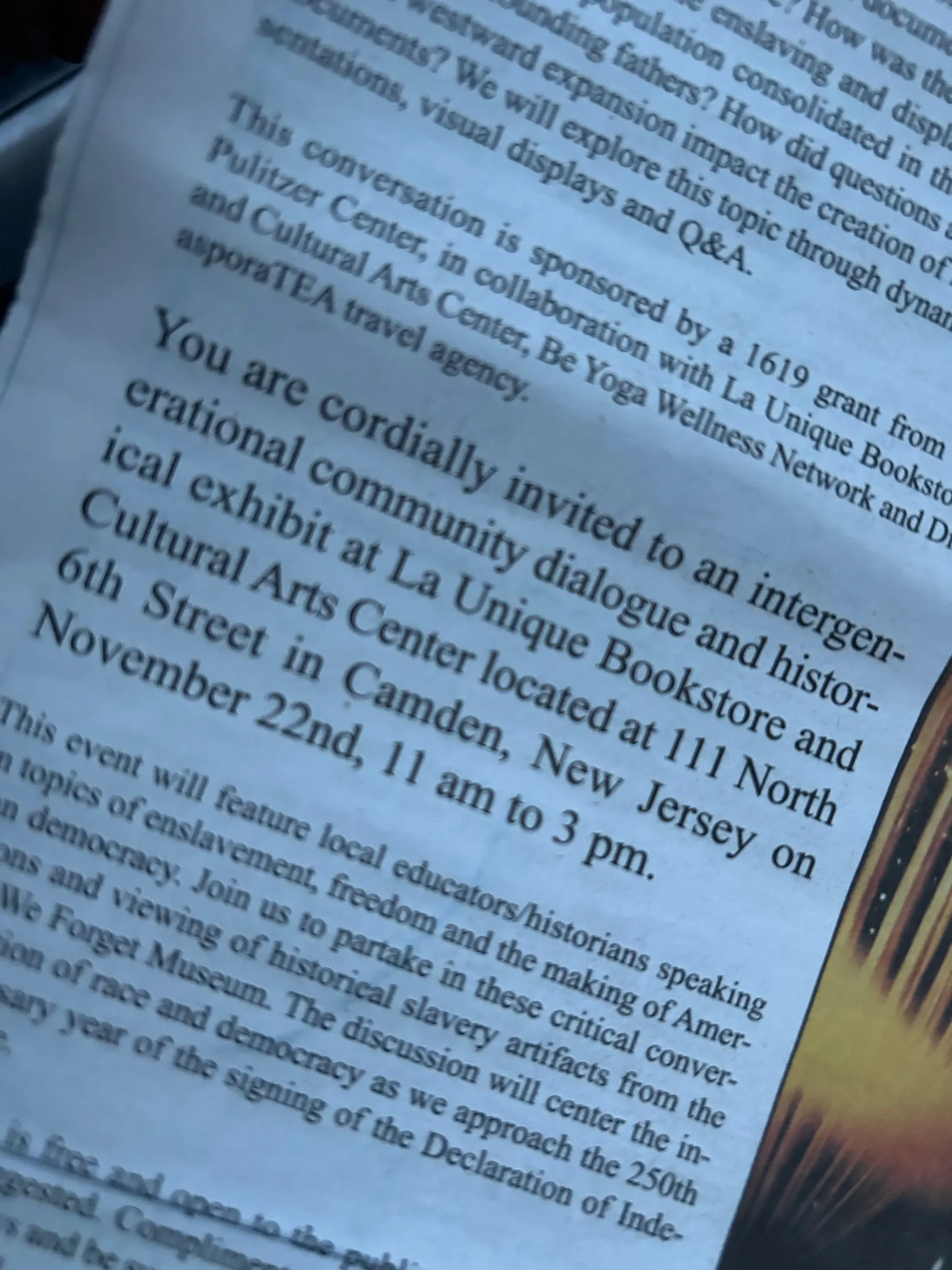
To do a project of this scale, you will need to advertise, advertise, advertise through print, internet, and word of mouth. As a part of our promotion, I wrote an article advertising “The Ink and The Iron” event that was published in the local Anointed News Journal. You’ll want to design a project that can be done without additional funding and then use any funding received to expand and further develop. Our funding allowed us to pay speakers, provide food and book resources, and include giveaways for our audiences.
My advice to other educators interested in doing similar work is to make sure you have a committed team. This is critical. Our project would have been a failure without the four strong and mighty team members who meet twice weekly to develop the various aspects of Democracy How? in a timely fashion.
We worked together to identify stakeholders and resources, making sure we kept lines of communication open. We found face-to-face contact with project partners to be the most beneficial, especially in our preparation for “The Ink and The Iron” event. I’d remind educators not to forget your local historical societies and museums as resources. We were able to include both local and statewide resources through experts who were willing to present relevant artifacts and information.
For the classroom work, we had to build and rely on relationships with teachers and community members, providing them an easy entry point and maintaining consistent communication and a positive attitude. There is still a lot of fear around teaching 1619. I was surprised by how difficult it was to get the Born on the Water project approved by one of the districts. In another district a teacher was on board and attended the online information session and professional development session. However, the teacher had to pull out because district approval was withdrawn with no explanation given. Fortunately, I was able to replace that school and we were still able to get 40 books in the hands of students and teachers. In my work supporting the classroom component of this project, I met with principals and teachers to garner excitement and buy-in, visited classrooms, and taught sample lessons modeling protocols for teaching hard history. I would really like to find avenues to continue to work with teachers in this manner.
Revitalization and Impact
Despite some initial challenges with the classroom implementation, we saw true transformation for the teachers who participated. This was the greatest value of the project. The teachers gained confidence in teaching about slavery and were surprised (at least in one case) about how receptive and interested the students were. Having support for teachers is critical for this type of teaching and learning.
During the community events, I was surprised and energized by the eagerness of the participants at all levels of engagement. We had overlap in participation in the online book club and events. The overall consensus was to continue having programs at the bookstore in the new year.
After meeting with the owner of the bookstore, the La Unique team has decided to plan for monthly events in 2026 around topics that impact the African American community. We began our planning sessions in January. I truly enjoyed the work and learning. Even with the challenges, I am excited to work with this team on any similar community engagement projects as we discuss what’s next.

