Pulitzer Center Update February 17, 2026
How Journalists Helped Students See the World and Their Place in It: Reflections from Fall Classroom Visits
Country:

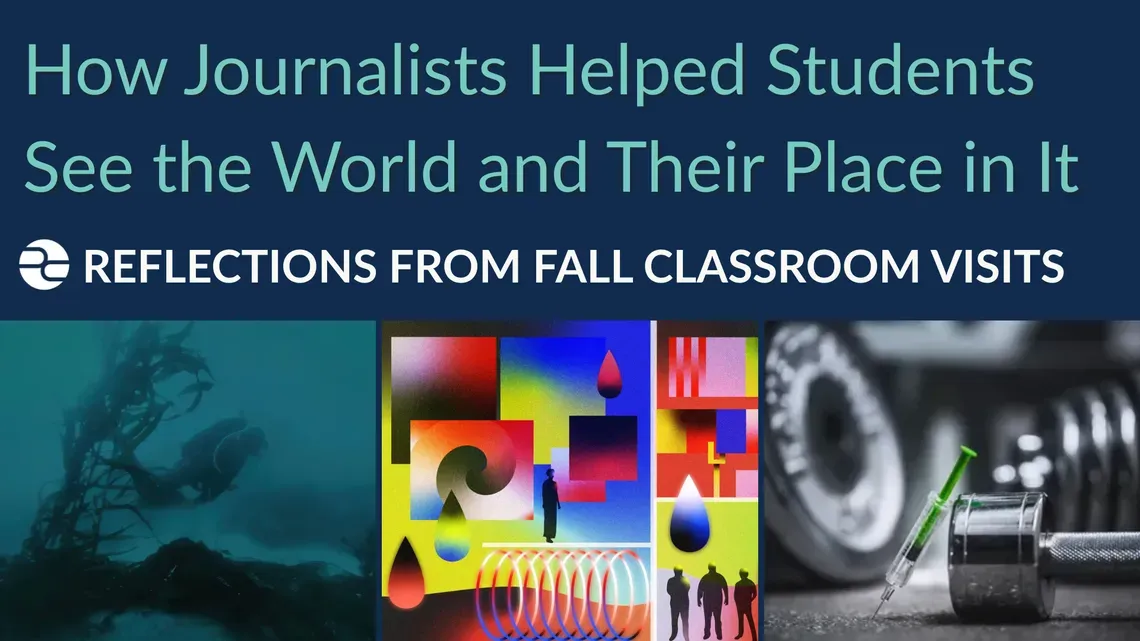
This past fall, classrooms across the United States and beyond became spaces for global learning, curiosity, and critical thinking through the Pulitzer Center’s virtual journalist visit program. Between September and December 2025, journalists met virtually with students to share reporting on some of the most pressing issues shaping our world today.
Following their visits, journalists were invited to reflect on what motivated their reporting, how students engaged with their work, and what they hope young people took away from these conversations. Their responses offer a snapshot of how journalism entered classrooms this fall and how students grappled with complex global systems in real time.
The reflections below highlight visits across three Pulitzer Center focus areas, offering a window into how journalists and students explored interconnected global challenges together.
Across grade levels and subjects, one theme emerged again and again: students were not just learning about global issues. They were asking how those issues connect to their own lives, choices, and futures.
Climate & Environment: Asking Better Questions About the Natural World
During his classroom visits, Andrew Robinson shared his multimedia project The Vanishing, Invisible Forest, which explores the impact of climate change on ocean biodiversity along the West Coast.
When asked what motivated him to pursue the project, Robinson pointed to a personal connection. “I have a personal connection to Monterey Bay,” he explained. “Seeing that wildlife up close made a big impression on me; this was ‘Nature’ with a capital N that lived right amongst the buildings, fishing boats, and tourists.”
That early experience shaped his understanding that the natural world is not separate from human life. It exists within it. “There’s a perspective in a lot of environmental media that points to the natural world as if it exists separately from humans, but that couldn’t be farther from the truth,” he said.
In his presentations, Robinson often begins with a foundational question: How do we know what we know? That question opens broader discussions about sourcing, credibility, and evaluating environmental claims. “The quality, context, and source of our information have never been murkier and more critical to understand,” he said.
When reflecting on the impact he would like to see from his classroom conversations, Robinson returned to the theme of curiosity. He hopes students take away “[a] curiosity for asking questions about their world, a certainty that those questions are valid and important, and a confidence that they are capable of seeking answers from the source.”
Through conversations about biodiversity, climate systems, and information literacy, students were encouraged to see environmental journalism as both scientific and civic. It became a way to understand the interconnected systems shaping their lives.
Information & AI: Understanding the Hidden Human Labor Behind Technology
Through virtual visits with middle and high school journalism classes, Tatiana Dias shared her reporting on underpaid AI micro-workers in Brazil, helping students examine the invisible human labor behind emerging technologies.
Dias’s interest in this investigation began with recognizing what was missing from dominant narratives about artificial intelligence. “Behind the fantastic stories they tell us about AI,” she explained, “there are many other stories that aren’t told. Stories of real people who work hard in this industry but aren’t seen. They’re not even considered workers.” In her reporting, Dias strives to center worker voices and illuminate geopolitical dynamics. “The perspective of the workers who are ‘inside the machine’ was essential…It was also important to include the geopolitical perspective, in which Latin America is positioned as a supplier of cheap labor.”
Students brought their own familiarity with AI tools into their conversations with Dias. “Many are already ChatGPT users,” she acknowledged, “but they know they can’t completely trust AI. It was very interesting to see their perspectives.” She emphasized that artificial intelligence is the result of human labor, data systems, and global inequities. “I think it’s very important to show students that AI isn’t magic…It helps students develop a more critical and informed perspective about the technologies they use.”
Ultimately, Dias says she hopes to leave students “more skeptical and aware of the complexity of the AI industry, which is made not just by machines, but by many real people.”
Global Health: Challenging Misinformation and Understanding Public Health Systems
During a virtual visit with high school students, Theo Ruprecht shared his reporting on the rise of anabolic steroid sales in Brazil and the role of misinformation in shaping public health decisions.
His investigation began after steroid sales increased by more than 600% in five years, not only through illegal markets, but through misleading health claims and questionable prescribing practices. He emphasized the importance of centering those directly affected in his reporting and classroom conversations about it. Ruprecht said that he and his reporting team want to highlight the stories of “people who actually used anabolic steroids...Most of them start using it because of cultural pressure, inadequate prescriptions, and misinformation.”
When reflecting on student engagement, Ruprecht noted that conversations about science and misinformation resonated strongly. “Students engaged quite well…No student wants to be a fool, right? And science can help society look more critically at claims that mislead people.”
Ruprecht hopes students are left with both practical caution and critical awareness. “I hope they become more interested in checking facts instead of only informing themselves through digital influencers,” he said. He has witnessed global health reporting help students understand interconnected systems, and ultimately hopes that these issues “can perhaps stimulate a more empathic view of the world.”
Why This Matters Now
Across these visits, students were not passive recipients of information. They asked how we know what we know. They questioned systems of power. They examined misinformation. They connected global crises to their own experiences.
Virtual journalist visits help students understand see how reporting is built, how evidence is gathered, how bias is navigated, and how storytelling can illuminate complex systems. They help students see themselves not just as consumers of information, but as informed global citizens.
Through these exchanges, classrooms became spaces where global issues felt human, relevant, and actionable, and where students began to understand their place within the stories shaping our world.
Interested in bringing a journalist into your classroom? Learn more about the Pulitzer Center’s virtual journalist visit program here.

