

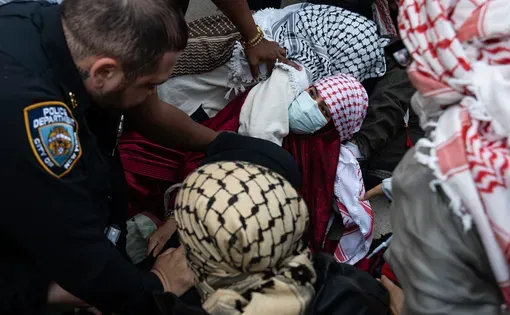
This photo project documents the pro-Palestinian student protests in New York City between 2024 and...
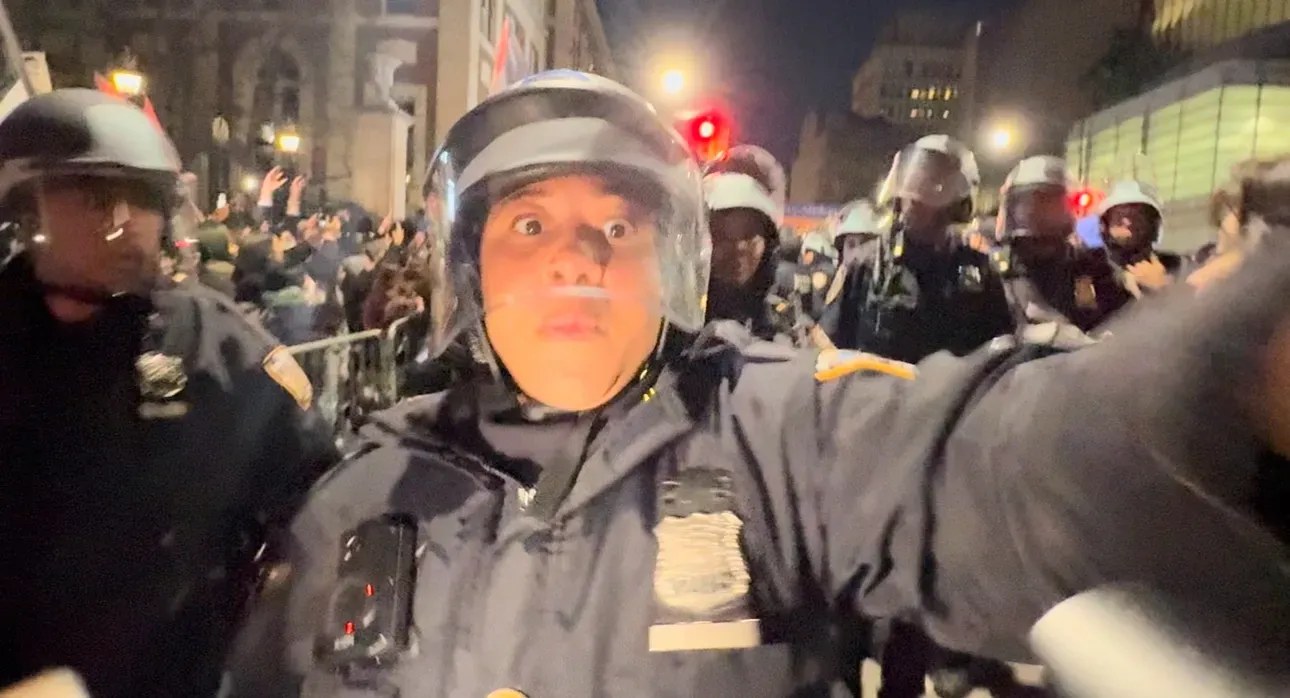
Photographing the pro-Palestinian student movement in New York City has left me with more questions than answers about being a journalist. But I’m grateful for them.
Doxxing campaigns, random attacks, death threats, racist rhetoric, and ostracization are nothing new to me. I’ve been covering political unrest in the U.S. since 2020. Photographing and documenting student protests and right-wing rallies have put me at the crosshairs of police force deployed toward demonstrators and online attacks due to the topics I cover.
Ever since I started my field work for this project, though, I’ve felt a looming darkness over me. It was as though there wasn’t just a possibility of danger, but a promise of it. This became clear when an officer tried to snatch my phone from my hand the first night I stepped out to cover the pro-Palestinian student movements in New York City. This was the reality of the situation: Officers tried to block my camera or find reasons to stop me from recording, threatening me or shoving me.
Over the last year, I’ve become all too familiar with the sound a body makes as it's thrown onto concrete—the hollow thud, the skid of shoes as they scrape against the ground in search of balance, and the voices of press members screaming “press” as they’re assaulted for doing their jobs. As administrations changed, political discourse heightened, and cultural tensions boiled, my sources retracted their statements out of concern for their safety. As a result, this project has undergone repeated shifts and rebuilds.
As a nonprofit journalism organization, we depend on your support to fund more than 170 reporting projects every year on critical global and local issues. Donate any amount today to become a Pulitzer Center Champion and receive exclusive benefits!
During this process, which spanned from 2024 to 2025 and in which I’ve witnessed and lived through the seemingly militaristic strategy deployed against demonstrators, a latent questioning kept creeping up. And as news updates emerged from those on the ground in Gaza, haunting images have stayed with me: Men who look like me and my cousins cry over the bodies of their loved ones; men torn to shreds by bombs built for steel machinery and concrete structures; the sound of the final pleas for help from 6-year-old Hind Rajab as her family’s vehicle was shot repeatedly by Israeli tanks; mothers who have become martyrs; doctors who have been buried beneath rubble; bloodied blue press vests once worn by journalists.
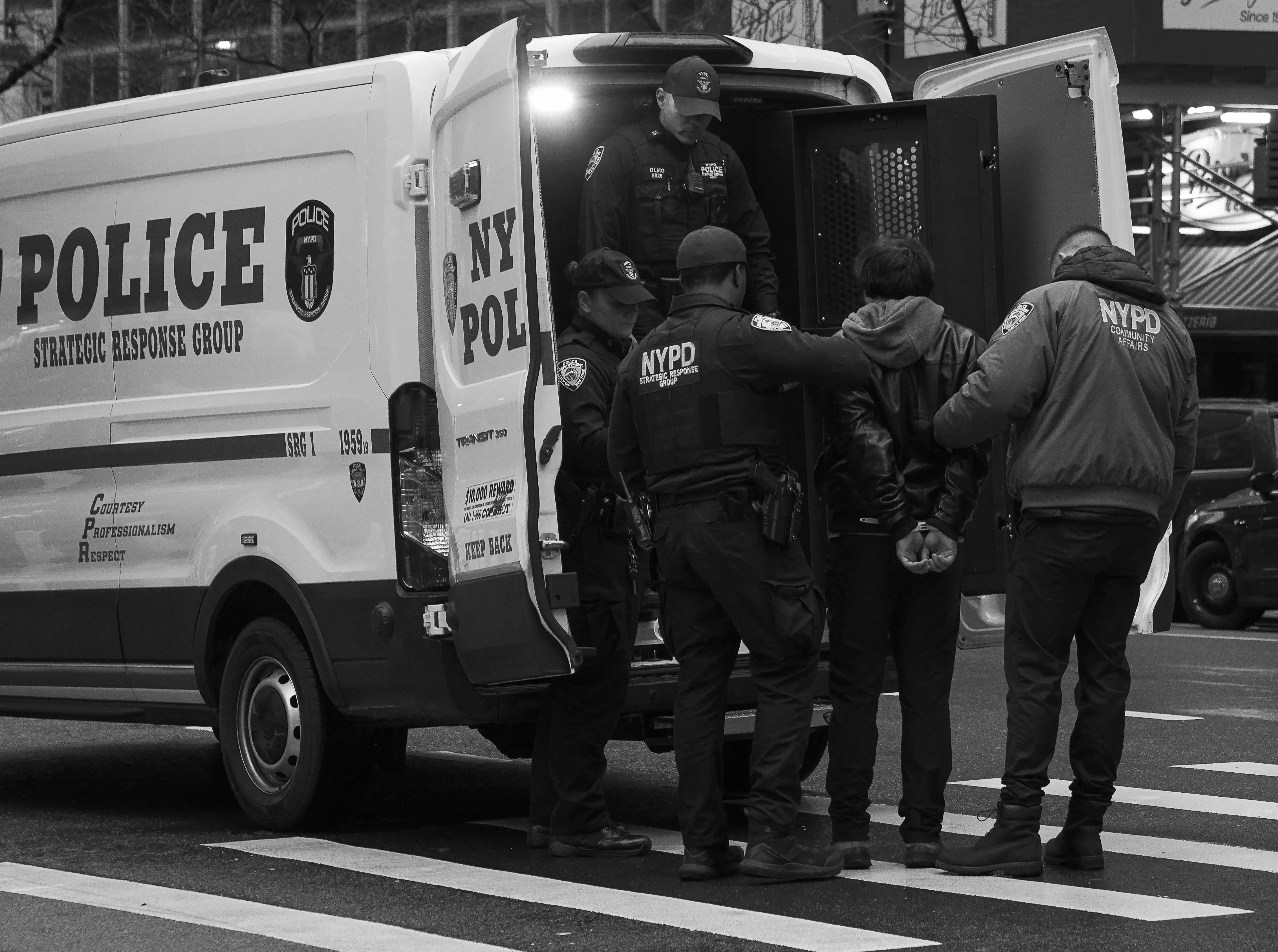
In the face of this, I have been told (by others and myself) to be objective and impartial, to remove the empathetic voice of soul and replace it with that of detached journalistic inquiry. And I ask: Am I a bad journalist for not being able to wipe these images from my mind as I write this? Have I lost all of my credibility because I am no longer able to uphold the facade of journalistic neutrality in the face of violent repression, surges in the popularity of propagandic media, and genocide? Have I lost anything worth having if my humanity was the trade-off for keeping whatever I have relinquished?
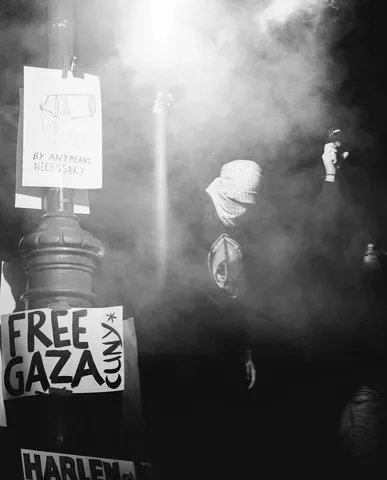
“The subtle and deadly change of heart that might occur in you would be involved with the realization that a civilization is not destroyed by wicked people; it is not necessary that people be wicked but only that they be spineless,” James Baldwin’s words echoed in my head. Baldwin wrote these in The Fire Next Time, which served as inspiration for this photo project.
Nothing I’ve covered in my short career could have prepared me for what I experienced while documenting the student protests. The question of “objectivity” stopped being an academic principle and became a daily practice under pressure, as I wrestled with what I should film, when to intervene, when to step back, how to protect sources, and how to keep my own fear from shaping what I chose to show.
This project taught me that the struggle doesn’t disappear—it ebbs and flows with the subject, the power you’re up against, and the proximity of harm. These principles, which I tested and put into practice during this project, will carry me through every future assignment. I no longer understand objectivity as emotional absence or neutrality. I understand it as a discipline: Verify what I can, name what I can’t, document precisely, and minimize harm, especially when institutions or political powers of any kind are trying to control the narrative through intimidation.
The first night I stepped out to photograph the student movement, an officer reached for my phone, and I felt that looming darkness settle in like poison. That feeling never entirely left, and only grew heavier as the days went on. Aside from its intensity, all that changed was my relationship to it.
I learned to keep my footing, to map exits, to move with intention, and to keep recording anyway—not to prove bravery, but to honor the people whose voices were being threatened into silence.