


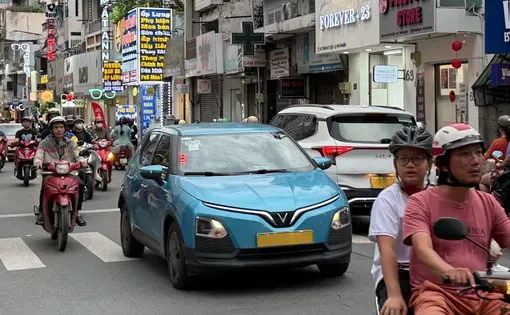
As demand for EVs rises, so does the need for tires made with natural rubber.
Monoculture rubber plantations backed by ethnic armed groups and China, along with other cash crops and mining, are stripping Myanmar’s eastern hillsides bare and saturating them with chemicals
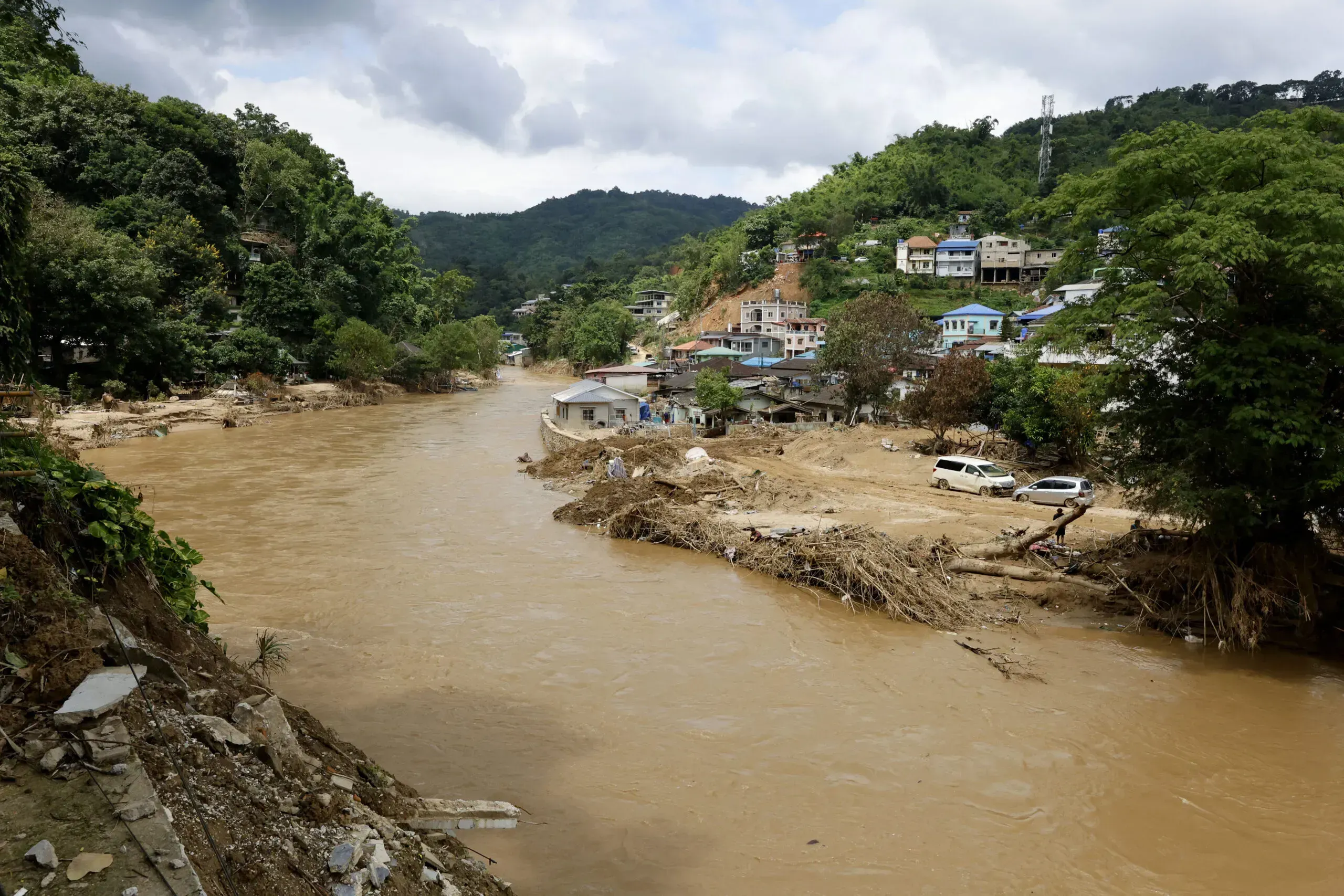
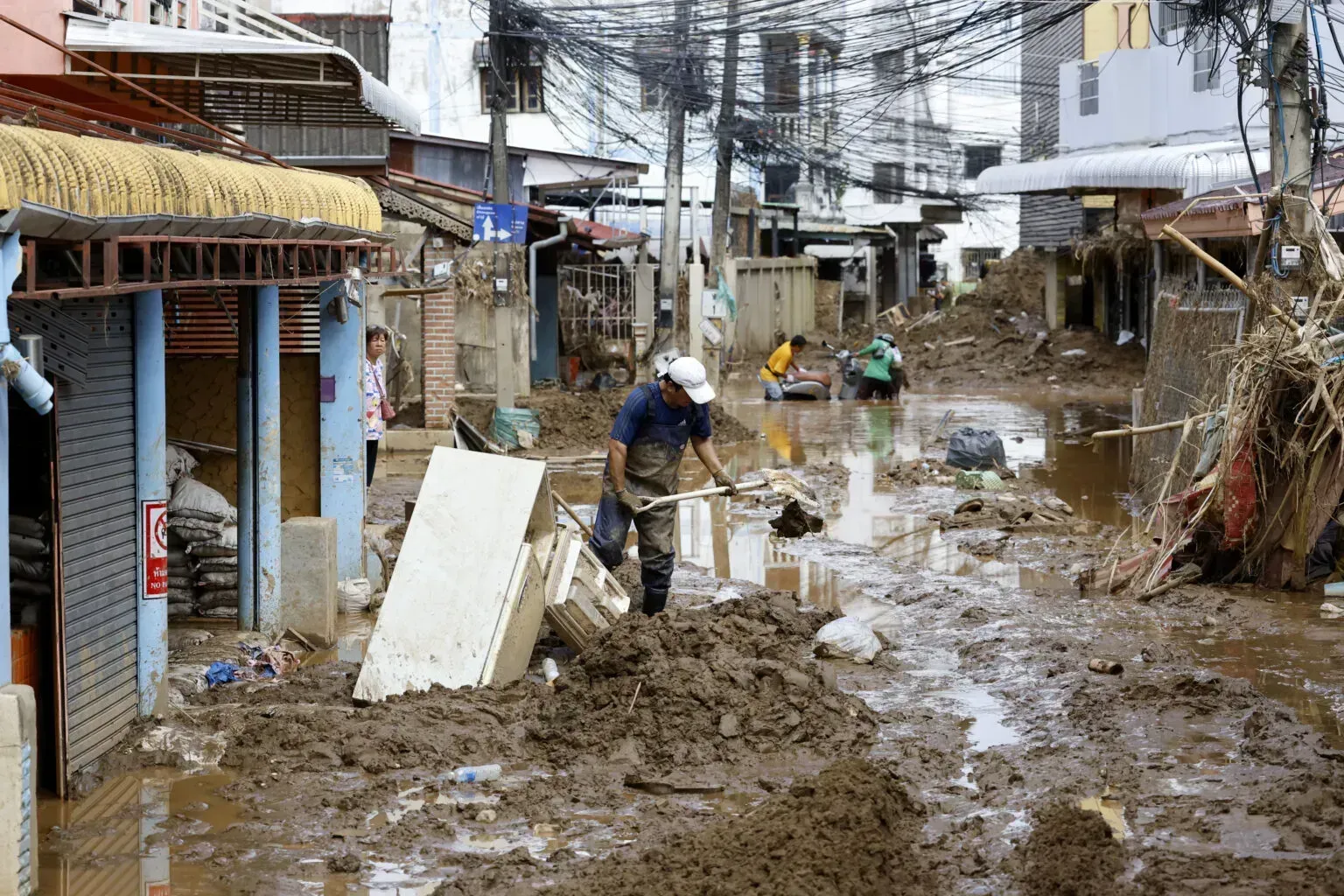
On a stormy night in July, muddy torrents swept through Mae Sai, a small town in northern Thailand bordering Myanmar. The Sai River, which flows from the mountainous Shan State of eastern Myanmar, turned deep brown as it flooded homes and streets.
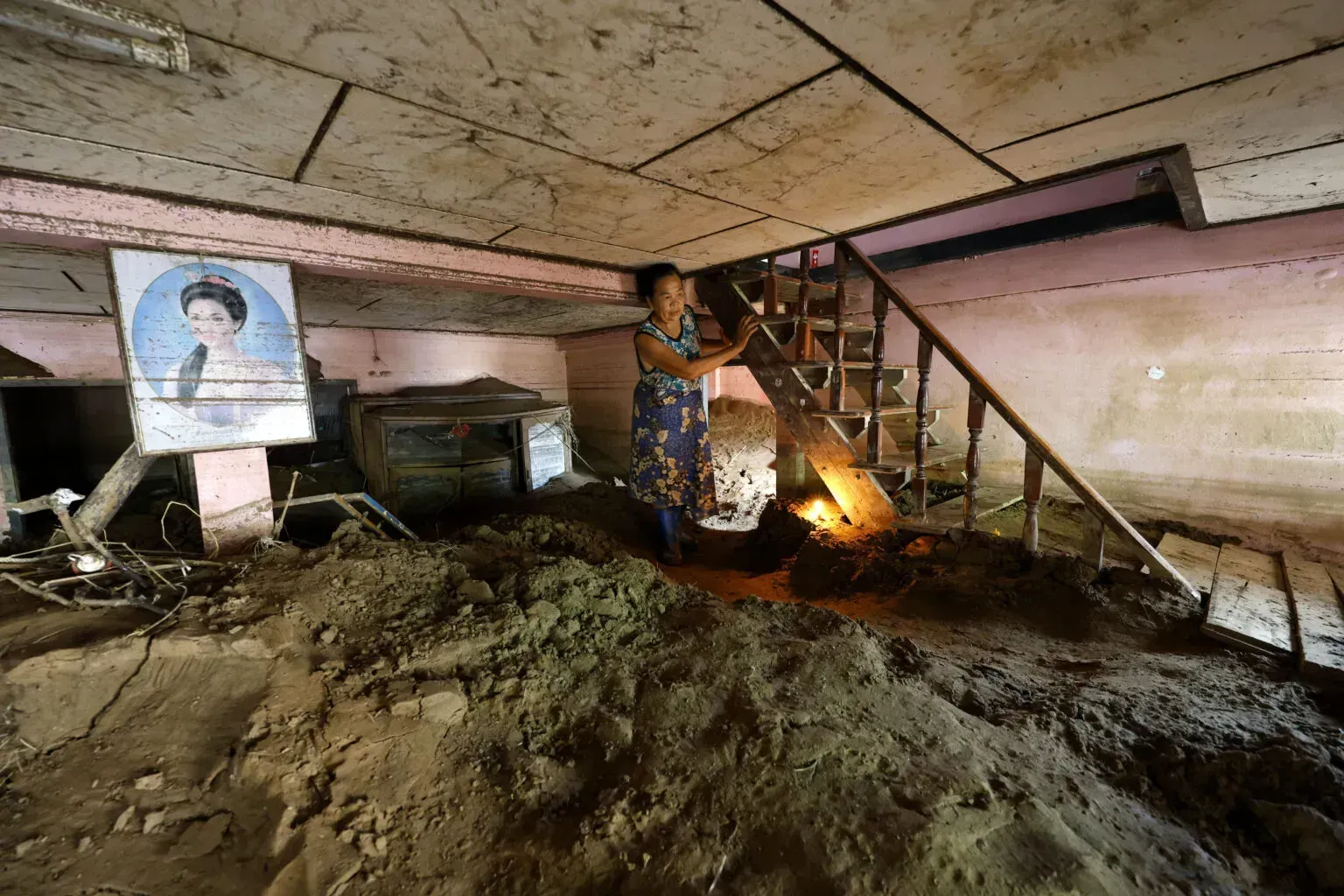
The water receded over the following two days, but a thick layer of mud coated walls, floors and roads – leaving villagers with a long, backbreaking cleanup.
In recent years, transboundary floods like this have become increasingly severe. In September 2024, floods and landslides killed two, injured two and left four missing in Mae Sai.

As a nonprofit journalism organization, we depend on your support to fund more than 170 reporting projects every year on critical global and local issues. Donate any amount today to become a Pulitzer Center Champion and receive exclusive benefits!
Changes in both the upstream and downstream parts of the river were to blame. Down the river, rapid urban expansion has narrowed the floodways. In the upstream section, the widespread clearance of forests for agriculture and mining have stripped the hills bare and left them more vulnerable to erosion.
One crop that is replacing forests in the area at a significant rate is rubber, most of which is exported to China and used for the tire industry.
The Wa-China rubber corridor
On the Myanmar side along the Sai River and Ruak River, into which the Sai flows, rubber plantations now blanket once-forested slopes.
Straight rows of rubber trees have spread across eastern Shan State, where both rivers start. Here, Myanmar’s most powerful ethnic armed group, the United Wa State Army (UWSA), is in charge.
The group has been opening up the hills it controls to satisfy China’s relentless demand for natural rubber for the past decade.
During this period, plantations have expanded significantly near the border with China, satellite imagery revealed.
More than 50,000 hectares of rubber – an area larger than Singapore – now covers UWSA-controlled territory in most of eastern Shan State, where environmental regulations are rarely enforced.
One plantation along Ruak River, which also travels across the Thai-Myanmar border, spans more than 3,600 hectares.
Another plantation along the Kok River, which flows from this territory through Thailand before joining the Mekong River, stretches for 11 kilometers along the riverbank, covering 8,300 hectares.
“The plantations belong to the Chinese. That’s all we were told,” said Nang Saeng Ngern, a daily-wage rubber tapper and local villager in Shan State. “The Wa army permitted them. We just keep our mouths shut,” she added.
Between 2013 and 2023, natural rubber production in Myanmar nearly doubled, according to FAO data.
China’s tire industry – producing more than one billion tires in 2024 – relies heavily on imports from rubber-producing countries in Southeast Asia, including Myanmar.
In 2023, the country exported nearly 85,000 tons of natural rubber, with 62% sent to China, UN Comtrade data shows.
With improved infrastructure under the China-Myanmar Economic Corridor and tariff-free access through the Regional Comprehensive Economic Partnership starting from May 2025, Myanmar’s rubber has become increasingly attractive to Chinese buyers.
Northern Myanmar’s rubber boom largely began with China’s Opium Replacement Program in 2004, which tried to curb poppy farming in Myanmar and Laos by supporting Chinese firms to grow other cash crops, especially rubber.
Backed by the UWSA, many Chinese investors secured long-term land deals – some lasting up to 30 years. Smallholders, on the other hand, are dependent on dealers who have a connection with Chinese traders.
Under the program, state-owned giants such as Yunnan State Farms Group (YSFG) and Guangdong Guangken Rubber received grants, concessional loans, tax breaks and duty-free import quotas.
As an early entrant, YSFG’s two subsidiaries in Myanmar had secured nearly 8,000 hectares through long-term leases by the late 2000s. They planted hundreds of thousands of rubber seedlings near Pangkham, the UWSA capital bordering China.
Surging rubber prices in the 2010s fueled further growth. In 2012, the group opened a processing plant that supplied tire-grade rubber to factories in Yunnan.
According to a Chinese state media, Yunnan Natural Rubber Industry Group, a subsidiary of YSFG, supplies rubber to Chinese and international tire manufacturers, including Giti, Hankook, Maxxis and Kunlun.
Mekong Eye contacted YSFG for comment on its activities in Myanmar and northern Laos, but did not receive a response by the time of publication.
Not forest cover
Across the Mekong region, rubber plantations are often counted as forest cover. Yet, researchers have long argued that monoculture rubber plantations cannot replicate the ecological functions of natural forests, such as retaining water and anchoring soil.
A 2025 study found that rubber expansion in the middle Lancang-Mekong River Basin has worsened erosion, especially in plantations aged between 12 and 18 years.
Researchers warned that new plantations were increasingly encroaching on higher, steeper, wetter and more depleted terrains – where erosion is most likely to occur.
“In many parts of the Mekong River Basin, prolonged use of pesticides and herbicides has accelerated the depletion of soil organic carbon,” explained an Australian-Vietnamese environmental expert studying ecological change in Mekong region, who requested anonymity so he could speak more freely.
Soil organic carbon plays a vital role in sustaining soil health by retaining moisture, supporting microbial activity, and stabilising soil structure. Its depletion leads to soil desiccation, reduced cohesion, heightened erosion, and increased surface runoff, limiting groundwater recharge and undermining the land’s ability to retain water.
“If current monoculture practices persist, the rubber industry in the region faces substantial risk under intensifying climate change,” the expert warned.
More frequent and extreme rainfall events driven by climate variability—such as those associated with La Niña—particularly in Myanmar and Laos, where rubber plantations are widely established on steep slopes, are increasing the likelihood of flash floods, landslides, and severe soil loss.
“These cascading impacts threaten rural livelihoods, reduce plantation productivity, and heighten disaster risks for surrounding communities.”
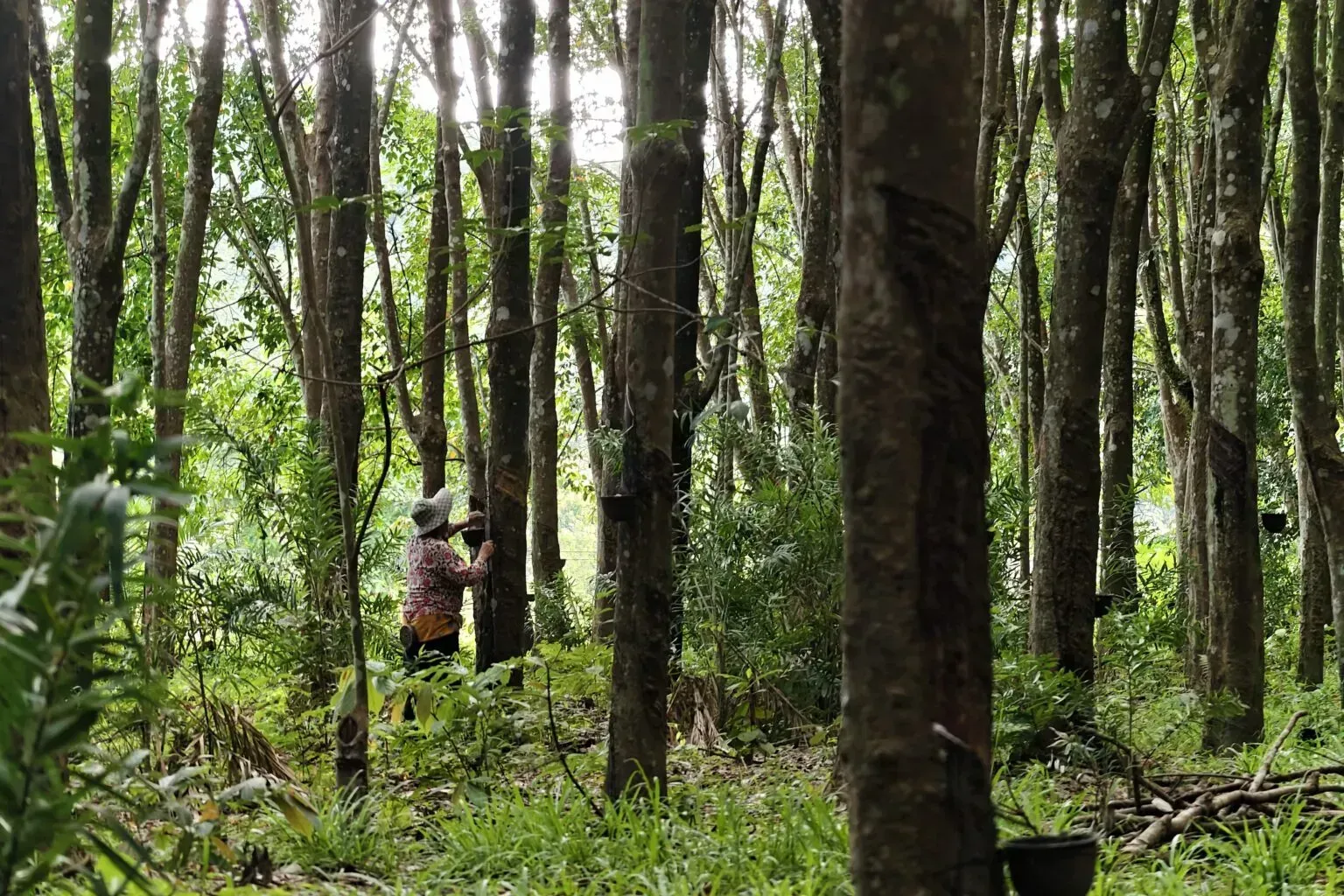
In 2021, the Shan Human Rights Foundation reported that rubber expansion by UWSA-linked companies, in partnership with Chinese investors, destroyed community forests and traditional upland farms. Villagers were forced to clear and burn land for rubber seedlings, and some were even evicted.
In Tachileik, a border town, most rubber plantations are owned by outside investors who bring in migrant laborers from other parts of Myanmar, according to the report.
Local communities did not reap significant benefits from the crop. Rubber jobs often go to outsiders who speak Chinese, leaving many Shan villagers excluded from these opportunities. Those who did secure a job earned barely enough to survive.
“They told us rubber would bring more income than rice farming,” said 35-year-old Said Sai Muang, a rubber tapper living south of Muang Hsat in Shan State who wished to speak anonymously. Said earns only 20 yuan (US$3) a day on the land he once owned.
“I’m lucky because I can speak a little Chinese,” he said.
Cross-border water contamination
Rubber plantations don’t just rip open the soil, their heavy chemicals can also spread across borders via waterways.
In eastern Shan State, Chinese dense planting techniques – up to 1,200 kilograms per hectare per year – promise higher yields than Myanmar’s traditional farming methods, but with hidden environmental costs.
“Rubber needs constant fertilizer, especially as a monoculture,” said Suphachai Khangkhun, director of the Rubber Authority of Thailand’s Chiang Rai Office. “The chemicals increase production, but organic substances that sustain the soil don’t yield.”
The combination of chemical-heavy cultivation and acid-based rubber processing has left the rivers murky and the soil depleted.
Wan Wiriya, a chemist at the Environmental Science Research Center of Chiangmai University, tracks the flow of rivers from Shan State into Thailand and the Mekong. He has noticed alarming spikes in heavy metals, including arsenic, cadmium, manganese and nickel.
In July 2025, his research team conducted a study of rivers along the Thai-Myanmar border and found alarming results. Water at eight of nine monitoring stations registered contamination at “high risk” levels, indicating it poses serious health threats and requires urgent toxic control and monitoring.
Two stations, both near the border where the largest rubber compound in Shan State is situated, were classified as “very high risk” and “extremely high risk,” meaning the water can cause immediate or long-term harm to human health without prompt action.
Multiple factors may be linked to this contamination, including mining and land-use changes associated with large-scale agriculture.
“When forests are replaced with large plantations, the land itself releases metals into rivers,” Wan explained. “Monocultures demand intensive chemicals, and rubber processing uses strong acids. These contaminants linger in the environment for decades, even centuries.”
For communities downstream, this could mean the water flowing through their homes and fields is not safe, although there is not yet research that clarifies the extent of cross-border water contamination.
“Rivers are a single ecosystem. They are always connected – you cannot confine the damage to one river,” said Thanapol Piman of the Stockholm Environment Institute. Thanapol has studied flooding patterns in Thailand’s Mae Sai since 2019 and believes that floods are becoming more frequent and severe.
“When one river suffers, others in the same system suffer too. To tackle environmental impacts, you need to work across all of them,” he added.
“Every country involved needs to work together on cross-border water management. No matter where you are, you will face the same consequences sooner or later.”


